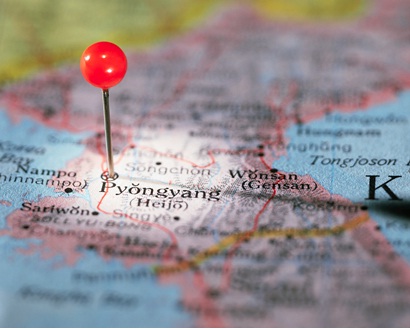
The news was revealed on December 17th. Kim Jong Il was dead. At first, people thought it was a hoax. Later it became official news. Even images of his body lying in state while North Koreans mourn him have made it official. His successor is his third and youngest son, 28 year-old Kim Jong Un. He has officially assumed the office on December 24th just days before his father’s funeral. The big question is will Kim Jong Un be able to rule the tiny, private, separatist country the way his father has or will North Korea find its grip succumbing to the times?
The nation of North Korea has existed since 1948. Korea was under Japanese occupation for decades before World War II and existed as a nation after World War II ended. However it was divided at the 38th parallel under a United Nations agreement with the Soviet Union occupying the north part and the democratized world occupying the south part. It was the communist North’s refusal to participate in a 1948 UN-supervised election that led to the two Koreas being separate and Kim Il Sung being the leader of what established as the Democratic People’s Republic.
North Korea is not only unique for having only three heads of state in its existence but also from the same family: first Kim Il Sung, then Kim Jong Il and now Kim Jong Un. During Kim Il Sung’s reign, he wreaked havoc of his own. The two Koreas tried to control each other during the first few years of existence. Its escalating border conflicts led the North to invade the South which kicked off the Korean War: a civil war that lasted three years, included support for the south from UN-backed countries like the US, the UK and Canada, and left a total of over 2,000,000 soldiers and civilians dead and the borders restructured as originally planned with a heavily-armed Korean Demilitarized Zone protecting the borders. Despite the peace, relations between the North and South have been tense as was common during the Cold War times and still remain tense to this day. The North has attempted many times to assassinate leaders of the South, North Korea boycotted the 1988 Summer Olympics as Seoul was the host city, and has even attempted to develop its own nuclear weaponry. Even as the South adopted a Sunshine Policy in 1998 to moderate for peace, that hasn’t stopped the North from uttering threats and causing international tension.
During the time of Kim Il Sung, he developed a ‘cult of personality’ status that would even make some of the heads of state of most other Communist countries envious. He adopted the title of the ‘Great Leader’: a title repeated constantly amongst the citizens of North Korea of all three Kims. Glorification of him replaced all religion in North Korea. Even after his death in 1994, he’s still referred to as the ‘Eternal President’ and his birthday is a national holiday in North Korea. As a ruler, he came across as the familiar tyrant we know Kim Jong Il to have been through his own methods. During the first years of his reign, he issued a command economy with all industry owned by the state and all agriculture collectivized. His economy was focused on peasants and workers and was aimed at eliminating class differences. Heavy industry and arms production were also predominant as was a large army. While the USSR and China were moving away from de-Stalinization, Kim was infuriated and began distancing North Korea from the two countries, even denouncing any reconciliation or peace attempts with the United States. The times from 1979 onward were very hard for North Korea as China moved towards economic reform and the European Communist countries including the USSR were exercising political reforms that led to the eventual overthrow of Communism. This led Kim Il Sung to make North Korea even more isolated: an isolation that still exists to this day. Its economy was soon hurting and Kim Il Sung was investing in nuclear arms production: a process Kim was fiercely protective of up until a month before his sudden death in July of 1994.
Kim Jong Il was named by Kim Il Sung back in 1980 to be his successor and eventually succeeded his father after his death. Kim Jong Il would wreak the havoc most people are currently familiar with during his reign from his father’s death up until his own death on the 17th. He would keep the heated ‘cold war’ between South Korea alive and well with constant condemnation and threats of war. He too was heavy on developing nuclear military prowess, resisting UN demands to inspect facilities and even threatening a war if North Korea was imposed sanctions. His military prowess kept on growing by number of soldiers and weaponry the Military First policy he adopted. The policy would continue in existence even as the people in North Korea had to deal with flooding in the 1990’s which lead to a huge reduction in arable land and eventually a famine that left anywhere from 1 million to 3 1/2 million North Koreans dead. Relationships with the United States weren’t any nicer either as Kim would still portray the US as the bad guy and George W. Bush referring to North Korea as part of the ‘axis of evil’. Even as relationships appeared to be improving one moment, things appeared to go wrong the next.
Now Kim Jong Un assumes the role as the ‘great leader’ of North Korea. Over the past two weeks, we’ve learned more about him. He attended school in Switzerland as a child, has a degree in computer science and has a military rank as general. He has two older half-brothers but it was believed by many through his personal character that he was most likely to be Kim Jong Il’s successor. In 2009, it was made official by Kim Jong Il. Since Kim Jong Il’s death, it has become a reality as title after title from North Korea’s government is now being bestowed on the younger Kim. Since the funeral and transition, the media has kept a watchful eye on North Korea and Kim Jong Un. There have been countless headlines leaving one to question the state where North Korea is going:
- 24th – North Korea To Be Center Of Japan – China Talks
- 26th – Kim Jong Un Meets With South Korean Delegation
- 27th – North Asks South Korea For Money At Kim Jong Il’s Funeral
- 27th – North Calls For Enactment of Investment Pact
- 30th – Military Says South Korea Will ‘Pay For Hideous Crimes’
Once again, headline after headline that differ, confuse and even make people question about what the North will do next. Also in question is Kim Jong Un’s reign as the new leader. Does a dictator that’s not even 30 have what it takes to run a nation with a Stalinist style governing? Will North Korea still be a fierce hermit to the rest of the world? Will North Korea’s relations continue to be fiery and even lead to the ‘war’ North Korea keeps on talking about? Or will things open up and lead to progress and improvements in North Korea, especially its citizens’ way of life? Those are answers that can only be made as time moves on. Nevertheless it’s important for all to keep a watchful eye on events that unfold.
WORKS CITED:
WIKIPEDIA: North Korea. Wikipedia.com. 2011. Wikimedia Foundation Inc. <http://en.wikipedia.org/wiki/North_Korea>
WIKIPEDIA: Kim Il Sung. Wikipedia.com. 2011. Wikimedia Foundation Inc. <http://en.wikipedia.org/wiki/Kim_Il-sung>
WIKIPEDIA: Kim Jong Il. Wikipedia.com. 2011. Wikimedia Foundation Inc. <http://en.wikipedia.org/wiki/Kim_Jong-il>
 Jon The Blogcentric