Britsh Columbia Civic Elections: Not Much Change Noticed

If you live in one of the cities of British Columbia, you may have had to place your vote in this year’s civic election. It’s that time every three years where the B.C. Cities head out to decide their mayor, their school trustees, and their city councilors. Nevertheless it’s always the mayoral election that catches the most attention, especially for the mayor of the City of Vancouver. Whatever the situation, most major cities had very little change in terms of the mayor elected. The biggest changes happened in the smaller cities on the outskirts of Greater Vancouver or in the smaller towns. Here’s a brief wrap-up of which mayors are staying and which are leaving:

RE-ELECTED

VANCOUVER – Gregor Robertson

HIs three-year term of mayor has received huge publicity. It came as he was mayor while Vancouver was the Olympic City and mayor during the time of the Stanley Cup finals. His three-year term as mayor has come with many ups and downs. He sponsored HEAT (Homeless Emergency Action Team) to aid the homeless problem and provide shelters. It has helped the problem to an extent but has faced its own funding issues. He praised the opening of the Canada Line but criticized the construction process. He has mandated for Vancouver to become the “Greenest City on Earth’ but has been criticized for approving the construction of bike lanes down Dunsmuir from Beatty to Hornby. He has headed an amendment for borrowing almost half a billion to fund the 2010 Olympic Village without taxpayers input. He has also made some unguarded comments about Premier Gordon Campbell at a public introduction and profanity-laden comments about the rival civic party NPA which were broadcast on Youtube. He has even admitted partial responsibility for the 2011 Vancouver Riots.

In the 2011, he and his Vision Vancouver party faced stiff rivalry from councilor Suzanne Anton and rival party NPA and Ellen Woodworth and COPE. On election night, Robertson was re-elected mayor with all but two of the council seats won by Vision. The other two seats were won by the NPA party. Vision also kept the control of the Park Board and the School Board. Robertson promises in his term an aggressive agenda to try to end homelessness, raise the profile of green issues and tackle housing affordability.

BURNABY – Derek Corrigan

The election was known more for the forming of a new civic party than of the party that was expected to win. When Burnaby school board passed an anti-homophobia policy, many Burnaby parents were unhappy and formed the Burnaby Parents Voice party with five school board candidates in an attempt to strike down the policy. In the end, it was the left-leaning Burnaby Citizens Association headed by Mayor Derek Corrigan that swept everything, and for the second election in a row. Despite the lack of opposition, Corrigan says he and his Citizens Association will be open, transparent and anything but complacent about ideas and issues.

NEW WESTMINSTER – Wayne Wright

Being a resident of New Westminster, this was one election that was able to distract me from that of the City of Vancouver. Wayne Wright won for the fourth straight time and his win was double the number of votes of his closest rival James Crosty. The downside of the election was that there was only 24% voter turnout. Shame. Wright has been known to push for development in the city, especially after the loss of three pulp mills and the Labatt’s Brewery in the past decade. The last three years have seen a lot of development completed or taking shape like the completed shopping area and the business sector under construction at the Brewery District, the New Westminster Station shopping center which is to be opened next month, the New Westminster Civic Centre which has just started construction and a Pier Park project in the works.

SURREY – Dianne Watts

Her re-election to the mayor’s office was not a surprise. She had already won twice before. What was a surprise was that her Surrey First party swept all the councilor seats and won 81% of the vote. She plans to develop its City Centre into a ‘Second Downtown’ for Greater Vancouver with a new library and City Hall. She also plans to add more police presence and firefighter presence in the city and well as services for at-risk youth and a child advocacy center. She also plans for more seniors services and for more transit access in the city.

RICHMOND – Malcolm Brodie

It was Brodie again for the fourth straight election. His win may not have been the most decisive of the night but it was the quickest of the night. The biggest civic issue he plans to tackle is growth, especially around the Canada Line. He plans on working out an aggressive affordable housing strategy along with ensuring the number of green spaces and recreational facilities.

COQUITLAM – Richard Stewart

Richard Stewart’s biggest pre-election headlines weren’t about the campaign or his issues but about being hit by a car a week ago while campaigning. Despite an aggressive rivalry from Barrie Lynch, Stewart won the election.

NANAIMO – John Ruttan was re-elected mayor of Nanaimo with a convincing win. The council has a mix of some familiar faces and some new faces. This was another city with another low voter percentage: 26%.

VICTORIA – Dean Fortin

Fortin was re-elected for a second term. The capital region saw very little change in the leadership. There were some changes of councilors but most of the original councilors as well as the city’s mayors remained the same.

NEWLY ELECTED

WHISTLER – Nancy Wilhelm-Morden

Wilhelm-Morden won the mayor’s seat beating out incumbent mayor Ken Melamed: 2636 votes to 610. The city’s biggest issues were the transit problems, assisting business, trust between the community and city hall and the unpopular implementation of pay parking.

SQUAMISH – Rob Kirkham

Kirkham was elected Squamish’s new mayor in a close race: 2283 votes to 2104 to incumbent mayor Auli Parvainen. His biggest goal is the town’s oceanfront plan which he sees it key to the town’s prosperity.

LANGLEY – Jack Froese

Mayor Rick Green was often criticized for leading a dysfunctional council. In the end, he lost to newcomer Jack Froese. Froese plans to bring a better future to the community and tackle the town’s urbanization whom many residents feel is growing too fast.

PITT MEADOWS – Deb Walters

Don MacLean was stepping down as mayor of the town. That led to three rivals for the mayor’s seat. In the end, the winner was Deb Walters with 55% of the votes. In the process, she became Pitt Meadows’ first femal mayor.

KELOWNA – Walter Gray

Possible the biggest city to have a change of mayor. Walter Gray has been mayor before but lost to Sharon Shepherd back in 2005. After a six-year absence, Gray was elected back in to the mayor’s seat by a close margin: 47.1% compared to Shepherd’s 45.7%. His goals are to attract investors to Kelowna and create more jobs for the city.

There are more elections that happened in BC but those were the one that received the biggest notice for which seats changed and which remained the same. For most BC residents, there were two elections to pay close attention to: the City of Vancouver and their own city. Every city’s residents have a lot of expectations from their mayor and the councilors over the next three years. Whether they carry them out, and if the outcome is good or bad, is something only the next three years can tell.

WORK CITED:

VANCOUVER SUN: Vancouver Sun, 2011. Canada.com. Postmedia Network Inc. <http://www.vancouversun.com&gt;

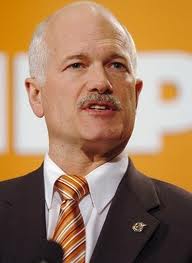
Jack Layton: 1950 – 2011

It’s extremely rare when a major politician dies in the middle of his term. It’s also unfortunate that Jack Layton dies soon after the biggest success for himself and his political party. Nevertheless his influence in Canadian politics will always be remembered.

John Gilbert Layton was born in Montreal on July 18, 1950 to a family with a huge political background. His mother Doris Steeves was a grand-niece to a Father of Confederation. His father Robert Layton was a Progressive Conservative MP who served as a Cabinet Minster during the Mulroney administration. His grandfather was a cabinet minister in Quebec parliament. His great-grandfather was an activist for the blind. Naturally he would follow in his family’s footsteps. He was elected student council of his high school and studied Political Science at McGill University. In 1969-1970 he was a member of the Quebec Youth Parliament. In 1970, the family moved to Toronto where he attended York University and received his PhD in Political Science. He became a professor at Ryerson University, was a prominent activist and wrote many books on political issues and his beliefs.

He first entered politics on a civic level. He was elected to Toronto City Council in 1982 and soon became one of the most outspoken members of the council and a leader of the left wing. He was one of the first advocates for rights for AIDS patients and spoke his opposition to the building of the Skydome and Toronto’s bid for the 1996 Summer Olympics. In 1985 he moved on to the Metropolitan Toronto council. In 1988 he became returned for the election to Toronto City Council. He not only won but his reformist coalition for which he headed gained control of City Council. In 1991, he made the move to run for mayor of Toronto. His opposition to the Olympic bid and the low popularity of the NDP party at the time caused him to lose the election. Layton would return to teaching and later founded an environmental consulting business, the Green Catalyst Group. He ran for the House of Commons twice in the 90’s and lost both times.

Then in January 2003 came the biggest breakthrough of his political career. He was elected leader of the federal NDP party. Before the 2004 election, Layton was already known for making some eyebrow-raising statements about the Liberal party led by Paul Martin shifting to being too right-wing. During the 2004 National Election, Layton accused the Liberal Party for the increase in homelessness and homeless deaths in Canada. Many people complained that it was negative campaigning. Layton caused another controversy during that election when he suggested the removal of the Clarity Act and allowing Quebec to declare independence upon a referendum vote. In that election the Layton-led NDP party had 15% of the popular vote, the highest in 15 years, and 19 seats in the House of Commons.

In the next federal election, in January 2006, Layton attempted to cast himself as the sole remaining champion of universal health care. Layton constantly repeated during the campaign to Canadian that they have a ‘third choice.’ Some conservative pundits mocked Layton and his stances. Some would paste Layton-styles moustaches on them and say things like ‘raise my taxes’ or ‘I’d like to pay higher gas prices.’ Layton also went all out in attacking the scandal-ridden Liberals at the time and pledged to use his minority clout to keep the Conservatives in check. The election resulted in 29 seats in the House of Commons for the NDP: 11 more than the previous election. Layton’s wife Olivia Chow was also elected to the House of Commons making them the first couple to be elected to the House.

During the 2008 Federal election, many were comparing Layton as trying to pass himself off as Canada’s Barack Obama. He shunned the comparisons and reminded people that he only simply shared the same views as him like the working class and the middle class. Layton also mentioned he told Obama and Hillary Clinton the North American Free Trade Agreement was hurting people on both sides of the border. Layton also spoke out about internet freedoms and his stance in favor of net neutrality, torrent sites, video-sharing sites and social networking sites. The NDP would go on to win a total of 37 seats in the House but would only be the fourth-most populous behind the Conservatives, Liberals and Bloc Quebecois. Shortly after the election in November 2008, Layton negotiated with Liberal leader Stephan Dion and Bloc leader Gilles Duceppe on forming a coalition to replace the Conservatives as the government. Prime Minister Stephen Harper responded by suspending parliament until January 2009. After Liberal leader Michael Ignatieff signed a budgetary agreement that would end the coalition, Layton declared: “If you oppose Mr. Harper and you want a new government, I urge you to support the NDP.”

In 2011, a new national election was called as the Conservative party was defeated in a Vote of Non-Confidence for contempt; the first time in the history of the Commonwealth for a government to receive a Vote on Non-Confidence. That resulted in Prime Minister Harper dissolving parliament for a new national election. During the election, appeal for the NDP started slow but Layton’s NDP party soon increased greatly in popularity after the leadership debates. The NDP moved past the Liberals into second place in the polls behind the Conservatives and first in Quebec. Soon after his popularity rose, a smear campaign came about as a retired police officer stated he saw Layton naked in a massage parlor back in 1996 but didn’t charge him. Layton responded that he was just simply getting a massage. In the end, no charges were laid against Layton. In the election, held May 2, 2011, the NDP won 103 Seats. That was the highest-ever total of seats for the NDP party and made the NDP the Official Opposition party to the Commons for the first time ever with Layton as the official opposition leader.

One thing known to few was of Jack Layton’s illness and the severity of it. In February 2010, he announced he had prostate cancer and vowed to beat it and continue to pursue his duties as the leader of the NDP. On July 25, almost three months since the national election, he announced he would take a temporary leave to fight an unspecified newly diagnosed cancer. He announced he planned to return as leader of the NDP once the House of Commons was to be resumed September 19, 2011 and recommended NDP caucus chair Nycole Turmel serve as interim leader. On the morning on August 22, 2011, Jack Layton died at his Toronto home. He was 61.

Jack Layton was a unique politician. He came from a family who had a lot of political experience. He rallied and campaigned for causes that were popular with the left and he strongly believed in as well. As a leader of a national party, he brought ideas and spoke of issues in ways unheard of before by leading Canadian politicians. He brought ideas unheard of before in Canadian parliament. Overall he was one p[politician who believed in a better Canada and wasn’t afraid to speak out about it. After his death, Prime Minister Stephen Harper said:  “On behalf of all Canadians, I salute Jack’s contribution to public life, a contribution that will be sorely missed. I know one thing: Jack gave his fight against cancer everything he had. Indeed, Jack never backed down from any fight.”

As a fitting final tribute, Jack wrote a letter two days before his death. His family released the letter the day of his death that ended with these final words:

“My friends, love is better than anger. Hope is better than fear. Optimism is better than despair. So let us be loving, hopeful and optimistic. And we’ll change the world.”

WORKS CITED:

WIKIPEDIA: Jack Layton. Wikipedia.com. 2011. Wikimedia Foundation Inc. < http://en.wikipedia.org/wiki/Jack_Layton&gt;