Oscars 2025 Best Picture Reviews: Part Two

It’s interesting for my next blog of Best Picture nominees. One film is a remake of one of the most captivating monster stories ever and the other film tells the story of the tragedy that produced one of the most legendary plays ever. They’re both unique in their own way.

Frankenstein

Ever since Mary Shelley has published her book titled Frankenstein; or, The Modern Prometheus back in 1818, the story and the monster have captured the imagination of the world. The monster definitely more often than the story. The Frankenstein monster has been featured and parodied frequently to the point people have created their own versions of Frankenstein on both the character and the physical appearance. People on Halloween especially have a field day with Frankenstein costumes and their own Frankenstein stories. Crazy thing is most of these stories stray greatly away from the original story of Mary Shelley. They may get the basics like a mad scientist creates a living person from the body parts of deceased people but they are too loosely based. The very first Frankenstein film, a silent film from Edison Studios released in 1910, was a film the director intended to be ‘broadly based’ on Shelley’s story or call itself a ‘liberal adaptation.’ The most famous film adaptation has to be the 1931 film which was an adaptation of a stage play. Frankenstein’s monster in that film, played by Boris Karloff, has the most iconic image of the Frankenstein monster with the rectangular forehead and green skin. That film also includes the memorable line: “It’s alive! It’s alive!”

This film is Guillermo del Toro’s adaptation of the story that is still off the original in some amount but is closer to Shelley’s story. The film is set in 1857 and a Danish ship of the Royal Navy is stuck in ice. The ship becomes like a hospice for a gravely injured Victor Frankenstein who was hurt from the wave of an explosion. The ship is then attacked by a fur-laden humanoid creature that appears indestructible. As Victor notices that’s the creature he created, he tells his story, which becomes Part I: Victor’s Tale. After Victor tells his story, the creature tells his story in Part II: The Creature’s Tale. This layout of the story sets up for the finale where the creature finally makes peace with Victor and Victor apologises for being too cruel to the creature. It’s after Victor’s death that the creature departs, but not until he frees the ship from being stuck in the ice.

Some of the most noticeable differences are in the novel, Victor’s mother dies of scarlet fever. In this film, she dies of childbirth giving birth to William. While the novel shows Victor discovering the possibility of creating new life through his studies, the film shows him actually conducting his proven findings in front of professors and being expelled. In the novel, Victor is shocked and repelled by the creature he created and abandons it in the cold snows. In the film, he’s proud of his creation but enslaves him. In the film, Victor wins the love of a woman named Elizabeth. In the film, it’s William who courts Elizabeth and Victor tries to win her, but his mad science and arrogance prevent her. Victor even kills Elizabeth and William. Also in the film, Elizabeth embraces the creature when he rushes back to Victor to demand a female creation for him. It turns out Elizabeth has more feelings for the creature than for Victor. The creature in the novel becomes lost in the wilderness and has both seen the best and ugliest of humanity. In the film, he is given refuge to a farming family whom the blind man treats him well. The other family think he killed the blind man when they return and try to shoot him. There is the reconciling of the two on the ship but the creature remains on the ship at the end of the novel while the creature leaves the ship but is powerful enough to push the ship free of the ice.

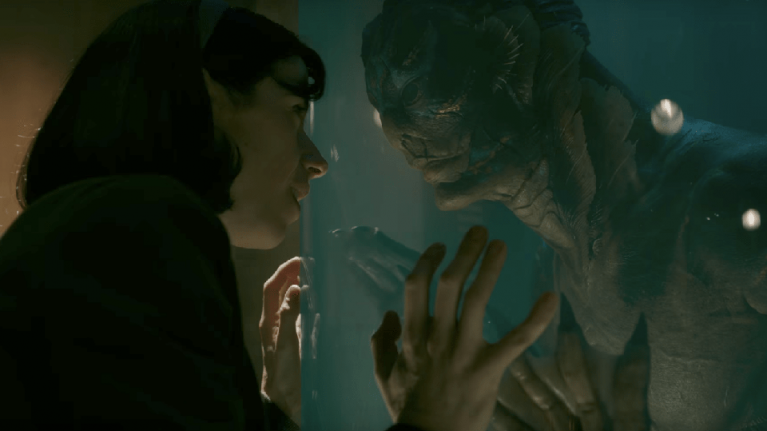
This adaptation that is both written and directed by Guillermo del Toro is a story that is more faithful to the book than most stories. Del Toro already knows how to do an excellent job of stories involving monsters like Pan’s Labyrinth and The Shape Of Water. Here, he shows off his expertise again with an excellent adaptation of the story. Making it two stories, of Victor’s story and The Creature’s story, is done quite well without deviating too much from the original. The two stories do a good job of playing themselves out leading to its eventual connection in the end. The result is not only an adaptation well done but an adaptation that will capture your attention and get you caught up in the story and the drama as it unfolds. The story will also get you feeling for The Creature as well as it showcases he’s not only a human in flesh but he’s a human in feeling. If you see the story, you will agree that the creature has more heart than Victor. Del Toro masters the story and the drama.

Oscar Isaac does a great job in making Victor Frankenstein into a doctor that isn’t completely heartless but full of personal flaws. His eccentricities interfere with his ability to relate with others, have any kind of heart to his creation or even love Elizabeth enough to win her love. Surprisingly, Isaac does succeed in making you feel sympathy to Victor and even forgive him for all he’s done. The dimension Isaac bring is excellent to the role. Jacob Elordi steals the film as the creature. Creating a character of a created human with the common sensitivities of people, even having feelings of love and heartbreak, gives the film its heart and soul within the spectacular drama. Many times, you’re tempted to think Elordi is the lead. Mia Goth is also very good in her role as Elizabeth, but the role could have been given more dimension in the story. Other good supporting acting performances come from Christian Convery as the young Victor, Felix Kammerer as William Frankenstein, and Lars Mikkelsen as the Captain Andersen.

For a film like this, you can bet this has a lot of excellent technical achievements. The cinematography from Dan Lautsen captures the story very well. The costuming from Kate Hawley, the production design from Tamara Deverell, and the hair and makeup team do a great job in taking the audience back to the past and recreating scenes of the times. Alexandre Desplat knows how to deliver a score for a film and he does it again here with a score that fits the drama of the story very well. The sound team and the visual effects team all deliver the right stuff to deliver the excitement of the film.

Frankenstein is not just another adaptation of the story. It’s one Guillermo del Toro does his own telling of the story mixing his own take and trying to stay faithful to the story. It succeeds in a very thrilling way!
Hamnet

There have been many semiautobiographical films of William Shakespeare many times before but you hardly see any films, plays or literature about his children. Among possibly the least known is his only son Hamnet Shakespeare. Little is known or documented about him or what he was like. It was known that he died at the age of 11. The play Hamlet premiered three or four years after his death and scholars have frequently debated Hamnet’s young death and how much inspiration it bored on Hamlet. It is known that before Hamnet’s death, Shakespeare mostly wrote comedies and Hamlet was a significant turning point. The film makes the case in point that it was very inspirational to the creation of Hamlet. You could tell in rehearsals Shakespeare was a perfectionist and was very demanding on his lead actor. It’s possible he wanted the actor to create the spirit of Hamnet in Hamlet.

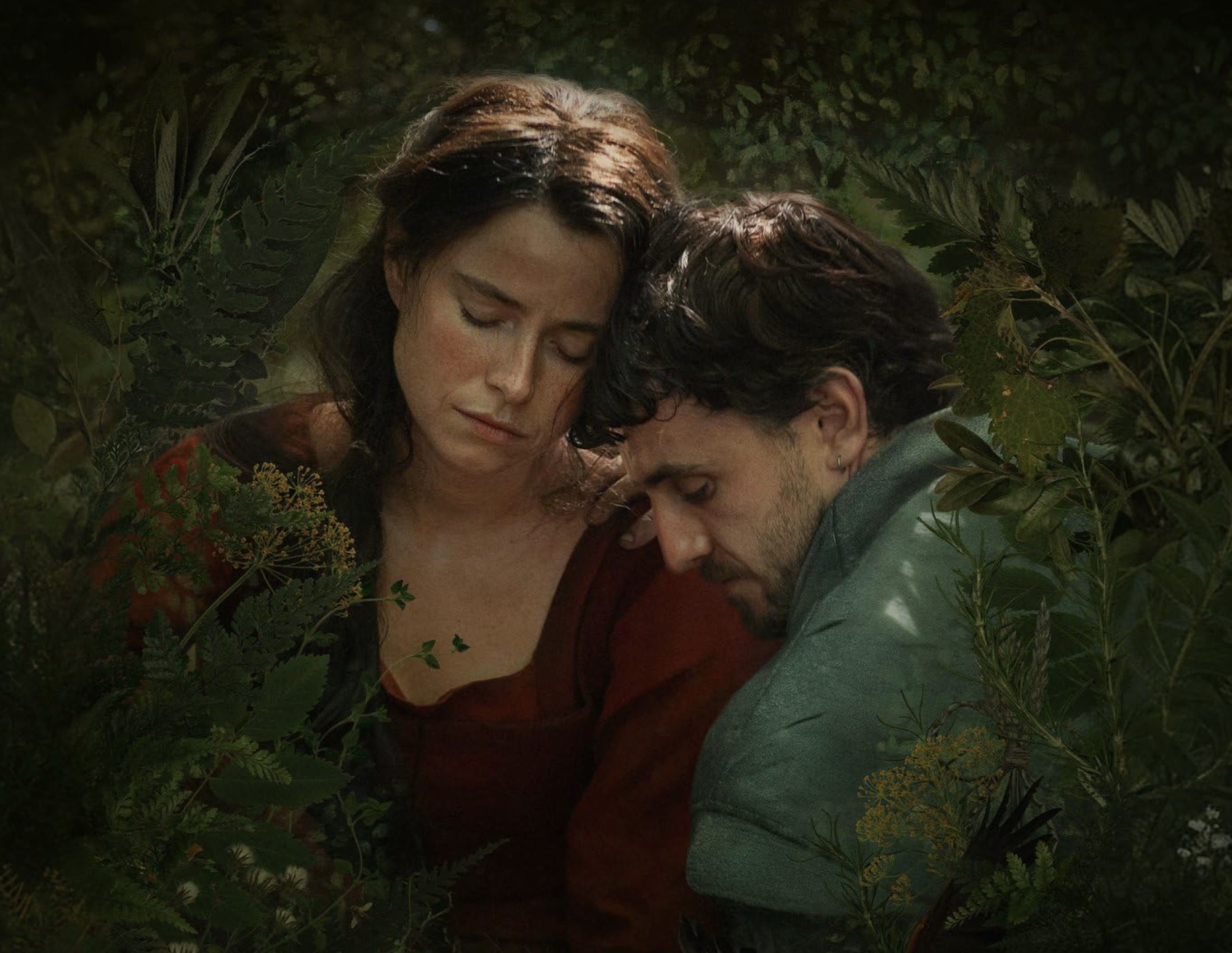
There are two things that stand out the most from this film. The first is that it is based on a novel that is historical fiction. There are many details in the film that are fact with Shakespeare’s life, but there are also a lot of myths and imagined fiction. Very little is documented about Hamnet so in her novel Hamnet, Maggie O’Donnell gave him a personality and in writing of Hamnet’s death, O’Donnell used some of her own experience when her daughter was suffering from a potentially fatal illness. The second thing that stands out is that the film is mostly focused on Shakespeare’s wife: Agnes Shakespeare. The film is more Agnes’s story as it shows her an herbalist who’s a lover of nature. She finds herself attracted to this playwright whom her family does not approve of. They fall in love, develop a family and marry. William frequently makes trips to London for his plays while Agnes does mostly motherly duties. Agnes is the one who has to deal with her twin children, their teachings and eventually their illnesses. She is the one who has to witness Hamnet’s death. No doubt she’s angry with William being away in London during that time. Years later, she learns of his plays Hamlet. She’s there at the opening. She fears the play could upset her. Instead she is touched by the play, by the actor, and by the character. It gives one the sense in seeing Hamlet played on stage, she senses Hamnet’s spirit living in him and shared with all.

The film itself doesn’t try to be a historical docudrama. It does keep many actual facts of history but it does its own storytelling. It does maintain situations that many would commonly relate to. It reminds people that Shakespeare’s choice to pursue arts or teaching was not well-regarded in his working class family. It shows William and Agnes married because she was pregnant and she didn’t want her daughter Susanna to be born a ‘bastard.’ It’s known that in between the death of Hamnet and the premiere of Hamlet, there was a period for Shakespeare known as the ‘lost years.’ What it does is it tells its story. As I mentioned earlier, the film is based on a book that is loosely based on the lives of the Shakespeares. It’s a story that connects with common situations in ones life like not being accepted into a family, loving someone their family doesn’t approve of, the loss of a child, trying to live life again and of how art connects with the human spirit. The latter, I think that’s the theme of the film. How art reflects humanity and can even be a method of healing. The film does an excellent job in having its story connect with the viewer while also maintaining intrigue towards the family of a legend. That’s its biggest quality.

This film is another excellent accomplishment for Chloe Zhao. When she agreed to do the story, she also hired Maggie O’Donnell, the author of the novel Hamnet, to help with the scriptwriting. Human connection is a common theme of Zhao’s films and Chloe does an excellent job in directing a story of an artist’s method of healing and how he shares it with the world. There have often been films that show how art connects with the human spirit. This film also succeeds in displaying that theme and Zhao creates an excellent work in delivering that message.

The performance of the film definitely belongs to Jessie Buckley. The film is mostly about Agnes and Jessie does an excellent job of taking charge of her role and owning the movie. She shows many dimensions of Agnes Shakespeare: falconer, herbalist, teacher, daughter, wife, mother and griever. She showcases both the triumphs and the struggles Agnes goes through and delivers a performance that’s an achievement in itself. Paul Mescal is also great as William Shakespeare but he does not deliver the performance of Shakespeare one would expect. Here, he’s seen as a son with a stormy relationship with his father, husband of Agnes, a playwright who’s away from the family for a long period of time and one who grieves the loss of his son. His performance in making William Shakespeare a three-dimensional common person instead of the icon we all know makes for the excellence of the film.

The film also has a lot of good supporting performances. The one that most stands out is Jacobi Jupe as Hamnet Shakespeare. While O’Donnell creates a character in the son of Shakespeare we never knew, Jupe adds an appeal to him and portrays Hamnet to be just as much of a dreamer as his father. Jupe is also good at portraying Hamnet as a twin brother willing to give his life for his ailing twin sister. Jupe really catches the spirit in both senses. Also good is Noah Jupe, Jacobi’s older brother. I think there was a sense of purpose in the film of having Jacobi cast as Hamnet and Noah cast as the actor who plays Hamlet. Noah is great in having the actor capture the spirit of Hamnet in his acting and be able to connect with Agnes. Other good supporting performances in the film are Emily Watson as Shakespeare’s mother and David Wilmot as John Shakespeare who was frequently at odds with his son.

The film also has a lot of excellent technical aspects. The cinematography from Lukasz Zal fits the film excellently. The set design by Fiona Crombie and Alice Felton excellently takes the film back to the past and the costuming by Malgosia Turganska fits the times perfectly. The score from Max Richter does an excellent job in capturing the drama of the story and the artistic triumph at the end.

Hamnet is more than just another Shakespeare story. It’s a story that connects with people and it shows how the arts are the way to the soul. It’s a story of joy, of love, of tragedy and of the eventual triumph.

That completes my second look at the Best Picture contenders for this year. Six more films left to review.
Movie Review: Corpus Christi (Boże Ciało)

Corpus Christi
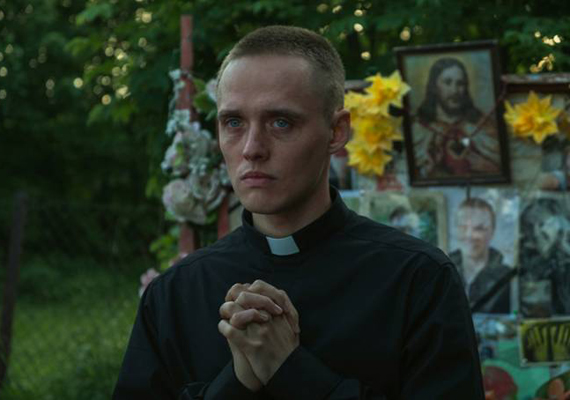
Bartosz Bielenia plays a parolee who poses as a priest in a small town in Corpus Christi.

Just around this time with the Oscars drawing closer, you would’ve thought my interest in the foreign films would be finished, right? When I saw Polish film Corpus Christi was playing, it caught my intrigue with the story. I thought it was worth seeing.

The film begins in a juvenile prison. Prisoners are prone to the same harsh actions, beatings and retaliations of other prisoners. 20 year-old Daniel knows he could be one. He killed someone when he was a teenager and was sentenced to juvenile prison, or ‘juvie’ as it’s commonly called, for manslaughter. Daniel has found a personal escape in religion. A priest, Father Tomasz, performs mass at the prison every Sunday. Daniel is the most willing participant as he even sings Psalm 23 for the mass. Every night he prays the rosary. Parole is nearing for him, which is a relief as one of his fellow prisoners named ‘Pinczer’ is threatening him. He wants to become a priest, but Father Tomasz says he can’t because of his criminal past. They’re not allowed in the seminary. As soon as Daniel achieves parole, it’s obvious he’s not ready for the priesthood as he happily does drugs and has sex at parties. He does however own a priest’s shirt.

For his parole, Daniel has to do sawmill work at a mill in a small Polish town specifically for parolees. He notices a church and introduces himself as ‘Father Tomasz’ to a young girl praying named Eliza and introduces himself as ‘Father Tomasz.’ He’s then introduced to her mother Lidia, the church secretary, and the ailing priest. Daniel is given the job to perform priestly duties. Daniel’s first mass goes excellently, and people believe him to be the temporary priest. Daniel soon notices as he walks around town people praying to a memorial to six young people. They died in a car accident which the driver hit them head-on. The image of the driver, who also died, is not on the memorial.

Over time, Daniel becomes more involved in the community with each mass he serves. He even wins the liking of the town mayor. Daniel even takes the opportunity to help those that constantly pray by the memorial to help overcome their feelings. Eliza and Lidia are among those as Jakub, Lidia’s son and Eliza’s brother, was one of the fatalities. He also notices how some people shout ‘the whore’ when dealing with their grief. He finds out people have been directing their anger to the driver’s widow. When meeting with the widow, he learns that people have been sending her hate-mail.

Daniel tries to think of a solution, but he later learns Pinczer, one of his rivals from prison who was called ‘Bonus,’ knows he’s posing as a priest. He demands 5000 Euros or else he will expose the truth of ‘Father Tomasz.’ Daniel tries to continue on as a priest and even works at making the town confront their unnecessary anger to the widow by showing them all the hate-mail they sent her. Soon her husband is given a proper burial and is attended by all: even those that lost a child in the accident. However it soon becomes apparent that Daniel’s secret will be exposed. It does happen and the aftermath becomes a case where you can watch and draw your own conclusions about the town, Eliza and Daniel.

One thing that caught my attention is that this film is based on true events. It may not be a true story, but it is of a collection of true events. Director Jan Komasa made mention in a Los Angeles Times interview that he has taken notice that there are several unordained men who have posed as priests. Many of those men believe they are doing priestly duties for the right reasons. The issue of fake priests is one that the clergy in Poland know of, but they sweep the issue under the rug. Scriptwriter Mateusz Pacewicz said in the same interview that he became very fixated about the idea of these fake priests and their spiritual passion. He even wrote a short story of it and that would lead him to write the screenplay for this film.

This is a film that will cause a lot of people with strong Catholic values to think a lot about. Some may even be outraged of a positive depiction of a fake priest. What we have here is a young man who found himself in God possibly through prison ministry. Daniel has this problem with him as he’s a killer and he’s reminded his past crimes will not allow him into the seminary. However he sees the town where he is to do his parole duties as his chance to be a priest. We should remember during his short time as a priest, he didn’t do anything to hurt the citizens of the town. He didn’t rob from the people, he didn’t disturb any masses. Instead he became a symbol of help and hope. He helped the townspeople overcome the losses they were enduring. He got the people to stop with their unnecessary hostilities towards the widow of the killer. He even helped the widow get back to being accepted rather than be the subject of a town’s wrath.

The film allows to both question and even make your own judgments about what happens in the story. First off it makes you wonder if Daniel posed as a priest because he feels he was meant to be one or to avoid an act of vengeance from the other parolees at the sawmill. It’s not made obvious but one can even sense in the film that Eliza always knew Daniel was not ‘Father Tomasz.’ I sensed that in the scene where Daniel was asked for his priest card and she says it’s in the laundry she was working with. Even that sex scene between Eliza and Daniel suggests that; an ordained priest would not have sex or else we would be forced to resign. However Eliza knew Daniel was the right man to bring peace to the town. Eliza also wanted healing along with the people of the town, including hard-hearted Lidia. Eliza felt she knew Tomasz could bring healing and was the only other person who felt making peace with the killer’s widow and allowing a dignified burial of his ashes can make the town heal.

The ending will especially get one thinking as what has happened and what has happened next for Eliza and Daniel. Even as Daniel learns after being recaptured that he was meant to be a criminal, he should be thankful he was able to be a priest and had the chance to do the right things while doing so. It’s possible being a priest during that time brought out his best personal traits while prison brought out his worst traits. It’s interesting to see that a killer who poses as a priest was the one that got the town to heal from the tragedy.

I commend the direction of the film by Komasa and the script by Pacewicz. This is a story that will keep you interested from start to finish. It has a lot to say and will allow one to draw their own conclusions of what the overall message of the film is. I don’t think the film is too critical of religion. We should remember Poland is a very religious country and the only European country where more than half of the population (65% to be exact) attends religious service at least once a month. Showing an anti-Catholic film in Poland is sure to spark outrage. I do feel both Komasa and Pacewicz were trying to make a critical statement without being disrespectful to the Roman Catholic Church. The statement being in Poland, anyone can be a priest.

Also excellent acting from Bartosz Bielenia. He did a great job as a man with immense faith but had something to hide. Eliza Rycembel was also very good at playing Eliza. She was good at knowing the truth of Daniel but being supportive in silent manner. Also very good was Alexandra Konieczna. Her best parts were the moments where she didn’t speak, but you call tell her emotions by her body language. Actually the acting from all involved was very believable and very good at telling the story. They were all very good at showing extreme emotion without going over the top.

Corpus Christi is the twelfth film representing Poland to be nominated for the Academy Award for Best International Feature Film (formerly Best Foreign Language Film).’ It was a highlight at last year’s Toronto Film Festival, it won the Edipo Re Award at last year’s Venice Film Festival, and Bielenia won the FIPRESCI Prize for Best Actor at this past Palm Springs Film Festival as well as the Best Actor award at the Stockholm Film Festival.

Corpus Christi is remarkable as it’s a film that will leave you asking more questions than giving you answers about the story. The film will also get you thinking about morality and how people judge others, or how flawed people deal with their feelings. You will be left thinking at the end.

WORK CITED:

Ellwood, Gregory. “Scammers or spiritually motivated, fake priests figure in Poland’s ‘Corpus Christi.'” Los Angeles Times. 1 Jan 2020. <https://www.latimes.com/entertainment-arts/movies/story/2020-01-01/corpus-christi-delves-into-fake-priest-trend-in-poland>

Movie Review: Cold War (Zimna wojna)

Cold War
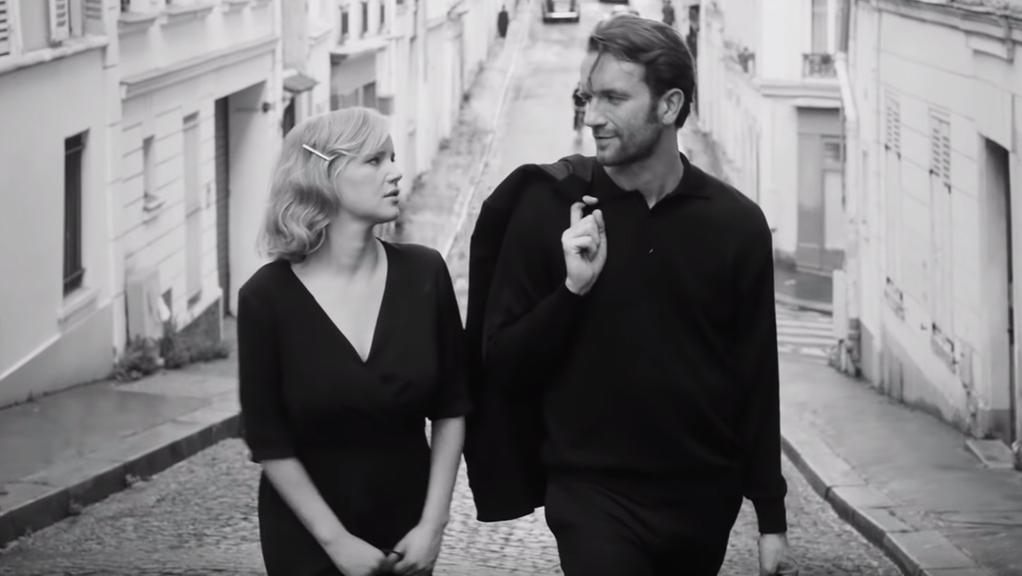
Joanna Kulig (left) and Tomasz Kot play a musical couple whose love overcomes politics and separation in Cold War.

At first I didn’t plan to see Cold War. It had a lot of good rapport, but I doubted its Best Picture chances. It may not have been nominated for Best Picture, but it did earn three nominations including Best Director. That’s enough to catch my intrigue.

The film begins in the late-1940’s. World War II has ended and Poland is now under Communist rule. People from the Communist party are called out to go into the towns and villages of farmers and peasants. They meet out in a remote area consisting of a forest, a single solitary building, and a bombed-out church. Their purpose is to create an ensemble of Poland to be shown to the Communist world. The art will consist of traditional song and dance, but will also consist of propaganda songs too. This is the new world order. Wiktor Warski and Lech Kaczmarek are the two men hired to construct this ensemble.

The men decide the pieces to have for the choir as well as the dances to have for the shows. They also decide who will be singing the lead for the choir. During the audition, Wiktor takes a special interest in a singer named Zuzanna, but nicknamed ‘Zula.’  Lech notices the affection between the two. Zula is not that vocally skilled as the other female singers, but has that ‘it’ quality and sings lead through most of the choir songs. During the time of rehearsals, Wiktor increasing becomes more in love with Zula. Their love for each other continues as the ensemble Masowske finally start performing for the whole of the nation.

However years later, the leads of the ensemble decide to develop propaganda songs that will be sung during the performance. They will also be touring internationally to other Eastern Bloc countries with the goal to eventually win praise in Moscow. The tour goes into East Berlin as part of the plan. The show goes well, but unsuspectingly Wiktor notices the French Sector which can easily be crossed. Wiktor invites Zula to cross with him, but she’s afraid, feeling that something will be lost behind. Wiktor does crosses and would eventually settle in Paris, France.

In the years since his defection, he has immersed himself into the jazz scene and even formed his own ensemble, becoming very successful. He’s even married to a French poetess Juliette. One night while his band is on tour in Split, Croatia, he notices the Polish ensemble he was a part of is performing there. He goes to watch the show. Zula is able to notice Wiktor in the crowd. Before they can meet, the secret service drags him back to Paris.

Years later, Wiktor notices Zula again, but in Paris. Wiktor fills in with his life of how he’s found a woman of his own. Zula tells him she’s married to a Sicilian man in Italy. She defected the ‘proper’ way. Zula is able to become a successful jazz singer under the wing of Wiktor which includes singing a jazz adaptation of one of the ensembles’ songs. However Wiktor notices something else in Zula. Zula has become very flirtatious. He notices it when ‘Rock Around The Clock’ is performed in the bar and she dances around with many a man. It takes Wiktor to stop this. They have an argument outside, but it becomes clear the argument exposes their selfishness and their ambitions. In the end, their worst traits are exposed and it sours their love for each other. It’s noted how Wiktor’s jazz playing has gotten worse that something is wrong.

In 1961, Zula is back in Poland fairly. Wiktor wants to return, but Lech informs him of how much he has insulted the country with his defection. Lech informs him that he can spend 15 years in a labor camp for what he has done. Wiktor is willing to accept for the sake of winning Zula back. Zula hears the news and goes to the prison camp to find him. Upon being reunited, they need to reaffirm their love for each other despite it all. They go back to the ruins where it all started.

This is a slow story of a love that grows and faces friction through art and political tension. The purpose of the slowness is to feel the dramatic tension of the love between the two. We have a man and a woman who have a love for each other, but face the tests of politics with the Cold War and the Iron Curtain causing a lot of division between the two. Plus we have the personal obstacles of the two, most notably their pride, that possibly is the biggest barrier between the two. They both love each other, even through marriages of their own, but their selfishness gets in the way.

I believe that was the point of the film. The central theme of the film is about divisions. We have the Cold War that represents the divided world. We have the selfishness and pride of Wiktor and Zula that causes division in their relationship. We also have the division of the two arts as jazz is more Wiktor’s thing. I think that’s the reason the film is shot in black and white. Pawlikowski may have done black-and-white before in the film Ida, but here, black and white is fitting as it represents all the divisions in the film.

The divided world may be the common ‘world’ in the film, but possibly the most present world in the film is the world of music. The film shows a lot about the arts in both song and dancing. It’s the song of peasant people that is the heart and soul of the people’s voice. It is the stoic choir singing propaganda songs that represents the new rigidity Poland has to go through and the ‘free world’ has to deal with. It is the happy folk dancing that shows the joy of the Polish people of generations past. It is the Rock Around The Clock dancing that shows Zula’s freeness and thus her biggest personal weakness. It’s that song of the love that can’t be allowed sung by Zula as lead of the choir and in a jazz song that becomes symbolic of the obstacles in the love between Zula and Wiktor. Music and dance are the biggest metaphors in the film.

This is possibly the crowning achievement of Pawel Pawlikowski, which he directs and co-writes with Janusz Glowacki and Piotr Borkowski. Pawlikowski has been mostly involved with the British film scene, but has recently delivered films in the Polish language. His previous film, Ida, was shot in black and white and won Best Foreign language Film three years ago. Here he delivers another Polish-language film. The story is more personal as it’s based on the romance of his own parents. The film he delivers is a masterpiece both of filmmaking and art. It’s a charming story that incorporates love, politics and music that works as a bittersweet romance.

The acting was also very good. Joanna Kulig is very good as Zula. Kulig has acted in many of Pawlikowski’s films before like Ida and The Woman In The Fifth. This film is her best performance. Tomasz Kot also does a very good job of playing the complicated Wiktor. Borys Szyc does a very good job in his first film role. Borys is more famous as a musician rather than an actor. Lukasz Zal does an excellent job with the cinematography in the angles he chose and the way they add to the story. The music, both original by Marcin Masecki and that performed by the performers make the story and add to its richness.

Cold War is one of the surprises of this year’s Oscar season. Those who see it will know why it has its recent renown.