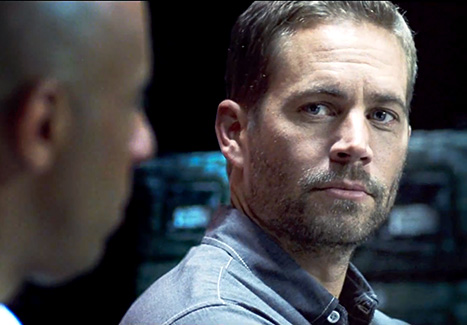
Movie Review: Furious Seven

Furious 7 was Paul Walker's last hurrah. But was it done right?
Furious 7 was both a continuation of the Furious series and a final farewell to Paul Walker. But was it done right?

Sure, Furious Seven is another sequel. However it is one that has been anticipated hotly. Particularly of a star’s death. Nevertheless does it hold up as a movie?

I admit that the only previous Fast and The Furious movie I’ve seen was the very first one. I can’t really judge it against the ones I haven’t seen. What I can say is that it is for the most part a very cliched movie. There were some notable moments that made the story unique with some cred like Dominic’s love to Letty and Brian’s struggle of being a family man while simultaneously being part of the ‘mission.’ However it had the typical thick action you’d come to expect from an action movie. The plot is nothing you haven’t seen before. It also includes scenes where you’d feel it’s too over-the-top. It’s especially notable when you see Dwayne Johnson come on from out of the hospital with his machine gun. You can see the Mr. Heavy Testosterone acting there. Even the comedic parts from Roman looked too ridiculous and question if it was too over-the-top for this movie. Many times I asked myself during his ‘song and dance’ at the Dubai party “Is this really necessary?”

Despite all this, there are some relevant qualities to the movie. Vin Diesel did well as Dominic. Actually he made the role of Dominic in the franchise. I was better at stomaching him than Dwayne Johnson as he was better at playing a macho character that doesn’t come across as Mr. Testosterone. Michelle Rodriguez was also impressive as Letty as her acting wasn’t as showy or over-the-top. And Ludacris as Tej knew how to keep Tyrese Gibson from unnecessarily stealing the show. And Paul Walker, whom I will focus on later in this review, did a respectable job as Brian.

As I mentioned at the beginning, I’ve only seen the first of the series. The first Furious movie was a good adrenaline rush, especially for those who like to street-race, but had a formula too similar to what you’d find in popcorn movies. I remember turning 2 Fast 2 Furious down because Vin Diesel wasn’t in it. Being a person who’s only seen the first and the last, I have to say the films other biggest quality is showing how far this film series has come. When The Fast And The Furious started, it started as street racers who would find themselves involved in fighting criminal activity Most of which are at high speed. The film ended with a street race. Six sequels later, the street-racing days are over but the fighting crime has continued and even progressed to the point of the type of action you’d come to expect in superhero movies. High speed action scenes continue to occur but this will surprise anyone who has only seen the first Furious movie. I’m sure I’m not the only one. I usually pass on Hollywood sequels because for all intents and purposes, I consider most Hollywood sequels the actors, directors and producers playing around for two hours. This sequel was common to expect from a Hollywood sequel but it did have some positive traits. Showing how far this franchise has come since the first is one of them. When I saw the first, I didn’t expect it to grow this big.

Finally I’ll focus on the memorializing of Paul Walker in the film. It’s no question that the Fast and The Furious series was what made Paul Walker. Sure, he had experience as a child actor in TV and movie bit parts, sure he had a major role in the renowned Flags Of Our Fathers, but it is his role as Brian O’Conner in the Fast and The Furious franchise that he will most be remembered for. Of course the first movie was a product featuring Vin Diesel and hoping to propel his stardom further. Even though it did, it also made a star out of the supporting player: Paul Walker. It was the breakthrough Paul had hoped for. Otherwise his movie career’s peak would have been the Disney Schmalzfest Meet The Deedles. Paul would go to star in all but one of the Fast And The Furious movies. It seems like a bizarrely tragic irony that Paul’s death at the age of 40 came as he was street racing along with his friend and crashed his car at a high speed. The death could even add to the stigma of Paul Walker being Brian O’Conner. So it shouldn’t be that big of a surprise that Furious 7 opened huge, albeit a bigger-than-expected $140 million on opening weekend. That set a record for biggest opening weekend for an April release.

As for this movie being a fitting ‘last hurrah’ for Paul Walker, his acting was fine. Nothing spectacular but nothing out of what you’d expect for the role of Brian O’Conner. The ending first seems like a good tribute to Paul and a nice final salute to him. However it would not be too long until the secret was given out that Paul’s look-alike brother was used to film the final screen and that his face was computer enhanced to look more like Paul. Knowing that will make the final tribute to Paul very questionable. Even seen as tacky. It’s also a question whether this movie was intended to be Paul’s last Furious movie right from the start. Right into the plot Paul talks about the challenges of putting his past behind and moving onto family life. That could be a hint this may have been intended to be his last movie. Even the ending of the beach scene will make one wonder if it was planned before his death or after. Something to think about, especially as they’re in the works of making Furious 8.

Furious 7 is your typical Hollywood sequel continuing and building on the formula made popular. It also tries to be a good farewell to Paul Walker. Despite it being off in a lot of areas and leaves Paul’s farewell questionable, it does have some positive qualities and succeeds in entertaining its core audience and pleasing fans of the franchise.

Documentary Review: Searching For Sugar Man

Meet Sixto Rodriguez, the music legend you never heard before, in Searching For Sugar Man.
Meet Sixto Rodriguez, the music legend you never heard before, in
Searching For Sugar Man.

When you think of singing icons, which male icons come to mind? Elvis? Bob Dylan? How about Rodriguez? Yeah, I know you’ll be asking ‘Who Rodriguez?’ Searching for Sugar Man solves the mystery for us of who Rodriguez is while the documentary plays out the fan’s mystery of what happened to him.

Sixto Rodriguez was a Detroit rock/folk singer from the early 70’s who wrote songs of what he saw and felt. His songs were a mix of folk and blues and he was already being touted as the next Bob Dylan by Sussex records: the record company that discovered him. He recorded two albums under Sussex but neither sold. Rodriguez was dropped in 1972. Yet another could’ve been that didn’t. That’s that, or so it seemed.

South Africa had a different story. People had bought both of Rodriguez’s albums and it caught on. The fact that his album was banned in South Africa at a time where censorship was heavy increased the stigma of the album and bootleg versions came about into the hands of many more South Africans. There was even talk of his alleged onstage suicide in 1973 that increased the stigma of Rodriguez that made him a bigger phenomenon than Elvis. The problem was that there was not only a lot of censorship within South Africa at the time but a lot of censoring of media of what came out of South Africa. Nobody outside South Africa knew of Rodriguez’s phenomenon there. Not even Sussex Records, which folded in 1976.

Then came the time to put Rodriguez’s music on compact discs in the 1990’s. This was done with the aid of record-store owner Stephen Segerman, who’s nicknamed ‘Sugar Man’ after one of Rodriguez’s songs, and journalist Craig Bartholomew-Strydom who had to write the liner notes to the disc. They try through pictures and through lyrics to get information to no avail. Instead Strydom wrote in the liner notes asking out for knowledge. That’s what triggered the determination to find out what happened to Rodriguez and learn more about his life. Boy were they in for a surprise. They post an ad on the internet asking for knowledge. They get more than knowledge from people that know him: they learn he could be alive.

Then came the call from the man himself to Segerman. Rodriguez is alive and working as a construction worker/demolition remover in Detroit. He has been married twice and has three daughters and a grandchild. He taught his children never to feel like second-class citizens despite coming from a working class family. He even ran unsuccessfully for civic office in 1989. They’re excited but they know that all of South Africa need to know what happened to him and Rodriguez needs to know of his fame. Then he finally agrees to do concerts in South Africa in February 1998 featuring a popular South African band as his backup musicians. It’s at that moment during the very first concert that Rodriguez finally learns of his greatness and South Africans finally meet their beloved musician. After the tour, it was a return for the Rodriguez family to their regular lives and Sixto back to his construction work. Only now his co-workers know more about his fame half a world away.

One thing I liked best about the documentary is that it keeps secret the fact that Rodriguez is still alive from the audience until we hear of Segerman’s phone call from Rodriguez right in the middle. Unless you have your wireless device with you at the film–and I hope you have enough manners not to use one in the theatre while the film’s running– you too will probably think that Rodriguez is deceased because you most likely wouldn’t have known who he is either. The film did a smart move in revealing Rodriguez is alive and showing us the real life Rodriguez in the middle of the film. It makes the South Africans’ mystery of the past our mystery too.

Another good quality of the documentary is that it does remind you about the music industry. It’s cruel but it still decided the winners and losers whether we like it or not. We often think that the late-60’s early-70’s was the time most accepting of new sounds, most consisting or game-changers in the music scene and less pressure to conform to looks or less need for mass promotion. Rodriguez’s lack of success reminds you that even back then, promotion and typical music business procedures were necessary to even make a legend out of Rodriguez. He could have been the ‘Dylan Of Detroit’ that people described him as but his success never happened at home. And this was at a time before independent record labels or alternative radio or even before unsigned musicians could create and produce their own music and have it on iTunes and Youtube. Was the grass really greener back then?

Another good addition in the documentary is the use of animation, pictures and Sixto’s music. The animation shows the images of the Detroit Rodriguez knew and wrote about. The pictures of Rodriguez during the 70’s give a good example of his personality. His music shows the darkness of the life he was living and the life he saw through his eyes. The combination of it makes this out to be something more than a simple music documentary. The people interviews for the documentary also added to it. It’s not just the two South Africans, Sixto and his family but record personnel who worked with Sixto, a South African band who idolized him and would become his back-up band during his 1998 South African tour, and even co-workers of his construction job.

The documentary is not just about Sixto and the fame he never knew he had but also of South Africa and why they fell in love with his music. We should remember up until 1990, South Africa was a country under the strict rule of apartheid: the separation of races. Life was hell for non-whites but life was difficult for many whites too, especially the ones who opposed apartheid. News was censored. Entertainment was limited. And speech against apartheid even from white people was a crime punishable by 3 years in prison. You think the hippies of the late 60’s early-70’s had their things to rebel against? It was nothing compared to what the young South Africans of the time had to deal with. You could understand why censored music would attract them: because they were that disgusted with their government. They even go into South Africa’s national archives of censored music, take out one of Rodriguez’s albums that was to be the nation’s official master copy and show the scratch marks of one of his songs. Scratching out songs on albums was the censorship technique used by the South African government.

The movie does not end on a completely happy note. We still learn that people other than Rodriguez are making money off of his records. We learn that Rodriguez has toured South Africa at least three more times and he has given all of his tour money to family members. He still lives in the same Detroit house he’s lived for forty years and never complained about the fame in the US he never had. In fact he’s even happy with his construction work as he says it helps keep him in good physical condition. Shows that Rodriguez is not just quite a musician but quite a person.

Has my review stimulated interest in you to actually hear Rodriguez’s music? Guess what? The documentary has succeeded in stimulating interest in Rodriguez to the point that the soundtrack of the documentary has sold. This has also led to recent reissuing of his two albums in many countries including the US and even appearances on 60 Minutes and Letterman. Guess what? For the first time his music is charting in the US! In fact this very week, Cold Fact is #78 and the Searching For Sugar Man soundtrack is #100 on the Billboard Album chart. Yeah, it’s a shame that he had to wait 40 years for success of any kind here but better late than never.

Searching For Sugar Man
is an intriguing documentary that leaves the audient engaged in Rodriguez’s music as well as the mystery the South Africans try to solve on him. In a world full of documentaries that mostly one-sided liberal propaganda being shoved down your throat, this is a welcome relief too. I went to see it because it’s heavily favored to win the Oscar for Best Documentary. Boy did I get more than my money’s worth.

Note: If you want to learn more about Rodriguez, here’s his official website: http://www.rodriguez-music.com/ You can even give your email for upcoming news and tour dates. Now if only he can come to Canada!