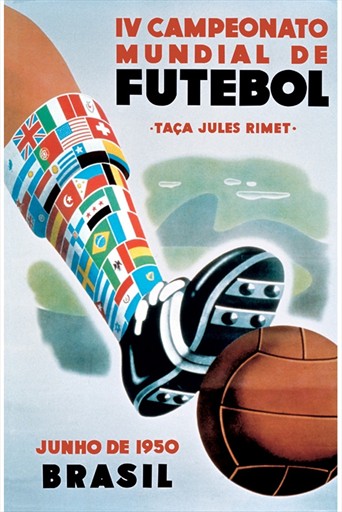
Brazil 1950: A Country’s Shining Moment Ends With A Country’s Heartbreak

The World Cup in 1950 was to be Brazil's shining moment. Instead it delivered a heartbreak that still haunts them to this day.
The World Cup in 1950 was to be Brazil’s shining moment. Instead it delivered a heartbreak that still haunts them to this day.

You may remember a while back I talked about Brazil’s football legacy but refrained from talking about 1950, the first time they hosted.  The first time they hosted was intended to be a grand moment for the country and especially their football team. In fact the Maracana was built to be the grand stage for Brazil’s win. Unfortunately the Cup ended with a heartache that still haunts the country to this day.

WAR IS OVER, THE WORLD CUP IS BACK

1950 was to be the fourth time the FIFA World Cup would be held. It started in 1930 but the 1942 World Cup had to be cancelled because of World War II. The 1946 World Cup was also cancelled as the world was still recovering from the end of that war just one year earlier. Just like 1948 was the year that brought the Olympic Games back to life, 1950 was the year the World Cup came back. However Germany and Japan were still part of the international sanctioned list and were banned from competing, just like they were banned from the 1948 Olympic Games. Brazil and Italy were given automatic berths: Brazil as host country and Italy as defending champions. The four British nations of England, Scotland, Wales and Northern Ireland returned to FIFA after seventeen years of ‘exiling’ themselves.

WE WANT OUT
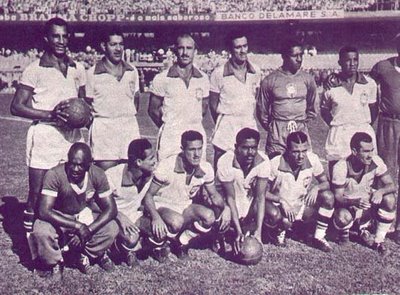
The 1950 Brazil team. Before 1950, Vrazil's best finish at the World Cup was third in 1938.
The 1950 Brazil team. Before 1950, Brazil’s best finish at the World Cup was third in 1938.

Seven spots were allocated to European countries, six to American countries and one to an Asian country. If you think it’s hectic getting teams to qualify for the World Cup, you should hear about 1950. Not because of competitive play but more because of international politics and football politics. Iron curtain countries like the USSR and two countries that participated in 1938–Hungary and finalist Czechoslovakia– refused to participate. Argentina, Peru and Ecuador withdrew after the qualifying round, possibly because of a dispute with the Brazilian Football Federation. The Philippines, Burma and Indonesia withdrew leaving India to receive the Asian berth by default. Austria declined to participate in qualifying feeling its team wasn’t good enough and Belgium withdrew from the qualification tournament which allowed Switzerland and Turkey to qualify without playing their final round of matches.

With the qualification done, it was off to the World Cup, right? Scotland withdrew because the very prideful chairman of the Scottish Football Federation insisted Scotland would only travel to Brazil as winners of the Home Championship. When England showed up, Scotland withdrew, even though England planned to attend even without the Championship. Turkey withdrew because of the huge cost of traveling to Brazil. FIFA invited two European nations who failed in qualifying–Portugal and France–to fill the gap. Only France accepted.

Now with the fifteen teams set for Brazil, that should lead to straight competition, but that led to more withdrawals. First came the draw on May 22, 1950 in Rio de Janeiro. India was the first drawn team to withdraw because of travel costs. France then withdrew because of the cost and time to travel between the cities. That left the World Cup with a field of only thirteen teams. Just like 1930 again! After all that, here’s how the teams worked out:

  • Group 1: Brazil, Mexico, Switzerland and Yugoslavia
  • Group 2: England, Chile, Spain and the United States
  • Group 3: Italy, Paraguay and Sweden
  • Group 4: Uruguay and Bolivia

ON WITH THE CUP

After all that hassle, the World Cup finally began on June 24, 1950. This would be the first world Cup since the inaugural 1930 World Cup where group play would be contested and would be the only World Cup where group play would decide the winner. It was Brazil’s idea to do this because more games meant more ticket sales to help compensate for the expenses of the stadiums. FIFA at first rejected the idea but agreed when Brazil threatened to pull out as hosts. The matches were held in six stadiums in six cities: Rio De Janeiro, Sao Paulo, Belo Horizonte, Curitiba, Porto Alegre and Recife. Four of the six stadiums were long into existence before the World Cup. There were only two that were build especially for the Cup: Estadio Raimundo Sampaio in Belo Horizonte and the Maracana in Rio.

Because of the uneven number of teams per group, it was decided that only the team that finished first advances. Group 4 had no problem deciding the advancer as that only required a single game, which Uruguay won 8-0 over Bolivia. In Group 3, Sweden was the winner with a win against Italy 3-2 and a draw against Paraguay 2-2.

Groups 1 and 2 were the two fully contested groups and they provided the most action. Group 1 was a no-brainer right from the start. Brazil delivered an attack style of play that would take them to the top of the group with a 4-0 win over Mexico, a 2-2 tie against Switzerland and a 2-0 win over Yugoslavia.

World Cup 1950 wasn't all Brazil, Brazil. It also was the stage for the American's 1-0 upset over England.
World Cup 1950 wasn’t all Brazil, Brazil. It also was the stage for the American’s 1-0 upset over England with Joe Gaetjens (right) scoring the winning goal.

Group 2 was not exactly remembered for its winner Spain or for Spain’s wins of 3-1 over the US, 2-0 over Chile or 1-0 over England. Instead Group 2 was known for one of the biggest soccer upsets of the time. The US vs. England match first appeared to be England’s for the taking since England, known then as the ‘Kings of Football,’ had the pros on their team while the American team was made up of part-time players who made their income from the jobs they worked. However the English and the 13,000 in attendance at the Estacio Independencia in Belo Horizonte were stunned when American Joseph Gaetjens, who was actually not an American citizen, scored the first goal in the 38th minute. Despite strong challenging play from both sides throughout the game, there were no other goals scored. The Americans’ 1-0 win over the English is still considered one of the biggest upsets in World Cup history.

The aftermath of this was also interesting. It made huge news in World Cup countries and almost made huge news in England but was trumped by the news the English cricket team lost to the West Indies for the first time ever. The English were nitpicky about the win saying that the team ‘had arrived through Ellis Island,’ referring to the assumption most Americans on that team were children of immigrants or immigrants themselves. For the record, three members of the American team including Gaetjens were not yet American citizens. In the United States, the win only made sidelined news. The Americans were still disinterested in soccer as they still promoted their ‘all-American’ sports like baseball, football and basketball. The win would gain appreciation by the Americans over time and especially in the last 25 years with the Americans slowly welcoming soccer especially after hosting the 1994 World Cup and the formation and success of MLS (Major League Soccer). The game has recently been dubbed by the Americans as the ‘Miracle Match’ and even spawned a small 2005 film “The Game Of Their Lives.’

ANOTHER SET OF GROUP PLAY?

Because of the uneven numbers of the groups in the first round, it was not only decided that only those that finish first in their group advance but also that it be group-style play to decide the winner.Also that ticket sales thing also has a lot to do with it too. This would be the only time in World Cup history in which group play would decide the winner. In group order, the finalists were Brazil, Spain, Sweden and Uruguay. All of the games in the ‘winners group’ were played either in Sao Paulo’s Estadio de Pacaembu or the Maracana. All teams played all their matches on the same day and at the same time. Brazil’s matches in this round were all contested at the Maracana.

The group play of the winners started July 9th with a 2-2 draw between Uruguay and Spain. Brazil delighted a crowd of 139,000 with a 7-1 win against Sweden which included four goals from Ademir. On July 13th Brazil continued their winning ways in front of a crowd of 153,000 with a 6-1 victory over Spain which included the Cup’s only ‘own goal’ by Spaniard Jose Parra Martinez. Uruguay gained some boost with a 3-2 win over Sweden with the winning goal coming with five minutes to go. The two games on July 16th were still group games however many still believed they played the role as 3rd Place Final and Final because of the end result and the team’s overall placing. Sweden beat Spain 3-1 in Pacaembu with a measly attendance of 11,000 and would finish the World Cup in third place.

A FINAL GAME TO BE REMEMBERED

“Down through its history, only three people have managed to silence the Maracana: the Pope, Frank Sinatra and me.”

-Alcides Ghiggia

Okay, here it was. This was Brazil’s for the winning. They were in excellent position to win the World Cup. They’ve already proven to the world their greatness. Even if Brazil tied Uruguay, they could still win the World Cup because Brazil had two wins while Uruguay had a win and a tie. The general public were not the only ones claiming Brazil to be the victors days before the match even started. The specialized press were too. In fact the Brazilian newspaper O Mundo printed an early edition paper that day with the Brazilian team on the front page with the headline ‘These are the World champions.” There was a song composed days before the game entitled Brasil os vencedores (Brazil The Victors) and was to be played once Brazil won. Even Julie Rimet, president of FIFA and founder of the World Cup, anticipated Brazil would win and even had prepared a speech in Portuguese to congratulate anticipated winners Brazil after their win. Unlike now, medals were not awarded to teams at the World Cup who finished in the Top 3 but the Brazilian Football Confederation has already made 22 gold medals with the names of the players engraved on them.

On the morning of July 16th, the streets were already full of energy and there was even a ‘makeshift carnival’ with thousands of signs celebrating the world title and chants of ‘Brazil must win!” The Maracana was bustling in its own way. One thing we should remember is that the Maracana stadium consisted of two tiers of stands and much of the stands were standing area. This is the reason why unlike today they could field a capacity of over 100,000. At this match, the official paid attendance registered 173,380 attended while many estimate the actual attendance was over 210,000. This still remains as a world record for attendance for a team sports match.

As Brazil were in the dressing room, confident of victory in their spiffy white shirts and blue collars, Uruguay has other plans. Uruguay’s captain Obdulio Varela brought as many copies of O Mundo that had ‘These are the World champions” on the front page, laid them on their bathroom door and encouraged his teammates to urinate on them. In Uruguay’s locker room prior to the match, coach Juan Lopez informed the team that their best chance of surviving of surviving the powerful offensive line of Brazil would come through adopting a defensive strategy. After he left, Varela stood up and addressed the team himself, saying “Juancito is a good man, but today, he is wrong. If we play defensively against Brazil, our fate will be no different from Spain or Sweden”. Varela then delivered an emotional speech about how they must face all the odds and not to be intimidated by the fans or the opposing team. In response to his squad’s underdog status, the captain delivered the memorable line, “Boys, outsiders don’t play. Let’s start the show.”
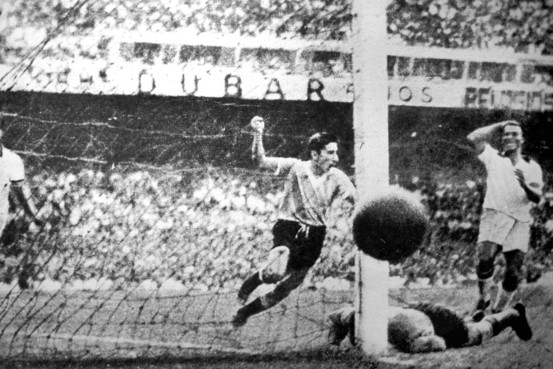
The goal scored by Alcides Ghiggia (centre) in the 79th minutes stunned the Maracana silent and would break the hearts of Brazil.

As expected, the game began with Brazil playing aggressively and attacking against the majority of the Uruguayan defensive line for the first half. However unlike Spain and Sweden, Uruguay was successful in maintaining their defense and the first half ended scoreless.

First blood was drawn at the 47th minute when Sao Paulo forward Friaca shot low past the goalkeeper to give Brazil the first goal of the game. Captain Varela immediately took the ball after the goal and disputed its validity, arguing that it was offside. Varela’s argument was obviously intentional to the point he even forced the referee, Englishman George Reader, to bring out an interpreter. The protest was unsuccessful but it succeeded in calming the crowd down. Then Varela took the ball to the centre of the field and shouted to his teammates: “Now it’s time to win.”

Uruguay was able to find control of the game and Brazil soon had its defensive frailty exposed. Juan Alberto Schiaffino scored the equalizer for Uruguay in the 66th minute. Then in the 79th minute, Alcides Ghiggia ran down the right side of the field, dribbled past Brazilian defender Bigode and scored another goal. The crowd was virtually silenced; Uruguay was now the leader. The silence continued for the remainder of the play until Reader blew the final whistle. It was official: Uruguay won the Cup by defeating Brazil 2-1.

THE AFTERMATH: BOTH IMMEDIATE AND IN THE LONG RUN

“The maximum punishment in Brazil is 30 years imprisonment, but I have been paying, for something I am not even responsible for, by now, for 50 years.”

-Moacir Barbosa

When the sudden news was official, many said there was a ‘traumatic and disturbing absolute silence’ except for the celebrating by the Uruguayan team and delegation. In Brazil, many newspapers refused to accept the fact that their team had been defeated. Radio journalist Ary Barroso retired, albeit briefly. At least two or three people on the top tier of the stands of the Maracana were so distraught by the loss, they committed suicide. Yes, there were peole so distraught over Brazil’s loss, they committed suicide. One man in the stands even had a heart attack. The gold medals were immediately disposed of. The song Brazil the Victors was never played. The nation was just heartbroken over the loss. The game remains one of the biggest upsets in football history and Brazil commonly refers to that game as the Maracanazo, or “blow at the Maracana.” Even Pele talks of how his father cried saying: “Brazil lost!”

In the years to come, the game was influential for a lot of superstition. For one thing, Brazil refused to have a white-and-blue uniform and would soon adopt their famous yellow shirt with blue collar that still exists today. White is seen as bad luck in Brazil. The players of the time were vilified by the fans and were sometimes seen as bad luck. Many went into silent retirement while some never played for the national team again. Only two players that didn’t play in the final played for Brazil’s team in later World Cups. The defeat would weigh down on Brazil’s team so much, they brought a psychiatrist to the 1958 World Cup to remove the haunts of the memories of that game. Whatever the situation, the Brazilian team of 1958 which featured a 17 year-old Pele capturing the world’s imagination won the World Cup: the first of five total World Cups won by Brazil.
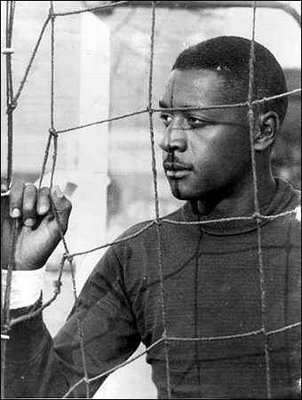
Brazilian goalkeeper Moacir Barbosa would be blamed and even vilified for Brazil's loss for the rest of his life.
Brazilian goalkeeper Moacir Barbosa would be blamed and even vilified for Brazil’s loss for the rest of his life.

However of all the players from Brazil, it was goalkeeper Moacir Barbosa that got hit the hardest. He received the biggest flack and biggest blame for the Maracanazo and it seems like Brazil never forgave him. He was still able to play professionally for another thirteen years and was even part of Brazil’s national team until 1953 but he was commonly shunned by the nation. There was even one time he was in a store in Brazil and a mother pointed at him and said to her small son: “Look at him, son. He is the man who made all of Brazil cry.” Little changed over the years. In 1993 the president of the Brazilian Football Confederation refused to let him be a commentator. In 1994, the Brazilian national team did not want him to visit them because they feared he would give them bad luck. If there was one good thing, his wife stayed married to him for a total of 50 years until her death in 1997. He managed administration at the Maracana but was always at a shortage for money after leaving. He did however received assistance from sources such as Brazilian football team Vasco da Gama and his wife’s friend after her death. The friend remembered his last years: “He even cried on my shoulder. Until the end he used to always say: ‘I’m not guilty. There were 11 of us.'” Moacir Barbosa died of a heart attack in 2000 at the age of 79. He was penniless at the time.

One interesting note is what happened to Alcides Ghiggia who scored that heartstopping goal. He would continue to have a prolific career as a professional player until 1968 and was even signed onto European teams like AC Milan and AS Roma during a time when it was extremely rare for South American players to play for teams outside their home country. As of today, the 87 year-old Ghiggia is the only surviving member of Uruguay’s World Cup winning team from 1950.

Interesting note is that on December 29, 2009, Brazil honored Ghiggia by celebrating that decisive goal by having Ghiggia plant his feet in a mould to take his place along greats like Pele, Eusebio and Franz Beckenbauer. The reception to Ghiggia was surprisingly warm and Ghiggia himself was overcome by emotion to the warmth. Ghiggia also made a return appearance to Brazil during the draw for the groups of the 2014 World Cup in December 2013. Each country that had won a World Cup in the past was allowed to send one of its great players to participate in the draw. Uruguay sent Ghiggia. There was however one negative thing as of recent. Ghiggia has been invited to the opening games of both the 2006 and 2010 World Cup but it was revealed by him that he was not on the guest list for this World Cup. I wonder who did it too? Whatever the situation, FIFA spokesperson Delia Fischer insisted the day before that Ghiggia and a guest will have at ticket. Ghiggia has also commented on this World Cup: “I hope Brazil become world champions, so they can all enjoy it here.”

The Brazilian team this year are hoping to finally make that bad memory of 1950 a think of the past. So far Brazil have been doing very well even if they’re not the most spectacular team out there. They opened with a 3-1 win over Croatia but left people shocked with a 0-0 draw against Mexico. They did reassure people that they will win with a 4-1 win over Cameroon to close out the Group Stage. They did win the Round of 16 match against Chile on penalty kicks after a 1-1 draw. For those concerned since that, don’t be. There have been many teams in the last 28 years that had a match lead to penalty kicks before they played in the final for the Cup and won.

Brazil is often praised and even fancied in the way they treat football like a religion. However their reaction to their loss in 1950 is a negative side of that. Sure the loss to Uruguay was a shock but it’s a shame how they went about it. You know how when the Boston Red Sox won the 2004 World Series and fans then showed a sign saying “We forgive Bill Buckner” in reference to Buckner’s Series-costing fumble in Game 6 of the 1986 Series? I hope that if Brazil wins the World Cup, there should be someone in the stands with a sign saying: “Nós perdoamos Moacir Barbosa  (We forgive Moacir Barbosa).”

WORKS CITED:

WIKIPEDIA: 1950 FIFA World Cup. Wikipedia.com. 2014. Wikimedia Foundation Inc. <http://en.wikipedia.org/wiki/1950_FIFA_World_Cup>

WIKIPEDIA: Uruguay v. Brazil (1950 FIFA World Cup). Wikipedia.com. 2014. Wikimedia Foundation Inc. <http://en.wikipedia.org/wiki/Uruguay_v_Brazil_%281950_FIFA_World_Cup%29>

Bellos, Alex. “Obituary: Moacir Barbosa” THE GUARDIAN. 13 April 2000 <http://www.theguardian.com/news/2000/apr/13/guardianobituaries.alexbellos>

The Confederations Cup And Protests In Brazil

One of many protests in Brazil that occurred during the time of the Confederations Cup.

The Confederations Cup soccer tournament began on June 15th. Also what started around that time was a protest in Sao Paulo about transit fare inflation. Protests soon grew in Brazil. I’m sure the Confederations Cup competition and the worldwide media attention to that event had a lot to do with the growth. But what are the protests about? And why are they happening all of a sudden?

First it’s important to look at the country of Brazil. Most people will consider Brazil a poor or developing country. It is true to an extent. What most people don’t know is how much Brazil’s economy has grown since the 1980’s. Its biggest growth was in the industries of oil, mining and agriculture which grew at 47% or 3.6% per year since 2000. Its industrial growth rate is also impressive with an 8.8% back in 2008. Brazil’s economy is one of the fastest growing in the world and actually now ranks 7th in the world and has the highest GDP per capita in South America and 53rd in the world overall. Its gross national income of $10,721 US in 2011 classifies itself as upper-middle income: an income on par with many countries of Eastern Europe. It can be attributed to many factors. Some say it could be Brazil’s move to democracy that started with an Amnesty Law in 1979 and developed into its own Constitution in 1988.

The quality of life has also gone up considerably in the last 20 years and Brazil has worked to establish methods to either keep it that way or improve it. Despite huge urban sprawl in cities like Rio de Janeiro and Sao Paulo, its cities have some of the finest public transit systems that have been copied and studied by many major cities in the world. Brazil has also reformed its Social Security programs and tax systems. There was even a Law Of Fiscal Responsibility that controls public expenditures by the Executive Branches of all government levels. Export, Industry and Trade has been increased while allowing Brazil to keep itself from vulnerabilities by methods such as not exporting the oil it consumes. It has also halved its debt through exchange rate-linked certificates which has allowed exporting to grow to as much as 20% a year and put a limit on its inflation rate to 4%. It also has an average life-expectancy rate of 72.7 years (2009) which is comparable to that of many Eastern European countries.

So what are all the protests about? Even before I get into the nitty gritty of the protests there are some facts to send a message that a bubble was about to burst. We must remember that while Brazil has improved a lot in past years and especially this century, there’s still a lot of development to go. Despite its improvements, the 53rd best GDP in the world shows they can do better. Its gross national income is roughly 1/4 of what developed countries like Canada are receiving. In addition, the minimum wage translates to an annual income of an unenviable 8,086 Brazilian Reals (R$) or roughly $3,600 American. Even in government despite being a democracy, Brazil still ranks as the 69th least corrupt country in the World according to Transparency International with a score of 43 out of 100.

The first protests actually started on June 1st, two weeks before the Confederations Cup was about to begin. The first major protest was in the city of Sao Paulo of a transit fare increase from R$ 3.00 to R$ 3.20. The first protest started on June 6 and grew over time. The real turning point came when police fired rubber bullets at the protesters and journalists on June 13th. This was widely criticized by Amnesty International and even Brazilian Amnesty Groups.

Soon after, and while the Confederations Cup was progressing further, the protests grew to as many as 250,000 in various major Brazilian cities on June 17th protesting. Rio de Janeiro had the biggest that day with 100,000. Even Brazilians in other world cities stages their own protests. By June 20th, protests grew to millions of people in 100 cities and grew over the next few days. As negotiations and government involvement in matters occurred, which I will discuss later, the protests calmed down but not without incidents.

Interesting enough is not just the number of protesters and cities involved growing but the issues too. What started off as one protest over a transit fare increase grew to a wide array of issues being protested against or demanded:

  • A bill (PEC – 37) that hindered Public Ministry to investigate.
  • The distribution of petroleum royalties to the appropriate causes.
  • Lack of criminalization of all forms of Corruption and Embezzlement.
  • Secret Voting in Congress for forfeiture of office.
  • A bill (PEC – 33) allowing decisions made by the Supreme Court going to Congress.
  • Having a Privileged Forum.
  • Taxing in Public Transport.
  • Demands to the National Pact for fiscal responsibility, control of inflation and proper distribution of funds to education, public transport and health.
  • Demands to implement means of political reform in the country.
  • Demanding 10% of the GDP be devoted to education.
  • Demanding a free-pass for full-time university students.
  • Demanding a revocation of a ‘gay cure’ bill (PDL – 234) authorizing psychologists to treat LGBT people.

Evident enough is that the growth in numbers and issues happened as the Confederations Cup matches were occurring. I still remember telecast of Confederation Cup matches on CBC that even included security updates of what was happening in the cities. Even though the protests have been successful in leading to solutions of problems being protested over, there was still last chances for opportunity as violent clashes occurred in Belo Horizonte as it was hosting a semifinal match on the 26th and in Rio de Janeiro as it was hosting the final on the 30th.

You could understand why the Confederations Cup had a lot to do with the increase in protests. With a major world event happening, it’s obvious the protesters want to highlight Brazil’s problems right while the eyes of the world are watching. Mind you these next three years are going to be very big for Brazil as they will play host to many major international events. Besides the Confederations Cup that finished yesterday, Rio will host the Catholic event World Youth Day later this month. Next year Brazil will host soccer’s World Cup with twelve major cities contesting the competition. And 2016 will have Rio hosting the Summer Olympic Games. I don’t know of any other country that has had to host this many major events in a matter of four years. For Brazil it’s a chance for them to show the world their image as a well-to-do nation as they will be the first developing country since Mexico in 1986 to host a World Cup and the first developing country since Mexico again in 1968 to host a Summer Olympics. In fact the World Cup was even the subject of protests that received less notice than most other protests. Many were protesting the government giving a lot of the budget ($12 billion US) to these sports events instead of on living conditions.

I mentioned that many of the issues being protested upon have been approved within this two-week span of time. You can assure the media attention to this had a lot to do with it. Among those approved by the governments and senate are: public transit prices reduced and taxes eliminated; petroleum royalties destined to education (75%) and health (25%); reform and improvement demands to the National Pact being granted; secret voting ended; Bill PEC – 37 being revoked; all forms of Corruption and Embezzlement being criminalized; and implementing a Plebiscite to politic national reform. Even though the Confederations Cup is over and a lot of reform and improvements have been politically approved, there are still demands outstanding. Some like the 10% allocation of the GDP to education, revocation of bill PDL – 234, and the Free Pass for students are currently under negotiation by Congress while issues of ending of Privileged Forum and the elimination of Bill PEC – 33 still remain undiscussed. On top of it, time will tell if the approved reforms are carried out and if carried out successfully or not. Another thing to look for in the future is how much impact it will have on President Dilma Rousseff. Her popularity has already been hit by the protests. It remains into question whether she will win the next election.

Even though many of the protester’s demand have been met and even though many are still pending as of now, don’t expect all the action to end just as the Confederation Cup has ended. I’m sure as long as Brazilians see injustice or wrong ways of doing things, there will continue to be protests even without the anticipated major events happening and even after they all end. Nevertheless it’s excellent opportunism to make improvements happen to a developing nation that has improved so much in recent decades but still has more to improve upon.

WORKS CITED:

WIKIPEDIA: Economy Of Brazil. Wikipedia.com.  2013. Wikimedia Foundation Inc. <http://en.wikipedia.org/wiki/Economy_of_Brazil>

Uncredited Author . “Brazil: One Million People Demand Accountability” Transparency International. 21 June 2013. <http://www.transparency.org/news/feature/brazil_one_million_people_demand_accountability>

WIKIPEDIA: 2013 Protests In Brazil. Wikipedia.com.  2013. Wikimedia Foundation Inc. <http://en.wikipedia.org/wiki/2013_protests_in_Brazil>

9/11 Remembered

September 11, 2001: A day that will live on forever. A lot has changed in the ten years since. Air security is way tighter. Arabic names and words no one could pronounce previously have since become part of our everyday vocabulary. Entering the United States is more regulated. Being Arab American has made people more victim to racism than ever before. We have a no-fly list and a terrorism alert of color grades. We have people claiming conspiracy theories. We have had two wars declared since which has further divided political sides. We’ve caught many to do with the terrorism but have more to go.

Around this time, you will read many articles and views surrounding the events, political climates and beliefs of the writers. You will hear many stories from those involved to those who lost loved ones to those in political power. As for me, I won’t be focusing on such. Instead I will focus on the day as I remember it.

Tuesday, September 11th 2001 started off like any other day for me. I wasn’t yet 30 and had recently moved to Vancouver months earlier and living in a character house with at least six other residents at the time. I was off to work and listening to a radio show talking about a bizarre contest where people do crazy stunts for the sake of an entry. Things wouldn’t be the same after that. In the morning while I was on a break from my first job, I saw one of my co-workers laughing. When I saw him, he said a plane hit the World Trade Center. Some of you may think it was insensitive but looking back, I think he was laughing at the bizarreness of the event. When I first heard the news from him, I first thought it was probably a small passenger plane and it hit one of the Twin Towers by accident. That afternoon I was working at my second job for a government business. I heard one of my supervisors talking about what happened and saying that it could have happened to a building like ours. Hearing that, I started to think that this may not be an accident after all, but how?

Later on in the day as I was returning home, I saw news stories and images of the events that happened. There was even a second newspapers issued that day about the events. I saw one of the towers hit by an airplane was burning while another airplane hit the other tower. When I first saw it, I was in disbelief. I thought it was something that could only happen in the movies. Then hearing of other crashes like the plane that hit the Pentagon and one that crashed in a failed attempt to hit Camp David. Then hearing how all Worldwide commercial air ground to a halt. Then seeing images of people running and screaming for their lives as the first of the Twin Towers crashed down. The events were just completely unreal in my mind. Until then, I always thought hijacking a plane was always about the terrorist using plane passengers hostages for the sake of making demands. Until then, I’ve only heard of airplanes used as weapons during the Kamikaze attacks of World War II. I never thought that terrorist could use passenger planes for the sake of a suicide mission. The attacks on the Twin Towers also immediately brought back a memory of how back in 1993, the World Trade Centre was bombed but there were only five fatalities at the time. I also remember that the mastermind was a Muslim cleric. Remembering that got me thinking that the attackers had the failed attempt from 1993 in mind to bring the towers down for sure that time.

Then back at my home, I met with the other residents in my character house and we were all shocked. One who was visiting from the Netherlands even videotaped the speech from President Bush. The day was just completely surreal. All networks were focused on all the events that happened. There was no changing the other channel. It would continue to be that way for at least two weeks straight.

Days later, I would hear stories of those who died that day. There was even a memorial service broadcast from radio at my workplace that consisted of five minutes of silence. I also heard from those who lost loved ones. Even later on I heard even further details of the activities. Hearing about how some of the terrorists went to flying school to carry out those activities completely surprised me. Hearing how Al-Qaeda had a worldwide network with followers even in Canada shocked me. Hearing of these countries having weapons given to them by the United Stated puzzled me even further. Hearing the various reactions around the world also caught my eye. Most of the world, including many Arab countries, expressed their condolences to the events. There were some, like Palestinians, the Taliban and Saddam Hussein, who considered that day a day of celebration. Then there were the speeches of Osama bin Laden. Already infamous for his years of bomb attacks on American embassies in other countries, he led the taunts. Shockingly he promised a ‘great day of terror’ weeks earlier.

Despite all the nastiness, there were also a lot of positives. The United States however refused to let it defeat them and a renewed sense of patriotism happened. New York City also developed its own pride in itself. People who used to diss the police and firemen and politicians almost immediately rallied behind them. Families would help out stranded air passengers during that time. Nations would come to the support of the United States and some other nations even lost citizens of their own.

Ten years have passed. Yeah, you could say a lot has changed. Even reflecting back on the happenings of that tragic day still boggles my mind. Commercial planes used as weapons for a suicide mission. Four flights hijacked with the intent to destroy four places. Thousands dead. I was never involved with it nor did I personally know anyone who died that day but even ten years ago, it does seem like yesterday.

Anyways those are my thoughts on 9/11. I just wanted to reflect on what I remember from that day. I didn’t want to get into any political speech or political thought. If you want any political thought from me, read my Osama bin Laden is Dead article. Since I wrote it, Al-Qaeda has elected a new leader. Whether he has the same sophistication as Osama or not is something only time will tell. I just hope there’s no massive loss of life in the process. There you go. That’s the most political I will get in this article.

I hope you liked what I had to say because that’s what I remember. I was never an actual part of the events. I never knew anyone lost that day. Nevertheless I still remember the constant broadcast of the day’s events and the atmosphere surrounding it. You can’t deny how much it’s changed the world and changed people. I end my article saying: God Bless the souls of those lost that day and may God continue to be with the families.

Movie Review: In A Better World

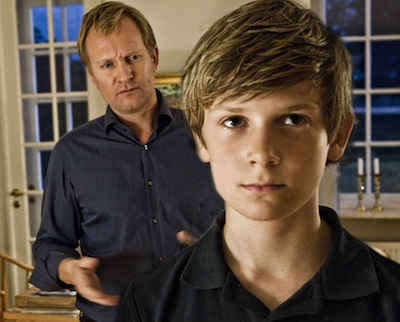
In A Better World is the winner for this year’s Oscar for Best Foreign Language Film. It is only the third of the five nominees I’ve seen: the others being Canada’s Incendies and Spain’s Biutiful. I finally had the chance to see In A Better World a while back. This film has a story line that really gets one thinking.

The film begins as a Danish boy named Christian reads a eulogy at his mother’s funeral. He appears calm and composed but his mother’s death troubles him. He and his father move from London to Denmark where he spends his spare time on the roof of his grandfather’s silo looking out. We then meet Anton, a Swedish doctor who lives in Denmark but spends most of his time working in a refugee camp in Sudan. The villagers, especially the children, regard him as a hero but home life is difficult as he is on the verge of a divorce and he doesn’t see his sons as often as he’d like.

Their paths cross as Anton drops his son Elias off to school. A group of bullies taunt Elias because of his awkward looks. As Christian interferes, he too is assaulted. As Elias is bullied again the next day, Christian assaults the bully with his bike pump and threatens him with a knife at his throat never to hurt him again. Anton hopes to teach the two boys about the wrongs of violence as he himself witnesses it in the refugee camp each day. He gets a chance as his son is fighting with another boy in a playground and the father of the other son hits Anton. From atop the silo, Christian is able to spot where the man who hit Anton works by his car. Anton takes the boys again to see him confront the man where he gets hit again. Anton wants the boys to see how violence fails but they don’t get his intended message.

Later Anton is called back to work in the refugee camp. He soon has to deal with tending to the wounded warlord despite villagers pleading for him not to help. It’s later after a female patient dies that the warlord coming asking for her body that Anton leads him out where he is met by villagers ready to lynch him. After coming across fireworks in the silo, Christian gets an idea to create a bomb to blow up Anton’s attacker’s van. Meanwhile Christian’s relationship with his father takes a turn for the worse as Christian lets out his frustrations about his mother’s death, including his father’s failed promise that his mother would get better. Elias tries to talk to his father via Skype about Christian’s plan but Anton is exhausted after a stressful day. Elias then agrees to Christian’s plan. They go out one Sunday when no one is to be around and set the bomb off under the van. As Elias notices joggers, he wards them off but the bomb explodes knocking him unconscious.

Anton comes rushing back to Denmark after learning Anton is unconscious and hospitalized. When Christian tries to visit Elias in the hospital, Elias’ mother tells him to leave and calls him a ‘brat’ and a ‘psychopathic killer.’ Christian runs off and goes to the top of the silo contemplating to jump, only to be stopped by Anton. He reconciles with his father and goes to visit Elias, relieved knowing that Elias is alive and recovering well. The movie ends as Anton returns back to Sudan and is greeted by the adoring children.

There are a lot of subjects in this film. One of which is about communication barriers between people. There’s the main protagonist Anton struggling with communicating to his wife while they’re on the verge of splitting up. Anton again struggling to be there for Elias while he’s thousands of miles away in Sudan. Anton struggling to be an idealist to the boys and show how weak violence is when the boys expect Anton to be a hero. Christian struggles to relate with his father just after his mother’s death. He also struggles with the personal troubles of himself. There’s also the subject of making hard decisions. Anton has a duty of being a doctor to the refugees while Elias faces problems of his own. Anton is faced with a hard decision of being a doctor to the wounded landlord while the people insist that he doesn’t help him. Overall Anton is trying to be the man of reason and he has his share of successes and failures. Elias makes a tough decision whether to rejects Christian’s plan to blow up his father’s enemy’s van or not. All of which deliver in the results in the choices they make, or fail to make.

This is another impressive script from Susanne Bier. Although I have not seen her past works, I know she has developed a reputation. She has produced many works in Sweden and Denmark and even has one American release: 2007’s Things We Lost in The Fire. This is her latest work. The script she co-wrote with Anders Thomas Jensen also touches base on another subject of the film. Before they wrote the script for the film, Bier and Jensen had a discussion about how Denmark is perceived as having a harmonious society. They then wanted to write a story where dramatic turns of events would disrupt the image of a place perceived as blissful. The film’s original title is Hævnen, which is Danish for ‘revenge’. This film is a stark reminder that it’s quite possible in countries like Denmark that appear to be harmonious and peaceful, violence can happen through the actions of a single instigator. The film does a good job of setting situations of violence, both in Denmark and Sudan, while capturing the perceived peacefulness of Denmark at the same time.

The acting in the film was also excellent. The lead actor, Mikael Persbrandt, was excellent in portraying a man trying to maintain peace and show rational thought in hugely stressful situations both on the job and at home. Young actor William Johnk Neilsen was excellent as the troubled Christian. Also excellent were the performances of Trine Dyrholm and Markus Rygaard. The film did a good job of not overdramatizing events and maintaining its themes along with the storytelling. The cinematography added to the storytelling of how acts of violence can happen in such a peaceful place like Denmark.

It’s hard to say if In A Better World deserved the Oscar for Best Foreign Language Film. I’d hate to compare it against its rivals. Nevertheless it was a very good film in its own right. It keeps one thinking as they leave the theatre.