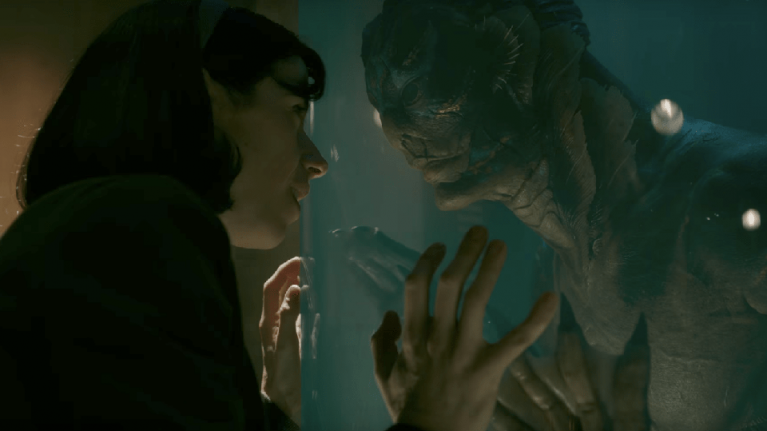
It’s interesting for my next blog of Best Picture nominees. One film is a remake of one of the most captivating monster stories ever and the other film tells the story of the tragedy that produced one of the most legendary plays ever. They’re both unique in their own way.
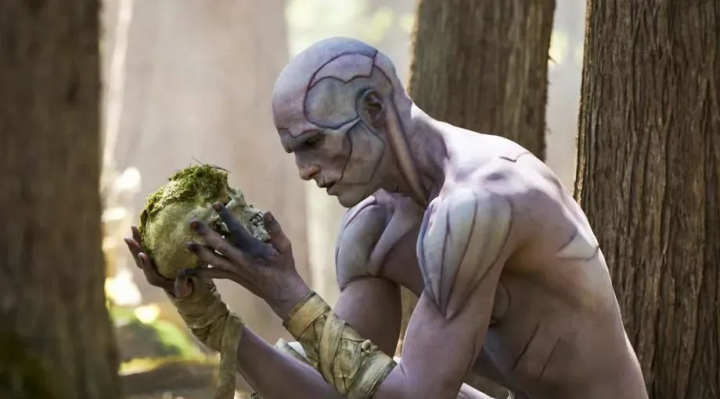
Frankenstein
Ever since Mary Shelley has published her book titled Frankenstein; or, The Modern Prometheus back in 1818, the story and the monster have captured the imagination of the world. The monster definitely more often than the story. The Frankenstein monster has been featured and parodied frequently to the point people have created their own versions of Frankenstein on both the character and the physical appearance. People on Halloween especially have a field day with Frankenstein costumes and their own Frankenstein stories. Crazy thing is most of these stories stray greatly away from the original story of Mary Shelley. They may get the basics like a mad scientist creates a living person from the body parts of deceased people but they are too loosely based. The very first Frankenstein film, a silent film from Edison Studios released in 1910, was a film the director intended to be ‘broadly based’ on Shelley’s story or call itself a ‘liberal adaptation.’ The most famous film adaptation has to be the 1931 film which was an adaptation of a stage play. Frankenstein’s monster in that film, played by Boris Karloff, has the most iconic image of the Frankenstein monster with the rectangular forehead and green skin. That film also includes the memorable line: “It’s alive! It’s alive!”
This film is Guillermo del Toro’s adaptation of the story that is still off the original in some amount but is closer to Shelley’s story. The film is set in 1857 and a Danish ship of the Royal Navy is stuck in ice. The ship becomes like a hospice for a gravely injured Victor Frankenstein who was hurt from the wave of an explosion. The ship is then attacked by a fur-laden humanoid creature that appears indestructible. As Victor notices that’s the creature he created, he tells his story, which becomes Part I: Victor’s Tale. After Victor tells his story, the creature tells his story in Part II: The Creature’s Tale. This layout of the story sets up for the finale where the creature finally makes peace with Victor and Victor apologises for being too cruel to the creature. It’s after Victor’s death that the creature departs, but not until he frees the ship from being stuck in the ice.
Some of the most noticeable differences are in the novel, Victor’s mother dies of scarlet fever. In this film, she dies of childbirth giving birth to William. While the novel shows Victor discovering the possibility of creating new life through his studies, the film shows him actually conducting his proven findings in front of professors and being expelled. In the novel, Victor is shocked and repelled by the creature he created and abandons it in the cold snows. In the film, he’s proud of his creation but enslaves him. In the film, Victor wins the love of a woman named Elizabeth. In the film, it’s William who courts Elizabeth and Victor tries to win her, but his mad science and arrogance prevent her. Victor even kills Elizabeth and William. Also in the film, Elizabeth embraces the creature when he rushes back to Victor to demand a female creation for him. It turns out Elizabeth has more feelings for the creature than for Victor. The creature in the novel becomes lost in the wilderness and has both seen the best and ugliest of humanity. In the film, he is given refuge to a farming family whom the blind man treats him well. The other family think he killed the blind man when they return and try to shoot him. There is the reconciling of the two on the ship but the creature remains on the ship at the end of the novel while the creature leaves the ship but is powerful enough to push the ship free of the ice.
This adaptation that is both written and directed by Guillermo del Toro is a story that is more faithful to the book than most stories. Del Toro already knows how to do an excellent job of stories involving monsters like Pan’s Labyrinth and The Shape Of Water. Here, he shows off his expertise again with an excellent adaptation of the story. Making it two stories, of Victor’s story and The Creature’s story, is done quite well without deviating too much from the original. The two stories do a good job of playing themselves out leading to its eventual connection in the end. The result is not only an adaptation well done but an adaptation that will capture your attention and get you caught up in the story and the drama as it unfolds. The story will also get you feeling for The Creature as well as it showcases he’s not only a human in flesh but he’s a human in feeling. If you see the story, you will agree that the creature has more heart than Victor. Del Toro masters the story and the drama.
Oscar Isaac does a great job in making Victor Frankenstein into a doctor that isn’t completely heartless but full of personal flaws. His eccentricities interfere with his ability to relate with others, have any kind of heart to his creation or even love Elizabeth enough to win her love. Surprisingly, Isaac does succeed in making you feel sympathy to Victor and even forgive him for all he’s done. The dimension Isaac bring is excellent to the role. Jacob Elordi steals the film as the creature. Creating a character of a created human with the common sensitivities of people, even having feelings of love and heartbreak, gives the film its heart and soul within the spectacular drama. Many times, you’re tempted to think Elordi is the lead. Mia Goth is also very good in her role as Elizabeth, but the role could have been given more dimension in the story. Other good supporting acting performances come from Christian Convery as the young Victor, Felix Kammerer as William Frankenstein, and Lars Mikkelsen as the Captain Andersen.
For a film like this, you can bet this has a lot of excellent technical achievements. The cinematography from Dan Lautsen captures the story very well. The costuming from Kate Hawley, the production design from Tamara Deverell, and the hair and makeup team do a great job in taking the audience back to the past and recreating scenes of the times. Alexandre Desplat knows how to deliver a score for a film and he does it again here with a score that fits the drama of the story very well. The sound team and the visual effects team all deliver the right stuff to deliver the excitement of the film.
Frankenstein is not just another adaptation of the story. It’s one Guillermo del Toro does his own telling of the story mixing his own take and trying to stay faithful to the story. It succeeds in a very thrilling way!
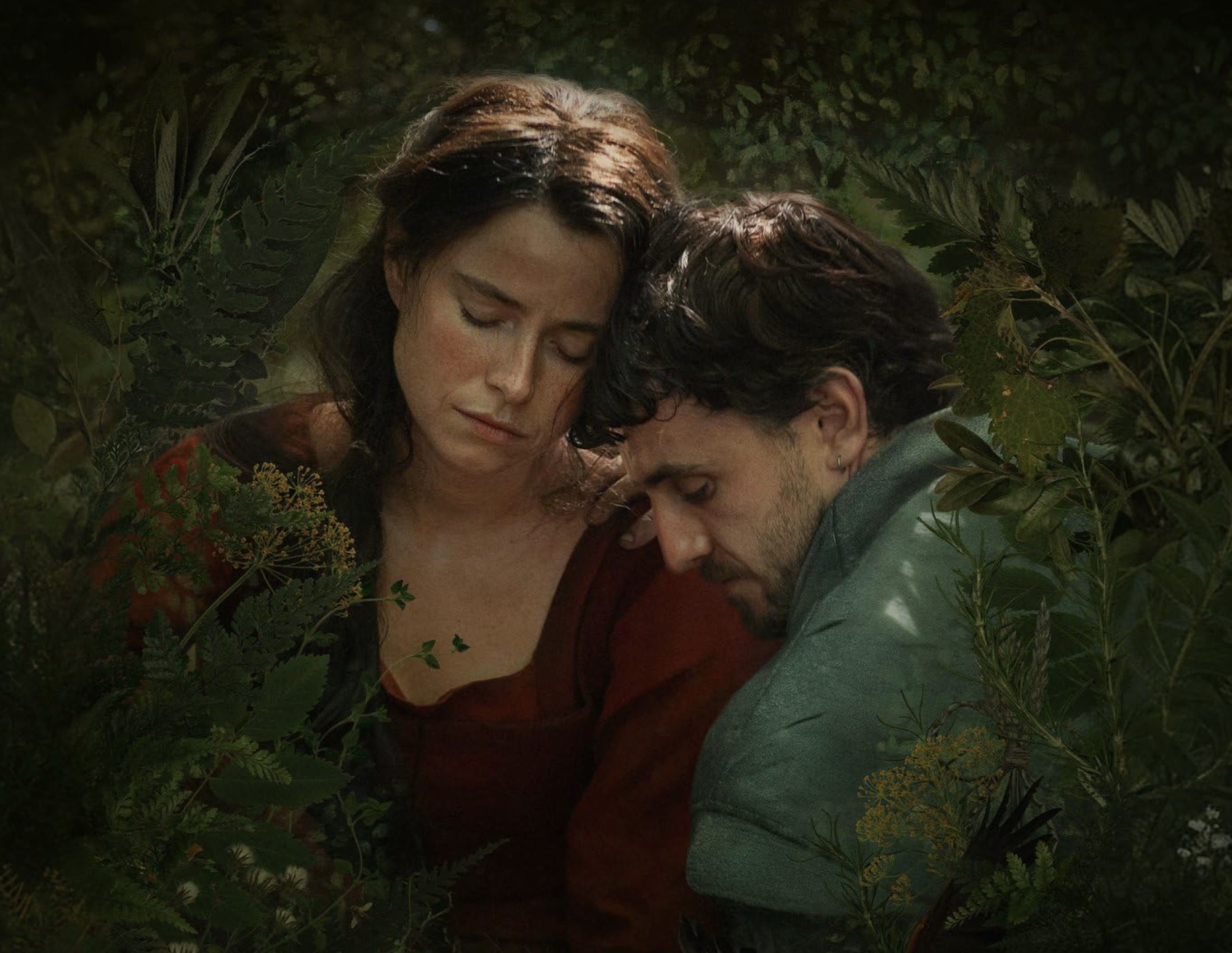
Hamnet
There have been many semiautobiographical films of William Shakespeare many times before but you hardly see any films, plays or literature about his children. Among possibly the least known is his only son Hamnet Shakespeare. Little is known or documented about him or what he was like. It was known that he died at the age of 11. The play Hamlet premiered three or four years after his death and scholars have frequently debated Hamnet’s young death and how much inspiration it bored on Hamlet. It is known that before Hamnet’s death, Shakespeare mostly wrote comedies and Hamlet was a significant turning point. The film makes the case in point that it was very inspirational to the creation of Hamlet. You could tell in rehearsals Shakespeare was a perfectionist and was very demanding on his lead actor. It’s possible he wanted the actor to create the spirit of Hamnet in Hamlet.
There are two things that stand out the most from this film. The first is that it is based on a novel that is historical fiction. There are many details in the film that are fact with Shakespeare’s life, but there are also a lot of myths and imagined fiction. Very little is documented about Hamnet so in her novel Hamnet, Maggie O’Donnell gave him a personality and in writing of Hamnet’s death, O’Donnell used some of her own experience when her daughter was suffering from a potentially fatal illness. The second thing that stands out is that the film is mostly focused on Shakespeare’s wife: Agnes Shakespeare. The film is more Agnes’s story as it shows her an herbalist who’s a lover of nature. She finds herself attracted to this playwright whom her family does not approve of. They fall in love, develop a family and marry. William frequently makes trips to London for his plays while Agnes does mostly motherly duties. Agnes is the one who has to deal with her twin children, their teachings and eventually their illnesses. She is the one who has to witness Hamnet’s death. No doubt she’s angry with William being away in London during that time. Years later, she learns of his plays Hamlet. She’s there at the opening. She fears the play could upset her. Instead she is touched by the play, by the actor, and by the character. It gives one the sense in seeing Hamlet played on stage, she senses Hamnet’s spirit living in him and shared with all.
The film itself doesn’t try to be a historical docudrama. It does keep many actual facts of history but it does its own storytelling. It does maintain situations that many would commonly relate to. It reminds people that Shakespeare’s choice to pursue arts or teaching was not well-regarded in his working class family. It shows William and Agnes married because she was pregnant and she didn’t want her daughter Susanna to be born a ‘bastard.’ It’s known that in between the death of Hamnet and the premiere of Hamlet, there was a period for Shakespeare known as the ‘lost years.’ What it does is it tells its story. As I mentioned earlier, the film is based on a book that is loosely based on the lives of the Shakespeares. It’s a story that connects with common situations in ones life like not being accepted into a family, loving someone their family doesn’t approve of, the loss of a child, trying to live life again and of how art connects with the human spirit. The latter, I think that’s the theme of the film. How art reflects humanity and can even be a method of healing. The film does an excellent job in having its story connect with the viewer while also maintaining intrigue towards the family of a legend. That’s its biggest quality.
This film is another excellent accomplishment for Chloe Zhao. When she agreed to do the story, she also hired Maggie O’Donnell, the author of the novel Hamnet, to help with the scriptwriting. Human connection is a common theme of Zhao’s films and Chloe does an excellent job in directing a story of an artist’s method of healing and how he shares it with the world. There have often been films that show how art connects with the human spirit. This film also succeeds in displaying that theme and Zhao creates an excellent work in delivering that message.
The performance of the film definitely belongs to Jessie Buckley. The film is mostly about Agnes and Jessie does an excellent job of taking charge of her role and owning the movie. She shows many dimensions of Agnes Shakespeare: falconer, herbalist, teacher, daughter, wife, mother and griever. She showcases both the triumphs and the struggles Agnes goes through and delivers a performance that’s an achievement in itself. Paul Mescal is also great as William Shakespeare but he does not deliver the performance of Shakespeare one would expect. Here, he’s seen as a son with a stormy relationship with his father, husband of Agnes, a playwright who’s away from the family for a long period of time and one who grieves the loss of his son. His performance in making William Shakespeare a three-dimensional common person instead of the icon we all know makes for the excellence of the film.
The film also has a lot of good supporting performances. The one that most stands out is Jacobi Jupe as Hamnet Shakespeare. While O’Donnell creates a character in the son of Shakespeare we never knew, Jupe adds an appeal to him and portrays Hamnet to be just as much of a dreamer as his father. Jupe is also good at portraying Hamnet as a twin brother willing to give his life for his ailing twin sister. Jupe really catches the spirit in both senses. Also good is Noah Jupe, Jacobi’s older brother. I think there was a sense of purpose in the film of having Jacobi cast as Hamnet and Noah cast as the actor who plays Hamlet. Noah is great in having the actor capture the spirit of Hamnet in his acting and be able to connect with Agnes. Other good supporting performances in the film are Emily Watson as Shakespeare’s mother and David Wilmot as John Shakespeare who was frequently at odds with his son.
The film also has a lot of excellent technical aspects. The cinematography from Lukasz Zal fits the film excellently. The set design by Fiona Crombie and Alice Felton excellently takes the film back to the past and the costuming by Malgosia Turganska fits the times perfectly. The score from Max Richter does an excellent job in capturing the drama of the story and the artistic triumph at the end.
Hamnet is more than just another Shakespeare story. It’s a story that connects with people and it shows how the arts are the way to the soul. It’s a story of joy, of love, of tragedy and of the eventual triumph.
That completes my second look at the Best Picture contenders for this year. Six more films left to review.
 Jon The Blogcentric