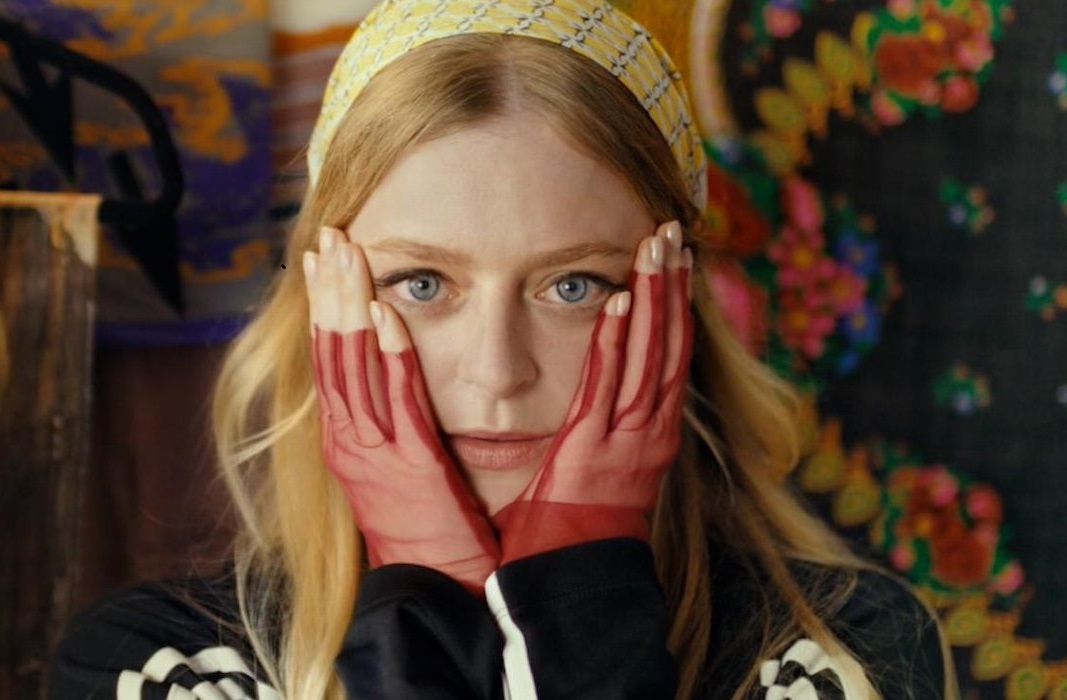
VIFF 2025 Review: The Things You Kill (Öldürdüğün Şeyler)

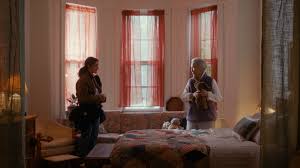
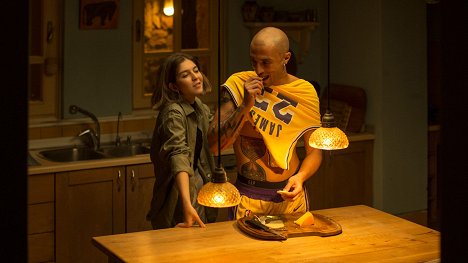
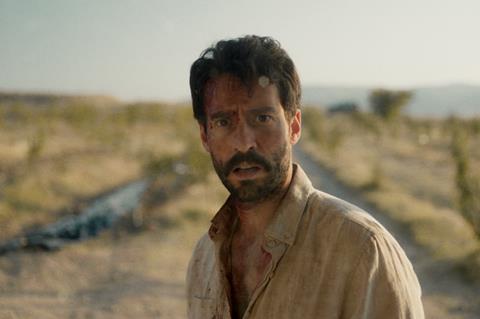
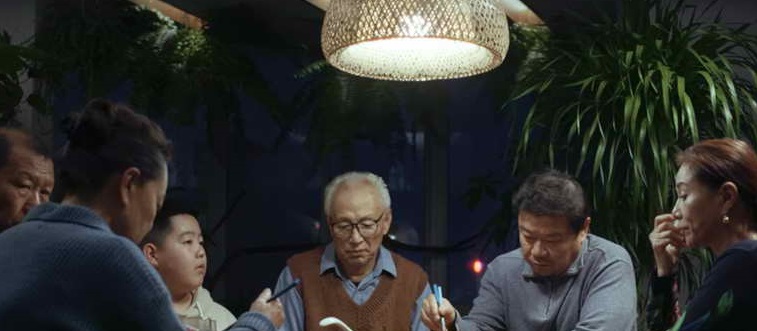
Ekin Koc plays a son whose dark family secrets are unraveled after his mother’s death in The Things You Kill.

For the 2025 Oscar race, Canada’s official entry for the category of Best International Feature Film is a Turkish-language film: The Things You Kill. The film is both a psychological drama and a supernatural story.

Ali appears to live a somewhat stable life in Turkey with problems no worse than anyone else. He returned to teach English in Turkey after spending fourteen years in the United States as a literature professor. His wife Hazar wants to start a family but he learns of a low sperm count he tries to keep hidden. He lives in a well-to-do house and has a garden miles away he wants to make active again. He hires a new gardener named Reza to help. He notices his mother’s house is in need of great repair. Repairs the father neglects to carry out.

Then one day, the mother dies. After the funeral, the father Hamit puts all the blame on Ali for spending all those years in the United States. More bad news in Ali’s case comes as he’s told they can’t afford to have his program taught at the University. To add to it, he never told his wife about the low sperm count result. Soon his sister privately tells him a dark secret. The mother had head injuries at the time of her death and Hamit was seen with a bandaged arm. Ali suspects the worst. He tries to get an official account of her death, but it will take days.

Ali soon develops a mentality of rage. First he hires Reza to help dig a hole in an unknown place in the Turkish valley. Both men help in leading Hamit there and killing him. After the incident, Ali soon enslaves Reza and keeps him at the garden where he treats him like a dog, even leashing him with a chain. Ali also tries to keep all the secrets of what he conducted away from his sisters and Hazar as a nationwide search is conducted. Hazar is suspecting the marriage is falling apart. Hamit’s mother, Ali’s grandmother, is hugely concerned. Ali also receives a rude surprise as one of the people heavily concerned with Hamit missing is his mistress. To which, Ali responds with nasty insults to her.

One day, Ali returns to the burial site of his father only to find it all dug up. He goes back to the garden hoping to check up on Reza, only to get a surprise retaliation from him. Now Reza is filling in the places of Ali’s life Ali used to have, including that of teacher. It’s in a flashback to an interview with the Turkish college that we learn of the biggest reason why Ali chose to teach in the United States because of the abuse he and his family suffered at the hands of his father. The film ends just as Reza has it good for him, and he receives a shocking surprise at his door one night.

This film makes for a compelling drama. The incidents that take place over time will get one questioning of what really happened. Did his mother die at the hands of Hamit? The film also makes you question Ali. He is angered over the death of his mother and believes it’s his father’s fault, but he now turns into a person who is hungry for blood. He kills his father with Reza and then enslaves Reza like a dog. You’re left to wonder what’s with Ali? Is something supernatural taking over him?

The film does succeed in being a drama, but the film succeeds better as a puzzle pieced together over time. Throughout the film, there’s what we know and what we don’t know. This is something that will take time as the story will unravel facts hidden from us. It’s as it nears the end that we learn of what was hidden from us the whole time. Even though many questions are unanswered, you could see why Ali suspects this from Hamit. At the same time, this film does become a supernatural story as Reza acts like a dog as Ali treats him like a dog. It’s after Reza gets revenge on Ali that he acts human again. Even the ending of what Reza faces is supernatural. I just wonder if genres are trying to be mixed in the film.

This is a great film from Iranian-Canadian director/writer Alireza Khatami. His latest feature film, he creates a drama that will connect with you and keep you intrigued with what’s happening. The story may puzzle you, but he connects things all together at the very end. It’s a great work form him. Ekin Koc does a great job in his role of Ali. Going from the troubled son in the family to the one committing sinister acts is a big change of character and he does it well. Although Ali is the lead role, there are also great supporting performances. Hazar Erguclu is great as the wife Hazar. She is the one who’s able to maintain some control over Ali as he’s going out of control. Erkan Kostendil is also great as Reza. To go from human to animal-like back to a human character and make it look believable is no easy feat. Erkan does a great job of it.

The film’s accolades not only include the Oscar entry, but was also nominated for seven awards at the Istanbul Film Festival, nominated for Best Film at the SXSW London Film Festival and won a Sundance award for directing for Khatami in the World Cinema – Director category.

The Things You Kill is more than just Oscar bait. It’s a story that gets you thinking. It gets you trying to make sense of the story after you leave the theatre long after.

VIFF 2025 Review: Calle Málaga

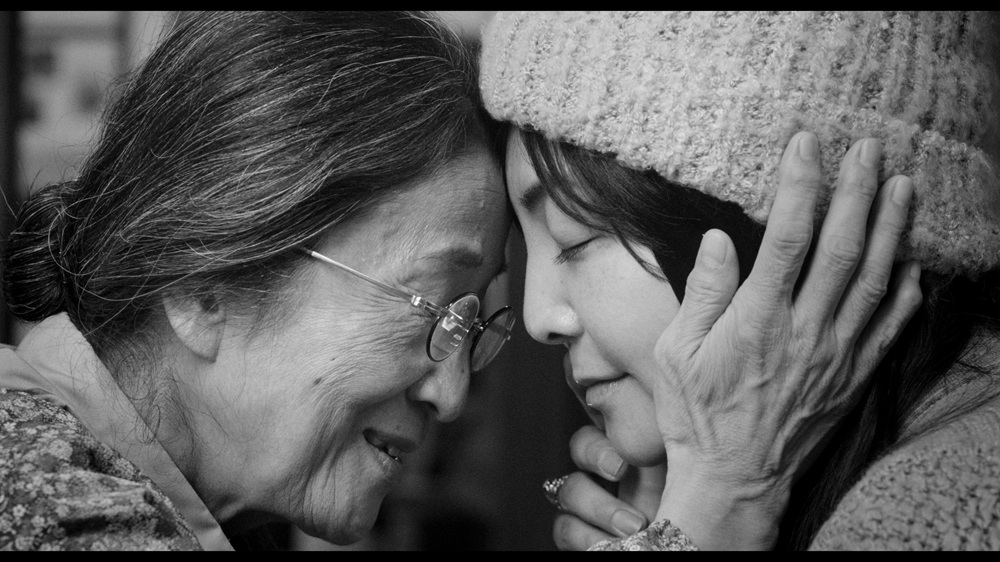
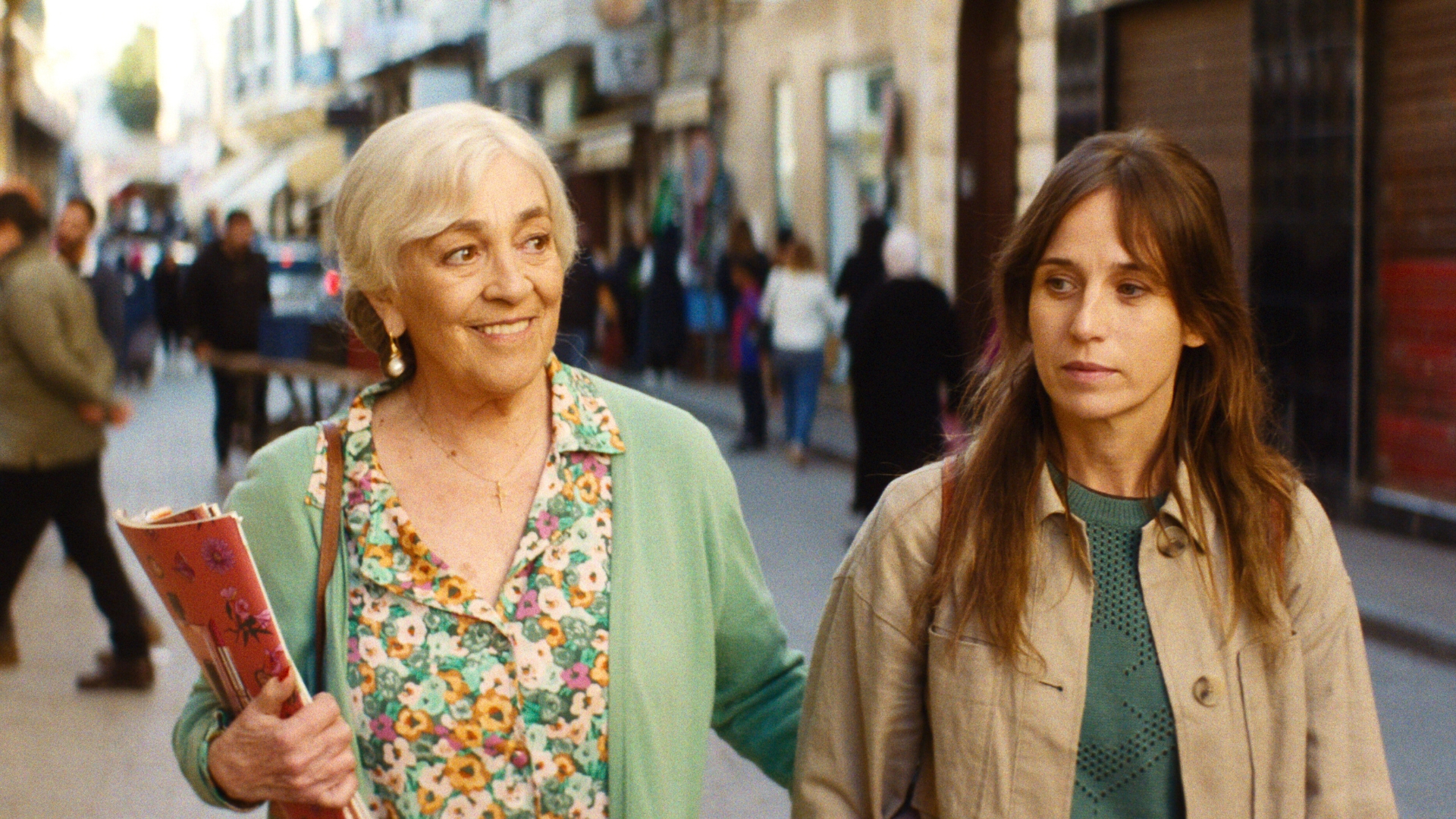
Carmen Maura (left) plays a mother who refuses to let her daughter sell her flat in Tangier, Morocco in Calle Málaga.

For this year’s Academy Awards, Morocco’s official submission for the Best International Feature Film category is a Spanish-language film: Calle Málaga. It presents a tense story set among beautiful scenery.

In Tangier, Maria Angeles is an elderly Spanish woman. She’s of descendants of Spaniards who fled to Tangier to evade the Franco dictatorship of Spain. After Franco died and democracy was introduced, many Spaniards returned back to Spain, but Maria remained with her husband and daughter. Over time, her daughter Clara returned back to Madrid, married, and had a family of her own as Maria stayed in Tangier at the Calle Malaga flats. Having her daily coffee, talking with her best friend who’s a nun who’s taken a vow of silence, watering her plants, and embracing the horizon at night, her life in Tangier is all she asks for.

One day, Clara returns to Maria. It first appears that it would be a happy family visit, but it’s something else. Since her divorce, Clara has been cash-strapped. Especially since she has to both work and raise her two children. It’s gotten so dire, Clara thought it best to sell Maria’s flat. Maria is crushed, but Clara thinks she did the right thing. Clara feels Maria will have a better quality of life being around her daughter and grandchildren. Besides Maria’s husband died 20 years ago and most of the people she’s known her life have either died or migrated back to Spain.

Maria protests but Clara reminds her the flat is in her name and she can do what she chooses. Clara states the only other option is for Maria to go to the Spanish nursing home in the city. Maria first chooses the nursing home. As she’s transported there, the house’s old belongings go for sale or for pawning so the empty flat can sell. Maria is not happy with her life at the nursing home. It’s missing all the vitality of her own life and she’s also very able to take care of herself.

One day, she fakes a situation where she’s flying to Spain to be with her daughter. The only other person who knows this is the cab driver who’s to pick her up. What Maria really does is move back to the flat that used to be hers. She returns and the neighbors are happy to see her back, but all her furniture is gone. To add to the frustration, the tenant holding the flat for sale lives on the floor below.

Her first goal is to make enough money to get all her furniture back. Her pension doesn’t pay her enough. What she decided to do is turn her flat into a café for friends to watch La Liga football games. In turn making a new friend with the young Khalid who’s helping her out with new visitors. It becomes a popular hangout. One day, she catches the tenant at the suite and puts him in a situation that she is to hold fort until it’s sold. She reminds him she’s in control. She gives her friend the nun quite the story.

Over time, she learns of the antique shop selling her furniture. She confronts the salesman named Abslam about getting her furniture back. She also tries to use her makeshift café as a chance to coax him into helping her further. Over time, it becomes more and she starts to feel love for the first time since her husband’s death. She learns that Abslam was never married. The romance grows and she has quite the story to tell Sister Josefa.

As time passes, it becomes evident Maria’s secret will run out. During one of her games, the tenant comes to visit and tells her the place is sold. She’s brokenhearted and doesn’t know what to do. Also that day, Sister Josefa dies. Maria sees her in her deathbed to tell her last feelings. The following day, the day before the new owners are to move in, Clara arrives and is surprised as she sees one of her mother’s parties. It’s there Maria confronts Clara tells of her choice. The film ends with no telling what happens the next day, but telling of how it appears things should be.

This is one story that’s not too heavy on its core social topic. The topic here is ageism. The daughter who has the flat in her name feels she can make decisions for the mother, but the mother is able to decide her life for herself. Maria wants Clara to know this but is afraid to at first. It’s over time she’s able to amass the courage to tell her. This is a common problem among families.

I’ve seen films or shorts of people who don’t want things to change at first and are unwilling to accept change, only to accept it and eventually embrace it in the end. Maria is different. This life in Tangier and her flat is the only life she’s ever known and the only life she wants to know. One would find this a bad thing for her not to accept change, but it’s her choice. Mind you the film is more about Maria’s refusal to change. It’s also about Maria finding vitality in her own age. Most people Maria’s age would feel they’re at the end of their life. Instead, Maria sees a chance for a new beginning. She may refuse to change her living situation but the changes she makes like her makeshift football café, her new young friend Khalid and her new love with Abslam add to her vitality.

This is a great film by director Maryam Touzani. The story she co-wrote with husband Nabil Ayouch is a nice calm story where the intensity is in the moments of heated discussions. It makes for a nice story about a woman and the life she feels she was meant to live. Instead of this story being a super-heated story about ageism, it’s a calm story about what is meant to be and is given a nice calm vibe.

Carmen Maura owns the film. Outside of Spain, Maura is most famous for her frequent collaborations with Pedro Almodovar. Here in this film, she handles her role with immense class and her personal charm adds to the film. Ahmed Boulane is also great as Abslam. Playing a man who feels love for the first time also adds well to the film. Also great is Maria Alfonsa Rosso as the mute Sister Josefa. Her performance with her body language adds to the comedic elements of the film. The best technical element has to be the cinematography of Virginie Surdej. The cinematography of the city images and the panoramic nature of Tangier adds to the story as it’s one of the best elements at telling the audience why Maria can’t leave her old life behind.

Calle Malaga tells a story about a woman who finds a purpose in her life in her age and finds a new life. It’s also a cinematographic delight to watch with the scenery adding to the storytelling.

VIFF 2025 Shorts Segment Review: Forum 3 – The peripheral core

One thing about being into cinema is that it will give you a liking for short films. I saw a second segment or forum of shorts at the VIFF entitled The peripheral core. This segment, the third Forum segment, consisted of eight films that are very similar, very different, but tell a lot.

-Resistance Meditation (dir. Sara Wylie): In this documentary, we see a woman (possibly director Wylie) sleeping in bed. As she sleeps, Wylie talks about sleeping and how the time on the clock we follow is ‘corporate time.’ As she lays in bad, we learn she has a disability and she calls her sleep here ‘crip time.’ It’s not just for her sleep, but to rebel against the demands of the capitalist world.

Simply put, this is a five-minute documentary where the filmmaker has something to say. Although I don’t completely agree with her opinion about ‘corporate time,’ I like how she makes her statement in a creative way. It makes sense to present filming of sleeping and her speaking her belief about time, disability and rebelling against it.

-A Very Straight Neck (Japan – dir. Neo Sora): A woman wakes up from her sleep and has terrible neck pain. The dream she has haunts her. Her dream was she was lying face-down on the sidewalk of a busy street and the world passes around her. Even crumbling out of its existence in her mind.

This is a picturesque short film which the focus is on unspoken images and the main character narrating in the background. The biggest quality is the visuals as it adds to the story and creates the mood of what she’s trying to say. Sometimes we can understand the pain she’s going through. Very well done.

-Not Enough for the Love Inside (Brazil – dirs. Marcelo Matos de Oliveira and Wallace Nogueira): Cassio and Otto are both gay couple in Bahia, Brazil and both became blind recently. Cassio is unemployed while Otto is able to participate with a theatre group. Through all that happens in the story and Cassio’s body language, one can’t help but notice the relationship appears doomed to end.

The biggest quality of the film is the body language. I don’t know if both became blind from the same incident or from separate incidents, but you can understand how sudden changes can affect a relationship. The body language in the film is as valuable to the story as the dialogue itself. It creates the negative vibe of a relationship that is starting to fall apart.

-The Sphinx (USA – dir. Jesse Pavdeen): Harold is a young adult locksmith by profession, but he has a problem. He was born without a nose and he needs to wear a prosthetic. His nose falls off during a date, but his date doesn’t mind. She encourages him to come to a party. Things get worse when the people at the party want him to show ‘his true self.’ He takes his nose off and they all laugh. He runs to his estranged mother’s house, but she has the door locked with seven locks. Meeting with his father exposes the secret.

When you have short films, you should expect a bizarre comedy or two. Harold is seen as The Sphinx as The Sphinx itself has its nose missing. I’ve seen stories of missing body parts or weird body parts before, but this comedy does a unique job in showing one young man’s flaw and how the world treats him. Even his mother who has cut herself off from everyone. It’s a bizarre story that’s humorous too.

-Confluence (Canada – dirs. Charlene Moore and Oliver Darrius Merrick King): This is a documentary made by Indigenous members of the Winnipeg Film Group for their 50th anniversary. As images of parts of Winnipeg are shown on screen, the Indigenous members of the Group talk about various topics like their land and colonizing, being an Indigenous person, filmmaking as an Indigenous person and even envisioning the future and pondering ideas of what to film next.

I’m from Winnipeg and I remember the Winnipeg Film Group and how it took a modest area in an office building back in the 1990’s. The Group has grown a lot. This documentary is important because in recent decades, the Indigenous peoples are getting more into the arts and holding their own. Film has a bright future in Winnipeg, but the Indigenous filmmakers show the most promise and most envisioning. It’s good to hear them speak their minds about the topics as we view images of Winnipeg.

-In My Hand (Norway – dirs. Marja Helander and Liselotte Wajstedt): The film begins with a re-enactment of Norwegian Sami activist Niillas Somby waking up in prison with his amputated arm bandaged. Niillas narrated how he spent 21 years in prison and was involved greatly with Sami activism. He also talks of the accidental battery explosion from 1981 that led to the loss of his arm. He also talks of the time he went to Canada cleverly disguised as a white man and with a fake passport. The film ends in the present with present-day Niillas and today’s Sami activists.

This is another film that showcases the racism felt by a nation’s first peoples. In this case, it’s the Sami peoples of the Nordic nations. Niillas Somby tells his story about what it was like to be a Sami activist and of some of the illegal things he did in his life. We hear Somby narrate as the moments are re-enacted in front of us. This is a valuable story in learning about their struggle and has a message worth hearing.

-Cocotte Coulombe, Filmmaker (Canada – dir. Charles-Francois Asselin): Charles-Francois has always known his unmarried deaf aunt Cocotte. He does remember her bringing a film camera to family events. It’s after her death that he discovered she had taken lots of family films. As he watches the family films of hers, he discovers this was they way she communicated her love to them.

This documentary is great at telling its story. Cocotte’s family films play in the background as Charles-Francois tells his story of Cocotte and his recent discovery of the films. It’s an intimate story of how a film maker himself learns how home videos were not just a hobby for Cocotte, but also the means for a deaf family member to show her love to them. It was nice to watch.

-We Were The Scenery (USA – dir. Christopher Radcliff): In 1978, Hoa Thi Le and Hue Nguyen Che were Vietnamese refugees in a refugee camp in the Philippines. During that time in that same place, Francis Ford Coppola was filming Apocalypse Now and wanted to use the refugees as extras for the film. Le and Che rewatch Apocalypse Now and during the scenes, they point themselves out and mention of other people they knew personally as their appearances come on screen.

This is one documentary one would not expect. Most of us who saw Apocalypse Now probably never bothered to notice the extras were from a Vietnamese refugee camp. It was great to hear the story of how a couple who are married were those very extras and they saw it as just a way to make some extra money. It’s also a smart choice the director had them tell their story in Vietnamese. Although they are now American citizens, telling their story in Vietnamese only adds to this documentary.

And that was my experience with the short films from Forum 3: The peripheral core. Interesting how with this forum, five of the eight films were documentaries. Although I prefer watching live-action, I still found the documentaries intriguing to watch. Whatever the documentaries had to say, they said it well in their own way. For the live-action, they were unique to watch as well.

VIFF 2025 Review: The Track

The Track is about three Bosnian lugers who are not only dreaming of an Olympic chance, but restoring vitality into a damaged Olympic site.

You might wonder why would anyone be interested in a documentary about something from the 1984 Winter Olympic Games? The Track isn’t solely about a track used for the 1984 Winter Olympics, but making a future happen.

It’s February 2018 in Sarajevo, Bosnia and the Pyeongchang Winter Olympics are happening. Three teenage boys in Sarajevo — Zlatan, Mirza and Hamza — are watching the luge competition with their coach Senad and observing how the best lugers steer their sleds. They have a luge track a distance away because of the Sarajevo Winter Olympics from 1984, but it’s hard to sled on. During the Balkan War from 1992 to 1995, the track was subject to a lot of bullet damage. In the decades that followed, little had been done to repair it back to the world class form it had during the Olympics and before the Balkan War.

Despite the shabby graffiti-ridden cement track, the three boys still have the dream to compete at the next Olympics and Senad is willing to coach them. Fortunately, one of the boys is an engineering student and he is able to help create a roller luge to ride on a concrete track. Also Senad is willing to help use concrete patches to help fix up the track. For all of them, the fixing, building and training comes at a big expense for them as they won’t be receiving much government funding.

One thing about this is it is coming as it is hard to be a young person in Bosnia-Hercegovina. In the decades that followed the end of the war, the nation of Bosnia-Hercegovina has struggled to rebuild itself. The war devastated a lot of populations. In the Balkan nations, many young people feel they have to leave for another nation in order to get wealth. The corruption of the governments that have since led Bosnia has caused additional problems. As for sport, there’s very little money going around for Olympic sports and luge hardly gets much, if any money. Despite all that, all three boys and the coach still stay strong with their dream.

One thing about this Olympic dream is four years is a long way. As the three are young, they’re in that stage of life trying to decide about what their future will be. Some come from difficult family situations where they may have to supply them with an income. One comes from a family where the father left them and he has to look out for his mother and younger sisters. It may have them questioning if doing luge is worth their time. To add to it, the coach Senad makes it clear his health is ailing. It’s hard to coach the three especially since he would be paid very little for coaching.

The year 2018 is about getting the roller sleds ready, the track patched up and the boys watching luge competitions to see how it’s done. The summer is used as a time to use the roller sleds for their luging. It’s not an easy thing to do as the track is also a tourist attraction. 2019, the practices still continue for the boys as they ponder their futures. Training gets better as the track is better patched up and the sledders are able to do more sledding. They even enter international junior competitions such as one in Calgary. 2020 is a setback not just for them, but the whole world as the COVID pandemic. They have to use makeshift training methods for training. The pressure of it all gets to the point Zlatan can’t do it anymore.

As 2021 begins, the COVID pandemic is still active but the training has to get more serious. Senad adds two new cross training methods for the two. He adds in running up the Igman Olympic Jumps, another abandoned Olympic site, as part of their cross-training. He also includes indoor training at the Zetra Olympic Hall — the former Olympic arena rebuilt as a multi-purpose recreation facility — to develop their speed and conditioning more. Mirza, Senad and Hamza make television appearances. Senad goes as far as talking about his failing health in one interview.

Then the 2021-2022 luge season. For either Mirza and Hamza to qualify for the Olympic Games, they need to achieve a qualifying time and a qualifying place during the Luge world Cup circuit. This would be tough for them as they will finally sled on ice. The first attempt was Altenberg, Germany in December 2021. It did not happen as Mirza, the one with the best chances, fell from his sled near the end. He’s unhappy about it, but he has to ready himself as there’s the next meet in Innsbruck the following week. In Innsbruck, he completes both his runs and achieves the qualifying time. His Olympic berth is guaranteed! At the Beijing Olympics, Mirza is one of the two flagbearers for Bosnia during the Opening Ceremony. He competes the next day and finishes last. Nevertheless, he is proud of his achievement of competing. He also talks about his increase in social media popularity. As Mirza and Senad are back at home and on the track, they reflect and talk about their ‘impossible possibility.’

This documentary is not just about athletes dreaming of the Olympic Games. This is also about restoring life to an Olympic site that was devastated. This is about four people and their families trying to make dreams come true despite the difficulties of their livelihoods. This is about giving some vitality to a nation still recovering from a devastating war that lasted 3 1/2 years and they’re still picking up the pieces from. During that war, over 100,000 people were killed, over 2.2 million people were displaced and Sarajevo became the longest-sieged capital city ever. I myself remember watching the Sarajevo Olympics when I was a child. I also remember nonstop news stories of the Bosnian War as I was a college student and I often wondered if it would ever end. Since then, the nation has struggled to rebuild, government corruption has been common and many people have had to find opportunity in other nations.

The documentary shows how the three boys and their coach are training for their athletic dreams, but it also shows how the boys are also growing into young men. The documentary takes place over a four-year time frame. Their athletic dreams face frequent obstacles like their family situations, their maturation into adults, trying to decide their futures, and dealing with living in a nation with limited opportunity. It’s not like they live in Germany, Austria, Italy, the US or Canada where they can juggle it all with less difficulty. They have little to no funding, they have difficult living situations and they’re training on a shabby track. It’s almost like they’re the Olympic amateurs of past decades before professionals were allowed to compete starting in the 1980’s. It’s an against-all-odds story where they won.

If there’s one flaw of the documentary, I think it’s about the limited amount of footage in the film. It does a good job of showing the four training and of their family situation, but I feel the film could have also focused more on the background of the Olympic track and why it became shabby over time. It does often mention of the Sarajevo Olympics of 1984 and of the Bosnian War in the 1990’s, but it’s mostly brief moments. Seeing them train for their dream was great to see, but past references could have been added in more. Even more footage of what the track looked like in its Olympic glory days would be great. Despite what I want, that does not stop in telling a good story of Olympic dreams.

Top respect for director Ryan Sidhoo. He knows the story is about them and he has them tell the story as it happens over the four -year period. We often see these up-close-and-personal stories of Olympians before they compete in their big moment, but this is unique that it’s over this four-year period. Although there were some areas where it could have been better, I feel Ryan did an excellent job of showing their stories. Oh, and for those wondering about for the upcoming Cortina Olympics this coming February, Mirza is still luging. For the 2024-2025 season, he finished 20th in the World Cup standings and looks poised to compete at the upcoming Olympics and do much better than his placing in Beijing. Only this coming luge season will tell by how well he does.

The Track is more than just a documentary of Olympic dreams. It’s a story of hope for sport, for a nation, and for the young. The chronology of telling the story over four years tells you why this story is about a lot more.

VIFF 2025 Shorts Segment Review: Forum 2 – Memory & Meditation

With the VIFF happening, I have to see at least one segment of short films. Forum 2 – Memory & Meditation was the first one I saw. Some are live- action, some animated, while some are documentary style. All are intriguing in their own way.

One Duck Down (Canada – dir. Lindsay Aksarniq McIntyre): This film is a five-minute documentary. Lindsay Aksarniq McIntyre returns to her home in the Arctic tundra. There she finds the carcass of a duck with the feathers still on. As we see imagery of the duck, various shot ducks, the land and the waters, she tells of the area and of her own personal story.

The documentary is fast, brief and simple, but also intimate. If you look at the imagery, you can understand why Lindsay talks of the area. It’s the area she grew up in and was raised. The imagery means a lot to her. Even that of a dead duck means a lot to her as hunting was most likely part of her family’s livelihood. It was nice to see.

Baadarane (Lebanon – dir. Sarah El Kadi): In a small town in Lebanon, a young boy loses his mother. At her funeral at the mosque, he hears people always talking of God as they pay their last respects to her. Some even saying this is ‘God’s will.’ That causes him to think. Did God punish her with a young death? He himself feels he’s at odds with God for her death.

You can tell the theme of God is omnipresent in the film as God’s name is mentioned throughout. I guess it’s common living in a Muslim society to hear God frequently referenced. The story does capture a young boy’s crisis of faith especially since his mother died and many reference it as God’s will. It makes him question if his mother was a bad person to die so young. The black-and-white filming adds in as at a young age, it does seem like a black-and-white issue and you don’t know what to think.

Water Girl (France/Netherlands/Portugal – dir. Sandra Desmazieres): An elderly woman looks out to the empty seashore as she drinks coffee. As she looks out, she’s reminded of the times she used to doo deep-sea fishing for a living. She also remembers the time at the nearby lounge where she used to drink, be entertained and romance.

Animation usually does a lot with storytelling and imagery that live-action normally can’t. This story of a woman reminiscing on a coastline really creates the environment of her past and uses the imagery of fish and various colors to help add to the storytelling. The story is slow, but creates a mood and is a delight to watch.

-Adieu Ugarit (Canada – dir. Samy Benammar): The film is a documentary where a Syrian refugee named Mohamed tells his story. He tells of growing up in a harsh dictatorship mixed with political turmoil in Syria and knowing as a soldier, his life could be taken any time. Unfortunately, his best friend was murdered by militia men just outside of Damascus in 2012. He recounts these memories as we see imagery of a peaceful land and water.

This documentary is of a story that we rarely hear about, but needs to be heard. Benammar makes a smart move in having the audio of Mohamed telling his story as we see imagery of the land and the water. The land and water is in the Laurentian area of Ontario but it brings back his traumatic memories. Especially that of a lake in Syria filled with the blood of soldiers. As Mohamed tells his story, the images haunt us back.

-A Light That Doesn’t Dim (USA – dir. Colby Barrios): Sister Jones is a Mormon missionary in Mexico. You can tell by the look on her face she’s not happy about something. Could it be homesickness? Could it be a lack of faith? She makes it clear in her diary she wants to go home. Meeting with elders does not help her personal crisis any more. Then one night, she has images that shock her and haunt her.

Of all the characters in the film’s shorts, It’s Sister Jones that will cut the deepest. She faces either a crisis of faith or homesickness, but no one is there to help. Colby’s distortive and hallucinatory imagery in the film adds to the traumatic feel to the story and makes us feel the frustration of Sister Jones’ situation. It makes the story unforgettable.

-Four Walls And A Memory (Poland – dir. Joanna Piatek): A young girl is on the run from a wild creature. She enders into a cabin, but the creature enters. Fortunately in the run, the creature hits his head on the wall and dies. For some reason, the girl doesn’t leave. She stays for days where she even makes food out of the dead creature’s leg, makes the creature like a blanket overnight and dances with the creature as she hears music from the radio of a passer-by.

The film festival is known for showing films with out-of-the-ordinary stories, but the magic of animation is it can take out-of-the-ordinary to even bigger lengths. It does seem odd for the girl to go from running from the creature to eating one of his limbs to making him a blanket to dancing with him. Sometimes you think the story is about her overcoming her fears, but it could end up being more than that. It’s subject to one’s opinions.

-WASSUPKAYLEE (USA – dir. Pepi Ginsberg): Kaylee, a young awkward teenage girl, is a social media influencer in a house popular with TikTok content and with other teen influencers. Despite the other influencers befriending her, Kaylee feels out of place as they all have bigger followings than her. Everything changes as one of the boys tries to do a high dive from the house roof into the pool. He misses and is badly hurt. As all reach out to communicate the emergency, Kaylee does it on social media and that gives her the breakthrough she’s been waiting for. Also the boy will be just fine.

Although this story doesn’t take the same creative chances as the other films in this shorts forum, it does tell a story. It’s a story relatable as we have a lot of young people who want to grow up to be a social media influencer. Kaylee is like a lot of teenagers where her self-esteem is connected to her popularity. She shouldn’t let her lack of a breakthrough get to her, but it does. Fortunately she does get a breakthrough. It may be due to the result of an injured friend, but he’ll be fine.

And there’s my look at the short films of the VIFF segment Forum 2 – Memory & Meditation. Two were documentaries, two were animated and three were dramas. Two were made by Canadians, two by Americans, and the other three from France, Poland and Lebanon. All were intriguing to watch.

VIFF 2025 Review: Free Leonard Peltier

Free Leonard Peltier is about the accused crime of Indigenous activist Leonard Peltier, his imprisonment and his fight for freedom that lasted half a century.

The first documentary I saw at this year’s VIFF was Free Leonard Peltier. At a time when Canada has been made to face the music of what they’ve done to Indigenous people, Leonard’s story will remind you that the plight of the people is not strictly a Canadian problem.

The film begins with a group of American Indigenous activists on a travel. They are traveling to Florida in hopes that fellow activist Leonard Peltier be pardoned and freed just as Joe Biden is about to leave the presidency on January 20, 2025. Trying to get Peltier freed from a double-murder from 1975 he denies and most believe he’s wrongfully accused for has been going on for the last half-century. Many believe it’s Leonard’s last chance at any freedom as he just turned 80 years old and he’s ailing.

The story of the Leonard Peltier case is told through friends, family and allies of Peltier from the American Indian Movement (AIM). Footage of a 1989 news interview is also shown where Leonard states his own case. Leonard’s early life was like that of many American Indigenous people for over a century. He was born on a reserve in North Dakota to a large family and forced into a Residential School 150 miles away from his place of birth where he and others were taught to assimilate. The Bureau of Indian Affairs (BIA) dictated his life and the lives of American indigenous peoples. After he left his schooling behind in 1965, he became a man of various trades doing welding, construction or auto work.

In the late-1960’s, Indigenous activism was growing and the group AIM was founded. Leonard first started with local activism where he was elected tribal chairman of a reservation and he was introduced to AIM from a colleague. His biggest activism in that time was his appearance at 1972’s Trail Of Broken Treaties. Over time, activism became more violent and a group called the Guardians Of the Oglala Nation, or GOON, was founded. Peltier was also involved in violent conflicts and was even charged with attempted murder for an unrelated incident.

During his wait for the trial, FBI agents entered the Pine Ridge Reservation in pursuit of a man named Jimmy Eagle on June 26, 1975 wanted for theft and assault. Two FBI agents named Ronald Williams and Jack Coler were pursuing a Chevrolet with AIM members Peltier, Norman Charles and Joe Stuntz. Charles had met with the two FBI the day before and they told him of their intended pursuit. As the Chevrolet entered the ranch, the three men quickly parked the car and ran out, and that’s when a firefight between the three men and the two FBI ensued. Williams and Coler were shot to death in the shootout. Stuntz was shot to death later that day by a BIA agent. Peltier took Coler’s pistol after he died. The shootout would come to be remembered as the Battle At Wounded Knee.

In the aftermath, the FBI went to arrest three AIM members who were present at the shootout at the time: Dino Butler, Peltier and Robert Robideau. All three were AIM members and all three stole the firearms form the two FBI agents after they were killed. After Peltier was bailed out, he sought refuge in Canada, but it was unsuccessful as Hinton, Alberta RCMP agreed to extradite him back to the United States. In the end, Butler and Robideau were acquitted on grounds of self-defense but Peltier was found guilty. He was sentenced to two life terms and seven years.

In the years that followed would be a long arduous process from friends, family, Indigenous activists, human rights foundations and AIM members to get Leonard Peltier free from a crime he insisted he was innocent of. Over the decades, there was evidence proving that Peltier did not shoot any of the officers. At the same time, the FBI appeared to be playing games as they had one Indigenous women sign an affidavit claiming she was his girlfriend and he confessed to her the shooting. Truth is she didn’t even know him. They also withheld evidence and shred important documents clearing Peltier.

In later decades, Peltier would make pleas of clemency with active Presidents of the United States. Rays of hope first came in 1999 when President Bill Clinton said he would be looking into the Leonard Peltier case and have him cleared and freed. This case for clemency received support from many world leaders like Bishop Desmond Tutu and the Dalai Lama. The hope faded as the FBI held a backlash where family of FBI and their allies staged a demonstration claiming that freeing Peltier would do a dishonor to the FBI agents. Their manipulation of making this a Leonard Peltier vs. the FBI case succeeded in keeping him in prison. Peltier continued to make please with clemency with presidents in the years that followed. All would be unsuccessful.

In the 2020’s, Peltier’s health was failing. Painting and drawing, one of his passions he was able to do for decades in prison, was something he could no longer do. Joe Biden was seen as his last chance for clemency in his lifetime, especially since his friends and family knew he would not get any clemency from Trump when he re-enters the White House. Friends and family built a house for Peltier at the Turtle Mountain Indian Reservation in Belcourt, North Dakota where he could live after his release. January 19, 2025 was the last day of Biden’s presidency and the supporters at the beginning of the film are waiting to hear the news they hope to hear. Biden reduces Peltier’s sentence from life imprisonment to house arrest. They celebrate knowing he will soon stop being a prisoner.

This is a good documentary as it reminds you of a common problem in the world. Not just in Canada, in the US or in the Americas, but the whole world. The problem is nations being unable to deal with their indigenous peoples or tribal peoples well. Living in Canada, I am very familiar with news stories of how badly the Canadian government has mistreated the Indigenous peoples and how they’re doing a lackluster job to make amends and right past wrongs. The United States is just as guilty of that. They had a residential school system too, they have most of them living on reservations, they have a government that appears unable to listen to them and they’ve even had ‘Indian Wars.’ One can see how the story of the struggle of Leonard Peltier can be something all American Indigenous people can understand and relate to.

The story itself is well-told. I was first introduced to the Leonard Peltier case in 1994 through the music video of “Freedom” by the American band Rage Against The Machine. Peltier’s case has been an inspiration for many songs and films and this documentary is only the latest. In this documentary, we have news footage of the events involving the shootout, arrest, imprisonment and an interview from Peltier in 1989. We also have interviews from surviving friends and family members, Indigenous activists and even attorneys and paralegals who have worked with the Peltier case. The story becomes clear that Peltier’s imprisonment appears to have been used by the FBI just to simply give resolve to the deceased officers’ families and to protect the FBI from looking bad in the eyes of the public. The film’s inclusion of Peltier’s statement of his case makes the shootout look like a case of self-defense. Even though he has always maintained he never shot the officers, he has also stated he would defend himself and his people. One can see why the FBI would fear someone like him.

This is a very informative documentary by Jesse Short Bull and David France. They not only show the Peltier story, but they show how important the Peltier case is to his friends and allies. This is a case that’s taken so long to resolve and it’s at the point friends are even willing to travel from North Dakota to Florida by car in hopes of hearing the good news they’ve been waiting since 1976 to hear. Having AI recreate the incident with film appearing like satellite images re-enacting the heist will get you thinking of the case itself and have you try to make up your own mind about it.

This documentary has received a lot of renown this year. It got a lot of attention at the Sundance festival in January and its biggest acclaim came at the Thessaloniki Documentary Film Festival where it won three awards including the FIPRESCI Prize and the Amnesty International Award.

Free Leonard Peltier is a story about the common racism felt by Indigenous peoples in North America. It’s also a story of hope that what’s wrong can be corrected over time.

VIFF 2025 Review: A Poet (Un poeta)

Ubeimar Rios plays an aging poet who is a troubled man who can’t seem to do anything right in A Poet.

I started my film watching at this year’s Vancouver International Film Festival with the Colombian film A Poet. It is a very bizarre story of not just the poet but the people in his life and who he intersects with.

Poetry has been Oscar Restrepo’s life but as he’s aging, he needs to face the fact he can’t make a living off it. He’s written two books of poetry as a young adult, but stopped after. Any job he’s tried, he’s been down on his luck. The guild of poets he’s with look down upon him, his 15 year-old daughter Daniela has no real relation with him, and even his ailing mother wonders what’s wrong with him. It’s gotten to the point his siblings want him to change his life around and get a job. He still has that dream in him of being as great of a Colombian poet as Jose Asuncion Silva.

One day, the guild of poets offer him a teaching job at a high school. As he’s teaching a class, he learns one of his students, a girl named Yurlady, has a gift for writing poetry and drawing. As he looks at her notebook, he is astounded by her work and sees a lot of promise in her. He looks at it as an opportunity to be a mentor to her to get a poetry scholarship. As he tutors her, he spends time outside of classes with her and tries to get to know her, her family, her bad living conditions, and her works. He sees a lot of potential in her to be the renowned poet he never could be.

Over time, problems arise with Oscar and his tutelage. A lot of students say he taught classes after he had been drinking. The guild notices him spending too much outside time with Yurlady and reminds him that could harm his reputation in his new job and even provoke nasty rumors. Even Yurlady questions Oscar in making a career in poetry. Especially since she has a huge extended family to support in the future.

Soon Oscar helps Yurlady get a spot on a national talk show to promote an upcoming meeting of young poets. The appearance is a success for her. Then the night of the poetry reading features a group of young and established poets from various backgrounds. The meeting is attended by Yurlady and some of her classmates. Yurlady’s reading goes well. In the evening, Oscar gets drunk with his colleagues and forgets about Yurlady. Later that evening, Oscar finds out Yurlady got sloppy drunk and is vomiting nonstop. Instead of staying with her at the hotel all night, he takes a cab and drops her off at her home’s doorstep.

That’s when the rumors get worse. That Oscar was careless, that he copulated with her. Oscar is fired from his job. The guild of poets will offer an out-of-court settlement for what happened provided Yurlady does a video explaining everything. Just in the middle of shooting, Oscar blockades and insists it not happen for personal reasons. The problem Oscar causes is so embarrassing, they give the family a cash payment settlement. Oscar is so defamed after that, Daniela wants nothing to do with him.

Just when it appears all is lost and as his mother’s health condition is deteriorating, Daniela finds something at her home. It’s her missing notebook that Yurlady found in Oscar’s car weeks earlier. Daniela sees Yurlady used the book to do poetry and drawings of her own. She also notices Yurlady wrote a letter to her specifically telling the whole truth of what did and did not happen that night. The letter also mentions about how she really feels about poetry. She loves doing it, but it’s not the passion Oscar wants her to have. It’s after that Daniela welcomes Oscar back into her life, but demands he smarten up. It’s at the very end with a family tragedy that the full reconciliation happens.

This film is both a drama and a comedy. Oscar and his character is what gives the film the biggest comedic elements. He’s a poet and a fail of a person. He’s like a lot of people in the arts in which they’re good at their craft, but they’re their own worst enemy. Often you will find them failing at everything else. Even making an alcoholic of themselves. That’s Oscar. The funny things is as you watch Oscar, you will see a lot of personality traits and habits that will remind you of a lot of poets in the past. I’ve even joked that poets are ‘too suicidal.’

Oscar is not as suicidal as your common poet but he is his own worst enemy, can’t think properly, can’t succeed at anything else, and finds himself back on the bottle again and again. He feels since he failed as a father to his daughter and as a poet, he can be seen as a mentor to at least one person in his life. He feels he can mentor a promising poet and share his dream of poetry with her and help her become a great. It first appears he failed at that too as he continues to make dumb decisions like making a minor part of the poetry scene. In the end, he made things worse for him and those around him. That appears to be the common theme of the film: Oscar feeling like a failure. We see it in how he messes up time and time again. We also see it as he looks at images of the poet Silva and the writer Bukowski of how he laments over his failure at literary greatness.

The film also has drama as it’s about his strained family relations and his own desire to want to be liked and admired. It’s also of his complicated redemption. It’s through Yurlady and his daughter’s notebook that he gets his unlikely redemption. It’s like the flower blooming out of a ground of ashes. It’s like the mess-up Oscar had with Yurlady eventually becomes what starts the path of the resolve between Oscar and Daniela. It is right at the ending it appears Oscar has the chance to redeem himself and really turn his life around for his family and his daughter.

This film is a great work from director/writer Simon Mesa Soto. His first feature film, 2021’s Amparo was an impressive breakthrough for him. Here, he follows it up with another great story about a troubled man who appears to be art itself in all of its triumphs and devastations, despite struggling to better himself as a poet and constantly messing up as a person. It’s a film that will impress you when and where you least expect it. Also it will become the story you didn’t expect it to be.

Possibly the most surprising thing of this film is that for the lead actors, this is their first-ever film roles. You wouldn’t notice it! Ubeimar Rios was great as Oscar. Playing a poet who is a man-child and makes life hard for everyone is quite an accomplishment for a first role. Also great is Rebeca Andrade for playing Yurlady. She did well not only as the young girl with dreams, but as the one person who could be a solution to Oscar in an unexpected way. Great performances also include Allisson Correa as the teenage daughter caught in the middle of this mess and Margarita Soto as the mother who tries to get Oscar’s head together.

This film is Colombia’s official entry for this year’s Oscar race in the category of Best International Feature Film. Additional awards the film has won are the Cannes Film Festival Jury Award of Un Certain Regard, Horizon’s Award at the San Sebastian Film Festival, the CineCoPro Award at the Munich Film Fest, and winner of the Bright Horizons Award at the Melbourne Film Festival.

The film A Poet is a unique comedy that’s also a sad comedy. It’s about a man who appears to be a poor excuse for a human being, but gets an unlikely redemption.