VIFF 2025 Review: The Things You Kill (Öldürdüğün Şeyler)

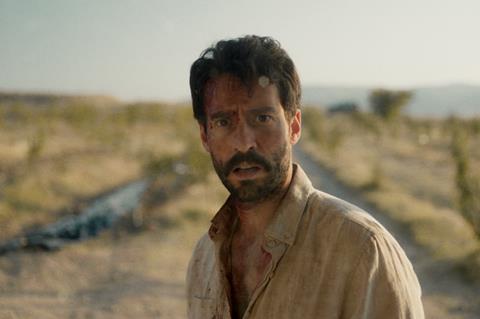
Ekin Koc plays a son whose dark family secrets are unraveled after his mother’s death in The Things You Kill.

For the 2025 Oscar race, Canada’s official entry for the category of Best International Feature Film is a Turkish-language film: The Things You Kill. The film is both a psychological drama and a supernatural story.

Ali appears to live a somewhat stable life in Turkey with problems no worse than anyone else. He returned to teach English in Turkey after spending fourteen years in the United States as a literature professor. His wife Hazar wants to start a family but he learns of a low sperm count he tries to keep hidden. He lives in a well-to-do house and has a garden miles away he wants to make active again. He hires a new gardener named Reza to help. He notices his mother’s house is in need of great repair. Repairs the father neglects to carry out.

Then one day, the mother dies. After the funeral, the father Hamit puts all the blame on Ali for spending all those years in the United States. More bad news in Ali’s case comes as he’s told they can’t afford to have his program taught at the University. To add to it, he never told his wife about the low sperm count result. Soon his sister privately tells him a dark secret. The mother had head injuries at the time of her death and Hamit was seen with a bandaged arm. Ali suspects the worst. He tries to get an official account of her death, but it will take days.

Ali soon develops a mentality of rage. First he hires Reza to help dig a hole in an unknown place in the Turkish valley. Both men help in leading Hamit there and killing him. After the incident, Ali soon enslaves Reza and keeps him at the garden where he treats him like a dog, even leashing him with a chain. Ali also tries to keep all the secrets of what he conducted away from his sisters and Hazar as a nationwide search is conducted. Hazar is suspecting the marriage is falling apart. Hamit’s mother, Ali’s grandmother, is hugely concerned. Ali also receives a rude surprise as one of the people heavily concerned with Hamit missing is his mistress. To which, Ali responds with nasty insults to her.

One day, Ali returns to the burial site of his father only to find it all dug up. He goes back to the garden hoping to check up on Reza, only to get a surprise retaliation from him. Now Reza is filling in the places of Ali’s life Ali used to have, including that of teacher. It’s in a flashback to an interview with the Turkish college that we learn of the biggest reason why Ali chose to teach in the United States because of the abuse he and his family suffered at the hands of his father. The film ends just as Reza has it good for him, and he receives a shocking surprise at his door one night.

This film makes for a compelling drama. The incidents that take place over time will get one questioning of what really happened. Did his mother die at the hands of Hamit? The film also makes you question Ali. He is angered over the death of his mother and believes it’s his father’s fault, but he now turns into a person who is hungry for blood. He kills his father with Reza and then enslaves Reza like a dog. You’re left to wonder what’s with Ali? Is something supernatural taking over him?

The film does succeed in being a drama, but the film succeeds better as a puzzle pieced together over time. Throughout the film, there’s what we know and what we don’t know. This is something that will take time as the story will unravel facts hidden from us. It’s as it nears the end that we learn of what was hidden from us the whole time. Even though many questions are unanswered, you could see why Ali suspects this from Hamit. At the same time, this film does become a supernatural story as Reza acts like a dog as Ali treats him like a dog. It’s after Reza gets revenge on Ali that he acts human again. Even the ending of what Reza faces is supernatural. I just wonder if genres are trying to be mixed in the film.

This is a great film from Iranian-Canadian director/writer Alireza Khatami. His latest feature film, he creates a drama that will connect with you and keep you intrigued with what’s happening. The story may puzzle you, but he connects things all together at the very end. It’s a great work form him. Ekin Koc does a great job in his role of Ali. Going from the troubled son in the family to the one committing sinister acts is a big change of character and he does it well. Although Ali is the lead role, there are also great supporting performances. Hazar Erguclu is great as the wife Hazar. She is the one who’s able to maintain some control over Ali as he’s going out of control. Erkan Kostendil is also great as Reza. To go from human to animal-like back to a human character and make it look believable is no easy feat. Erkan does a great job of it.

The film’s accolades not only include the Oscar entry, but was also nominated for seven awards at the Istanbul Film Festival, nominated for Best Film at the SXSW London Film Festival and won a Sundance award for directing for Khatami in the World Cinema – Director category.

The Things You Kill is more than just Oscar bait. It’s a story that gets you thinking. It gets you trying to make sense of the story after you leave the theatre long after.
VIFF 2020 Review: There Is No Evil (شیطان وجود ندارد)

There Is No Evil is four films in one about the topic of the death penalty and how Iran carries it out.Definitely a film that will make people think.

I was eager to watch There Is No Evil because of a lot of the pre-festival buzz surrounding it. it’s a very thought-provoking film.

The first quarter of the film is a simple setting. It’s a man named Hashmet and his wife. They’re coming home in the same car doing daily tasks before they arrive home and picking up the daughter from school. The wife is actually arriving home from work. They talk about plans of going to a wedding and of caring for his wife’s mother. The husband actually works his job in the early morning. After the wife and daughter arrive in their well-to-do home, have their dinner and go to bed, the husband then goes off to work. He wears a uniform of a guardian. He makes his way to a private room with some food. With his job, he has to wait until all lights in a section turn green. There are a few red ones. Then the lights are all green. He presses a button. The button involves a platform men who are about to be hanged stand on. The button he presses drops the platform from underneath their feet and they hang until their deaths: whether it’s immediate or by strangulation of the noose.

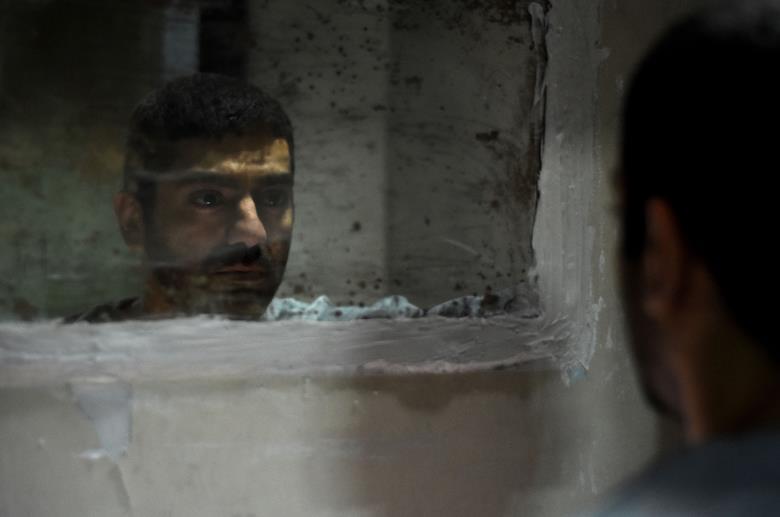
The second quarter of the story shows a bunker room for soldiers. It is Iranian law that a young soldier is to assist with the execution process. It can be any one in the bunker area. Pouya is the one chosen. He is completely against committing this act. He will have to perform this act or else he will not receive a completion certificate, which will mean no chances for a good career. He talks of doing mutiny and escaping with his girlfriend. All of the other soldiers think this is too risky of a move. Some even think he’s a sissy. Then the moment for his service comes. Pouya is all prepared and dressed. As they’re walking their way to the gallows, Pouya suddenly revolts against the guard. He then makes his way into another room where he also revolts against the security guards. Pouya then breaks free. He meets his girlfriend in a remote locate. The two drive off where they talk of their future plans for outside Iran.

The third quarter of the film belongs to a young soldier named Javad. Javad is on a three-day leave from his military service. First thing he does on his leave is bathe in the river before seeing his girlfriend Nana, whom he hopes to marry one day. Nana’s family is setting up a memorial service in the house. Javad willingly attends the private service until he sees the picture of who the memorial service is for. It’s for a man Javad helped execute. Javad is brought to guilt over what he did. He tells Nana and she is heartbroken. He tries to convince her of what he did. He said “If we say no, they will destroy our lives.” He can be seen trying to wash his face in the river. To some, it may look like he’s trying to drown himself.

The fourth and final quarter is the story of a couple and their niece. Their niece Darya arrives at the airport after arriving from Germany and they’re excited to see her. The trip is supposed to be a nice get-together, as he takes Darya in the rural countryside. Darya is uncomfortable with the hunting trips as she refuses to kill a living thing. However the get-together is to turn solemn as the uncle has some heartbreaking news to tell. He is dying and has less than a year to live. Darya is heartbroken. However the uncle has two other pieces of news to confess to her. The first is that he used to participate in the process of capital punishment as a soldier. The second is that he is Darya’s father. Darya is upset with all this news. She can’t even begin to look at him in the face. The story ends asking more questions than answers.

The main topic of the film is the death penalty in Iran. It’s good that a film about this topic is made. Iran is second only to the People’s Republic of China as the country that carries out the most executions. Many believe Iran carries out the most per capita. The crimes for execution range anywhere from murder to rape to even crimes considered non-capital in other countries like armed robbery, arson, burglary, counterfeiting and even non-crimes like fornication, blasphemy, homosexuality and adultery. Often when there are hangings, their bodies are out on display in the public streets of the cities. The film shows that those people who do the escorting of prisoners to be executed are soldiers of the Iranian army. Such is a military duty. There may be some soldiers that think it’s the right thing, some that think nothing of it, and some that are dead-set against it. Whatever the situation, military service is mandatory in Iran if you want to have a future of any kind. If you reject your military duty and don’t receive a completion certificate, you won’t be able to apply for a passport or a job. Although the part involving Hashmet has nothing to do with the military, it shows that he can have a well-do-to life through this system. Executioners are well-paid in Iran.

This film presents four different stories of capital punishment. The people are not linked in any way whether it be the people they execute or any family relation so it almost looks like four short films stringed together. The first is of a man who carries out his daily life with a good standard of living by Iranian standards and does his job normally. The second is of a young soldier who is dead-set against it and plans to commit mutiny. The third story is of a soldier who realizes who he led to execution when he’s over at a house for the memorial. The fourth is a man who’s the biological father of the girl and has to confess his past before he dies. These films can stand alone, but they’re all interconnected in this feature film that has something to say about the death penalty, and the systemic regime of Iran that supports this system of rewarding those who carry out the duties.

The film is well-constructed as it sets up for the main topic of the film and the second and third stories are more a case of the rebel and the conformist who regrets what he does. The fourth story is a bit unique as it’s of a man who is nearing his death and he regrets what he did. The fourth story didn’t make the most sense. Often you wonder why the daughter is angry. Is it his past of participating in executions? Or is it his truth he had to tell? It’s hard to understand at that point.

This film is a remarkable achievement for director/writer Mohammad Rasoulof. Just right after the 2017 Cannes Film Festival where his film A Man of Integrity premiered and won the Un Certain Regard Award, he was arrested for ‘endangering national security’ and ‘spreading propaganda’ against the government. He was eventually sentenced to a year in prison and banned for life from filmmaking. Rasoulof is not the first Iranian director to be criminally sentenced. Jafar Panahi who directed 3 Faces was also given a prison sentence and a ban on filmmaking. We should admire these Iranian directors. They’re risking their freedom to tell the truth that the government wants hidden. With Rasoulof, he’s defying his lifetime ban to tell his feelings about the death penalty in Iran. His assembly of four short films into a feature-length film of a common theme is his brave attempt at sending the message to the world. Although it’s a strong assembly until the last film doesn’t seem so clear in its message, it is worthy of admiration and being labeled an accomplishment. I don’t think there was a single standout performance among the acting. There was no single lead performance. All the actors who performed in their vignettes embodied the character and the story well. Also world noting, Rasoulof’s daughter Baran plays Darya in the film.

There Is No Evil has had an impressive tally on the film festival circuit. It started to year off by winning three awards at the Berlin Film Festival including the Golden Bear for Best Film. Since then, it has also won Best Narrative awards at the Heartland Film Festival, Montclair Film Festival and the Philadelphia Film Festival. It’s also won the Audience Award at the Sao Paulo Film Festival and Rasoulof won the Best Director Award at the Valladolid Film Festival where it was a nominee for the Golden Spike Award for Best Film.

There Is No Evil is a powerful film with something to say about capital punishment and the regime that promotes it. The four stories are not related by story but by the common theme. All four have something to say about the subject. A proud accomplishment from a director who could be criminally punished again for making such a film.