VIFF 2025 Review: As The Water Flows (翠湖)

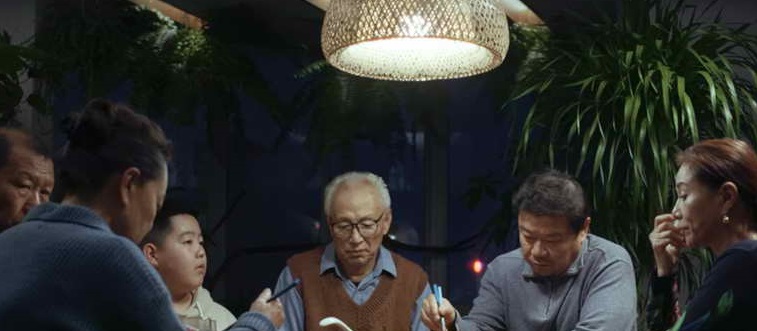
A dying grandfather, played by Li Zhenping (centre), seeks to mend family ties in the Chinese film As The Water Flows.

As The Water Flows is one of many Asian films that played at the VIFF this year. Its subject matter isn’t exactly a film that would make you want to see it, but it’s worth seeing.

The film begins with a grandfather on a boat on a river with his grandchildren. The film then goes to the grandfather Xie Shuwen, a former college professor. He’s with his new girlfriend whom he has seen recently since his wife died. He will be having a dinner with his daughters and he’s unsure they will be happy with the news of her. The dinner happens and all three daughters are there with their husbands. Only one daughter brought their child: a pre-teen chubby boy named Panda. He delivers the news, but they’re not happy about it. Especially the oldest and the most orderly of the daughters. After the dinner, bad memories of the past agent the daughters.

After the dinner, the daughters move on with their lives. They’re busy maintaining a career, their own families and their children. They want their children to grow up well and be successful but there will be difficulties ahead. One daughter is proud that her son, the eldest grandson, is going to Stanford the next year. Suspicion of what’s really happening grows when Xie notices the grandson drunk. Panda appears to participate in classes well but he is the target of bullying because of his short overweight stature. Another daughter of Xie’s is unhappy her own daughter quit a job in a family restaurant and has different career desires.

Meanwhile Xie learns he has a terming lung cancer diagnosis. As he knows he’s dying, he continues to spend his quiet time at Green Lake Park but he also uses the time to spend more time with people close to him. That includes his new girlfriend, friends from the college he taught at, neighbors, and his families. Family dinners become more common. One daughter notices how he has become closer to the family even more so than when they were younger. She also notices how his harmonica which he used to play often is showing age. She’s especially angry when she learns he’s still smoking and playing mah-jong.

As time passes, what the children are hiding becomes more obvious. The granddaughter wants to go her own direction and she has fallen in love with a man. She hints she may want to marry. The older grandson admits he forged the acceptance letter to Stanford and that he will really be going to a common University. He’s broken-hearted about this. Also Panda is unhappy with the demanding regiment at his school. It becomes frustrating to the point Panda buries his schoolbooks in dirt. It’s time with grandfather Shuwen that the grandchildren are able to be more confident with their life and their decisions. Even the older grandson is able to find luck in his life as he meets the granddaughter of one of his grandfather’s professor friends.

Shuwen then has one last visit with his girlfriend. It’s a nice quiet occasion. The marriage between the granddaughter and her boyfriend happens and Shuwen is happy to be there. The occasion is a happy occasion for all and he’s able to have amicable conversations with his daughters, despite his cancerous coughing. The ending and credits role gives a hint the wedding is the last family occasion Shuwen is present.

The film is as much about the family dynamic and the family ties as it is about the main protagonist trying to find his purpose to live. We have the widowed grandfather who has recently been diagnosed with lung cancer. Even though he lost his wife, he wants to maintain a life for himself by playing mah-jong, meeting with his professor friends and dating again. We have the three daughters who are trying to maintain their careers, keep their marriages together, and raise their children for the future. They’re the ones with the biggest struggles now. Finally, we have the three cousins that treat each other like siblings. They dream of the future, but they also fear for it. They feel it’s demanding and unforgiving and they either don’t know what to do or they want to do it their way.

This all comes as Xie Shuwen learns he is dying, just a year after his wife’s death. He spends time with his children and their families. He becomes like a guide or a mentor to the grandchildren while the daughters feel he didn’t spend enough time with them during his professor days. It’s possible he wants to seek relations with his grandchildren and resolve with his daughters. It’s not an easy thing to do with the constant arguing between the daughters and him. To add to it, the daughters are not very welcoming to his new girlfriend.

The story is told through all angles. The biggest angle seen is through Xie’s, but we also see the story through the angles of the daughters and the grandchildren. The multiple angles make for a good way of telling a story and presenting the complicated scenarios, but it can get confusing at times. The story itself is so complex, it can often seem like a drama that’s drawn out longer than it should be. Often throughout the film, you’re tempted to question who the story is mostly about. Some would argue the film follows the same formula as 1989’s Parenthood. Some would also say it has a similar sound of 2001’s The Royal Tenenbaums. It’s easy to dismiss as such but if you see the story, it relates to real situations that one can see happening in their own family. That’s the biggest quality of the film. That probably every family can see an element of the film or the characters in their own life.

This film is the directorial and writing debut for Zhuo Bian. Not much is known about Zhuo’s filmmaking before this film, according to IMDB. With this film, he creates a well-arranged family story that starts with a family dinner, goes into the lives of the separate families and the members, often returning with another family dinner from time to time, then going off again, and ending with the wedding. This type of storytelling allows the story to be told from all angles and remind us that it’s a family story. It’s very complex and sometimes difficult to connect all the stories together, but Zhuo does a very good job. He also does a great job in placing the story to the Green Lake Park in Kunming, China. That’s the place where Xie often visits or meets with others as he reflects on his thoughts. Adding that in adds to the sensitivity and solitude of the story.

The film has excellent acting from Li Zhenping as Xie. As the grandfather who’s at a crossroads between living again after losing his wife and just learning he’s dying, he does a great performance that is low on the drama but makes for honest emotions. He does a great job of holding the story together. It’s hard to pick out the best supporting performance because all the other actors did an excellent job of playing their parts well. The daughters, the sons in law, the grandchildren, they all did their parts well. The cinematography of Wang Zixuan and Jie Zhu gave the dramatic story a picturesque telling with its various shots happening inside homes and outside in nature.

As The Water Flows is as much about the family dynamic over three generations as it is about the difficulty of a grandfather trying to maintain a family and maintain one’s life. It’s possible you can see something where you can identify in your own life with this film.
VIFF 2013 Review: Viva Cuba Libre: Rap Is WAR

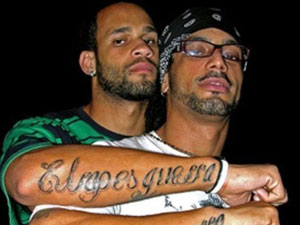
Meet Los Aldeanos, a Cuban rap duo who are more than mere entertainers in Vibva Cuba Libre: Rap Is WAR.
Meet Los Aldeanos, a Cuban rap duo who are more than mere entertainers in Viva Cuba Libre: Rap Is WAR.

I won’t look the other way. The truth will find a way out.

You can’t ignore us much longer. People are beginning to wake up!

That motherfucker made this country a prison!

Put walls in front of me, I’ll knock ’em down!

If you stop my shows, I will sing on!

 -Los Aldeanos

When you think of revolutionary voices in rap, who first comes to mind? Public Enemy? N.W.A? 2pac? How about Los Aldeanos? Okay, I know you’re asking “Los Who?” In Viva Cuba Libre: Rap Is WAR, you’ll learn all about Los Aldeanos and why they should be considered revolutionary voices.

Los Aldeanos is a rap group beloved by the people of Cuba but greatly feared by the government. Why should the government fear them? We should remember that Cuba is a communist country. The Communist Party run by Fidel Castro in the late 50’s won a brutal war and started a revolution in Cuba. For decades Fidel was the charismatic leader of Cuba firm to the communist ideal. Fidel even stood by his communist beliefs and rulings during the late 80’s-early 90’s as many countries under communist regimes including the U.S.S.R. did away with communist rule. Fidel simply declared the moves to freedom in those countries as ‘terrible, terrible things.’ Tight Communism still stands in Cuba today even after various economic sanctions against the country, even after Fidel Castro’s daughter defected in 1993 and even after Fidel transferred rule over to his brother Raul upon retirement five years ago.

Rap Is WAR shows the difficulties of living in Cuba. Most of us in North America see Havana and the rest of Cuba as a beach paradise or a place where locals like to dance the samba at night spots. Here we see the shabby living conditions Cubans have to go through in cities like Havana and Holguin City or even local villages and farms. We also see of police brutality given to people even simply for speaking freely. Some of us older people may remember how we were taught that in Russia one could be jailed for free speech. It happens in Cuba today. We also learn of young people of how limited their future is and how it appears they don’t have much of a choice in the matter. We also see a crying child at a farm who misses his mother. She’s jailed for prostitution because she can’t afford to raise her family with the meager wage she received.

One pair of people who are not afraid to speak the truth about what’s happening in Cuba is the rap duo Los Aldeanos: two young men from Havana named Aldo ‘El Aldeano’ and Bian ‘El B’. “Los Aldeanos” is Spanish for “The Villagers.” Those two friends see and live the same daily life as the people in Havana and the rest of Cuba. However they refuse to be silenced. They will speak about the struggles about daily life in Cuba. They will rap about how phony those images of Cuba on those postcards are. They will rap about the limited future Cuban people are given. They will rap commemorating those Cubans who lost their lives seeking to escape the brutal Communist life in Cuba. They aren’t even afraid to rap about what cowards Fidel, Raul and the Communist Regime of Cuba are.

Their music is very well-known across Cuba. The music is not allowed any radio airplay or sales in stores. So the duo record their songs and burn them onto discs to give to the people to hear. The music has spread by the thousands or even millions across Cuba. The people on the streets love Los Aldeanos. They dance to it. They rap along to it. Many are proud of Los Aldeanos for speaking the truth. Many feel that Los Aldeanos speak the voice of Cuba that most Cubans are afraid to speak.

However it’s not to say it comes without consequences. Los Aldeanos use their ‘underground’ distribution methods because they know that what they say in their raps is breaking the law in Cuba and can subject them to imprisonment. In fact they often play to concerts without them on the bill as promoters ‘sneak’ them on stage during intermissions. Both men of Los Aldeanos know of the potential consequences their recorded raps and their rapping in their concerts can give them and it’s a gamble they’re willing to take. In fact the documentary shows two incidents where the two men of Los Aldeanos are arrested but released shortly after. Communists, even locals who believe in the Communist regime, would consider them unpatriotic. Truth is they’re very patriotic to the point they believe in a free Cuba.

The film shows images of Havana and the rest of Cuba as their raps are in the background. The film also shows them on stage at a concert only to have the sound shut off just after they say a few lines. That doesn’t stop the audience from rapping their lyrics out loud. We also see Los Aldeanos as they record their next disc Viva Cuba Libre: a disc they believe will be the ‘death of them’ but are not afraid. We see them preparing for a big street concert but the two struggling to negotiate with concert promoters. We also see as Bian’s girlfriend is pregnant. It’s a struggle for Bian especially since her girlfriend has had bad symptoms during her pregnancy and it threatens to put the duo on hold during their anticipated big show. The big show in the square in Havana goes as planned and they both are able to avoid arrest. Bian’s girlfriend did have to go to the hospital where she gave birth to a healthy boy. Bian proudly says that he will rap for a better Cuba for his son.

The film doesn’t strictly focus on the duo as they plan for their next disc or their big concert. The film also alternates from Havana where Las Aldeanos live and perform to Holguin City. There we meet the mother of the Cruz brothers who are in prison awaiting trial for ‘anti-government activities.’ Their crime? One night they played the music of Los Aldeanos out loud from the top of their house, waved the Cuban flag and shouted out “Viva Cuba Libre!” The police were fast as they came and beat the whole family and arrested the two sons. Their house which had freedom messages painted on it was painted over by the government. The mother talks tearfully of the prison conditions her sons are going through and her fears for the youth of the country. Even the father talks of the fears he has for this country. A reminder that even playing Los Aldeanos’ music can result in criminal punishment.

It’s at the end days after Los Aldeanos gave their grand performance that they meet with the parents and hear their story. They even decide to write a rap about the injustice the brothers have been receiving. The parents give the two huge praise. Looking at that, you could say the documentary is two stories in one. The story of the rap group and the story of the two brothers who are political prisoners for loving their music.

The film is an excellent depiction of a rap band, their music, and the status quo they threaten. It let the duo tell their story and the cameraman show the images uncensored instead of a narrator speaking a point of view. There were times when the cameraman had to turn the camera off but not without showing on film the reason why. Hidden cameras were often used in certain scenes. The film is also a risk to all those involved. It’s not just Los Aldeanos but also the villagers and city people who openly speak their mind about how terrible life in Cuba is. It’s also the fans of Los Aldeanos in the street who proudly say their reasons why they love their music and how true it is. They all risk going to jail for speaking the truth or supporting Los Aldeanos. In fact there’s a message at the beginning that names have been changed and identities protected because of fear of reprisal. Even the Americans involved with the film are subject to possible arrest and are unaccredited. The cameraman even is credited as (Anonymous). Director Jesse Acevedo even risks his own freedom for the sake of getting this documentary out. No one involved with this is immune.

One of the things of this documentary is that it restores the credibility of the term ‘underground rap.’ Underground Rap was a huge phenomenon in the 80’s as young people of a generation wanted music that was untouched and devoid of ‘watering down’ from the mainstream. That’s why underground rock and rap was huge during that time. Underground rap especially took off as a phenomenon during the late 80’s thanks to the release of N.W.A’s Straight Outta Compton. It received no radio airplay but the buzz of the anger in the songs spread like wildfire and made it go quadruple-platinum. The controversy of songs like Fuck Tha Police made headlines and made young people hungrier to buy the records. Its offensiveness to adult society made young people like it even more. It was only a matter of years when gangsta rap would become a huge phenomenon that would last for almost two decades. The ‘rebel spirit’ of gangsta rap and other underground rap was catchy enough for even white middle-class or upper-class kids to get a piece of the action and don the athletic wear gangsta baggy jeans, multiple tattoos, ghetto hand-gestures African-American accents and the walking swagger. Even though it was phony, it shows how catchy the ‘rebel spirit’ of rap was. Even if they couldn’t live it, they adopted the clothes and mannerisms of it to get the feel of it.

Nowadays ‘underground rap’ appears to be a thing of the past at least in the modern world. Underground music of the past had an impact on mainstream music and has caused changes to it. Much of underground rap was able to come above ground over time. Alternative music no longer has to rely on specialized record shops or independent labels to get their stuff hear. Apple’s iTunes has become a domain where even unsigned musicians can display their music and have the creative control alternative musicians in the past could only dream of. On top of it, the ‘rebel spirit’ of rap has faded over time. When the offensiveness of Eminem and 50 Cent faded, it took the flare and fire of rap with it. Rap music is still popular with the young but its phenomenon in terms of shelling out hot new music talent and dominating youth culture has faded over these past few years. Today’s hottest new rap talents seem simply to be ‘carbon copies’ of past phenomenons or just mere entertainers compared to those of the past. In fact I’ve often said: “Rap and hip-hop has faded in popularity so much over the last five years, it’s no longer sissyish for guys to wear skinny jeans anymore.”

One thing about Los Aldeanos is that they bring back the rebel spirit of rap. It’s rightly so because they are rebels. They’re the ones trying to shake the tight grip of Castro’s Communism in Cuba with their raps and the fans that agree with all they say. They do it at a huge risk knowing that they risk imprisonment for violating the tight Communist speech laws but they’re not afraid to do it or pay whatever price comes their way. It’s like one of their lines in their raps: “Rap is war!” Very true as they are battling the regime with the power of their rhymes. It’s been commonly said that the pen is mightier than the sword. Here’s a chance for their raps to be mightier than the sword in Cuba. In fact when I myself heard the raps of Los Aldeanos, I was reminded of Public Enemy. That’s how good they are.

Viva Cuba Libre: Rap Is War is an excellent depiction of a rap group few people know about and the country they come from. Those who have a chance to see this will see why Los Aldeanos is not only great for Cuba but necessary. I can’t think of any other people in Cuba inspiring the young for the hope of a better tomorrow.

BONUS: If you want to learn more about Los Aldeanos, here are a pair of sites to go to:

Official Music Site: http://www.losaldeanosmusic.com

WordPress: http://losaldeanos.wordpress.com/