VIFF 2025 Review: Calle Málaga

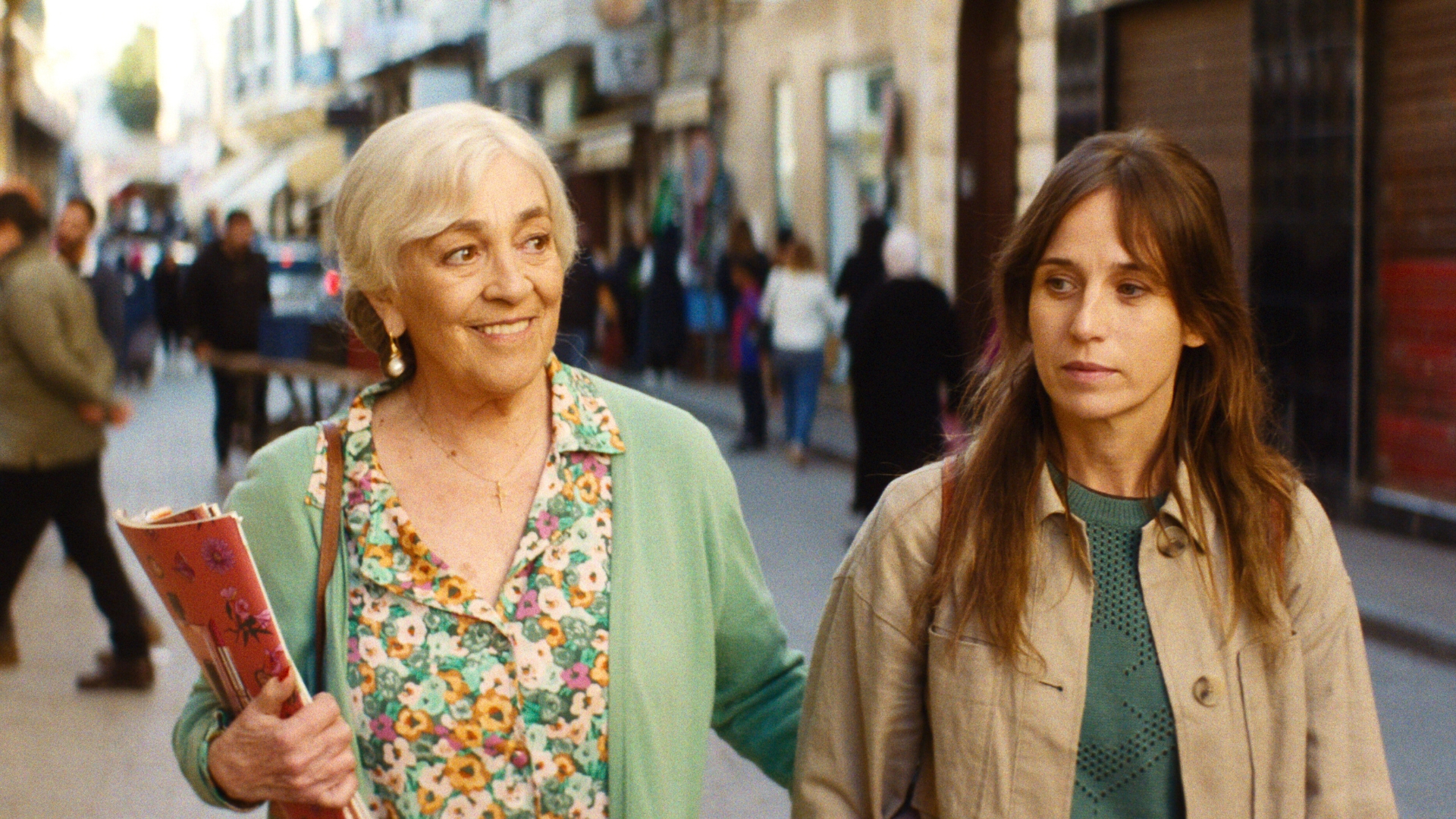
Carmen Maura (left) plays a mother who refuses to let her daughter sell her flat in Tangier, Morocco in Calle Málaga.

For this year’s Academy Awards, Morocco’s official submission for the Best International Feature Film category is a Spanish-language film: Calle Málaga. It presents a tense story set among beautiful scenery.

In Tangier, Maria Angeles is an elderly Spanish woman. She’s of descendants of Spaniards who fled to Tangier to evade the Franco dictatorship of Spain. After Franco died and democracy was introduced, many Spaniards returned back to Spain, but Maria remained with her husband and daughter. Over time, her daughter Clara returned back to Madrid, married, and had a family of her own as Maria stayed in Tangier at the Calle Malaga flats. Having her daily coffee, talking with her best friend who’s a nun who’s taken a vow of silence, watering her plants, and embracing the horizon at night, her life in Tangier is all she asks for.

One day, Clara returns to Maria. It first appears that it would be a happy family visit, but it’s something else. Since her divorce, Clara has been cash-strapped. Especially since she has to both work and raise her two children. It’s gotten so dire, Clara thought it best to sell Maria’s flat. Maria is crushed, but Clara thinks she did the right thing. Clara feels Maria will have a better quality of life being around her daughter and grandchildren. Besides Maria’s husband died 20 years ago and most of the people she’s known her life have either died or migrated back to Spain.

Maria protests but Clara reminds her the flat is in her name and she can do what she chooses. Clara states the only other option is for Maria to go to the Spanish nursing home in the city. Maria first chooses the nursing home. As she’s transported there, the house’s old belongings go for sale or for pawning so the empty flat can sell. Maria is not happy with her life at the nursing home. It’s missing all the vitality of her own life and she’s also very able to take care of herself.

One day, she fakes a situation where she’s flying to Spain to be with her daughter. The only other person who knows this is the cab driver who’s to pick her up. What Maria really does is move back to the flat that used to be hers. She returns and the neighbors are happy to see her back, but all her furniture is gone. To add to the frustration, the tenant holding the flat for sale lives on the floor below.

Her first goal is to make enough money to get all her furniture back. Her pension doesn’t pay her enough. What she decided to do is turn her flat into a café for friends to watch La Liga football games. In turn making a new friend with the young Khalid who’s helping her out with new visitors. It becomes a popular hangout. One day, she catches the tenant at the suite and puts him in a situation that she is to hold fort until it’s sold. She reminds him she’s in control. She gives her friend the nun quite the story.

Over time, she learns of the antique shop selling her furniture. She confronts the salesman named Abslam about getting her furniture back. She also tries to use her makeshift café as a chance to coax him into helping her further. Over time, it becomes more and she starts to feel love for the first time since her husband’s death. She learns that Abslam was never married. The romance grows and she has quite the story to tell Sister Josefa.

As time passes, it becomes evident Maria’s secret will run out. During one of her games, the tenant comes to visit and tells her the place is sold. She’s brokenhearted and doesn’t know what to do. Also that day, Sister Josefa dies. Maria sees her in her deathbed to tell her last feelings. The following day, the day before the new owners are to move in, Clara arrives and is surprised as she sees one of her mother’s parties. It’s there Maria confronts Clara tells of her choice. The film ends with no telling what happens the next day, but telling of how it appears things should be.

This is one story that’s not too heavy on its core social topic. The topic here is ageism. The daughter who has the flat in her name feels she can make decisions for the mother, but the mother is able to decide her life for herself. Maria wants Clara to know this but is afraid to at first. It’s over time she’s able to amass the courage to tell her. This is a common problem among families.

I’ve seen films or shorts of people who don’t want things to change at first and are unwilling to accept change, only to accept it and eventually embrace it in the end. Maria is different. This life in Tangier and her flat is the only life she’s ever known and the only life she wants to know. One would find this a bad thing for her not to accept change, but it’s her choice. Mind you the film is more about Maria’s refusal to change. It’s also about Maria finding vitality in her own age. Most people Maria’s age would feel they’re at the end of their life. Instead, Maria sees a chance for a new beginning. She may refuse to change her living situation but the changes she makes like her makeshift football café, her new young friend Khalid and her new love with Abslam add to her vitality.

This is a great film by director Maryam Touzani. The story she co-wrote with husband Nabil Ayouch is a nice calm story where the intensity is in the moments of heated discussions. It makes for a nice story about a woman and the life she feels she was meant to live. Instead of this story being a super-heated story about ageism, it’s a calm story about what is meant to be and is given a nice calm vibe.

Carmen Maura owns the film. Outside of Spain, Maura is most famous for her frequent collaborations with Pedro Almodovar. Here in this film, she handles her role with immense class and her personal charm adds to the film. Ahmed Boulane is also great as Abslam. Playing a man who feels love for the first time also adds well to the film. Also great is Maria Alfonsa Rosso as the mute Sister Josefa. Her performance with her body language adds to the comedic elements of the film. The best technical element has to be the cinematography of Virginie Surdej. The cinematography of the city images and the panoramic nature of Tangier adds to the story as it’s one of the best elements at telling the audience why Maria can’t leave her old life behind.

Calle Malaga tells a story about a woman who finds a purpose in her life in her age and finds a new life. It’s also a cinematographic delight to watch with the scenery adding to the storytelling.
Oscars 2014 Best Picture Review: Selma

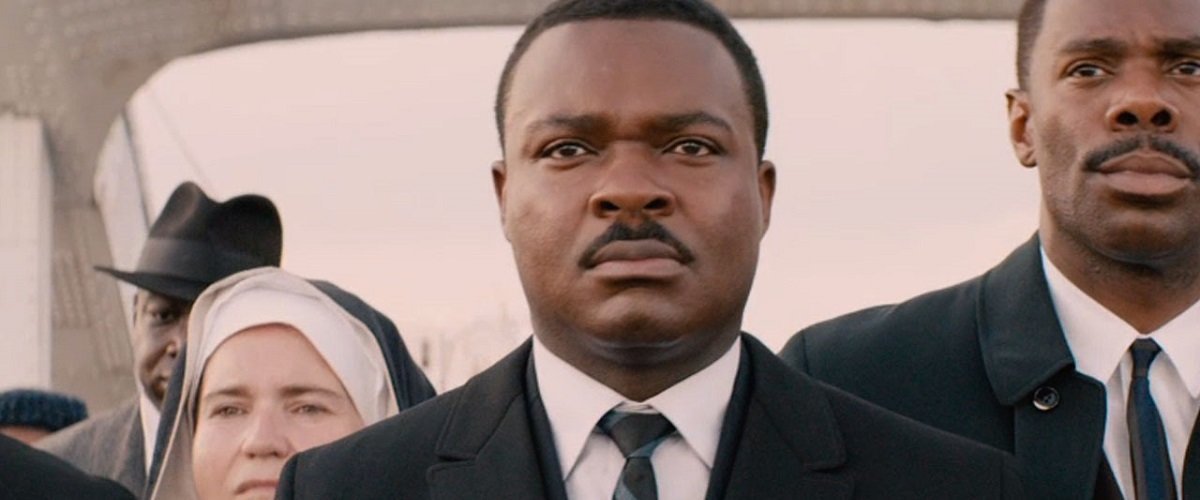
David Oyelowo (centre) plays Martin Luther King in Selma.
David Oyelowo (centre) plays Martin Luther King in Selma about an important part of American history.

Selma appears to be about an important time in US history. However it tells more than what we’ve learned about the whole story including those involved.

The film is about the march from Selma to Montgomery in 1965 led by Martin Luther King Jr. that would pave way to President Lyndon Johnson signing the Voting Rights Act of 1965. But it was more than that. It starts with Martin receiving his Nobel Peace Prize in 1964. However it’s just the beginning for Martin. A black church in Alabama explodes killing four young girls. Annie Lee Cooper has been denied the right to vote like most black people in Alabama before her. Meanwhile King is unsuccessful in convincing Johnson to pass a law allowing black citizens to vote.

Instead of accepting defeat, King is undeterred and determined to achieve this. Selma, Alabama is the meeting place for King and other activists to organize efforts to achieve this law. However both Johnson and FBI head J. Edgar Hoover are nervous about this. Hoover uses phone calls to disrupt his marriage to Coretta. Undeterred, King and black residents of Selma march to the registration office only to be confronted by a mob of police and a riot ensues where King and Cooper are arrested.

Things get even harder as state governor George Wallace, a pro-segregationist, speaks out against the marches and even calls police in Marion, Alabama to use force from state troopers during a planned night march. An assault by troopers does occur during the march where Jimmie Lee Jackson, who hid in a restaurant for the safety of him and his family, is shot to death by the police. Jimmie’s death only prompts King to tell people to stick to fighting for their rights. However the Kings receive threats on their children and activist groups are becoming unhappy with him.

A march from Selma to Montgomery to make their message heard is planned especially with the hopes of having all of the United states watching and paying attention, especially as working on ‘white consciousness’ is one of King’s objectives. At first King is hesitant but is convinced by his colleague Andrew Young. The original march takes place with all African-Americans. Right on the Edmund Pettis Bridge they’re stopped by police and attacked. The news goes nationwide. A second march is planned. This time King not only has blacks from other cities but white supporters too from regulars to religious clergy. Just before the marchers reach the end of the bridge, the chief officer and his group are back again. This time they’re allowed to proceed but King kneels in prayer and goes back. The reason was because King was suspicious. He doesn’t trust the mob of police and wants legal permission for them to march. The push for permission is especially stressed as one of the white allies, Rev. James Reeb, was beaten to death. The permission is granted by Alabama Judge Frank Minis Johnson. Lyndon Johnson, Martin Luther King and the marchers make history.

There’s no question that this is to do about an important moment in American history. Actually coming from Canada, I was never taught about Selma. I knew about the I Have A Dream speech but was never taught about Selma. However the film is also about Martin Luther King himself. The movie begins with him accepting his Nobel Peace Prize which came months after his I Have A Dream speech. However we would be reminded that King had more work to be done. Selma was a new challenge for him as his people needed the right to vote. However there was the constant threat of police brutality and even death. He stood firm in his non-violence stance and his plan was to work on ‘white consciousness’ and he knew it was the only way to work. He also knew he had to work with the tough minds of President Johnson and other politicians including Alabama Governor George Wallace. Each death linked to the marches would make him more fearful but it would make him more convinced this is something that needs to be done. We all know it was achieved but this is a reminder of how King and his people had to achieve their right.

The film also takes us back to the time and place. It reminds us just how hard it was to be black in southern US states like Alabama. Living in segregation was one thing. Being denied the right to vote was another. The only time in my life I knew of black people being denied the right to vote was in South Africa up to 1994. Apartheid riots were common news stories in the 80’s. I was shocked to learn that it was happening to black people in the 60’s in the Southern US. I always thought the US was supposed to be the ‘land of the free.’ It showed the red tape black people had to face in the justice system and especially with the police. We are all shocked and disgusted to hear about the fatal shootings of Michael Brown and Trayvon Martin in recent years and their killers getting away with it. This was happening in Alabama in the 60’s all the time. Especially shootings by police on young unarmed black men like Jimmie Lee Jackson. You couldn’t blame them for having had it. They couldn’t be denied this anymore and this was a must-win situation for them and King.

Just as much of a focal point as blacks fighting for their right to vote is also the focus of the bigoted attitude of the whites in Alabama. King made it his duty to work on ‘white consciousness’ in order to achieve this victory. Alabama, especially in the city of Selma, showed what type of ‘racial battleground’ they had to deal with. The first sign was the church explosion but we’d see it all throughout. We’d see it in the police brutality, we’d see it as a restaurant proudly advertises itself as ‘a whites-only restaurant since 1883,’ we’d see it as a white man ‘introduces’ himself to King and punches him in the face, we’d see it in the taunting of white people from all around. That’s the type of environment the black people had to fight. We should forget that Alabama has segregation removed years ago but the white people weren’t happy. They felt that segregation was right and they reacted in frustration with taunting and even violence. Even when white people joined the blacks in their march, that didn’t change a lot of people’s minds. In fact they found white supporters to be a threat and reacted with the same violence on them, even killing some. Another reminder that white supporters of the Selma marches would also be at risk to the same violent reactions as blacks. The film takes us back to the time, place and the hostile attitudes at the time. An ugly reminder but necessary to show.

Even though the film was about Martin Luther King, his crusade for human rights and the bigoted attitudes in the area, the film also showed another factor: the strength of non-violence. King’s use of non-violent means to achieve human rights may appear radical to many and even ridiculous to some at first. In fact it explains why he had a rivalry with Malcolm X as seen near the beginning of the film. Because Malcolm believed: “by any means necessary.” However it was shown to be successful in the actual event and in the film. In fact I noticed the film to also show violent means to look cowardly. We see it in the police who try to use it to strike fear in the protesters in hoping they’d quit. We see it in the white Alabamans as they use it to strike fear in the blacks and their supporters. Most of the times it’s seen they do it on impulse because they just don’t know how to deal with the situation. Funny how we’ve seen a lot of Hollywood movies, especially in the action movies of the 80’s and 90’s, where the leading man uses vengeance and violence to become the hero. Here violence looks very cowardly.

Without a doubt, this film has to belong to Ava DuVernay in directing and co-writing the story with Paul Webb. She did an excellent job in recreating the story of the marches, the people involved with them and the atmosphere of the time and place. The end result is an excellent film that won’t leave you. It’s not without controversy. There are many questioning the depiction of Lyndon Johnson in the film. Historical documents show he was actually supportive of Martin Luther King and his mission. Even I myself believed for a second that Johnson may have had some difficulty at first, knowing Johnson was originally from Texas: a state that formerly had segregation. DuVernay simply responded: “I’m a storyteller. Not a historian.” Whatever the situation, it was still a very good film put together.

David Oyelowo was excellent as Martin Luther King Jr. as she showed him in both his convictions, his inner strength and even his own personal frailties at times, like that time he relied on Andrew Young to go through with the march. Even that scene where he calls gospel singer Mahalia Jackson for inspiration and she sings to him shows that King did have fears which he needed support for. Tom Wilkinson was also very good as Johnson. Even if you feel his depiction of Johnson wasn’t that truthful, it was still a very good performance. Carmen Ejogo was excellent as Coretta. She did more than just simply play Martin Luther King’s wife. She played a young woman who herself grew in courage: a courage Coretta would need after Martin’s assassination. Oprah was also surprisingly well as Annie Lee Cooper. Right at the beginning we could see a character completely opposite to the Oprah we know. A character that looks like she’s been through the hardest life offered her. You could see it in her face. The cinematography and music added to the environment of the story. You could feel that this was a struggle worth winning.

Selma is a film retelling an important moment in history. It gives us insight into the people involved and the environment they had to fight in order to achieve their rights.