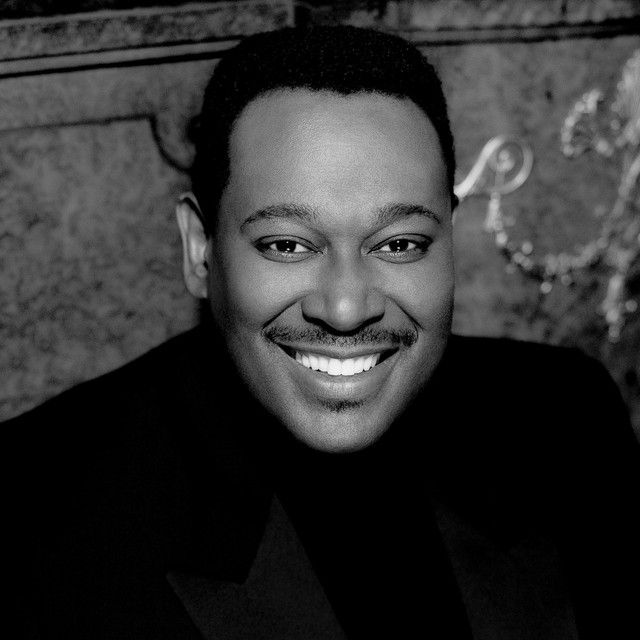
I’m sure most of us who were teens from the 80’s or 90’s will remember the music of Luther Vandross. The documentary Luther: Never Too Much is a documentary that showcases the R&B legend’s career but also tell us of personal sides of the singer we never knew.
The film starts by showing Luther performing on stage and then focuses on his childhood. Luther comes across as the type of child which music was born in him. He was born in a housing project in Manhattan to a father who was a former singer and mother who was a nurse. At three, he taught himself how to play piano by ear thanks to having his own record player. At 9 and shortly after the death of his father, the family moved to a rough area of the Bronx. His older sister Patricia sang for the group The Crests, most famous for the hit 16 Candles. His sisters took him to the Apollo theatre to see acts perform for free. For Luther, that was his way of escaping the threat of street life. There, he not only got to see legends perform on stage but he studied the performers, their movements and their singing.
As an adult, music was so much a passion for Luther, he dropped out of college to pursue it. Despite trying to make it in the music business being very tough, Luther was very driven. He led a Patti LaBelle fan club, finally got on stage at the Apollo as part of the group Shades Of Jade, and then formed his own vocal group Listen My Brother. Listen My Brother got to perform on some of the very first Sesame Street episodes! Vandross tried other routes in music such as writing songs for Patti Labelle and the Blue Belles, Roberta Flack, Bette Midler, Diana Ross, Donny Hathaway and Chaka Khan. He also sang back-up for artists like Gary Glitter, David Bowie, Carly Simon, Donna Summer, Sister Sledge and Flack. He would also create jingles for many commercials, including many fast food franchises.
The whole time, many felt Vandross had what it took to make it as a solo singer with his singing and his drive. There were some critics who felt his weight is what kept him from having star potential. The turning point was when in 1980, he was ‘fired’ by Roberta Flack as he was a back-up singer on his album. Flack told him he was too good to be a back-up singer. He deserved better. It’s that move that finally started his drive to make it as a solo singer. The first crack as his singing career started in the summer of 1981 with his album Never Too Much. It went double platinum and the title song hit #1 on Billboard’s R&B chart and #33 on the Hot 100. That would be the situation through the first years of his solo career. His songs would become big hits on the R&B chart but would very rarely hit the Top 40 on the pop chart. The album also helped him achieve his first two Grammy nominations.
Vandross would get more notice in the public eye as he continued to release music over the years. Becoming known as the ‘Velvet Voice,’ his Grammy nominations made him one to watch. His jingle singing would be made fun of by Eddie Murphy in his comedic monologue of singers. Of which, Vandross responded by singing his KFC jingle while Murphy was in the audience. Vandross would also get nasty flack about his weight. His concerts drew huge attendance and his hits started getting bigger on the pop chart despite not making the Top 10. On the negative side, he would get more Grammy nominations and wouldn’t win. His weight was a constant struggle throughout his life and it appeared in the mid-80’s he was finally losing weight. Then in 1986, he drove recklessly with Jimmy Salvemini, a singer he was working with, and his manager brother Larry. The car spun out of control and crashed, killing Larry. Vandross was badly injured, was sued by the Salvemini family, and returned to overeating.
In late-1989, his fortune made a turn for the better. He released a Greatest Hits album co-titled ‘The Best of Love.’ The compilation went triple-platinum and it gave the hit Here And Now that became his first-ever US pop Top 10 hit, peaking at #6. The hit also helped Luther win his first Grammy after nine previous nominations. Further pop success continued with the album Power Of Love in 1991. The album peaked at #7 on pop albums, certified double-platinum, spawned two more Top 10 hits on the pop chart and won two more Grammies. Additional pop success came over the years with two more Top 10 duets with Janet Jackson and Mariah Carey.
Despite all the success, Vandross was still going through a lot of personal problems. He had health problems, continuing struggles with his weight and difficulty confronting his sexuality. The early-90’s saw the rise of hip hop and its eventual revolution with the African American music scene. Vandross’ career soon faded and he would be dropped from Epic records. In the early 2000’s, Vandross made less public appearances and was quietly teaming up with Richard Marx to create what would be his last album: Dance with My Father. The album went double-platinum and the title song went platinum and would win the Grammy for Song Of The Year. Unfortunately a year earlier, he had a stroke that left him bound to a wheelchair and unable to sing. Vandross’ mother accepted the award on his behalf. After two years of struggling with the effects of his stroke and diabetes, he died in 2005 at the age of 53. His funeral was well-attended by legends of R & B like Aretha Franklin, Patti LaBelle, Dionne Warwick and Stevie Wonder.
This documentary is more than just a common biographical film of a musician. It’s also a good focus at a lot of garbage musicians face in the music business. Luther was an excellent singer, musician and songwriter, but making it in the business was hard. The music business always gives its performers commercial expectations or else they will dropped in favor of a rising star with better selling potential. All too often, talented people get overlooked by singers or performers with better looks. All too often when a record label looks to hire a solo male singer, they expect him to look like a “Prince Charming” or a “Mr. Hot Stuff.”
Luther was the case of person who loved music so much, he was determined to make it whatever way we could. Even as he was frequently shunned because of his weight n the 70’s, his musical work, back-up singing and songwriting ability is what made him be active in the business. Even after he made it, he still faced the difficulty of racism in the music business, pressures from his record label and personal setbacks. His biggest problems were about his weight and his closeted sexuality. In the 80’s and 90’s, he was in the public eye and judged. If he was overweight, he was ridiculed in the press. When he lost weight in the mid-80’s, he was rumored to have AIDS. He would admit in talk shows that food would be his drug or source of solace. As for his sexuality, it was a case back in the 80’s and 90’s that a male singer with a romantic voice couldn’t come out. He had to keep it hidden throughout his life. It’s only after his death it came to light.
The film is as good at showing some of the problems Vandross faced in his music career as it is about his music. It was good at showcasing his many achievements. Many of which, some of his biggest fans wouldn’t have known about. The film is also very good at getting even some of the most personal information about Luther from some of the people Vandross was closest to from musical colleagues to family members. As a musical documentary, it doesn’t offer too much in terms of a new and different way of presenting its story. There are times it feels like the common formula in music documentaries. Also in terms of chronology, I noticed there were times in which some of the musical events in his career weren’t shown in fluid chronology. Whenever the film focused on a particular year, some songs were shown years before their release.
This film is a good achievement from Dawn Porter. Porter is known as a documentarian whose works primarily focus on African American subject matter. It started in 2013 with Gideon’s Army and still continues well. She also has in plans a documentary of the Mandela’s coming up. Here in this documentary, she does an excellent job of presenting a life of a man who loved music and had to make a profession of it however he could and was lucky enough to be a famous singer. She also presents well the personal troubles and difficulties Vandross went through. The documentary of Vandross’ life and career also makes a good lesson to wannabe musicians who want to make a career. The obstacles he went through are common big names in the music business go through and have to overcome. It’s easy to see how so many either don’t make it or get swallowed alive even if they do.
Luther: Never Too Much is an intriguing look at an R&B great that shows the singer’s drive, his fame, and his struggles, both physical and personal. His story is showcased in a format common in music documentaries but it presents its story very well.

 Jon The Blogcentric