Brazil 1950: A Country’s Shining Moment Ends With A Country’s Heartbreak

The World Cup in 1950 was to be Brazil's shining moment. Instead it delivered a heartbreak that still haunts them to this day.
The World Cup in 1950 was to be Brazil’s shining moment. Instead it delivered a heartbreak that still haunts them to this day.

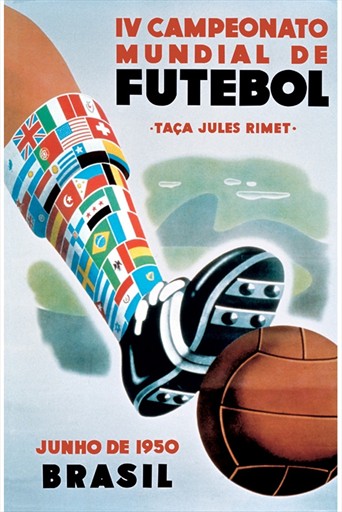
You may remember a while back I talked about Brazil’s football legacy but refrained from talking about 1950, the first time they hosted.  The first time they hosted was intended to be a grand moment for the country and especially their football team. In fact the Maracana was built to be the grand stage for Brazil’s win. Unfortunately the Cup ended with a heartache that still haunts the country to this day.

WAR IS OVER, THE WORLD CUP IS BACK

1950 was to be the fourth time the FIFA World Cup would be held. It started in 1930 but the 1942 World Cup had to be cancelled because of World War II. The 1946 World Cup was also cancelled as the world was still recovering from the end of that war just one year earlier. Just like 1948 was the year that brought the Olympic Games back to life, 1950 was the year the World Cup came back. However Germany and Japan were still part of the international sanctioned list and were banned from competing, just like they were banned from the 1948 Olympic Games. Brazil and Italy were given automatic berths: Brazil as host country and Italy as defending champions. The four British nations of England, Scotland, Wales and Northern Ireland returned to FIFA after seventeen years of ‘exiling’ themselves.

WE WANT OUT
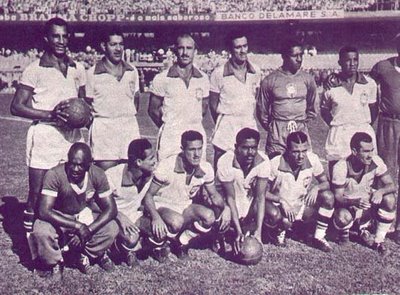
The 1950 Brazil team. Before 1950, Vrazil's best finish at the World Cup was third in 1938.
The 1950 Brazil team. Before 1950, Brazil’s best finish at the World Cup was third in 1938.

Seven spots were allocated to European countries, six to American countries and one to an Asian country. If you think it’s hectic getting teams to qualify for the World Cup, you should hear about 1950. Not because of competitive play but more because of international politics and football politics. Iron curtain countries like the USSR and two countries that participated in 1938–Hungary and finalist Czechoslovakia– refused to participate. Argentina, Peru and Ecuador withdrew after the qualifying round, possibly because of a dispute with the Brazilian Football Federation. The Philippines, Burma and Indonesia withdrew leaving India to receive the Asian berth by default. Austria declined to participate in qualifying feeling its team wasn’t good enough and Belgium withdrew from the qualification tournament which allowed Switzerland and Turkey to qualify without playing their final round of matches.

With the qualification done, it was off to the World Cup, right? Scotland withdrew because the very prideful chairman of the Scottish Football Federation insisted Scotland would only travel to Brazil as winners of the Home Championship. When England showed up, Scotland withdrew, even though England planned to attend even without the Championship. Turkey withdrew because of the huge cost of traveling to Brazil. FIFA invited two European nations who failed in qualifying–Portugal and France–to fill the gap. Only France accepted.

Now with the fifteen teams set for Brazil, that should lead to straight competition, but that led to more withdrawals. First came the draw on May 22, 1950 in Rio de Janeiro. India was the first drawn team to withdraw because of travel costs. France then withdrew because of the cost and time to travel between the cities. That left the World Cup with a field of only thirteen teams. Just like 1930 again! After all that, here’s how the teams worked out:

  • Group 1: Brazil, Mexico, Switzerland and Yugoslavia
  • Group 2: England, Chile, Spain and the United States
  • Group 3: Italy, Paraguay and Sweden
  • Group 4: Uruguay and Bolivia

ON WITH THE CUP

After all that hassle, the World Cup finally began on June 24, 1950. This would be the first world Cup since the inaugural 1930 World Cup where group play would be contested and would be the only World Cup where group play would decide the winner. It was Brazil’s idea to do this because more games meant more ticket sales to help compensate for the expenses of the stadiums. FIFA at first rejected the idea but agreed when Brazil threatened to pull out as hosts. The matches were held in six stadiums in six cities: Rio De Janeiro, Sao Paulo, Belo Horizonte, Curitiba, Porto Alegre and Recife. Four of the six stadiums were long into existence before the World Cup. There were only two that were build especially for the Cup: Estadio Raimundo Sampaio in Belo Horizonte and the Maracana in Rio.

Because of the uneven number of teams per group, it was decided that only the team that finished first advances. Group 4 had no problem deciding the advancer as that only required a single game, which Uruguay won 8-0 over Bolivia. In Group 3, Sweden was the winner with a win against Italy 3-2 and a draw against Paraguay 2-2.

Groups 1 and 2 were the two fully contested groups and they provided the most action. Group 1 was a no-brainer right from the start. Brazil delivered an attack style of play that would take them to the top of the group with a 4-0 win over Mexico, a 2-2 tie against Switzerland and a 2-0 win over Yugoslavia.

World Cup 1950 wasn't all Brazil, Brazil. It also was the stage for the American's 1-0 upset over England.
World Cup 1950 wasn’t all Brazil, Brazil. It also was the stage for the American’s 1-0 upset over England with Joe Gaetjens (right) scoring the winning goal.

Group 2 was not exactly remembered for its winner Spain or for Spain’s wins of 3-1 over the US, 2-0 over Chile or 1-0 over England. Instead Group 2 was known for one of the biggest soccer upsets of the time. The US vs. England match first appeared to be England’s for the taking since England, known then as the ‘Kings of Football,’ had the pros on their team while the American team was made up of part-time players who made their income from the jobs they worked. However the English and the 13,000 in attendance at the Estacio Independencia in Belo Horizonte were stunned when American Joseph Gaetjens, who was actually not an American citizen, scored the first goal in the 38th minute. Despite strong challenging play from both sides throughout the game, there were no other goals scored. The Americans’ 1-0 win over the English is still considered one of the biggest upsets in World Cup history.

The aftermath of this was also interesting. It made huge news in World Cup countries and almost made huge news in England but was trumped by the news the English cricket team lost to the West Indies for the first time ever. The English were nitpicky about the win saying that the team ‘had arrived through Ellis Island,’ referring to the assumption most Americans on that team were children of immigrants or immigrants themselves. For the record, three members of the American team including Gaetjens were not yet American citizens. In the United States, the win only made sidelined news. The Americans were still disinterested in soccer as they still promoted their ‘all-American’ sports like baseball, football and basketball. The win would gain appreciation by the Americans over time and especially in the last 25 years with the Americans slowly welcoming soccer especially after hosting the 1994 World Cup and the formation and success of MLS (Major League Soccer). The game has recently been dubbed by the Americans as the ‘Miracle Match’ and even spawned a small 2005 film “The Game Of Their Lives.’

ANOTHER SET OF GROUP PLAY?

Because of the uneven numbers of the groups in the first round, it was not only decided that only those that finish first in their group advance but also that it be group-style play to decide the winner.Also that ticket sales thing also has a lot to do with it too. This would be the only time in World Cup history in which group play would decide the winner. In group order, the finalists were Brazil, Spain, Sweden and Uruguay. All of the games in the ‘winners group’ were played either in Sao Paulo’s Estadio de Pacaembu or the Maracana. All teams played all their matches on the same day and at the same time. Brazil’s matches in this round were all contested at the Maracana.

The group play of the winners started July 9th with a 2-2 draw between Uruguay and Spain. Brazil delighted a crowd of 139,000 with a 7-1 win against Sweden which included four goals from Ademir. On July 13th Brazil continued their winning ways in front of a crowd of 153,000 with a 6-1 victory over Spain which included the Cup’s only ‘own goal’ by Spaniard Jose Parra Martinez. Uruguay gained some boost with a 3-2 win over Sweden with the winning goal coming with five minutes to go. The two games on July 16th were still group games however many still believed they played the role as 3rd Place Final and Final because of the end result and the team’s overall placing. Sweden beat Spain 3-1 in Pacaembu with a measly attendance of 11,000 and would finish the World Cup in third place.

A FINAL GAME TO BE REMEMBERED

“Down through its history, only three people have managed to silence the Maracana: the Pope, Frank Sinatra and me.”

-Alcides Ghiggia

Okay, here it was. This was Brazil’s for the winning. They were in excellent position to win the World Cup. They’ve already proven to the world their greatness. Even if Brazil tied Uruguay, they could still win the World Cup because Brazil had two wins while Uruguay had a win and a tie. The general public were not the only ones claiming Brazil to be the victors days before the match even started. The specialized press were too. In fact the Brazilian newspaper O Mundo printed an early edition paper that day with the Brazilian team on the front page with the headline ‘These are the World champions.” There was a song composed days before the game entitled Brasil os vencedores (Brazil The Victors) and was to be played once Brazil won. Even Julie Rimet, president of FIFA and founder of the World Cup, anticipated Brazil would win and even had prepared a speech in Portuguese to congratulate anticipated winners Brazil after their win. Unlike now, medals were not awarded to teams at the World Cup who finished in the Top 3 but the Brazilian Football Confederation has already made 22 gold medals with the names of the players engraved on them.

On the morning of July 16th, the streets were already full of energy and there was even a ‘makeshift carnival’ with thousands of signs celebrating the world title and chants of ‘Brazil must win!” The Maracana was bustling in its own way. One thing we should remember is that the Maracana stadium consisted of two tiers of stands and much of the stands were standing area. This is the reason why unlike today they could field a capacity of over 100,000. At this match, the official paid attendance registered 173,380 attended while many estimate the actual attendance was over 210,000. This still remains as a world record for attendance for a team sports match.

As Brazil were in the dressing room, confident of victory in their spiffy white shirts and blue collars, Uruguay has other plans. Uruguay’s captain Obdulio Varela brought as many copies of O Mundo that had ‘These are the World champions” on the front page, laid them on their bathroom door and encouraged his teammates to urinate on them. In Uruguay’s locker room prior to the match, coach Juan Lopez informed the team that their best chance of surviving of surviving the powerful offensive line of Brazil would come through adopting a defensive strategy. After he left, Varela stood up and addressed the team himself, saying “Juancito is a good man, but today, he is wrong. If we play defensively against Brazil, our fate will be no different from Spain or Sweden”. Varela then delivered an emotional speech about how they must face all the odds and not to be intimidated by the fans or the opposing team. In response to his squad’s underdog status, the captain delivered the memorable line, “Boys, outsiders don’t play. Let’s start the show.”
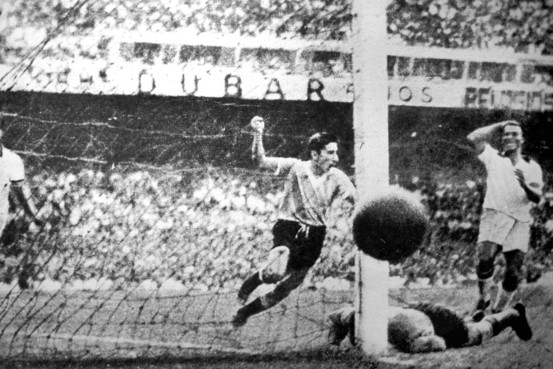
The goal scored by Alcides Ghiggia (centre) in the 79th minutes stunned the Maracana silent and would break the hearts of Brazil.

As expected, the game began with Brazil playing aggressively and attacking against the majority of the Uruguayan defensive line for the first half. However unlike Spain and Sweden, Uruguay was successful in maintaining their defense and the first half ended scoreless.

First blood was drawn at the 47th minute when Sao Paulo forward Friaca shot low past the goalkeeper to give Brazil the first goal of the game. Captain Varela immediately took the ball after the goal and disputed its validity, arguing that it was offside. Varela’s argument was obviously intentional to the point he even forced the referee, Englishman George Reader, to bring out an interpreter. The protest was unsuccessful but it succeeded in calming the crowd down. Then Varela took the ball to the centre of the field and shouted to his teammates: “Now it’s time to win.”

Uruguay was able to find control of the game and Brazil soon had its defensive frailty exposed. Juan Alberto Schiaffino scored the equalizer for Uruguay in the 66th minute. Then in the 79th minute, Alcides Ghiggia ran down the right side of the field, dribbled past Brazilian defender Bigode and scored another goal. The crowd was virtually silenced; Uruguay was now the leader. The silence continued for the remainder of the play until Reader blew the final whistle. It was official: Uruguay won the Cup by defeating Brazil 2-1.

THE AFTERMATH: BOTH IMMEDIATE AND IN THE LONG RUN

“The maximum punishment in Brazil is 30 years imprisonment, but I have been paying, for something I am not even responsible for, by now, for 50 years.”

-Moacir Barbosa

When the sudden news was official, many said there was a ‘traumatic and disturbing absolute silence’ except for the celebrating by the Uruguayan team and delegation. In Brazil, many newspapers refused to accept the fact that their team had been defeated. Radio journalist Ary Barroso retired, albeit briefly. At least two or three people on the top tier of the stands of the Maracana were so distraught by the loss, they committed suicide. Yes, there were peole so distraught over Brazil’s loss, they committed suicide. One man in the stands even had a heart attack. The gold medals were immediately disposed of. The song Brazil the Victors was never played. The nation was just heartbroken over the loss. The game remains one of the biggest upsets in football history and Brazil commonly refers to that game as the Maracanazo, or “blow at the Maracana.” Even Pele talks of how his father cried saying: “Brazil lost!”

In the years to come, the game was influential for a lot of superstition. For one thing, Brazil refused to have a white-and-blue uniform and would soon adopt their famous yellow shirt with blue collar that still exists today. White is seen as bad luck in Brazil. The players of the time were vilified by the fans and were sometimes seen as bad luck. Many went into silent retirement while some never played for the national team again. Only two players that didn’t play in the final played for Brazil’s team in later World Cups. The defeat would weigh down on Brazil’s team so much, they brought a psychiatrist to the 1958 World Cup to remove the haunts of the memories of that game. Whatever the situation, the Brazilian team of 1958 which featured a 17 year-old Pele capturing the world’s imagination won the World Cup: the first of five total World Cups won by Brazil.
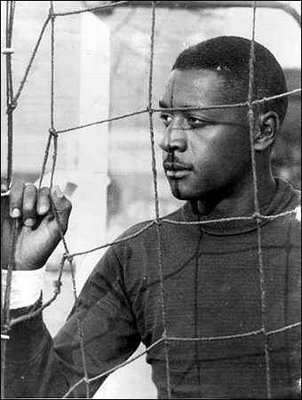
Brazilian goalkeeper Moacir Barbosa would be blamed and even vilified for Brazil's loss for the rest of his life.
Brazilian goalkeeper Moacir Barbosa would be blamed and even vilified for Brazil’s loss for the rest of his life.

However of all the players from Brazil, it was goalkeeper Moacir Barbosa that got hit the hardest. He received the biggest flack and biggest blame for the Maracanazo and it seems like Brazil never forgave him. He was still able to play professionally for another thirteen years and was even part of Brazil’s national team until 1953 but he was commonly shunned by the nation. There was even one time he was in a store in Brazil and a mother pointed at him and said to her small son: “Look at him, son. He is the man who made all of Brazil cry.” Little changed over the years. In 1993 the president of the Brazilian Football Confederation refused to let him be a commentator. In 1994, the Brazilian national team did not want him to visit them because they feared he would give them bad luck. If there was one good thing, his wife stayed married to him for a total of 50 years until her death in 1997. He managed administration at the Maracana but was always at a shortage for money after leaving. He did however received assistance from sources such as Brazilian football team Vasco da Gama and his wife’s friend after her death. The friend remembered his last years: “He even cried on my shoulder. Until the end he used to always say: ‘I’m not guilty. There were 11 of us.'” Moacir Barbosa died of a heart attack in 2000 at the age of 79. He was penniless at the time.

One interesting note is what happened to Alcides Ghiggia who scored that heartstopping goal. He would continue to have a prolific career as a professional player until 1968 and was even signed onto European teams like AC Milan and AS Roma during a time when it was extremely rare for South American players to play for teams outside their home country. As of today, the 87 year-old Ghiggia is the only surviving member of Uruguay’s World Cup winning team from 1950.

Interesting note is that on December 29, 2009, Brazil honored Ghiggia by celebrating that decisive goal by having Ghiggia plant his feet in a mould to take his place along greats like Pele, Eusebio and Franz Beckenbauer. The reception to Ghiggia was surprisingly warm and Ghiggia himself was overcome by emotion to the warmth. Ghiggia also made a return appearance to Brazil during the draw for the groups of the 2014 World Cup in December 2013. Each country that had won a World Cup in the past was allowed to send one of its great players to participate in the draw. Uruguay sent Ghiggia. There was however one negative thing as of recent. Ghiggia has been invited to the opening games of both the 2006 and 2010 World Cup but it was revealed by him that he was not on the guest list for this World Cup. I wonder who did it too? Whatever the situation, FIFA spokesperson Delia Fischer insisted the day before that Ghiggia and a guest will have at ticket. Ghiggia has also commented on this World Cup: “I hope Brazil become world champions, so they can all enjoy it here.”

The Brazilian team this year are hoping to finally make that bad memory of 1950 a think of the past. So far Brazil have been doing very well even if they’re not the most spectacular team out there. They opened with a 3-1 win over Croatia but left people shocked with a 0-0 draw against Mexico. They did reassure people that they will win with a 4-1 win over Cameroon to close out the Group Stage. They did win the Round of 16 match against Chile on penalty kicks after a 1-1 draw. For those concerned since that, don’t be. There have been many teams in the last 28 years that had a match lead to penalty kicks before they played in the final for the Cup and won.

Brazil is often praised and even fancied in the way they treat football like a religion. However their reaction to their loss in 1950 is a negative side of that. Sure the loss to Uruguay was a shock but it’s a shame how they went about it. You know how when the Boston Red Sox won the 2004 World Series and fans then showed a sign saying “We forgive Bill Buckner” in reference to Buckner’s Series-costing fumble in Game 6 of the 1986 Series? I hope that if Brazil wins the World Cup, there should be someone in the stands with a sign saying: “Nós perdoamos Moacir Barbosa  (We forgive Moacir Barbosa).”

WORKS CITED:

WIKIPEDIA: 1950 FIFA World Cup. Wikipedia.com. 2014. Wikimedia Foundation Inc. <http://en.wikipedia.org/wiki/1950_FIFA_World_Cup>

WIKIPEDIA: Uruguay v. Brazil (1950 FIFA World Cup). Wikipedia.com. 2014. Wikimedia Foundation Inc. <http://en.wikipedia.org/wiki/Uruguay_v_Brazil_%281950_FIFA_World_Cup%29>

Bellos, Alex. “Obituary: Moacir Barbosa” THE GUARDIAN. 13 April 2000 <http://www.theguardian.com/news/2000/apr/13/guardianobituaries.alexbellos>
Grey Cup Preview

Grey Cup

On Sunday November 24th, the 101st Grey Cup will be contested at Mosaic Stadium at Regina’s Taylor Field. The game promises excitement as it will pit the Saskatchewan RoughRiders against the Hamilton Tiger Cats. But what’s in store for this year?


This year’s Grey Cup is not a milestone Grey Cup like last year. And unfortunately for a Vancouverite like myself, BC won’t be playing like two years ago. Nevertheless the game promises excitement. The defending champions will not be returning. Neither will the teams that finished at the top of their division during the regular season be playing. Instead it’s the two underdogs from both divisions.

The game also brings a return to Mosaic Stadium for the third and last time. Mosaic Stadium has previously hosted in 1995 and 2003, back when it was still called Taylor Field. Normally it seats about 33,000 people but it’s expandable to 55,000. As I said earlier, this will be the last year Mosaic Stadium will host the Grey Cup. Back in July of last year, it was decided that a new staudium was needed for Regina and its Roughriders. The new open-air stadium is expected to be completed by 2017 with an estimated cost of $280 million and is planned for Evraz Place. This will make it a break with a 107-year tradition with Taylor Field being home of the Roughriders.

The entertainers at the Cup are expected to please the crowds. The Saskatoon-based group The Sheepdogs are to perform in the pre-game show, Serena Ryder will sing the national anthem and Hedley will be doing the halftime show. The Roughriders will spend $14 million on temporary seating to increase the capacity to 50,000. Corporate boxes and concessions will also be added. A new 60-foot wide LED screen an scoreboard will be added to the northeast end zone while a 55-foot wide LED screen and scoreboard will be brought to the west grandstand. Now time to check out the two contenders:

SASKATCHEWAN ROUGHRIDERS

Being the host city of a Grey Cup has been a lucky thing for its team for the third year in a row. Two years ago when Vancouver hosted, the Lions qualified and won. Last year when the Skydome was hosting, the Argonauts qualified and won. This year luck is on the side of the RoughRiders. The regular season went well with 11 wins and 7 losses, placing them second in the West just behind Calgary at the end of the season. They were able to score a win against every team they played. Even leading into the playoffs, the RoughRiders had the advantage as both teams they faced–the Lions and the Stampeders– they’ve had at least one win against. Their play experience payed off as they beat the Lions 29-25 and beat the Stampeders 35-13.

HAMILTON TIGER CATS

They came in as a team with small expectations and they now find themselves playing in the Grey Cup. This year was adifficult year for the TiCats as they were not only no longer playing in the Ivor Wynne Stadium but were playing in the Alumni Stadium in Guelph as they were awaiting their new home stadium. They actually started their 2013 season off slow winning only one of their first five games. Almost echoing the BC Lions in 2011. However head coach Kent Austin was able to turn things around and they’ve won nine of their last thirteen regular season games. Like the RoughRiders, they too had at least one regular season win against the playoff opponents they faced and they materialized too beating the Alouettes 19-16 in overtime and the defending Grey Cup champion Argonauts 36-24.

THE BIG GAME AND MY PREDICTION

Coming to the game, my prediction is pretty much solid. I predict the Roughriders to win scoring double whatever Hamilton gets. It’s no doubt of the two teams, Saskatchewan has showed the most muscle this year. They have the strongest offence in the CFL and a very strong defence too. On top of it, Saskatchewan has beaten the TiCats both times they played them this season. It’s not to say the TiCats can pull an upset. Underrated teams have come from behind in the past. Plus keep in mind the losses to Saskatchewan were part of the first five games where the TiCats struggled. We have a whole new set of TiCats since so Saskatchewan should take note if they want to win. I still stand by my prediction that the RoughRiders will win but that doesn’t mean they’re not vulnerable.

So there you go. The preview for the 101st Grey Cup. Kickoff is slated for 6:00pm EST which would actually be 5:00pm in Regina. May the best team win!

The Confederations Cup And Protests In Brazil

One of many protests in Brazil that occurred during the time of the Confederations Cup.

The Confederations Cup soccer tournament began on June 15th. Also what started around that time was a protest in Sao Paulo about transit fare inflation. Protests soon grew in Brazil. I’m sure the Confederations Cup competition and the worldwide media attention to that event had a lot to do with the growth. But what are the protests about? And why are they happening all of a sudden?

First it’s important to look at the country of Brazil. Most people will consider Brazil a poor or developing country. It is true to an extent. What most people don’t know is how much Brazil’s economy has grown since the 1980’s. Its biggest growth was in the industries of oil, mining and agriculture which grew at 47% or 3.6% per year since 2000. Its industrial growth rate is also impressive with an 8.8% back in 2008. Brazil’s economy is one of the fastest growing in the world and actually now ranks 7th in the world and has the highest GDP per capita in South America and 53rd in the world overall. Its gross national income of $10,721 US in 2011 classifies itself as upper-middle income: an income on par with many countries of Eastern Europe. It can be attributed to many factors. Some say it could be Brazil’s move to democracy that started with an Amnesty Law in 1979 and developed into its own Constitution in 1988.

The quality of life has also gone up considerably in the last 20 years and Brazil has worked to establish methods to either keep it that way or improve it. Despite huge urban sprawl in cities like Rio de Janeiro and Sao Paulo, its cities have some of the finest public transit systems that have been copied and studied by many major cities in the world. Brazil has also reformed its Social Security programs and tax systems. There was even a Law Of Fiscal Responsibility that controls public expenditures by the Executive Branches of all government levels. Export, Industry and Trade has been increased while allowing Brazil to keep itself from vulnerabilities by methods such as not exporting the oil it consumes. It has also halved its debt through exchange rate-linked certificates which has allowed exporting to grow to as much as 20% a year and put a limit on its inflation rate to 4%. It also has an average life-expectancy rate of 72.7 years (2009) which is comparable to that of many Eastern European countries.

So what are all the protests about? Even before I get into the nitty gritty of the protests there are some facts to send a message that a bubble was about to burst. We must remember that while Brazil has improved a lot in past years and especially this century, there’s still a lot of development to go. Despite its improvements, the 53rd best GDP in the world shows they can do better. Its gross national income is roughly 1/4 of what developed countries like Canada are receiving. In addition, the minimum wage translates to an annual income of an unenviable 8,086 Brazilian Reals (R$) or roughly $3,600 American. Even in government despite being a democracy, Brazil still ranks as the 69th least corrupt country in the World according to Transparency International with a score of 43 out of 100.

The first protests actually started on June 1st, two weeks before the Confederations Cup was about to begin. The first major protest was in the city of Sao Paulo of a transit fare increase from R$ 3.00 to R$ 3.20. The first protest started on June 6 and grew over time. The real turning point came when police fired rubber bullets at the protesters and journalists on June 13th. This was widely criticized by Amnesty International and even Brazilian Amnesty Groups.

Soon after, and while the Confederations Cup was progressing further, the protests grew to as many as 250,000 in various major Brazilian cities on June 17th protesting. Rio de Janeiro had the biggest that day with 100,000. Even Brazilians in other world cities stages their own protests. By June 20th, protests grew to millions of people in 100 cities and grew over the next few days. As negotiations and government involvement in matters occurred, which I will discuss later, the protests calmed down but not without incidents.

Interesting enough is not just the number of protesters and cities involved growing but the issues too. What started off as one protest over a transit fare increase grew to a wide array of issues being protested against or demanded:

  • A bill (PEC – 37) that hindered Public Ministry to investigate.
  • The distribution of petroleum royalties to the appropriate causes.
  • Lack of criminalization of all forms of Corruption and Embezzlement.
  • Secret Voting in Congress for forfeiture of office.
  • A bill (PEC – 33) allowing decisions made by the Supreme Court going to Congress.
  • Having a Privileged Forum.
  • Taxing in Public Transport.
  • Demands to the National Pact for fiscal responsibility, control of inflation and proper distribution of funds to education, public transport and health.
  • Demands to implement means of political reform in the country.
  • Demanding 10% of the GDP be devoted to education.
  • Demanding a free-pass for full-time university students.
  • Demanding a revocation of a ‘gay cure’ bill (PDL – 234) authorizing psychologists to treat LGBT people.

Evident enough is that the growth in numbers and issues happened as the Confederations Cup matches were occurring. I still remember telecast of Confederation Cup matches on CBC that even included security updates of what was happening in the cities. Even though the protests have been successful in leading to solutions of problems being protested over, there was still last chances for opportunity as violent clashes occurred in Belo Horizonte as it was hosting a semifinal match on the 26th and in Rio de Janeiro as it was hosting the final on the 30th.

You could understand why the Confederations Cup had a lot to do with the increase in protests. With a major world event happening, it’s obvious the protesters want to highlight Brazil’s problems right while the eyes of the world are watching. Mind you these next three years are going to be very big for Brazil as they will play host to many major international events. Besides the Confederations Cup that finished yesterday, Rio will host the Catholic event World Youth Day later this month. Next year Brazil will host soccer’s World Cup with twelve major cities contesting the competition. And 2016 will have Rio hosting the Summer Olympic Games. I don’t know of any other country that has had to host this many major events in a matter of four years. For Brazil it’s a chance for them to show the world their image as a well-to-do nation as they will be the first developing country since Mexico in 1986 to host a World Cup and the first developing country since Mexico again in 1968 to host a Summer Olympics. In fact the World Cup was even the subject of protests that received less notice than most other protests. Many were protesting the government giving a lot of the budget ($12 billion US) to these sports events instead of on living conditions.

I mentioned that many of the issues being protested upon have been approved within this two-week span of time. You can assure the media attention to this had a lot to do with it. Among those approved by the governments and senate are: public transit prices reduced and taxes eliminated; petroleum royalties destined to education (75%) and health (25%); reform and improvement demands to the National Pact being granted; secret voting ended; Bill PEC – 37 being revoked; all forms of Corruption and Embezzlement being criminalized; and implementing a Plebiscite to politic national reform. Even though the Confederations Cup is over and a lot of reform and improvements have been politically approved, there are still demands outstanding. Some like the 10% allocation of the GDP to education, revocation of bill PDL – 234, and the Free Pass for students are currently under negotiation by Congress while issues of ending of Privileged Forum and the elimination of Bill PEC – 33 still remain undiscussed. On top of it, time will tell if the approved reforms are carried out and if carried out successfully or not. Another thing to look for in the future is how much impact it will have on President Dilma Rousseff. Her popularity has already been hit by the protests. It remains into question whether she will win the next election.

Even though many of the protester’s demand have been met and even though many are still pending as of now, don’t expect all the action to end just as the Confederation Cup has ended. I’m sure as long as Brazilians see injustice or wrong ways of doing things, there will continue to be protests even without the anticipated major events happening and even after they all end. Nevertheless it’s excellent opportunism to make improvements happen to a developing nation that has improved so much in recent decades but still has more to improve upon.

WORKS CITED:

WIKIPEDIA: Economy Of Brazil. Wikipedia.com.  2013. Wikimedia Foundation Inc. <http://en.wikipedia.org/wiki/Economy_of_Brazil>

Uncredited Author . “Brazil: One Million People Demand Accountability” Transparency International. 21 June 2013. <http://www.transparency.org/news/feature/brazil_one_million_people_demand_accountability>

WIKIPEDIA: 2013 Protests In Brazil. Wikipedia.com.  2013. Wikimedia Foundation Inc. <http://en.wikipedia.org/wiki/2013_protests_in_Brazil>

2013 Confederations Cup: More Than A Soccer Tournament

The FIFA Confederations Cup is as much of a pre-World Cup test event as it is a major international soccer tournament.
The Confederations Cup is as much a pre-World Cup test event as it is a major soccer tournament.

So 2014 has the World Cup and 2012 had the Euro. I guess that means 2013 will be devoid of big-time international soccer excitement, right? Wrong! 2013 is the year of the Confederations Cup, an eight-team competition held in Brazil. It’s good and important for a lot of reasons.

A TOURNAMENT GROWS IN SIGNIFICANCE:

The Confederations Cup is more of an intercontinental competition than international. Six of the eight teams that are competing here have earned their berth by winning their respective continent’s confederation championship. The only exceptions being the World Cup winner and the host country. That’s how the Confederations Cup is contested.

The idea of having a soccer competition of the best of the continents was an idea that evolved over 21 years. Actually the first attempt at such a competition came not with the participation of FIFA. It came through the royal family of Saudi Arabia through a competition called the King Fahd Cup. The first King Fahd Cup was contested in Riyadh, Saudi Arabia over five days in October 1992 and consisted of Saudi Arabia, which was the Asian Cup holder at the time, CONCACAF Gold Cup winner USA, African Cup Of Nations holder Ivory Coast and South America’s Cop America holder Argentina who won the Cup. The King Fahd cup was contested once more in 1995 and expanded to six teams: five continental cup winners and host Saudi Arabia.

By 1997, FIFA became involved and the King Fahd Cup had been renamed the Confederations Cup. This is the turning point with the Cup being contested the year before the World Cup and with the competition consisting of the eight teams through the qualifying format that still exists today. There were however two exceptions as two second-place teams from their continent’s championships competed: Czech Republic because Euro winners Germany declined to participate and United Arab Emirates because the hosting Saudis had already qualified as hosts. This would also be a new standard for the Cup  that if one of the continental cup holders already earned their berth as either host nation or World Cup holder, the runner-up team would be given the continent’s berth.

After the 1997 tournament, the Confederations Cup would be contested bi-annually and in a different country every year. The 2001 tournament featured a unique twist as the host countries were Japan and South Korea, the host of the following year’s World Cup. That would be the norm from now on in which the Cup held the year before the World Cup would be hosted by the World Cup host nation(s). Six of the stadiums that were to be for the World Cup the following year were the sites for the Confederations Cup.

The Confederations Cup would continue being a bi-annual competition. Germany, the host nation of the 2006 world Cup, would continue the tradition by hosting the 2005 Confederations Cup with five of the venues for the following year’s World Cup used for this event. Since 2005 in Germany, the Confederations Cup has become a quadrennial event and seen as a warm-up event for the following year’s World Cup. South Africa used it to prepare for their hosting of the World Cup and you can be sure Brazil will do the same here. Six venues that will participate in next year’s World Cup including the legendary Maracana stadium will stage this competition. You could say the Confederations Cup has really grown a lot in the last decade.

WITH THE WORLD CUP A YEAR AWAY…:

You can be sure with the Cup being contested, the media will be paying close attention to how prepared Brazil is for this event and how ready they will appear to look with the World Cup just a year away. Already the media has paid high attention to Brazil’s troubled preparations for the World Cup. FIFA and even local critics have complained of construction delays and cost overruns. Few infrastructure projects were completed and even the 3G network couldn’t work properly. Even the official musical instrument of the World Cup was a failure as fans of losing teams would throw it on the field. Only two of the six stadiums participating in the Confederations Cup were completed by December and two cities were almost axed from hosting. In fact delays have caused FIFA to make an exception in their pre-World Cup demand that the host country hold three major competitions.

It’s not to say it’s all bad. Tickets for the World Cup and the Confederations Cup were a success. Also a record number of volunteers for both the Confederations Cup and World Cup signed up. Even exports from Brazil look optimistic as Brazil anticipates to export $1 billion from this Cup. Brazil has openly vowed it will be ready for the World Cup and even FIFA believes they’re confident Brazil will be ready. There’s only one year to go.

TEAM BY TEAM ANALYSIS:

Now enough talk about hosting the tournament. Let’s move onto the teams and see how well they stack up for this. All but two teams are winners of their respective country’s continental championship. The two exceptions are Brazil who qualifies as hosts and Italy which was runner-up at Euro but qualified since the winner Spain already qualified as World Cup winner. Here’s how they pare up group by group with their current FIFA ranking in brackets:

GROUP A:

-Brazil (22)- You’d think a country like Brazil with a legacy and depth of talent would enter the competition as the favorites but it’s actually not the case. Brazil first surprised everybody at the 2010 World Cup with a quarterfinal loss to the Netherlands. They surprised soccer fans even more by being ousted in the quarterfinals of the 2011 Copa America. Brazil just wasn’t Brazil. Lately Brazil has been making some changes like bringing back coach Luis Felipe Scolari who helped coach Brazil to the 2002 World Cup. Their play has gotten better in a slowly but surely pace. They may have tied Italy 3-3 three months ago but just last week they won a friendly against France who has been traditionally considered Brazil’s ‘Achilles Heel.’ The Confederations Cup could be a turning point for Brazil and send a message how much their team has improved and how far they would have to go to win the World Cup. I’m sure the world will be watching.

-Italy (8)- If you remember last year’s Euro, you’d remember it for Italy’s comeback as much as for Spain’s win. Italy was a team that was direly in need of improving after the 2010 World Cup and their qualification for the finals shows how far they came. Their play in World Cup qualifying matches have also been excellent. However they’re not immune to choking as noticed in a 2-2 friendly against Haiti. Nevertheless this tournament can also send a strong message to Italy how their team looks en route to the World Cup.

-Mexico (17)- Mexico has always been considered the ‘sleeping giant’ of soccer. The team has always been loaded with talent and skill but they have yet to prove themselves in a big way at a major tournament. They may be the current CONCACAF Gold Cup holders but even now with World Cup qualifying for the CONCACAF they still find themselves third in the standings with the USA leading. This group being the ‘group of death’ in the Cup could also pose a challenge. Nevertheless Mexico could pull one of the big upsets of the tournament. We also shouldn’t forget Mexico won the gold medal in London. It’s a given in any tournament to never count Mexico out.

-Japan (32)- If there’s one continent that has grown the most in terms of soccer play in the last two decades, it has to be Asia. And Japan has to be one of its strongest examples of accelerated success. Nevertheless Japan finds itself in a tight situation here in the Cup against three teams known for their legacies and their consistency of play. But don’t count Japan out. They’re the first team to earn a World Cup 2014 berth on play by already leading their AFC qualifying group by a huge margin. Plus they’ve won three of their six matches in 2013. So if any team can most give the biggest surprise at the Cup, it’s Japan.

GROUP B:

-Spain (1)- How about that? Spain has gone in five years from being ‘soccer’s greatest underachievers’ into the top team in the world. Two straight Euros and a World Cup. They sure have come out of their shell and they come to the Cup as the favorites to win. Heck they haven’t had a single loss not just in 2013 but 2012 too. They look to have an easy Group Stage play but play in the semis and possible finals could make things more challenging for Spain. Just because a team is #1 and undefeated for two years doesn’t mean their infallible. We shouldn’t forget they lost to the USA in the semis at 2009’s Confederations Cup. Here could be yet another achievement in Spain’s recent legacy or a sudden reminder of their own weaknesses. Only the next two weeks will tell.

-Uruguay (19)- Uruguay has to be the comeback story right now. It seemed as though Uruguay’s soccer legacy was a thing of the past. Their prowess from the 30’s to the 50’s captured the imagination of the world. However it was their fourth place finish at the 1970 World Cup that appeared to mark the end of Uruguay’s greatness. However recent years has seen Uruguay make a comeback with a fourth-place finish at the 2010 World Cup and the win of the 2011 Copa America. But before you can shout out that Uruguay was back in a big way, it hasn’t been completely easy. They currently stand fifth in the standings of World Cup qualifying play for the CONMEBOL. Nevertheless while their play against South American teams have been a bit of a struggle, their play against other international teams have been quite impressive. This tournament can also send a message to the Uruguayan team in terms of what they need to do to qualify for the World Cup.

-Nigeria (31)- Nigeria has always been one of the top African teams. They look impressive in world Cup qualifying right now. The big question is their international play. Not much is known and past international and World Cup play has not given to impressive results. One result that did send a strong message was a 2-2 tie against Mexico two weeks ago. Nigeria could prove to be a stronger team here than most experts think.

-Tahiti (138)- Usually the OFC Nations Cup goes to either Australia or New Zealand. Last year it went to little Tahiti! Tahiti has become the least populous nation ever to win a continental championship. Here at the Cup, Tahiti’s biggest victory is just simply qualifying. Not much is expected since all the other teams have stronger depth in talent and international experience. In fact Tahiti is the only team at the Cup that doesn’t have a chance in even qualifying for the World Cup as the Oceania contestant for a berth against a CONCACAF team is New Zealand. Nevertheless the Cup can be a valuable learning experience for Tahiti. They’ve had hardly any international experience outside of Oceania. Now’s their chance to experience play against some of the best teams in the World. Despite their meager chances of qualifying for further play, Tahiti is probably the only team at the Cup with nothing really to lose and everything else to gain.

So there’s my rundown of the eight teams for the Confederations Cup. I’m not going to hazard predictions until the Group play is done and the semifinal berths have been decided. In the meantime stay tuned to see who will win the 2013 Confederations Cup. And stay tuned to see how ready Brazil appears to be for hosting next year’s World Cup. Both should be interesting to see.

The Grey Cup Plays Its 100th Game

This Sunday will have the 100th contesting of the Grey Cup, the most prestigious prize of Canadian football. It will be an exciting time not just for fans of Canadian football but fans of the Cup itself.

A CUP FULL OF HISTORY

I’ve already talked about the Grey Cup partially back in a post from last year but I’ll elaborate more here. The Grey Cup has more history than the Super Bowl: 58 more years to be exact. Before there was a CFL, the Grey Cup was open to Canadian football teams from all sorts of leagues. The very first Grey Cup was played in 1909 by the University of Toronto Varsity Blues and the Toronto Parkdale Canoe Club at Toronto’s Rosedale Field to a crowd of just over 3,800. Yeah, that small. The winner was the Blues 26-6. From 1909 to 1915 the Grey Cup was often a contest between Toronto and Hamilton teams. World War I led to the postponement of four straight Grey Cups until it was revised back in 1920. Those would be the only years the Grey Cup was not contested.

It wasn’t until 1921 that the Grey Cup stopped being a contest strictly of Ontario teams when the Edmonton Eskimos qualified for the final. It would pave the way for teams from Regina and Winnipeg to qualify for the final. 1931 was a history-maker for the Grey Cup as it was contested in Montreal’s Molson Stadium: the first time ever the Grey Cup was contested outside of Ontario. Just as historic was the match as it featured two teams outside of Ontario: the Regina Roughriders and the Montreal AAA Winged Wheelers. Montreal won 22-0, making them the first team outside of Ontario to win the Grey Cup. The first team from Western Canada to win the Grey Cup was the Winnipeg ‘Pegs back in 1935. While the Grey Cup was cancelled during World War I, it was not cancelled during World War II where teams from branches of Canada’s armed forces qualified for the finals.

The Grey Cup’s popularity grew after World War II as 1948 saw the first Grey Cup with a crowd of 20,000 in attendance for the first time. Then the Canadian Football Council (CFC) became the Canadian Football League (CFL) in 1958 which would propel the Grey Cup to further popularity. Since then, Grey Cup Sunday has become a permanent fixture in Canadiana with the top team from the East competing against the top team from the West. An average crowd of over 50,000 gather to watch the big final in the stadium and millions more watch from their house.

A MILESTONE WORTH CELEBRATING

This year marks the 100th contesting of the Grey Cup. To celebrate, there has been a Grey Cup 100 Train Tour with the Cup touring various cities of Canada with three CFL themed railway coaches: a museum car, a railcar with contemporary memorabilia, and a car containing the Grey Cup itself. It started September 9th in an official ceremony in Vancouver, traveled across Canada for ten weeks visiting various Canadian cities including all cities with CFL teams, and ended in Toronto on November 17th. The 100th Grey Cup has also been celebrated through Canada Post. Canada Post has issued commemorative stamps of all the teams and the Cup itself. It has also issued 8*10 pictures of the various Grey Cup stamps and many other gift sets. Rosedale Field–which has had its spectator seats removed years ago and now functions as a field for festivals and community events as part of Rosedale Park– was commemorated during the celebrations in Toronto with a commemorative plaque from Heritage Toronto for its role as host field for the first-ever Grey Cup.

THIS YEAR’S CUP

As for this year’s Cup, the event will be held at the Rogers Centre, formerly SkyDome, tomorrow night. This is the 46th time Toronto will host it. There will be a fan parade from Varsity Stadium to Rogers Centre. The coin toss of the game will consist of the first 100th commemorative Grey Cup coin struck by the Royal Canadian Mint executed by Governor General David Johnston. There will be various musical acts for both the pre-game show and the halftime show. Pre-game show acts include the Guess Who’s Burton Cummings and country singer Johnny Reid. Halftime show performers include Justin Bieber, Carly Rae Jepsen, Marianas Trench and Gordon Lightfoot.

As for game itself, it will be a face-off between the Toronto Argonauts representing the East and the Calgary Stampeders representing the West. So who will win? Here’s the breakdown:

EAST – Toronto Argonauts: The Argonauts have not looked like the team most likely to win the berth for the East. They have both won and lost nine games during regular season play and it was looked to be Montreal that would represent the East. Nevertheless Toronto has played brilliantly in their Division playoff games firstly against the Eskimos 42-26 and recently against the Allouettes 27-20. Toronto has an advantage leading into the Cup having won both its regular season games against Calgary. Their veteran quarterback Ricky Ray has been consistently strong and looks strong leading into tomorrow’s game. Nevertheless Toronto knows Calgary has a strong defense and they won’t overlook it for tomorrow’s game. Kevin Huntley even admitted their game against Saskatchewan, which I will talk about later, sent them the message. Nevertheless they have been taking note on Calgary’s strengths and weaknesses. They know that Kevin Glenn and Jon Cornish are the ones they have to maintain if they want to win tomorrow. Will they win it again or will it be a change in the game plan?

WEST – Calgary Stampeders: Like Toronto, Calgary was second in their division leading up to the playoffs. The Stampeders have has a better season with twelve wins and six losses. They too have been brilliant in the playoff games winning against Saskatchewan 36-30 and BC 34-29. Their consistency has been their biggest strength. They’re not flashy showmen, just a strong team. One important statistic to remember is that Calgary lost both of its regular season games against Toronto. Nevertheless they showed they can come from behind by winning a game against Saskatchewan where they were originally trailing by 17 points with six minutes to go. Quarterback Kevin Glenn has been getting better and stronger as of recent. Their other strong players have played well. Nevertheless they know the Argo’s star quarterback Ricky Ray has returned from surgery back in October and is playing strong. Also the Stamps know the Argos have been good at holding Cornish back. Tomorrow could go either way for the Stamps.

MY PREDICTION:

So what’s my say? This is a hard one to call. both have their strengths and weaknesses. Both have shown they know how to perform when it matters. I have to give the win to Toronto. It’s not just about their play against Calgary this year but also balancing things out. Kevin Glenn has become a stronger quarterback but Ricky Ray has returned in a strong way. Also Toronto knows how to hold down Cornish and they have a special edge with Chad Owens winning the CFL award for Most Outstanding Player. So I have to hand it to Toronto. They have the edge but it’s going to be a tight game.

Anyways everything will be decided tomorrow in Rogers Centre and it promises to be a great game and a great show. In the end, one city will be left smiling. So may the best team win!

WORK CITED:

WIKIPEDIA: List Of Grey Cup Champions. Wikipedia.com. 2012. Wikimedia Foundation Inc. <http://en.wikipedia.org/wiki/List_of_Grey_Cup_champions>

Grey Cup 2011

On Sunday November 27th, fans of Canadian Football will have all their attention fixed on the newly renovated BC Place Stadium for the 99th Annual Grey Cup. For those unfamiliar with Canadian Football or even the Canadian Football League (CFL), the Grey Cup is to Canadian Football what the Super Bowl is to American Football. This year, the rivalry between East and West over the Cup will be the BC Lions against the Winnipeg Blue Bombers.

For those non-Canadians unfamiliar with the CFL, the CFL is as much a part of Canadiana as the NFL is to Americana. The Grey Cup has been part of league football in Canada since 1909 but it wasn’t until the CFL formed in1958 that the Grey Cup was a permanent fixture in Canadiana. For the most part, the CFL consists of nine teams except when something goes wrong with one of them. Usually there is at least one city that has problems with their CFL team. In the 80’s and 90’s, it was Montreal. Now it’s Ottawa. But don’t worry. Ottawa will be returning in 2013. Plus there’s talk of possible franchises in the future from Quebec City or Halifax.

For the most part, the CFL has been happy to be Canada’s own football league. For many decades, it didn’t worry about competing with the NFL because it knew it had a very solid dedicated base in Canada. Things became uncomfortable in the late 80’s when the CFL tried attracting new players to the league but couldn’t compete with the big salaries of the NFL teams. In the 90’s, the CFL tried things like offer a $5 million annual salary to Raghib ‘Rocket’ Ismael to join the Toronto Argonauts in 1991. It turned out to a success for that one year. Sure the Rocket and the Argos won the Grey Cup that year but the Rocket’s career went downhill after that. The success of the Rocket led to the CFL to form franchises in cities like Sacramento, Baltimore, Las Vegas and Shreveport. In 1995 Birmingham and Memphis entered the league. The 1995 Grey Cup came as a shocker as the Baltimore Stallions won; the only time an American team won the Grey Cup. After a lot of business issues and bad management from some American teams, the CFL returned to being based completely in Canada since 1996 and we’re happy to keep it that way.

Nowadays, the CFL does not need to seek out ways to try to reach the popularity level or moneymaking level of the NFL. Ever since the CFL stopped its expansion into the US, they were reminded again that they can hold their own with loyal Canadian fans. The CFL has the seventh-highest per-game attendance average of 27,000. Its average may be less than that of Major League Baseball and not even half that of the NFL but it has a higher average than the top soccer leagues of Mexico, Italy, Argentina, France and even Brazil. Yeah, that well-attended.

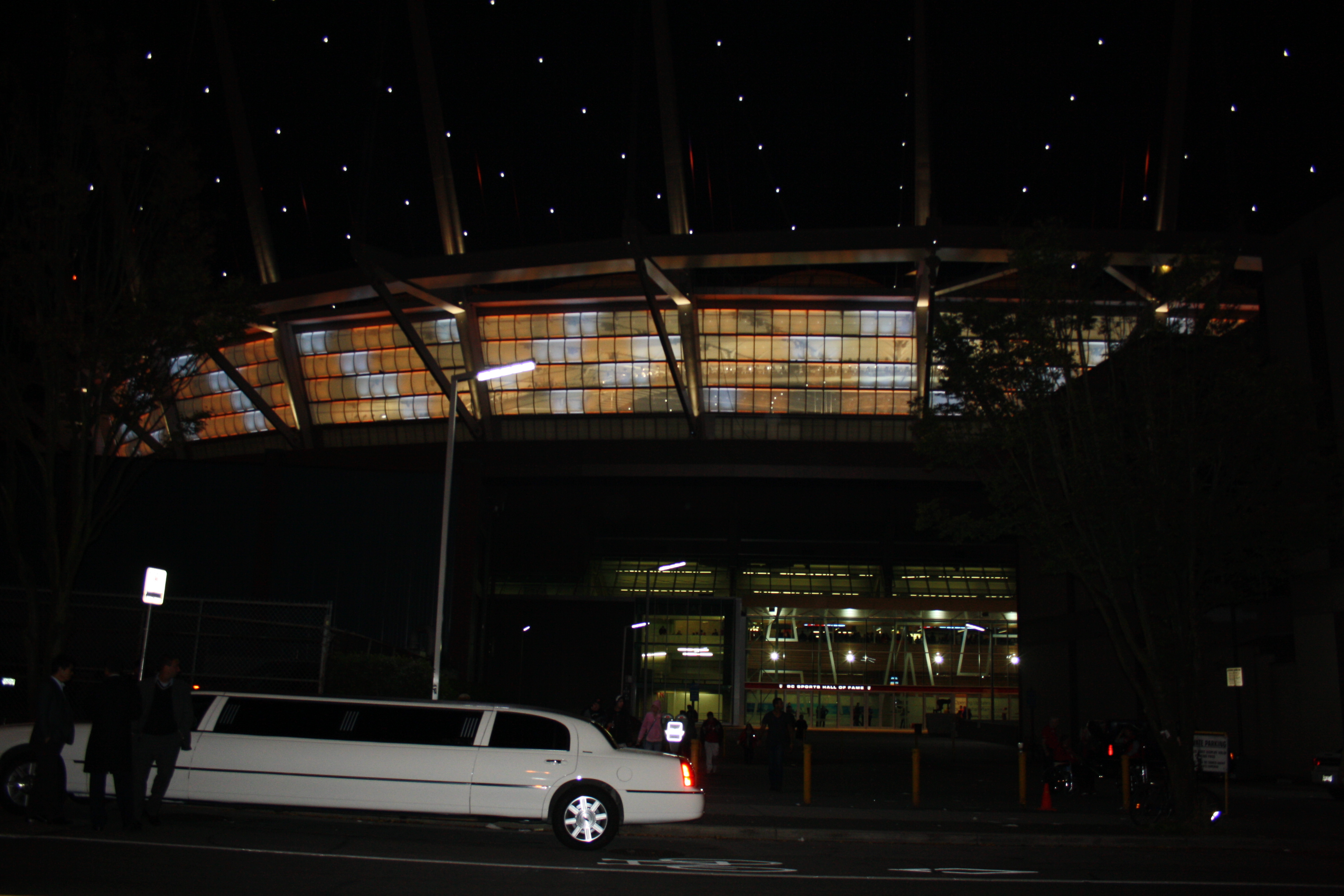
BC Place and its new roof on its opening night.

This year’s Grey Cup will prove to be an exciting match. Firstly because it is held in BC Place with the new roof. Before the 2010 Winter Olympics, there was a demand for a new roof for the stadium as the air-supported ETFE roof had a tear in 2007. The construction of the new roof began after the 2010 Paralympics and was completed on September 30 of this year. During that time, the Lions returned to the dismantled Empire Field and played in a stadium consisting completely of 25,000 temporary seats. This was quite an experience for me as I saw the Lions’ fourth game of theis season in that temporary stadium. A lot of banging, that’s for sure. As for BC Place’s new roof, it’s more high-tech and doesn’t require so much air pressure to keep it up. The scoreboard is supported by 36 cables connected to its own mast. The top of the Stadium consists of lighted glass. Looks great from the outside, but now that people couldn’t call BC Place ‘The Marshmallow’ anymore, what could they call it? My pick for the name would be ‘The Crown’. Anyways in the very first year of BC Place being ‘The Crown’, it appropriately hosts the Grey Cup this year. This year the race for the Grey Cup has narrowed the field down to its East and West contenders: the Winnipeg Blue Bombers and the home team BC Lions. Here’s a wrap-up on how the two stack up:

BC LIONS

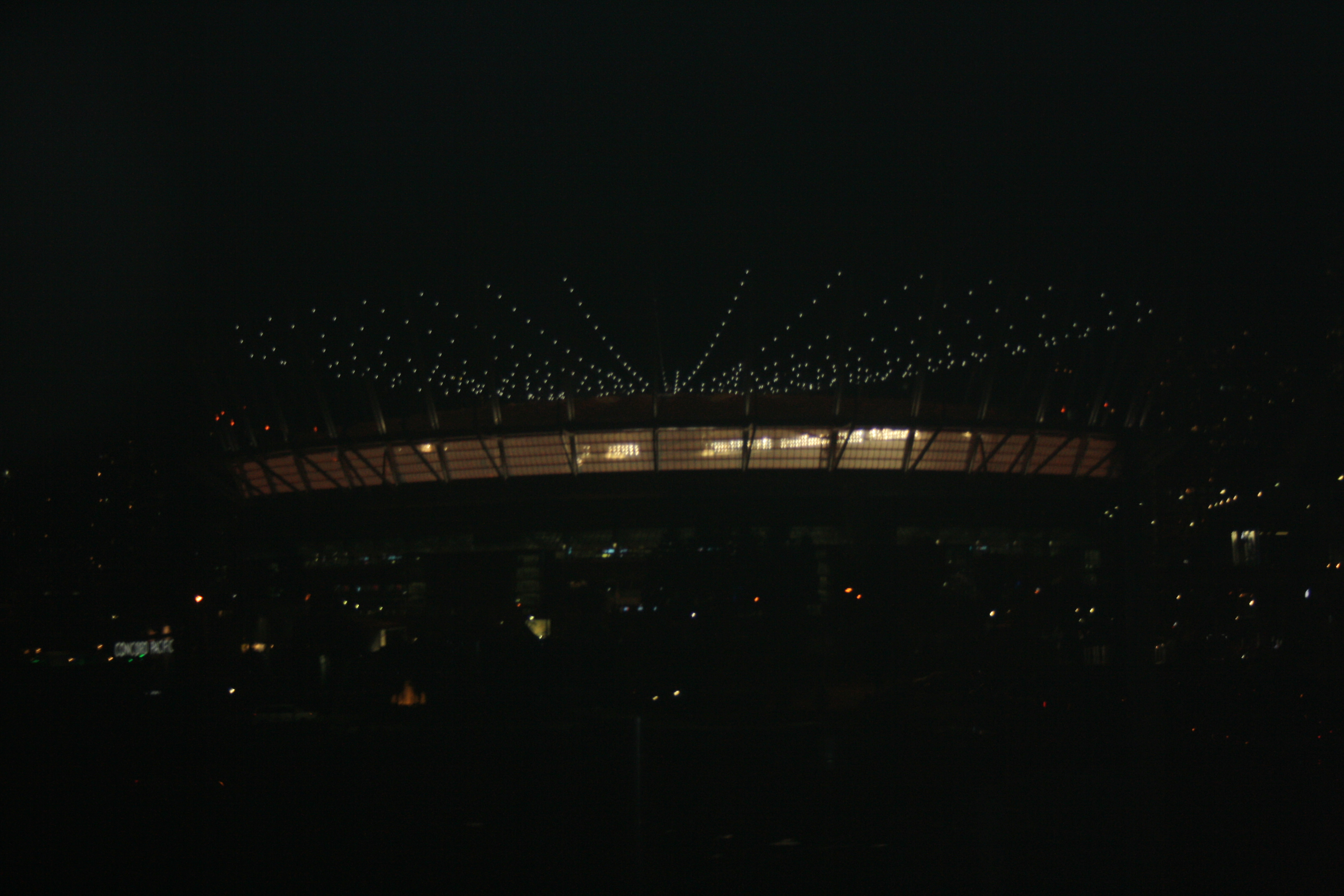
Another pic of the newly renovated BC Place at night.

If one would say at the beginning of the CFL season that the Lions would be in the Grey Cup, most would be laughing. The start of the regular season for the Lions was depressing and even frustrating for fans. The first five games were straight losses. Even I attended the fourth game, against Hamilton, and witnessed the loss. Their sixth game was a win against Saskatchewan only to follow it us with a loss against Edmonton. After that, it was like a miracle turnaround. Eight straight wins propelling themselves to the top of the CFL. There was only one loss after the sixth game, and that was against Hamilton in their 16th game in the regular season. By finishing atop the West Division, they only had to wait until the Division Finals to play their first and only playoff game against Edmonton, in which they won 40-23.

Overall, the 2011 Lions have had an excellent season with 11 wins and 7 losses. They became the first team in CFL history to lose their first five games only to end regular season on top of the CFL. Many teams they lost to at the start of the season they were able to beat in matches later in the season. The only two teams the Lions did not win against this season were the Hamilton TiCats and the Winnipeg Blue Bombers. This may come as an Achilles heel for the Lions as they will face Winnipeg for the Cup, and Winnipeg beat Hamilton en route to their East division berth for the Cup. However it may not be a glitch as we should remember that the two losses to Winnipeg came in its first seven games of the season. The Lions have sure changes since then and they could be ready for Winnipeg this time.

Also a bit of Grey Cup trivia. This year’s Grey Cup may come in the first year of BC Place’s new roof but BC Place hosted the Grey Cup in its opening year: 1983. Like this year, the Lions played in the Cup. Unfortunately they lost. Actually of the three times BC both played in and hosted the Grey Cup, only once were they the Cup winners. Something to think about for Sunday.

WINNIPEG BLUE BOMBERS

The Bombers finished atop the East Division with 10 wins and eight losses. Sounds impressive at first but while the Lions started their regular season weak and ended strong, the Bombers started strong and ended weak. They started off impressively winning all but one of their first eight games of regular season. However there was a surprise turnabout as the Bombers would only win three of the last ten games of regular season. They were known for their strong defence but many of their top defencemen were injured later on in the season. By finishing atop the East division, their only playoff game was the division Final against Hamilton which they won 19-3. If their strength from the beginning of the season has returned to form, then they should be able to beat the Lions for the Cup. It may not be 100% as some of their top defencemen are too injured to play in the Grey Cup. If Winnipeg’s defence is still strong, it will be decided in the play for the Cup.

One additional note. While Winnipeg had its own challenges on the playing field, its biggest news this season was of the loss of their Assistant Coach Richard Harris. Harris collapsed at the CanadInns Stadium on Tuesday, July 26 and died that afternoon. He was 63. He was promoted to Assistant Coach this season after being their Defensive Line Coach since 2006. This also came as a loss for the Lions too as he was their Defensive Line Coach from 2011 to 2004. Surely Coach Harris will be on the minds of the Bombers when they play the Grey Cup on Sunday.

For me, it’s hard for me to pick who will win or who I should cheer for. I was born in Winnipeg and lived there most of my life. However I’ve made a home for myself in Vancouver these past ten years. BC has only won the Cup five times compared to ten for Winnipeg, but Winnipeg hasn’t won the Cup since 1990 while BC’s last won the Cup five years ago. Anyways I decided not to cheer for either team and let the game decide the better team. Anyways, Go Bombers! Go Lions! May the best team win!

Stanley Cup Game 7 Aftermath

Excitement Before The Big Game.

I don’t have to explain Game 7 for you; most of you know Boston won 4-0 and took the Stanley Cup with it. I don’t even have to explain the aftermath that happened immediately after. It’s worldwide news now. However I would like to tell what I experienced, why I’m not surprised and what has happened since.

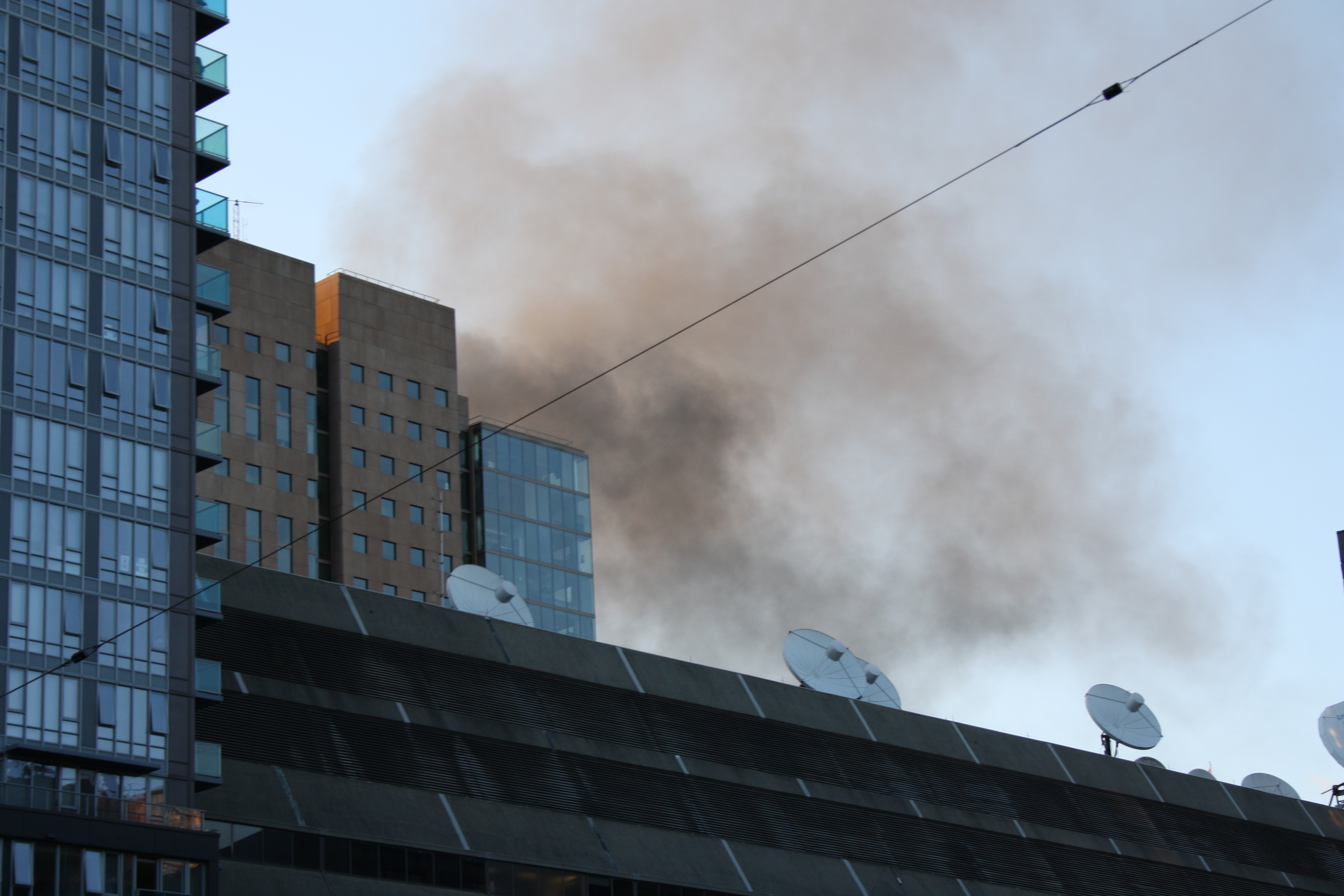
I saw the event over around Robson and Beatty. It was in a building with 70 others. It was a fun time, even though we weren’t happy with the final score. We sat through watching the Stanley Cup being given out, despite our obvious disappointment. Afterwards many of us stuck around to help set the place up for tomorrow’s work day. As we were looking out the window, all we saw were people walking down the street. Within a matter of minutes, I heard someone say that two cars were being burned. Another short while later, I heard another say that a police car was set ablaze on Granville. Once we had the room completed, I talked with four others I would be leaving the building with that I felt it was best to go to the Yaletown SkyTrain. Just as we were leaving, we went outside and saw rising smoke from above a skyscraper. The skyscraper was blocking the view of where the smoke was coming from. Then we heard two explosions that sounded like gunshots only to see more smoke. It was after ten minutes of looking out to the rising smoke that we decided to walk the long route to Yaletown SkyTrain. While walking, we saw one cafe had a TV screen on and live coverage of a car burning outside the Post Office building; that area where we saw smoke rise. We were all shocked. Soon we boarded the Canada Line Skytrain, got off at the Langara station and took a bus to a Metrotown Restaurant to toast the Canucks.

 At home hours later, I didn’t know if I would be going to work the next morning. The next morning I was able to go to work but not without seeing some of the damage, destruction or repairs happening. It was all over the news. Reactions not just in Vancouver’s news but all across Canada and around the world poured in. The riot led to 150 injuries, 15 burned cars and millions in damages and stolen goods. Even a story of a Boston Bruins fan stabbed in the neck. Vancouver was officially defamed.

The craziest thing about these riots is that they were not completely unexpected. Some may remember that seventeen years ago, in 1994 when the Canucks lost the Stanley Cup to the New York Rangers in Game 7, there was rioting happening then too. Businesses were damaged, there were at least 100 injuries. Police had to rush in to stop the action. Remembering that, I was originally planning to title my article Vancouver Riots: The Next Generation. Recently I heard a story from my uncle that there was a riot in Vancouver back in the 60’s when they won the Grey Cup. Whatever the situation, it was the riot of 1994 that would make Vancouver the unofficial ‘riot capital of North America’. There would be further riots: 1997 at the time of the G8 summit, a multitude of pre-Olympic protests and clashes, and Olympic raids during 2010. Vancouver has also been known as a central meeting spot for anarchists from all over BC and even the Northwestern United States. Even many people knew that there would be a riot after Game 7, win or lose. Some made mention that there were people in the crowd of Georgia street dressed as fans but carrying pepper spray and goggles for the sake of wreaking havoc at the end. Mayor Gregor Robertson and the Chief Of Police even made mention in a news story that they learned from 1994 and would be prepared for a possible riot this time around. They couldn’t have been wronger.

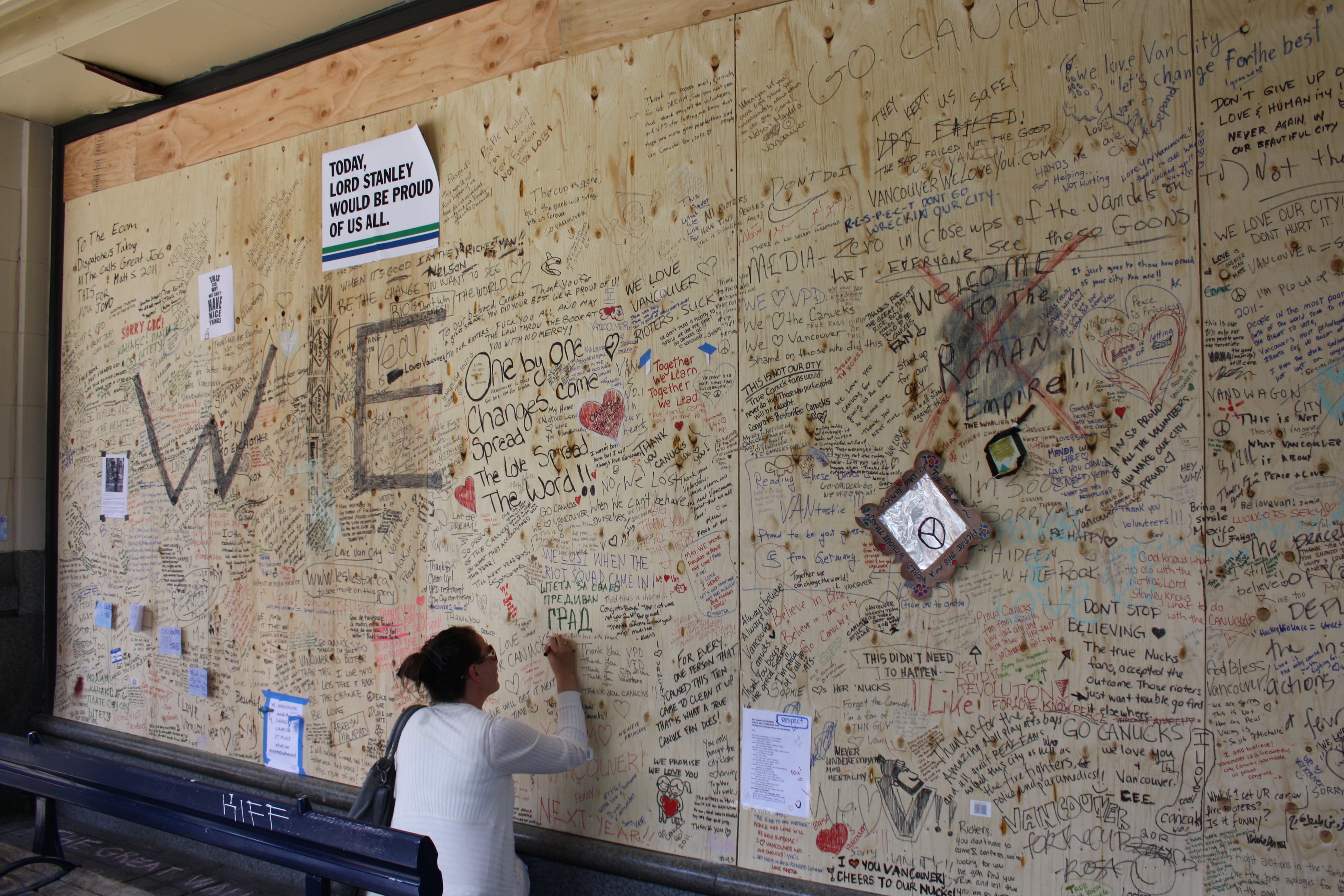
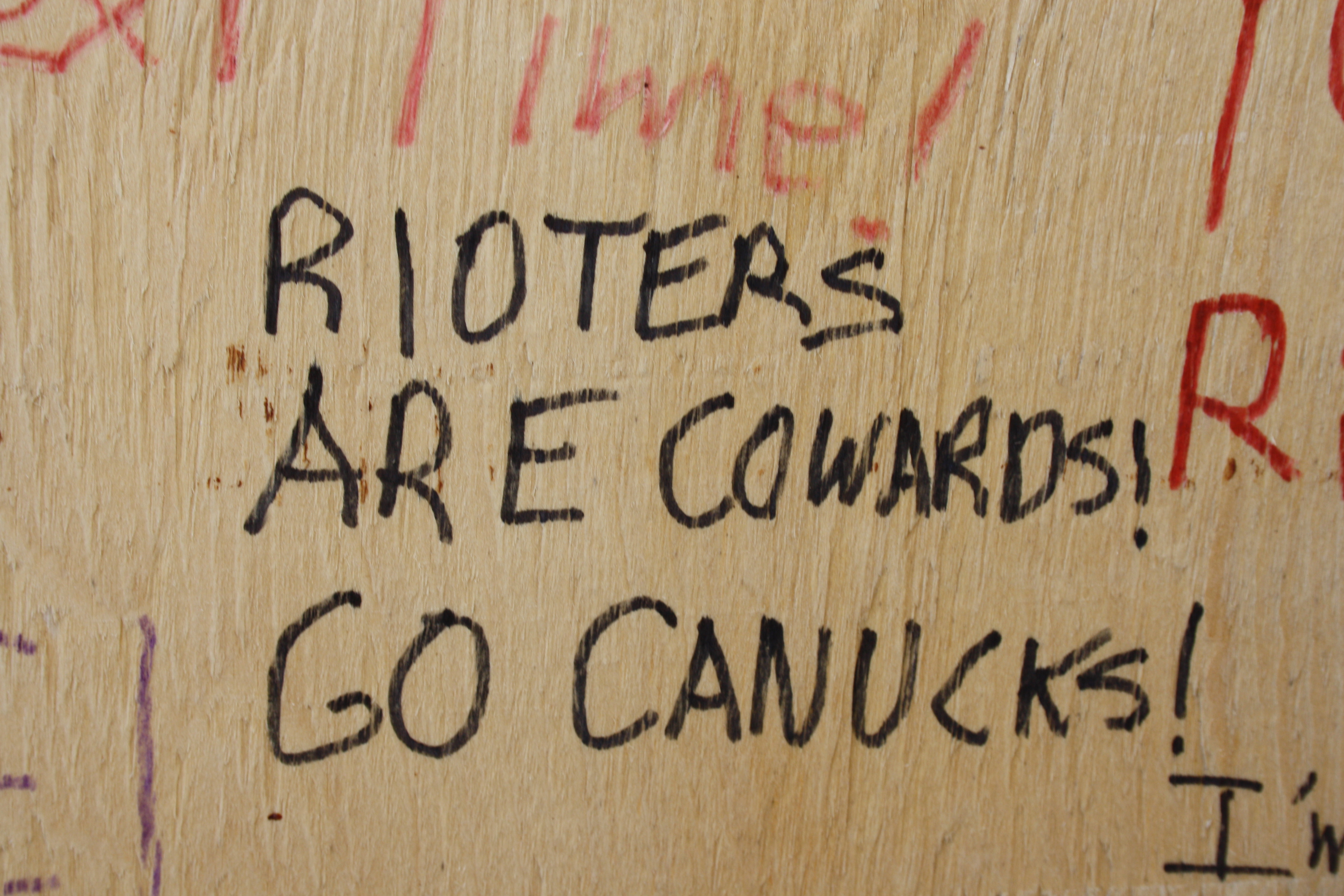
Despite all the nasty things that happened, there was a ray of hope. As workers started cleaning up the glass from smashed-in windows, volunteers came in and helped with the clean-up. I saw many along the streets and even around the Post Office building cleaning where cars burned the night before. Groups on Facebook started support groups like: ‘Vancouver Spirit Rally,’ ‘Real Canucks Fans Don’t Riot!’ and ‘Canucks Fans Against the 2011 Riots.’ One Facebook page even encouraged volunteers to clean up from the night before. That may have to do with why there were volunteers cleaning the next day. There were even pages devoted to posting photos of people causing criminal activity like ‘Vancouver Riot Pics: Let’s Get These People Locked Up,’ and ‘Report Canucks Riot Morons.’ Pages like those has led to many arrests since. On the plywood held in place of the various business’ broken windows, people wrote messages of apology or messages condemning the rioting or support to Canucks and the city of Vancouver. It’s a given that when cowardice like the riot arises, humanity responds.

 It has been eleven days since the riots. A lot of rebuilding and replacing have happened since. A lot of support has happened since too. The reputation of Vancouver since the riots still has yet to be determined. Will new laws be passed to prevent further riots from happening? If Vancouver qualifies for another Stanley Cup finals, will there be another telecast on a big screen on Georgia Street? Win or lose, will things be better this next time? Or will we have another riot? And will the authorities be prepared this time around? Only time will tell.

My Statement To Be Made.

Stanley Cup Finals Game Seven: All Or Nothing

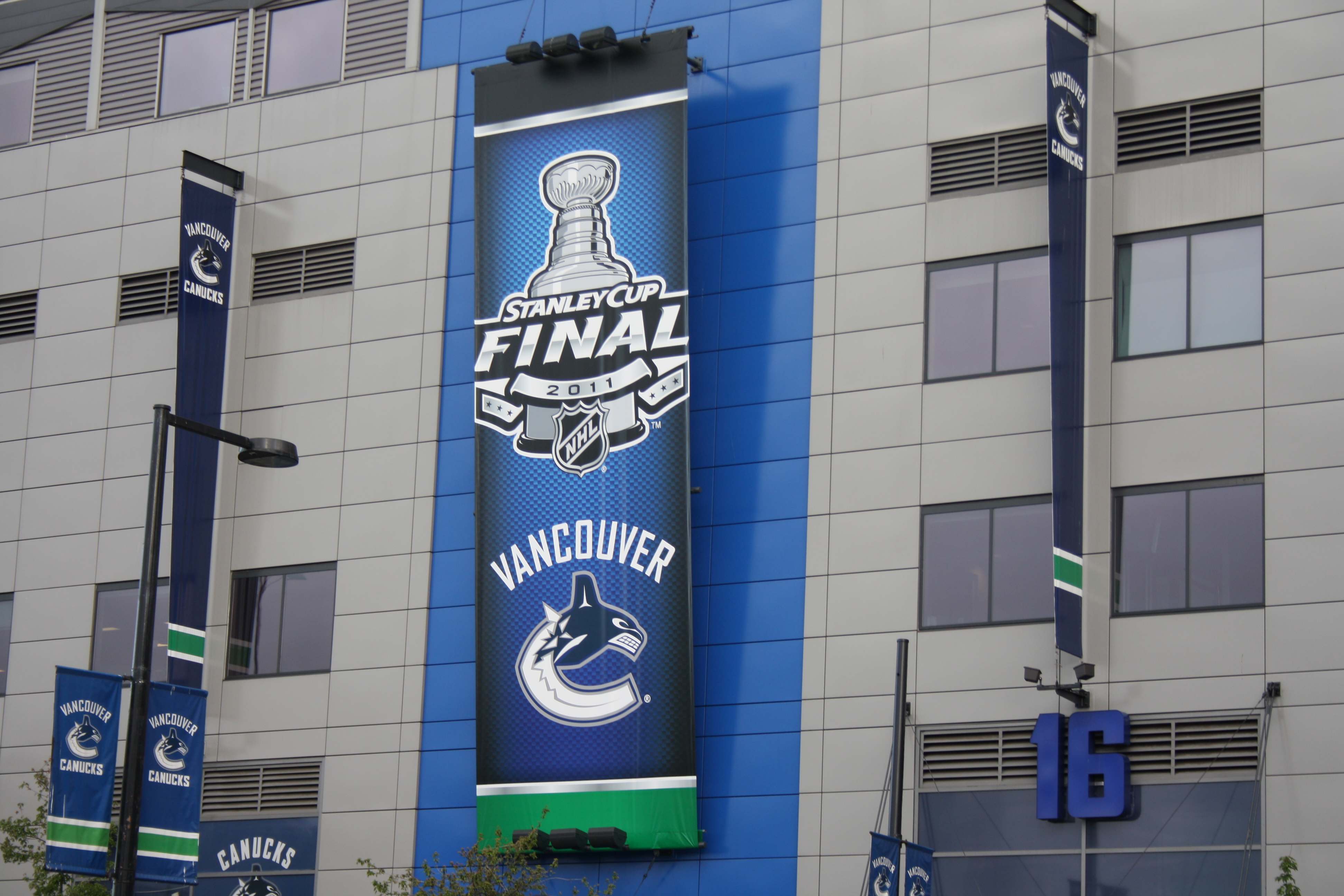
This is it. On Wednesday June 15th at Rogers Arena, the Stanley Cup will be decided in a single game. The two finalists–the Vancouver Canucks and the Boston Bruins–both have won three games apiece. Both have shown their strengths and both have shown their weaknesses. Both have some key players out, either by penalty or injury. Both have also been the subject of negative opinion and positive opinion. Whatever the situation, tomorrow decides it all. But who will win? Instead of predicting the winner for tomorrow, I decided to sum the two all up and break them all down:

VANCOUVER-Three wins on home ice. All of their wins have been very close: 1-0, 3-2 overtime and 1-0. One thing about the wins is that they may not have been big or spectacular but the Canucks knew how to play smart at home in order to make the wins happen. Yes, the wins were mostly conservative but their conservative play would pay off at home. Their losses to Boston have been a lot bigger: 8-1, 4-0 and 5-2. Part of the reason for their losses in Boston have to be with the lack of confidence many would display. It would be noticeable as they would miss many important plays. Also during the Boston games, there was a noticeable weakness in Roberto Luongo as he let in a total of fifteen goals. Whenever he was replaced by Cory Schneider, the Canucks would soon get their confidence back and start playing better hockey. Already two top players: Aaron Rome and Mason Raymond are out.

BOSTON-Also three wins on home ice. All three of their wins against the Canucks have been decisive: 8-1, 4-0 and 5-2. The Bruins definitely know how to go all out on them while at home but during the away games, they’re lacking. All three of their losses have been tight games. They’re not as good at scoring in Vancouver and despite having a lot of puck control, they don’t materialize it at Rogers Arena as well as they could. One thing about their big wins is that they’re hoping to use it to intimidate the Canucks en route to winning the Stanley Cup. The big wins didn’t intimidate the Canucks enough as they would win 1-0 on Game 5. Tim Thomas has been an excellent goalie conceding only eight goals in the final. However this would prove to be a weakness as there would be two Canuck wins of 1-0. Plus Boston’s big wins in Game 3 and 4 didn’t succeed in intimidating the Canucks as they would win Game 5 1-0, putting the embarrassments of Game 3 and 4 behind them.

Now there’s the overall play. The media are already calling this the ugliest Stanley Cup finals in recent years. It all started in Game 1 with the Burrows Bite. Then in Game 3 came the check from Canuck Aaron Rome to Bruin Nathan Horton. That left Horton hospitalized and out of Finals play. For Rome’s part, he was slapped with a four-game suspension also leaving him out of Finals play. Then came the ‘pumping his tires’ reference from Bruins goalie Tim Thomas to Roberto Luongo that has been well-published. Already the Canucks were labels the most hated team of the Finals by many. Then things took a worse for Boston. Game 6 saw a check to Canuck Mason Raymond which left him hospitalized with a fractured vertebrae. Also many on the web have suspected the Boston ice to be too soft and the Boston referees too ignorant to the Bruins own penalty-worthy misdoings. Already the Finals are memorable for a lot of wrong reasons.

With Game 7 just more than a day away, people are already giving out their predictions. There has even been some numerology and trivia bits floating about to hint who will win. Now I’m not one who completely believes in numerology or trivia odds and ends but I have been hearing some interesting facts that may lead to tomorrow’s fates. I heard that a Canadian host city of an Olympic Games would win the Stanley Cup the following year: Montreal hosted in 1976 and won in 1977; Calgary hosted in 1988 and won in 1989: Vancouver hosted last year and it’s just so close. Also in favor of Vancouver, there’s the fact that of the fifteen previous Game 7’s of the finals, all but two have been one in the Game 7 host city. However there’s also one going against Vancouver which I learned of during Game 5’s telecast. Of the previous fifteen Cup Finals that lead to a Game 7, all but four winners of Game 5 would not win the Cup.

Whatever the odds and ends, whatever play happened in the previous six Finals games, only tomorrow will decide the 2011 Stanley Cup Winner.. Will Vancouver’s conservative style of playing and winning at home pay off? Or will it take its toll in Game 7? Will Boston’s big wins succeed in intimidating the Canucks for Game 7? Or will it be like in Game 5 in which the Canucks were able to bounce back from humiliation and show the Bruins they weren’t so intimidated? It will all be decided when the puck drops in Rogers Arena tomorrow, Wednesday, June 15 at 5pm Pacific time. May the best team win!

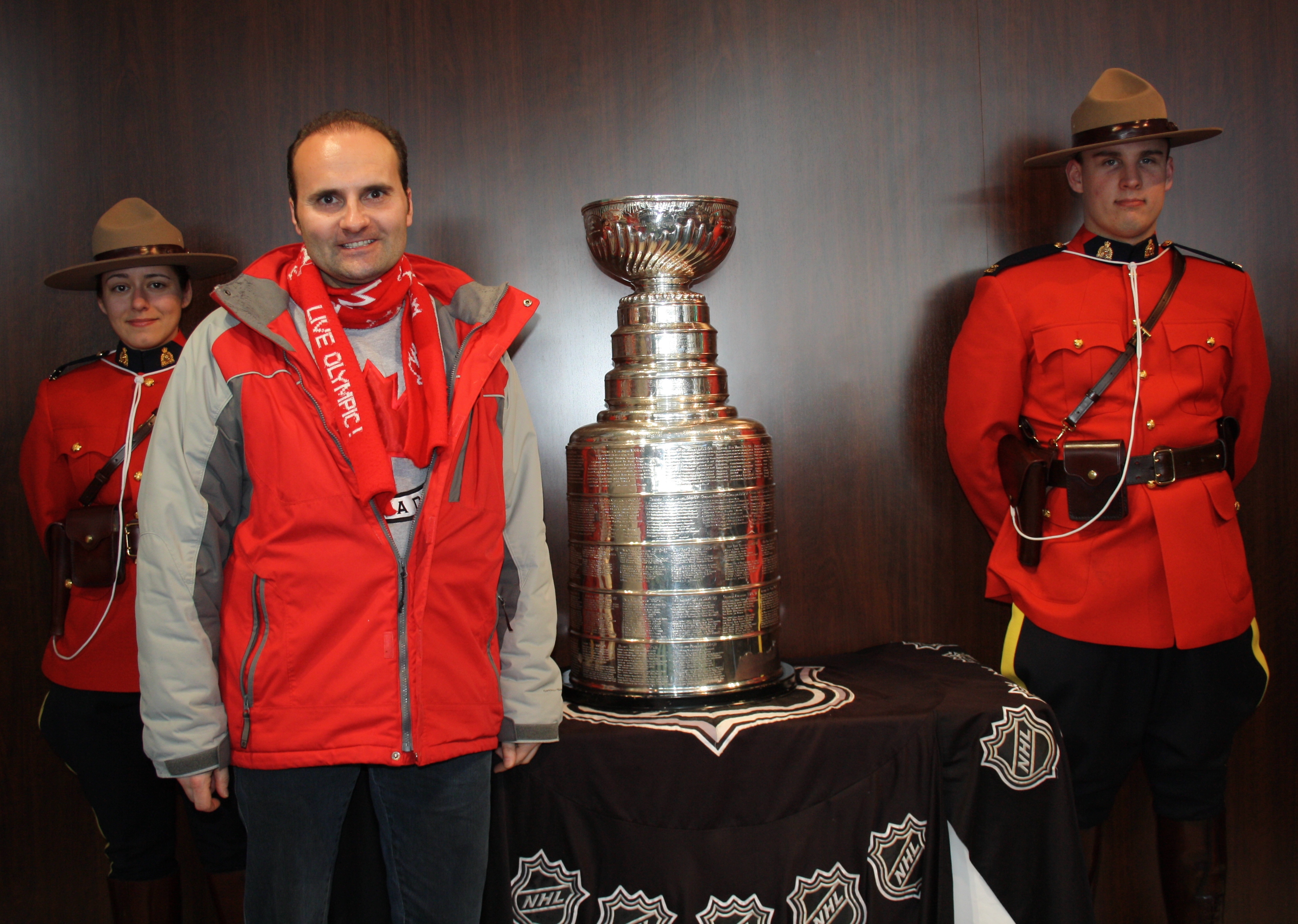
Me with the Stanley Cup. Which team will hoist it tomorrow?

My Stanley Cup Experience

So some of you may have already got my first taste of Canucks talk. Well guess what’s happened since? I was at the very first Stanley Cup Finals Game at Rogers Arena! Don’t ask me how much my tickets were. The most I’ll say was they were over $500. I will say that I was glad to be in the arena for a once-in-a-lifetime event. Looking back, I can say I was there when it all started.

Tickets for the Finals games didn’t go on sale until 10am on Tuesday, May 31st,, only the morning before Game 1. They were originally intended to go on sale Monday at noon but they were delayed 22 hours for inexplicable reasons. I took an early lunch break at that time to buy a fair-priced ticket for Game 1 from Ticketmaster. By the time I got on, they were either impossible to buy or completely sold out. I know that before ticket-buying I promised myself that $500 was the most I’d attempt to spend on a Stanley Cup ticket, but desperate times call for desperate measures. I called ShowTimeTickets to place an order because I had trouble logging in to their website. Luckily, I was able to buy one ticket for Game 1, for up on the balcony. Unluckily, I broke my promise to myself. I mean it is history in the making, right?

Okay, Game Day. On Wednesday June 1st, I was finally done my job at 4:30. I was told by ShowTime to wait until 3 at the latest to get the best seats in the house for my order.  Once my work was done, I took my Canon Rebel camera and bag out of my backpack to make my trek to the ShowTime office. Luckily I get my ticket just a minute as soon as I arrive. Amen! My order was for a balcony seat and I ended up with Section 329, Row 13, Seat 107. Original ticket price, $150. Luv-lee! I immediately head to the nearest path to get to Rogers Arena. I get to one entrance and security demands that they check my camera bag and  backpack and removed all my empty liquid bottles. Real fun.  Then my ticket was taken and scanned. Easiest part of getting in.

First thing’s first, I find my seat. Okay, first thing’s not first. I go to get a medium soda and huge pretzel. Yes, my favorite game snack is the huge pretzel! I get my goodies and then head to my seat. I find there’s no finals towel there. Which means either arena personnel forgot to put one on or the guys in the seats above me stole it as an extra thing to hock on Ebay.

I set my bags underneath my chair and have my camera around my neck. Nice SLR camera I bought for the Olympics for the sake of taking some good action shots. Now ready for another set of action shots. Before the game began, there was a rap from rapper Kyprios—whom I personally don’t care for—who rapped “How The West Was One”. Game begins with the Bruins and the Canucks on the ice. The national anthems are sung. Meanwhile Luongo is warming up the whole time. Anyways the game starts off on an exciting note. During the first two minutes, the Canucks produced four shots on goal. Boston would respond strongly. First penalty of the game would go to Daniel Sedin and that landed him 4 minutes in the box. Despite more shots on goal, Boston failed to score. The second half of the first period saw more Canucks dominance with a powerplay and six shots on goal compared to Boston’s four. After the twenty minutes were up, the period was scoreless. One thing I have to say is that being so far up in my seat made it hard to notice the Burrows Bite at the very end. It looked like a typical hockey squabble from where I was sitting and I wouldn’t know until tomorrow’s news what exactly happened.

During intermission, I left my seat and learned some yahoo spilled beer on my backpack. As annoyed as I was, I should have expected it. Anyways I made a full circle around the lobby to check out the shops, concessions, exhibits and fandemonioum. During the break, I bought another pretzel, this time salted. I took photos of the exhibits and some of the more colorful fans: both Canucks and even a Bruin or two. I hope those Boston fans inside know that Vancouver has a store that sells all sorts of ‘different’ meats, including bear meat! I bought some souvenirs in time for Father’s Day. Oh yeah, Supertramp and Michael J. Fox were spectators that night and Don Cherry was there too.

Before I get into my talk about second period, I have to say that being up there in my seat was not an easy thing. I wanted to watch the game and take pictures at the same time. It was not an easy thing to do being from my seat and sometimes using my camera as binoculars for the game. Sometimes I’d forget to take pictures of some of the highlights. I must admit that watching is easier without the camera.

I arrive back into my seat minutes after second period began. By the time I arrived, Boston had four more shots on goal and the Canucks had a power play. I returned around the time an injured Dan Hamhuis delivered one of the more entertaining tackles by flipping Bruin Milan Lucic. After that, there was some boring play for a while and then came the penalties- three in a minute. Thanks to a Bruin getting a penalty, I get my first look at the green men. Vancouver loves them but I bet every other team hates them! Vancouver soon came on strong and then Boston had more goal attempts. Nevertheless, the period ended with the game still scoreless. I didn’t want to deal with a soaked bag again so I remained in my seat during intermission.

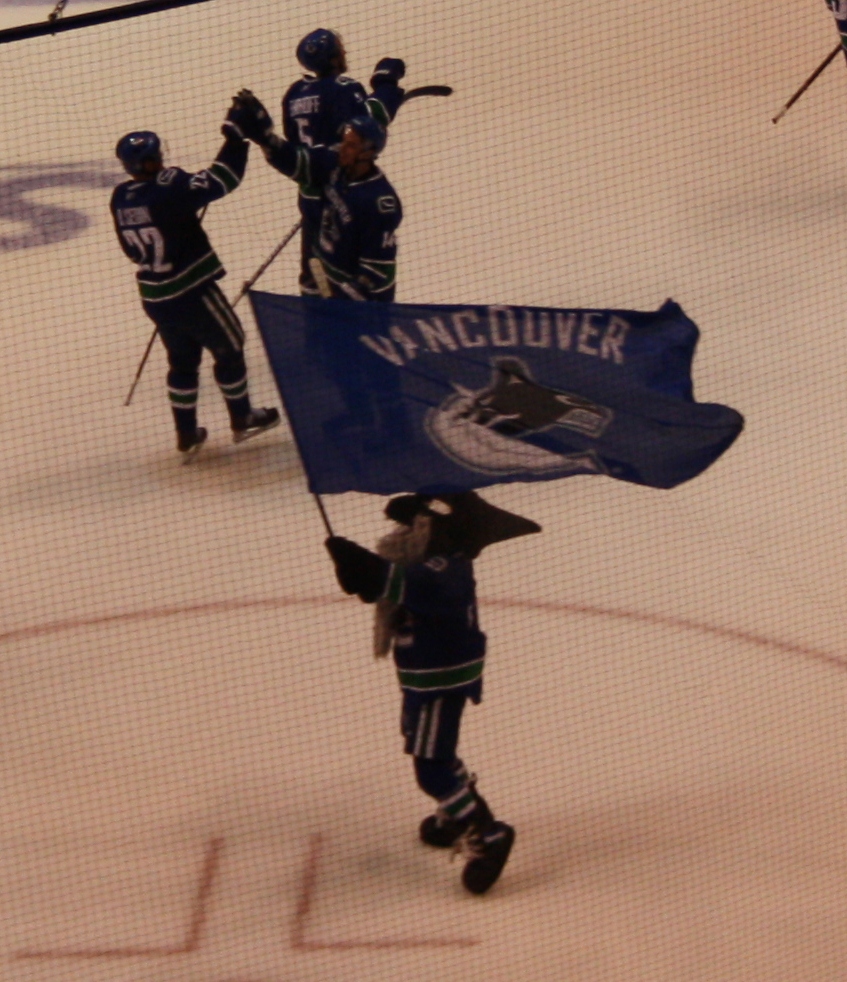
Third period came with the Canucks coming on stronger but Boston continuing to challenge. There was music mixing from DJs Marlon J English and Jay Swing and the Canucks band played in our area. The last half of the third period saw the Canucks come out of their shell and start making more of a serious attempt to score. However in the final minute, most of us were groaning about a possible overtime after a scoreless game. Then the miracle happened. With 18.5 seconds to go, Raffi Torres delivered the goal, much to the euphoria of the full venue. It was there and then we knew the Canucks did it! Even though Boston called a time-out, we knew there was no hope for them. The game was ours and the Canucks began their quest for the Cup with a Win and Torres was the savior of the night. The final mark of the win was Fin waving the Canucks flag on top of his hockey stick.

After the win, it was a party as people were leaving the Rogers Arena and into the streets of Vancouver. As I exited arena with my backpack soaked in beer, the streets were loaded with fans. I met one guy who came from Winnipeg to see this. For three blocks until I hit the Central Library, it was like a complete parade of fans. Even after I left the library ½ hour later, it was still active with fans. Already the quest for the Cup began with a good start.

Hard to believe it was five days ago. Hard to believe Game 3, Boston’s first Finals game as host happened tonight. We had a second game on Saturday where the Canucks started good but Boston pulled a second period surprise. I was with friends in a church hall at the time. I kept on telling them ‘It’s not over.’ In the third period was the game-tyer. However with an event taking place upstairs, the church was under a strict regulation to end telecast of the game at regulation, overtime or no overtime. When we made it to the chapel, we were reassured that the Canucks won: 11 seconds into overtime by Burrows.

All I can say this last while is fan euphoria like no other. There have even been fan videos from Youtube. My favorite is of a Victoria comedian imitating a Bruins fan with Boston accent, attitude, foul mouth and all. I think he could rival the green men.

Just now, Vancouverites are recovering from an 8-1 loss to Boston. I was working when it all happened but I heard a lot and saw enough from replays on Youtube. Canuck Aaron Rome has gotten the biggest heck for that check to Nathan Horton that left Horton carried off on a stretcher. Boston sure came back with a vengeance, although many Canuck fans are complaining about bad reffing. Bad reffing or not, the Bruins won the game. Personally I had a bad feeling that Boston would win today but not by that much. I knew that both Canucks wins came from very tight games. Game One was won by a goal in the last minute. Game 2 was won by an overtime goal after just eleven seconds. Before Game 3, Boston was able to show the Canucks that they can be a formidable rival, even though they lost both games. Boston knows the Canucks are a tough team but they also have a vulnerable side and they really exploited that tonight. Many Canuck fans are claiming they appeared tired after the second and that’s where it all went Boston’s way. Now the Canucks know they will have to play harder smarter games if they don’t want to give anything else up. I believe the next Boston game will be another nail biter for both teams. Nevertheless Vancouver can take comfort that they still lead the finals two games to one. It ain’t over yet.

I don’t think I’ll ever see another Stanley Cup Finals game ever again. Not that I doubt the Canucks in the future but I believe the next Stanley Cup Finals tickets will be way more expensive the next time. It’s even possible that in the near future, $1000 won’t even be enough. All I can say is I was glad to be there when it all started. Now I have something to tell my grandkids!

Me With The Stanley Cup During The 2010 Paralympics

Confessions Of A Canucklehead

Okay. Now’s when I take a break from my journalistic ambitions and I write about something on my mind.
 
Normally during most of the year, I don’t pay attention to hockey that often until playoff time. Then, like most Vancouverites, it’s my focus on how far they make it through the playoffs to the Cup. This year was a landmark year for the Vancouver Canucks. For years, Vancouverites have been hoping they’d win the Stanley Cup and this looks like the first year they might do it. They’ve made it to the Stanley Cup finals before–in 1982 and 1994–but they’d lose both times. The latter was especially famous for the rioting that happened for days. Since then, Vancouver has had a reputation of being the unofficial riot capital of North America.
 
Since the 1994 Stanley Cup, Vancouverites have been hoping their Canucks would have another shot at the Cup. The time since the 1994 Stanley Cup to the 2004 NHL Lockout were not the best of times for the Canucks. Despite a new arena with the GM Place, now called Rogers Arena, it had some difficulties including four years in a row failing to make the playoffs. Whenever it did qualify, they would only get as far as a Conference Quarterfinals of Semifinals. After the 2004 Lockout, the Canucks have had a change for the better. Upon returning to NHL play, they didn’t qualify for the 2006 or 2008 playoffs. 2007, 2009 and 2010 would see them win the Northwest Division but only make it as far as the Conference Semifinals. one bright note was that Roberto Luongo was named Goalie Of The Year by the NHL for two years straight.
 
The 2010-2011 was a different year for the Canucks. After the usual trades and free agent deals, the Canucks were ready to start their new year, which was also their 40th Annivarsary, with a bang. After losing their first game against the Los Angeles Kings 2-1, the rest of the season was complete magic.With 54 wins and 19 losses, including scoring 262 total goals and conceding only 185, the Canucks were the top team of the NHL in regular season. Upon having the top standings in regular season, they were awarded the President’s Trophy.
 
When the playoffs began, their first round pairing was against none other than the defending Stanley Cup champions the Chicago Black Hawks. The first three games were wins against the Hawks and appeared to have a comfortable lead over them. Things sure changed once the fourth game began. The Hawks showed that even though they entered the playoffs the last of the Western Conference teams to qualify, they were not going to give up their Stanley Cup chances easily, and boy did they pour it on once the fourth game started. The Hawks came back with 7-2, 5-0 and 4-3 overtime wins. That left the seventh and last game a nailbiter. Played at Rogers Arena on Tuesday April 26, the Canucks appeared poised to win with 1-0 until Hawk Jonathan Toews scored the game-tier with 2 minutes to go. This left fans nervous as the game went into overtime. It took a goal from Alexandre Burrows at 5:22 to win it for the Canucks and move them to the next round. It’s a good thing too because the previous two Presidents Trophy winners lost in the Conference quarterfinals. If the Canucks did the same, three-in-a-row would make the Presidents Trophy a curse!

After the Conference quarterfinals, things were easier for the Canucks although they still had to put in a good fight. The conference semis against the Nashville Predators was also a tight competition but the Canucks prevailed four games to two. The Conference Finals against the San Jose Sharks were possibly the easiest of the bunch. The Canucks won four games to one and the Canucks wins were in spectacular fashion. They’re the first Canadian NHL team in four years to qualify for the Stanley Cup finals. For the record, the last Canadian team to win the Stanley Cup was Montreal in 1993. Will the Canucks break Canada’s 18-year drought?
 
Now the Finals. The Western Conference winning Canucks will be up against the Eastern Conference winning Boston Bruins. How well do they stack up?:
 
CANUCKS-What haven’t I talked about already. A team loaded with talent, but all coming down to how they play as a team unit, and under the pressure of the Stanley Cup. They showed they could lead well but almost give it up, as they did against Chicago. They also showed they can come on strong as they did against the Sharks. It all depends how they play against the Bruins. One thing about the Presidents Trophy winner is that those winners that qualify for the Stanley Cup final have the odds with them. Of the nine previous Presidents Trophy winners that made it to the Cup Finals, seven won. Will the Canucks be the eighth to do so or the third to lose?
 
BRUINS-They finished third in the Eastern Conference and won the Northeast Division. Like the Canucks, they had a tough fight in their Conference Quarterfinals against the Montreal Canadiens and qualified for the semis on a seventh game overtime goal. Their Semis against the Philadelphia Flyers were magic as they won four straight games en route to their Conference Finals against the Tampa Bay Lightning. Their Conference Finals against the Lightning  was a tougher affair as Tampa Bay proved to be a tough opponent. In the end, the Bruins won their seventh and final game with a single goal by Nathan Horton with 7 1/2 minutes to go in the third period. That’s all it takes! One important fact: In their one regular season game against the Canucks, they won 3-1. Even the Canucks will admit that they are a good rival. The Bruins had one of the highest goals-per-game averages in regular season this year. The defence of the Bruins is so good, even Luongo will admit it’s their strongest asset. However in playoffs, their scoring magic has taken a backseat. They’ll have to pour it on against the Canucks featuring Luongo if they want to win their sixth Stanley Cup.

Anyways on with the show. Hopefully the Canucks will win their first ever Stanley Cup. What’s especially noteworthy is that I promised my Admin team at work that if we win the Cup, I will buy them all a cake! I’ve already bought cupcakes for them when we won the Conference quarterfinals. Make it a yummy win guys!