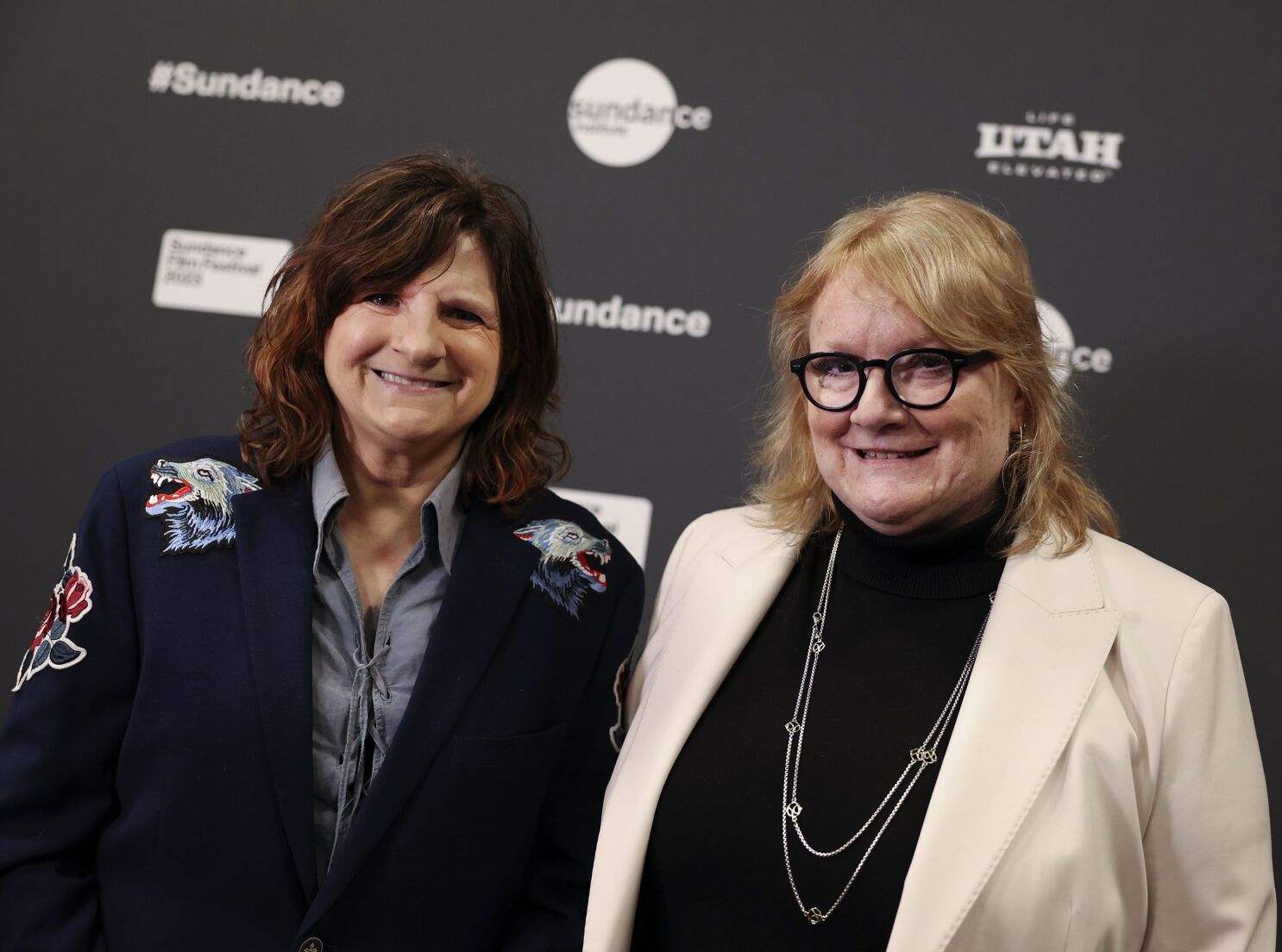
Before I saw the documentary It’s Only Life After All, I wasn’t really a fan of the music of the Indigo Girls. If you like music, this is a documentary that will keep you intrigued.
The film begins with Amy Ray and Emily Saliers, the two women making up the Indigo Girls, meeting with Alexandria Bombach and bringing out a lot of old audio tapes, video tapes, old magazine articles and various pictures. They wonder what this documentary will be like. First we learn that Amy and Emily first met in elementary school but it wasn’t until attending Shamrock High School in DeKalb County, Georgia that they both learned the other likes music. A friendship began and the musical companionship started soon after. At the same time, they discovered through their own ways, they’re lesbians. Both had differing initial reactions to it as well as initial reactions from family.
As both graduated in different years and went to colleges in separate states, they both eventually became homesick and dropped out. The music led them back together. The two went through various names at first but decided on The Indigo Girls in 1985. Over time they began to draw bigger crowds in their home state of Georgia and started cutting records. First a single, then an EP in 1986 and then a full-length album Strange Fire in 1987 recorded in a studio in the ‘college rock’ town of Athens, Georgia. Their album attracted the attention of music manager Russell Carter who first dismissed their music as too ‘immature’ to get a record deal. The album changed his mind about the two and Carter agreed to be their manager which he still is to this day.
Their success grew in the coming years but they did face some difficulties in terms of establishing themselves. Folk music had commonly been known as stoic and serious. The Indigo Girls were more light-hearted and cheerful on stage. Then there’s the fact that they’re two lesbians which was becoming more acceptable, but still seen as a taboo by most. The AIDS epidemic and how it increased the public’s hostility towards LGBT people in the late-1980’s didn’t help much either.
One thing is the two did have a source of luck on their side. In the late-80’s, there came this boom in folk music. Possibly as a backlack to the loud heavily-distorted guitars of the heavy metal phenomenon from years earlier. It was also a boost for female folk acts like 10,000 Maniacs, Suzanne Vega and Tracy Chapman. The folk phenomenon also led the two to be signed on to Epic Records in 1988. Their self-titled release with Epic included participation with REM’s Michael Stipe and Irish band Hothouse Flowers. After its release in 1989, it has since gone double-platinum and spawned their biggest hit “Closer To Fine.”
Their overnight success came with both perks and problems. The perks included appearances on MTV and VH-1, a Grammy win for Best Contemporary Folk Recording, praise from critics and a growing fan base. The problems included fame coming too fast, not being a feature in Rolling Stone or musical guests on Saturday Night Live, some negative reviews from male critics whose reviews sounded more like sexism than critiquing. Even the big question or concern about whether their fame will turn them into a ‘product’ or not was of concern.
As their sudden fame cooled off, they continued making music together. They also ventured into activism. Their causes include feminism and indigenous rights but their most notable activism has been LGBT rights. With them being two lesbians from Georgia and having established a big LGBT following, they have been active in being active in LGBT issues. From dealing with AIDS, whom they lost a lot of musical friends to, to military participation, marriage and adoption, The Indigo Girls have been very vocal on many LGBT issues. The two also made a cameo appearance in an Ellen episode in 1997. Even some LGBT fans have gone as far as crediting The Indigo Girls for saving their lives.
In the 21st Century, the two started to focus more on themselves as individuals. They wanted to start families. Both married another woman and have daughters of their own. Amy did solo recordings and started exploring her gender identity more. Emily encountered a struggle with alcoholism for years and needed time to recover. Despite it all, both came back to each other and got performing again. They also have their own record label. The film ends with a recent post-COVID concert.
This is a film that will capture one’s intrigue if they like biographies about music and musicians. This is a telling story about two friends who have had a career together going on almost 40 years. Like most musician’s careers, it has not been smooth and it has had its fair share of hurdles. The Indigo Girls being two women who play folk will undoubtedly face obstacles more than just facing a general public that may accept them or not. They face the sexism that’s common to women in music. They face the homophobia of them being two lesbians. They face the music business which frequently pressure musical acts, established and rising, to make a product of themselves. They face unwelcomed intrigue of them being two lesbians who never dated each other. They even have to face their own personal demons and their own personal obstacles. It’s not just about music that they face obstacles and frustrations with.
Even though it is about a folk duo who rose to fame and are still going strong after all these years, it’s about the two as people. It shows through images and their words about what it was like growing up as lesbian teens in the late-70’s and early-80’s. It shows how the two still worked to keep themselves together as a duo and still keep themselves grounded and avoid the common pitfalls of the music business. It shows Emily’s struggle with alcoholism, It shows Amy’s path to starting her own family. It shows personal sides to them known to few including Amy’s spiritual side. It shows the close personal relations they have with family, fellow musicians and close friends. It shows the duo’s move towards activism towards various causes. This film is very in depth about showcasing the two.
This is an excellent work from director Alexandria Bombach. Bombach’s documentaries have commonly been about feminist topics. Her most renowned works involve stories of women in Islamic countries. Here, her subject matter is less intense. Nevertheless the documentary she delivers presents The Indigo Girls as musicians, as temporary celebrities, as activists, as crusaders, as mothers and as people. It’s a good documentary featuring footage on media, footage never seen before and filming during their more private moments. It does an excellent job of being three-dimensional and going beyond.
This documentary has had awards acclaim at film festivals. Nominations for Best Documentary include Seattle, Cleveland, Atlanta and the South By SouthWest (SXSW) Film Festivals. The Sidewalk Film Festival awarded it their Audience Award for Best Documentary and The Film Club made it their winner of their Lost Weekend Award for documentaries.
It’s Only Life After All is a telling look at the Indigo Girls through all the ups and downs and struggles they had to go through from their formation to now. It succeeds in getting you to respect them and what they do.
 Jon The Blogcentric