
VIFF 2025 Shorts Segment Review: Forum 2 – Memory & Meditation

With the VIFF happening, I have to see at least one segment of short films. Forum 2 – Memory & Meditation was the first one I saw. Some are live- action, some animated, while some are documentary style. All are intriguing in their own way.

One Duck Down (Canada – dir. Lindsay Aksarniq McIntyre): This film is a five-minute documentary. Lindsay Aksarniq McIntyre returns to her home in the Arctic tundra. There she finds the carcass of a duck with the feathers still on. As we see imagery of the duck, various shot ducks, the land and the waters, she tells of the area and of her own personal story.

The documentary is fast, brief and simple, but also intimate. If you look at the imagery, you can understand why Lindsay talks of the area. It’s the area she grew up in and was raised. The imagery means a lot to her. Even that of a dead duck means a lot to her as hunting was most likely part of her family’s livelihood. It was nice to see.

Baadarane (Lebanon – dir. Sarah El Kadi): In a small town in Lebanon, a young boy loses his mother. At her funeral at the mosque, he hears people always talking of God as they pay their last respects to her. Some even saying this is ‘God’s will.’ That causes him to think. Did God punish her with a young death? He himself feels he’s at odds with God for her death.

You can tell the theme of God is omnipresent in the film as God’s name is mentioned throughout. I guess it’s common living in a Muslim society to hear God frequently referenced. The story does capture a young boy’s crisis of faith especially since his mother died and many reference it as God’s will. It makes him question if his mother was a bad person to die so young. The black-and-white filming adds in as at a young age, it does seem like a black-and-white issue and you don’t know what to think.

Water Girl (France/Netherlands/Portugal – dir. Sandra Desmazieres): An elderly woman looks out to the empty seashore as she drinks coffee. As she looks out, she’s reminded of the times she used to doo deep-sea fishing for a living. She also remembers the time at the nearby lounge where she used to drink, be entertained and romance.

Animation usually does a lot with storytelling and imagery that live-action normally can’t. This story of a woman reminiscing on a coastline really creates the environment of her past and uses the imagery of fish and various colors to help add to the storytelling. The story is slow, but creates a mood and is a delight to watch.

-Adieu Ugarit (Canada – dir. Samy Benammar): The film is a documentary where a Syrian refugee named Mohamed tells his story. He tells of growing up in a harsh dictatorship mixed with political turmoil in Syria and knowing as a soldier, his life could be taken any time. Unfortunately, his best friend was murdered by militia men just outside of Damascus in 2012. He recounts these memories as we see imagery of a peaceful land and water.

This documentary is of a story that we rarely hear about, but needs to be heard. Benammar makes a smart move in having the audio of Mohamed telling his story as we see imagery of the land and the water. The land and water is in the Laurentian area of Ontario but it brings back his traumatic memories. Especially that of a lake in Syria filled with the blood of soldiers. As Mohamed tells his story, the images haunt us back.

-A Light That Doesn’t Dim (USA – dir. Colby Barrios): Sister Jones is a Mormon missionary in Mexico. You can tell by the look on her face she’s not happy about something. Could it be homesickness? Could it be a lack of faith? She makes it clear in her diary she wants to go home. Meeting with elders does not help her personal crisis any more. Then one night, she has images that shock her and haunt her.

Of all the characters in the film’s shorts, It’s Sister Jones that will cut the deepest. She faces either a crisis of faith or homesickness, but no one is there to help. Colby’s distortive and hallucinatory imagery in the film adds to the traumatic feel to the story and makes us feel the frustration of Sister Jones’ situation. It makes the story unforgettable.

-Four Walls And A Memory (Poland – dir. Joanna Piatek): A young girl is on the run from a wild creature. She enders into a cabin, but the creature enters. Fortunately in the run, the creature hits his head on the wall and dies. For some reason, the girl doesn’t leave. She stays for days where she even makes food out of the dead creature’s leg, makes the creature like a blanket overnight and dances with the creature as she hears music from the radio of a passer-by.

The film festival is known for showing films with out-of-the-ordinary stories, but the magic of animation is it can take out-of-the-ordinary to even bigger lengths. It does seem odd for the girl to go from running from the creature to eating one of his limbs to making him a blanket to dancing with him. Sometimes you think the story is about her overcoming her fears, but it could end up being more than that. It’s subject to one’s opinions.

-WASSUPKAYLEE (USA – dir. Pepi Ginsberg): Kaylee, a young awkward teenage girl, is a social media influencer in a house popular with TikTok content and with other teen influencers. Despite the other influencers befriending her, Kaylee feels out of place as they all have bigger followings than her. Everything changes as one of the boys tries to do a high dive from the house roof into the pool. He misses and is badly hurt. As all reach out to communicate the emergency, Kaylee does it on social media and that gives her the breakthrough she’s been waiting for. Also the boy will be just fine.

Although this story doesn’t take the same creative chances as the other films in this shorts forum, it does tell a story. It’s a story relatable as we have a lot of young people who want to grow up to be a social media influencer. Kaylee is like a lot of teenagers where her self-esteem is connected to her popularity. She shouldn’t let her lack of a breakthrough get to her, but it does. Fortunately she does get a breakthrough. It may be due to the result of an injured friend, but he’ll be fine.

And there’s my look at the short films of the VIFF segment Forum 2 – Memory & Meditation. Two were documentaries, two were animated and three were dramas. Two were made by Canadians, two by Americans, and the other three from France, Poland and Lebanon. All were intriguing to watch.
Movie Review: Cold War (Zimna wojna)

Cold War
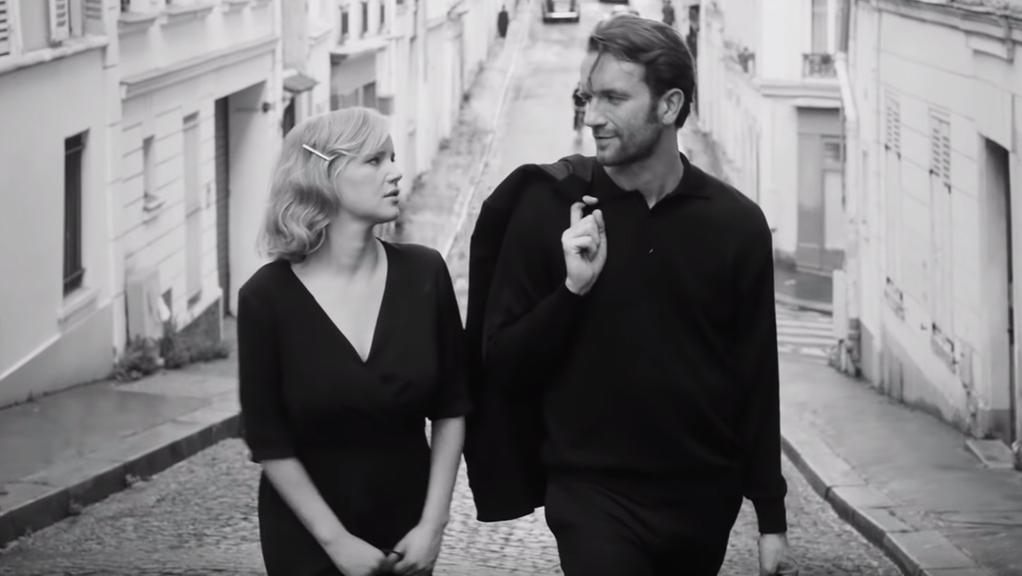
Joanna Kulig (left) and Tomasz Kot play a musical couple whose love overcomes politics and separation in Cold War.

At first I didn’t plan to see Cold War. It had a lot of good rapport, but I doubted its Best Picture chances. It may not have been nominated for Best Picture, but it did earn three nominations including Best Director. That’s enough to catch my intrigue.

The film begins in the late-1940’s. World War II has ended and Poland is now under Communist rule. People from the Communist party are called out to go into the towns and villages of farmers and peasants. They meet out in a remote area consisting of a forest, a single solitary building, and a bombed-out church. Their purpose is to create an ensemble of Poland to be shown to the Communist world. The art will consist of traditional song and dance, but will also consist of propaganda songs too. This is the new world order. Wiktor Warski and Lech Kaczmarek are the two men hired to construct this ensemble.

The men decide the pieces to have for the choir as well as the dances to have for the shows. They also decide who will be singing the lead for the choir. During the audition, Wiktor takes a special interest in a singer named Zuzanna, but nicknamed ‘Zula.’  Lech notices the affection between the two. Zula is not that vocally skilled as the other female singers, but has that ‘it’ quality and sings lead through most of the choir songs. During the time of rehearsals, Wiktor increasing becomes more in love with Zula. Their love for each other continues as the ensemble Masowske finally start performing for the whole of the nation.

However years later, the leads of the ensemble decide to develop propaganda songs that will be sung during the performance. They will also be touring internationally to other Eastern Bloc countries with the goal to eventually win praise in Moscow. The tour goes into East Berlin as part of the plan. The show goes well, but unsuspectingly Wiktor notices the French Sector which can easily be crossed. Wiktor invites Zula to cross with him, but she’s afraid, feeling that something will be lost behind. Wiktor does crosses and would eventually settle in Paris, France.

In the years since his defection, he has immersed himself into the jazz scene and even formed his own ensemble, becoming very successful. He’s even married to a French poetess Juliette. One night while his band is on tour in Split, Croatia, he notices the Polish ensemble he was a part of is performing there. He goes to watch the show. Zula is able to notice Wiktor in the crowd. Before they can meet, the secret service drags him back to Paris.

Years later, Wiktor notices Zula again, but in Paris. Wiktor fills in with his life of how he’s found a woman of his own. Zula tells him she’s married to a Sicilian man in Italy. She defected the ‘proper’ way. Zula is able to become a successful jazz singer under the wing of Wiktor which includes singing a jazz adaptation of one of the ensembles’ songs. However Wiktor notices something else in Zula. Zula has become very flirtatious. He notices it when ‘Rock Around The Clock’ is performed in the bar and she dances around with many a man. It takes Wiktor to stop this. They have an argument outside, but it becomes clear the argument exposes their selfishness and their ambitions. In the end, their worst traits are exposed and it sours their love for each other. It’s noted how Wiktor’s jazz playing has gotten worse that something is wrong.

In 1961, Zula is back in Poland fairly. Wiktor wants to return, but Lech informs him of how much he has insulted the country with his defection. Lech informs him that he can spend 15 years in a labor camp for what he has done. Wiktor is willing to accept for the sake of winning Zula back. Zula hears the news and goes to the prison camp to find him. Upon being reunited, they need to reaffirm their love for each other despite it all. They go back to the ruins where it all started.

This is a slow story of a love that grows and faces friction through art and political tension. The purpose of the slowness is to feel the dramatic tension of the love between the two. We have a man and a woman who have a love for each other, but face the tests of politics with the Cold War and the Iron Curtain causing a lot of division between the two. Plus we have the personal obstacles of the two, most notably their pride, that possibly is the biggest barrier between the two. They both love each other, even through marriages of their own, but their selfishness gets in the way.

I believe that was the point of the film. The central theme of the film is about divisions. We have the Cold War that represents the divided world. We have the selfishness and pride of Wiktor and Zula that causes division in their relationship. We also have the division of the two arts as jazz is more Wiktor’s thing. I think that’s the reason the film is shot in black and white. Pawlikowski may have done black-and-white before in the film Ida, but here, black and white is fitting as it represents all the divisions in the film.

The divided world may be the common ‘world’ in the film, but possibly the most present world in the film is the world of music. The film shows a lot about the arts in both song and dancing. It’s the song of peasant people that is the heart and soul of the people’s voice. It is the stoic choir singing propaganda songs that represents the new rigidity Poland has to go through and the ‘free world’ has to deal with. It is the happy folk dancing that shows the joy of the Polish people of generations past. It is the Rock Around The Clock dancing that shows Zula’s freeness and thus her biggest personal weakness. It’s that song of the love that can’t be allowed sung by Zula as lead of the choir and in a jazz song that becomes symbolic of the obstacles in the love between Zula and Wiktor. Music and dance are the biggest metaphors in the film.

This is possibly the crowning achievement of Pawel Pawlikowski, which he directs and co-writes with Janusz Glowacki and Piotr Borkowski. Pawlikowski has been mostly involved with the British film scene, but has recently delivered films in the Polish language. His previous film, Ida, was shot in black and white and won Best Foreign language Film three years ago. Here he delivers another Polish-language film. The story is more personal as it’s based on the romance of his own parents. The film he delivers is a masterpiece both of filmmaking and art. It’s a charming story that incorporates love, politics and music that works as a bittersweet romance.

The acting was also very good. Joanna Kulig is very good as Zula. Kulig has acted in many of Pawlikowski’s films before like Ida and The Woman In The Fifth. This film is her best performance. Tomasz Kot also does a very good job of playing the complicated Wiktor. Borys Szyc does a very good job in his first film role. Borys is more famous as a musician rather than an actor. Lukasz Zal does an excellent job with the cinematography in the angles he chose and the way they add to the story. The music, both original by Marcin Masecki and that performed by the performers make the story and add to its richness.

Cold War is one of the surprises of this year’s Oscar season. Those who see it will know why it has its recent renown.