VIFF 2025 Review: Akashi (あかし)

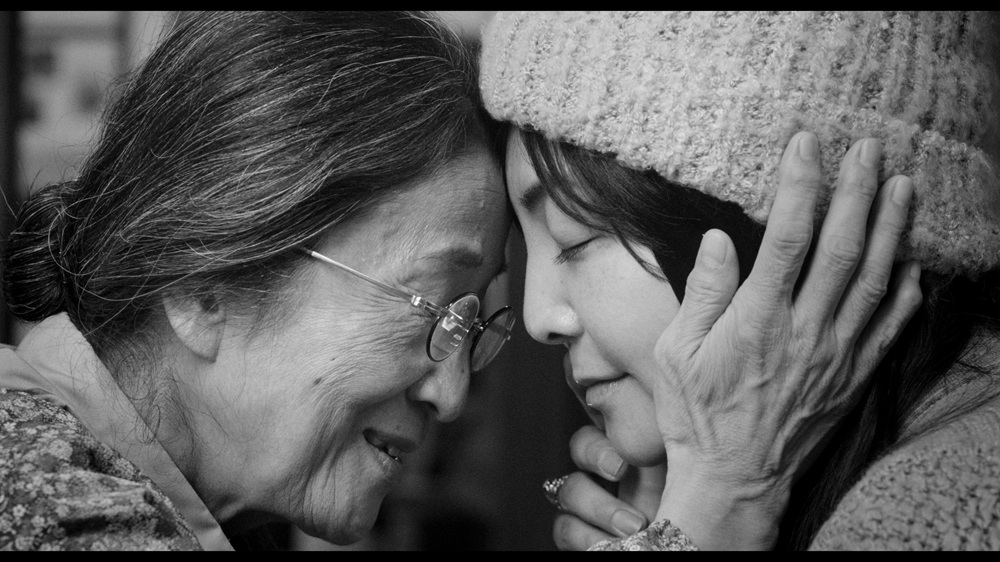
Akashi is a film by Mayumi Yoshida (right) who makes peace with her Japanese family’s past during the funeral of her grandmother, played by Hana Kino.

One thing about the Vancouver Film Festival is you will find some unique films from local filmmakers. The Japanese-language film Akashi is one of those films and it was met with great fanfare.

The film begins with Kana returning to Tokyo, Japan from Toronto, Canada. Kana is an advertising professional who dreams of breaking through as an artist. The purpose for the trip is a sad one: her grandmother’s passing. She is welcomed warmly by her parents, siblings, niece, nephew and in-laws. Kana is the only one of the children who has not yet married. In Canada, she’s been more focused on getting a prestigious arts grant and is awaiting the news of her third attempt at it.

As she’s in the home of her grandparents, memories come back to her. As she sees her grandfather’s artwork on the walls, it reminds her of how he used to teach her how to draw when she was younger and how it would lead to her own dream to be an artist. As she sees photos of her grandmother, she is reminded of the last talk she had with her. Her grandmother told her the marriage was arranged shortly after World War II and her grandfather actually loved another woman named Wakaku.

As she’s on a shopping errand before the funeral, she goes to a local store. In the store is Hiro, the boyfriend she had before she left for Canada. As they dated, Hiro had dreams of becoming an actor and the relationship was a case of two lovers with artistic dreams. Kana does not want Hiro to know she’s here and hides, but a sudden phone call from Shelby, her work colleague in Toronto, gives it away. Hiro is surprised to see her and the two talk for a while.

Kana is staying with her family for that week’s period. The funeral happens and they hold the service, tearfully paying their last respects. As Kana spends more time with her family, she starts observing her parents and how they struggled to keep a marriage and a family together while they were pursuing their professions. Now she sees it in her brother and sister and how they’re trying to raise their two children. This causes her to spend more time with Hiro. She starts to sense maybe Hiro was the one she was meant to be with.

Things become more frustrating for Kana as she learns that the drama group he’s with is not that successful. This comes over time she tries to learn more about the love between her grandfather and the other woman Wakaku. It’s in her grandfather’s drawings and notes that she learns more about what was covered up over time. Even though her grandfather was arranged to be marries to her grandmother, his love for Wakaku never died. Any interaction between the two had to be kept private. It’s noticeable as in one encounter in an art gallery, Wakaku and the grandfather had to give small talk and not have people notice. One boyfriend of Wakaku’s did find out about the love in the 1950’s and blamed her miscarried pregnancy on him, but it was the boyfriend that impregnated her.

As Kana is nearing the end of her visit, she has to make decisions. As she’s about to leave, she tells Hiro that she can’t be his. Hiro is heartbroken to hear the news. He takes it as another failure in his life. She gets the news of her attempt for her grant from Shelby. Again, it was unsuccessful. She also has a meeting with Wakaku on the day she is to leave. She sees Wakaku and learns she never married. She hears from Wakaku all that happened. Wakaku even appeared at her grandfather’s funeral. For which, the grandmother had no ill feeling and thanked her for loving him. The film appears to end with a telephone interaction between Hiro and Kana that appears she will live out a similar love story like her grandparents.

One theme of this film is about making resolve of the past and making sense of what love is. Kana sees the strong but difficult marriage of her parents and the marital situations of her own siblings. She has the reflection of her own relationship with Hiro and doesn’t know if it’s worth pursuing again. Then there’s the loveless marriage of the grandparents and knowing of the other woman. It is through talking with the other woman that Kana can resolve the dark secret in her family. Hidden truths no longer have to haunt her or the family. The marriage of her grandparents happened in post-World War II Japan and times were difficult as the nation was rebuilding itself. All personal lives and all family’s lives in Japan were affected by it in some way. It was a hard time for the family and for the grandmother to marry a man she didn’t love, but she held no hard feelings to the other woman in the end.

The film has many more themes to it. Another element of the story is about how things relate to in her own life. Kana is a struggling artist. Despite having a good job with an advertising agency, she still wants to make it as an artist. Meanwhile she reunites with her boyfriend who has still not become too successful as an actor. Her other siblings have bustling but difficult careers and her parents are retiring. This comes as she’s waiting to see if her application for the grant, her third attempt, will come through or not. As this all happens during her grandmother’s funeral, it’s there she finally gets the answers about the ‘other woman’ she learned of years ago. It’s there she learned of grandfather’s true love and gets a look at the relationship of her own parents and her siblings. It’s as she sees and learns what goes around her, she’s trying to question her own life and her own love. All this in a week’s period of time. To add to it, she begins the film as the family member who has been away for so many years and appears out of place at the start. At the end, she gets her feeling of belonging back. It’s almost like everything in question at the beginning was answered in the end.

This film is unique that it has most of the story in black and white, but both the story of the affair of Wakaku and the grandfather and the mental interaction of Kana and Hiro at the end in color. I think Yoshida had a reason to make it that way. I think it may be because the color was to represent the love that’s meant to be, despite the barriers and friction separating them. The story itself is slow and can get intense at times, but it does tell its story very well.

This film is an accomplishment for actor/writer/director Mayumi Yoshida. It’s a feature-length film nine years in the developing. It started as a stage play, adapted into a short film in 2017 and eventually evolved into a feature-length film. The audience at the Playhouse Theatre cheered loudly as a Japanese-born Vancouver local made her dream happen! The story is based on a conversation Yoshida had with her own grandmother back in 2011 shortly after the earthquake and tsunami that year. In an interview, she mentioned she noticed how her grandmother’s generation and her own generation look at love and marriage differently and has often reflected on the popular misconception of the young that the older generations had it better and easier. The film may be slow at times and appears to try and keep solitude even in the biggest moments of friction, but it tells the story well and pieces the puzzle together in good form.

Additional good acting performances are from Hana Kino. Her portrayal as the grandmother who kept secrets and eventually found peace in the end added to the drama of the story. Ryo Tajima is also very good as Hiro. His portrayal as the ex-boyfriend who still loves Kana makes for a very telling situation of modern love in a story about love between three generations. The performances of Kimura Bun as the younger grandfather and Sayaka Kunisada as the young Wakako is acted very well and makes for a believable scenario of the complications of love at the time. Even that single-scene performance of Chieko Matsubara as the older Wakaku makes you feel for the ‘other woman.’ The best technical aspects of the film are the cinematography from Jaryl Lim, the colorizing from David Tomiak, and the piano-driven score from Andrew Yong Hoon Lee.

Akashi is a film that’s simply more than a woman returning home. It’s about making peace and resolve with the past while making decisions about her own life. Although it may be slower than it should be, it’s still nice to see and showcases the skills of a promising director.
Movie Review: Corpus Christi (Boże Ciało)

Corpus Christi
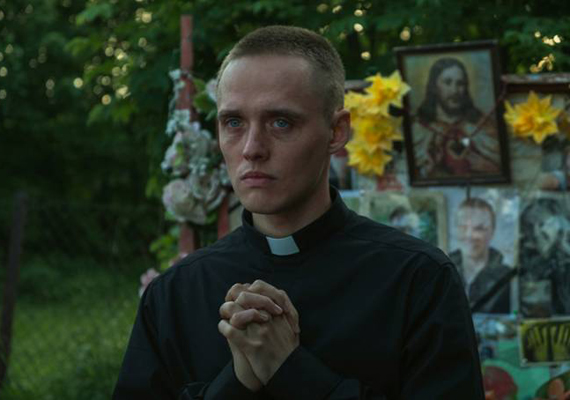
Bartosz Bielenia plays a parolee who poses as a priest in a small town in Corpus Christi.

Just around this time with the Oscars drawing closer, you would’ve thought my interest in the foreign films would be finished, right? When I saw Polish film Corpus Christi was playing, it caught my intrigue with the story. I thought it was worth seeing.

The film begins in a juvenile prison. Prisoners are prone to the same harsh actions, beatings and retaliations of other prisoners. 20 year-old Daniel knows he could be one. He killed someone when he was a teenager and was sentenced to juvenile prison, or ‘juvie’ as it’s commonly called, for manslaughter. Daniel has found a personal escape in religion. A priest, Father Tomasz, performs mass at the prison every Sunday. Daniel is the most willing participant as he even sings Psalm 23 for the mass. Every night he prays the rosary. Parole is nearing for him, which is a relief as one of his fellow prisoners named ‘Pinczer’ is threatening him. He wants to become a priest, but Father Tomasz says he can’t because of his criminal past. They’re not allowed in the seminary. As soon as Daniel achieves parole, it’s obvious he’s not ready for the priesthood as he happily does drugs and has sex at parties. He does however own a priest’s shirt.

For his parole, Daniel has to do sawmill work at a mill in a small Polish town specifically for parolees. He notices a church and introduces himself as ‘Father Tomasz’ to a young girl praying named Eliza and introduces himself as ‘Father Tomasz.’ He’s then introduced to her mother Lidia, the church secretary, and the ailing priest. Daniel is given the job to perform priestly duties. Daniel’s first mass goes excellently, and people believe him to be the temporary priest. Daniel soon notices as he walks around town people praying to a memorial to six young people. They died in a car accident which the driver hit them head-on. The image of the driver, who also died, is not on the memorial.

Over time, Daniel becomes more involved in the community with each mass he serves. He even wins the liking of the town mayor. Daniel even takes the opportunity to help those that constantly pray by the memorial to help overcome their feelings. Eliza and Lidia are among those as Jakub, Lidia’s son and Eliza’s brother, was one of the fatalities. He also notices how some people shout ‘the whore’ when dealing with their grief. He finds out people have been directing their anger to the driver’s widow. When meeting with the widow, he learns that people have been sending her hate-mail.

Daniel tries to think of a solution, but he later learns Pinczer, one of his rivals from prison who was called ‘Bonus,’ knows he’s posing as a priest. He demands 5000 Euros or else he will expose the truth of ‘Father Tomasz.’ Daniel tries to continue on as a priest and even works at making the town confront their unnecessary anger to the widow by showing them all the hate-mail they sent her. Soon her husband is given a proper burial and is attended by all: even those that lost a child in the accident. However it soon becomes apparent that Daniel’s secret will be exposed. It does happen and the aftermath becomes a case where you can watch and draw your own conclusions about the town, Eliza and Daniel.

One thing that caught my attention is that this film is based on true events. It may not be a true story, but it is of a collection of true events. Director Jan Komasa made mention in a Los Angeles Times interview that he has taken notice that there are several unordained men who have posed as priests. Many of those men believe they are doing priestly duties for the right reasons. The issue of fake priests is one that the clergy in Poland know of, but they sweep the issue under the rug. Scriptwriter Mateusz Pacewicz said in the same interview that he became very fixated about the idea of these fake priests and their spiritual passion. He even wrote a short story of it and that would lead him to write the screenplay for this film.

This is a film that will cause a lot of people with strong Catholic values to think a lot about. Some may even be outraged of a positive depiction of a fake priest. What we have here is a young man who found himself in God possibly through prison ministry. Daniel has this problem with him as he’s a killer and he’s reminded his past crimes will not allow him into the seminary. However he sees the town where he is to do his parole duties as his chance to be a priest. We should remember during his short time as a priest, he didn’t do anything to hurt the citizens of the town. He didn’t rob from the people, he didn’t disturb any masses. Instead he became a symbol of help and hope. He helped the townspeople overcome the losses they were enduring. He got the people to stop with their unnecessary hostilities towards the widow of the killer. He even helped the widow get back to being accepted rather than be the subject of a town’s wrath.

The film allows to both question and even make your own judgments about what happens in the story. First off it makes you wonder if Daniel posed as a priest because he feels he was meant to be one or to avoid an act of vengeance from the other parolees at the sawmill. It’s not made obvious but one can even sense in the film that Eliza always knew Daniel was not ‘Father Tomasz.’ I sensed that in the scene where Daniel was asked for his priest card and she says it’s in the laundry she was working with. Even that sex scene between Eliza and Daniel suggests that; an ordained priest would not have sex or else we would be forced to resign. However Eliza knew Daniel was the right man to bring peace to the town. Eliza also wanted healing along with the people of the town, including hard-hearted Lidia. Eliza felt she knew Tomasz could bring healing and was the only other person who felt making peace with the killer’s widow and allowing a dignified burial of his ashes can make the town heal.

The ending will especially get one thinking as what has happened and what has happened next for Eliza and Daniel. Even as Daniel learns after being recaptured that he was meant to be a criminal, he should be thankful he was able to be a priest and had the chance to do the right things while doing so. It’s possible being a priest during that time brought out his best personal traits while prison brought out his worst traits. It’s interesting to see that a killer who poses as a priest was the one that got the town to heal from the tragedy.

I commend the direction of the film by Komasa and the script by Pacewicz. This is a story that will keep you interested from start to finish. It has a lot to say and will allow one to draw their own conclusions of what the overall message of the film is. I don’t think the film is too critical of religion. We should remember Poland is a very religious country and the only European country where more than half of the population (65% to be exact) attends religious service at least once a month. Showing an anti-Catholic film in Poland is sure to spark outrage. I do feel both Komasa and Pacewicz were trying to make a critical statement without being disrespectful to the Roman Catholic Church. The statement being in Poland, anyone can be a priest.

Also excellent acting from Bartosz Bielenia. He did a great job as a man with immense faith but had something to hide. Eliza Rycembel was also very good at playing Eliza. She was good at knowing the truth of Daniel but being supportive in silent manner. Also very good was Alexandra Konieczna. Her best parts were the moments where she didn’t speak, but you call tell her emotions by her body language. Actually the acting from all involved was very believable and very good at telling the story. They were all very good at showing extreme emotion without going over the top.

Corpus Christi is the twelfth film representing Poland to be nominated for the Academy Award for Best International Feature Film (formerly Best Foreign Language Film).’ It was a highlight at last year’s Toronto Film Festival, it won the Edipo Re Award at last year’s Venice Film Festival, and Bielenia won the FIPRESCI Prize for Best Actor at this past Palm Springs Film Festival as well as the Best Actor award at the Stockholm Film Festival.

Corpus Christi is remarkable as it’s a film that will leave you asking more questions than giving you answers about the story. The film will also get you thinking about morality and how people judge others, or how flawed people deal with their feelings. You will be left thinking at the end.

WORK CITED:

Ellwood, Gregory. “Scammers or spiritually motivated, fake priests figure in Poland’s ‘Corpus Christi.'” Los Angeles Times. 1 Jan 2020. <https://www.latimes.com/entertainment-arts/movies/story/2020-01-01/corpus-christi-delves-into-fake-priest-trend-in-poland>