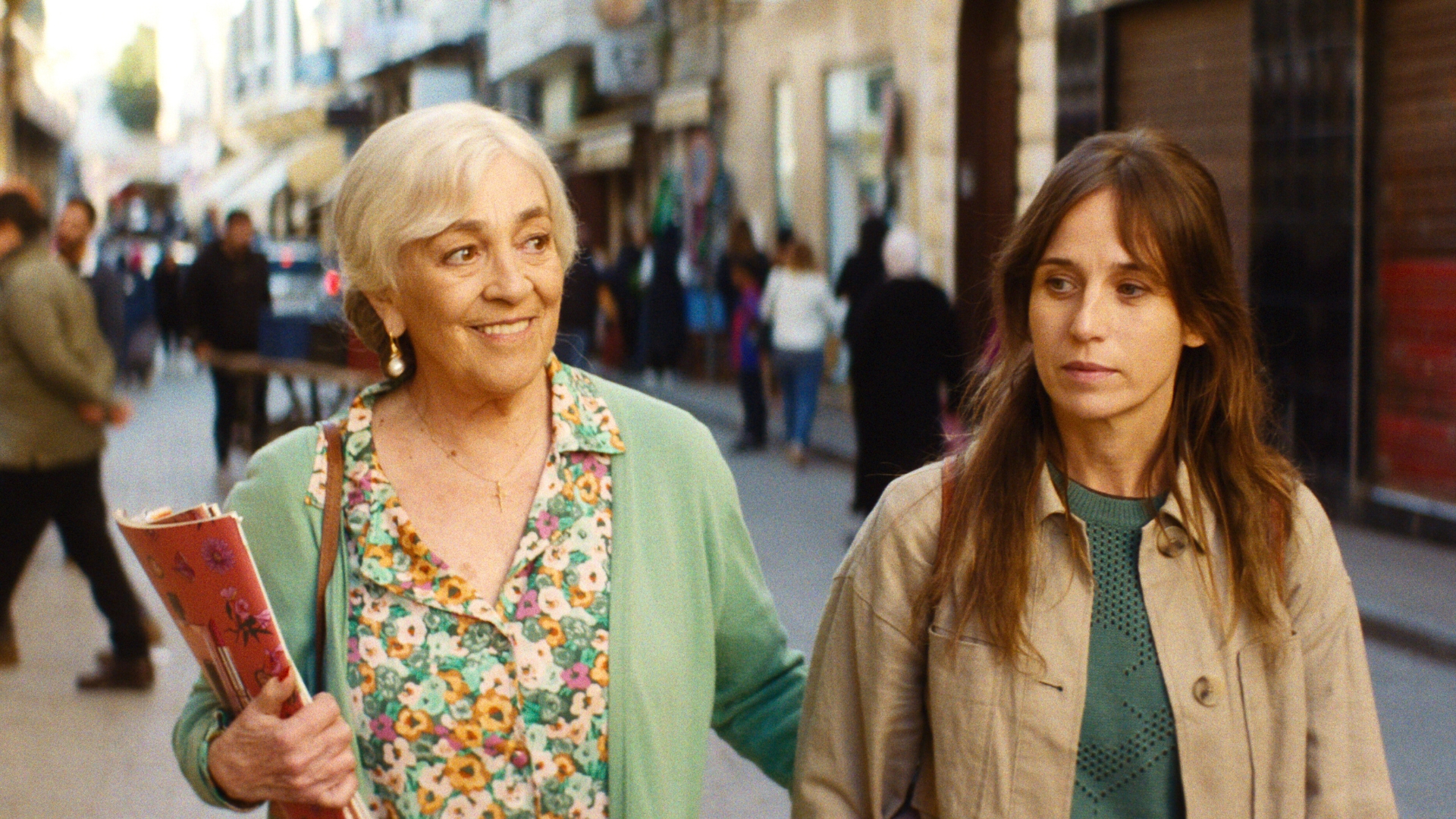
For this year’s Academy Awards, Morocco’s official submission for the Best International Feature Film category is a Spanish-language film: Calle Málaga. It presents a tense story set among beautiful scenery.
In Tangier, Maria Angeles is an elderly Spanish woman. She’s of descendants of Spaniards who fled to Tangier to evade the Franco dictatorship of Spain. After Franco died and democracy was introduced, many Spaniards returned back to Spain, but Maria remained with her husband and daughter. Over time, her daughter Clara returned back to Madrid, married, and had a family of her own as Maria stayed in Tangier at the Calle Malaga flats. Having her daily coffee, talking with her best friend who’s a nun who’s taken a vow of silence, watering her plants, and embracing the horizon at night, her life in Tangier is all she asks for.
One day, Clara returns to Maria. It first appears that it would be a happy family visit, but it’s something else. Since her divorce, Clara has been cash-strapped. Especially since she has to both work and raise her two children. It’s gotten so dire, Clara thought it best to sell Maria’s flat. Maria is crushed, but Clara thinks she did the right thing. Clara feels Maria will have a better quality of life being around her daughter and grandchildren. Besides Maria’s husband died 20 years ago and most of the people she’s known her life have either died or migrated back to Spain.
Maria protests but Clara reminds her the flat is in her name and she can do what she chooses. Clara states the only other option is for Maria to go to the Spanish nursing home in the city. Maria first chooses the nursing home. As she’s transported there, the house’s old belongings go for sale or for pawning so the empty flat can sell. Maria is not happy with her life at the nursing home. It’s missing all the vitality of her own life and she’s also very able to take care of herself.
One day, she fakes a situation where she’s flying to Spain to be with her daughter. The only other person who knows this is the cab driver who’s to pick her up. What Maria really does is move back to the flat that used to be hers. She returns and the neighbors are happy to see her back, but all her furniture is gone. To add to the frustration, the tenant holding the flat for sale lives on the floor below.
Her first goal is to make enough money to get all her furniture back. Her pension doesn’t pay her enough. What she decided to do is turn her flat into a café for friends to watch La Liga football games. In turn making a new friend with the young Khalid who’s helping her out with new visitors. It becomes a popular hangout. One day, she catches the tenant at the suite and puts him in a situation that she is to hold fort until it’s sold. She reminds him she’s in control. She gives her friend the nun quite the story.
Over time, she learns of the antique shop selling her furniture. She confronts the salesman named Abslam about getting her furniture back. She also tries to use her makeshift café as a chance to coax him into helping her further. Over time, it becomes more and she starts to feel love for the first time since her husband’s death. She learns that Abslam was never married. The romance grows and she has quite the story to tell Sister Josefa.
As time passes, it becomes evident Maria’s secret will run out. During one of her games, the tenant comes to visit and tells her the place is sold. She’s brokenhearted and doesn’t know what to do. Also that day, Sister Josefa dies. Maria sees her in her deathbed to tell her last feelings. The following day, the day before the new owners are to move in, Clara arrives and is surprised as she sees one of her mother’s parties. It’s there Maria confronts Clara tells of her choice. The film ends with no telling what happens the next day, but telling of how it appears things should be.
This is one story that’s not too heavy on its core social topic. The topic here is ageism. The daughter who has the flat in her name feels she can make decisions for the mother, but the mother is able to decide her life for herself. Maria wants Clara to know this but is afraid to at first. It’s over time she’s able to amass the courage to tell her. This is a common problem among families.
I’ve seen films or shorts of people who don’t want things to change at first and are unwilling to accept change, only to accept it and eventually embrace it in the end. Maria is different. This life in Tangier and her flat is the only life she’s ever known and the only life she wants to know. One would find this a bad thing for her not to accept change, but it’s her choice. Mind you the film is more about Maria’s refusal to change. It’s also about Maria finding vitality in her own age. Most people Maria’s age would feel they’re at the end of their life. Instead, Maria sees a chance for a new beginning. She may refuse to change her living situation but the changes she makes like her makeshift football café, her new young friend Khalid and her new love with Abslam add to her vitality.
This is a great film by director Maryam Touzani. The story she co-wrote with husband Nabil Ayouch is a nice calm story where the intensity is in the moments of heated discussions. It makes for a nice story about a woman and the life she feels she was meant to live. Instead of this story being a super-heated story about ageism, it’s a calm story about what is meant to be and is given a nice calm vibe.
Carmen Maura owns the film. Outside of Spain, Maura is most famous for her frequent collaborations with Pedro Almodovar. Here in this film, she handles her role with immense class and her personal charm adds to the film. Ahmed Boulane is also great as Abslam. Playing a man who feels love for the first time also adds well to the film. Also great is Maria Alfonsa Rosso as the mute Sister Josefa. Her performance with her body language adds to the comedic elements of the film. The best technical element has to be the cinematography of Virginie Surdej. The cinematography of the city images and the panoramic nature of Tangier adds to the story as it’s one of the best elements at telling the audience why Maria can’t leave her old life behind.
Calle Malaga tells a story about a woman who finds a purpose in her life in her age and finds a new life. It’s also a cinematographic delight to watch with the scenery adding to the storytelling.
 Jon The Blogcentric