VIFF 2025 Review: As The Water Flows (翠湖)

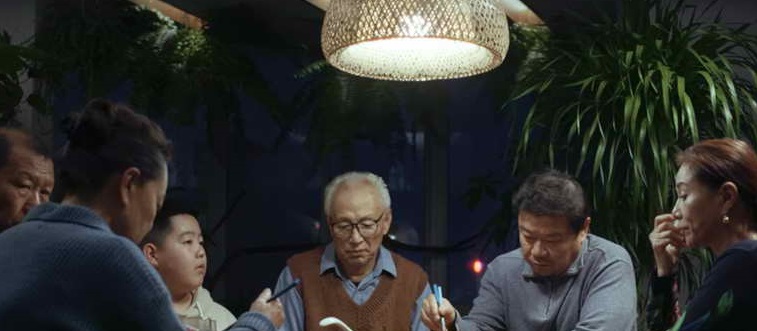
A dying grandfather, played by Li Zhenping (centre), seeks to mend family ties in the Chinese film As The Water Flows.

As The Water Flows is one of many Asian films that played at the VIFF this year. Its subject matter isn’t exactly a film that would make you want to see it, but it’s worth seeing.

The film begins with a grandfather on a boat on a river with his grandchildren. The film then goes to the grandfather Xie Shuwen, a former college professor. He’s with his new girlfriend whom he has seen recently since his wife died. He will be having a dinner with his daughters and he’s unsure they will be happy with the news of her. The dinner happens and all three daughters are there with their husbands. Only one daughter brought their child: a pre-teen chubby boy named Panda. He delivers the news, but they’re not happy about it. Especially the oldest and the most orderly of the daughters. After the dinner, bad memories of the past agent the daughters.

After the dinner, the daughters move on with their lives. They’re busy maintaining a career, their own families and their children. They want their children to grow up well and be successful but there will be difficulties ahead. One daughter is proud that her son, the eldest grandson, is going to Stanford the next year. Suspicion of what’s really happening grows when Xie notices the grandson drunk. Panda appears to participate in classes well but he is the target of bullying because of his short overweight stature. Another daughter of Xie’s is unhappy her own daughter quit a job in a family restaurant and has different career desires.

Meanwhile Xie learns he has a terming lung cancer diagnosis. As he knows he’s dying, he continues to spend his quiet time at Green Lake Park but he also uses the time to spend more time with people close to him. That includes his new girlfriend, friends from the college he taught at, neighbors, and his families. Family dinners become more common. One daughter notices how he has become closer to the family even more so than when they were younger. She also notices how his harmonica which he used to play often is showing age. She’s especially angry when she learns he’s still smoking and playing mah-jong.

As time passes, what the children are hiding becomes more obvious. The granddaughter wants to go her own direction and she has fallen in love with a man. She hints she may want to marry. The older grandson admits he forged the acceptance letter to Stanford and that he will really be going to a common University. He’s broken-hearted about this. Also Panda is unhappy with the demanding regiment at his school. It becomes frustrating to the point Panda buries his schoolbooks in dirt. It’s time with grandfather Shuwen that the grandchildren are able to be more confident with their life and their decisions. Even the older grandson is able to find luck in his life as he meets the granddaughter of one of his grandfather’s professor friends.

Shuwen then has one last visit with his girlfriend. It’s a nice quiet occasion. The marriage between the granddaughter and her boyfriend happens and Shuwen is happy to be there. The occasion is a happy occasion for all and he’s able to have amicable conversations with his daughters, despite his cancerous coughing. The ending and credits role gives a hint the wedding is the last family occasion Shuwen is present.

The film is as much about the family dynamic and the family ties as it is about the main protagonist trying to find his purpose to live. We have the widowed grandfather who has recently been diagnosed with lung cancer. Even though he lost his wife, he wants to maintain a life for himself by playing mah-jong, meeting with his professor friends and dating again. We have the three daughters who are trying to maintain their careers, keep their marriages together, and raise their children for the future. They’re the ones with the biggest struggles now. Finally, we have the three cousins that treat each other like siblings. They dream of the future, but they also fear for it. They feel it’s demanding and unforgiving and they either don’t know what to do or they want to do it their way.

This all comes as Xie Shuwen learns he is dying, just a year after his wife’s death. He spends time with his children and their families. He becomes like a guide or a mentor to the grandchildren while the daughters feel he didn’t spend enough time with them during his professor days. It’s possible he wants to seek relations with his grandchildren and resolve with his daughters. It’s not an easy thing to do with the constant arguing between the daughters and him. To add to it, the daughters are not very welcoming to his new girlfriend.

The story is told through all angles. The biggest angle seen is through Xie’s, but we also see the story through the angles of the daughters and the grandchildren. The multiple angles make for a good way of telling a story and presenting the complicated scenarios, but it can get confusing at times. The story itself is so complex, it can often seem like a drama that’s drawn out longer than it should be. Often throughout the film, you’re tempted to question who the story is mostly about. Some would argue the film follows the same formula as 1989’s Parenthood. Some would also say it has a similar sound of 2001’s The Royal Tenenbaums. It’s easy to dismiss as such but if you see the story, it relates to real situations that one can see happening in their own family. That’s the biggest quality of the film. That probably every family can see an element of the film or the characters in their own life.

This film is the directorial and writing debut for Zhuo Bian. Not much is known about Zhuo’s filmmaking before this film, according to IMDB. With this film, he creates a well-arranged family story that starts with a family dinner, goes into the lives of the separate families and the members, often returning with another family dinner from time to time, then going off again, and ending with the wedding. This type of storytelling allows the story to be told from all angles and remind us that it’s a family story. It’s very complex and sometimes difficult to connect all the stories together, but Zhuo does a very good job. He also does a great job in placing the story to the Green Lake Park in Kunming, China. That’s the place where Xie often visits or meets with others as he reflects on his thoughts. Adding that in adds to the sensitivity and solitude of the story.

The film has excellent acting from Li Zhenping as Xie. As the grandfather who’s at a crossroads between living again after losing his wife and just learning he’s dying, he does a great performance that is low on the drama but makes for honest emotions. He does a great job of holding the story together. It’s hard to pick out the best supporting performance because all the other actors did an excellent job of playing their parts well. The daughters, the sons in law, the grandchildren, they all did their parts well. The cinematography of Wang Zixuan and Jie Zhu gave the dramatic story a picturesque telling with its various shots happening inside homes and outside in nature.

As The Water Flows is as much about the family dynamic over three generations as it is about the difficulty of a grandfather trying to maintain a family and maintain one’s life. It’s possible you can see something where you can identify in your own life with this film.
VIFF 2018 Review: One Cut Of The Dead (かめら お とめる な)

One Cut Of The Dead
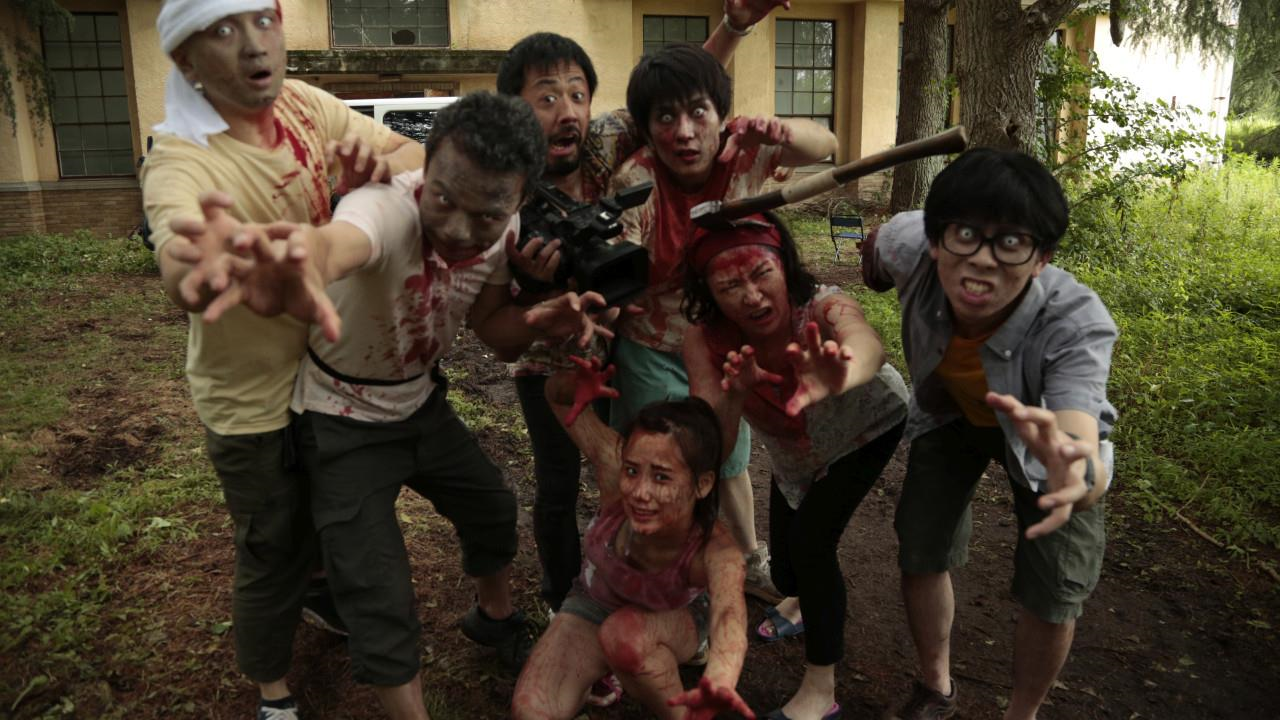
A zombie show and its making make for an entertaining movie in One Cut Of The Dead.

Every VIFF I make the effort to see some of the later shows, including the latest during the weekends at the Rio. The first I saw was the Japanese movie One Cut Of The Dead. It turned out to be a hilarious time.

The film begins with us seeing a young girl about to kiss her zombie boyfriend before killing him. Then Director Higurashi yells ‘Cut!’ This is a scene from a zombie movie being shot. However this is the 42nd take. The director is obviously frustrated. He berates the actress Chinatsu by telling her she lives a lie. He even abuses the actor Ko as he scolds him for his performance. However Nao, a middle-aged make-up lady, recommends a thirty-minute break to overcome the stress, to which the director accepts begrudgingly.

During the break, the two from the scene drink and talk with Nao while the crew and director go outside. Nao talks of how this used to be a water filtration during World War II and even demonstrates to them her hobby of learning self-defense. She even tries to teach them the Pom method for when being attacked by the back, but suddenly a severed arm comes flying in. Then we see the best boy Kazahara is a zombie. One of the techs has become decapitated. They’re all freaking out. But Higurashi likes this. Now that there are real zombies happening, he feels he can get some real acting out of them and calls action as the zombies are around.

It’s up to the three to flee their way out of this zombie mayhem. They leave the water site and try for the van. It doesn’t work out. Chinatsu goes into hiding, but is soon spotted by a zombified man. Ko tries to protect her, but time is running out as all zombies are after them. Meanwhile Higurashi is seizing each moment to shoot their parts. As they run for their lives, they head to the top of the facility.  Chinatsu senses Ko is a zombie and that is the case. In the meantime, she has to deal with Nao who’s on the attack. At the end of it all, Chinatsu battles Nao and has no choice but to kill Ko in passion. Higurashi complains she didn’t do the scene right but she kills him on the spot. Chinatsu then goes to the area of the building where she stands in a star made of blood in triumph as the credits roll…

…and then we go back to a month earlier. There’s a channel in Japan that’s about to be launched: The Zombie Network. The channel has called Higurashi to direct an uncut zombie show as part of the channel’s opening. Higurashi has never really done zombie movies, but the network accepts him because of his motto of his films being ‘fast, cheap, but average.’ Elsewhere his daughter Mao has developed a reputation as a crew person. Frustrated with the junk she gets at work, she wants to develop into a career of filmmaking of her own. The mother Nao used to be an actress until she met Higurashi. Her marriage and the birth of Mao led her to forget about her dreams. She didn’t mind it, but now it’s become mundane as she tries to kill her time with hobby after hobby, including video lessons of self-defense.

Higurashi meets with the people to do with the script of the film entitled One Cut Of The Dead. The first rehearsal is crazy because Chinatsu brought her baby and they can’t rehearse well. Chinatsu also has issues as she is a major heartthrob and her agent says that being in a movie with too much blood can interfere with her star status. Also at the first rehearsal is nerdy Kazahara, a crewman whose stomach doesn’t go well with hard water, and a man with a drinking problem. Mao is originally disinterested in the project until she learns major teen idol Ko will be a part of it. This comes as moody Mao is about to move out of the house. Higurashi tries to forget about Mao’s move out until he talks with one of the men playing a zombie and he talks of how he misses his daughter. However when the actor who plays the director doesn’t show, people recommend Higurashi play the lead. Before Mao leaves, she talks with her mother Nao about her ambitions. Nao asks Higurashi to be a part of it.

Then comes shooting day. You can bet this could be a big break for Higurashi. First trouble is the crew man with the stomach issue drank hard water and the portaloos for the film and crew aren’t here! Secondly the man that’s supposed to play the zombie drank a whole bottle of sake and is drunk on the floor! The director tries to continue with shooting with the crew trying to help out however they can. Then the craziness. When it comes for the zombie’s part, Higurashi has to carry the drunken man to make him move into his part. Then comes the crew man with the stomach problem. He has to go outdoors and… you know. The crew try to help as much as they can. Mao tries to step in to save what she can. The network people are in an area away watching everything that is happening live and they don’t know what to make of what’s happening. Then Nao really gets into her part. The director knows she has to be controlled but she’s able to Pom her way out. She requires sedation! Then there’s the camera crane required to do the ending shot. It feel from the roof and is broken. So Mao and Higurashi organize a human pyramid for that long final shot. After a lot of misses, it finally happens with Mao being the camera girl on top. The whole insane craziness works to perfection. The show is a success!

The film is very creative and very fun. The film starts out as a zombie movie which we first think is a simple short film. Just for reference, the VIFF is known for showing a short film of 20-30 minutes before the actual feature. Most features with a short before the start list the short in the program. I myself thought that was the case. It was a short film meant to be shown before the actual feature. Then it became evident that it was a case of the short zombie show followed by the making of the zombie show from start to finish. That was very smart of them to do such a thing. Plus they make the story work. The making of the film is a story of its own in how this director is placed with this demand from the network, they try to get things ready for a month, the rehearsing starts out shaky, and then the director and his wife find themselves actors. Then there’s the hairiness of shooting as one actor got himself drunk on sake and one crewman has a bad stomach because of the hard water and one camera breaks. It’s like from start to finish, it looks like something that would fail or fall apart, but it works in the end.

Funny thing about the film is that it includes the family element of it all. The director has a reputation of being “fast, cheap, but average.” The daughter has earned her own experience on the set and feels she can establish herself. She feels it’s time to move out. The father doesn’t take the move-out well at all. Meanwhile the mother is a former actress who quit to become a full-time mother and housewife. She killed her time by adopting hobby after hobby, but her daughter gives her a chance to be an actress again by recommending her for the film. In the end, it helps bring the family together.

The film has been known for its surprise success in Japan. I don’t know about ‘fast, cheap, but average,’ but the film was produced by Tokyo acting and directing school Enbu Seminar at a cost of only $70,000 to make and made by mostly unknown actors. The film made its debut at the Udine Far East Film Festival in April where it won the second-place audience award. It has since been invited to 60 film festivals. Back in Japan, it made a box-office run starting in June. The film had modest expectations. Enbu Seminar hoped that 5,000 tickets would be sold during its box office run. Instead it became a big hit in Japan already amassing $24.4 million and is now the 13th-highest grossing film in Japan right now. When I went to see it for its 10:45 showing at the Rio, the theatre was surprisingly packed. Word has gotten around.

Top kudos to writer/director Shinichiro Ueda for inventing the story and making it come alive. His two-shows-in-one was fun to watch and very winning. The whole cast also has to get top kudos for helping to make this story come alive in a very entertaining way. They have as much to do with the movie’s surprise success as Ueda. You have to admit that it’s very rare to have a film within a TV show within a film. Excellent job!

One Cut Of The Dead proves to everyone who sees it why it’s the surprise hit in Japan. It’s the ‘guilty pleasure’ movie you won’t feel guilty about enjoying!