VIFF 2025 Review: Free Leonard Peltier

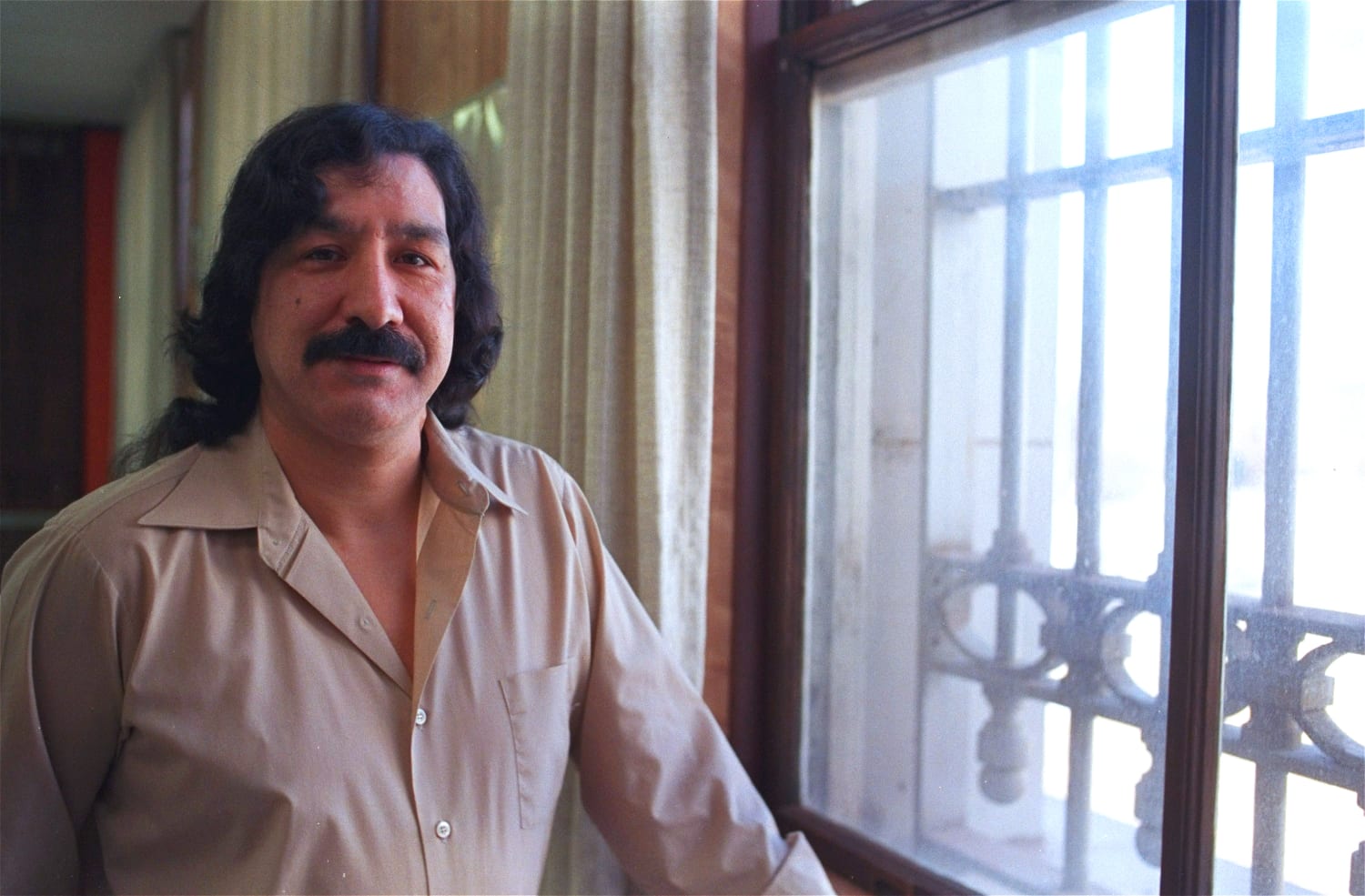
Free Leonard Peltier is about the accused crime of Indigenous activist Leonard Peltier, his imprisonment and his fight for freedom that lasted half a century.

The first documentary I saw at this year’s VIFF was Free Leonard Peltier. At a time when Canada has been made to face the music of what they’ve done to Indigenous people, Leonard’s story will remind you that the plight of the people is not strictly a Canadian problem.

The film begins with a group of American Indigenous activists on a travel. They are traveling to Florida in hopes that fellow activist Leonard Peltier be pardoned and freed just as Joe Biden is about to leave the presidency on January 20, 2025. Trying to get Peltier freed from a double-murder from 1975 he denies and most believe he’s wrongfully accused for has been going on for the last half-century. Many believe it’s Leonard’s last chance at any freedom as he just turned 80 years old and he’s ailing.

The story of the Leonard Peltier case is told through friends, family and allies of Peltier from the American Indian Movement (AIM). Footage of a 1989 news interview is also shown where Leonard states his own case. Leonard’s early life was like that of many American Indigenous people for over a century. He was born on a reserve in North Dakota to a large family and forced into a Residential School 150 miles away from his place of birth where he and others were taught to assimilate. The Bureau of Indian Affairs (BIA) dictated his life and the lives of American indigenous peoples. After he left his schooling behind in 1965, he became a man of various trades doing welding, construction or auto work.

In the late-1960’s, Indigenous activism was growing and the group AIM was founded. Leonard first started with local activism where he was elected tribal chairman of a reservation and he was introduced to AIM from a colleague. His biggest activism in that time was his appearance at 1972’s Trail Of Broken Treaties. Over time, activism became more violent and a group called the Guardians Of the Oglala Nation, or GOON, was founded. Peltier was also involved in violent conflicts and was even charged with attempted murder for an unrelated incident.

During his wait for the trial, FBI agents entered the Pine Ridge Reservation in pursuit of a man named Jimmy Eagle on June 26, 1975 wanted for theft and assault. Two FBI agents named Ronald Williams and Jack Coler were pursuing a Chevrolet with AIM members Peltier, Norman Charles and Joe Stuntz. Charles had met with the two FBI the day before and they told him of their intended pursuit. As the Chevrolet entered the ranch, the three men quickly parked the car and ran out, and that’s when a firefight between the three men and the two FBI ensued. Williams and Coler were shot to death in the shootout. Stuntz was shot to death later that day by a BIA agent. Peltier took Coler’s pistol after he died. The shootout would come to be remembered as the Battle At Wounded Knee.

In the aftermath, the FBI went to arrest three AIM members who were present at the shootout at the time: Dino Butler, Peltier and Robert Robideau. All three were AIM members and all three stole the firearms form the two FBI agents after they were killed. After Peltier was bailed out, he sought refuge in Canada, but it was unsuccessful as Hinton, Alberta RCMP agreed to extradite him back to the United States. In the end, Butler and Robideau were acquitted on grounds of self-defense but Peltier was found guilty. He was sentenced to two life terms and seven years.

In the years that followed would be a long arduous process from friends, family, Indigenous activists, human rights foundations and AIM members to get Leonard Peltier free from a crime he insisted he was innocent of. Over the decades, there was evidence proving that Peltier did not shoot any of the officers. At the same time, the FBI appeared to be playing games as they had one Indigenous women sign an affidavit claiming she was his girlfriend and he confessed to her the shooting. Truth is she didn’t even know him. They also withheld evidence and shred important documents clearing Peltier.

In later decades, Peltier would make pleas of clemency with active Presidents of the United States. Rays of hope first came in 1999 when President Bill Clinton said he would be looking into the Leonard Peltier case and have him cleared and freed. This case for clemency received support from many world leaders like Bishop Desmond Tutu and the Dalai Lama. The hope faded as the FBI held a backlash where family of FBI and their allies staged a demonstration claiming that freeing Peltier would do a dishonor to the FBI agents. Their manipulation of making this a Leonard Peltier vs. the FBI case succeeded in keeping him in prison. Peltier continued to make please with clemency with presidents in the years that followed. All would be unsuccessful.

In the 2020’s, Peltier’s health was failing. Painting and drawing, one of his passions he was able to do for decades in prison, was something he could no longer do. Joe Biden was seen as his last chance for clemency in his lifetime, especially since his friends and family knew he would not get any clemency from Trump when he re-enters the White House. Friends and family built a house for Peltier at the Turtle Mountain Indian Reservation in Belcourt, North Dakota where he could live after his release. January 19, 2025 was the last day of Biden’s presidency and the supporters at the beginning of the film are waiting to hear the news they hope to hear. Biden reduces Peltier’s sentence from life imprisonment to house arrest. They celebrate knowing he will soon stop being a prisoner.

This is a good documentary as it reminds you of a common problem in the world. Not just in Canada, in the US or in the Americas, but the whole world. The problem is nations being unable to deal with their indigenous peoples or tribal peoples well. Living in Canada, I am very familiar with news stories of how badly the Canadian government has mistreated the Indigenous peoples and how they’re doing a lackluster job to make amends and right past wrongs. The United States is just as guilty of that. They had a residential school system too, they have most of them living on reservations, they have a government that appears unable to listen to them and they’ve even had ‘Indian Wars.’ One can see how the story of the struggle of Leonard Peltier can be something all American Indigenous people can understand and relate to.

The story itself is well-told. I was first introduced to the Leonard Peltier case in 1994 through the music video of “Freedom” by the American band Rage Against The Machine. Peltier’s case has been an inspiration for many songs and films and this documentary is only the latest. In this documentary, we have news footage of the events involving the shootout, arrest, imprisonment and an interview from Peltier in 1989. We also have interviews from surviving friends and family members, Indigenous activists and even attorneys and paralegals who have worked with the Peltier case. The story becomes clear that Peltier’s imprisonment appears to have been used by the FBI just to simply give resolve to the deceased officers’ families and to protect the FBI from looking bad in the eyes of the public. The film’s inclusion of Peltier’s statement of his case makes the shootout look like a case of self-defense. Even though he has always maintained he never shot the officers, he has also stated he would defend himself and his people. One can see why the FBI would fear someone like him.

This is a very informative documentary by Jesse Short Bull and David France. They not only show the Peltier story, but they show how important the Peltier case is to his friends and allies. This is a case that’s taken so long to resolve and it’s at the point friends are even willing to travel from North Dakota to Florida by car in hopes of hearing the good news they’ve been waiting since 1976 to hear. Having AI recreate the incident with film appearing like satellite images re-enacting the heist will get you thinking of the case itself and have you try to make up your own mind about it.

This documentary has received a lot of renown this year. It got a lot of attention at the Sundance festival in January and its biggest acclaim came at the Thessaloniki Documentary Film Festival where it won three awards including the FIPRESCI Prize and the Amnesty International Award.

Free Leonard Peltier is a story about the common racism felt by Indigenous peoples in North America. It’s also a story of hope that what’s wrong can be corrected over time.
Movie Review: Corpus Christi (Boże Ciało)

Corpus Christi
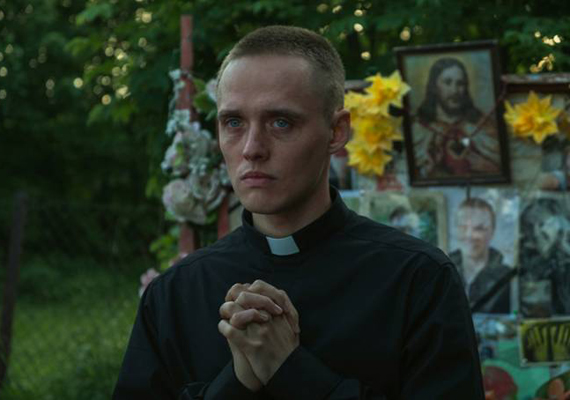
Bartosz Bielenia plays a parolee who poses as a priest in a small town in Corpus Christi.

Just around this time with the Oscars drawing closer, you would’ve thought my interest in the foreign films would be finished, right? When I saw Polish film Corpus Christi was playing, it caught my intrigue with the story. I thought it was worth seeing.

The film begins in a juvenile prison. Prisoners are prone to the same harsh actions, beatings and retaliations of other prisoners. 20 year-old Daniel knows he could be one. He killed someone when he was a teenager and was sentenced to juvenile prison, or ‘juvie’ as it’s commonly called, for manslaughter. Daniel has found a personal escape in religion. A priest, Father Tomasz, performs mass at the prison every Sunday. Daniel is the most willing participant as he even sings Psalm 23 for the mass. Every night he prays the rosary. Parole is nearing for him, which is a relief as one of his fellow prisoners named ‘Pinczer’ is threatening him. He wants to become a priest, but Father Tomasz says he can’t because of his criminal past. They’re not allowed in the seminary. As soon as Daniel achieves parole, it’s obvious he’s not ready for the priesthood as he happily does drugs and has sex at parties. He does however own a priest’s shirt.

For his parole, Daniel has to do sawmill work at a mill in a small Polish town specifically for parolees. He notices a church and introduces himself as ‘Father Tomasz’ to a young girl praying named Eliza and introduces himself as ‘Father Tomasz.’ He’s then introduced to her mother Lidia, the church secretary, and the ailing priest. Daniel is given the job to perform priestly duties. Daniel’s first mass goes excellently, and people believe him to be the temporary priest. Daniel soon notices as he walks around town people praying to a memorial to six young people. They died in a car accident which the driver hit them head-on. The image of the driver, who also died, is not on the memorial.

Over time, Daniel becomes more involved in the community with each mass he serves. He even wins the liking of the town mayor. Daniel even takes the opportunity to help those that constantly pray by the memorial to help overcome their feelings. Eliza and Lidia are among those as Jakub, Lidia’s son and Eliza’s brother, was one of the fatalities. He also notices how some people shout ‘the whore’ when dealing with their grief. He finds out people have been directing their anger to the driver’s widow. When meeting with the widow, he learns that people have been sending her hate-mail.

Daniel tries to think of a solution, but he later learns Pinczer, one of his rivals from prison who was called ‘Bonus,’ knows he’s posing as a priest. He demands 5000 Euros or else he will expose the truth of ‘Father Tomasz.’ Daniel tries to continue on as a priest and even works at making the town confront their unnecessary anger to the widow by showing them all the hate-mail they sent her. Soon her husband is given a proper burial and is attended by all: even those that lost a child in the accident. However it soon becomes apparent that Daniel’s secret will be exposed. It does happen and the aftermath becomes a case where you can watch and draw your own conclusions about the town, Eliza and Daniel.

One thing that caught my attention is that this film is based on true events. It may not be a true story, but it is of a collection of true events. Director Jan Komasa made mention in a Los Angeles Times interview that he has taken notice that there are several unordained men who have posed as priests. Many of those men believe they are doing priestly duties for the right reasons. The issue of fake priests is one that the clergy in Poland know of, but they sweep the issue under the rug. Scriptwriter Mateusz Pacewicz said in the same interview that he became very fixated about the idea of these fake priests and their spiritual passion. He even wrote a short story of it and that would lead him to write the screenplay for this film.

This is a film that will cause a lot of people with strong Catholic values to think a lot about. Some may even be outraged of a positive depiction of a fake priest. What we have here is a young man who found himself in God possibly through prison ministry. Daniel has this problem with him as he’s a killer and he’s reminded his past crimes will not allow him into the seminary. However he sees the town where he is to do his parole duties as his chance to be a priest. We should remember during his short time as a priest, he didn’t do anything to hurt the citizens of the town. He didn’t rob from the people, he didn’t disturb any masses. Instead he became a symbol of help and hope. He helped the townspeople overcome the losses they were enduring. He got the people to stop with their unnecessary hostilities towards the widow of the killer. He even helped the widow get back to being accepted rather than be the subject of a town’s wrath.

The film allows to both question and even make your own judgments about what happens in the story. First off it makes you wonder if Daniel posed as a priest because he feels he was meant to be one or to avoid an act of vengeance from the other parolees at the sawmill. It’s not made obvious but one can even sense in the film that Eliza always knew Daniel was not ‘Father Tomasz.’ I sensed that in the scene where Daniel was asked for his priest card and she says it’s in the laundry she was working with. Even that sex scene between Eliza and Daniel suggests that; an ordained priest would not have sex or else we would be forced to resign. However Eliza knew Daniel was the right man to bring peace to the town. Eliza also wanted healing along with the people of the town, including hard-hearted Lidia. Eliza felt she knew Tomasz could bring healing and was the only other person who felt making peace with the killer’s widow and allowing a dignified burial of his ashes can make the town heal.

The ending will especially get one thinking as what has happened and what has happened next for Eliza and Daniel. Even as Daniel learns after being recaptured that he was meant to be a criminal, he should be thankful he was able to be a priest and had the chance to do the right things while doing so. It’s possible being a priest during that time brought out his best personal traits while prison brought out his worst traits. It’s interesting to see that a killer who poses as a priest was the one that got the town to heal from the tragedy.

I commend the direction of the film by Komasa and the script by Pacewicz. This is a story that will keep you interested from start to finish. It has a lot to say and will allow one to draw their own conclusions of what the overall message of the film is. I don’t think the film is too critical of religion. We should remember Poland is a very religious country and the only European country where more than half of the population (65% to be exact) attends religious service at least once a month. Showing an anti-Catholic film in Poland is sure to spark outrage. I do feel both Komasa and Pacewicz were trying to make a critical statement without being disrespectful to the Roman Catholic Church. The statement being in Poland, anyone can be a priest.

Also excellent acting from Bartosz Bielenia. He did a great job as a man with immense faith but had something to hide. Eliza Rycembel was also very good at playing Eliza. She was good at knowing the truth of Daniel but being supportive in silent manner. Also very good was Alexandra Konieczna. Her best parts were the moments where she didn’t speak, but you call tell her emotions by her body language. Actually the acting from all involved was very believable and very good at telling the story. They were all very good at showing extreme emotion without going over the top.

Corpus Christi is the twelfth film representing Poland to be nominated for the Academy Award for Best International Feature Film (formerly Best Foreign Language Film).’ It was a highlight at last year’s Toronto Film Festival, it won the Edipo Re Award at last year’s Venice Film Festival, and Bielenia won the FIPRESCI Prize for Best Actor at this past Palm Springs Film Festival as well as the Best Actor award at the Stockholm Film Festival.

Corpus Christi is remarkable as it’s a film that will leave you asking more questions than giving you answers about the story. The film will also get you thinking about morality and how people judge others, or how flawed people deal with their feelings. You will be left thinking at the end.

WORK CITED:

Ellwood, Gregory. “Scammers or spiritually motivated, fake priests figure in Poland’s ‘Corpus Christi.'” Los Angeles Times. 1 Jan 2020. <https://www.latimes.com/entertainment-arts/movies/story/2020-01-01/corpus-christi-delves-into-fake-priest-trend-in-poland>