VIFF 2025 Review: Free Leonard Peltier

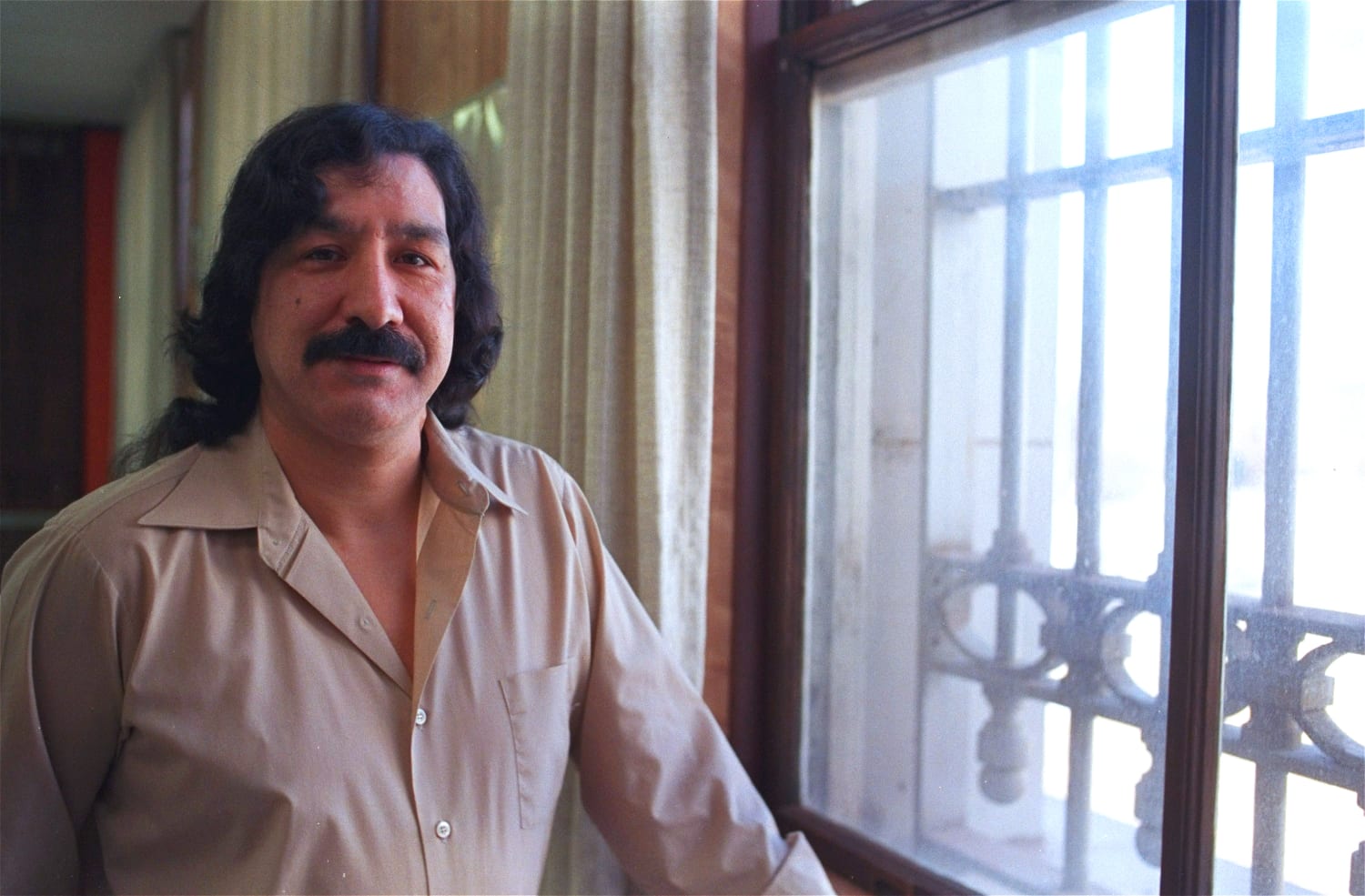
Free Leonard Peltier is about the accused crime of Indigenous activist Leonard Peltier, his imprisonment and his fight for freedom that lasted half a century.

The first documentary I saw at this year’s VIFF was Free Leonard Peltier. At a time when Canada has been made to face the music of what they’ve done to Indigenous people, Leonard’s story will remind you that the plight of the people is not strictly a Canadian problem.

The film begins with a group of American Indigenous activists on a travel. They are traveling to Florida in hopes that fellow activist Leonard Peltier be pardoned and freed just as Joe Biden is about to leave the presidency on January 20, 2025. Trying to get Peltier freed from a double-murder from 1975 he denies and most believe he’s wrongfully accused for has been going on for the last half-century. Many believe it’s Leonard’s last chance at any freedom as he just turned 80 years old and he’s ailing.

The story of the Leonard Peltier case is told through friends, family and allies of Peltier from the American Indian Movement (AIM). Footage of a 1989 news interview is also shown where Leonard states his own case. Leonard’s early life was like that of many American Indigenous people for over a century. He was born on a reserve in North Dakota to a large family and forced into a Residential School 150 miles away from his place of birth where he and others were taught to assimilate. The Bureau of Indian Affairs (BIA) dictated his life and the lives of American indigenous peoples. After he left his schooling behind in 1965, he became a man of various trades doing welding, construction or auto work.

In the late-1960’s, Indigenous activism was growing and the group AIM was founded. Leonard first started with local activism where he was elected tribal chairman of a reservation and he was introduced to AIM from a colleague. His biggest activism in that time was his appearance at 1972’s Trail Of Broken Treaties. Over time, activism became more violent and a group called the Guardians Of the Oglala Nation, or GOON, was founded. Peltier was also involved in violent conflicts and was even charged with attempted murder for an unrelated incident.

During his wait for the trial, FBI agents entered the Pine Ridge Reservation in pursuit of a man named Jimmy Eagle on June 26, 1975 wanted for theft and assault. Two FBI agents named Ronald Williams and Jack Coler were pursuing a Chevrolet with AIM members Peltier, Norman Charles and Joe Stuntz. Charles had met with the two FBI the day before and they told him of their intended pursuit. As the Chevrolet entered the ranch, the three men quickly parked the car and ran out, and that’s when a firefight between the three men and the two FBI ensued. Williams and Coler were shot to death in the shootout. Stuntz was shot to death later that day by a BIA agent. Peltier took Coler’s pistol after he died. The shootout would come to be remembered as the Battle At Wounded Knee.

In the aftermath, the FBI went to arrest three AIM members who were present at the shootout at the time: Dino Butler, Peltier and Robert Robideau. All three were AIM members and all three stole the firearms form the two FBI agents after they were killed. After Peltier was bailed out, he sought refuge in Canada, but it was unsuccessful as Hinton, Alberta RCMP agreed to extradite him back to the United States. In the end, Butler and Robideau were acquitted on grounds of self-defense but Peltier was found guilty. He was sentenced to two life terms and seven years.

In the years that followed would be a long arduous process from friends, family, Indigenous activists, human rights foundations and AIM members to get Leonard Peltier free from a crime he insisted he was innocent of. Over the decades, there was evidence proving that Peltier did not shoot any of the officers. At the same time, the FBI appeared to be playing games as they had one Indigenous women sign an affidavit claiming she was his girlfriend and he confessed to her the shooting. Truth is she didn’t even know him. They also withheld evidence and shred important documents clearing Peltier.

In later decades, Peltier would make pleas of clemency with active Presidents of the United States. Rays of hope first came in 1999 when President Bill Clinton said he would be looking into the Leonard Peltier case and have him cleared and freed. This case for clemency received support from many world leaders like Bishop Desmond Tutu and the Dalai Lama. The hope faded as the FBI held a backlash where family of FBI and their allies staged a demonstration claiming that freeing Peltier would do a dishonor to the FBI agents. Their manipulation of making this a Leonard Peltier vs. the FBI case succeeded in keeping him in prison. Peltier continued to make please with clemency with presidents in the years that followed. All would be unsuccessful.

In the 2020’s, Peltier’s health was failing. Painting and drawing, one of his passions he was able to do for decades in prison, was something he could no longer do. Joe Biden was seen as his last chance for clemency in his lifetime, especially since his friends and family knew he would not get any clemency from Trump when he re-enters the White House. Friends and family built a house for Peltier at the Turtle Mountain Indian Reservation in Belcourt, North Dakota where he could live after his release. January 19, 2025 was the last day of Biden’s presidency and the supporters at the beginning of the film are waiting to hear the news they hope to hear. Biden reduces Peltier’s sentence from life imprisonment to house arrest. They celebrate knowing he will soon stop being a prisoner.

This is a good documentary as it reminds you of a common problem in the world. Not just in Canada, in the US or in the Americas, but the whole world. The problem is nations being unable to deal with their indigenous peoples or tribal peoples well. Living in Canada, I am very familiar with news stories of how badly the Canadian government has mistreated the Indigenous peoples and how they’re doing a lackluster job to make amends and right past wrongs. The United States is just as guilty of that. They had a residential school system too, they have most of them living on reservations, they have a government that appears unable to listen to them and they’ve even had ‘Indian Wars.’ One can see how the story of the struggle of Leonard Peltier can be something all American Indigenous people can understand and relate to.

The story itself is well-told. I was first introduced to the Leonard Peltier case in 1994 through the music video of “Freedom” by the American band Rage Against The Machine. Peltier’s case has been an inspiration for many songs and films and this documentary is only the latest. In this documentary, we have news footage of the events involving the shootout, arrest, imprisonment and an interview from Peltier in 1989. We also have interviews from surviving friends and family members, Indigenous activists and even attorneys and paralegals who have worked with the Peltier case. The story becomes clear that Peltier’s imprisonment appears to have been used by the FBI just to simply give resolve to the deceased officers’ families and to protect the FBI from looking bad in the eyes of the public. The film’s inclusion of Peltier’s statement of his case makes the shootout look like a case of self-defense. Even though he has always maintained he never shot the officers, he has also stated he would defend himself and his people. One can see why the FBI would fear someone like him.

This is a very informative documentary by Jesse Short Bull and David France. They not only show the Peltier story, but they show how important the Peltier case is to his friends and allies. This is a case that’s taken so long to resolve and it’s at the point friends are even willing to travel from North Dakota to Florida by car in hopes of hearing the good news they’ve been waiting since 1976 to hear. Having AI recreate the incident with film appearing like satellite images re-enacting the heist will get you thinking of the case itself and have you try to make up your own mind about it.

This documentary has received a lot of renown this year. It got a lot of attention at the Sundance festival in January and its biggest acclaim came at the Thessaloniki Documentary Film Festival where it won three awards including the FIPRESCI Prize and the Amnesty International Award.

Free Leonard Peltier is a story about the common racism felt by Indigenous peoples in North America. It’s also a story of hope that what’s wrong can be corrected over time.
VIFF 2017 Review: Indian Horse

Indian-Horse-Film-1
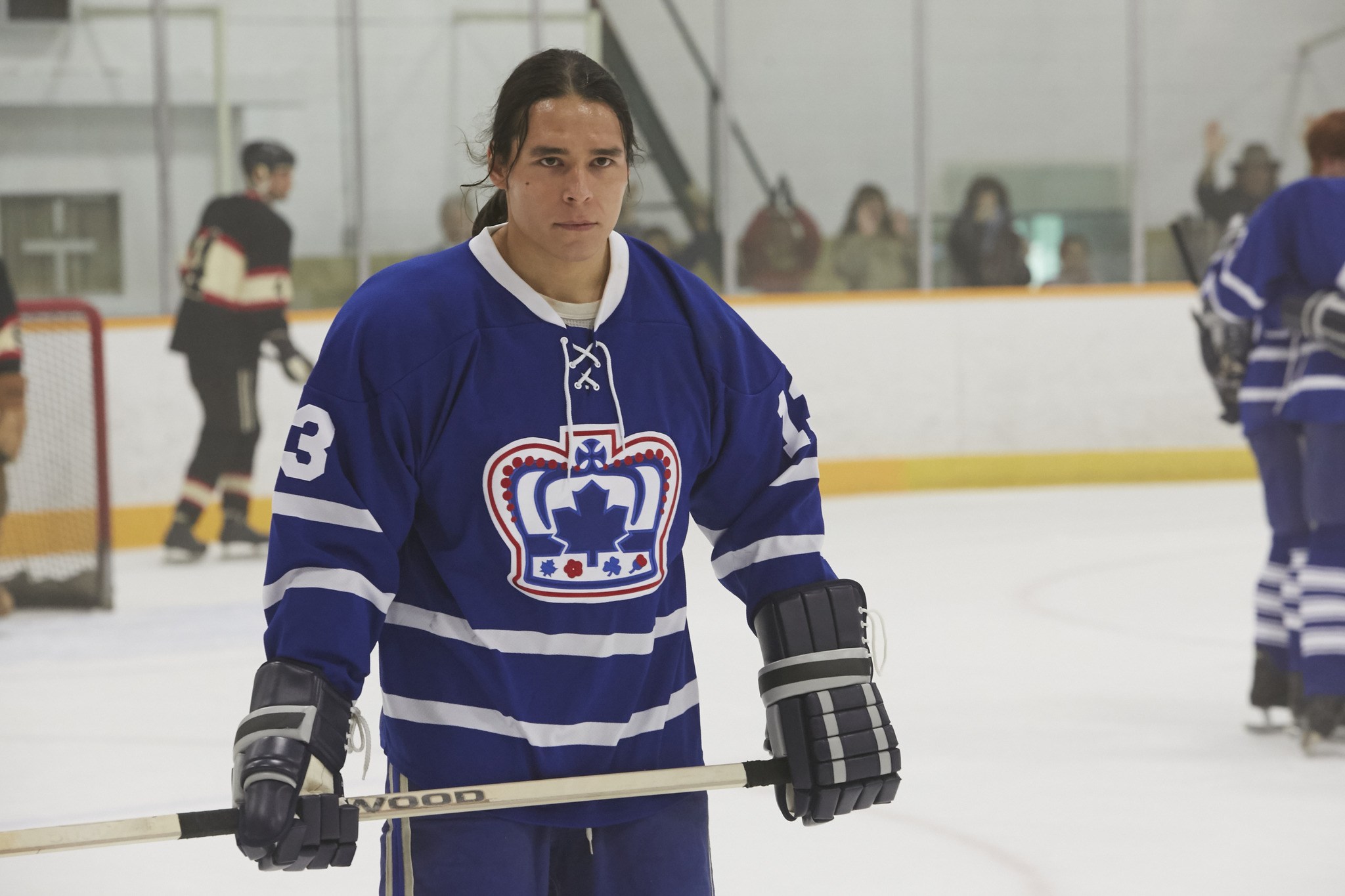
Indian Horse follows the life of Saul Indian Horse (played here by Ajuawak Kapashesit) and his struggle with himself and his Indigenous heritage.

I was lucky to see a lot of Canadian film this year at the VIFF. The last Canadian film I saw was Indian Horse. It touches on a dark moment of Canada’s history, but it also gives a ray of hope.

The story begins with Saul Indian Horse in a rehab clinic for alcoholism. He is around other First Nations people who tell of their experiences being raised in a Residential School. It’s there where Saul needs to make sense of his past.

His first memories come back to 1958: before he was taken to the School. He had a grandmother who spoke in her Ojibway language and still practiced Indigenous spirituality. Her daughter, Saul’s mother, was raised in the School. It changed her terribly. She called the mother’s religion blasphemy and would only speak English. The grandmother would be undaunted and would comment on how she was drinking the ‘white man’s drink.’ Their first son, Saul’s older brother, was to be home from the School temporarily, but was terribly sick. Eventually the brother died. Saul never saw his parents again.

It was just Saul and his grandmother shortly after. The grandmother took Saul to a remote location to try to hide Saul from being taken by authorities to the School, but she died. The authorities did find Saul and took him to the School. The first day was terrible. Saul was joined by a boy named Lonnie who spoke nothing but Ojibway. They were told how they would be made to speak English, revoke their ‘pagan Indian religion’ and not act like ‘savages.’ It all started with the cut of Saul’s ponytail.

The School was where the First Nations children were ‘schooled’ and ‘raised.’ They weren’t taught much in school as far as education went, but they were taught a lot of the Catholic religion. As far as ‘raising’ the children, the priests and nuns ‘raised’ them through abuse and humiliation, even keeping them captive in the basement cage at times. Saul witnesses it all and is even victim to the abuse. He witnesses Lonnie constantly beaten for speaking Ojibway, Lonnie’s failed escape and being held captive for punishment, one girl held captive for behavior and even dying in the cage, and her sister later committing suicide.

Saul did find a way out of the horror. There was one priest, Father Gaston, who appeared to be less strict than the others. He introduced the boys of the school to the sport of hockey. The school had a hockey team and the boys were allowed to watch Hockey Night In Canada. Saul wanted to play but he was too small at first. Fr. Gaston allowed him to tend the uniforms and clean the ice. That time allowed Saul to learn skating for himself and to learn hockey…using frozen horse turds as pucks. Fr. Gaston is astounded by Saul, but the head priest is reluctant to let Saul on the team. After a year, Saul is allowed on. It was a smart decision as the team came the surprise winner at many games with Saul outpowering and outplaying players way bigger than him.

Saul improves so much over the years in hockey, he’s allowed to leave the school early to play for a team on a nearby reserve. Before he leaves, he promises Lonnie he’ll see him again. He’s given a rooming home by an Indigenous couple who are empathetic to what he went through. He even blends well with his new team: The Moose. The Moose are not just a team that plays well, but a team with a brotherly bond. Whenever they win, they celebrate together no matter who the big star is. When they go to a bar to drink, they stand their ground against any bigoted white men why try to fight them.

Years later, Saul is offered a big opportunity to play with a team from a big city, and play professionally for money. The coach, Jack Lanahan, makes an offer in from of Saul’s teammates. Saul refuses at first, but his teammates encourage him to go for it. Saul accepts. Saul is the only member of the team that isn’t white and the team makes him feel like a misfit. On the ice, things aren’t any less discomforting. The crowds taunt him and whenever he scores a goal, they throw Indian figures on the ice. The media isn’t any kinder as a drawing depicts him as a warrior and even the journalist writes him as a warrior. Saul can’t take it anymore and he quits the team, and hockey as a whole. Years later, Saul is doing menial jobs like dishwashing for a restaurant. As he walks the streets of the town, he sees so many First Nations people with drinking problems. Then one day he notices Lonnie on the street with a bottle in his hand. That leads to Saul dealing with his own bout of alcoholism.

It’s 1989. Saul was hospitalized with liver problems. The doctor tells him any more drinking, and he will die soon. Saul check into a rehab centre specifically for First Nations people. There he hears many residential school stories similar to what he endured or what he saw happen to others. One of the counselors ask him if he ever cried. He never has; Saul has always made himself stoic in emotions. He’s asked to go retrace his past. Saul goes back to all the places he knew. First place he returns to is the residential school. It’s no longer running and is now just a shabby building. As he tours the place, he’s reminded of the memories of the ice rink where he learned to play, of the basement where students were locked up, and even the stairway where we learn Fr. Gaston used to perform ‘abuse’ on him. Saul returns to the land in the woods where he lived as a child before being sent to the school. It’s there Saul cries for the first time. It’s also there where he experiences a reconnection with his family and his indigenous heritage. This time he feels the pride. Then he returns to the reserve and is welcomed by his foster parents and The Moose with open arms.

This film is remarkable because it touches on a subject that remains the darkest blemish in Canadian history. The residential school system was set up with contempt in indigenous culture. The white English-French Canadians who ran Canada over a century ago always saw indigenous culture as ‘pagan,’ ‘wicked’ or ‘demonic.’ They felt they were doing the right thing by ‘whitewashing’ the indigenous people. Instead they created a huge mess that was very hurtful to the indigenous people. I attended high school in downtown Winnipeg and I saw firsthand the social problems the indigenous people endured from the late 80’s onward like alcoholism, drug abuse, homelessness, teenage pregnancies, gang violence and suicides. One scene that stuck out for me was when the white authorities were taking Saul away to the schools as his grandmother lay dead beside him. They only cared about taking Saul: they didn’t care about the recently-deceased grandmother at all. What does that tell you?

It’s only until revelations of abuse at the schools, both physical and sexual, surfaced in the 90’s after the system was dismantled that we finally got our answers why the indigenous had all these problems. It’s only now since the beginning of the 21st century that efforts have been made to reconcile and to clean up this mess. The stories experienced by the children that were put in the schools were echoed in the 2012 novel Indian Horse by Richard Wagamese. The novel has earned huge renown and even won awards since its release. The story of Saul is a story commonly echoed by many indigenous people that were ‘prey’ to this system.

Now adapting Wagamese’s novel into a film would prove to be a challenge. This was a story that needed to be told, no matter how painful the details. However the goal was not just to simply create a film, but create it in a ‘movie’ format so it can be viewed by a wider audience. Direction ended up in the hands of Stephen Campanelli who actually has a reputation in Hollywood as a cameraman, mostly for Clint Eastwood’s films. Campanelli has become Clint’s most trusted ‘camera eye’ since The Bridges Of Madison County. Scriptwriting was given to reputed Canadian scriptwriter Dennis Foon, but not without consultation with Wagamese himself.

The film had to include a lot of important elements of what happened both in the lives of the protagonist and what the indigenous peoples endured over the decades. However if this was to be a movie, the film had to be made into something watchable. The days back in the 90’s when we used to admire directors like Harmony Korine and Lars von Trier who’d take the unwatchable and shoved it in people’s faces are long gone. Making it ‘watchable’ would be a huge challenge. The subject of child abuse is never easy to write about. Seeing images of bigotry toward the indigenous children makes it additionally harder to watch. I don’t deny that anyone who went through the system will say that the depictions of abuse were ‘light’ in comparison to their experiences. However they were very good in telling exactly what they went through. The priests and nuns insulted them, humiliated them and even tortured them whenever they did wrong or didn’t live up to their standards. I may be Catholic, but I felt a lot of wrath towards the priests and nuns who taught at the schools when I was watching. I even thought: “They’re in hell now!” However the film also pointed to their mindset too. The film gave the impression that the priests felt the using abuse to teach and punish was the right thing to use not just on the indigenous, but in raising children as a whole. We shouldn’t forget there were people back in the 50’s that thought using abuse to raise children and punish them was the right thing.

Another element the film had to include was the common prejudices indigenous people received which helped lead to their lifelong identity crisis. The image of indigenous people has always had a difficult time. I don’t want to get started about all those ‘cowboys and indians’ movies of decades past. Imagine an indigenous child watching one of those. How’s he supposed to feel about his identity? The film does a good job in showing the identity crisis the indigenous continued to face just after Saul leaves the school. They would face prejudice whenever they’d go into a bar or any other place mostly filled with white people. Whenever an indigenous would make news of an accomplishment, they would be subject to journalism depicting them as a ‘warrior.’ That scene of Saul reading over that news story is something very common. There are a lot of white people who think that depicting the indigenous as ‘warriors’ through sports names like Redskins or Tomahawks are doing the right thing. Instead it only adds to their inferiority complex.

I think the purpose of the film is to show Saul’s experience as an indigenous person from childhood to adulthood as difficulties shared by most indigenous people in Canada. Throughout the film, I was thinking that this film is not based on a true story. It’s based on a thousand true stories. I’m sure there are many indigenous people who will see the abuse or bigotry or feelings of inferiority happening to Saul and the people around him and feel that this is their story too. This is a mirror of what happened in their lives too.

However going back to how this film was to be in a ‘movie’ format, it still needed to be watchable. There were certain harsh truths that could not be hidden from the movie, but the story is about finding a way out of the harshness and even finding a feeling of belonging after it all. The story of hockey makes for excitement and gets you cheering for Saul. Those in the audience who never read the novel want Saul to come out the winner. Even after we see all that Saul has been through, we want Saul to come out triumphant after all the ordeals he had been through in his life. The ending is the highlight because the end scene of Saul’s recovery and coming to terms with his past shows a ray of hope. All of Canada has seen the harm the system has done to the indigenous people. Even the indigenous peoples of Canada themselves don’t want to hurt anymore. They want to live their lives and be seen as people deserving of respect. The end scene may be a bit simple and may be seen as ‘sugar coated’ by some, or even a ‘prodigal son’ moment by a few, but it’s also part of the theme of hope. That scene where Saul returns to his foster parents and the Moose greeting him is a reminder of those that will never leave you no matter what. There are people that will find you when you’re lost.

Director Stephen Campanelli and writer Dennis Foon did a very good job of bringing the novel to the big screen in movie format. There were some noticeable imperfections and even a thing or two that could have been done better, but that doesn’t stop this for being an accomplishment for Canadian cinema. As for author Wagamese, unfortunately Wagamese died on March 10th of this year at the age of 61. It’s unfortunate Wagamese didn’t live to see its debut at the TIFF. Many in the indigenous communities say he’s still here in spirit.

The actors did a very good job in their roles. All the actors who played Saul did very well, but the standout had to be Sladen Peltier who played Saul at 9. He never acted before, but he was excellent. Forrest Goodluck was also very good too. The 19 year-old from Albuquerque has professional experience already through roles like Hawk in The Revenant and has two films to be released soon. Even newcomers like Ajuawak Kapashesit and Bo Peltier were impressive. The film shows a lot of good young indigenous talent in Canada that have a promising future. The music was a good mix of original score by Jesse Zubot and modern-day indigenous music or indigenous pop.

I know I’ve often said about Canadian film that there’s two groups: Quebec and English Canada. I’ve often elaborated how Quebec is the class of the field while English Canada is struggling with its identity in film. This is a film that I feel can change that. This is a very professionally-done film about a story that creates a lot of intrigue and gets one hoping for the protagonist. Oh, remember I said that Campanelli was a cameraman on many of Clint Eastwood’s films? Well, Eastwood himself is an executive producer of this film! This film was a big hit at the TIFF and won the Audience Award at the VIFF. I heard during a Q&A that this film will have an American release in April. That could open more doors for Canadian film in the future.

Indian Horse attempts to do something tricky in film making: attempt to make a ‘movie’ out of a hard subject in Canadian history. It succeeds in doing so, albeit imperfectly, and even serves as a ray of hope for the future.