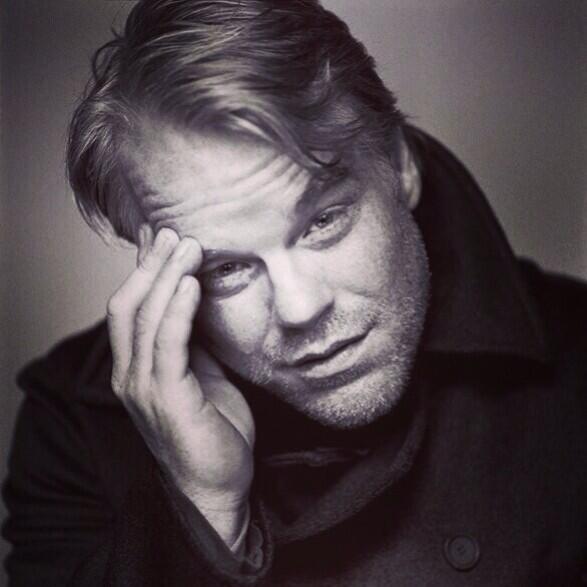
 I wasn’t planning on posting this. Actually I was planning my next blog to be another Best Picture review. Instead I post this because of how shocking it is. And of how much I admired him and his works.
Philip was born in Fairport, New York (just outside of Rochester) on July 23, 1967, one of four children to family court judge Marilyn O’Connor and Xerox executive Gordon Hoffman. His parents divorced when he was 9. Hoffman’s past-time in high school was wrestling but switched to acting after a neck injury caused him to quit. Talent was noticed at a young age as he was selected at 17 to attend the 1984 theatre school at the New York State Summer School Of The Arts in Saratoga Springs. He graduated from Fairport High School in 1985 and attended the Circle in the Square Theatre’s summer program. He would go on to attend New York University’s Tisch School Of The Arts and graduated with a BFA in 1989. Soon after he had a bout of alcohol and drug addiction which we would attend rehab for shortly after and eventually overcome.
He made his acting debut on television acting in a 1991 Law & Order episode. His first film role came in 1992’s Scent Of A Woman. Minor roles in film continued for Hoffman over the next few years. In 1995 he joined the LAbyrinth Theatre Company where he staged and performed in numerous productions. However his breakthrough came in 1997 when he had a scene-stealing supporting role as Scotty J. in Paul Thomas Anderson’s Boogie Nights. Hoffman would act in three more Paul Thomas Anderson movies: 1999’s Magnolia, 2002’s Punch Drunk Love and 2012’s The Master. Over the next few years, Hoffman’s reputation as an actor would grow with more excellent performances in independent films like The Big Lebowski, Happiness, The Talented Mr. Ripley, and State And Main. He also showed he could act well in popcorn films like Patch Adams and Almost Famous. In theatre, he would earn a Tony Award nomination for Best Actor in 2000 for playing Lee in the readaptation of Sam Shepard’s True West.
Further excellent performances continued for him in films like Love Liza (which was written by his brother Gordy), Owning Mahowny and the TV miniseries Empire Falls. He also continued to do come off well in box office fare like Cold Mountain and Along Came Polly. Theatre accolades would continue with his second Tony nomination coming in 2003 for his supporting performance in Long Day’s Journey Into Night. However big critical acclaim in film. kept on alluding him until 2005’s Capote. There he was to play Truman Capote in a biopic directed by former Tisch classmate Bennett Miller. He was even said to act in character even after scene shooting ended. It was there where Hoffman won the Academy Award for Best Actor for his performance. And Miller received his first and so far only Best Director nomination.
Things became better for Hoffman commercially as he would play villain Owen Davian in Mission Impossible 3 months later. In 2007 he received Golden Globe nominations for Best Actor in the independent comedy The Savages and Best Supporting Actor for playing Gust Avrakotos in Charlie Wilson’s War opposite Tom Hanks. It’s his role in Charlie Wilson’s War that would earn him his second Oscar nomination. Hoffman would return as an Oscar nominee the following year in the Supporting Actor category again as Fr. Brendan Flynn in the film adaptation of the Broadway play Doubt opposite Meryl Streep and Amy Adams.
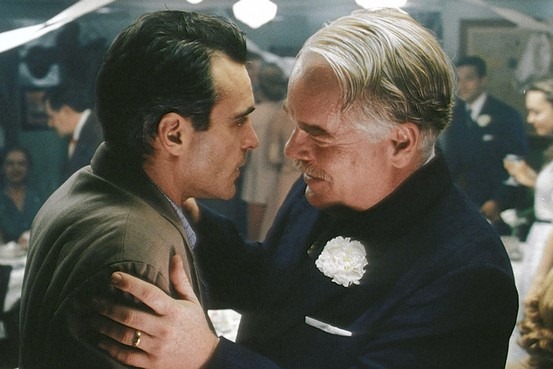
Hoffman would continue acting in film, both independent and commercial. He would also continue acting and directing in theatre. He wouldn’t get too much notice or acclaim over the next two years but his work continued to be consistent. He would again steal scenes in 2011’s The Ides Of March and Moneyball as frumpy Coach Art Howe. 2012 was another big year for Hoffman as it would be acclaim in both his theatre and his film acting. On stage he blew Broadway crowds away during the summer with his performance of Willy Loman in Death Of A Salesman and played controlling yet charismatic religious leader Lancaster Dodd in The Master. 2013 would give him more exposure to the commercial movie crowd as he entered into the Hunger Games trilogy as Plutarch Heavensbee in 2013’s Catching Fire. He had already finished playing Plutarch in the first Mockingjay film and had just finished most of the shooting for the second as of February 1st.
Outside of acting, Hoffman shied away from the spotlight. In 1999, he statrted dating Mimi O’Donnell. It would prove to be a permanent union and both he and Mimi had three children. He was open about his past alcohol and drug abuse from which experienced upon graduating from Tisch. He said of his experiences: “I abused anything I could get my hands on and I liked it all.” He recovered successfully and would describe himself as a teetotaler from his past experience but a relapse would eventually happen. In May 2013, he openly confessed to abusing heroine and prescription pills and checked himself into a rehab clinic for ten days.
On Sunday February 2nd, Hoffman was found dead by playwright and friend David Bar Katz in the bathroom of his Manhattan office apartment. A hypodermic needle was found in his arm according to the police. Heroin was also found in the apartment. He was 46 years old.
I hate to bring up the topic of tabloid gossip at a time like this but that topic is unavoidable. Especially when a famous actor dies in such a way. There’s no question in the weeks and months after, there will be a lot of questions about this. There will be some journalists who will want to interview Mimi O’Donnell or close family relatives about this situation. Cast mates of past movies will also be questioned. Even the rehab clinic Hoffman has been attending since his relapse will face its fair share of journalists. I myself am shocked to hear of that. Years ago I read his IMDB profile and it said he does not drink alcohol because of his past experience with alcoholism. I was happy feeling that there was an actor that can be free from scandal. I never knew about his relapse. This is especially surprising since you normally hear about such deaths of actors hugely in the public eye. And Philip was the opposite. He was mostly private, rarely attended A-list events, had friends who were mostly in theatre rather than in the Hollywood business, had an unmarried relationship to the same woman since 1999 and raised his kids quietly. I guess we’ll only know the whole story in the future.
One thing to say is I don’t want to focus on the surroundings of his death. Even though I feel like asking ‘What happened,’ I’ll keep my mouth shut for now. One thing I will say is that I will always admire Philip Seymour Hoffman for the actor that he was. I’m able to separate myself from actors as actors and actors as people. Whenever I admire actors, I admire them for their acting jobs. They’d have to give me a good reason for me to admire their lifestyle. Anyways Philip Seymour Hoffman was an excellent actor. He really knew how to embrace the character both physically and emotionally. He was more than a top character actor, he knew how to make the roles multidimensional. I’ve seen many of his performances and he never let me down once. He always delivered.
I’ve always considered Philip to be one of the best actors of my generation. I also must confess I was secretly predicting and hoping that Philip would be the next Tom Hanks. It just showed how naive I was to the present acting system. There was a time when an actor had the ability to be both a master of their craft and a top box office draw. That was common form the 30’s to the 60’s. Then there was a time in the 70’s when the big money-winning movies and the serious films had a gap between them that really widened in that decade. With that came a bigger gap between the on-screen craftmasters and the money-winning A-listers. That was especially noticeable in the 80’s. The reason why Tom Hanks was so beloved was that he was one of those rarities who was able to deliver in their craft and bring in top box office dollar.
I felt that Philip had the potential to do just that. I just wasn’t aware at the time of the types of actors that were able to win over the box office dollars. Turns out it’s back to being a looks thing again. Especially in the wake of the Twilight movies. I should know that 5′ 10″ and slightly pudgy won’t make you an A-lister. In fact one New York journalist summed up the physical appearance of Hoffman as: “a stocky, often sleepy-looking man with blond, generally uncombed hair who favored the rumpled clothes more associated with an out-of-work actor than a star.” That was just his nature. He was more interested in being an actor than a star.
Like I said Philip never let me down. Whether it was a role in a popular popcorn movie or if it was in a serious independent production, Philip always delivered. Even his co-stars would vouch for that. I believe that’s the legacy Philip will leave behind. Character acting performances that he didn’t just play but embodied and he knew how to grab your attention. I will always admire him for that.
Rest In Peace, Philip Seymour Hoffman. And thank you for captivating us over the years.
WORK CITED:
WIKIPEDIA: Philip Seymour Hoffman. Wikipedia.com. 2014. Wikimedia Foundation Inc. <http://en.wikipedia.org/wiki/Philip_Seymour_Hoffman>
 Jon The Blogcentric