
VIFF 2025 Shorts Segment Review: Forum 3 – The peripheral core

One thing about being into cinema is that it will give you a liking for short films. I saw a second segment or forum of shorts at the VIFF entitled The peripheral core. This segment, the third Forum segment, consisted of eight films that are very similar, very different, but tell a lot.

-Resistance Meditation (dir. Sara Wylie): In this documentary, we see a woman (possibly director Wylie) sleeping in bed. As she sleeps, Wylie talks about sleeping and how the time on the clock we follow is ‘corporate time.’ As she lays in bad, we learn she has a disability and she calls her sleep here ‘crip time.’ It’s not just for her sleep, but to rebel against the demands of the capitalist world.

Simply put, this is a five-minute documentary where the filmmaker has something to say. Although I don’t completely agree with her opinion about ‘corporate time,’ I like how she makes her statement in a creative way. It makes sense to present filming of sleeping and her speaking her belief about time, disability and rebelling against it.

-A Very Straight Neck (Japan – dir. Neo Sora): A woman wakes up from her sleep and has terrible neck pain. The dream she has haunts her. Her dream was she was lying face-down on the sidewalk of a busy street and the world passes around her. Even crumbling out of its existence in her mind.

This is a picturesque short film which the focus is on unspoken images and the main character narrating in the background. The biggest quality is the visuals as it adds to the story and creates the mood of what she’s trying to say. Sometimes we can understand the pain she’s going through. Very well done.

-Not Enough for the Love Inside (Brazil – dirs. Marcelo Matos de Oliveira and Wallace Nogueira): Cassio and Otto are both gay couple in Bahia, Brazil and both became blind recently. Cassio is unemployed while Otto is able to participate with a theatre group. Through all that happens in the story and Cassio’s body language, one can’t help but notice the relationship appears doomed to end.

The biggest quality of the film is the body language. I don’t know if both became blind from the same incident or from separate incidents, but you can understand how sudden changes can affect a relationship. The body language in the film is as valuable to the story as the dialogue itself. It creates the negative vibe of a relationship that is starting to fall apart.

-The Sphinx (USA – dir. Jesse Pavdeen): Harold is a young adult locksmith by profession, but he has a problem. He was born without a nose and he needs to wear a prosthetic. His nose falls off during a date, but his date doesn’t mind. She encourages him to come to a party. Things get worse when the people at the party want him to show ‘his true self.’ He takes his nose off and they all laugh. He runs to his estranged mother’s house, but she has the door locked with seven locks. Meeting with his father exposes the secret.

When you have short films, you should expect a bizarre comedy or two. Harold is seen as The Sphinx as The Sphinx itself has its nose missing. I’ve seen stories of missing body parts or weird body parts before, but this comedy does a unique job in showing one young man’s flaw and how the world treats him. Even his mother who has cut herself off from everyone. It’s a bizarre story that’s humorous too.

-Confluence (Canada – dirs. Charlene Moore and Oliver Darrius Merrick King): This is a documentary made by Indigenous members of the Winnipeg Film Group for their 50th anniversary. As images of parts of Winnipeg are shown on screen, the Indigenous members of the Group talk about various topics like their land and colonizing, being an Indigenous person, filmmaking as an Indigenous person and even envisioning the future and pondering ideas of what to film next.

I’m from Winnipeg and I remember the Winnipeg Film Group and how it took a modest area in an office building back in the 1990’s. The Group has grown a lot. This documentary is important because in recent decades, the Indigenous peoples are getting more into the arts and holding their own. Film has a bright future in Winnipeg, but the Indigenous filmmakers show the most promise and most envisioning. It’s good to hear them speak their minds about the topics as we view images of Winnipeg.

-In My Hand (Norway – dirs. Marja Helander and Liselotte Wajstedt): The film begins with a re-enactment of Norwegian Sami activist Niillas Somby waking up in prison with his amputated arm bandaged. Niillas narrated how he spent 21 years in prison and was involved greatly with Sami activism. He also talks of the accidental battery explosion from 1981 that led to the loss of his arm. He also talks of the time he went to Canada cleverly disguised as a white man and with a fake passport. The film ends in the present with present-day Niillas and today’s Sami activists.

This is another film that showcases the racism felt by a nation’s first peoples. In this case, it’s the Sami peoples of the Nordic nations. Niillas Somby tells his story about what it was like to be a Sami activist and of some of the illegal things he did in his life. We hear Somby narrate as the moments are re-enacted in front of us. This is a valuable story in learning about their struggle and has a message worth hearing.

-Cocotte Coulombe, Filmmaker (Canada – dir. Charles-Francois Asselin): Charles-Francois has always known his unmarried deaf aunt Cocotte. He does remember her bringing a film camera to family events. It’s after her death that he discovered she had taken lots of family films. As he watches the family films of hers, he discovers this was they way she communicated her love to them.

This documentary is great at telling its story. Cocotte’s family films play in the background as Charles-Francois tells his story of Cocotte and his recent discovery of the films. It’s an intimate story of how a film maker himself learns how home videos were not just a hobby for Cocotte, but also the means for a deaf family member to show her love to them. It was nice to watch.

-We Were The Scenery (USA – dir. Christopher Radcliff): In 1978, Hoa Thi Le and Hue Nguyen Che were Vietnamese refugees in a refugee camp in the Philippines. During that time in that same place, Francis Ford Coppola was filming Apocalypse Now and wanted to use the refugees as extras for the film. Le and Che rewatch Apocalypse Now and during the scenes, they point themselves out and mention of other people they knew personally as their appearances come on screen.

This is one documentary one would not expect. Most of us who saw Apocalypse Now probably never bothered to notice the extras were from a Vietnamese refugee camp. It was great to hear the story of how a couple who are married were those very extras and they saw it as just a way to make some extra money. It’s also a smart choice the director had them tell their story in Vietnamese. Although they are now American citizens, telling their story in Vietnamese only adds to this documentary.

And that was my experience with the short films from Forum 3: The peripheral core. Interesting how with this forum, five of the eight films were documentaries. Although I prefer watching live-action, I still found the documentaries intriguing to watch. Whatever the documentaries had to say, they said it well in their own way. For the live-action, they were unique to watch as well.
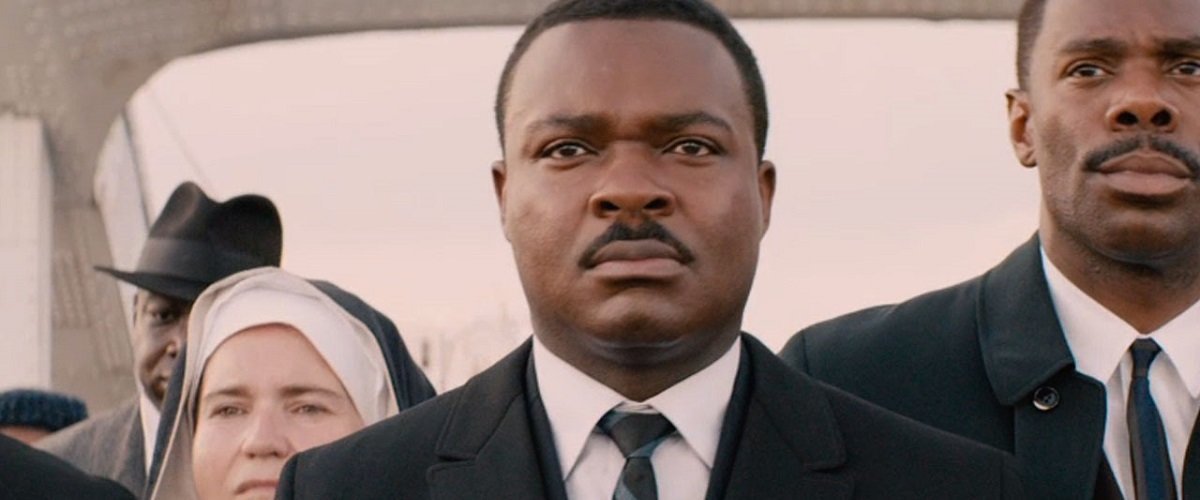
Oscars 2014 Best Picture Review: Selma

David Oyelowo (centre) plays Martin Luther King in Selma.
David Oyelowo (centre) plays Martin Luther King in Selma about an important part of American history.

Selma appears to be about an important time in US history. However it tells more than what we’ve learned about the whole story including those involved.

The film is about the march from Selma to Montgomery in 1965 led by Martin Luther King Jr. that would pave way to President Lyndon Johnson signing the Voting Rights Act of 1965. But it was more than that. It starts with Martin receiving his Nobel Peace Prize in 1964. However it’s just the beginning for Martin. A black church in Alabama explodes killing four young girls. Annie Lee Cooper has been denied the right to vote like most black people in Alabama before her. Meanwhile King is unsuccessful in convincing Johnson to pass a law allowing black citizens to vote.

Instead of accepting defeat, King is undeterred and determined to achieve this. Selma, Alabama is the meeting place for King and other activists to organize efforts to achieve this law. However both Johnson and FBI head J. Edgar Hoover are nervous about this. Hoover uses phone calls to disrupt his marriage to Coretta. Undeterred, King and black residents of Selma march to the registration office only to be confronted by a mob of police and a riot ensues where King and Cooper are arrested.

Things get even harder as state governor George Wallace, a pro-segregationist, speaks out against the marches and even calls police in Marion, Alabama to use force from state troopers during a planned night march. An assault by troopers does occur during the march where Jimmie Lee Jackson, who hid in a restaurant for the safety of him and his family, is shot to death by the police. Jimmie’s death only prompts King to tell people to stick to fighting for their rights. However the Kings receive threats on their children and activist groups are becoming unhappy with him.

A march from Selma to Montgomery to make their message heard is planned especially with the hopes of having all of the United states watching and paying attention, especially as working on ‘white consciousness’ is one of King’s objectives. At first King is hesitant but is convinced by his colleague Andrew Young. The original march takes place with all African-Americans. Right on the Edmund Pettis Bridge they’re stopped by police and attacked. The news goes nationwide. A second march is planned. This time King not only has blacks from other cities but white supporters too from regulars to religious clergy. Just before the marchers reach the end of the bridge, the chief officer and his group are back again. This time they’re allowed to proceed but King kneels in prayer and goes back. The reason was because King was suspicious. He doesn’t trust the mob of police and wants legal permission for them to march. The push for permission is especially stressed as one of the white allies, Rev. James Reeb, was beaten to death. The permission is granted by Alabama Judge Frank Minis Johnson. Lyndon Johnson, Martin Luther King and the marchers make history.

There’s no question that this is to do about an important moment in American history. Actually coming from Canada, I was never taught about Selma. I knew about the I Have A Dream speech but was never taught about Selma. However the film is also about Martin Luther King himself. The movie begins with him accepting his Nobel Peace Prize which came months after his I Have A Dream speech. However we would be reminded that King had more work to be done. Selma was a new challenge for him as his people needed the right to vote. However there was the constant threat of police brutality and even death. He stood firm in his non-violence stance and his plan was to work on ‘white consciousness’ and he knew it was the only way to work. He also knew he had to work with the tough minds of President Johnson and other politicians including Alabama Governor George Wallace. Each death linked to the marches would make him more fearful but it would make him more convinced this is something that needs to be done. We all know it was achieved but this is a reminder of how King and his people had to achieve their right.

The film also takes us back to the time and place. It reminds us just how hard it was to be black in southern US states like Alabama. Living in segregation was one thing. Being denied the right to vote was another. The only time in my life I knew of black people being denied the right to vote was in South Africa up to 1994. Apartheid riots were common news stories in the 80’s. I was shocked to learn that it was happening to black people in the 60’s in the Southern US. I always thought the US was supposed to be the ‘land of the free.’ It showed the red tape black people had to face in the justice system and especially with the police. We are all shocked and disgusted to hear about the fatal shootings of Michael Brown and Trayvon Martin in recent years and their killers getting away with it. This was happening in Alabama in the 60’s all the time. Especially shootings by police on young unarmed black men like Jimmie Lee Jackson. You couldn’t blame them for having had it. They couldn’t be denied this anymore and this was a must-win situation for them and King.

Just as much of a focal point as blacks fighting for their right to vote is also the focus of the bigoted attitude of the whites in Alabama. King made it his duty to work on ‘white consciousness’ in order to achieve this victory. Alabama, especially in the city of Selma, showed what type of ‘racial battleground’ they had to deal with. The first sign was the church explosion but we’d see it all throughout. We’d see it in the police brutality, we’d see it as a restaurant proudly advertises itself as ‘a whites-only restaurant since 1883,’ we’d see it as a white man ‘introduces’ himself to King and punches him in the face, we’d see it in the taunting of white people from all around. That’s the type of environment the black people had to fight. We should forget that Alabama has segregation removed years ago but the white people weren’t happy. They felt that segregation was right and they reacted in frustration with taunting and even violence. Even when white people joined the blacks in their march, that didn’t change a lot of people’s minds. In fact they found white supporters to be a threat and reacted with the same violence on them, even killing some. Another reminder that white supporters of the Selma marches would also be at risk to the same violent reactions as blacks. The film takes us back to the time, place and the hostile attitudes at the time. An ugly reminder but necessary to show.

Even though the film was about Martin Luther King, his crusade for human rights and the bigoted attitudes in the area, the film also showed another factor: the strength of non-violence. King’s use of non-violent means to achieve human rights may appear radical to many and even ridiculous to some at first. In fact it explains why he had a rivalry with Malcolm X as seen near the beginning of the film. Because Malcolm believed: “by any means necessary.” However it was shown to be successful in the actual event and in the film. In fact I noticed the film to also show violent means to look cowardly. We see it in the police who try to use it to strike fear in the protesters in hoping they’d quit. We see it in the white Alabamans as they use it to strike fear in the blacks and their supporters. Most of the times it’s seen they do it on impulse because they just don’t know how to deal with the situation. Funny how we’ve seen a lot of Hollywood movies, especially in the action movies of the 80’s and 90’s, where the leading man uses vengeance and violence to become the hero. Here violence looks very cowardly.

Without a doubt, this film has to belong to Ava DuVernay in directing and co-writing the story with Paul Webb. She did an excellent job in recreating the story of the marches, the people involved with them and the atmosphere of the time and place. The end result is an excellent film that won’t leave you. It’s not without controversy. There are many questioning the depiction of Lyndon Johnson in the film. Historical documents show he was actually supportive of Martin Luther King and his mission. Even I myself believed for a second that Johnson may have had some difficulty at first, knowing Johnson was originally from Texas: a state that formerly had segregation. DuVernay simply responded: “I’m a storyteller. Not a historian.” Whatever the situation, it was still a very good film put together.

David Oyelowo was excellent as Martin Luther King Jr. as she showed him in both his convictions, his inner strength and even his own personal frailties at times, like that time he relied on Andrew Young to go through with the march. Even that scene where he calls gospel singer Mahalia Jackson for inspiration and she sings to him shows that King did have fears which he needed support for. Tom Wilkinson was also very good as Johnson. Even if you feel his depiction of Johnson wasn’t that truthful, it was still a very good performance. Carmen Ejogo was excellent as Coretta. She did more than just simply play Martin Luther King’s wife. She played a young woman who herself grew in courage: a courage Coretta would need after Martin’s assassination. Oprah was also surprisingly well as Annie Lee Cooper. Right at the beginning we could see a character completely opposite to the Oprah we know. A character that looks like she’s been through the hardest life offered her. You could see it in her face. The cinematography and music added to the environment of the story. You could feel that this was a struggle worth winning.

Selma is a film retelling an important moment in history. It gives us insight into the people involved and the environment they had to fight in order to achieve their rights.