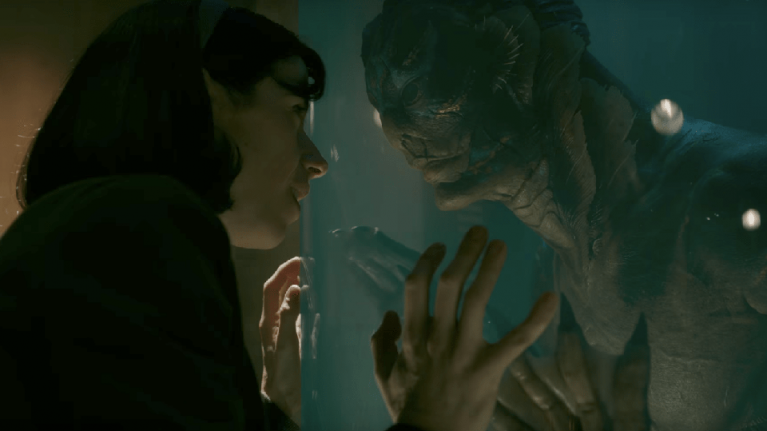
Oscars 2025 Best Picture Reviews: Part Two

It’s interesting for my next blog of Best Picture nominees. One film is a remake of one of the most captivating monster stories ever and the other film tells the story of the tragedy that produced one of the most legendary plays ever. They’re both unique in their own way.
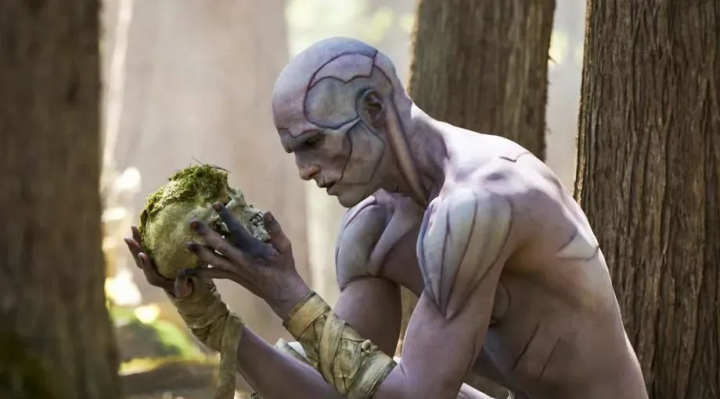
Frankenstein

Ever since Mary Shelley has published her book titled Frankenstein; or, The Modern Prometheus back in 1818, the story and the monster have captured the imagination of the world. The monster definitely more often than the story. The Frankenstein monster has been featured and parodied frequently to the point people have created their own versions of Frankenstein on both the character and the physical appearance. People on Halloween especially have a field day with Frankenstein costumes and their own Frankenstein stories. Crazy thing is most of these stories stray greatly away from the original story of Mary Shelley. They may get the basics like a mad scientist creates a living person from the body parts of deceased people but they are too loosely based. The very first Frankenstein film, a silent film from Edison Studios released in 1910, was a film the director intended to be ‘broadly based’ on Shelley’s story or call itself a ‘liberal adaptation.’ The most famous film adaptation has to be the 1931 film which was an adaptation of a stage play. Frankenstein’s monster in that film, played by Boris Karloff, has the most iconic image of the Frankenstein monster with the rectangular forehead and green skin. That film also includes the memorable line: “It’s alive! It’s alive!”

This film is Guillermo del Toro’s adaptation of the story that is still off the original in some amount but is closer to Shelley’s story. The film is set in 1857 and a Danish ship of the Royal Navy is stuck in ice. The ship becomes like a hospice for a gravely injured Victor Frankenstein who was hurt from the wave of an explosion. The ship is then attacked by a fur-laden humanoid creature that appears indestructible. As Victor notices that’s the creature he created, he tells his story, which becomes Part I: Victor’s Tale. After Victor tells his story, the creature tells his story in Part II: The Creature’s Tale. This layout of the story sets up for the finale where the creature finally makes peace with Victor and Victor apologises for being too cruel to the creature. It’s after Victor’s death that the creature departs, but not until he frees the ship from being stuck in the ice.

Some of the most noticeable differences are in the novel, Victor’s mother dies of scarlet fever. In this film, she dies of childbirth giving birth to William. While the novel shows Victor discovering the possibility of creating new life through his studies, the film shows him actually conducting his proven findings in front of professors and being expelled. In the novel, Victor is shocked and repelled by the creature he created and abandons it in the cold snows. In the film, he’s proud of his creation but enslaves him. In the film, Victor wins the love of a woman named Elizabeth. In the film, it’s William who courts Elizabeth and Victor tries to win her, but his mad science and arrogance prevent her. Victor even kills Elizabeth and William. Also in the film, Elizabeth embraces the creature when he rushes back to Victor to demand a female creation for him. It turns out Elizabeth has more feelings for the creature than for Victor. The creature in the novel becomes lost in the wilderness and has both seen the best and ugliest of humanity. In the film, he is given refuge to a farming family whom the blind man treats him well. The other family think he killed the blind man when they return and try to shoot him. There is the reconciling of the two on the ship but the creature remains on the ship at the end of the novel while the creature leaves the ship but is powerful enough to push the ship free of the ice.

This adaptation that is both written and directed by Guillermo del Toro is a story that is more faithful to the book than most stories. Del Toro already knows how to do an excellent job of stories involving monsters like Pan’s Labyrinth and The Shape Of Water. Here, he shows off his expertise again with an excellent adaptation of the story. Making it two stories, of Victor’s story and The Creature’s story, is done quite well without deviating too much from the original. The two stories do a good job of playing themselves out leading to its eventual connection in the end. The result is not only an adaptation well done but an adaptation that will capture your attention and get you caught up in the story and the drama as it unfolds. The story will also get you feeling for The Creature as well as it showcases he’s not only a human in flesh but he’s a human in feeling. If you see the story, you will agree that the creature has more heart than Victor. Del Toro masters the story and the drama.

Oscar Isaac does a great job in making Victor Frankenstein into a doctor that isn’t completely heartless but full of personal flaws. His eccentricities interfere with his ability to relate with others, have any kind of heart to his creation or even love Elizabeth enough to win her love. Surprisingly, Isaac does succeed in making you feel sympathy to Victor and even forgive him for all he’s done. The dimension Isaac bring is excellent to the role. Jacob Elordi steals the film as the creature. Creating a character of a created human with the common sensitivities of people, even having feelings of love and heartbreak, gives the film its heart and soul within the spectacular drama. Many times, you’re tempted to think Elordi is the lead. Mia Goth is also very good in her role as Elizabeth, but the role could have been given more dimension in the story. Other good supporting acting performances come from Christian Convery as the young Victor, Felix Kammerer as William Frankenstein, and Lars Mikkelsen as the Captain Andersen.

For a film like this, you can bet this has a lot of excellent technical achievements. The cinematography from Dan Lautsen captures the story very well. The costuming from Kate Hawley, the production design from Tamara Deverell, and the hair and makeup team do a great job in taking the audience back to the past and recreating scenes of the times. Alexandre Desplat knows how to deliver a score for a film and he does it again here with a score that fits the drama of the story very well. The sound team and the visual effects team all deliver the right stuff to deliver the excitement of the film.

Frankenstein is not just another adaptation of the story. It’s one Guillermo del Toro does his own telling of the story mixing his own take and trying to stay faithful to the story. It succeeds in a very thrilling way!
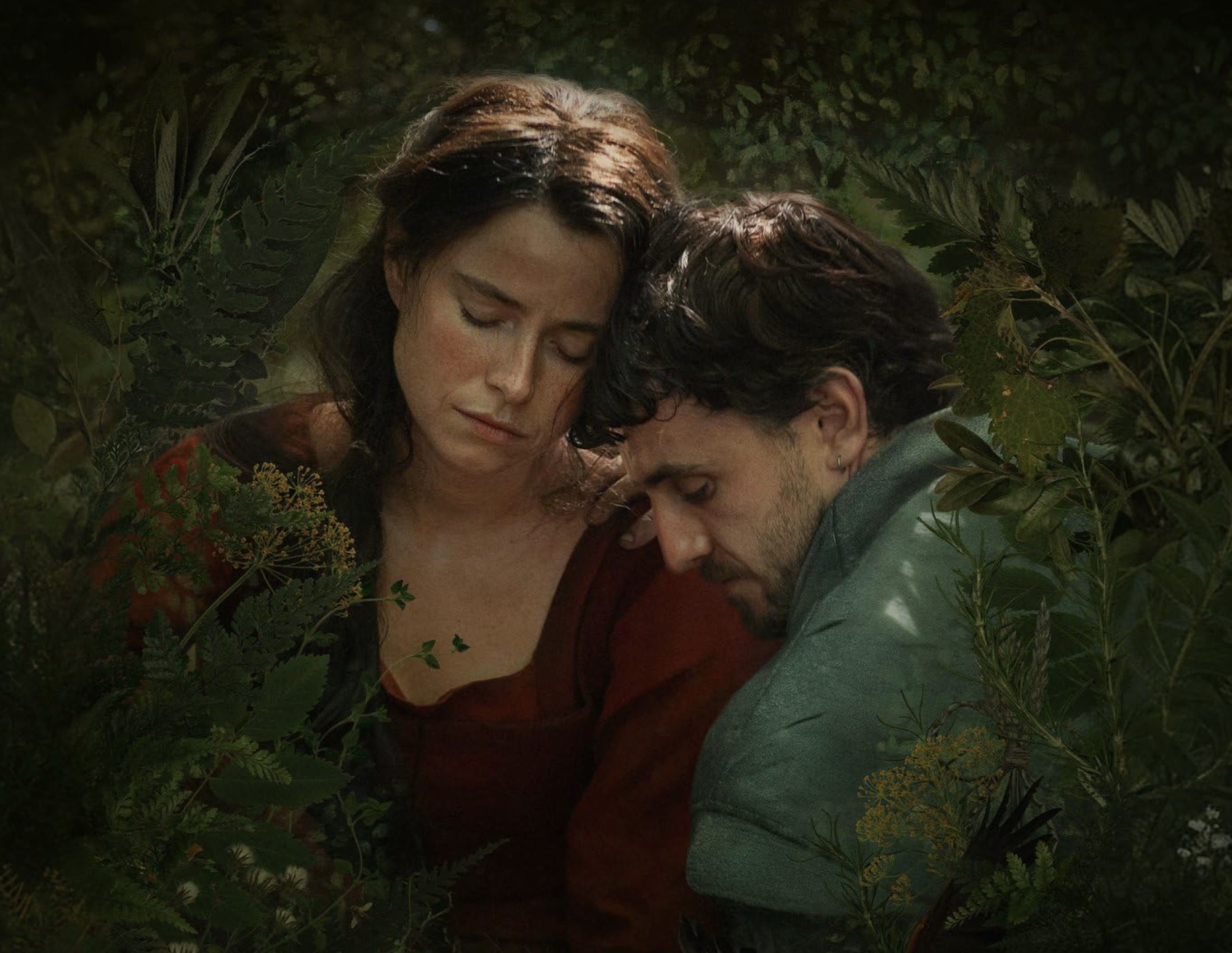
Hamnet

There have been many semiautobiographical films of William Shakespeare many times before but you hardly see any films, plays or literature about his children. Among possibly the least known is his only son Hamnet Shakespeare. Little is known or documented about him or what he was like. It was known that he died at the age of 11. The play Hamlet premiered three or four years after his death and scholars have frequently debated Hamnet’s young death and how much inspiration it bored on Hamlet. It is known that before Hamnet’s death, Shakespeare mostly wrote comedies and Hamlet was a significant turning point. The film makes the case in point that it was very inspirational to the creation of Hamlet. You could tell in rehearsals Shakespeare was a perfectionist and was very demanding on his lead actor. It’s possible he wanted the actor to create the spirit of Hamnet in Hamlet.

There are two things that stand out the most from this film. The first is that it is based on a novel that is historical fiction. There are many details in the film that are fact with Shakespeare’s life, but there are also a lot of myths and imagined fiction. Very little is documented about Hamnet so in her novel Hamnet, Maggie O’Donnell gave him a personality and in writing of Hamnet’s death, O’Donnell used some of her own experience when her daughter was suffering from a potentially fatal illness. The second thing that stands out is that the film is mostly focused on Shakespeare’s wife: Agnes Shakespeare. The film is more Agnes’s story as it shows her an herbalist who’s a lover of nature. She finds herself attracted to this playwright whom her family does not approve of. They fall in love, develop a family and marry. William frequently makes trips to London for his plays while Agnes does mostly motherly duties. Agnes is the one who has to deal with her twin children, their teachings and eventually their illnesses. She is the one who has to witness Hamnet’s death. No doubt she’s angry with William being away in London during that time. Years later, she learns of his plays Hamlet. She’s there at the opening. She fears the play could upset her. Instead she is touched by the play, by the actor, and by the character. It gives one the sense in seeing Hamlet played on stage, she senses Hamnet’s spirit living in him and shared with all.

The film itself doesn’t try to be a historical docudrama. It does keep many actual facts of history but it does its own storytelling. It does maintain situations that many would commonly relate to. It reminds people that Shakespeare’s choice to pursue arts or teaching was not well-regarded in his working class family. It shows William and Agnes married because she was pregnant and she didn’t want her daughter Susanna to be born a ‘bastard.’ It’s known that in between the death of Hamnet and the premiere of Hamlet, there was a period for Shakespeare known as the ‘lost years.’ What it does is it tells its story. As I mentioned earlier, the film is based on a book that is loosely based on the lives of the Shakespeares. It’s a story that connects with common situations in ones life like not being accepted into a family, loving someone their family doesn’t approve of, the loss of a child, trying to live life again and of how art connects with the human spirit. The latter, I think that’s the theme of the film. How art reflects humanity and can even be a method of healing. The film does an excellent job in having its story connect with the viewer while also maintaining intrigue towards the family of a legend. That’s its biggest quality.

This film is another excellent accomplishment for Chloe Zhao. When she agreed to do the story, she also hired Maggie O’Donnell, the author of the novel Hamnet, to help with the scriptwriting. Human connection is a common theme of Zhao’s films and Chloe does an excellent job in directing a story of an artist’s method of healing and how he shares it with the world. There have often been films that show how art connects with the human spirit. This film also succeeds in displaying that theme and Zhao creates an excellent work in delivering that message.

The performance of the film definitely belongs to Jessie Buckley. The film is mostly about Agnes and Jessie does an excellent job of taking charge of her role and owning the movie. She shows many dimensions of Agnes Shakespeare: falconer, herbalist, teacher, daughter, wife, mother and griever. She showcases both the triumphs and the struggles Agnes goes through and delivers a performance that’s an achievement in itself. Paul Mescal is also great as William Shakespeare but he does not deliver the performance of Shakespeare one would expect. Here, he’s seen as a son with a stormy relationship with his father, husband of Agnes, a playwright who’s away from the family for a long period of time and one who grieves the loss of his son. His performance in making William Shakespeare a three-dimensional common person instead of the icon we all know makes for the excellence of the film.

The film also has a lot of good supporting performances. The one that most stands out is Jacobi Jupe as Hamnet Shakespeare. While O’Donnell creates a character in the son of Shakespeare we never knew, Jupe adds an appeal to him and portrays Hamnet to be just as much of a dreamer as his father. Jupe is also good at portraying Hamnet as a twin brother willing to give his life for his ailing twin sister. Jupe really catches the spirit in both senses. Also good is Noah Jupe, Jacobi’s older brother. I think there was a sense of purpose in the film of having Jacobi cast as Hamnet and Noah cast as the actor who plays Hamlet. Noah is great in having the actor capture the spirit of Hamnet in his acting and be able to connect with Agnes. Other good supporting performances in the film are Emily Watson as Shakespeare’s mother and David Wilmot as John Shakespeare who was frequently at odds with his son.

The film also has a lot of excellent technical aspects. The cinematography from Lukasz Zal fits the film excellently. The set design by Fiona Crombie and Alice Felton excellently takes the film back to the past and the costuming by Malgosia Turganska fits the times perfectly. The score from Max Richter does an excellent job in capturing the drama of the story and the artistic triumph at the end.

Hamnet is more than just another Shakespeare story. It’s a story that connects with people and it shows how the arts are the way to the soul. It’s a story of joy, of love, of tragedy and of the eventual triumph.

That completes my second look at the Best Picture contenders for this year. Six more films left to review.
Oscars 2019 Best Picture Review: Little Women

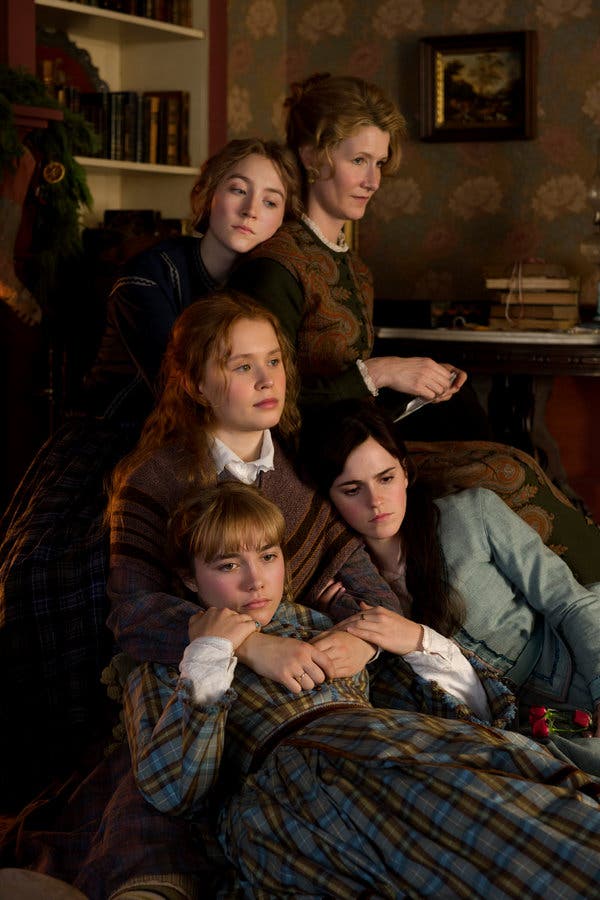
Little women
The latest adaptation of Little Women stars Saoirse Ronan (top left) as Jo March and is adapted and directed by Greta Gerwig.


I’m sure when most of you learned of Little Women about to be released, I bet most of you thought ‘not another Little Women adaptation.’ I admit I had those feelings at the start. However I was surprised to see how well it turned out.

In 1868, Jo March is a teacher in New York City. She has writing ambitions and takes her writing frequently to Mr. Dashwood who will publish her writing… under considerable editing. Her younger sister Amy is in Paris under the guidance of her elder Aunt March who never married and despises the idea of marriage. She meets her love from back home, Laurie and invites her to a party, in which he gets drunk to her dismay. Jo’s writing ambitions are kept alive by a professor named Friedrich Bhaer who supports her work but is constructive but blunt in his critiquing of her works. However Jo has to put everything on hold when she receives a letter that her younger sister Beth is sick. She has to return back home.

The film flashes back to the winter of 1861 in Massachusetts, just after the March’s father goes off to the Civil War, and the March sisters all dress up and prepare for a party where Jo meets Laurie, the grandson of their neighbor Mr. Laurence, for the first time. Just before Christmas dinner, the mother Marmee encourages the girls to give their food to their Mrs. Hummer and her group of hungry children. The girls return with a plentiful Christmas dinner thanks to Mr. Laurence and a letter from their father who just started fighting. During the trip, Jo is invited by her single elder Aunt March to come to Paris with her. Also during that winter, Amy is strapped by a teacher for her drawing in class and Laurie takes her in to his Latin lesson before her family arrives.

It’s obvious as Amy has artistic ambitions and Jo has writing ambitions, their ambitions clash, often violently. One night as Jo is out with the family for an occasion, Amy burns the notes to her novel. Jo discovers upon returning, and a violent fight ensued. However all animosity ends when on an occasion while skating, the ice breaks under Amy and is in danger of drowning. Jo saves her. Also during that winter, Mr. Laurence invites Beth to play on his piano as she reminds him of his late daughter.

Returning to 1868, Laurie apologizes to Amy for his drunken behavior the night before. He also begs Amy not to marry Fred Vaughn but marry him instead. That only makes Amy unhappy as she feels she’s ‘second to Jo’ at everything, including Laurie. Amy later rejects Fred’s proposal after she learns Laurie returned to London. Returning back to the past, there was a period of time when Marmee left to visit their father who was wounded during the War. During that time, Beth received a gift from Mr. Laurence: his piano! However she becomes ill with scarlet fever. With a weak heart, it means she might die. Her mother rushes home with their father, already recovered. All come home in time for Christmas and Amy is all better. However returning back to 1868, Amy dies shortly after Jo arrives from her train trip.

The film flashes back to the past on the day Meg is about to be married. Jo doesn’t want her to marry, feeling Meg doesn’t want to marry, but Meg reminds her Jo’s ambitions may be different from Meg’s ambitions, but they’re still her ambitions. It’s on the day of the wedding Aunt March announces she will take Amy to Paris instead of Jo. Laurie admits his feelings for Jo after the wedding, but Jo insists she doesn’t have the same feelings.

Returning back to 1868, a devastated Amy returns home with a dying Aunt March. Jo starts to wonder if she has second thoughts of her love to Laurie. She writes a letter confessing her feelings, but she soon learns Amy accepted Laurie’s proposal and rejected Fred Vaughn’s proposal. Jo later agrees with Laurie to just be friends. After she throws her letter of love to Laurie in the river, she’s inspired to write her novel about her and her sisters.

She takes the novel to Mr. Dashwood who dismisses it because he believes a lead protagonist female who marries is what sells novels. Mr. Dashwood is given a change of heart when he learns his own young daughters love the story. However he’s still skeptical and wants Jo to make the lead protagonist marry. Jo is at first against it as it is sacrilegious to her work. However she compromises, but on one condition. She gets a $500 up-front publishing payment and more than the original 5% profits promised. She starts at 10% but compromises at 6.6%. The novel Little Women is set to be published and the school Jo and her sisters wanted to open is opened in what was Aunt March’s house with Bhaer teaching children at the school.

This may be a film adapted from a novel written in 1868, but as one watches, one would be surprised to see its relevance for today. This may be a story set around the time of the US Civil War and in New England, but there are a lot of similarities to the present. One common theme is the competitiveness of sisters. We still have that. Ask any woman who comes from a family with a lot of girls! There’s also the story of women with desires and ambitions. Today’s young women have possibly the biggest ever ambitions for their future. Women may have had it rougher a century and a half ago, but it makes clear the ambitions the women shared, whether it be career ambitions, romance ambitions or artistic ambitions. We should remember from history that women had to work during the war while the men were fighting and that started suffrage groups and the first feminist groups. There’s dealing with dashing but stupid men, as seen in Laurie. There’s support and encouragement from others. There’s also the bond of the family. First of the March girls all live with their mother Marmee as they’re waiting for their father to come home from the war. Even dealing with the heartbreak of a sister that died too soon.

For those that read the novel Little Women, I feel the reason why it became so popular is that women could see mirror images of themselves in the March sisters. They shared similar goals, similar trials, similar ambitions and similar dreams. Here in the film, I felt the characters of the March girls were made to look very relatable to most young females of today.

Now Little Women has already been adapted into a film many times before. In fact this is the seventh film adaptation of the novel if you even include adaptations as far back as the silent era. To make people welcome a film adaptation of this in the present, there would have to be a freshness or a twist that works. Having it a case where Beth is one with no intentions to marry is a risky thing. I feel it did the smart thing by having it a case where Jo is the author of Little Women and trying to market it, and using the money to build the school, is a brave decision. I don’t think it does anything too sacrilegious to the book. In fact the character of Jo is to mirror that of Louisa. What the film does is actually give two alternatives of Jo: the Jo that’s common in the novel and the Jo who’s more of a reflection of Louisa’s own life and strong will when she deals with Mr. Dashwood. It’s a unique twist for Greta to make it happen. Plus instead of it defying the story, it actually adds a unique twist to it that works.

Top accolades of the film should go to director Greta Gerwig. This could have been another rehash of a commonly-adapted novel. Instead Greta adapts the story to make it very relatable to young women in today’s world and even adding a twist to the story without ruining the dignity of the original story. Gerwig bends instead of breaks. Even the constant flashes between the past and present work well. The best acting comes from Saoirse Ronan. Again she does an excellent acting performance that adds dimension and charm and speaks to the audience. Florence Pugh is also great as Amy: Jo’s most rivalrous sister and very good at stealing the show from Jo at times. Emma Watson and Eliza Scanlen are also very good as sisters Meg and Beth. Laura Dern is also good as Marmee, but her role is limited in dimension. Meryl Streep is also given a brief role as Miss March, but she delivers a character that commands your attention each time. Timothee Chalamet was good as the idiotic Laurie, but I feel he didn’t act 1860’s-ish enough.

The film also has a lot of great standout technical efforts too. There’s the costuming of Jacqueline Durran, there’s the score composition from Alexandre Desplat, the set design from Jess Gonchor and Claire Kaufman and there’s the cinematography of Yorick Le Saux.

The most recent adaptation of Little Women does the book justice, but it adds a twist at the end. I’m sure even the biggest fans of the novel will be happy how the film turns out.

Movie Review: Harry Potter and the Deathly Hallows Part 2

DISCLAIMER: Okay, I’ve been saying that I have a lot of catching up with my summer movie reviews. This should be the last of my catching up.
 
What was expected was that the final novel of the Harry Potter series would be made into a feature-length film. What wasn’t expected was that the final novel would be divided into two parts. Obviously it was for the sake of more money for the Potter franchise. Nevertheless, Deathly Hallows Part 2 was a very good trilling movie in itself as well as a fitting end to the biggest movie franchise ever.
 
For the record, this is only the second Harry Potter movie I have seen. The only other I have seen is the very first: The Philosopher’s Stone. For my review, I will base it off what I have seen instead of comparing to the book or the other movies.
 
The dark mood of the Harry Potter movies starts right at the beginning. The movie starts as the fate of Hogwarts is in jeopardy.Dumbledore is dead and Lord Voldemort has retrieves his wand. Snape is now the head of Hogwarts. Dobby is dead and is now in the accompaniment of the goblin Griphook. Now Harry must destroy Lord Voldemort’s horcrux.The first place he suspects is a vault Gringott’s bank. The threesome along with Griphook go to the vault and learn that Horcrux is Helga Hufflepuff’s cup. After Harry takes the cup, Griphook steals the sword, leaving the three to face security. The three are able to escape after releasing the dragon guardian.
 
Harry has a vision tof Voldemork killing goblins including Griphook and learns that the Drak Lord knows of the theft. Harry also learns there is a horcrux related to Rowena Ravenclaw. The apparate into Hogsmeade which starts an alarm. They are rescued by Aberforth Dumbledore who instructs the paining of his sister Arianna to fetch Neville Longbottom and lead them through a secret path back to Hogwarts.
 
As Snape controls Hogwarts, it paves the way for the anticipated battles for the movie. The whole story is a maze in which Harry has to lead through and piece through in order to confront Snape in the final battle over Hogwarts. It’s a maze involving battles, dreaming, going through Voldemort’s thoughts and retracing Snape’s personal thoughts and Harry’s mother’s personal history. It even involved facing Snape and going through a temporary death in order to succeed in his battle. It’s bound to leave one who hasn’t read the novel or seen the other movies confused. Harry Potter fans however should be able to understand it all.
 
One note about the ending. The movie ended as was done in the novel in being correct with its facts. It had a mix of darkness and sweetness but I felt it ended on too sweet of a note. Nevertheless I’m happy it ended well instead of dragging on the way Lord Of The Rings: Return Of The King did. I know both are ends to a remarkable book series, but still.
 
Director David Yates did a very good job in directing the final chapter. For the record, he has directed the last four Potter movies and was best at making the characters mature and maintaining the darkness of each story. In this final movie, he’s excellent in keeping the intensity of the fate of Hogwarts and the battles that await the many including Harry. The acting was also very well done if lacking in being spectacular. Daniel Radcliffe has done an excellent job over the years making Harry grow in both age and character. The same can be said of the two co-stars Emma Watson and Rupert Grint. The chemistry between the threesome is still there after all these years.
 
The Harry Potter phenomenon is arguably the biggest entertainment phenomenon of the 21st Century. Although the first novel–The Philosopher’s Stone–was released in 1997, the phenomenon first made notice in 1999 and grew to what it is now. The big question is if this movie will mark the end of a phenomenon. I remember there was a picture at the London Premier of Hallows Pt. 2 saying “The End Of An Era: 1997-2011”. Whatever the situation, the Harry Potter franchise has left a permament mark in pop culture. It started as a book series that actually made kids start reading and made J.K. Rowling a celebrity. Then it went to a movie series that would attract many big-name British actors and would become the highest-grossing movie franchise ever. It has even made household names of the three main actors: Daniel Radcliffe, Emma Watson and Rupert Grint. Now that it’s over, it remains in question whether there will be another pop culture phenomenon the size of Harry Potter ever again.
 
Harry Potter and the Deathly Hallows Pt. 2 is a fitting end to a fitting book series and a fitting movie series. It took a risk in splitting the final novel in two movies. But in the end, it did everything right.