Dove Campaign For Real Beauty Hits Youtube With Viral Results

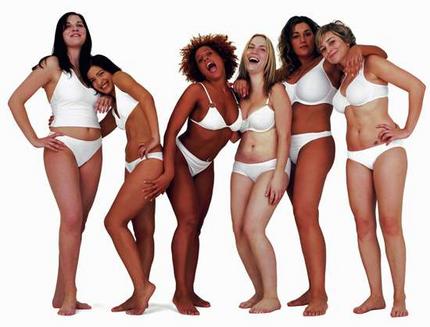
The Dove Campaign For Real Beauty is an attempt to make women feel confident about their looks.

Have you seen the campaign for Dove where they campaign ‘for real beauty?’ I’m sure we all have. They’ve been doing that for years. Many people like it while some find it annoying. However they’ve most recently taken their campaign to Youtube and the rapport has been surprising.

Dove’s worldwide Campaign For Real Beauty started back in 2004. It was created by Brazil’s branch of the advertising agency Ogilvy & Mather and bought by Unilever in 2004 when it learned in a survey that only 4% of women consider themselves beautiful. Sure, women have always struggled with the self-consciousness of their beauty for years and even decades but this was a highly critical time. Do you remember who the top celebrities were at the time? Paris Hilton, Britney Spears, Christina Aguilera. These were young female women who rose to the top of the fame game with little attention to whatever talent they had and more attention to their looks. Breast implants operations were at an all-time high. Girls getting their hair bleached like Pamela Anderson were still very popular. There were huge concerns about eating disorders in young women. Pop and hip hop videos featured scantily clad women and it paid off in taking them to the top of the charts. Not a nice picture at all.

Some of you may argue that it has always been that way. Sure there have been problems from generation to generation. Mind you it was a lot different from the time I was growing up. Back when I was a teenager–from the mid-80’s to the early 90’s–we had a mixed bag of female stars to look up to. MTV was just starting to become a vice in popular culture. There was Pat Benatar who rocked out female empowerment but wouldn’t use ‘sex as a weapon.’ There was the always controversial Madonna who raised eyebrows with whatever controversial thing she did but always had a message behind it and urged female empowerment. There was Tina Turner, a rock legend who was strong enough to leave an abusive husband. We had full-bodied models like Cheryl Tiegs, Christy Brinkley and Elle MacPherson. However it was not completely perfect. I even remember one moment back in the 80’s talking to one of my classmates just after she bought a pack of diet pills. Also in the 80’s was Karen Carpenter, a singer who died of anorexia at a time when hardly anybody knew what it was. Just like Morgan Fairchild said “Rock Hudson gave AIDS a face,” Karen Carpenter gave anorexia a face.

By the 90’s things really started to get to a concern from parents. Soon came Kate Moss and her waif look followed by ‘heroin chic’ models. The term supermodel became present and a phenomenon at the beginning of the decade as models were able to command salaries over $1 million a year. Young girls went from wanting to be models to wanting to be supermodels. Imagine making millions just for looking good. Rap videos consisted of scantily clad women dancing and acting unapologetically immodest. Baywatch babe Pamela Anderson rose to the top of the fame game with her bleached-blonde hair and breast implants and would soon be emulated by girls everywhere.

It’s not to say the whole 90’s was completely vicious to girls. In fact the 90’s should have been a more positive time for women and young girls. There was actress/comedian Roseanne who wouldn’t let her overweight looks or attempts at male dominance stand in her way. And she’s send that message in her sitcom. There was Nike promoting Jackie Joyner-Kersee as she was seen as an achiever with little attention paid to her looks. There were more and more women assuming higher political office or higher business positions. There were movies with more forceful depictions of women like Thelma And Louise and G.I. Jane. There were even attempts from the media to promote intimate singers like Jewel and Sarah McLaughlin as well as the Lilith Fair. But right while that was all taking off, the teen revolution in pop happened with the likes of Britney Spears and Christina Aguilera hitting the top of the charts. You could’ve simply dropped Lilith Fair in favor of ‘Tart Fest.’ By the end of the 90’s the more positive female role models like comediennes, athletes and business executives were being shunned by promoters in favor of tart-like girls that were cute or thin or both. Hey, they were easier to guarantee sales and ratings.

You could understand with the celebrity admiration and star emulation that has been wildfire especially in the last 15 years there would be some concerns. It became apparent that the obsession of beauty was not just about fitting in but having the looks that won. If a certain look or certain body is going to put a female celebrity to the top of the ‘fame game,’ you could be sure girls wanted to copy that. You can’t blame pop star Pink for singing in her song Stupid Girls: “What happened to the dream of a girl president? She’s dancin’ in the video next to 50 Cent.” Problem was the beauty industry wanted to take full advantage of it. They wanted women to think that their product would make them more attractive or they’d be inferior without it. I even remember hearing a radio ad for a plastic surgery office and the voiceover said: “How you look on the outside affects how you feel on the inside.” What does that tell you?

Dove wanted to change all that with their Campaign For Real Beauty. It was created by Brazil’s Ogilvie & Mather and its mission was: “to create a world where beauty is a source of confidence and not anxiety.” I still remember seeing ads on a bus in 2004 of women with regular bodies looking confident and the tagline ‘campaign for real beauty.’ Those pictures were taken by reputed photographer Annie Liebovitz. I also remember a television ad of a city square full of what appears to be blondes. Soon one woman takes her blonde wig off and the others follow. One thing I didn’t know at the time of the first ads was that the campaign also involved studies too about the opinions of the bodies. There were even some ads that invited people to vote on a female image if she was ‘fat or fab’ or ‘wrinkled or wonderful’ with results displayed on the billboard itself.

Like every campaign, this Campaign had to market attention. The Campaign won media coverage from talk shows, women’s magazines, as well as mainstream news broadcasts and publications. Unilever were able to purchase a $2.5 million 30-second spot during the Super Bowl XL of 2006 as part of the Little Girls branch of their campaign. With the purchase of a Campaign For Real Beauty website, the campaign was expanded into videos that started with Daughters, an interview-style piece where mothers and daughters related to the beauty industry and how it affected their perceptions of beauty. Further videos followed including Evolution, Onslaught and Amy. Evolution won two Cannes Lions awards for advertising film making. Unlike most campaigns, research was being conducted on this by Dove.

It’s not to say the campaign has had their doubters. There have been those who’ve accused Dove as being hypocritical since it belongs to the Unilever company: the same company responsible for Axe body spray products that feature overtly sexual women in their ads, Fair and Lovely skin-lightening products and Slim Fast diet bars. There would be defenders saying that Dove represents Dove, not Unilever as a whole. There were also females who posted their dissatisfaction of the ads because they believed Dove was telling them of the insecurities they felt. Also you have the odd person on the street who likes being cynical and say “They’re just doing it to sell more products.” Even if it was true, you should remember that the campaign came at a time when marketers were shelling out ads to make people insecure about themselves to get their product sold. If that argument was true, I could rightfully argue it’s great to see Dove use a positive message to sell their products instead.

However the biggest attention came as they released two videos of Dove Real Beauty Sketches on Youtube back in April of this year. The videos consisted of regular women being drawn portraits by a forensic artist. While drawing the women, he’d ask them to describe certain aspects of their looks. Before being drawn, the women were asked to get friendly with another person. Those people, both women and men, would be asked by the artist to describe their looks and features. Days later the women would return to the studio and see two drawings of herself. The first drawing would be of herself of how she described herself. The second drawing would be herself of how the other person saw her. The differences were very noticeable. It also changed the way they thought of themselves. The ads definitely caught a lot of attention as they’ve received more than 50,000,000 hits on Youtube.

The question is will it change how women, especially young women, look at themselves? We should take into account not all has been better ever since the Campaign For Real Beauty started. Girls still idolize celebrities, even no-talents like Kim Kardashian. Fashion magazines continue to sell. Girls still desire to be models. On top of it there are many complaints in recent years of female figures being photoshopped. That was especially made evident in a Youtube video entitled Fotoshop by Adobe where Adobe is pronounced “Ad Obey.” Even Dove did ads where it showed young girls in sports with a caption saying: “Six out of ten young girls would give up a sport if it made them seem unattractive.”  The results of the Sketches video going viral are encouraging but its effect is still yet to be seen. Also it would be interesting if Dove releases another Real Beauty Sketches video in the future.

Dove Campaign For Real Beauty surely does take their Campaign to a new level with their Sketches video. This is only the latest in the Campaign’s efforts. Whether it will pay off in terms of a woman’s self-image is questionable in the future. I’m sure Dove will be paying close attention to the results.

WORK CITED:

WIKIPEDIA: Dove Campaign For Real Beauty. Wikipedia.com. 2013. Wikimedia Foundation Inc. <http://en.wikipedia.org/wiki/Dove_Campaign_for_Real_Beauty>

‘Hot Problems’ And The Charm Of Awful

‘Hot Problems’ girls Lauren Willey and Drew Garrett

I was watching the latest React video on Youtube from the Fine Bros’ various React shows: Teens React To Hot Problems. Actually first I paused the video after ten seconds so I can hear Hot Problems for myself.  As I was listening to the intro of that video which will soon hit 30 million views, I noticed that the number of dislikes was more than 90% of the likes. That had me wondering. Then I heard it for myself. It was so dreadful I had enough after two minutes. I could not blame the teens that were irritated with it. Then the song  grew on me: I actually liked it because of how awful it was. I’m sure I’m not alone, but why does this happen?

I’ll admit there are times when our society is charmed by things that are downright awful. Possibly the reason why we have a term called ‘guilty pleasure’. I’m sure it has existed since the beginning of time. We should remember that there was such thing as B-movies when movies started coming out. Some of the best of the worst came either during the 30’s or the 50’s. It was movies people loved because of its awfulness. I’m sure B-movies continued in the 60’s but who remembers those?

Then came the 70’s. This was the decade when awful really started to take off. B-movies became ‘cult films’ with all sorts of blood, gore, exploitation and purposely-bad acting. There was also the raunchy Rocky Horror Picture Show: a musical where the house of Frankenstein meets the sexual revolution that made no real sense. TV also had its variety of bad taste to offer too. Remember the $1.98 Beauty Show and The Gong Show? Yeah, I especially remember the latter. Even now I love watching clips of old Gong Show acts on Youtube. It’s my guilty pleasure.

Awful had a bit of a lull in the 80’s or 90’s but there was the occasional hit that was loved for its awfulness, like the infantile man/boy Pee-Wee Herman or the sitcom Married With Children. Those who saw Married With Children would remember it for its awful episodes, awfully acted superstock-like characters and very off writing as much as it was for its raunchiness. Nevertheless it was all those factors why people loved it. On the opposite side, there was Saved By The Bell: a Disney Channel show that found its way on NBC in 1989. Its lame writings, characters and over-the-top cutesy scenarios were eaten up by young teens and preteens and help pave the way for many fluffy sugar-coated Disney Channel shows that have become phenomenons in the past 7 years.

However it seems like in the 21st Century, bad taste and awful have aimed to become either legendary or competitive, or both. It seems like in a multimedia world we live in that has so much to offer, one has to stand out above the rest. That even includes performances of bad and terrible. And it’s produced some legends too along the way. I don’t know the first 21st Century instance of bad being catchy but I assume it’s the 2003 movie The Room. It’s so bad it earned its own Rocky Horror like following. The difference being Rocky Horror was basically bad acting and bad writing done professionally. The Room is just completely amateurish from the acting to the writing to the stunts to the cinematography. I can’t see a single trace of professionalism in it. Nevertheless it was The Room’s pathetic awfulness that garnered its cult following.

2004 would see the temporary stardom of non-singer William Hung; the right no-talent at the right time. He arrived right while the nation was so fixated on American Idol shelling out the next big thing in pop music with contestants groomed and dressed to perfection and voices pitch perfect. Hung didn’t have the look at all and he sounded dreadful with his version of Ricky Martin’s She Bangs. But his horrid audition was catchy enough for him to garner a fan following including the release of a disc tiled Inspiration and numerous talk show appearances. Weird how a singer could become so famous for their awfulness and imperfections. Today William is out of music altogether and now works for the LA County Sherriff’s Department.

Then along came this thing called Youtube in 2005. Youtube went from being a channel that simply showed home movies to also changing the fame game. People could become famous for simply saying things like “Leave Britney alone,” or “Charlie bit my finger.” It was a place musicians can play their own music which would pave the way for the popularity of Chocolate Rain. It was also where a teenager could become hugely famous for a hyperactive 6 year-old character named Fred.

Youtube was also seen as a domain for professional skilled musicians to show their stuff and hopefully get their big break. It worked for launching the careers of recent teen phenoms like Justin Bieber and Cody Simpson. It also allowed a 13 year-old girl named Rebecca Black perform a song called Friday. Tailor-made by an amateur music producer with a $5000 promise to her parents it would make her a star, it was done with cheesy lyrics, Rebecca Black singing either monotoned, nasally or to auto-tune, and the producer rapping. The song was placed on Youtube back in February of 2011 and has received 31,000,000 hits so far and 810,000 ‘thumbs’: almost 80% are dislikes. It worked to propel Rebecca to fame but the kind of fame with a lot of ridicule. Yet its awfulness also started a huge following with a lot of satire videos to follow. A lot of people will admit the awfulness was catchy. Even Lady Gaga thinks Rebecca Black is a genius.

Now 2012 brings a new chapter to awful entertainment and yes, it’s courtesy of Youtube. Two California high school girls going by the name of Double Take recorded a song entitled Hot Problems about the problems girls that are labeled ‘hot’ go through and had the video placed on the OldBaileyProductions channel on April 15th. Since then the song has gone viral to the point it has already received 12,000,000 hits. The reactions are mostly negative as the song has received over 520,000 dislikes and not even 40,000 likes. It even has many people comparing the song to Friday in terms of its awfulness. It has cheesy lyrics and the singing of the two girls sound like they don’t have a hint of skill or unison. Yes, it too has had its own spoof videos too. Some are even calling it the ‘worst song ever’. Didn’t they say the same thing about Friday last year?

All parties involved in this have responded to the feedback from the song. OldBaileyProductions responded saying they have nothing to do with the song and that they created the video as a favor for a sibling of a friend. The two girls of Double Take, Drew Garrett and Lauren Willey, also responded to the feedback to their ‘masterpiece of maladroit’. They admit they were not good singers and that they were just simply ‘talk-singing’. They also said they made the video to simply have something funny for their friends and didn’t mean anything from it. Hey, at least they’re not desperate for fame the way Rebecca Black and her parents were. Also unlike Rebecca Black, they’re brushing all negative criticism aside. They are heading to college with career plans for real careers but they do admit that they’re ‘open’ to careers as songwriters. Also they admit they don’t consider themselves ‘hot’.

Nevertheless it’s a surprise how another awful song or awful act gets a following. I’m sure that in this Youtube world, there will be more to come. Who knows? Maybe next year we might have a new ‘worst song ever’. You gotta love this planet.

WORK CITED:

“’Hot Problems’ Dubbed Worst Song Of The Year.” ABC News.go.com. 2012. ABC News. 20 April 2012. <http://abcnews.go.com/blogs/entertainment/2012/04/hot-problems-dubbed-worst-song-of-the-year/>

J. Crew In The Middle Of ‘Toenailgate’

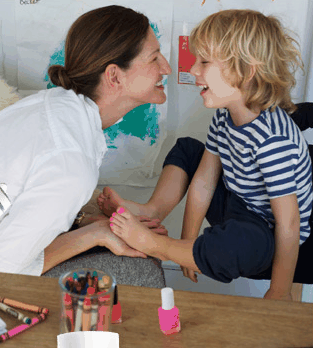
This picture in a J. Crew e-flyer is the subject of major discussion this week.

Ever notice how in the news there’s always a story that comes from nowhere and is not worth paying any mind, until some loudmouth makes a hullabaloo about it? It’s funny that while Japan is recovering from a tsunami, earthquake and nuclear meltdown, and Libya is fighting a war to depose a dictator, there’s a minor story that makes a lot of loud news. It happened this week when the picture on the right that was featured in an e-catalog from J.Crew got on a conservative pundit’s nerves to the point he spoke out about it. And it has since drawn a lot of reactions since Tuesday.

It all started when J.Crew sent out its e-catalog to subscribers on Tuesday April 5th. For those unfamiliar, J. Crew is a clothing store known for its colorful preppy looking clothes. Its most famous customer is First Lady Michelle Obama. Included is a Saturday With Jenna column written by J. Crew president and creative director Jenna Lyons. On that column’s front page that weekend was that picture of her having fun with her 5 year-old son Beckett. Why should that cause controversy? Because the fun she had with Beckett was painting his toenails with pink nail polish. She even included in the Quality Time caption: “Lucky for me, I ended up with a boy whose favorite color is pink. Toenail painting is way more fun in neon.”

Some of the J. Crew customers who received that ad would look at it as something funny and some might raise their eyebrows over it. It was able to stay away from being a complete controversy, until Tuesday April 12th. That’s when FOX News Psychologist Dr. Keith Ablow made these comments:

 Yeah, well, it may be fun and games now, Jenna, but at least put some money aside for psychotherapy for the kid—and maybe a little for others who’ll be affected by your “innocent” pleasure.

This is a dramatic example of the way that our culture is being encouraged to abandon all trappings of gender identity—homogenizing males and females when the outcome of such “psychological sterilization” is not known.

Dr. Ablow further goes on to talk about the benefits and goods of gender distinctions and continues:

Jenna Lyons and J. Crew seem to know exactly what they’re up to. That’s why the photograph of Jenna’s son so prominently displays his hot pink, neon toe nails. These folks are hostile to the gender distinctions that actually are part of the magnificent synergy that creates and sustains the human race. They respect their own creative notions a whole lot more than any creative Force in the universe.

Dr. Ablow wasn’t the only right wing pundit speaking their mind on this. Four days earlier, Erin M. Brown, writer for the Culture and Media Institute website, wrote an article on the ad which she declared ‘blatant propaganda celebrating transgendered children’. She then went on to say: “Not only is Beckett likely to change his favorite color as early as tomorrow, Jenna’s indulgence (or encouragement) could make life hard for the boy in the future. J.CREW, known for its tasteful and modest clothing, apparently does not mind exploiting Beckett behind the façade of liberal, transgendered identity politics.”

Since the ad controversy, there have been a lot of responses. Numerous news stories in websites, newspapers and television have featured the heated issue. All three major networks have done discussions about this. They’ve interviewed parents on the street: some were freaked out while some liked it. Psychiatrists interviewed have said it’s normal for children to play cross-dressing games. Some news stories showed celebrity parents including Gwen Stefani with pictures of their own boys wearing nail polish.  Alyona Minkovski from RT Network responded: “Look people. Mom’s actually spending time with her child having fun, which is a lot more than what I can say about a lot of parents out there who tend to neglect their children. And if painting your child’s toenails is a way for a child and parent to connect, then have at it.” Jon Stewart even talked about it on his Daily Show, declaring the fiasco ‘Toemageddon 2011’ and commenting: “You make it sound like it’s a story about incest or cannabalism…You’re all aware that nail polish comes off, right? You’re all acting like this lady gave her son an ‘I Love Cock’ tattoo.” For the record, J. Crew have not responded because they ‘don’t want to add fuel to a non-issue.’

Even amongst the internet, there have been responses. Youtubers have also spoken their mind with one man even paining his fingernails pink. On the opposite side, there’s been at least one video in support of the complaining pundits, from the channel Final Justice Movement. Bloggers have posted their opinions. Message boards have also been loaded with comments both for the ad ‘what century is this?’ and against this ‘This is disgusting!’ Change.org started a petition thanking J.Crew ‘for the heartwarming ad’ and received 7500 signatures. The 10 year-old son of a writer for Wired magazine painted his fingernails green in response. There’s even a Pink Piggies page on Facebook where the page honors ‘people of all gender identities.’

One thing I like to say is that it’s another example of how people like to raise a big fiasco of just about anything. I’ve seen it from both the left and right side of people raising a big fuss over something simple. It seems like the thing nowadays to be offended about anything. Years ago, people were declaring The Passion Of The Christ to be anti-Semitic when it’s the story of Christ’s crucifixion that has been played out many times in the past including on film. Recently after the movie Mars Needs Moms was released, a gay Youtube personality posted on his Twitter page that it’s very offensive to non-traditional families. And now we have right-wing pundits taking a crack at this ad. Do people enjoy getting offended?

Yes, it’s a different parent-child bonding scenario but it’s not worth declaring ‘propaganda’ to turn into an issue for headlines’ sake. I also agree with Alyona: in case you didn’t notice, there’s a load of joy between Jenna and Beckett in that picture. It’s very common for parents to neglect their children in their busy lives so a moment like that should be considered fun.Secondly I don’t think paining a son’s toenails pink makes him gay. His orientation has already formed itself even before he was born. In addition when I brought this story up at work, one of my co-workers mentioned that she painted her nephew’s fingernails and they had a fun time together. Weeks later when she brought up ‘nail polish’, he said “That’s girls stuff.” So what does that tell you? Also I admire J. Crew for not responding to this and dismissing it for the ‘non-issue’ that it is.