Oscars 2025 Best Picture Reviews: Part Two

It’s interesting for my next blog of Best Picture nominees. One film is a remake of one of the most captivating monster stories ever and the other film tells the story of the tragedy that produced one of the most legendary plays ever. They’re both unique in their own way.
Frankenstein

Ever since Mary Shelley has published her book titled Frankenstein; or, The Modern Prometheus back in 1818, the story and the monster have captured the imagination of the world. The monster definitely more often than the story. The Frankenstein monster has been featured and parodied frequently to the point people have created their own versions of Frankenstein on both the character and the physical appearance. People on Halloween especially have a field day with Frankenstein costumes and their own Frankenstein stories. Crazy thing is most of these stories stray greatly away from the original story of Mary Shelley. They may get the basics like a mad scientist creates a living person from the body parts of deceased people but they are too loosely based. The very first Frankenstein film, a silent film from Edison Studios released in 1910, was a film the director intended to be ‘broadly based’ on Shelley’s story or call itself a ‘liberal adaptation.’ The most famous film adaptation has to be the 1931 film which was an adaptation of a stage play. Frankenstein’s monster in that film, played by Boris Karloff, has the most iconic image of the Frankenstein monster with the rectangular forehead and green skin. That film also includes the memorable line: “It’s alive! It’s alive!”

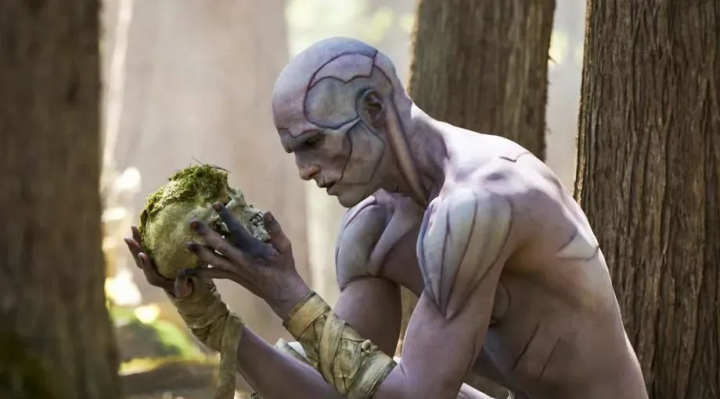
This film is Guillermo del Toro’s adaptation of the story that is still off the original in some amount but is closer to Shelley’s story. The film is set in 1857 and a Danish ship of the Royal Navy is stuck in ice. The ship becomes like a hospice for a gravely injured Victor Frankenstein who was hurt from the wave of an explosion. The ship is then attacked by a fur-laden humanoid creature that appears indestructible. As Victor notices that’s the creature he created, he tells his story, which becomes Part I: Victor’s Tale. After Victor tells his story, the creature tells his story in Part II: The Creature’s Tale. This layout of the story sets up for the finale where the creature finally makes peace with Victor and Victor apologises for being too cruel to the creature. It’s after Victor’s death that the creature departs, but not until he frees the ship from being stuck in the ice.

Some of the most noticeable differences are in the novel, Victor’s mother dies of scarlet fever. In this film, she dies of childbirth giving birth to William. While the novel shows Victor discovering the possibility of creating new life through his studies, the film shows him actually conducting his proven findings in front of professors and being expelled. In the novel, Victor is shocked and repelled by the creature he created and abandons it in the cold snows. In the film, he’s proud of his creation but enslaves him. In the film, Victor wins the love of a woman named Elizabeth. In the film, it’s William who courts Elizabeth and Victor tries to win her, but his mad science and arrogance prevent her. Victor even kills Elizabeth and William. Also in the film, Elizabeth embraces the creature when he rushes back to Victor to demand a female creation for him. It turns out Elizabeth has more feelings for the creature than for Victor. The creature in the novel becomes lost in the wilderness and has both seen the best and ugliest of humanity. In the film, he is given refuge to a farming family whom the blind man treats him well. The other family think he killed the blind man when they return and try to shoot him. There is the reconciling of the two on the ship but the creature remains on the ship at the end of the novel while the creature leaves the ship but is powerful enough to push the ship free of the ice.

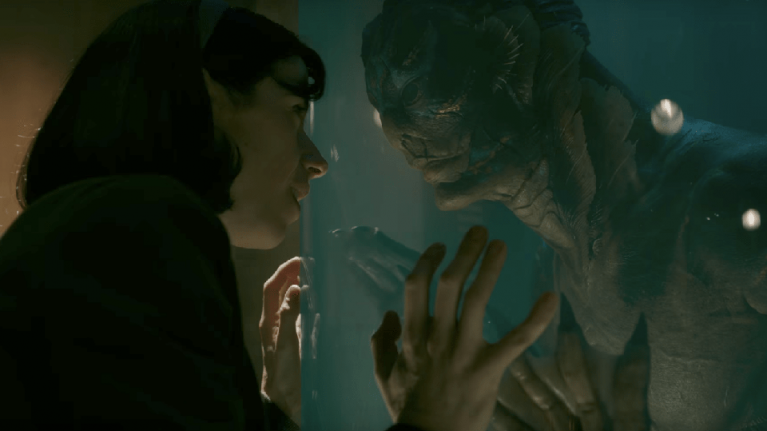
This adaptation that is both written and directed by Guillermo del Toro is a story that is more faithful to the book than most stories. Del Toro already knows how to do an excellent job of stories involving monsters like Pan’s Labyrinth and The Shape Of Water. Here, he shows off his expertise again with an excellent adaptation of the story. Making it two stories, of Victor’s story and The Creature’s story, is done quite well without deviating too much from the original. The two stories do a good job of playing themselves out leading to its eventual connection in the end. The result is not only an adaptation well done but an adaptation that will capture your attention and get you caught up in the story and the drama as it unfolds. The story will also get you feeling for The Creature as well as it showcases he’s not only a human in flesh but he’s a human in feeling. If you see the story, you will agree that the creature has more heart than Victor. Del Toro masters the story and the drama.

Oscar Isaac does a great job in making Victor Frankenstein into a doctor that isn’t completely heartless but full of personal flaws. His eccentricities interfere with his ability to relate with others, have any kind of heart to his creation or even love Elizabeth enough to win her love. Surprisingly, Isaac does succeed in making you feel sympathy to Victor and even forgive him for all he’s done. The dimension Isaac bring is excellent to the role. Jacob Elordi steals the film as the creature. Creating a character of a created human with the common sensitivities of people, even having feelings of love and heartbreak, gives the film its heart and soul within the spectacular drama. Many times, you’re tempted to think Elordi is the lead. Mia Goth is also very good in her role as Elizabeth, but the role could have been given more dimension in the story. Other good supporting acting performances come from Christian Convery as the young Victor, Felix Kammerer as William Frankenstein, and Lars Mikkelsen as the Captain Andersen.

For a film like this, you can bet this has a lot of excellent technical achievements. The cinematography from Dan Lautsen captures the story very well. The costuming from Kate Hawley, the production design from Tamara Deverell, and the hair and makeup team do a great job in taking the audience back to the past and recreating scenes of the times. Alexandre Desplat knows how to deliver a score for a film and he does it again here with a score that fits the drama of the story very well. The sound team and the visual effects team all deliver the right stuff to deliver the excitement of the film.

Frankenstein is not just another adaptation of the story. It’s one Guillermo del Toro does his own telling of the story mixing his own take and trying to stay faithful to the story. It succeeds in a very thrilling way!
Hamnet

There have been many semiautobiographical films of William Shakespeare many times before but you hardly see any films, plays or literature about his children. Among possibly the least known is his only son Hamnet Shakespeare. Little is known or documented about him or what he was like. It was known that he died at the age of 11. The play Hamlet premiered three or four years after his death and scholars have frequently debated Hamnet’s young death and how much inspiration it bored on Hamlet. It is known that before Hamnet’s death, Shakespeare mostly wrote comedies and Hamlet was a significant turning point. The film makes the case in point that it was very inspirational to the creation of Hamlet. You could tell in rehearsals Shakespeare was a perfectionist and was very demanding on his lead actor. It’s possible he wanted the actor to create the spirit of Hamnet in Hamlet.

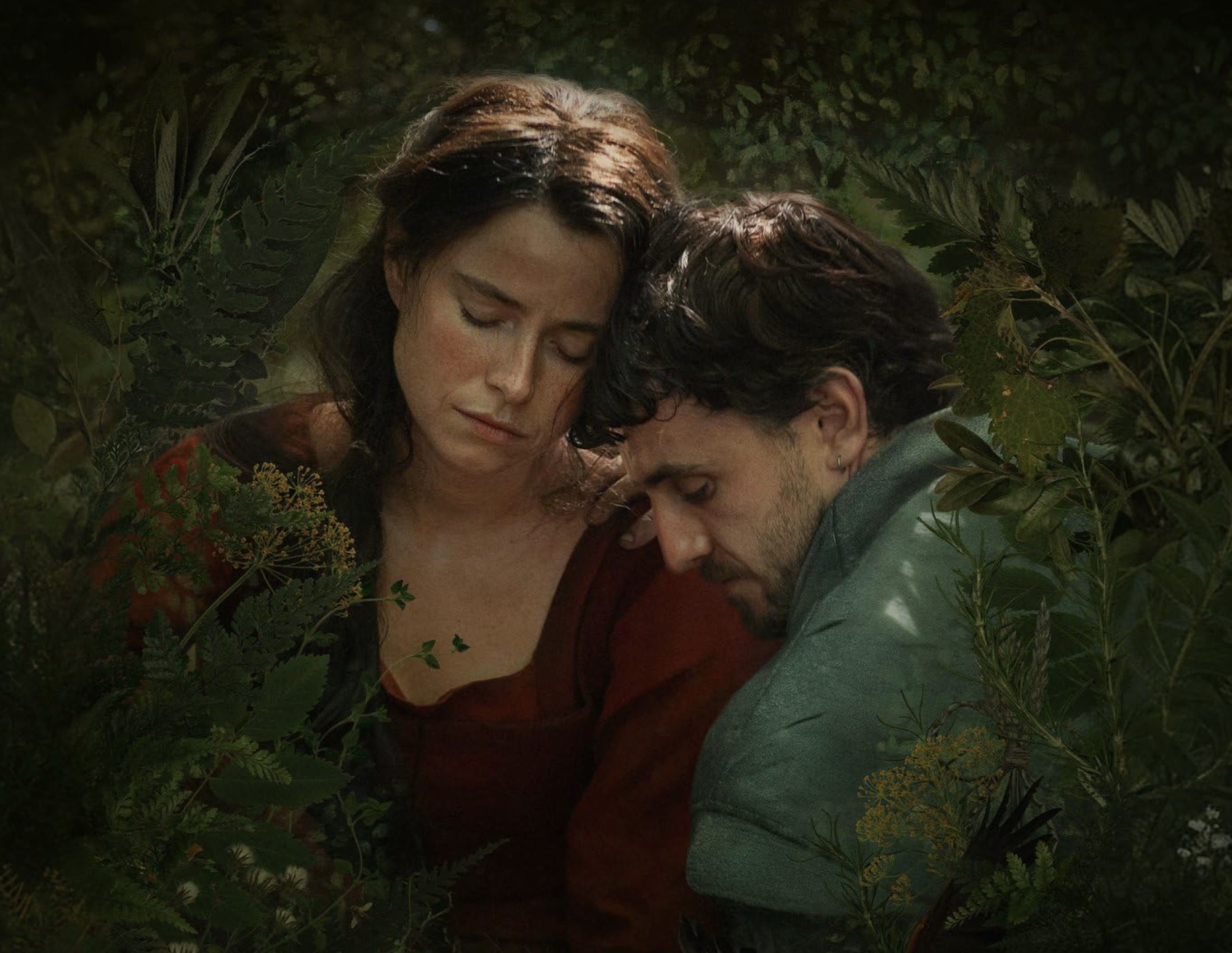
There are two things that stand out the most from this film. The first is that it is based on a novel that is historical fiction. There are many details in the film that are fact with Shakespeare’s life, but there are also a lot of myths and imagined fiction. Very little is documented about Hamnet so in her novel Hamnet, Maggie O’Donnell gave him a personality and in writing of Hamnet’s death, O’Donnell used some of her own experience when her daughter was suffering from a potentially fatal illness. The second thing that stands out is that the film is mostly focused on Shakespeare’s wife: Agnes Shakespeare. The film is more Agnes’s story as it shows her an herbalist who’s a lover of nature. She finds herself attracted to this playwright whom her family does not approve of. They fall in love, develop a family and marry. William frequently makes trips to London for his plays while Agnes does mostly motherly duties. Agnes is the one who has to deal with her twin children, their teachings and eventually their illnesses. She is the one who has to witness Hamnet’s death. No doubt she’s angry with William being away in London during that time. Years later, she learns of his plays Hamlet. She’s there at the opening. She fears the play could upset her. Instead she is touched by the play, by the actor, and by the character. It gives one the sense in seeing Hamlet played on stage, she senses Hamnet’s spirit living in him and shared with all.

The film itself doesn’t try to be a historical docudrama. It does keep many actual facts of history but it does its own storytelling. It does maintain situations that many would commonly relate to. It reminds people that Shakespeare’s choice to pursue arts or teaching was not well-regarded in his working class family. It shows William and Agnes married because she was pregnant and she didn’t want her daughter Susanna to be born a ‘bastard.’ It’s known that in between the death of Hamnet and the premiere of Hamlet, there was a period for Shakespeare known as the ‘lost years.’ What it does is it tells its story. As I mentioned earlier, the film is based on a book that is loosely based on the lives of the Shakespeares. It’s a story that connects with common situations in ones life like not being accepted into a family, loving someone their family doesn’t approve of, the loss of a child, trying to live life again and of how art connects with the human spirit. The latter, I think that’s the theme of the film. How art reflects humanity and can even be a method of healing. The film does an excellent job in having its story connect with the viewer while also maintaining intrigue towards the family of a legend. That’s its biggest quality.

This film is another excellent accomplishment for Chloe Zhao. When she agreed to do the story, she also hired Maggie O’Donnell, the author of the novel Hamnet, to help with the scriptwriting. Human connection is a common theme of Zhao’s films and Chloe does an excellent job in directing a story of an artist’s method of healing and how he shares it with the world. There have often been films that show how art connects with the human spirit. This film also succeeds in displaying that theme and Zhao creates an excellent work in delivering that message.

The performance of the film definitely belongs to Jessie Buckley. The film is mostly about Agnes and Jessie does an excellent job of taking charge of her role and owning the movie. She shows many dimensions of Agnes Shakespeare: falconer, herbalist, teacher, daughter, wife, mother and griever. She showcases both the triumphs and the struggles Agnes goes through and delivers a performance that’s an achievement in itself. Paul Mescal is also great as William Shakespeare but he does not deliver the performance of Shakespeare one would expect. Here, he’s seen as a son with a stormy relationship with his father, husband of Agnes, a playwright who’s away from the family for a long period of time and one who grieves the loss of his son. His performance in making William Shakespeare a three-dimensional common person instead of the icon we all know makes for the excellence of the film.

The film also has a lot of good supporting performances. The one that most stands out is Jacobi Jupe as Hamnet Shakespeare. While O’Donnell creates a character in the son of Shakespeare we never knew, Jupe adds an appeal to him and portrays Hamnet to be just as much of a dreamer as his father. Jupe is also good at portraying Hamnet as a twin brother willing to give his life for his ailing twin sister. Jupe really catches the spirit in both senses. Also good is Noah Jupe, Jacobi’s older brother. I think there was a sense of purpose in the film of having Jacobi cast as Hamnet and Noah cast as the actor who plays Hamlet. Noah is great in having the actor capture the spirit of Hamnet in his acting and be able to connect with Agnes. Other good supporting performances in the film are Emily Watson as Shakespeare’s mother and David Wilmot as John Shakespeare who was frequently at odds with his son.

The film also has a lot of excellent technical aspects. The cinematography from Lukasz Zal fits the film excellently. The set design by Fiona Crombie and Alice Felton excellently takes the film back to the past and the costuming by Malgosia Turganska fits the times perfectly. The score from Max Richter does an excellent job in capturing the drama of the story and the artistic triumph at the end.

Hamnet is more than just another Shakespeare story. It’s a story that connects with people and it shows how the arts are the way to the soul. It’s a story of joy, of love, of tragedy and of the eventual triumph.

That completes my second look at the Best Picture contenders for this year. Six more films left to review.
VIFF 2019 Review: The White Snake (白蛇:缘起)

WHITE-SNAKE
The White Snake is the story of a young woman who is destined to be a snake spirit, but is torn between her destiny and the man she loves.

“Your fate may be in stone, but you choose how you live.”

I ended my VIFF 2019 experience by seeing The White Snake at the Playhouse theatre. I wanted to treat myself to something imaginative. It was excellent and breathtaking to watch.

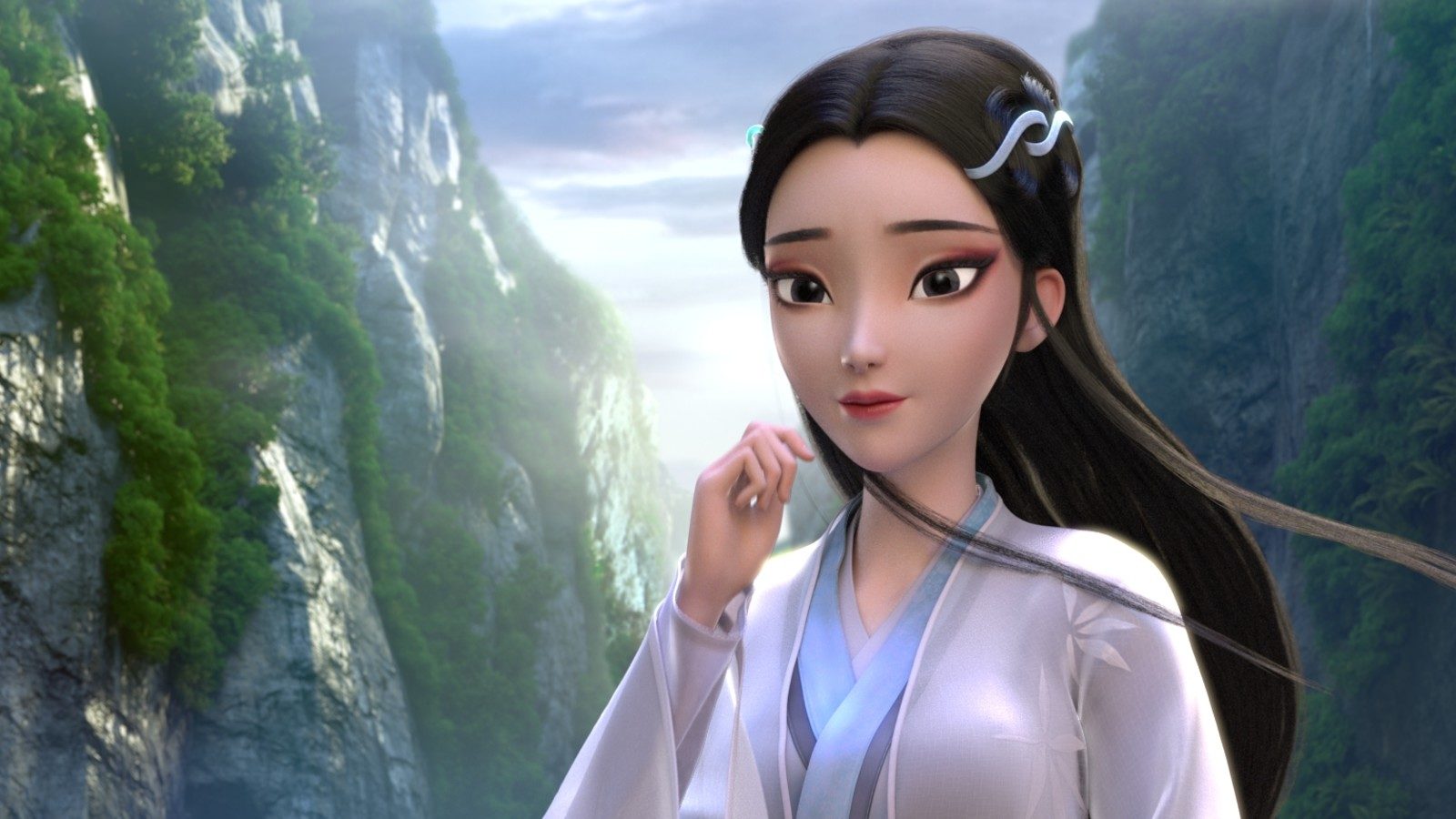
Blanca is a young assassin in white clothes. She is a snake spirit as the ‘White Snake’ and is able to assume human form, but she can’t achieve her goal of immortality. The answer to her goal of immortality lies in a memory of centuries ago, which she cannot recall. Her sister Verta, who is a ‘green snake’ spirit, gives her a magical hairpin that allows her to go back in time to the Tang Dynasty to get her answer.

Back in time, Blanca finds herself waking up in a village. She is surprised to learn she’s in what’s called ‘Snake Catcher Village.’ She comes across a handsome villager names Sean and his dog DuDou. Sean rescued her from a rock by the waterfalls. She falls for Sean, but is unaware that Sean is a snake-hunter. He has been ordered to hunt snakes for the Dark General and the Little General as they believe the snakes hold the key to supreme power.

Soon Sean faces an attack from a snake demon. Blanca stops the demon, only to learn it’s Verta. Sean is surprised and Dudou is convinced she’s a demon. Sean is convinced Blanca is not a demon, despite all he knows about her. Nevertheless Verta reminds Blanca that her true nature will come out when there will be a battle between the snakes and the Dark General’s army. Soon Sean learns who Blanca is as she assumes snake form. Foxy Boss tells Blanca a terrible secret about being a ‘demon:’ gods, people, and even other demons want to kill you.

Will Sean still love Blanca? There will be a battle between the snake catchers and the snake spirits very soon. The Snake General wants Blanca to be extinguished since she wants to defy her snake spirit. Blanca is heartbroken and feels she’s doomed to her demon spirit forever, but Sean sees it in his heart to love Blanca and see her for who she really is. The film ends with a battle in thrilling fashion and in a romantic mood.

This film is a 3D animation big-screen adaptation of the traditional four-chapter Legends Of The White Snake. What I liked best about the film is that the film doesn’t just present a good eye-catching drama, but it also possesses a lot of elements of Chinese culture and Chinese mythology. The imagery of animal spirits within a person is very common in Chinese storytelling and Chinese folklore. I’m not familiar with all of Chinese folklore but I can see a lot of familiar traits of it in the film. Especially the animal spirits that exist in the humans. The film does it in a very entertaining and a very mesmerizing way. The 3D animation doesn’t hurt it at all. In fact it makes it very eye-catching and even brings the audience into the story.

The film appears like a common Chinese fable meant to tell the story of bad and good. However the story is also about rejecting a destiny all for the love of a man. She was a snake spirit; he was a snake hunter. It shows how the heart can win over a person even if they are destined to be something else. The film is mostly a drama and the film succeeds in being a dramatic story. However there are some humorous moments. Most of the humor comes from Dudou, especially after he’s able to speak. It does seem like a must to have some humor in an animated film. Kids will be watching. The film doesn’t seem to get as suggestive as parts of Children Of The Sea does, but there are some suggestive scenes. The story tries more to capture the essence of love between the two. Nevertheless the suggestiveness and the violence in the film leaves me thinking this will get a PG rating.

This is an excellent film done by Light Chaser Animation. Excellent job by directors Amp Wong (credited as Huang Jiakang) and Ji Zhao. Amp has animation credits with doing the Green Lantern series. Zhao has more credits in doing editorial work in film and this is his first direction of animation. Here the directors and the Animation studio deliver a great, colorful eye-catching story that’s a delight to watch and will capture your imagination. The story by first-time scriptwriter DaMao is also excellent. It captures the story and the essence of Chinese mythology well while giving an ideal story for big-screen animation.

The vocal talent is also there. Zhang Zhe did a very good job at making Blanca sound mystical. Yang Tianxuang was also good at making Xu Xuan sound as romantic as he looked. He Zhang was great in adding the humor to the film with DuDou and Zheng Xiaopu was great at bringing out the deviousness of Foxy Boss. The music from Guo Haowei and the songs sung by Sean are also a delight to hear and add to the film’s mystique.

It’s interesting to note that the White Snake cost 80 million Chinese Yuan (roughly $11.4 million US) to make but made 447 million Yuan (about $63.9 million US) in China alone. It will be released in North America starting only with Los Angeles on November 15th and in limited release starting November 29th. English dubs will be in the release as Stephanie Sheh will be the English-language voice for Blanca and Paul Yen will voice Ah Xuan or Sean. Having seen the film in Mandarin with subtitles, I would see the English-language one, but I would try to see which one in more magical. Also those who watch the film when it comes out, I highly recommend you stay to watch the credits. Yes, there is a scene in between the credits featuring Foxy Boss that leaves you convinced there will be a sequel coming out. In fact the Mandarin title of the film means ‘White Snake: The Origin.’

The White Snake is a film with a lot of beauty and intense thrills, but it also has some humor and passion. It succeeds in doing what an animated film should do and make you escape into another world.

And that does it! There wraps up the last of the films I saw at the Vancouver International Film Festival. I will be posting my wrap-up blog very soon.

VIFF 2019 Review: To Live To Sing (活着唱着)

to_live_to_sing
To Live To Sing is of a local Chinese opera troupe trying to save itself from gentrification.

I accidentally came across To Live To Sing when the virtual reality show I wanted to see was in a venue with a low capacity. I’m glad I saw it.

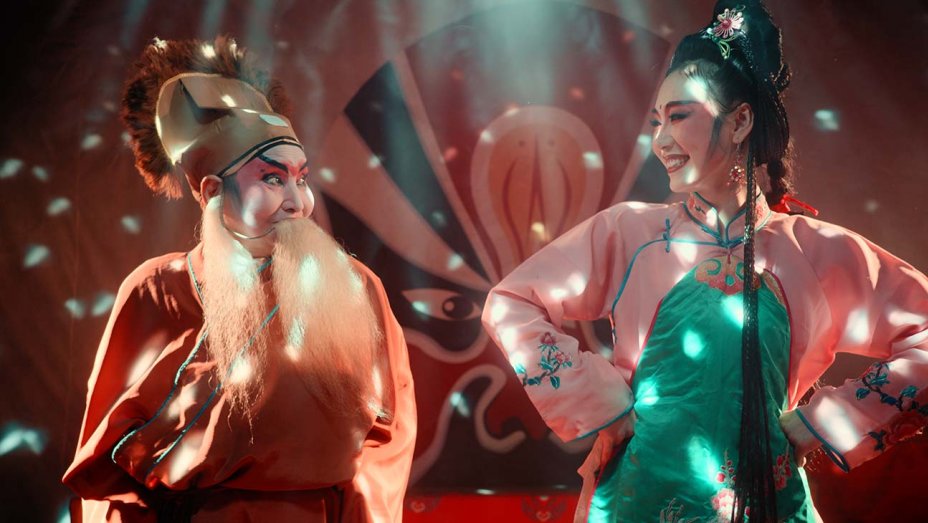
The film begins with a show of local performers in a Chinese city. The show starts with a modern fan dance by schoolgirls. It’s then followed by the Jinli Sichuan Opera Troupe: a local troupe that performs traditional Chinese opera. Right after the show, the opera troupe goes back to their own end of the city where they put on their own daily show. They perform every day at the same time at the same small theatre and entertain the same local crowd they’ve charmed for years. They rehearse well and they get along mostly fine. They have their own disputes on how to do something artistically, but it doesn’t last long. The Troupe is led by Zhao Li whom oversees everything. Her niece Dan Dan, who was orphaned at a young age and raised by Zhao, is seen by Zhao as the future of the troupe as most are aging.

Things are changing in the area they live. A lot of old homes are being crushed under government orders in order to build new developments. The theatre is under threat. This will not only mean the end of the theatre but the end of the opera troupe too. Zhao is frustrated as her theatre doesn’t attract crowds big enough. The others are worried too, but they try to make plans fearing the worst. Dan Dan however sees this as a breakthrough moment as she always dreamt of being a pop star instead of being confined to an opera troupe where she only gets paid 10%. During the time of frustrations, Zhao notices a dwarf in Chinese opera wear. She tries to spot him out, but he runs away.

Zhao is trying to negotiate with the government about keeping her theatre. However she knows it will be uncertain due to the small crowds that come to her theatre. Zhao is very forbidding of any modernisms that come to the theatre. She is strict on tradition. Then one night when she’s out, she notices the dwarf. She tries to follow him but loses focus of him. She is by a night club and she is drawn to the music. Then the announcer announces a singer for her first performance. It’s Dan Dan, and in a showy dress. Dan Dan notices Zhao in the crowd and can’t sing. The two have a fight outside where Dan Dan walks off furiously. The following day, Zhao confessed to Dan Dan that she always saw her as her daughter. Dan Dan becomes more committed to the troupe.

Zhao has another encounter with the dwarf and the dwarf takes her to a restaurant. There she sees one of the men negotiate a future job deal. Feeling the threat harder, Zhao decides one day to break with tradition and do a show that fuses modern with traditional. The troupe is welcoming of it. They perform the show with the mix of modern and traditional. The crowd loved it, but Zhao notices the spirit of the dwarf as it takes her to a mysterious land of Chinese art and culture.

Despite the audience pleased with the performance, Zhao can’t lose focus as an official from the party will be attending a show to see whether to keep the theatre up or not. They get a chance! However it’s a very slim one as the areas nearby are being crushed. The night before, Zhao has the same fantasy of the dwarf taking her to that land. Then the day of the show. The audience is ready. The players are ready, but the official is not to be seen. There has to be a wait and it’s making the crowd impatient. Then the official finally arrives and they are able to put on their show. Just as the show is happening, Zhao is again taken away to that imaginary place. The show she’s in is a dazzling trip of the imagination, until the character played by Dan Dan is stabbed. It all falls apart.

We then learn that the official decided to have the theatre removed. The troupe is heartbroken, even though some talk about plans of what to do after. The next day where there’s no show, members of the local audience show up and wonder why know show? The film flashes five years later with Zhao and Dan Dan returning to the same spot and what’s become of it. They see the development and the ruins. However Zhao gets back onto the stage for one last performance.

The film is a common story about art attempting to stay alive. The film also touches on the subject of gentrification. We see it all around us; old buildings being crushed for new developments with big profits in mind. I see it a lot in Vancouver. Here it shows it happening in the People’s Republic of China. In most countries, they have the freedom where they can come bring this issue up to the government. Not all chances work out successfully, but they’re still given a fair chance. In China, you’re chances are very limited with a chance that’s slim to none. When the government says it will happen, it will happen. Zhao was lucky to have that one chance where she could prove to the government the importance of her opera. It was unsuccessful but she still had it.

The film also showed another aspect or battle. It also showcased the battle between traditional art and the more modern art or entertainment that’s the call of the day. Without a doubt, Zhao is a purist of the traditional Chinese opera and starts off as forbidding to the new ways and the new sounds. We should not be surprised that she would be furious if she saw Dan Dan become a contemporary pop star. Despite her belief in traditionalism, she does convince herself to welcome the modern sounds and even mesh it into the traditional opera. We see that a lot in many countries of mixing traditional or classical with the modern. It’s actually very successful in many countries. It proves to be a success here too. However the film sends a message that even with modernisms, the traditional should not be lost. It should still be admired and celebrated.

One thing the film tried to make clear with the story is of the spirits of art and how it exists inside Zhao. You may notice there are many times a dwarf in opera garb is in Zhao’s vision. The dwarf leads Zhao to many images all telling the story of what will happen. However the dwarf doesn’t always lead Zhao to images of a happy ending. That image where the opera comes alive in Zhao’s dreams but leads to the stabbing of Dan Dan is what would send the message of the bad fate of the opera troupe and its house. However it’s right at the end where when it appears all has been long lost at the end, it’s not. The spirit of art still remains even in the ruins.

This is the first film I’ve seen from Chinese-Canadian writer/director Johnny Ma. Living in Vancouver, he’s able to do Chinese stories that would not be the most welcome in the People’s Republic. His first feature from 2016 Lao Shi was about battling bureaucracy and legal manipulation in China. The film was shown at the Hong Kong film festival but not in Shanghai. This film was shown in both Shanghai and Hong Kong. It doesn’t depict the government that bad here. Instead the focus is on art and its attempt to survive. Johnny does a very good story and is good at sending a message, but it is a bit uneven in its storyline. The film also has a real opera troupe as its cast and they all play fictional versions of themselves. That’s another quality to the film. It does make you wonder how they’re doing in their home country. The actors all did well by being themselves when they had to, performers when they had to, and actors when they had to. Zhao Xiaoli and Gan Guidan stood out the most as the two did show a close chemistry in the film that made the aunt/niece relationship look real.

To Live To Sing is a story of artistic ambitions with a bittersweet ending. However it’s a good and colorful, albeit imperfect, reminder that art will triumph.