VIFF 2023 Review: The Invention Of The Other (A invenção do Outro)

The Invention Of The Other is an intriguing look at a mission to reunite lost members of a Brazilian indigenous peoples.

One thing about documentaries is that they give an intriguing look at people from various parts of the world. The Invention Of The Other is an intriguing look at Indigenous Brazilians and how they try to continue to live their way of life at a time of increased modernization.

It’s 2019. The Brazilian government has organized a mission. The mission is conducted by FUNAI: a Brazilian state protection agency that works with Indigenous rights. The mission, led by Bruno Pereira, is the most complicated mission in decades. The mission is to go into the heart of the Amazon rainforest, make contact with the Indigenous peoples, provide medical services, and locate and reconnect separated family members from the Korubo tribe, an isolated group. The Indigenous leader who is to be reconnected with his people is named Xuxu. This mission will take them along the borders of Brazil, Peru and Colombia.

This will not be an easy task. There was one previous mission where it was attempted and many who participated were killed either by loggers, miners, fisherman or drug traffickers. Reuniting with his people will not be easy for Xuxu as he has become quite modernized in many ways. He is still able to do things in traditional Indigenous manner like hunt food, but there’s concern his many years in developed society could lead to strain. He talks of eating Brazilian food of how it’s good and it takes some getting used to. He often speaks with Bruno as he’s the one Brazilian who best knows how to speak Korubo. During the trip, Xuxu sings his native songs on a daily basis.

The trip takes them along the far reaches of the rainforest along the Amazon River. Over time, it becomes obvious the Indigenous people never lost their original hunting skills. The then have to go into the jungle in order to meet up with their lost people. In the jungle, they face dangerous obstacles like trees and wild animals. Finally Xuxu and the other men reunite. It is a warm unite. His fellow tribesmen welcome him well with a dance and a ritual. Many thought he was dead. Over time we learn that Xuxu’s singing was a way to keep some connection with his people. Near the end, Xuxu tells his people of the medicines coming and prepares them for it. The film ends as a boat with cases of medicine arrives. We also learn at the end Bruno Pereira was murdered along with British journaist Dom Phillips during a 2022 expedition.

In recent decades, talk of indigenous rights has been a hot topic not just in Canada but in many nations in the Americas. The last few decades have seen a lot of achievements in fighting injustices and dismantling many oppressive systems. The national governments appear more cooperative than ever to help them along the way, but they definitely fall short. It’s either a case they don’t make it enough of a priority that they should, they simply don’t know how to do it right or they’re just not even trying to do it right.

As we watch the mission, it becomes less of a story of people trying to make their way into dangerous territory and more of a study of peoples. We learn of the Indigenous peoples and of how they live, how they hunt, how they develop a community and a family. These are people whom we’ve often dismissed as too primitive but as you look closer, they have a set of values. You see it in their families and of how Xuxu is welcomed back into the community as a brother. They have family relations and community relations that sometimes make you wonder how on earth did we as people isolate ourselves from others? How is it we can’t treat our own family and value family members the way we do? They may not have lost their primitive ways but they’ve also haven’t lost their ability to relate to other people or keep a family bonding we never bother to give.

The thing about this film is that it does a very good job of showing the peoples, the values they live by, how they live their lives and how they make peace. The problem with this film is that it appears too drawn out. There were a lot of scenes where it appeared it just took longer than it should in some moments. Even the whole running time of almost 2 1/2 hours will make some people wonder if it was really necessary to have the film that long. I’m sure the filmmaker would want to capture the essence of many of the moments, but you wonder if all that time on that scene was really necessary?

This is a good documentary form Bruno Jorge. The Indigenous people are a common subject in Jorge’s documentary. In this documentary, he takes us on a rare mission where we don’t know what will happen next but we discover the story along the way. He lets those in the mission and the cameramen who follow the various people around do the storytelling. This documentary tells the story of the mission and of the people. They tell of ways that refused to be lost to modernism and of a set of values owned by a people that should make us envious. The problem of the drawn-out scenes don’t take away from the quality of the documentary but they do drag various scenes out. It’s nice to showcase their rituals and their habits and their reunions, but the dragged-out scenes make it feel like it’s overdone. Despite this, this documentary has won an a Jury award for Best International Documentary at the Docville Film Festival in Leuven, Belgium.

The Invention Of The Other is a unique look at a peoples and the difficult mission created to reunite them with others and to bring medicines to them. The problem is it’s too long and feels drawn out. Worth seeing, but it shouldn’t be this long.
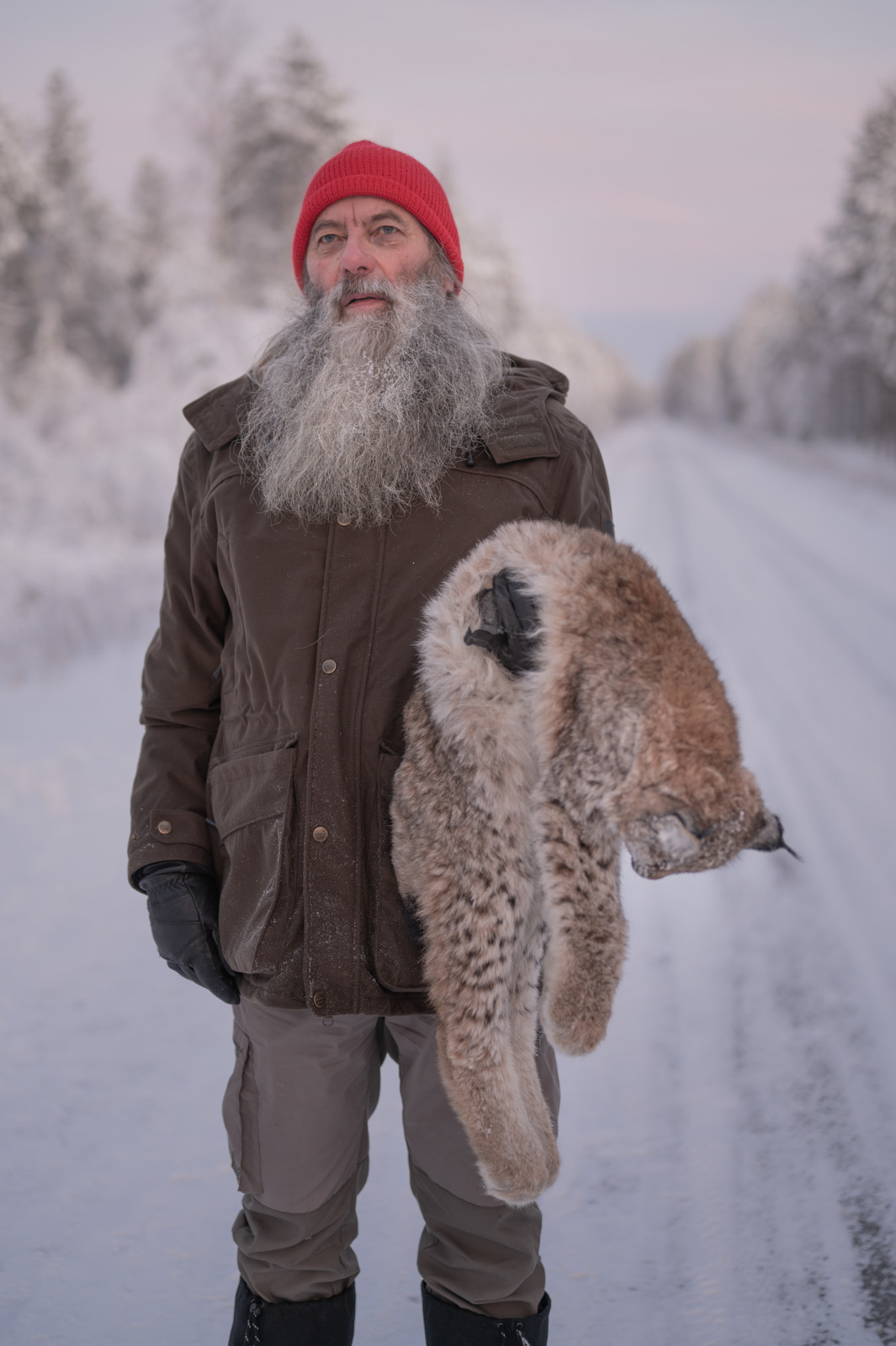
VIFF 2023 Review: Lynx Man (Ilveskuiskaaja)

Finnish hermit Hannu and his fascination with the endangered Eurasian lynx is the subject of the documentary Lynx Man.

The documentary Lynx Man showcases a man who you’d first think to be an eccentric. Over time, you’ll see his work is less of a hobby and more of a mission.

The film begins with an old Finnish man finding a dead Eurasian lynx near the street. He picks it up and takes it with him. Soon we learn this man’s name is Hannu. This Eurasian lynx is not just any animal he came across. This is an animal he has studied. But how could he study them? He lives in a house in the forest completely away from all people?

Over time, we learn that Hannu has set up video cameras in the wild in various set-ups. He has one by a mirror near a pond. He has one by a tree where he has a hanging rooster. He has many other cameras set up in the wilds surrounding his little hut. Over time, we learn the videos he takes of these lynxes are observances of their behavior. They are a study in how they behave, how they hunt, how they lead their children. One could say that Hannu knows how to study the lynxes well.

There’s more than meets the eye. Hannu’s filming does more than just document the lynx’s behaviors. Hannu can also differentiate between the lynxes. He can recognize and identify each one. He knows the males from the females and he gives names to the ones he distinguishes. He even knows their behaviors. He talks of “Joseph” and about how he knows his way and how he lures females to his area. He talks of another he names “Grumpy Girl.” He even talks of the other animals in the area like the deer, the rabbits and the birds that could end up being the lynx’s prey.

We also learn about Hannu. He has become a nature man ever since he asked his doctor about going outdoors just once for the sake of his mental health. His love for the outdoors never stops. Even with his sauna habits and playing music to himself, he occasionally goes out and hikes and skis. Sometimes he wears a lynx mask on and does some bizarre dancing like a ritual to nature. The filming of the lynxes is almost like his connection to nature. It’s almost as if he has made friends with these lynxes that he’s never come face to face with. Sometimes we sense the lynxes know about him.

Soon we learn about a skin disease on one of the lynxes. He calls one of the veterinarians about the skin disease found on their tail and learns it’s a contagious disease. Soon he finds the lynx dead. Hannu has pictures of the deceased lynxes that he has known. It breaks his heart, but he has an environmental battle to deal with the Finnish government.

It’s easy to think of Hannu as an eccentric person. This man who lives in a remote area of northern Finland and has a seemingly-bizarre fascination with the Eurasian Lynx will get you thinking this way at first. Over time, we see this fascination less bizarre and even gain an appreciation for it. It’s interesting seeing the various camera arrangements Hannu does and of the various videos Hannu achieves from what he does. Even though Hannu never comes face to face with them, he develops a friendship and a closeness with them. As we watch this film, we feel it is a good thing that he does so. Not mentioned in the film is that Hannu is a divorced man who withdrew from the work force after a work accident did a lot of physical damage to him. When you know that, it seems like nature is his one connection to the outside world. He never comes close to the lynxes but the videotapes and his studying of them and giving them names gives him a connection of some sort.

The story presents itself as Hannu and his lifestyle. We see him relaxing in t he sauna, we see him eating, we see him in the various ways he sets up his videotaping of the lynxes, we see his finished results and learn of the names he has for them. Near the end, we see why he does the filming. The northern area of Finland has been threatened with expanded urbanization. We see how a highway threatens the habitats of the lynxes. Modernization and urbanization threatens the ways of a lot of species all over the world. The Eurasian lynxes have proved in numbers since their threats of extinction were brought to light but they still face new threats as time passes.

The best part of the documentary is that it takes us into Hannu’s world. As he becomes fascinated with the lynxes and their behaviors, we share in that fascination. When he sets up the cameras in their unique poses and their unique concoctions, we’re tempted to see what the end result will be. When we see the footage played, we also get curious on how the lynxes react, Do they play along with Hannu’s concoctions? Do they wreck one of the cameras? Do any of the lynxes become prey or prey on other animals? Anything can happen in the wild. The film is slow, but the slowness helps your intrigue in these lynxes grow as well.

This is a great film from documentarian Juha Suonpaa. Suonpaa lets Hannu tell and show his own story. Suonpaa shows how Hannu studies the lynxes and befriends the lynxes. In many ways, he shoes how Hannu has more knowledge about these endangered animals than the best zoologists. Suonpaa also shows Hannu’s habits like playing music, exercising and spending time in the sauna. Sometimes it appears his sauna time is to get out his personal frustrations. Suonpaa does a great job in making an intriguing documentary about a person one would either not be intrigued with or would want to judge as an eccentric.

Lynx Man doesn’t just show you a man, his studies of a certain animal and his mission to do it. The film also succeeds in making the viewer appreciate his work and even get a feel for his passion. That’s what makes this documentary unique.