World Cup 2014 Preview: Group B

The funny thing about the World Cup group draws is its unpredictability. They try to make things easier by designating seeded teams from all the others to give better parity only to end up with a crazy combination. Group B has a combination crazy enough to have the very first match a rematch of the exact World Cup final from 2010! Also just as surprising is that Group B has four teams that are very talented but it’s not enough to call it the ‘Group Of Death.’ I think there was more than one ‘Group Of Death’ for this World Cup. It’s a wonder why Group B didn’t get that label.

Despite these oddities, Group B is loaded with talented teams and should make some exciting play. Here’s my rundown of the Group B teams:

Spain Fixed-Spain (1)- Now seems to be ‘The Reign of Spain.’ Spain has always been known to be full of football talent but the team hardly ever came together at World Cup tournaments of the past, often performing below people’s expectations. This would cause Spain to be known as ‘football’s greatest underachievers’ for a long period of time. This all changed when Vicente del Bosque was appointed coach of Spain’s national team in 2008. Since then, Spain’s magic came about. It all started with winning Euro 2008, then surprising everybody including their compatriots with a win of the 2010 World Cup. Spain’s long-awaited legacy continued with a win at Euro 2012 and becoming the first team ever to successfully defend their European Championship. Spain’s success continued as they played without a loss until the finals of the Confederations Cup where they lost to Brazil 3-0. Spain continues to be brilliant only losing one game since, 1-0 to South Africa. Spain just recently beat Italy 1-0 in a friendly. They appear poised to repeat in Brazil. It’s the next month that will define things.

Netherlands Fixed-Netherlands (15)- While Spain is no longer ‘football’s greatest underachievers,’ the Netherlands have the misfortune of being seen as the greatest team in the world to never have won a World Cup. Three times a finalist, never a winner. Oranje is waiting for that day to prove themselves the best in the world. However it will come a t a challenge. Back during Euro 2012, the Netherlands performed one of the biggest chokes in their history by losing all three of their Group Stage matches. 2013 was a year they really wanted to make up for things and they did well by not losing a game. However failing to win all four of their friendlies since World Cup qualifying including a 2-0 loss to France shows that they might not be ready for this World Cup. This is unfortunate for head coach Louis van Gaal as he would like to leave team Netherlands on a positive note. Nevertheless it could be that Oranje is just ‘playing possum’ and may come alive in Brazil.

Chile-Chile (13)- Chile is another team full of talent that has yet to prove itself in a big way. The team that is affectionately called ‘La Roja’ by its compatriots and supporters have only gone as far as 3rd at the World Cup, and that was back in 1962 when they hosted it. In recent years, Chile has been better at its consistency. They’ve qualified for the 1998 and 2010 World Cups and finished in the Round of 16, the only other two times they’ve made it past the Group Stage. Chile has had a great play record since 2013 in both friendlies and World Cup qualifiers. They’ve shown they can challenge some the best teams in the world, if not defeat them. They beat Uruguay 2-0 in a World Cup qualifier last March, tied Spain 2-2 in a September friendly and even beat England 2-0 in a friendly in November. However they have lost to Brazil 2-1 back in November and lost to Germany 1-0 this March. Most people are predicting Spain and Netherlands to be the two advancers from Group B. There could be a Chilean surprise.

Australia-Australia (59)- The Socceroos were the surprise of the 2006 World Cup. Their 2006 advance to the Round of 16 led them to be transferred from Oceania’s continental federation to Asia’s. However their prowess has taken a bit of a dip. They didn’t advance past the Group stage in 2010 and have struggled in play for the Asian Cup. The 2013 and 2014 play seasons have been unimpressive including 6-0 losses in friendlies against both Brazil and France. In 2014, they’ve had a 4-3 loss to Ecuador and a 1-1 draw to South Africa. 2014 could be a further learning experience for Australia.

So now my prediction for the two advancers from Group B: Spain will definitely advance but it will be tight between Netherlands and Chile in which I feel Chile will be the one moving on.

STADIUM SPOTLIGHT

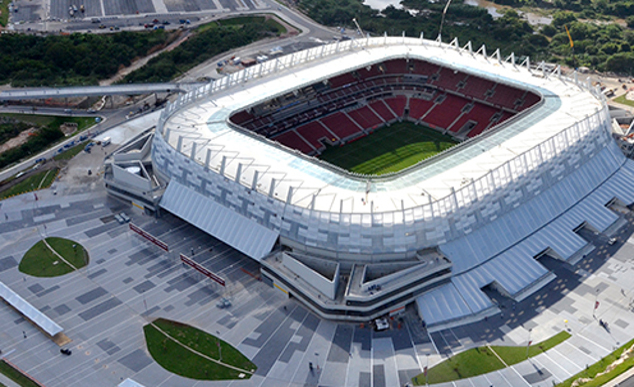
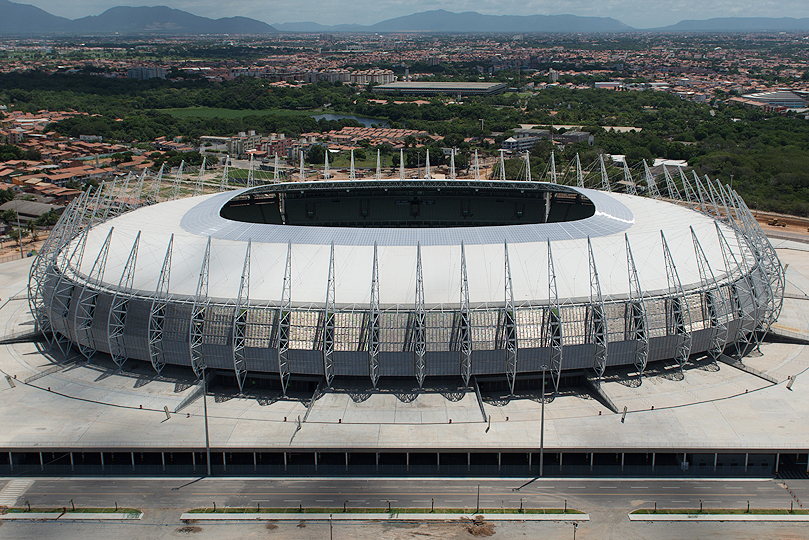
More stadiums in focus. Like the stadiums focused in my Group A review, these two will also host four matches, all in the Group Stage. And both with host a Group Stage match for Group B. I also want to remind you that in my Stadium Spotlight, I won’t completely compliment the stadiums. In fact I will make aware of some of the glitches, especially since glitches in the construction and/or upgrades of stadiums have made big news leading up to the World Cup. And these two have been two of the ‘bad news bears.’ So without further ado:

-CUIABA: Arena PantanalPantanal

Year Opened: 2014

World Cup Capacity: 42,968

World Cup Groups Hosting: B, C, F, H

There’s been a lot of concern of the readiness of many of the stadia set to stage the World Cup. Cuiaba is one stadium that’s been causing some of the headaches. One of the headaches happened back in October when a fire caused structural damage, which has since been repaired. In fact Cuiaba needed a second World Cup warm-up match on April 28th to prove its readiness. FIFA was pleased this time around. Nevertheless it didn’t guarantee the stadium was 100% ready. Work returned to the stadium shortly after and on May 9th, a worker was killed when he was electrocuted while working on the installation of a telecommunications network. Work was halted temporarily after his death.

Ready or not, Arena Pantanal will be the stage for four Group Stage games. After the World Cup, the Arena is to be reduced in capacity and to be the home venue for both Cuiaba and Mixto Esporte Club.

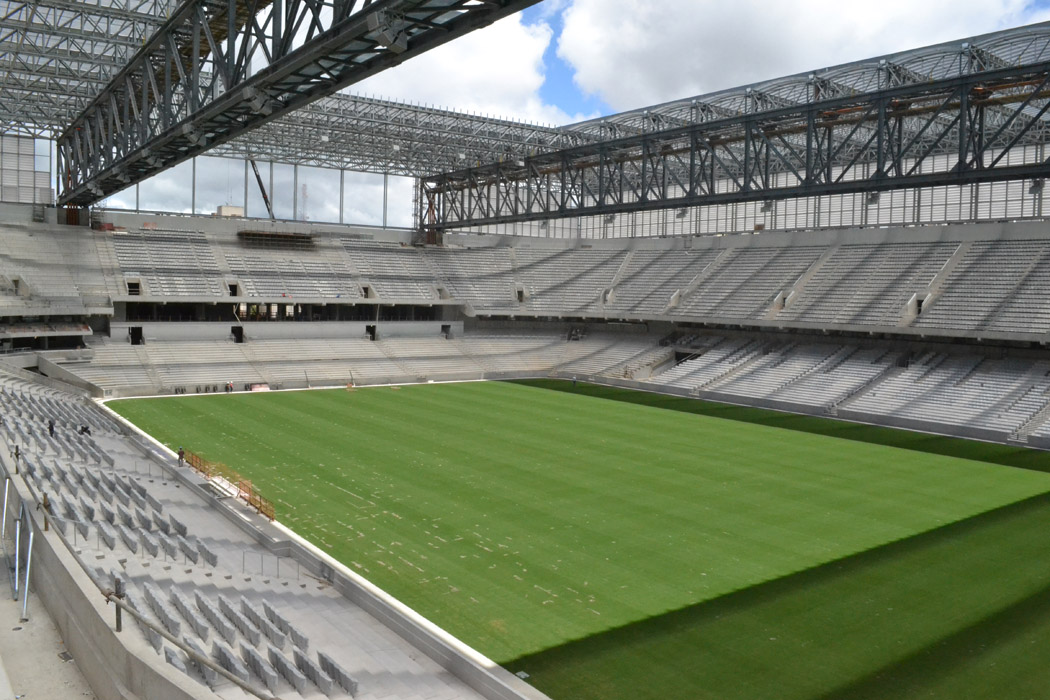
-CURITIBA: Arena da BaixabaCuritiba

Year Opened: 1999

World Cup Capacity: 41,456

World Cup Groups Hosting: B, E, F, H

Not all World Cup stadium problems are about the new stadiums. Existing stadiums have had their own problems too in terms of renovations or upgrades. Curitiba’s Arena da Baixaba is one stadium that had its issues. The stadium had plans for upgrades like extra seats and a retractable roof. The stadium suffered a setback in October 2013 as work was suspended  on the orders of a Brazilian labor tribunal due to numerous and serious safety breaches. An extra headache came in January 22 of this year when FIFA’s General Secretary visited the Arena and said Curitiba could be dropped if significant improvements in the renovations didn’t take place within a month. FIFA decided to keep Curitiba the following month. Recently there was some good news about the Arena. Valcke visited the Arena again on May 22nd and this time he praised it for being a ‘top-class’ venue.

The venue is expected to have its seating reduced once again to its usual 30,000 and return to being the host venue for Atletico Paranaense.

So there you have it. Another Group Stage group summary and two more stadiums in the spotlight. More World Cup reviews coming.

World Cup 2014 Preview: Group A

Those of you that have known my writing over the years have  known that when I do soccer blogging of major events, I do a rundown of the teams that will be competing. Some of you may have guessed I’d be doing it again for the World Cup, and you are right. However I’m doing a separate blog for each of the eight Group Stage groups. So much to preview, so little space. With this being my first blog of the upcoming World Cup, then it’s no question the first blog will be done on Group A. For the record, my summary of  the teams will be done in their drawn World Cup order rather than their FIFA ranking of May 2014. FIFA ranking of that month will appear in brackets.

GROUP A:

Brazil-Brazil (4)-No other country has as much of a football legacy as Brazil. Brazil is the only country that can boast competing at all nineteen past World Cups and the only country to have won the World Cup five. The World Cup arena has been an excellent showcase of Brazilian football at its best and it has inspired the world around. However we’ve also seen Brazil choke at times, especially in recent competitions. Just ask France. They’re known as Brazil’s ‘achilles heel’ and have handed Brazil some surprising defeats including the 1998 world Cup final and the 2006 World Cup quarterfinal. In both cases, Brazil was the defending World Cup holder. Brazil’s recent chokes were more humbling as they choked to the Netherlands in the 2010 World Cup quarterfinal and at the 2011 Copa America, they lost their quarterfinal in what was Brazil’s worst-ever Copa America performance.

Brazil can’t take any chances at this World Cup more than any World Cup. They’re the host country and all the world expects them to win. They especially want to rid their compatriots of the 1950 ‘Maracanazo,’ which I will talk about in another blog. Yes, Brazil may have won the World Cup more than any other country but of the eight countries that have won the World Cup, Brazil and Spain are the only ones to fail to do so as host country. Brazil hopes to end this ignominy this time around. After their Copa America debacle, they sacked their coach in favor of Luiz Felipe Scolari who helped coach Brazil to its last World Cup in 2002. The return to Scolari has paid off as Brazil won last year’s Confederation Cup defeating reigning World Cup holders Spain 3-0. Since the return of Scolari, Brazil’s overall record has been excellent losing only twice: to England and Switzerland. No doubt they’ll face huge pressure but the Confederations Cup proved that Brazil is back in action and ready to deliver.

Croatia ficed-Croatia (20)- If you were to do a pound-for-pound rational of football teams, Croatia should rank amongst the top. Croatia is one of only two countries in FIFA’s current Top 20 with a population of less than 5 million . Uruguay being the only other country. Ever since their independence in 1991, Croatia has proved itself a formidable force in football, especially at the 1998 World Cup where they finished third. However that was the last World Cup where they even advanced past the Group Stage. 2002 and 2006 appearances didn’t pan out and a failure to qualify in 2010 almost made the Vatreni’s glory a thing of the past. However Croatia is looking to mount a comeback. In 2012, they signed on a new president in Davor Suker, himself a former great as the top goalscorer at the 1998 World Cup. The role of manager was replaced by former team captain Niko Kovac. The team successfully qualified for the World Cup. They also have a good mix of talent from veterans like Darijo Srna and Luka Modric and fresh young talents like Dejan Lovren and Mateo Kovacic. Croatia is one country that’s very capable of causing a surprise.

Mexico-Mexico (19)- Mexico is without a doubt the best team in the CONCACAF as far as legacy goes. No other North American team has qualified for the World Cup as often. However its greatness has appeared to have alluded them in the past couple of years. They failed to advance past the Group Stage of last year’s Confederations Cup, they lost to Panama in the semifinals of the CONCACAF Gold Cup and almost missed  qualifying for the World Cup in a qualifier against Costa Rica where they trailed 1-0 after 80 minutes. Two goals in the last 10 minutes kept them alive where they’d go on to beat New Zealand for the wildcard berth. Mexico has made efforts to make their near-loss to Costa Rica a thing of the past. They have not lost a game since but they have come across some tight ties like a scoreless draw against Nigeria and even a 2-2 tie against the US last month. Mexico hopes to be ready for Brazil. Miguel Herrera is one tough coach who favors home grown talent over talent from European leagues. That could be the factor that could either spell success or failure. Only the World Cup stage will decide that.

Cameroon-Cameroon (50)- Older people may remember Cameroon as the team that came from nowhere in 1990 to win 1-0 against defending champions Argentina. Cameroon charmed the world that year by reaching the quarterfinals and becoming the first African team to do so. However their glory appears to be a thing of the past. Cameroon has not advanced past the Group Stage since. This time around doesn’t show too much promise. They do have a German coach, Volker Finke, and have good talent in Samuel Eto’o and Alex Song but they do face a heavy battle in group play. Already this year, they’ve had mixed results with a 5-1 loss to Portugal and a 2-0 win against Macedonia. Nevertheless it’s too soon to judge. I’ve seen teams where nothing was expected of them and they’d advance far.

STADIUM SPOTLIGHT

This is a new feature. This is where I get to focus on the various stadia that are hosting the World Cup. I figure the arenas are worth talking about. Brazil has twelve stadia that will facilitate for the World Cup: seven just opened within the past year. The crazy thing is how the Group Stage play is organized. Usually in most cases at a World Cup, the country would have organized certain Group Stage groups playing at a set stage of stadiums. In Brazil’s case, a country with twelve stadiums may have three stadiums in cities close to each other to host the Group Stage games of two groups. Division that simple. Brazil has done it weird. All twelve of the stadiums will hold four Group Stage matches but they will be matches for four different groups. Additionally, all six of the Group Stage games for each individual group will be played in six different stadiums, and not all will be that close by. That will mean a lot of traveling around for the 32 teams, especially in a country of over 3 million square miles.

It’s confusing but hopefully it won’t interfere with the play as badly as the vuvuzelas did at the last World Cup. As for stadiums, Brazil has twelve good stadiums. Five are old and traditional but renovated in time. Seven are new built especially for the sake of hosting the World Cup. Here I’ll give you my first taste of my Stadium Spotlight. Note that each stadium I show in my Stadium Spotlight feature will be a stadium that will contest Group Stage matches for each respective group. These two I will focus on will host Group Stage matches in Group A. So without further ado, here are the two stadiums in focus:

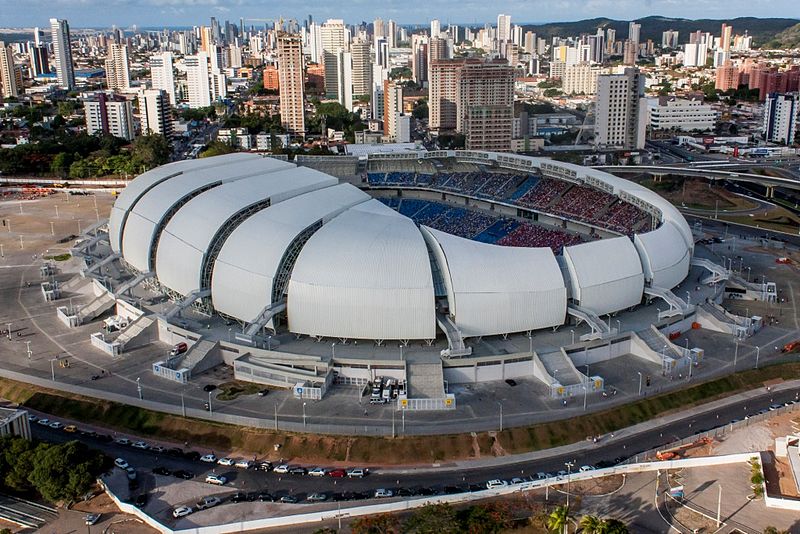
-NATAL: Estadio das DunasDunas

Year Opened: 2014

World Cup Capacity: 42,086

World Cup Groups Hosting: A, C, D, G

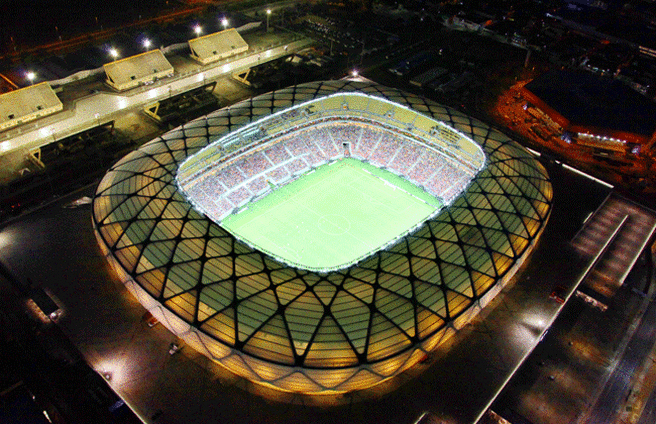
One of seven new stadiums built especially for this World Cup, the most unique thing of the stadium is definitely the roof. While Brazil had made headlines with difficulties of building and completing stadiums in time for the World Cup, this stadium however earned praises from FIFA not just for the stadium itself but for development of areas surrounding the stadium which I will talk about later. This stadium finished in good time and officially opened this January. After the World Cup, the stadium capacity is to be extended to 45,000 seats and to be the stage of home games for both the America Futebol Clube and ABC Futebol Clube. The area surrounding the stadium has planned a shopping centre, commercial buildings, hotels of international standard and an artificial lake.

-MANAUS: Arena AmazoniaAmazonia

Year Opened: 2014

World Cup Capacity: 42,374

World Cup Groups Hosting: A, D, E, G

There was some criticism from England’s manager Roy Hodgson about Manaus hosting World Cup matches. He should watch his tongue as England will be playing the very first World Cup match of his group there, against Italy. This was one new stadium that actually was under question whether it would be ready for the World Cup. The stadium has been completed and was officially opened in March. The stadium has a full capacity of 46,000 and is to be the host stadium of Nacional FC after the World Cup, replacing the now-demolished Vivaldao Stadium.

And there you go. My first preview of the World Cup teams and stadiums. As for predictions, I’ll just settle for predicting the two countries that will advance past the Group Stage right now, and I predict it will be Brazil and Croatia.

Seven more groups and ten more stadiums to review before World Cup 2014 starts. Stay tuned for more.

2014 World Cup Group Stage: Luck Of The Draw

The stage was set Friday to decide the eight First Round groups for next year's FIFA World Cup in Brazil.
The stage was set Friday to decide the eight First Round groups for next year’s FIFA World Cup in Brazil.

You could say it took a lot to determine the 32 countries that qualified for the 2014 FIFA World Cup: thirty months, six confederations, 204 countries or teams, 820 matches, and a total of 2303 goals to decide the 31 berths up for grabs. Finally on November 20th, all thirty-one berths up for contention were all decided. However deciding the eight groups of four for the Group Stage was also another tricky matter. Yeah, just when you thought it would get easier.

Yesterday, the eight First Round groups were decided at the Costa de Sauipe resort in Bahia. It was broadcast live around the world. I myself saw the live telecast at 9am my time. The draw to form the eight groups for each World Cup involves a process with a lot of thought: four countries per group with continental separation. That would mean each continent other than Europe would have only one of their countries in a First Round group. Europe by means of fielding thirteen berths this World Cup would have a maximum of two countries per group. That’s always been the case since the World Cup expanded to 32 countries back in 1998.

The respective continent’s confederations contested their matches conducted their own qualifying format for deciding their qualifiers for the World Cup. There were even two countries that qualified via a ‘wildcard’ berth where they’d have to play a team from another continent twice. The thirty-two qualifying countries were all decided more than two weeks ago. Seeded teams which I will talk about later are in italics:

  • Host Nation: Brazil
  • South America: Argentina, Chile, Colombia, Ecuador, Uruguay
  • Europe: Belgium, Bosnia-Hercegovina, Croatia, England, France, Germany, Greece, Italy, Netherlands, Portugal, Russia, Spain, Switzerland
  • Africa: Algeria, Cameroon, Ghana, Ivory Coast, Nigeria
  • The CONCACAF (North and Central America, Caribbean): Costa Rica, Honduras, Mexico, U.S.A.
  • Asia: Australia, Iran, Japan, South Korea

That list of qualifiers does provide for some interesting notes. Australia has played for the Asian confederation (AFC) since 2006 because of its superiority in Oceania’s confederation (OFC). Also Spain, the defending World Cup nation, still had to play qualifying matches as the defending World Cup team no longer qualifies its own automatic berth: a FIFA rule in effect starting with the 2006 World Cup.

Dividing the groups into four teams of appropriate continental separation would include something else involved: a seeded pot. Host Brazil was already allocated to Group A: a FIFA regulation in effect starting with the 2006 World Cup. Each of the other seven groups would have to have one of the teams amongst the Top 7 of FIFA’s World rankings from October 2013. In order from 1st to 7th, they were:

  • Spain
  • Germany
  • Argentina
  • Colombia
  • Belgium
  • Uruguay
  • Switzerland

There always was a seeded pot for drawing groups for the World Cup that would involve a complicated system involving a multitude of ranks, previous World Cup places and other factors. This time around the seeding was just on that one FIFA ranking list. Sure, it was odd to see countries normally not amongst the top seeds like Belgium and Switzerland in the mix but finally creating a seeded pot was that simple.

The pots meant for continental separation amongst the groups were not that easy. One easy element was that Pot 3 consisted of teams from Asia and the CONCACAF: continents that both fielded four berths. As you could tell, the seeded pot consisted of three South American teams and four European teams. That’s where complications and confusions would arise as Pot 2 would consist of Africa and South America. Pot 2 ended up with seven countries since three of South America’s five berths were seeded teams. Pot 4 consisted of the nine non-seeded European teams. So how do you solve this problem of those pots with the continental maximums?

Yeah, explaining continental limits and parities is easy. Making it happen in the groups this year is the hard part. So FIFA under Sepp Blatter decided to make the following procedures to even it up:

  • Draw one European team from Pot 4 and place into Pot 2 for four even pots of eight with the teams assuming the first position of their group.
  • Draw from Pot 1 to decide the first teams for Groups B to H.
  • Draw amongst the four seeded South American teams and place the drawn out team in auxiliary pot  ‘Pot X’ for the sake of continental separation.
  • Place the European team drawn out of Pot 3 with the South American team from Pot X.
  • Draw from the remaining pots to determine the other qualifying teams.
  • After the Pot 1 teams were drawn, draw the positions of the teams of the other three groups as the draw goes group by group.

Yes, it’s hard to make sense. It’s hard to explain. And it’s hard to make it all work out. It’s not like the last World Cup where there were five seeded European teams and you’d easily have a European pot of eight. Nevertheless it was accomplished. The European team from Pot 3 that was drawn out first was Italy. The seeded South American team that was put into Pot X was Uruguay which was already drawn to Group D. That would mean Uruguay and Italy would both be in the same group. The remaining teams would also be drawn out evenly.

So after all that confusion and fretting, all the First Round groups were drawn out. The parity and continental separations took place as FIFA wanted it: maximum two European teams and maximum one team from the other continents in each group. So here are the eight First Round groups for the 2014 FIFA World Cup:

Group A

  • Brazil
  • Croatia
  • Mexico
  • Cameroon

Group B

  • Spain
  • Netherlands
  • Chile
  • Australia

Group C

  • Colombia
  • Greece
  • Ivory Coast
  • Japan

Group D

  • Uruguay
  • Costa Rica
  • England
  • Italy

Group E

  • Switzerland
  • Ecuador
  • France
  • Honduras

Group F

  • Argentina
  • Bosnia-Hercegovina
  • Iran
  • Nigeria

Group G

  • Germany
  • Ghana
  • Portugal
  • U.S.A.

Group H

  • Belgium
  • Algeria
  • Russia
  • South Korea

The group set-ups sure have gotten a lot of people talking. Some people have noticed that some groups are so tightly put together, it’s hard to declare the one group to call the ‘Group Of Death.’ Some are stating it’s Group D with Uruguay, England and Italy. Some are saying it’s Group G with all four of its teams being top contenders. Some are even saying it’s Group B with their very first match—Spain vs. Netherlands—a re-contest of the 2010 World Cup finalists.

Whatever the situation, all 32 teams have to be ready to face their Group Stage opponents and put their best foot forward if they want to advance and be the last team standing that wins the 2014 World Cup. The world will be watching from June 12th to July 13th. I myself will be doing group-by-group reviews on my blog in the weeks leading up to the start. Stay tuned for more action.

2013 Confederations Cup: More Than A Soccer Tournament

The FIFA Confederations Cup is as much of a pre-World Cup test event as it is a major international soccer tournament.
The Confederations Cup is as much a pre-World Cup test event as it is a major soccer tournament.

So 2014 has the World Cup and 2012 had the Euro. I guess that means 2013 will be devoid of big-time international soccer excitement, right? Wrong! 2013 is the year of the Confederations Cup, an eight-team competition held in Brazil. It’s good and important for a lot of reasons.

A TOURNAMENT GROWS IN SIGNIFICANCE:

The Confederations Cup is more of an intercontinental competition than international. Six of the eight teams that are competing here have earned their berth by winning their respective continent’s confederation championship. The only exceptions being the World Cup winner and the host country. That’s how the Confederations Cup is contested.

The idea of having a soccer competition of the best of the continents was an idea that evolved over 21 years. Actually the first attempt at such a competition came not with the participation of FIFA. It came through the royal family of Saudi Arabia through a competition called the King Fahd Cup. The first King Fahd Cup was contested in Riyadh, Saudi Arabia over five days in October 1992 and consisted of Saudi Arabia, which was the Asian Cup holder at the time, CONCACAF Gold Cup winner USA, African Cup Of Nations holder Ivory Coast and South America’s Cop America holder Argentina who won the Cup. The King Fahd cup was contested once more in 1995 and expanded to six teams: five continental cup winners and host Saudi Arabia.

By 1997, FIFA became involved and the King Fahd Cup had been renamed the Confederations Cup. This is the turning point with the Cup being contested the year before the World Cup and with the competition consisting of the eight teams through the qualifying format that still exists today. There were however two exceptions as two second-place teams from their continent’s championships competed: Czech Republic because Euro winners Germany declined to participate and United Arab Emirates because the hosting Saudis had already qualified as hosts. This would also be a new standard for the Cup  that if one of the continental cup holders already earned their berth as either host nation or World Cup holder, the runner-up team would be given the continent’s berth.

After the 1997 tournament, the Confederations Cup would be contested bi-annually and in a different country every year. The 2001 tournament featured a unique twist as the host countries were Japan and South Korea, the host of the following year’s World Cup. That would be the norm from now on in which the Cup held the year before the World Cup would be hosted by the World Cup host nation(s). Six of the stadiums that were to be for the World Cup the following year were the sites for the Confederations Cup.

The Confederations Cup would continue being a bi-annual competition. Germany, the host nation of the 2006 world Cup, would continue the tradition by hosting the 2005 Confederations Cup with five of the venues for the following year’s World Cup used for this event. Since 2005 in Germany, the Confederations Cup has become a quadrennial event and seen as a warm-up event for the following year’s World Cup. South Africa used it to prepare for their hosting of the World Cup and you can be sure Brazil will do the same here. Six venues that will participate in next year’s World Cup including the legendary Maracana stadium will stage this competition. You could say the Confederations Cup has really grown a lot in the last decade.

WITH THE WORLD CUP A YEAR AWAY…:

You can be sure with the Cup being contested, the media will be paying close attention to how prepared Brazil is for this event and how ready they will appear to look with the World Cup just a year away. Already the media has paid high attention to Brazil’s troubled preparations for the World Cup. FIFA and even local critics have complained of construction delays and cost overruns. Few infrastructure projects were completed and even the 3G network couldn’t work properly. Even the official musical instrument of the World Cup was a failure as fans of losing teams would throw it on the field. Only two of the six stadiums participating in the Confederations Cup were completed by December and two cities were almost axed from hosting. In fact delays have caused FIFA to make an exception in their pre-World Cup demand that the host country hold three major competitions.

It’s not to say it’s all bad. Tickets for the World Cup and the Confederations Cup were a success. Also a record number of volunteers for both the Confederations Cup and World Cup signed up. Even exports from Brazil look optimistic as Brazil anticipates to export $1 billion from this Cup. Brazil has openly vowed it will be ready for the World Cup and even FIFA believes they’re confident Brazil will be ready. There’s only one year to go.

TEAM BY TEAM ANALYSIS:

Now enough talk about hosting the tournament. Let’s move onto the teams and see how well they stack up for this. All but two teams are winners of their respective country’s continental championship. The two exceptions are Brazil who qualifies as hosts and Italy which was runner-up at Euro but qualified since the winner Spain already qualified as World Cup winner. Here’s how they pare up group by group with their current FIFA ranking in brackets:

GROUP A:

-Brazil (22)- You’d think a country like Brazil with a legacy and depth of talent would enter the competition as the favorites but it’s actually not the case. Brazil first surprised everybody at the 2010 World Cup with a quarterfinal loss to the Netherlands. They surprised soccer fans even more by being ousted in the quarterfinals of the 2011 Copa America. Brazil just wasn’t Brazil. Lately Brazil has been making some changes like bringing back coach Luis Felipe Scolari who helped coach Brazil to the 2002 World Cup. Their play has gotten better in a slowly but surely pace. They may have tied Italy 3-3 three months ago but just last week they won a friendly against France who has been traditionally considered Brazil’s ‘Achilles Heel.’ The Confederations Cup could be a turning point for Brazil and send a message how much their team has improved and how far they would have to go to win the World Cup. I’m sure the world will be watching.

-Italy (8)- If you remember last year’s Euro, you’d remember it for Italy’s comeback as much as for Spain’s win. Italy was a team that was direly in need of improving after the 2010 World Cup and their qualification for the finals shows how far they came. Their play in World Cup qualifying matches have also been excellent. However they’re not immune to choking as noticed in a 2-2 friendly against Haiti. Nevertheless this tournament can also send a strong message to Italy how their team looks en route to the World Cup.

-Mexico (17)- Mexico has always been considered the ‘sleeping giant’ of soccer. The team has always been loaded with talent and skill but they have yet to prove themselves in a big way at a major tournament. They may be the current CONCACAF Gold Cup holders but even now with World Cup qualifying for the CONCACAF they still find themselves third in the standings with the USA leading. This group being the ‘group of death’ in the Cup could also pose a challenge. Nevertheless Mexico could pull one of the big upsets of the tournament. We also shouldn’t forget Mexico won the gold medal in London. It’s a given in any tournament to never count Mexico out.

-Japan (32)- If there’s one continent that has grown the most in terms of soccer play in the last two decades, it has to be Asia. And Japan has to be one of its strongest examples of accelerated success. Nevertheless Japan finds itself in a tight situation here in the Cup against three teams known for their legacies and their consistency of play. But don’t count Japan out. They’re the first team to earn a World Cup 2014 berth on play by already leading their AFC qualifying group by a huge margin. Plus they’ve won three of their six matches in 2013. So if any team can most give the biggest surprise at the Cup, it’s Japan.

GROUP B:

-Spain (1)- How about that? Spain has gone in five years from being ‘soccer’s greatest underachievers’ into the top team in the world. Two straight Euros and a World Cup. They sure have come out of their shell and they come to the Cup as the favorites to win. Heck they haven’t had a single loss not just in 2013 but 2012 too. They look to have an easy Group Stage play but play in the semis and possible finals could make things more challenging for Spain. Just because a team is #1 and undefeated for two years doesn’t mean their infallible. We shouldn’t forget they lost to the USA in the semis at 2009’s Confederations Cup. Here could be yet another achievement in Spain’s recent legacy or a sudden reminder of their own weaknesses. Only the next two weeks will tell.

-Uruguay (19)- Uruguay has to be the comeback story right now. It seemed as though Uruguay’s soccer legacy was a thing of the past. Their prowess from the 30’s to the 50’s captured the imagination of the world. However it was their fourth place finish at the 1970 World Cup that appeared to mark the end of Uruguay’s greatness. However recent years has seen Uruguay make a comeback with a fourth-place finish at the 2010 World Cup and the win of the 2011 Copa America. But before you can shout out that Uruguay was back in a big way, it hasn’t been completely easy. They currently stand fifth in the standings of World Cup qualifying play for the CONMEBOL. Nevertheless while their play against South American teams have been a bit of a struggle, their play against other international teams have been quite impressive. This tournament can also send a message to the Uruguayan team in terms of what they need to do to qualify for the World Cup.

-Nigeria (31)- Nigeria has always been one of the top African teams. They look impressive in world Cup qualifying right now. The big question is their international play. Not much is known and past international and World Cup play has not given to impressive results. One result that did send a strong message was a 2-2 tie against Mexico two weeks ago. Nigeria could prove to be a stronger team here than most experts think.

-Tahiti (138)- Usually the OFC Nations Cup goes to either Australia or New Zealand. Last year it went to little Tahiti! Tahiti has become the least populous nation ever to win a continental championship. Here at the Cup, Tahiti’s biggest victory is just simply qualifying. Not much is expected since all the other teams have stronger depth in talent and international experience. In fact Tahiti is the only team at the Cup that doesn’t have a chance in even qualifying for the World Cup as the Oceania contestant for a berth against a CONCACAF team is New Zealand. Nevertheless the Cup can be a valuable learning experience for Tahiti. They’ve had hardly any international experience outside of Oceania. Now’s their chance to experience play against some of the best teams in the World. Despite their meager chances of qualifying for further play, Tahiti is probably the only team at the Cup with nothing really to lose and everything else to gain.

So there’s my rundown of the eight teams for the Confederations Cup. I’m not going to hazard predictions until the Group play is done and the semifinal berths have been decided. In the meantime stay tuned to see who will win the 2013 Confederations Cup. And stay tuned to see how ready Brazil appears to be for hosting next year’s World Cup. Both should be interesting to see.

Euro 2012: It All Comes Down To The Finals

Will Spain win for the third time?
Or Italy for the second?

The Group Stage came and went. The quarterfinals came and went. The semifinals just finished. Now all that remains is the Euro Final to decide who wins the Henri Delaunay Cup. It’s between two teams: Italy and Spain. Both have their strengths. Both have their weaknesses. The question is who will win this year’s Euro?

SPAIN-To start things off, let’s have a look at the defending champion Spain. La Furia Roja has traditionally been known as football’s greatest underachievers: known for being a team loaded with talents players that gets eliminated from major tournaments sooner than most expect. Spain has sure changed a lot since 2008. The first sign of Spain’s new-found consistency came at the 2008 Euro. They won all their games and even survived a penalty shootout against Italy in the quarterfinals to meet Germany for the final. Tradition would have it that Germany would win. Instead Spain won 1-0.Then came the 2010 World Cup. After losing their first match against Switzerland, they really came alive. After that it was all straight wins. Even the knockout round resulted in 1-0 wins for Spain including the final for the Cup against Netherlands in overtime.

Euro 2012 has continued to showcase Spain’s consistency.  They started with a 1-1 draw against Italy but won their other Group C matches against Ireland and Croatia. A 2-0 win over France continued their success. It almost came to a halt against Portugal in a scoreless semifinal but penalty kicks gave Spain their ticket to the final.

ITALY-Italy has always been one of Europe’s greats in football. Hard to believe the Forza Azzurri have only ever won a single European Championship. The crazy thing is Italy has its good years and its bad years. When they have their good years, boy does it show. When they have their bad years, boy does it show too. It really showed at the 2010 World Cup when they failed to win any of their Group Stage games and faced an early exit. Ironically the 2010 team was coached by Marcello Lippi: the very coach who coached the Azzurri to the World Cup win in 2006.

Since the World Cup, Italy has been in rebuilding mode. They hired a new coach in Cesare Prandelli. They’ve kept some of their most consistent talent and even scouted out new talent, like young Mario Balotelli. Here at this Euro, they had a lot to prove and prove they did. The Group Stage was not easy however. They drew 1-1 against both Spain and Croatia. It took a 2-0 win over Ireland to guarantee them to the quarterfinals. Over in the quarterfinal against England, it was all theirs. They may have had a scoreless draw but their control of the ball and frequent attempts on goal showed they were ready to perform. It took a penalty kick round—England’s Achilles heel—to give them a berth in the semifinals. In the semi against Germany, they continued to perform well with continued ball control and phenomenal scoring from Balotelli. Italy has been known to be Germany’s Achilles heel and tradition continued with Italy’s 2-1 win. Interesting how Italy has already earned the UEFA berth for next year’s Conederations Cup since Spain has already qualified as the reigning World Cup holders.

Now comes the final. Interesting how we started the quarterfinal with two teams from four groups each, the semis had two teams from two different groups and now the final will have two teams from Group C. And we thought Group B was the Group Of Death. So who will win? Italy or Spain?

Spain looks poised to become the first team to successfully defend their title. Spain is also poised to join Germany as the only other nation to win a total of three Euros. It’s obvious Spain has a lot of strengths as they know how to control the ball well. However their scoring abilities have faded a bit in recent Euro matches. They went all out against Ireland but it was all scoreless against Portugal. They have to be as good at attacking as they are about ball possession. They’ve demonstrated against Ireland and France that they are good at scoring but they have to deliver when it matters. It’s going to be needed against Italy because they’re the team they drew against in the Group Stage.

As for Italy, they were lackluster in the Group stage and but came alive in the quarterfinals and semis. Like Spain, they’ve demonstrated ball control. They’ve also showed they can score well. However like Spain, they also showed that they can hold back in terms of attacking. Their scoreless game against England showed it. Joe Hart turned out to be one tough goalkeeper. If they play as well against Spain as they did against Germany, they could do it.

So what’s my prediction? I believe the game will be 1-1 with Spain winning on penalty kicks. Both teams drew in their Group Stage match. Both have demonstrated great ball control and both have stellar goalkeepers in Gianluigi Buffon for Italy and Iker Casillas for Spain. Both also have good scorers with Mario Balotelli for Italy and Xavi Alonzo and Fernando Torres for Spain. However neither is going to give way during the match and it would have to be penalty kick to decide it, in which Spain has the edge.

So will my prediction of Spain repeating hold true? It’s hard to say. A lot of my predictions have come true. However don’t forget I predicted a Portugal – England final in my article from last week. Anyways may the best team win in Kiev’s Olympic Stadium on Sunday.

Euro 2012: Now It’s Last Team Standing

Okay. The Group Stage is done and the Last-Team-Standing stage is about to start. The Groups have separated the eight contenders from the eight pretenders. The pretenders are now on their flights home. The contenders move to the quarterfinals where eight will become four. Then the semis are where the four will become two and the final is where the two will decide who wins this year’s Henri Delaunay Trophy. After giving analyses on the ousted teams, I’m glad I can now finally predict the winners. Before I do, here’s a rundown on the contending teams and their demonstrated play at Euro:

Group A winner: Czech Republic-They started out badly with a 4-1 loss to Russia but they came back with wins against Greece and Poland. All I can say is that I’m glad goalie Petr Cech got a wake-up call from Russia otherwise the Czechs wouldn’t have finished #1 in Group A. Actually the whole team woke up after their big loss to Russia. Also great scoring from Petr Jiracek and Vaclav Pilar. As for continuing on, they have to play as well as they did in the last two matches because that match to Russia showed their vulnerability. If they don’t, they could face an early out because of Group B being the Group Of Death.

Group A runner-up: Greece-Another team that was alive one moment and down the next. They drew again Poland 1-1 which turned out to be better than anyone thought. They also lost to the Czechs 2-1. That meant they had to deliver against Russia like they meant it and boy did they ever with a 1-0 victory. That sent them to the quarterfinals. The question is can they go further? As I said with the Czechs, Group B was the Group Of Death so any one of the teams that made it would be a formidable opponent for them. We also shouldn’t forget that they came alive in Euro 2004 when they were the least expected team to win. They could pull an upset again here just as they did against Russia but they have to be dead on and make everything as a team work.

Group B winner: Germany-They’re the team that has it all right now. Excellent team play, smart coaching and straight wins. If one could make a judgment on who’s going to win the Henri Delaunay Trophy upon Group Stage play, I’m sure Germany would be your pick. However don’t forget Germany has been known to choke at World Cups and at Euros past. We shouldn’t forget they even got eliminated during Group Stage in 2000 and 2004. Germany has to remember to do things right and not get overconfident after their Group Stage success or they may be out sooner than they wanted.

Group B runner-up: Portugal-What can I say? Great team play and Cristiano Ronaldo as the highlight. The loss to Germany was the only downside to their Group Stage play. They have the potential to win. It’s just a matter of them doing it. We shouldn’t forget that they could be their own worst adversaries and get an early out, like last Euro when they were stopped at the quarterfinals. Portugal’s strong enough to win the Euro. But are they smart enough to make it happen?

Group C winner: Spain- The team that has been long known as football’s greatest underachievers keep on achieving. If you remember the World Cup, Spain gave a surprise win by winning all the knockout matches 1-0 including the final for the Cup. Here at the Euro, their winning was more spectacular. Nevertheless they did show some vulnerability as they drew against Italy 1-1 and beat Croatia with 1-0. Hopefully in the knockout matches they can deliver on demand because that trick of trying to win 1-0 may just backfire. Some of their rivals may have thing or two up their sleeve. If they want to be the first ever team to successfully defend their Euro, they have to do what it takes.

Group C runner-up: Italy-The Azzuri had something to prove after their disappointment at the 2010 World Cup. They’ve made it through but it wasn’t a strong performance. 1-1 draws against Spain and Croatia and a 2-0 win against Ireland. That doesn’t look very strong for a team like Italy. They now have to start performing.  They have however demonstrated improvement since the World Cup but here in the knockout games they have to play harder. I don’t know if they are still trying to get their power back or if they were just playing conservatively in the Group Stage but they can’t take any chances here.

Group D winner: England-If there was any inability to play as a team, the Red Devils didn’t let it show. A 3-2 win against Sweden and a controversial 1-0 win against Ukraine shows the familiar winning flare of England. However conceding two goals against Sweden and drawing against France highlights their weak spots. They really have to come together in the knockout stage because they could face some tough rivalry from the other teams. Also England has never won a Euro in the past. Now more than ever should they show the world what England is made of.

Group D runner-up: France-Italy wasn’t the only country seeking redemption at the Euro after a disappointing 2010 World Cup. Les Bleus were hoping too and they’re on the right path, if not completely smooth. Their 2-0 win against Ukraine showed they’re on and their 1-1 draw against England showed they’re getting their strength back. But the 2-0 loss to Sweden shows they still have some obvious weaknesses. If they want to win the Euro, they really have to play smarter than in their game against Sweden. Group C was a tough group. Any bad moves or lack of team chemistry and it’s over for them sooner than they wanted.

Okay enough of my summary. Now for my predictions for the quarterfinals, semifinals and final for the Cup:

Quarterfinals:

Czech Republic vs. Portugal – The Navigators will win. Portugal has a competitive edge over the Czech Republic and it shows no signs of slowing down. Even in Group Stage they showed their consistency by finishing second in the Group Of Death.

Germany vs. Greece – The Mannschaft. Germany hasn’t played Greece in eleven years. However Germany is looking very strong and hard for Greece to beat.

Spain vs. France – La Furia Roja will win. It used to be France in the past that had the competitive edge. Now Spain is the team with the strength while France is still in rebuilding mode.

England vs. Italy – England will win with the possibility of penalty kicks. It’s been ten years since England played Italy and it was a loss. Mind you Italy is still in rebuilding mode. The Three Lions have shown they’re on and look very likely to beat the Azzuri to the win.

Semifinals – Assuming my predictions turn out right:

Portugal vs. Spain – Portugal in overtime. Both teams look strong. Spain and Portugal have always had a rivalry with split results. I think Portugal has the edge because Spain has had some iffy plays lately.

Germany vs. England – Oh boy. A rematch of the 2010 World Cup Round of 16. These two have also had a heated rivalry with results split both ways. I think it will be the Three Lions on penalty kicks. Mind you I’m sure England hasn’t forgotten the goal that wasn’t called.

Final for the win:

Portugal vs. England – If my predictions run true and the two actually meet for the final then Portugal will win. Portugal has the competitive edge over England this century and I don’t think it will change here.

 So there you have it. My predictions for the knockout rounds. Don’t forget I’m well-aware that any of the teams I predict to lose could in fact win. It would make some interesting changes. However I’m not putting any money on my guesses and you shouldn’t either!

Euro 2012: With One Last Group Stage Game Left

Go Slavek! Go Slavko!

It’s always that way whether it’s the Euro or World Cup. The Group Stage is always what separates the contenders from the pretenders. The contenders qualify for the quarterfinals and keep playing until the last team is standing. The pretenders pack for home earlier than they hoped. This Euro has told a lot about each of the four teams in each of the four groups. So with the final game for each group’s teams coming up, here’s my team-by-team rundown:

GROUP A

Russia- They have been the class of the group so far with their 4-1 win against the Czechs. But they would soon find themselves humbled by Poland with a 1-1 draw. Even a simple draw against Greece would have them advancing and it would have to take a win from the Czechs or a big win from the Poles to displace Russia from #1. The only way Russia could fail to qualify is if they lose to Greece by at least a -4 goal differential and either team from the other game winning. Otherwise Russia is very comfortable in qualifying.

Czech Republic- Czechs are also comfortable as they could just simply draw against the Poles and still advance. They may have taken a beating from Russia but their win against Greece keeps their hopes alive. Mind you it’s very chancy. Poland has pulled some surprises. If Poland wins, Czechs are packing early. Simple as that.

Poland-If there’s one team in this group that had the most to prove, it was Poland. The team at Euro with the lowest FIFA ranking (65th), they had something to prove and boy have they done it. They haven’t won a game yet but they’ve drawn 1-1 against Greece in the Euro opener and even drawn 1-1 against Russia. The latter is remarkable since Russia had one of the tournament’s biggest winning games so far. Goes to show what a homefield advantage can do. Since Greece and the Czech Republic already have a loss, this puts Poland at an advantage as they face their final Group Stage match against the Czech Republic. Already Poland is ranked 3rd in the group standings. A win, and nothing less, is what it takes for them to qualify for the quarterfinals. Can they do it?

Greece-They drew hosts Poland in the opening game and then lost to the Czech Republic. This is it plain and simple. They need to have nothing less than a win of +3 goal differential against Russia if they are to have any chance at qualifying. The winner of the Poland vs. Czech Republic game will be the one qualifying and Russia already has a 4-1 win. Even if the Poles and the Czechs draw, Czech Republic will be the one moving on if Greece doesn’t win.

GROUP B

Germany- They seem to have it the most comfortable of all teams at this Euro. Two games, two wins. That doesn’t mean they’re completely guaranteed a berth in the quarterfinals. The only ways Germany can fail to qualify is if Portugal wins and Denmark wins either 1-0, 2-1 or with a +2 goal differential. That just shows how tight it is in this Group of Death. There’s no telling what will happen. Even though Germany’s comfortable right now, who know? A simple draw against Denmark can have them qualifying #1 in their group but don’t forget the Danes surprised the Dutch.

Portugal- Portugal started out with a 1-0 loss against Germany and then came roaring back against Denmark with a 3-2 win. Even though Portugal and Denmark have the same win-loss stats and goal differentials, Portugal has the advantage because their win was bigger than Denmark’s 1-0 win. Draws in the next games will help Germany and Portugal advance. The only chance Portugal doesn’t have of qualifying is if the Netherlands wins and both Denmark even so much as draws Germany. Knowing that all final games of the Group Stage are simultaneous, there are no taking chances. And Portugal wouldn’t want to do that.

Denmark-They were the surprise of the group. Lowest ranked of the four but they beat Netherlands 1-0 and give Portugal a strong challenge in their 3-2 loss. They can qualify not just by simply drawing against Germany but if the Netherlands beat Portugal. Otherwise nothing less than a win against Germany is what they need to move on.

Netherlands-The problem with being in the Group Of Death is that even the best teams in the World can face stiff competition and look less powerful than they are. Netherlands is the team that had it the worst here at the Euro. A 0-1 loss to Denmark and a 2-1 loss to Germany. Its only chance of qualifying comes not just in beating Portugal but in Germany beating Denmark. Anything less and the Dutch are packing. This should make for an interesting match. Will the Dutch play hard and well or will it all be in vain?

GROUP C

Spain-Funny how they used to be known as ‘football’s greatest underachievers’ and they sure have been achieving a lot in the last five years. They’ve continued their achieving here with a 4-0 victory against Ireland and a healthy 1-1 draw against Italy. Their lead is comfortable enough that they could still qualify if they lose against Croatia and Ireland draws against Italy. Mind you they could be out if they lose to Croatia and Italy wins. This group may not be as much of a group of death as Group B but they have their own tight statistics that can even cause Spain to be out in the Group Stage. It will all be decided Monday.

Croatia-Like Spain, they too are quite comfortable. A win against Spain means they win the group. A draw against Spain still has them moving on but the draw would have to be at least 1-1 and Italy doesn’t do better than 2-0 against Ireland. A 2-2 draw against Spain would help them qualify provided Italy doesn’t win 3-0. Even if they lose to Spain, Croatia can still qualify if Ireland beats Italy. Mind you I’m sure the Croats won’t want to take any chances.

Italy-After 1-1 draws against Spain and Croatia, this is it. Croatia and Spain both have a win and a draw under their belt. They have to win against Ireland if they are to move on. The real complicated part comes in being #1 in the group. The only way that could happen is if a win of 2-0 and Spain and Croatia have a scoreless draw. A 1-1 draw of Spain and Croatia would mean Italy would have to beat Ireland 4-0 for #1. Yeah, this numbers thing is confusing but for the teams it matters tons. Especially for the Azzuri since they want to recover from their Group Stage ouster form the 2010 World Cup.

Ireland-Simply put, it’s over. A 3-1 loss to Croatia and a 4-0 loss to Spain marks the end of Ireland’s chances completely. This should make it interesting in their game against Italy. Even though it’s over, they could still try to beat Italy for the sake of their own pride. I’ve seen it done before at World Cups where the team that’s out and knows it still makes the effort to win with one last thing to prove. Could Ireland do it? They face a tight challenge from the Azzuri hungry for its first win.

GROUP D

France-If you remember the 2010 World Cup, France’s performance was so dreadful the president of the French Football Association resigned before their last Group Stage game. When you hit rock bottom, all that you can do is rebuild. France’s rebuilt team has obviously paid off here. A 1-1 draw against England and a 2-0 win against Ukraine has France top of the group with one last game to play. The only way France can fail to qualify is if they lose to Sweden and Ukraine beats England. And even then it would have to come down to some tricky goal-scoring numbers to deny France a quarterfinal berth.

England-Like France, they too have a  draw and a win. Unlike France, their win against Sweden was 3-2. Their single-goal differential is what puts them in second. For England to be top of the group, they not only have to win but France would have to lose or draw against Sweden or England’s win would have to be two more goals than a France’s win. England can simply draw against Ukraine on Tuesday and they’d still qualify. A loss to Ukraine would be what would deny England a quarterfinal berth. The only way they could qualify upon losing against Ukraine is if Sweden beats France by at least two goals. Do you think England would want that to happen?

Ukraine-Like co-host Poland, they too had low expectations but surprised everyone with a 2-1 win against Sweden. The excitement died down four days later with a 2-0 loss to France. Plain and simple, Ukraine has to win against England if they want to qualify. The only other option would be drawing and Sweden beating France by at least 3 goals. Knowing that’s an impossibility, you can imagine Ukraine wants to be ready on Tuesday. Three Euro hosts of the past have failed to make it past Group Stage. You can bet Ukraine doesn’t want to be added to that list.

Sweden-Like Ireland, they’re out. Not even a big win against France can help them qualify for the quarterfinals. Their match against France would be as interesting as Ireland’s match against Italy as it could be one last thing for Sweden to prove. Also interesting for Sweden, Ireland or any of the other six countries that get eliminated is to see in the months ahead what changes they’ll be making to their football board, coaching or even player roster as the World Cup qualifiers start just months from now. The teams will want to take from this experience in all their victories and defeats and learn from it in preparation for qualifying for a World Cup berth. Will they improve? Will they still stay the same? Or will they get worse during the qualifying matches? Only time will tell.

And there you have it. A summary of the teams and what they need to do to qualify for the quarterfinals. Nothing is really sacred for any team right now. Even though Germany has the most comfortable qualifying chances, there’s still a slim chance they may be eliminated: slim but still possible. It will all be decided during these next four days. I have to say there’s something about the final Group Stage match. What is it? The simultaneous play? The heat and pressure of qualifying? The sometimes thrilling moments of some games? Whatever it is, they will finalize all the Group Stage play of Euro 2012 and sports history will be paved from then on.

Euro 2012: Anyone’s Game

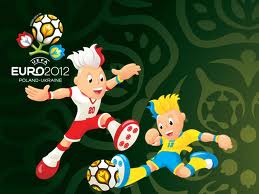
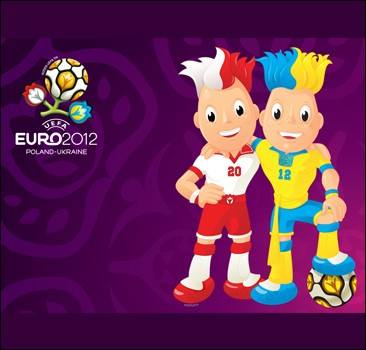
Mascots Slavek and Slavko can’t wait for Euro 2012 to begin!

The World Cup is definitely the most exciting and anticipated football/soccer tournament in the World. Next in line would have to be the UEFA European Football Championships, or the ‘Euro’. Like the World Cup, it takes place once every four years. Also like the World Cup, it is a contest of the last team standing to win the Cup. This year’s Euro will take place in two countries: Poland and Ukraine from June 8th to July 1st. This is the first time the two countries have hosted a soccer tournament this huge. The draw for the First Round groups were decided back in December and people have made predictions which country will win the championships. This is not easy as it involves group play in the first round and the second round being the last team standing.

For my part, I won’t predict the winner. What I will do is give an analysis of each country group by group in terms of what to expect in terms of current skill and even possible surprises (FIFA ranking of May 2012 in brackets):

GROUP A

-Czech Republic (26)-The Czech Republic always has a talent-loaded team each time they make a tournament like the World Cup or Euro. It’s just a matter of them being on the ball. Since Czechoslovakia split up in 1992 and the Czech Republic has fielded its own team, it has participated in all four Euros since and their performances include being a finalist in 1996 and a semifinalist in 2004. They’ve also been known to lose out early as in the other two Euros and their only World Cup appearance in 2006 where they started strong but racked up a lot of injuries. Lately they’ve been looking strong as they’ve won or drew five of their last six friendlies. Will they go the distance at Euro or will they lose out early? It’ll all be determined in Poland.

-Greece (14)-In the past, Greece’s football team was never thought of as much. Greece’s team of today is a lot different that their team of twenty or even ten years ago.  Never underestimate Greece as they are very capable of pulling a surprise. They were the team at the 2004 Euro that was least expected to win and they won. They do have an Achilles Heel and it’s evident as they tied 1-1 in friendlies against Belgium and Slovenia this year. Nevertheless they could prove to be a very formidable opponent this year. Knowing that the nation of Greece has been going through a lot of violent rioting and huge economic turmoil this past year, a win of the Euro could lift the spirits of the country.

-Poland (65)-Poland’s international prowess is always in question. They’ve qualified for seven World Cups in the past and even finished 3rd twice yet only qualified for one other Euro: the previous one. They currently have the lowest FIFA ranking of all the teams at this year’s Euro but were able to tie Portugal and defeat Slovakia, two countries with higher rankings, in recent Friendly play. Being in the weakest of the first round groups–this is the only group without a team in FIFA Top 10– could be an advantage, as well as playing home field. A surprise could await.

-Russia (11)-Russia has always been known to have a strong football team even after the breakup of the USSR back in 1991. Nevertheless acquiring big achievements has always been a challenge for them. They’ve qualified only two World Cups in 1994 and 2002 and failed to advance past the first round both times. They’ve also had lackluster showings at Euros until they had a breakthrough in 2008, qualifying for the semifinal. There’s no question Russia wants to do well here. The next World Cup is two years away and they’ll host the World Cup right after in 2018. They’ve even acquired coach Dick Advocaat to get their team ready. They’re already looking strong as they beat Denmark and Italy in friendlies this year. Hopefully this Euro could write a new chapter for their team.

GROUP B

-Denmark (10)-Denmark is a country that has really come alive in the last 30 years. They’ve qualified for four World Cups and even made it to the quarterfinals in 1998. Their Euro achievements have been better as they qualified for seven Euros including winning in 1992 and qualifying for the semifinals in 1984. They are a strong team as they’ve won friendlies against Portugal and Sweden last year but they also lost to Russia months ago. Nevertheless they could pull a surprise. Don’t forget that their winning 1992 Euro happened as they were a replacement team for Yugoslavia. Also don’t forget this is a tight group: the group most called the ‘group of death’. All four countries ranked in FIFA’s Top 10 which means any two of them can qualify for the quarterfinals and even Denmark has a good shot. It’s all a matter of who delivers.

-Germany (2)-The Mannschaft are always considered heavy contenders and this Euro is no exception. However they too are known for choking big at Euro. They’re the only country ever to win the Euro three times and they even made the finals three other times.  However thy have failed to move past the first round in 2000 and 2004. Being in the ‘Group Of Death’ could go either way for Germany. They’re always at their most consistent during World Cup play and they showed in the 2010 that they’re still a strong team. However they’ve lost their two friendlies of this year: against Switzerland and France. Will they show the strength they’re known for at Euro 2012 or will they face an early out? Anything’s possible here.

-Netherlands (4)-Netherlands has what it takes to win; no doubt about it. However they could face an early out. We shouldn’t forget at the last Euro, the Orange were eliminated in the quarterfinals by Russia. This Euro could provide for some interesting results. They’re already known for consistency at the Euro as they’ve always made it past the First Round since 1980. They’ve since won in 1988 and made three semifinals. Since the 2010 World Cup where they made it to the finals, they’ve been ranked #1 in the World back in August 2011. Could they return as champions? It’s possible as they’ve won their last three friendlies but they did lose to Germany in a friendly in November 2011. It can go any way here.

-Portugal (5)-If any country seems to have come from nowhere to become a major force in the soccer world, it has to be Portugal. Before the 90’s it’s had successes in the past with a third at both the 1966 World Cup and 1984 Euro. Nevertheless they would rarely qualify for those events. Starting in the 90’s, Portugal’s football prowess has grown tremendously. They’ve qualified for the past three World Cups and even came in fourth back in 2006. They’ve also qualified for every Euro since 1996 where they even made it to the semifinals in 2000 and finals in 2004 when they were co-hosts. They have the power and the talent to perform well at Euro 2012. Nevertheless they do have an Achilles Heel as they’ve played to scoreless draws in friendlies against Poland and Macedonia this year and even lost to Turkey recently. Will The Navigators excel or will they choke? It’s all in their hands.

GROUP C

-Croatia (8)-Ever since the collapse of Yugoslavia, Croatia has proven themselves to be the little country that can. The Blazers have been able to qualify for four of five Euros and three out of four World Cups including a third-place finish in 1998. The team of that World Cup is known as Croatia’s “Golden Generation”. However the country has been in a struggle ever since most of the Golden Generation have retired. They have had their ups and downs in the past twelve years. This year’s team hopes to revive the successes of the Golden Generation but it won’t come without a fight. Recent friendly results include ties to Ireland and Norway and a loss to Sweden. Nevertheless Croatia could just deliver here and make this their best ever Euro.

-Italy (12)-The Azzuri’s Euro record is just as impressive as its World Cup record as it has won once in 1968, finalists in 2000 and semifinalists in 1980 and 1988. But it too has a habit of choking. The last two Euros have been dismal for them. And they choked badly at the 2010 World Cup. Not pleasant at all when you’re defending Cup champions. They have worked hard to improve its reputation since and even hired a new coach: Cesare Prandelli. It hasn’t been completely easy. Their friendly play these past twelve months have been a mixed bag: they won against Spain and Poland but lost against Ireland, Uruguay and the USA. Will Italy play like the Italy we’ve always known them to be or will they struggle again? It all starts June 11th in Gdansk.

-Republic Of Ireland (18)-Ireland is actually better at qualifying for the World Cup than it is at qualifying for the Euro. It has qualified for three World Cups but only one Euro: way back in 1988. It has the lowest ranking of the four teams of this group but it could pull a surprise. In fact it tied Croatia and beat Italy in friendly games within the last 12 months. Ireland also drew 1-1 against the Czech Republic. Besides Euro wins from Denmark in 1992 and Greece in 2004 remind us not to count the little guys out. So don’t count Ireland out.

-Spain (1)- Spain has always been referred to as ‘football’s greatest underachievers’. They have an excellent team full of talent and capable of winning, but often lose out early in the tournament. Last Euro was a big turnaround for La Furia Roja as they won it. They also went on to win the World Cup in 2010. Finally the greatest underachievers were achieving. They could continue their achievements or they could go back to being the Spain the football world knows. Another important thing to take note of is no winning team has successfully defended their title at the Euro. As for Spain, they’ve so far continued to show their strength in friendlies play this past year but they did lose to Italy 2-1 in one match. This Euro will tell another story of Spain and it will either be continued consistency or back to choking. Time will tell.

GROUP D

-England (7)- It’s the same story all over again. The Three Lions always has a team that can boast of some of the best combined talent in the world. The problem is when they get to a major event like Euro or the World Cup, the TriLi’s aren’t the best at playing as a team unit. They almost always lose out too soon. While they’ve only won one World Cup, they’ve never won a Euro. They’ve qualified for the tournament seven times and their best finish was being a semifinalist twice. This Euro could be different if England plays well as a team unit. Their play in friendlies has been very good as they beat Sweden and Spain and only lost to the Netherlands. Will this be England’s first-ever win at the Euro? It will all be decided this month.

-France (16)-Les Bleus are an enigmatic team. They can go all the way or lose out fast. In the past four World Cups, they’ve been champions in 1998, runners-up in 2006 and out in the First Round in both 2002 and 2010. Even the Euro has seen their all-or-nothing play pay off or fall flat. They’ve won the Euro twice, including 2000 as reigning World Cup holders. However they lost out in the first round at the last Euro. This coming Euro will be a chance to prove themselves again as the team has gone through massive reconstruction since their disappointing World Cup in 2010. Can they bounce back? They’ve been looking impressive in friendlies as they’ve beaten the USA and Germany. The 2012 Euro looks like the playing fields for their redemption.

-Sweden (17)-Sweden is a country that has had their ups and downs in the past. They’ve qualified for eleven World Cups where they’ve been finalists once and semifinalists three other times. As for Euro, they’ve qualified for five including this one and their best finish was the semifinals back in 1992. This year’s team has potential to do well. In recent friendly play they’ve won against Ukraine, Croatia and Serbia but also lost to England and Denmark. Will they have it all together at Euro 2012? It’s all up to them.

-Ukraine (50)- Even though they’re co-hosting Euro, this will be the very first Euro the team will have ever played in. Even though they competed at the 2006 World Cup where they made it to the quarterfinals, they have yet to prove themselves amongst the best European teams. Like co-host Poland, they’re the only other country not in FIFA’s Top 30. Nevertheless they could pull a surprise. In their last seven friendlies, they’ve won five and tied Germany 3-3. So they could still prove to be a surprise contender. Homefield could prove to be an advantage. Never has there been a better time to seize the moment.

And there you have it. The summary of each team competing at Euro 2012. There are many heavy favorites but even they have weaknesses that could cause them to lose out even as early as the First Round. There are also teams that have minimal expectations that could perhaps pull a surprise. It all starts with Poland playing Greece in Warsaw’s National Stadium on Friday June 8th, twenty-nine matches in between, and ends with the winner decided July 1st in Kiev’s Olimpiyskiy Stadium. Excitement awaits.