2026 FIFA World Cup – Group E Focus

You know, I went into a Walmart in Vancouver and I’ve already seen lots of memorabilia and collector’s items already being sold. It’s very exciting to see, but the items are quite expensive. That’s what happens with a World Cup. A lot of keepsakes at a big price.

Moving on, here’s my look at the teams of Group E of this year’s World Cup:

-Germany (10): For a long time, Die Mannschaft were one of the most feared teams in the world. One with an excellent record of consistency and performing well at major tournaments time and time again. Things changed right after their fourth World Cup win in 2014. The following World Cup, they failed to progress past the opening round for the first time in 80 years. Further disappointment came as they again missed qualifying for the knockout round in 2022 and in the last two Euros, the furthest they got was the quarterfinals. It appears like right now is the toughest era for German football.

The German team’s coaching staff is from a mix of European nations but their head coach is German: Julian Nagelsmann. Star players include legendary goalkeeper Manuel Neuer from Bayern Munich, defender Antonio Rudiger from Real Madrid, midfielder Joshua Kimmich also from Bayern Munich and striker Kai Havertz from Arsenal. In these past twelve months, the team had a terrible UEFA Nations League losing to Portugal, France and Slovakia. They would then come back with wins against Northern Ireland, Switzerland, Finland, Ghana and the United States. This World Cup is the arena where Germany can seize redemption in the world’s eyes.
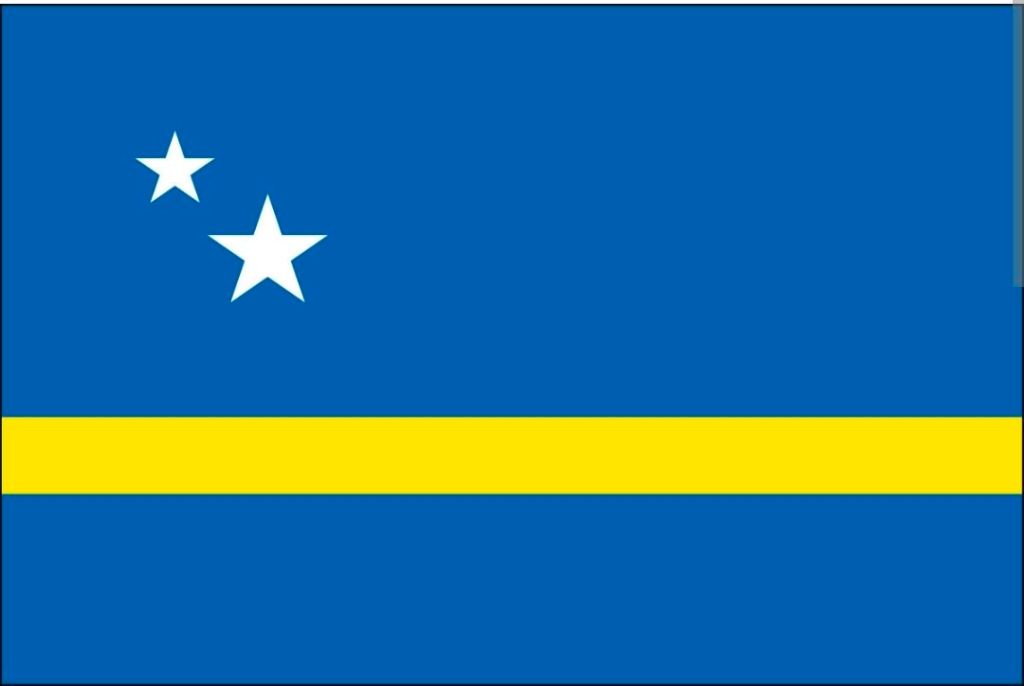
-Curacao (83): One thing about this World Cup is that we will have teams the never previously had a chance in qualifying in the past make it this time. Increasing it to 48 teams really changes a lot. Curacao is one of four teams competing in its first-ever World Cup. Nicknamed The Blue Wave, Curacao competed as an independent nation after the Netherlands Antilles dissolved in 2010. They’ve qualified for three CONCACAF Gold Cups and won one Caribbean Cup back in 2017. Upon coming first in their qualifying CONCACAF group, Curacao, with a population of just over 155,000, became the smallest country to qualify for a World Cup! Part of the success may have to do with the fact all but one of the players were born in the Netherlands to Curacaoan parents. Only one player was born in Curacao.

Curacao is making sure they’re team will be ready for the World Cup. Their coaching staff is of mostly Dutch coaches and their head coach Dirk Advocaat will make his fifth World Cup appearance as head coach, for five different teams! Most of the players play for either MLS or the Netherlands’ Eredivisie. Top players include goalkeeper Eloy Room who plays for Miami FC, defender Jurien Gaari who plays for Saudi Arabia’s Abha, midfielder Leandro Bacuna who plays for Turkey’s Igdir and striker Kenji Forre who plays for Israel’s Maccabi Haifa. Their play in the last twelve months have included wins to Jamaica, Bermuda, Aruba and Haiti. They’ve drawn against Trinidad and Canada. They’ve also lost to Scotland, Australia and China. Whatever the result, the 2026 World Cup will take Curacao and its football to a whole new level.

-Ivory Coast (33): The Ivory Coast, or Cote d’Ivoire, have participated in three previous World Cups. All of them were consecutive from 2006 to 2014 and all of them were out in the Group Stage. In all three previous times, Les Elephants had their most heralded players: defender Didier Zokora and striker Dider Drogba. The team has struggled since those two players retired after World Cup 2014 but a new team has come of age and they have a win at the 2023 African Cup Of Nations to their credit.

The team has a mostly-Ivorian coaching staff. Head coach is Emerse Fae who has played in the 2006 and 2010 World Cup. The team plays for a mix of of European teams. Top players include goalkeeper Yahia Fofana who plays for Turkey’s Caykur Rizespor, defender Ghislain Konan who plays for Portugal’s Gil Vicente, midfielder and captain Franck Kessie who plays for Saudi Arabia’s Al-Ahli, and striker Nicolas Pepe who plays for Villareal. Their play in the last twelve months tell a lot. They’ve had wins to non-African teams like South Korea, Scotland and France. They’ve had draws to Gabon, Cameroon and Canada. Their losses came to New Zealand, Saudi Arabia and Egypt. The World Cup can be the chance for the Ivory Coast to take their football to a new level.

-Ecuador (24): Hard to believe La Tricolor never participated in a World Cup in the 20th Century. This coming World Cup will be their fifth. Making a name for themselves has been a struggle. Their best-ever World Cup result in the Round of 16 and the best they ever did at the Copa America was a fourth-place finish. Proving themselves in the CONMEBOL is tough for them. Ecuador did prove themselves as a team ready to play well. They succeeded in qualifying for the World Cup despite a three-point deduction for player Byron Castillo having a passport with falsified information.

Their coaching staff is completely made up of Argentineans and their head coach Sebastian Beccacece is a former assistant with the 2018 Argentinean national team. Top players include goalkeeper Hernan Galindez who plays for Argentina’s Huracan, defender Angelo Preciado who plays for Brazil’s Atletico Mineiro, midfielder Moises Caicedo who plays for Chelsea, and striker and captain Enner Valencia who plays for Mexico’s Pachuca. In the past twelve months, they have not had a single loss! They have only had four wins: to New Zealand, Saudi Arabia, Argentina and Guatemala. They’ve had draws to the USA, Mexico, Canada and Brazil to name a few. If there’s one team that pull a surprise at the World Cup, it’s Ecuador.

My Qualifier Predictions: Sometimes you think you know who will qualify. Sometimes it’s all a shocker. I predict Germany will top the group with Ecuador second. I think my third-place pick Ivory Coast will qualify.

And that completes my look at Group E of this year’s World Cup. Sometimes I wonder how I’m able to do all this typing and have it all completed before the first game begins!

VIFF 2023 Shorts Segment Review: Forum 2

With me having to spend the entirety of VIFF in Vancouver this year, I have better chances of completing my three annual VIFF goals. I was able to complete the second of my goals: see a segment of short films. I did so at a “Film Forum” titled Forum 2. Not the most original of titles, but the stories made up for it. On top of it, they’re all from Canadian film makers. Definitely worth checking out:

-Sisters (Ontario – dir. Marisa Hoicka): The film begins with a 1960’s look and it appears to be an instruction film on how to be a “proper woman.” Instead the film is the narrator talking about how her “sister” taught her how to be a powerful woman with what she said and how she lived.

This is a unique short film. It comes in the guise of your stereotypical instructional film on how to be prim and proper, but instead is a story about empowerment. Throughout it all, it never loses that 60’s feel it intends to have. Very good film that does a lot in its brief time.

-Four Mile Creek (Quebec – Dir. Ryan McKenna):****The story begins with the retelling of the Cormier family as they go through Ontario until their eventual settlement to La Salle, Manitoba. Their journey is in the mid-1880’s and during a time of rampant smallpox. While in Ontario, the Cormier children were hit and their eight year-old daughter Aurore died. She was buried in the plains near their house and outside Kenora, Ontario by her father because a priest would not perform the blessing. A century later, a group of University of Winnipeg archivists, including family and one claiming to be haunted by Moise Cormier’s ghost, go on a mission to research and uncover Aurore Cormier’s grave.

This is a docudrama that combines recalling of letters from the Cormier’s to re-enacting of the moments of the family and their smallpox ordeal to those involved in the uncovering telling their story. It’s two films in one and tells a revealing historical story known to few. Impressive and creative.

-Cloud Striker (B.C. – dir. A.W. Hopkins): At an Indian Residential School in 1931, four male students are being punished by the nun. Their crime: speaking in their Indigenous language. One student, Elijah Cloud Striker, is defiant and even uses his Indigenous name in front of the nun. She slaps him and gives him the hardest of the punishment. A man comes to visit. He’s Chief Cloud Striker and he’s looking for his son. Both the nun and the priest try to persuade him to stop but the Chief punches the priest in the face after he hurls the chief a racist slur. The Chief and Elijah make a run for it. Later while resting in a remote area, they talk and wonder why their people aren’t angrier about this

The treatment of Indigenous peoples through the residential school system has scarred our nation like nothing else. Especially since Canada has been dealing with the ugly aftermath this past half-century. It’s unclear if this is based on a true story or if this is a story of an incident the filmmaker wishes had happened. The film is good at retelling ugly things that happened at residential schools and how it hurt peoples. The ending talk between the Chief and Elijah gives an impression of how a lot of Indigenous people feel about this system. That mention from Elijah of two boys being buried is another ugly reminder. Even though the residential school system completely ended in 1996, I’m sure there’s a lot of harbored anger with the system, the Roman Catholic Church, and the Canadian government. This story tells a lot.

-Conviction (Alberta – dir. Bruce Thomas Miller): A former convict named Joseph, an Indigenous man, is released from prison after years of incarceration. He is given a job as a custodian at a thrift store. He is given residence with a man maned Quincy who himself was a former convict and is to look out for him. At his job, he has to deal with co-workers who find him suspicious, a second-in-command who wants to be at odds with him, a customer who hurls an insult at him and traumatic memories of his crimes and his incidents in prison. At the end, Quincy reminds Joseph of what he himself had been through and he’s someone for Joseph to turn to.

We go from a film about the ugliness of Residential Schools to a film about the aftermath. Over time, it became evident the residential schooling system was a terrible idea as it led to substance abuse, homelessness, substance addictions, suicides and crime among the Indigenous people’s. Joseph is like a lot of Indigenous men who want to leave their ugly past behind and want to start a new life, but doesn’t know if he can. The director/writer wrote this script as he himself was going through his own healing of PTSD. It speaks volumes of the struggle they have to go through. Sometimes, Joseph doesn’t know if his freedom is a bigger hell than prison and may feel it’s better to return. At the same time, it’s a reminder there is support along the way from those who also went through what they went through. Excellent story that’s well-acted and gets one thinking.

-Black Box Investigations (B.C. – dir. Paige Smith): A woman buys a disposable camera. She takes all sorts of pictures of her, of her surroundings and of various angles. She buys another with a flash. Again all sorts of weird photos, including inside her mouth. The photos are for all to see.

This is the kind of short film I’d expect to see in a shorts show of MODES. Although I didn’t exactly like this short film, I give the director credit for wanting to play around and want to do something creative and fun.

-Autre Chose (Quebec – dir, Etienne Lacelle): A biker is repairing his motorbike. He had a bad crash the day before. He has a hard time repairing his bike but succeeds. He wants to go for one last ride in the wild. On thing. Just before he leaves, he comes across a strand of long blonde hair on him. It’s a strand of his late girlfriend who died in the crash. He puts it in a small bag and heads off on his bike with a rifle. He drives through the terrain but gets his bike stuck. He tries to camp out and throws his girlfriend’s hair in a bonfire. While out walking the wilderness, he contemplates shooting himself. He doesn’t and moves on. As he comes across a lake, he cleanses himself in it. But as he drives off, he comes across her hair again.

This is a unique short film with no dialogue and lets the images and the sounds tell the story. You can get a sense of what is happening with the story. The images of the story even gets one asking questions. Like did he kill her during the accident? The thought of suicide and the bathing in the lake just after could mean it’s showcasing a chance at redemption. The ending can also send a message that even if redemption is possible, he still has to deal with the unresolved aftermath. The film really gets you thinking and will leave you with questions of your own..

-The Great Kind Mystery (Newfoundland =dir. Ella Morton): Images of Daniel’s Harbour, Newfoundland and its surrounding area are shown as young artist Amy Hull, who is of Mi’kmaq and Inuk descent, tells her story. The stories she tells are of the area of Daniel’s Harbour and its history, her denial of her Indian Status while she was attending university, and of the pride she feels of her ancestry.

This is the third Indigenous-themed short that was part of the segment. The first dealt with oppression of the past, the second dealt with the aftermath and this short deals with the current systemic racism in Canada’s Indian Act. This film is a reminder that Canada still has a long way to go to do things right and drop its racist systematic treatment of Indigenous peoples, especially in these post-Residential School times. This documentary is also a film that inspires hope. Amy is young and resilient and refuses to let racist politics destroy her pride or her identity and pursue her artistic dreams. She embraces her identity despite what has happened to her and won’t bow down. This film, and Amy’s story, is a ray of hope for the future.

-Element (Quebec/Ivory Coast – dir. Will Niava): It’s a hot summer day in Abidjan, the capital city of the Ivory Coast. A group of four young thugs have a hard time trying to make money. Their current business is not doing so well so they decide to get involved in illegal things. As the money gets better, things make a turn for the worse such as in their unity, the leader’s relationship with his girlfriend and even his soul. He even comes across a vision of himself of him dead and all of his loved ones at his funeral. It’s there he emerges from the ocean water and starts a new life, but not without something tragic at the end.

This is a unique story as it tells the story of pursuing life in the fast lane with the mix of spirituality. What the leader experiences is consequences both in the earthly world and the spiritual world. The inclusion of the spiritual world adds to the film and shows a form of spirituality rarely seen by others. It’s rare to see something like that in a film about young thugs trying to live fast. Overall, a great unique drama.

That’s what it was. Eight shorts from eight Canadian directors. Two were from BC, three were from Quebec. Three were from female directors and three were Indigenous themed. Most were dramas, some were experimental and some were even documentaries or docudramas. All of them are unique in the stories they showed and what messages they want to send. Also all of them showcase directors with a promising future.

Those are my thoughts on the eight short films of Forum 2. Some I liked, some I found intriguing, a few I didn’t. All of them did showcase the director’s works and abilities very well.

World Cup 2014 Preview: Group C

Group C may look like a more relaxed group as compared to groups like Group B, Group D or Group G, but don’t be so quick to dismiss. There have been teams from nowhere that would come to surprise and finish high, if not win. Group C may come with one of those surprisers and it could be any of the four teams. All four have reputations of being ‘sleeping giants’ and it could be right here in Brazil where they finally arrive. Here’s my rundown:

Colombia-Colombia (5)- Colombia is one of many great teams who never had the change to deliver well at the World Cup. There was a period in the 90’s when they were one of the best teams in the world but during those three World Cups, they only made it past the Group Stage once and even then only got as far as the Round of 16. It’s a question of what it was: not all being together, political tension at the time, best players sidelined. We’ll never know. But now there’s a new Colombian team picking up where the previous one left off. They’re currently ranked in FIFA’s Top 5 and they’re hoping to deliver this time around. They have the players and the clout. They also have a good coach in Jose Pekerman who often selects players for a specific role rather than their profile. He was successful in coaching Argentina to the quarterfinals in 2006. They’ve even played well in recent games, tying Netherlands 0-0 and beating Belgium 2-0. Colombia can finally arrive on the World Cup scene here in Brazil.

Greece ficed-Greece (10)- This is one team whose prowess over the years has grown considerably. Their first World Cup was in 1994 and they were uninspiring: losing all three of their matches and scoring no goals while conceding ten. Things have really picked up for Greek football since. They were the surprise winners of Euro 2004. They returned to the World Cup and even though they didn’t advance past the Group Stage, they still had the benefit of winning a game: 2-1 against Nigeria. For 2014, they’re a top-ranked team in good hands with Portuguese coach Fernando Santos who has been very successful coaching in both Portugal and Greece. He guided Greece to the quarterfinals of Euro 2012 and to a consistent track record since, losing only to Bosnia-Hercegovina and South Korea. This is possibly Greece’s best team ever and there’s no better time than now for them to prove themselves.

Ivory Coast-Ivory Coast (21)- At every World Cup since 1986, there’s been at least one African country that advances past the Group Stage. Some have made it as far as the quarterfinals. Many have expected the Ivory Coast–or Cote d’Ivoire– to be that team but ‘The Elephants’ have played below expectations in their two World Cup appearances in 2006 and 2010. Even though they have Didier Drogba, one of the greatest African football players ever, he can’t be a one-man team. Nevertheless the team has been very consistent in recent years. Much from the help of French coach Sabri Lamouchi who has guided the team these past couple of years. They finished second in the African Cup of Nations in 2012 and even tied Belgium 2-2 in a friendly this year. Even at 36, Drogba still looks and plays strong and the team consists of other good talents like Manchester City star Yaya Toure and promising young gun Serge Aurier. This could finally be The Elephants’ year.

Japan-Japan (47)- No other nation has experienced increased growth of football in the last 20 years the way Japan has. It all started with the creation of the J League in 1993 when football really took off and helped Japan qualify for their first World Cup in 1998. They’ve qualified for every World Cup since even co-hosting in 2002 where they made it to the Round of 16 for the first time. Success continues for the Blue Samurais. They’re coached by Italian Alberto Zaccheroni They feature star players in the top European leagues including Keisuke Honda with AC Milan and Shinji Kagawa with Manchester United. From the first year Zaccheroni assumed the role of Japan’s coach, they won the 2011 Asian Cup. They’ve has mixed results in international play these past two years but have shown their strength trough ties against the Netherlands 2-2 and wins against France 1-0, Belgium 3-2, Ghana 3-1 and South Korea 2-1. They may rank low on FIFA’s chart but they could perform above expectations here.

Now my prediction for the two that will advance. It’s a toughie but I believe it will be Colombia and Greece that will advance.

STADIUM SPOTLIGHT

Now that I’m done all the stadiums that will just hold Group Stage, I’ll now be focusing on stadiums that will host matches in the knockout rounds. One is brand new while one is older and has a reputation. Both will be known for their capacity and features and are both expected to have sufficient post-World Cup use.

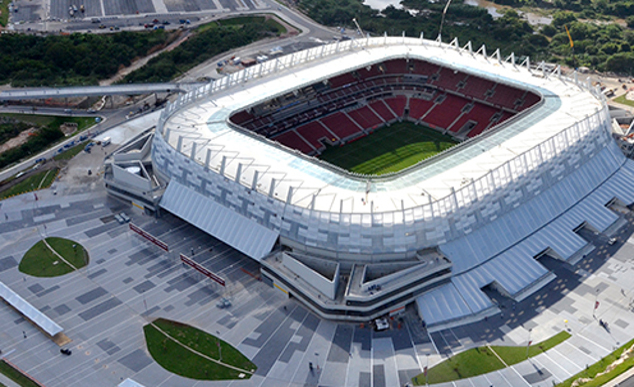
-RECIFE : Arena PernambucoPernambuco

Year Opened: 2013

World Cup Capacity: 46,154

World Cup Groups Hosting: A, C, D, G

Additional World Cup Matches Contested: Round of 16 (D1 vs. C2)

Pernambuco is a new stadium that was built not just for the World Cup but for last year’s Confederations Cup too. Pernambuco is a new stadium not just built for the World Cup and for Recife to have a new football stadium but also to give a financial boost to a deprived area of the city. Plans for the surrounding area include a university campus, indoor arena, hotel and convention centre, plus commercial, business and residential units and a large entertainment complex with shopping centres, cinemas, bars and restaurants. The biggest feature of the stadium is its intent to be a ‘Green Arena’ relying on solar power and even serving the purpose of being a solar power plant to power 6,000 people when not used for game play and be part of the research and development of solar power in Brazil. Football club Nautico Capibaribe is expected to make this stadium home after the World Cup.

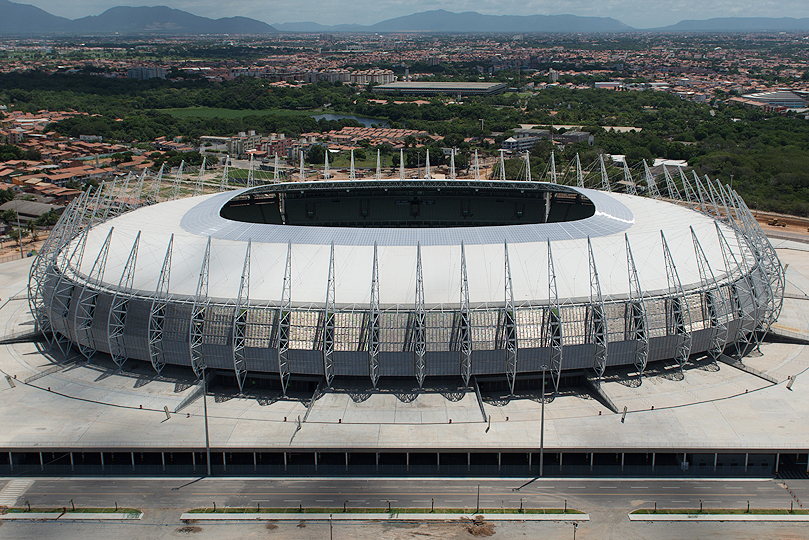
-FORTALEZA: Estadio CastelaoFBL-BRAZIL-WC2014-FORTALEZA-CASTELAO ARENA

Year Opened: 1973

World Cup Capacity: 67,037

World Cup Groups Hosting: A, C, D, G

Additional World Cup Matches Contested: Round of 16 (B1 vs. A2) & one quarter-final

Castelao is one of the few stadiums at this year’s World Cup to go through two major renovation projects. The first came in 2000 and it was a three-stage project that lasted a year. Then once it was assigned as a hosting venue for the World Cup, it was given a twenty-month reconstruction project starting in March2011: a mere ten years after the first set of renovations were completed. Whatever the situation, Castelao was the first World Cup venue to be completed, back in December 2011. Castelao was one of the venues for last year’s Confederations Cup. Castelao Stadium has always been a venue that has hosted big events in the past. Castelao plans to continue to host major concerts and serve as host venue for Ceara and Fortaleza Sporting Clubs.

And there you have it. My take on Group C and two more stadiums reviewed. Five more groups and six more stadiums to go.