I hope you all liked my talk about the mascots in my last blog. For this blog, I will be doing some more talk about official World Cup stuff. In the meantime, I’ll cut to the chase and bring on my review of World Cup Group K:

-Portugal (5): One of the biggest thing of this Century has to be the boom in the prowess of the Selecao das Quinas. In the 20th Century, they only qualified for two World Cups. This Century, they haven’t missed a single one. The excellence of Cristiano Ronaldo has a lot to do with it but they’ve also had other greats like Pepe, Joao Moutinho and Rui Patricio. Their prowess has even carried them to a win at Euro and two UEFA Nations League titles including last year.
The team’s coaching staff is mostly Portuguese coaches with coaches from other European nations. The head coach is Spain’s Roberto Martinez. The team plays for clubs in various European leagues. Stars of the team include goalkeeper Diogo Costa who plays for Porto, defender Ruben Dias who plays for Manchester City, midfielder Bernard Silva who’s also with Manchester City and striker and captain Cristiano Ronaldo who is now with Saudi team Al-Nassr. Their play in the last twelve months has been strong. They’ve had notable wins against Nigeria, the United States and Germany. They’ve had a win and a draw to Hungary along with draws to Spain and Mexico. They’ve also had a win and a loss to Ireland. That loss is their only loss in the past twelve months. The Portuguese team will be coming to North America with something to prove and they have the arena to possibly win it.
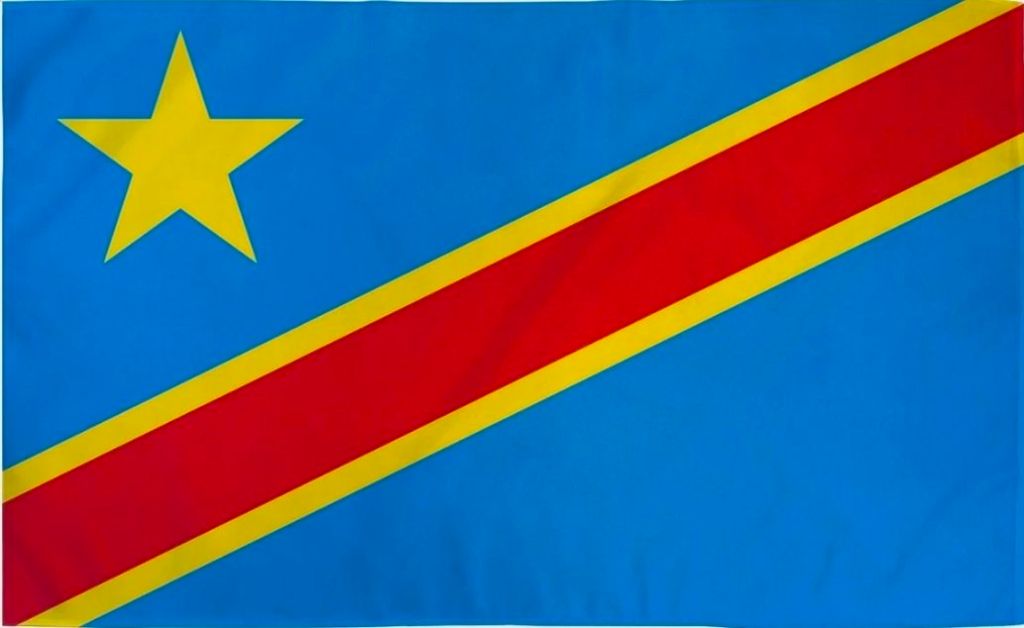
-Democratic Republic of the Congo (45): The Democratic Republic of the Congo competed in only one previous World Cup. It was not a pleasant one. They were under the name Zaire, was mismanaged by bad authorities, loss all three of their games, didn’t score a single goal, a kick that appeared erratic but was more of a protest, and nine of the fourteen goals they conceded were in the game against Yugoslavia! 52 years have passed. They’ve built a better team, have won some African Nations Championships in the last 20 years, and have had noticeably better playing prowess in the last ten years. No doubt the Leopards will come to the World Cup with something to prove.
The DR Congo’s coaching staff is mostly Congolese with two French and one Spanish coach. Head coach Herita Ilunga played for the national team from 2004 to 2011. The team’s roster consists of players from European teams. Top players include goalkeeper Lionel Mpasi who plays for France’s Le Havre, defender and captain Chancel Mbemba who plays for Lille, midfielder Samuel Moutoussamy who plays for Greece’s Atromitos, and striker Cedric Bakambu who plays for Spain’s Betis. Even now, the team has four of their ten most capped players ever. Their play in the last twelve months has been quite strong. Notable wins they achieved include against Jamaica, Cameroon and Zambia. They’ve achieved draws against Nigeria and Denmark, both a draw and a loss to Senegal and losses to Algeria and Chile. The team from DR Congo has a lot to prove at this World Cup. Chances are they can go above and beyond what most people expect.
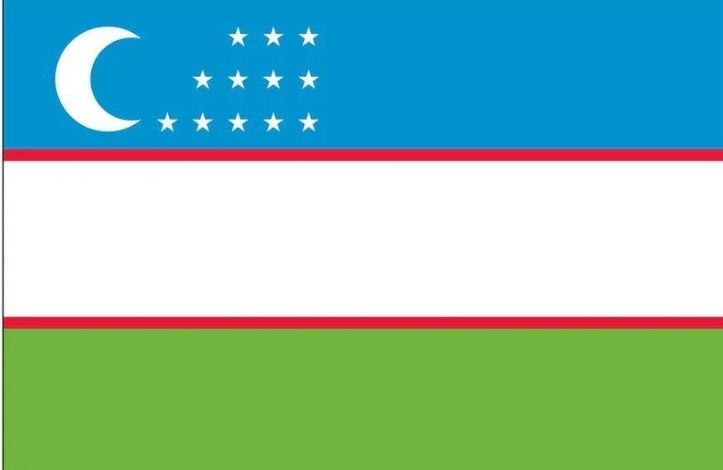
-Uzbekistan (50): For a long time, Uzbekistan was the best football team in central Asia but qualifying for the World Cup would elude them. Fortune changed for the White Wolves in the past two years as they played consistently in qualifying but would nab qualification to the World Cup in the second qualifying round. They’ve had additional feats like fourth place at the 2011 Asian Cup and winning Central Asia’s CAFA Cup in 2025. This could be the arena for them to prove a lot.
Uzbekistan’s top coaching staff is all Italian and their head coach is Fabio Cannavaro who was one of the legends of Italy’s World Cup-winning team of 2006. Most of the players play for teams in Uzbekistan’s Super League and for teams in Arabic countries. Top players include goalkeeper Utkir Yusupov, defender Rustam Ashurmatov, midfielder Otabek Shukurov and striker and captain Eldor Shomurodov who plays for Istanbul’s Basaksehir. Their play in the last twelve months have showed a lot of strength. Notable wins include against Qatar, Gabon and Egypt. They’ve achieved a win and a draw against Iran. They’ve also achieved additional draws against Oman, UAE and Venezuela, and they’ve had losses to Uruguay, Canada and the Netherlands. United 2026 will be their debut and no doubt Uzbekistan will want to make a good impression. They can do just that and make a statement to the football world.

-Colombia (13): Colombia has been seen as a sleeping giant. They had hopes in the 1990’s but didn’t live up to expectations. Upon returning to the World scene in 2014, Los Cafeteros have made a lot of improvements. The most notable being making it to the quarterfinals of World Cup 2014 for the first time. They’ve also finished third or higher in three of the last four Copa Americas including runner up to Argentina in the last one. You can bet Colombia will want to prove something here in North America.
Colombia’s coaching staff is a mix of Colombian and Argentinean coaches. Their head coach Nestor Lorenzo is a former player with Argentina’s national team and has coached Colombia since 2022. The players play for a mix of European and South African teams. Stars include goalkeeper David Ospina who plays for Colombia’s Atletico Nacional, defender Santiago Arias who plays for Argentina’s Independiente, midfielder and captain James Rodriguez who plays for the MLS’s Minnesota United, and striker Luis Diaz who plays for Bayern Munich. Their play in the last twelve months has been a mixed showing. Their wins include against Mexico, New Zealand, Australia and Jordan. They’ve had draws against Argentina and Peru and losses to Croatia and France. It’s at this World Cup that Colombia has a chance to achieve it’s best-ever showing. Possibly even win!
My Qualifier Predictions: Deciding the Top 2 is easy. Deciding third place takes a lot of thinking, and also determining if it will qualify or not. I predict Portugal to top with Colombia being second. I predict DR Congo to be third but will not have enough to qualify.
Now that I’m done predicting, here’s a focus on some more fun stuff of this World Cup. This time, I’m focusing on the official ball and on the official music.
World Cup Focus – Official Ball
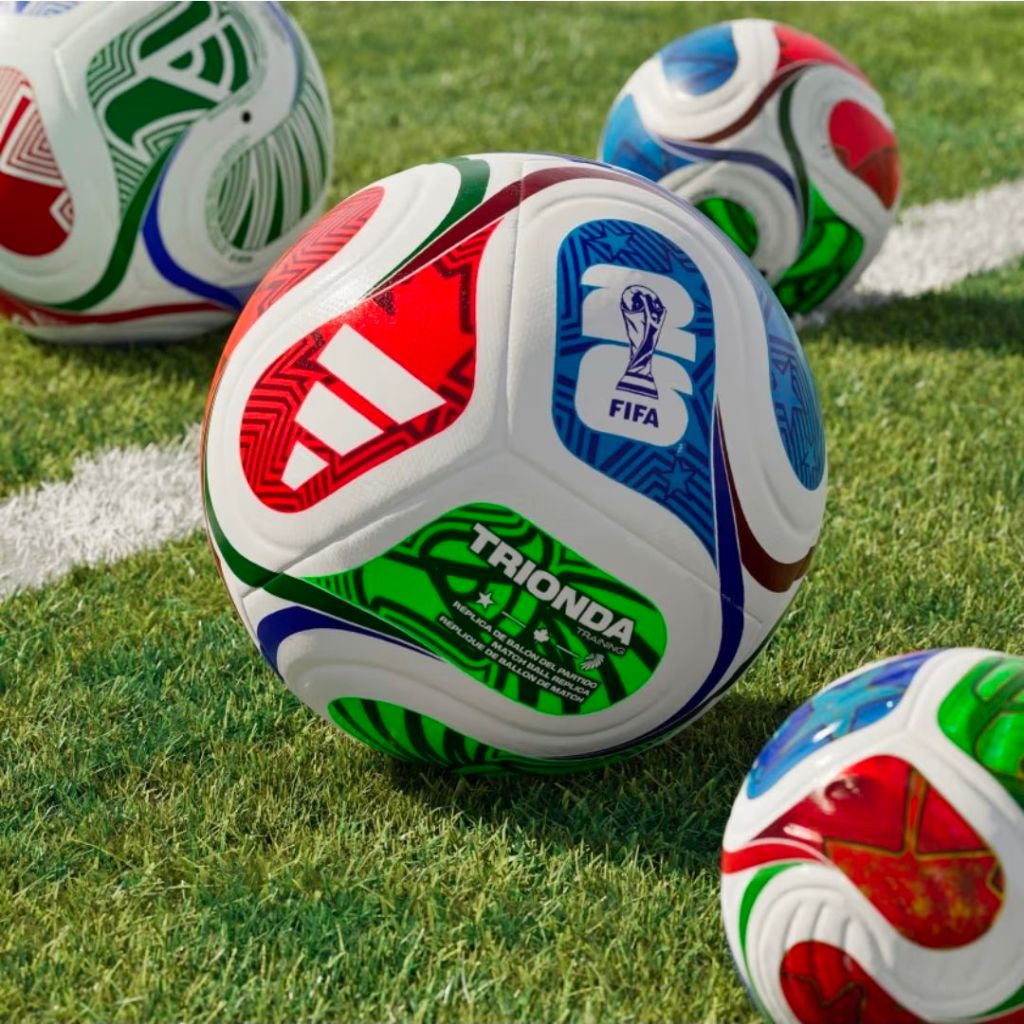
Adidas Trionda
Adidas is normally in charge of creating the official ball of the World Cup. For World Cup 2026 Adidas announced the ball on October 2, 2025: the Trionda. The membrane of the ball is made of four thermally bonded polyurethane panels. No other World Cup ball has had less. The surface is textured with the same debossed micro and macro patterns as the Al Rihla ball from the previous World Cup, meant to improve the balls flight stability, swerve and grip in wet conditions. The ball also includes an innovation of technology. The ball has what’s called ‘connected ball technology,’ a side-mounted inertial measurement unit chip inside one of the four panels to provide the Video Assisted Referee (VAR) with highly accurate ball movement data within seconds. The Al Rihla had its chip suspended within the bladder of its ball.
The balls design including its color scheme is inspired by the iconography of the three nations. Canada has red with a maple leaf, Mexico has green with a golden eagles head, and the U. S. has blue with a five-pointed star.
Official Music
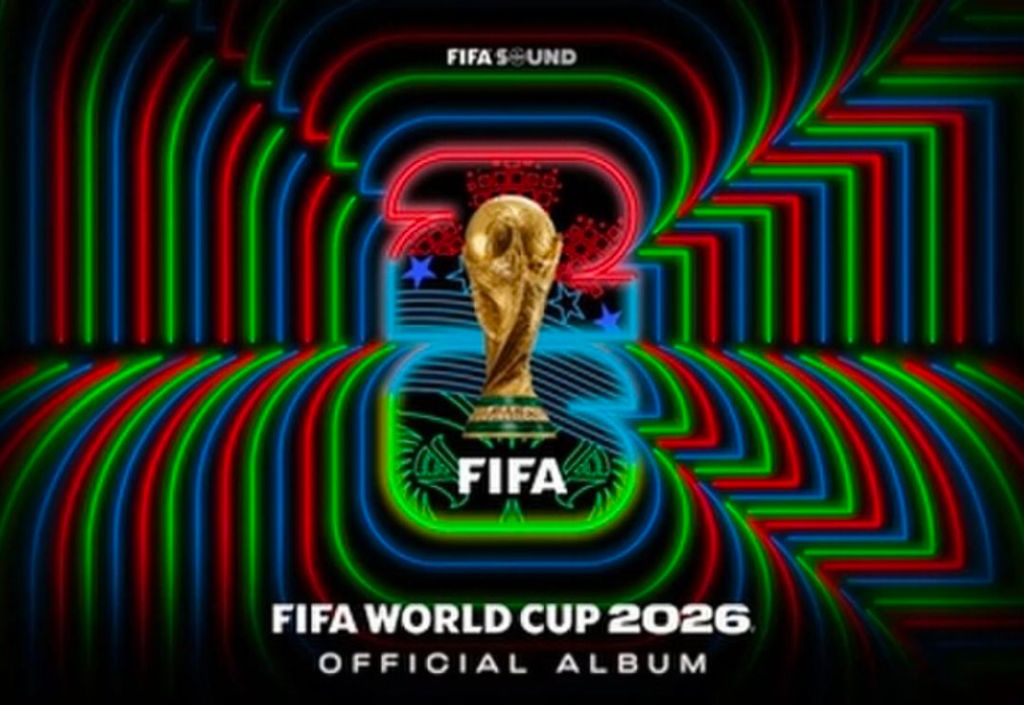
As of now, there is no one official song of the 2026 FIFA World Cup. Instead there is an eighteen-song official album of music for this World Cup. The music is released on FIFA Sound in collaboration with four record labels: Universal Arabic, Republic, SALXCO, and Def Jam. Music was recorded from musicians from all over the world, including Shakira making a return appearance, but most performers are from the three host nations. The songs would be remixed by DJ’s from all sixteen cities hosting a World Cup match. Official songs were released gradually over time with the official album released on June 3rd.
The official album consists of eighteen songs:
- “Goals” – performed by Lisa, Anitta and Rema
- “Game Time”- performed by Future and Tyla
- “Illuminate” – performed by Jessie Reyez and Elyanna
- “Echo” – performed by Daddy Yankee and Shenseea
- “Por Ella” – performed by Belinda and Los Angeles Azules
- “Three Nations” – performed by 21 Savage, Natanael Cano and French Montana
- “No Place Like Home” – performed by Major Lazer, Nelly Furtado and Davido
- “In The Stars” – performed by the Rolling Stones but remixed by Andrew Watt and Cirkut
- “Show Me” – Ayra Starr and Latto
- “Mi Mexico Lindo” – performed by Alejandro Fernandez
- “Blessings” – performed by Stormzy, Fridayy and Angel
- “Energy” – performed by Ava Max and Bia
- “Lighter” – performed by Jelly Roll and Carin Leon
- “Siir Siir” – performed by Nora Fatehi, Vegedream and Sanjoy
- “Partidazo” – performed by Danny Ocean
- “Champion” – performed by IShowSpeed
- “Love Always Wins” – performed by Zema featuring Shaggy and Cimafunk
- “Dai Dai” – performed by Shakira and Burna Boy
And there you have it! There’s my look at the teams of Group K of the FIFA World Cup and my look at some official World Cup items. I think that’s all I’ll focus on for official World Cup merchandise or symbols. I don’t think you want me to get into full details about collectibles like the toys and the video games.
WORKS CITED:
“Adidas Trionda.” Wikipedia, Wikimedia Foundation, 2026. <https://en.wikipedia.org/wiki/Adidas_Trionda>
“FIFA World Cup 2026 Official Album.” Wikipedia, Wikimedia Foundation, 2026. <https://en.wikipedia.org/wiki/FIFA_World_Cup_2026_Official_Album>


