VIFF 2024 Review: The Piano Lesson

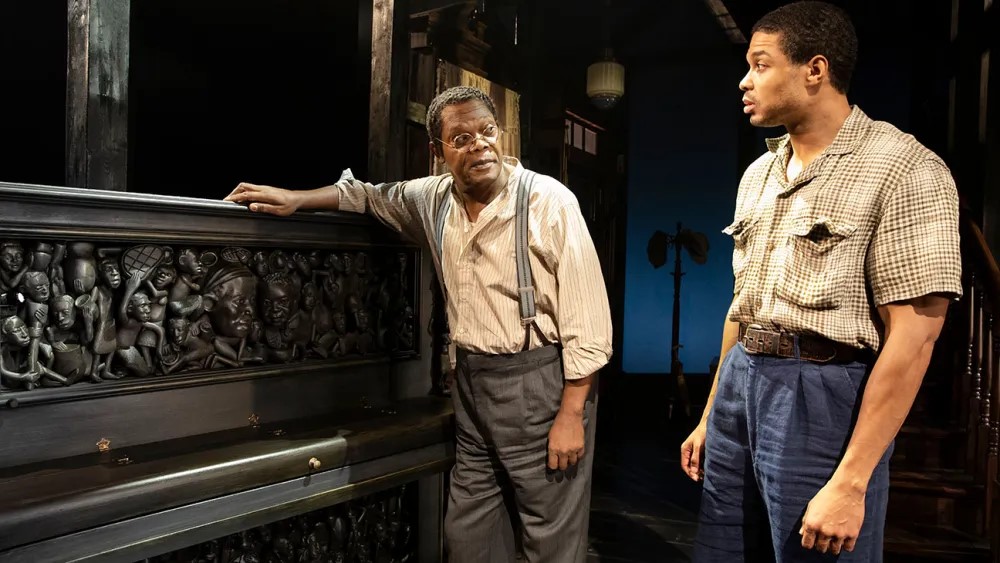
Samuel L. Jackson (left) and Ray Fisher (right) are among those that debate the heirloom status of a piano in The Piano Lesson.

You feel that? That’s your family. That’s your blood.

Every year, the VIFF features films that are bound to spark a lot of Oscar buzz. One that I saw is The Piano Lesson. The story and acting are bound to stimulate a lot of buzz this Oscar season.

The film begins during the Fourth-Of-July 1911 in a Mississippi town. As the white residents are celebrating, an African-American resident and a group of his friends are trying to put a piano in a truck. Why? After the fireworks and celebrations, the white residents burn Sutter’s house down and kill the African-American man inside.

The film moves forward to the summer of 1936 right in the middle of the depression. Boy Willie and Lymon have arrived in Pittsburgh and stop at the Doaker Charles household: household of his uncle. Unfortunately, Boy Willie tells sister Berneice about the death of Sutter back in Mississippi. Berneice, who’s recently widowed, is infuriated and demand her brother leave, accusing him of shoving Sutter down a well. Before Boy Willie leaves, he wakes her daughter Maretha as Berneice claims to see Sutter’s ghost.

In the Doaker Charles household, Lymon notices that piano that was saved. It’s not just any piano but engraved on it are the images of Willie’s and Berneice’s ancestors. Ancestors who were enslaved and carved in so they’re never forgotten. On a piano Willie wants to sell to buy Sutter’s land. Land where his ancestors toiled as those slaves engraved on that piano. Doaker Charles insists Berneice won’t comply and Berneice is infuriated with the plan as well as Willie’s prospective buyers list. Despite the fallout, Willie believes he will convince her but as Maretha comes to Willie at the piano, he teaches her a few things. Including the boogie-woogie.

As Wining Boy visits with Doaker, Boy Willie and Lymon return to announce they found a buyer. Not only is Boy Willie told Sutter will cheat him, but pasts and future desires come to light. It’s revealed the story of Lymon and Boy Willie’s terms in prison are exposed. Although they want to buy Sutter’s land, Lymon wants to be up North because of better treatment, but Willie reminds him that despite the North is not as racist, it still exists. As Wining Boy, who made a career as an entertainer, is asked to play the piano, Wining Boy declines feeling being solely as a piano player is nothing but a burden.

The story of the piano is finally told by Doaker. The piano was an anniversary present from Sutter to his wife. The piano was bought in a slave trade and a mother and child were the currency. Over time, Mrs. Sutter missed the slaves and Mr. Sutter had the sold slaves’ husband/father carve their likeness in the piano as he was a carpenter. On that Fourth of July 1911, it was Boy Willie’s father who stole the piano and he was killed by the whites in retaliation. Willie brushes the stories aside as something from the past but as Willie and Lymon try to move the piano to weigh it, Sutter’s ghost is heard. Berneice tries to stop Willie from ‘selling his soul’ but as the two argue, Mareitha is exposed to the ghosts and screams in terror.

The next day, Doaker tells Wining Boy that he saw the ghost of Sutter playing the piano and feels Berneice should discard the ‘cursed’ piano before it can traumatize more of the family. Wining Boy doesn’t agree. After a successful watermelon sale by Willie and Lymon, Wining Boy tries to distract them of their opportunism by selling them is suit and shoes, claiming it attracts women. That same day, Reverend Avery Brown meets with Berneice. He’s been hoping to win her love and tells her she needs to stop hurting over the past, especially her husband’s death. Berenice changes the subject by trying to get Brown to be a reverend and try to get the ghosts out of the house. Instead, Avery tells her by the piano not to be afraid of her family’s spirits. Berneice then tells Rev. Brown the story of the piano. It’s a story that involves her father’s blood and her mother’s tears and she refuses to expose her hurt to all.

Boy Willie returns to the house with Grace: a woman he just hooked up with. An infuriated Berneice demands them out. Just as they leave, Lymon enters. Lymon is disheartened over his feeling he’s not that good at attracting women and confesses his feeling to women to Berneice. Berneice kissed Lymon and is finally comfortable with letting go of her late husband.

The following morning Boy Willie and Lymon are ready to take the piano for selling but Uncle Doaker stops him. Boy Willie confronts Doaker and tells him how he’s determined to sell it. The day of the selling of the piano is inching closer and closer and Willie is excited without caring what Berneice things. That is, until Berneice enters with her late husband’s gun. As Doaker and Rev. Brown see the confrontation, they urge the two to talk it out. Right there, the ghost of Sutter is revealed to all in the house. Rev. Brown tries to pray the ghost out of the house but doesn’t succeed. As Berenice sees this, she then knows she needs to play the piano again as a plea to her ancestors. As she finally play it, the ghost of Sutton disappears and the calm returns to the house. Willie then decides to move back to Mississippi but tells Berenice to keep playing or else he and Sutter will return. Before leaving, Mareitha is given a lesson.

There’s no question the story is about racism. It’s a unique story as it is about one set of family members who are originally from Mississippi, which was a slave state and still faces harsh hostile racism, and another set of family who live in Pittsburgh, which never was a slave state but had its own racism. The story is also about a piano. Carved on the piano are the ancestors of the family. Ancestors who were slaves. One set of the family wants the piano kept because the images of the ancestors maintain a link to the family blood. Others of the family want it sold because it’s an ugly reminder of the slavery their ancestors have endured. Past memories even come to the point images of ghosts of the family are involved. They don’t know how to deal with this. In the meantime, it’s in the middle of the Great Depression where buying the recently-deceased slave owner’s land depends on the sale of the piano.

August Wilson did an excellent job when he wrote this play. The piano lesson isn’t just about a young girl being taught how to play the piano on a family piano. It’s an excellent story about how an African-American family, and their struggle to deal with racism and their family’s horrific past are all encompassed in a single piano. We have Berneice who values the piano. She knows her grandfather carved the family in it, her father died so it can be theirs, but she’s reluctant to play it. There’s Boy Willie who wants to sell the piano so he can buy Sutter’s land. Already there’s a case of the difficulty of dealing with a past of slavery. Berneice considers the piano sacred and a symbol of her family. Boy Willie sees it as a bad memory of slavery and he feels selling it to buy the land his ancestors were enslaved on will be revenge. A case of a brother and sister who don’t know how to deal with the past. Berneice being widowed and having to deal with the ghost of Sutter adds to its theme. It’s right in the moment of the ghost’s presence that both Berneice and Boy Willie have to make resolve both with their family’s past of slavery and the past as a whole.

Those that have seen the play before will be able to understand the film well. The scenes that were added in the film adds to the story and helps those that have never seen the stage play before get a better sense of all that happened in the past. Those that have never seen the play before and may not attend theatre as of may find the story a bit confusing. They may not understand about the piano or the presence of ghosts and even get confused of what genre the film is.

This is the third of three plays of August Wilson Denzel Washington has helped bring to screen. The thing is of the three, this is the film that’s the least fluid and the least together. This is also the first feature length film done by his son Malcolm. Malcolm has mostly directed short films in the past. His lack of experience shows in directing an unsteady adaptation of the play. The adaptation he co-wrote with Virgil Williams who is more experienced at writing is a good adaptation to the screen but its imperfections are noticeable.

One thing that shines biggest in the film is the acting. The best coming from Danielle Deadwyler. She did an excellent job of playing the troubled Berneice who first can’t seem to let go or make resolve with tragedies of the past, but finds it in herself at the end. Her performance was the strongest quality. Also excellent is the performance of John David Washington. He does a great job of playing the character most confused with the situation and what to do with it, and the need to stop having a hard heart. Also excellent is Samuel L. Jackson as the uncle trying to settle the score and try to get Boy Willie to leave his stubbornness behind.. His role as a man caught in the middle of a difficult problem helped add to the film as well. The production design by David Bomba, the costuming from Francine Jamison-Tanchuk and the music from Alexandre Desplat also add to the story and the times.

The Piano Lesson is another ambitious effort to bring August Wilson’s greatest plays to the screen. The film is adapted well but the errors are noticeable. The best thing is the acting is top calibre. Those who watch it will be impressed.
Oscars 2016 Best Picture Summary: Part 2

Some of you may be confused about the order of how I do each film of my Best Picture summary. It’s definitely not alphabetical. How I do it is in the order in which I saw the nominees. For example, I saw all the films in my first summary before Christmas. I saw La La Land on my father’s birthday, Fences the day after New Years, and Manchester By The Sea on the day of the Golden Globes. That explains why they’re the three films part of my next Best Picture summary.

LA LA LAND

la-la-land
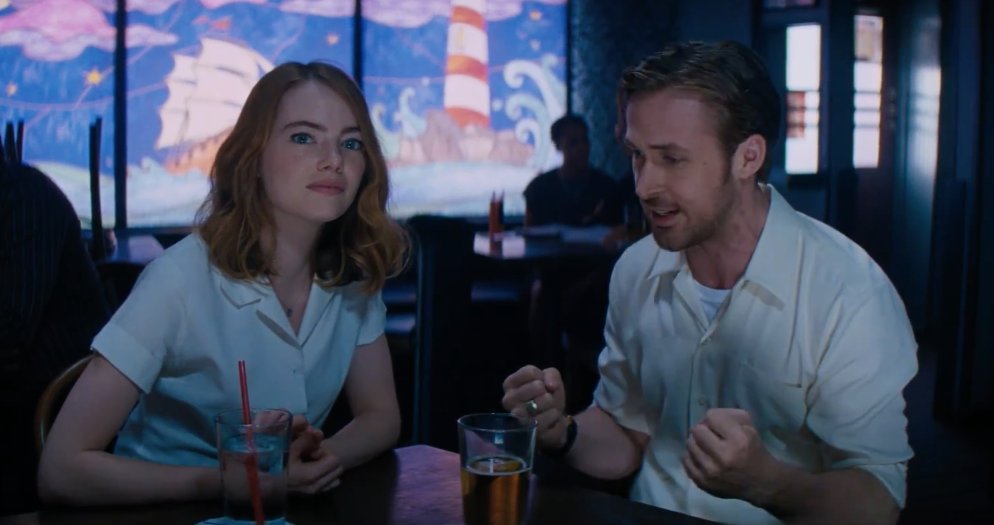
Emma Stone and Ryan Gosling star as an actress and a pianist united in their dreams of stardom in La La Land.

We don’t see musicals on the big screen as often as we did back in the 60’s and 70’s. La La Land may not make the musical phenomenon come back but it is very entertaining.

We’re constantly reminded that bringing a musical to the big screen is a very tricky job. In the past 15 years, I’ve seen a lot of cases of musicals being put on the big screen– most of which are adaptations of Broadway musicals– and it’s always been a case of sink-or-swim. There have been those done successfully like Moulin Rouge, Chicago, Dreamgirls and Les Miserables. There have also been adaptations with bad results like Rent, Nine, The Phantom Of The Opera and Mamma Mia. It’s a very tricky job and it may explain why we don’t have musicals as frequent as in decades past.

Now try putting a fresh original musical on the big screen. That’s what writer/director Damien Chazelle does here in cooperation with composer Justin Hurwitz who was Chazelle’s Harvard classmate. The musical is a story we’re familiar with: boy meets girl, boy learns girl also has showbiz dreams, both boy and girl are supportive of each other’s dreams, boy and girl both have long bumpy roads to get to their successes, boy and girl both achieve their own successes but their love is put to the test. One could argue anyone could create a musical with that kind of premise. Whatever the situation, it would have to take a lot of hard work and a lot of brainstorming to make a very good musical out of this. In addition, it would have to have the right songs, the right singing moments and the right dancing moments to make it succeed.

Chazelle and Hurwitz succeed in pulling it off. The story is familiar but they deliver all the right moves in making the story and the songs of the musical work. It’s not just about making a common story work as a musical on screen but have it set in the modern times too. I’ll admit that opening in the movie where there’s a song-and-dance number on a jammed-up freeway was unexpected. It’s not just set in modern time but it also brings back a lot of the classic scenes of Hollywood; the Hollywood we’ve all come to know and love. I think that’s why La La Land comes off as a gem. Because it’s a reminder of the great musicals of the past and why we love them so much. It’s just that charm.

It’s not just up to Chazelle and Hurwitz to make this musical work but also the actors too. Both Ryan Gosling and Emma Stone had to make things work as well both as individuals and both as the couple Mia and Sebastian. They had to tell their own stories of love and passion for their crafts and the heartbreak they had to endure to achieve their dreams. They both also had to play a couple with the right chemistry to work. They pull it off excellently both as a couple and in their own individual moments too. The supporting actors/singers/dancers also had their parts to play too and add to the zest of the musical. Their own participation also added to the movie. Sure some of the bigger supporting performances from John Legend, J.K. Simmons and Tom Everett Scott lacked range–I mean Mia and Sebastian were the dominant focus of the musical– but they did very well too. The film did a very good job in terms of the use of sets both set up and various Los Angeles locations. The film even scouted out some ‘old L. A.’ locations to add the charm. That was not an easy find, I’m sure.

And now onto the songs. My father who likes musicals believes having a memorable song is what makes a musical a masterpiece. I have to agree. I’ll say I agree with him that there is no single song in La La Land destined to be a memorable classic. True, ‘City Of Stars’ is getting a ton of awards but I don’t think it will be a classic 20 years from now. Actually my favorite songs were the opener ‘Another Day Of Sun’ and ‘Audition (Here’s To The Ones Who Dream).’

It’s funny. Years ago, I jokes the unique thing about my father is that he’s straight and he likes musicals. He was quick to remind me that back when he was dating my mother, musicals were the ideal date movie. My how times have changed. What defines a date movie has changed as much over the decade as ‘real man’ standards.

La La Land may not have what it takes to bring the musical phenomenon back to the big screen but it’s winning in it’s own right. Anytime soon I’m expecting a stage adaptation of this.

FENCES

fences
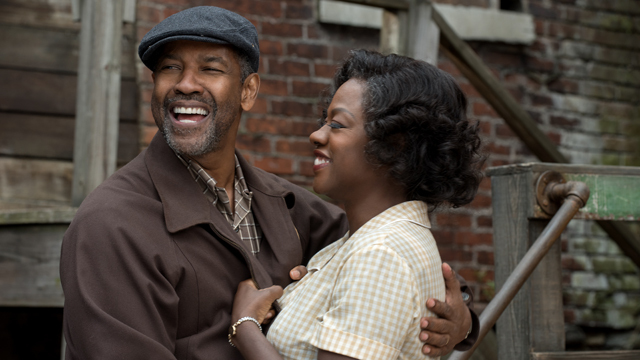
Denzel Washington and Viola Davis bring Troy and Rose Maxson to the big screen in Fences.

Fences is a play by August Wilson that won raves when it first came out in the 1980’s. Denzel Washington brings Fences to the big screen at long last and the end result is something wonderful.

Fences is unique as a stage play. It’s a story about Troy Maxson: an African-American man in 1950’s Pittsburgh who makes like he has it together but he doesn’t. He thinks he could have been the next Jackie Robinson but feels racism kept him from moving out of the Negro League. He wants to mould his son the way he feels right and wants him to be better than him but doesn’t sense how harsh he is. He wants to be seen as a loving husband to his wife Rose but secrets of his infidelity are about to unfold. He gets an opportunity as a driver of a garbage truck–the first ever for a black man in Pittsburgh– but is reminded of his weaknesses when he accidentally signs for his brother to be admitted into a mental hospital. He has his own feelings about what should be right such as how he feels it’s better to raise his son right than like him only to see it backfire. I’ve heard some writers say that every African-American male has some aspect of Troy Maxson in them. Some people say that Troy Maxson is the African-American everyman. Some can even say Troy Maxson is the black Willy Loman. Whatever the situation, it was the toast of the 1987 Tony Awards and definitely made a legend out of scriptwriter August Wilson.

Now Wilson had always dreamed of bringing Fences to the big screen. I know one of the things he insisted on was that it be directed by an African-American. That may or may not have been the biggest obstacle but it was never realized in Wilson’s lifetime; he died in 2005. Hope was revived in 2013 when Denzel Washington expressed interest in bringing it to the big screen and star as Troy Maxson. Washington played Maxson in a Broadway revival in 2010. He’s even had experience as a director with 2002’s Antwone Fisher and 2007’s The Great Debaters. The production was realized early in 2016 when Washington was joined by producer Scott Rudin who also produced the 2010 revival. Viola Davis who was also part of the revival as Rose Maxson soon joined in along with other actors from the revival like Mykelti Williamson, Russell Hornsby and Stephen Henderson. One thing was that Washington wanted to remain true to Wilson’s own adaptation in respect to his work.

Now adapting a play to the big screen is as much a tricky challenge as bringing a musical to the big screen. It’s a matter of choices of what to include and what to keep as is. Theatre and film are two different formats of medium. Film scenes are numerous and can be set in an unlimited number of  places in various amounts of time. Theatre scenes are often few, often quite lengthy, set in a limited number of places, and often consists of ‘moments of monologues.’ There’s even that 20-minute final scene in Fences where the family is getting ready for Troy’s funeral. Rarely in film do you have a scene after the death of the protagonist that’s even five minutes long. It’s a matter of making the adaptation work on the big screen. It’s also about what choices to add to the film adaptation and if they work. It was about choosing to add the scene of Troy and Jim Bono on the back of the garbage truck at the start. It was about including the scene without dialogue of Troy and Gabriel in the mental hospital. It was about keeping Alberta the mistress from being seen in the film in any which way.

Then there’s the acting. Of course it’s beneficial for most of the actors to have previous experience with the roles. However, it’s a known fact that stage acting and film acting have their differences. The biggest difference for film is that the audience expects a 100% believable performance, especially since it will be witnessed on a screen five-stories tall.

Overall I feel that Denzel Washington as a director/producer did a good job in adapting the play to the screen. It may not have the fast brief dialogues you get in your typical big screen fare but it was still done well and with the same truthfulness. The choices of what to add to the big screen adaptation were good choices, if not perfect. Denzel as an actor was definitely phenomenal in embodying the role of Troy in all of his triumphs and struggles. You could feel the pride and demons Troy was struggling with. Just as excellent is Viola Davis as Rose. The role of Rose was also a strong challenging role: a wife who appears happy and loving on the outside only to suddenly let out her hurt and inner wrath towards Troy and somehow come to peace with him upon his death. She does an excellent job of finally exposing Rose’s inner hurt and inner personal strength at the right times and even ending with believable delivery. The acting of the whole ensemble was very much there and as excellent as it can get. Of all the supporting performances, the one that stood out most was Stephen Henderson whose performance as Jim Bono came across as a common man at first but would soon come off as the man with a lot of wisdom and was able to see the good in Troy even while his terrible misdoings were being exposed. The ‘newcomers’ Jovan Adepo and Saniyya Sidney were also very good in their roles. Jovan especially did well as the son struggling to relate to Troy.

Fences is a triumph of a twelve year-old dream coming true. August Wilson dreamed it. Denzel achieved it. The end result is a masterpiece.

MANCHESTER BY THE SEA

manchester
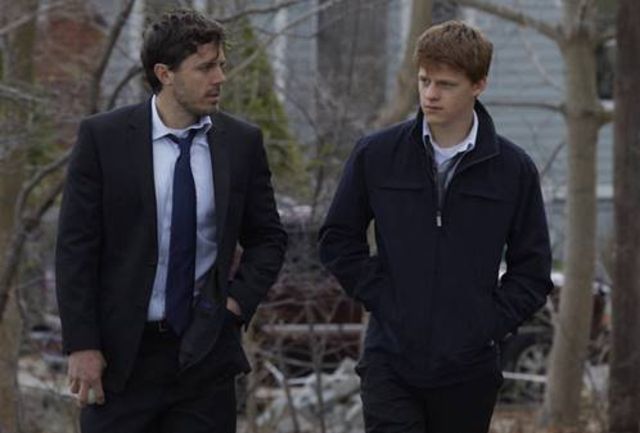
Manchester By The Sea is the story of an uncle (played by Casey Affleck, left) and a nephew (played by Lucas Hedges, right) who suddenly become closer through death.

Manchester By The Sea is a film that has been loaded with Oscar buzz ever since it made its debut at last year’s Sundance Film Festival. It’s easy to see why all the buzz.

The film presents a hurting person and showcases all the things that led to his hurt. It shows why he had to leave the town he always had as his home and why returning can’t be done. It shows why Lee Chandler comes across as a jerk in the present when he wasn’t like that at all years ago. The film is also about the relationship of Lee and Patrick. Rarely do we see a film about an uncle-nephew relationship. You think the relationship is something all of a sudden at first forced by something in his brother’s estate but it was always there even when the two were apart.

The film also presents a situation where healing or leaving the past behind is next-to-impossible. I’ve always believed people need to heal. It’s not right to hurt. I still believe it. However I can easily see how healing is very hard. You can see why it’s extremely hard for Lee to heal, especially upon returning to Manchester By The Sea, Massachusetts. His negligence that one night is why all three of his children were killed in that fire. The divorce from his wife Randi was bitter and she gave him hurtful words in the process. The town has not forgiven him for what he did: his name is still mud. Even moving to a suburb of Boston has not ended his hurt as he’s rude during his job and starts bar fights over the simplest thing.

The film does showcase Lee’s attempt to assimilate into the town and try to become the guardian to Patrick he hopes to be. The story does not water down as it exposes Lee’s failings. It also exposes how complicated the situation is as Patrick’s mother is a recovering alcoholic and still under strict control by her husband. It also shows how hard it is for Lee to forgive himself. Even as Randi says she’s forgiven him, Lee still can’t heal.

The story does not water down the situation or try to aim for the type of happier ending you’d get in a film like Arrival. The story does not end the way you hope it does. Nevertheless it does end with a ray of hope. Patrick is the closest relative to Lee. His parents and brother are gone and his other brother lives with his own family in Minnesota. Patrick is the one person in Manchester By The Sea outside of family friend George who doesn’t see Lee as this terrible person or rubs into Lee the tragedy he caused.

The film was not just about Lee trying to heal for Patrick but about Patrick too. Patrick is a teen with a lot of common ‘teenage make jerk’ traits like starting fights in hockey and cheating on girls but you know he has a naïve, innocent and even sensitive side and it comes out in his relationship with Lee that starts uneasy at first. Patrick still wants to live a normal teenage life by dating around, playing with his band, and talking about Star Trek with his friends, but you know he has feelings of hurt and frustration on the inside and you know they’ll come out eventually.  For all the teenage jerk traits Patrick has, his respect for Lee is his best quality. Patrick could have easily come across as a rebellious teen and gone as far as calling Lee a ‘child killer’ but he doesn’t. Possibly it’s being Joe’s son that may be why Patrick is the person most forgiving to Lee now that Joe is gone. Joe was the one person willing to help Lee live life again after the tragedy and Patrick accompanied Lee and Joe during that time. You can see how Patrick adopted his father’s sensitivity to Lee.

The story of this film is definitely not a crowd-winner. You can understand why a film like this would rely on the Film Festival circuit to get its exposure and its chances of making it to the box office. Nevertheless it is an excellent story about loss, grief, hurt and an attempt at healing. The film fest circuit was the best way for a story like this to get a box office release. It’s good because it is a story worth seeing.

Writer/director Kenneth Lonergan delivers an excellent original story. Lonergan has few works writing and/or directing to his credit but they have a lot of merit: like Analyze This, You Can Count On Me and The Gangs Of New York. This is his best work to date. He delivers a story that’s honest and even brutal at times and doesn’t water down but doesn’t try to rip at your heartstrings too often. He also gives characters that are three-dimensional and will remind you of people or situations you may know about.

Actor Casey Affleck fit the role of Lee excellently. He captured Lee’s inner demons excellently and played them very truthfully. He was able to make you hate Lee at first but come to understand him later, even feel for him, and make you want the best to work out for Lee in the end. Also excellent was Lucas Hedges. Hedges’ role of Patrick grows in its complexity over time and he does an excellent job of it. The two together had to have the right chemistry to make an uncle-nephew relationship like this work and they had it.

The only other significant supporting role in the film is Michelle Williams as Randi. The various scenes as the typical wife before the tragedy to being the remarried ex-wife who healed better than Lee and wants to make peace with him is also a complex role too and she does an excellent job of it too. Actually the whole cast did an excellent job of acting and they delivered one of the best ensemble performances of the year. It’s not just the basics that made this film great. There’s also the cinematography from Jody Lee Lipes where she’s able to get some of the most picturesque shots of the east coast. There’s the editing of the story shifting from the present to the past back to the present on a constant basis at the right times. There’s the inclusion of dialogue at the right moments and even moments of dialogue muted at the right times where you just know what they’re saying. The muted parts work to the story’s advantage. There’s also the arrangement of music–original, classical and choral– that add to the story.

Manchester By The Sea may come across as a film that’s unwatchable if you take its premise at face value. In the end, it turns out to be a great story that’s worth seeing.

And there you go. That’s the second of my review of the nominees. One’s an original musical, one’s an original story and one’s an adaptation of a renowned stage play. All three make it obvious why they were nominated for Best Picture as all three have what it takes to be among the Top 10 films of the year.

Final Best Picture summary is expected to be up by Tuesday.