Canada
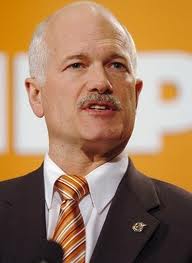
Jack Layton: 1950 – 2011
It’s extremely rare when a major politician dies in the middle of his term. It’s also unfortunate that Jack Layton dies soon after the biggest success for himself and his political party. Nevertheless his influence in Canadian politics will always be remembered.
John Gilbert Layton was born in Montreal on July 18, 1950 to a family with a huge political background. His mother Doris Steeves was a grand-niece to a Father of Confederation. His father Robert Layton was a Progressive Conservative MP who served as a Cabinet Minster during the Mulroney administration. His grandfather was a cabinet minister in Quebec parliament. His great-grandfather was an activist for the blind. Naturally he would follow in his family’s footsteps. He was elected student council of his high school and studied Political Science at McGill University. In 1969-1970 he was a member of the Quebec Youth Parliament. In 1970, the family moved to Toronto where he attended York University and received his PhD in Political Science. He became a professor at Ryerson University, was a prominent activist and wrote many books on political issues and his beliefs.
He first entered politics on a civic level. He was elected to Toronto City Council in 1982 and soon became one of the most outspoken members of the council and a leader of the left wing. He was one of the first advocates for rights for AIDS patients and spoke his opposition to the building of the Skydome and Toronto’s bid for the 1996 Summer Olympics. In 1985 he moved on to the Metropolitan Toronto council. In 1988 he became returned for the election to Toronto City Council. He not only won but his reformist coalition for which he headed gained control of City Council. In 1991, he made the move to run for mayor of Toronto. His opposition to the Olympic bid and the low popularity of the NDP party at the time caused him to lose the election. Layton would return to teaching and later founded an environmental consulting business, the Green Catalyst Group. He ran for the House of Commons twice in the 90’s and lost both times.
Then in January 2003 came the biggest breakthrough of his political career. He was elected leader of the federal NDP party. Before the 2004 election, Layton was already known for making some eyebrow-raising statements about the Liberal party led by Paul Martin shifting to being too right-wing. During the 2004 National Election, Layton accused the Liberal Party for the increase in homelessness and homeless deaths in Canada. Many people complained that it was negative campaigning. Layton caused another controversy during that election when he suggested the removal of the Clarity Act and allowing Quebec to declare independence upon a referendum vote. In that election the Layton-led NDP party had 15% of the popular vote, the highest in 15 years, and 19 seats in the House of Commons.
In the next federal election, in January 2006, Layton attempted to cast himself as the sole remaining champion of universal health care. Layton constantly repeated during the campaign to Canadian that they have a ‘third choice.’ Some conservative pundits mocked Layton and his stances. Some would paste Layton-styles moustaches on them and say things like ‘raise my taxes’ or ‘I’d like to pay higher gas prices.’ Layton also went all out in attacking the scandal-ridden Liberals at the time and pledged to use his minority clout to keep the Conservatives in check. The election resulted in 29 seats in the House of Commons for the NDP: 11 more than the previous election. Layton’s wife Olivia Chow was also elected to the House of Commons making them the first couple to be elected to the House.
During the 2008 Federal election, many were comparing Layton as trying to pass himself off as Canada’s Barack Obama. He shunned the comparisons and reminded people that he only simply shared the same views as him like the working class and the middle class. Layton also mentioned he told Obama and Hillary Clinton the North American Free Trade Agreement was hurting people on both sides of the border. Layton also spoke out about internet freedoms and his stance in favor of net neutrality, torrent sites, video-sharing sites and social networking sites. The NDP would go on to win a total of 37 seats in the House but would only be the fourth-most populous behind the Conservatives, Liberals and Bloc Quebecois. Shortly after the election in November 2008, Layton negotiated with Liberal leader Stephan Dion and Bloc leader Gilles Duceppe on forming a coalition to replace the Conservatives as the government. Prime Minister Stephen Harper responded by suspending parliament until January 2009. After Liberal leader Michael Ignatieff signed a budgetary agreement that would end the coalition, Layton declared: “If you oppose Mr. Harper and you want a new government, I urge you to support the NDP.”
In 2011, a new national election was called as the Conservative party was defeated in a Vote of Non-Confidence for contempt; the first time in the history of the Commonwealth for a government to receive a Vote on Non-Confidence. That resulted in Prime Minister Harper dissolving parliament for a new national election. During the election, appeal for the NDP started slow but Layton’s NDP party soon increased greatly in popularity after the leadership debates. The NDP moved past the Liberals into second place in the polls behind the Conservatives and first in Quebec. Soon after his popularity rose, a smear campaign came about as a retired police officer stated he saw Layton naked in a massage parlor back in 1996 but didn’t charge him. Layton responded that he was just simply getting a massage. In the end, no charges were laid against Layton. In the election, held May 2, 2011, the NDP won 103 Seats. That was the highest-ever total of seats for the NDP party and made the NDP the Official Opposition party to the Commons for the first time ever with Layton as the official opposition leader.
One thing known to few was of Jack Layton’s illness and the severity of it. In February 2010, he announced he had prostate cancer and vowed to beat it and continue to pursue his duties as the leader of the NDP. On July 25, almost three months since the national election, he announced he would take a temporary leave to fight an unspecified newly diagnosed cancer. He announced he planned to return as leader of the NDP once the House of Commons was to be resumed September 19, 2011 and recommended NDP caucus chair Nycole Turmel serve as interim leader. On the morning on August 22, 2011, Jack Layton died at his Toronto home. He was 61.
Jack Layton was a unique politician. He came from a family who had a lot of political experience. He rallied and campaigned for causes that were popular with the left and he strongly believed in as well. As a leader of a national party, he brought ideas and spoke of issues in ways unheard of before by leading Canadian politicians. He brought ideas unheard of before in Canadian parliament. Overall he was one p[politician who believed in a better Canada and wasn’t afraid to speak out about it. After his death, Prime Minister Stephen Harper said: “On behalf of all Canadians, I salute Jack’s contribution to public life, a contribution that will be sorely missed. I know one thing: Jack gave his fight against cancer everything he had. Indeed, Jack never backed down from any fight.”
As a fitting final tribute, Jack wrote a letter two days before his death. His family released the letter the day of his death that ended with these final words:
“My friends, love is better than anger. Hope is better than fear. Optimism is better than despair. So let us be loving, hopeful and optimistic. And we’ll change the world.”
WORKS CITED:
WIKIPEDIA: Jack Layton. Wikipedia.com. 2011. Wikimedia Foundation Inc. < http://en.wikipedia.org/wiki/Jack_Layton>
Election 2011: Canada Votes
Okay, some of you who don’t live in Canada have heard that we have a National Election—the 41st Canadian General Election– in which we will be voting on May 2nd, but don’t know all the details of what’s going on. Here are the details about what’s been happening and what to anticipate.
For those unfamiliar with how Canadian elections work compared to American elections, Canadian elections are held on any given date instead of the first Tuesday of November. A Prime Minister’s term can be any length of time instead of the solid four years of an American President’s term, even though most Prime Minister terms are between three to five years. While Presidential Elections are decided by electoral votes based on which Party wins the most votes per state, Canadian Prime Ministers are decided by the most won seats with each voting district or region deciding its own winning Member of Parliament per Seat. In other words, while citizens vote for electors in the Presidential election and the winning Party in the state wins all the state’s electors, Canadians vote for MP seats in the Prime Minister election. While an American President is decided by the most electoral votes, even if he doesn’t have the highest total of votes, A Canadian Prime Minister can be declared upon winning the most seats even if they don’t have the highest total of votes. So there are some similarities between Canadian elections and American elections but a lot of differences.
Now for the current political scenario in Canada. Politics in Canada has gone through a lot of chaos over the past few years; so chaotic this is the FOURTH National Election in seven years. The most recent National Election was declared in the aftermath of a political scandal. Stephen Harper’s Conservative party was long considered to be in contempt of parliament at the beginning of March upon refusing to meet Opposition requests for details of proposed bills and their cost estimates. The Liberal Party responded by declaring a motion of non-confidence against the Government and on March 25, 2011, the House voted agreeing 156-145 to the motion. This marked the first time in the history of Canada or any nation in the Commonwealth of Nations that a cabinet has been found in contempt of Parliament. Following a meeting with Stephen Harper, Governor-General David Johnston agrees to dissolve the 40th Canadian Parliament and a Federal Election was declared.
Even before the most recent election was declared, Canadian politics has already been known for its chaos in the last seven years. Back in 2005, the Liberal Party under then-Prime Minister Paul Martin faced a sponsorship scandal of what would be documented in the Gomery Report. Even though Paul Martin had been Prime Minister for less than a year, an election was declared and in January 2006 Conservative Party Leader Stephen Harper won the election with a minority of seats. The Conservative Party victory was considered an arrival for political conservatives in Canada who struggled during the 90’s after the eventual decline of the Progressive Conservative party upon the resignation of Brian Mulroney.
Another national election was held less than three years later in October 2008 and Harper’s Conservatives again won the election with a minority with Liberals, Bloc Quebecois and NDP making up most of the remaining seats. Shortly after the 2008 Federal Election, the Liberals and NDPs banded together for an overthrow of the Conservative government through a unified vote of non-confidence. Some may call it the right thing, others political mutiny. Whatever the situation, the coalition didn’t succeed and the Harper-led Conservatives remained the leading party of Canada. Since then, many Liberals have tried to distance themselves from the coalition.
Now it’s Stephen Harper’s try for a third term as Prime Minister. He comes in the election with the scandal creating baggage for him, but not a lot. Before the scandal, the Conservatives were tops in the polls and they still remain on top. One thing Stephen Harper is hoping for is a Conservative majority, especially with the 2008 attempted coalition still in his Party’s memory. The most surprising fact of the polls is that the Liberal Party is not the party with the second-highest ratings but the NDP. The Jack Layton-led NDP surpassed the Liberals in the April 20th poll and the most recent polls have the NDPs at an average of 31.4% in comparison with 3% for the Conservatives and the Liberals at 20%. This has many believing that the NDP could be setting up for a possible upset for Monday’s election; maybe even a Prime Minister Layton. Mind you the polls only represent popular voting patterns. It will all be decided when the ridings vote for the MP’s and their parties.
Win or lose, Jack Layton appears poised to have the biggest National Election result for the NDP party ever. The biggest ever result for the NDP Party is 43 seats in the 1988 election while the Party was led by Ed Broadbent. Even its founder, Tommy Douglas, never experienced the success Ed received. One difficulty of Layton’s, especially after the coalition, is for the NDP to distinguish its political platform from that of the Liberal Party. Too many voters label the NDP to be like the Liberals since they are on the same left stance. This may be seen good for liberal-siding voters but not so good for the NDP’s own identity. Whether Jack Layton wins or loses, he will have to prove the NDP’s distinction from the Liberals politically. Otherwise voters will continue to believe the NDP and Liberals are two choices of the same stance.
Then there’s the Bloc Quebecois. The Bloc was started in response to a resurgence of Quebec nationalism felt after the decline of the Parti Quebecois and after the Meech Lake Accord, which was intended to grant Quebec distinct constitutional status, was overturned in 1990. The party has attracted Quebec nationalists and even prompted a second referendum in 1995 in which Quebec nationalism lost again. Despite Quebec nationalism being voted down, the party has always won at least 50% of the Seats open to Quebec. The Bloc had 49 Seats in the last election–47 are still current– with 10% of the popular vote in Canada and 38.1% of the vote in Quebec. However recent polls have them at 7%. Could this mark a decline of the Bloc?
Party aspects aside, One thing about the election is that the parties are hoping for a better voter turnout than what happened during the 2008 election. Then, the voter turnout was 58.8%, the lowest turnout percentage ever for a National Election. Parties have been making the effort to urge voters out. Even campuses have had young people out to drum out support. Interesting how around the time I first became an adult, MTV started a ‘Rock The Vote’ campaign around the time of the 1992 Presidential election and MuchMusic started ‘Vote With A Vengeance’ for the 1993 Federal Election. This election, there’s no ‘Vote With A Vengeance’ campaign. Funny. Doesn’t Much care anymore?
The big day is May 2nd, tomorrow to be exact. Canadian history will be decided by the people. The election results and its aftermath will further shape Canadian democracy in the years to come. Stay tuned. As for Canadians, get out and vote!
WORKS CITED:
WIKIPEDIA: Canadian Federal Election, 2011.Wikipedia.com. 2011. Wikimedia Foundation Inc. <http://en.wikipedia.org/wiki/Canadian_federal_election_2011>
WIKIPEDIA: New Democratic Party.Wikipedia.com. 2011. Wikimedia Foundation Inc. <http://en.wikipedia.org/wiki/New_Democratic_Party>
WIKIPEDIA:Opinion Polling in the Canadian Federal Election, 2011.Wikipedia.com. 2011. Wikimedia Foundation Inc. <http://en.wikipedia.org/wiki/Opinion_polling_in_the_Canadian_federal_election,_2011>
WIKIPEDIA: Bloc Quebecois. Wikipedia.com. 2011. Wikimedia Foundation Inc. <http://en.wikipedia.org/wiki/Bloc_Qu%C3%A9b%C3%A9cois>
In The Wake Of The Japanese Tsunami, Are You Prepared?
Ever since the late evening of Thursday March 10th leading into Friday the 11th, the story of the Japanese tsunami and aftermath has dominated our headlines. We constantly see images, both professional and amateur, as well as the latest news updates. It’s both alarming and upsetting. It’s also a sobering reminder that something like this can strike close to home, especially if you live on either the east coast or west coast.
The news first broke this past Thursday night or very early Friday morning. A powerful earthquake in the Pacific Ocean just 100 miles east of Japan’s northern coast caused a tsunami that hit the coast of Japan, especially the city of Sendai, really hard. The quake measured 9.0 on the Richter scale and is the seventh-highest ever recorded. Replays of the wave’s crashing caught on amateur video has left many shocked. Some who were up during the early morning hours were able to see live footage of the wave as it was travelling towards the west coasts of the Americas. The destruction to the Japanese coast and surrounding areas has been in the news daily. The statistics of destruction and human loss are growing. Many anticipate the final death toll to reach around 20,000.
Another shocking thing about this disaster is that it comes more than six years after the 2004 tsunami in the Indian Ocean which claimed a total of almost a quarter-million lives in many countries. That ranks as the deadliest tsunami in history. I’m sure many of us still have images of the disaster fresh in our minds.
Those living near the west coasts of the Americas had the least damage to deal with. Hawaii was hardest hit but there was no loss of life and damage was minimal. Even the west coasts of the Americas had their own damage to deal with but the most damage individual areas faced was one or two million dollars. We were pretty lucky. Nevertheless one thing citizens living on or near coastal land need to remember is that a tsunami can strike at anytime. Where there’s a coast by an ocean, sea or lake, there’s a tsunami danger. The big question is do we know how to take action?
For one thing, warning systems are an excellent start for prevention. First part involves network sensors to detect threatening waves. Second part involves a communications infrastructure to issue timely alarms to permit evacuation of coastal areas. This can beneficial since the tsunami from days ago was distant enough from the Americas to allow ample time for warning. Although beneficial, they are imperfect as in the case for Japan in this instance. Tsunamis can come as fast as 600 miles/hour and the earthquake epicenter for this tsunami was 100 miles east of the coast. This wouldn’t allow for ample time to save enough property or enough lives. Nevertheless new advances in warning are still yet to come. After the 2004 Indian Ocean tsunami, an Internation Early Warning Programme was proposed immediately after and it resulted in the Indian Ocean Tsunami Warning System. I’m sure after the Japanese tsunami, there will me more pressure to follow through on the Internation Early Warning Programme and propose for more technological advancements.
Technological devices are also helpful. One such is the DART buoy: DART standing for Deep-ocean Assessment and Reporting of Tsunamis. These buoys are held in place off coast to detect possible tsunami threats along with a Bottom Pressure Recording package to detect pressure changes of the tsunamis. The United States has 39 DART buoys in the Pacific and Atlantic Oceans and The Caribbean Sea. Since 2009, other countries have started to use DART buoys for tsunami detection. Another such is a tsunami warning system like the Pacific Tsunami Warning System based in Honolulu which records seismic activity in the Pacific Ocean. Although not every Ocean earthquake causes a tsunami, the computers assist in analyzing the tsunami risk of every earthquake that occurs in the Pacific Ocean and the adjoining land masses.
Then there’s also local preventative measures. Some are natural, like mangroves, coastal vegetation and coral reefs which helped to cause the least damage during the 2004 Indian Ocean tsunami. Others are constructed like seawalls and floodgates. Japan has constructed some seawalls that are as tall as 15 feet to protect populated areas. Seawalls may have to be expanded in the wake of the most recent tsunami. All Pacific Rim countries have organized evacuation routes and practice evacuation procedures. In Japan, such preparation is mandatory for government, local authorities, emergency services and the population. Vancouver even has some disaster relief routes. There’s even preparation information and a program from BC’s Ministry of Safety and Solicitor General. It’s up to the governments to inform the public at risk to be informed how to take action.
The tsunami in northern Japan is a chilling and sobering wake up call to those who live on or near coastal areas. This will undoubtedly leave many questioning if such a disaster can happen to them and how would they respond. This will also leave government agencies time to question whether they have the right technological means to detect warnings necessary for alerts and possible evacuations. Hopefully none of us will have to experience what those in northern Japan are dealing with right now.
WORKS CITED:
WIKIPEDIA: Tsunami.Wikipedia.com. 2011. Wikimedia Foundation Inc. <http://en.wikipedia.org/wiki/Tsunami>
WIKIPEDIA: Tsunami Warning System.Wikipedia.com. 2011. Wikimedia Foundation Inc. <http://en.wikipedia.org/wiki/Tsunami_warning_system>
WIKIPEDIA: International Early Warning Programme.Wikipedia.com. 2011. Wikimedia Foundation Inc. <http://en.wikipedia.org/wiki/International_Early_Warning_Programme>
WIKIPEDIA: Deep-ocean Assessment and Reporting of Tsunamis (DART).Wikipedia.com. 2011. Wikimedia Foundation Inc. <http://en.wikipedia.org/wiki/Deep-ocean_Assessment_and_Reporting_of_Tsunamis>
Christy Clark’s Pre-Election Baggage
Hi. This is my first non-movie article. Hope you like it.
The BC Liberal Party announced a new leader on Saturday, February 26th. Her name is Christy Clark. She is to replace Gordon Campbell who has served as Premier since 2001 but recently resigned due to low ratings. Being Premier of BC is a big job for the 45 year-old, especially after Campbell’s recent resignation. The big question is how will she and the BC Liberal Party hold in the next provincial election?
Currently Premier-Designate Christy Clark is no stranger to politics. If you saw her resume, you’d see she has quite a list of accomplishments. Her first political victory came at the age of 30 when she was elected MLA for the Port-Moody-Westwood riding in 1996. At the start, while the Liberals were the official opposition party in BC, she served as the Official Opposition critic for the environment, children and families and for the public service. As the Liberal Party headed by Gordon Campbell prepared for the provincial election of 2001, she served as the campaign co-chair in which the Party won 77 of the 79 seats. Once Gordon Campbell was sworn in as Premier, she was appointed Deputy Premier and the Minister of Education. She would be appointed Minister of Children and Family Development in January 2004. In September of that same year, she quit provincial politics and did not seek re-election of her MLA position in 2005. She would later seek leadership of the Non-Partisan Association for the Vancouver mayor election that same year, but lost to eventual mayor Sam Sullivan.
She’s also a popular media figure too. She was a weekly columnist for the Vancouver Sun and Vancouver Province during the 2005 provincial election and was a television election analyst during the 2006 federal election. She also hosted a Vancouver radio show: The Christy Clark Show from 2007 until she decided to enter the premier leadership back in December.
Even though no provincial election has been called yet, she faces a bumpy road for the BC Liberal Party firstly based on past election results. On the provincial side of things, leading provincial parties face a huge electoral loss after their leader resigns as premier. Past history in the last 30 years have proven so. In Manitoba, NDP Howard Pawley, who was elected premier in 1981, resigned. The leadership then went to Gary Doer. The NDP finished the election with the third-most ridings. Doer would have to wait until three more provincial elections before being elected premier of Manitoba. BC premier Glenn Clark, who headed the NDP Party, resigned in 1999 and would be replaced by Dan Miller and Ujjal Dosanjh the following year. The BC NDP, headed by Dosanjh would face a humiliating loss of winning 2 of 79 seats, paving the way for Gordon Campbell and the BC Liberals. Carole James, the NDP leader since, has headed the party in two provincial elections, regaining many seats for the NDP but losing to Campbell both times.
Nationally, political parties have had its own dark days when their leader resigns as Prime Minister. In 1984, Pierre Trudeau resigned as Prime Minister and John Turner would be voted head the Liberal Party. In the national election, his Liberal party would lose to the PC Party headed by Brian Mulroney. Turner remains the Prime Minister with the second-shortest leadership. He would head the federal Liberal party in the following federal election in 1988 and would lose to the Mulroney PC’s again. The PC Party would soon face its own party troubles after Mulroney resigned in 1993. Kim Campbell succeeded him. However Campbell and the PC’s would face a crushing defeat in the federal election that same year by winning only two seats. The Liberal’s headed by Jean Chretien would win the federal election. Chretien would be re-elected twice more while Canadian Conservatives would struggle with political parties for many years. The PC Party ran again in 1997, would reconstruct themselves at the Canadian Alliance Party for the 2000 federal election, and would them become the Conservative Party in time for the 2004 election.
If past elections aren’t enough for Christy to cause concern, it would be the Campbell leadership, especially in the last year. Campbell’s leadership has always been through a rocky road ever since he was elected but he would be hit hardest in 2010 upon introducing the HST. The introduction of the tax, and the rapid implementation if it, proved to be very unpopular amongst British Columbians. Soon after, the polls had him at an approval rating of just 9%, the lowest of any provincial premier. This was cause for him to resign in November of 2010.
Now despite party problems, Christy Clark has had some political problems of her own once she’s sworn in on March 14th. As Minister of Education, she introduced changes like stronger parental power, increased accountability and provided greater parental choice in the flexibility in the school system. This proved unpopular with teachers, school board members and union officials as they believed it resulted in funding gaps. She also sought to increase the independence of the BC College of Teachers against strong opposition from the BC Teachers Federation. She also has allegations against her regarding a BC Rail scandal when she was deputy premier, although nothing has been proven against her. Those could hurt her come election time.
Currently no provincial election date has been set, and there may not even be one for a full year. Dawn Black is currently interim leader of the BC NDP Party, succeeding Carole James. Jane Sterk leads the Green Party. The BC Conservative Party is not associated with the national Conservative Party and may have a slim chance in the election. Nevertheless all opposition parties have a good chance at rivaling Clark and the Liberals in the eventual provincial election. In this period of time, Sterk and Black have to prove themselves worthy of the office of provincial Premier. Black already has a lengthy resume of her own political accomplishments while Sterk has yet to prove herself. In the meantime, Clark can use the time to her advantage to improve her political image and the image of the Liberal Party in this post-Campbell era as an effort to win the next election. She would also have to use the time to prove she is worthy of being Premier of British Columbia.
With the next provincial election happening anytime, Christy Clark arrives at the Premier’s desk with a lot of baggage of the Campbell Administration and of her own doing. Despite it all, only time will tell whether she has what it takes to be Premier of British Columbia and whether she and the BC Liberals deserve to win the election.
WORK CITED:
WIKIPEDIA: Christy Clark.Wikipedia.com. 2011. Wikimedia Foundation Inc. <http://en.wikipedia.org/wiki/Christy_Clark>