VIFF 2025 Shorts Segment Review: Forum 3 – The peripheral core

One thing about being into cinema is that it will give you a liking for short films. I saw a second segment or forum of shorts at the VIFF entitled The peripheral core. This segment, the third Forum segment, consisted of eight films that are very similar, very different, but tell a lot.

-Resistance Meditation (dir. Sara Wylie): In this documentary, we see a woman (possibly director Wylie) sleeping in bed. As she sleeps, Wylie talks about sleeping and how the time on the clock we follow is ‘corporate time.’ As she lays in bad, we learn she has a disability and she calls her sleep here ‘crip time.’ It’s not just for her sleep, but to rebel against the demands of the capitalist world.

Simply put, this is a five-minute documentary where the filmmaker has something to say. Although I don’t completely agree with her opinion about ‘corporate time,’ I like how she makes her statement in a creative way. It makes sense to present filming of sleeping and her speaking her belief about time, disability and rebelling against it.

-A Very Straight Neck (Japan – dir. Neo Sora): A woman wakes up from her sleep and has terrible neck pain. The dream she has haunts her. Her dream was she was lying face-down on the sidewalk of a busy street and the world passes around her. Even crumbling out of its existence in her mind.

This is a picturesque short film which the focus is on unspoken images and the main character narrating in the background. The biggest quality is the visuals as it adds to the story and creates the mood of what she’s trying to say. Sometimes we can understand the pain she’s going through. Very well done.

-Not Enough for the Love Inside (Brazil – dirs. Marcelo Matos de Oliveira and Wallace Nogueira): Cassio and Otto are both gay couple in Bahia, Brazil and both became blind recently. Cassio is unemployed while Otto is able to participate with a theatre group. Through all that happens in the story and Cassio’s body language, one can’t help but notice the relationship appears doomed to end.

The biggest quality of the film is the body language. I don’t know if both became blind from the same incident or from separate incidents, but you can understand how sudden changes can affect a relationship. The body language in the film is as valuable to the story as the dialogue itself. It creates the negative vibe of a relationship that is starting to fall apart.

-The Sphinx (USA – dir. Jesse Pavdeen): Harold is a young adult locksmith by profession, but he has a problem. He was born without a nose and he needs to wear a prosthetic. His nose falls off during a date, but his date doesn’t mind. She encourages him to come to a party. Things get worse when the people at the party want him to show ‘his true self.’ He takes his nose off and they all laugh. He runs to his estranged mother’s house, but she has the door locked with seven locks. Meeting with his father exposes the secret.

When you have short films, you should expect a bizarre comedy or two. Harold is seen as The Sphinx as The Sphinx itself has its nose missing. I’ve seen stories of missing body parts or weird body parts before, but this comedy does a unique job in showing one young man’s flaw and how the world treats him. Even his mother who has cut herself off from everyone. It’s a bizarre story that’s humorous too.

-Confluence (Canada – dirs. Charlene Moore and Oliver Darrius Merrick King): This is a documentary made by Indigenous members of the Winnipeg Film Group for their 50th anniversary. As images of parts of Winnipeg are shown on screen, the Indigenous members of the Group talk about various topics like their land and colonizing, being an Indigenous person, filmmaking as an Indigenous person and even envisioning the future and pondering ideas of what to film next.

I’m from Winnipeg and I remember the Winnipeg Film Group and how it took a modest area in an office building back in the 1990’s. The Group has grown a lot. This documentary is important because in recent decades, the Indigenous peoples are getting more into the arts and holding their own. Film has a bright future in Winnipeg, but the Indigenous filmmakers show the most promise and most envisioning. It’s good to hear them speak their minds about the topics as we view images of Winnipeg.

-In My Hand (Norway – dirs. Marja Helander and Liselotte Wajstedt): The film begins with a re-enactment of Norwegian Sami activist Niillas Somby waking up in prison with his amputated arm bandaged. Niillas narrated how he spent 21 years in prison and was involved greatly with Sami activism. He also talks of the accidental battery explosion from 1981 that led to the loss of his arm. He also talks of the time he went to Canada cleverly disguised as a white man and with a fake passport. The film ends in the present with present-day Niillas and today’s Sami activists.

This is another film that showcases the racism felt by a nation’s first peoples. In this case, it’s the Sami peoples of the Nordic nations. Niillas Somby tells his story about what it was like to be a Sami activist and of some of the illegal things he did in his life. We hear Somby narrate as the moments are re-enacted in front of us. This is a valuable story in learning about their struggle and has a message worth hearing.

-Cocotte Coulombe, Filmmaker (Canada – dir. Charles-Francois Asselin): Charles-Francois has always known his unmarried deaf aunt Cocotte. He does remember her bringing a film camera to family events. It’s after her death that he discovered she had taken lots of family films. As he watches the family films of hers, he discovers this was they way she communicated her love to them.

This documentary is great at telling its story. Cocotte’s family films play in the background as Charles-Francois tells his story of Cocotte and his recent discovery of the films. It’s an intimate story of how a film maker himself learns how home videos were not just a hobby for Cocotte, but also the means for a deaf family member to show her love to them. It was nice to watch.

-We Were The Scenery (USA – dir. Christopher Radcliff): In 1978, Hoa Thi Le and Hue Nguyen Che were Vietnamese refugees in a refugee camp in the Philippines. During that time in that same place, Francis Ford Coppola was filming Apocalypse Now and wanted to use the refugees as extras for the film. Le and Che rewatch Apocalypse Now and during the scenes, they point themselves out and mention of other people they knew personally as their appearances come on screen.

This is one documentary one would not expect. Most of us who saw Apocalypse Now probably never bothered to notice the extras were from a Vietnamese refugee camp. It was great to hear the story of how a couple who are married were those very extras and they saw it as just a way to make some extra money. It’s also a smart choice the director had them tell their story in Vietnamese. Although they are now American citizens, telling their story in Vietnamese only adds to this documentary.

And that was my experience with the short films from Forum 3: The peripheral core. Interesting how with this forum, five of the eight films were documentaries. Although I prefer watching live-action, I still found the documentaries intriguing to watch. Whatever the documentaries had to say, they said it well in their own way. For the live-action, they were unique to watch as well.

VIFF 2025 Review: The Track

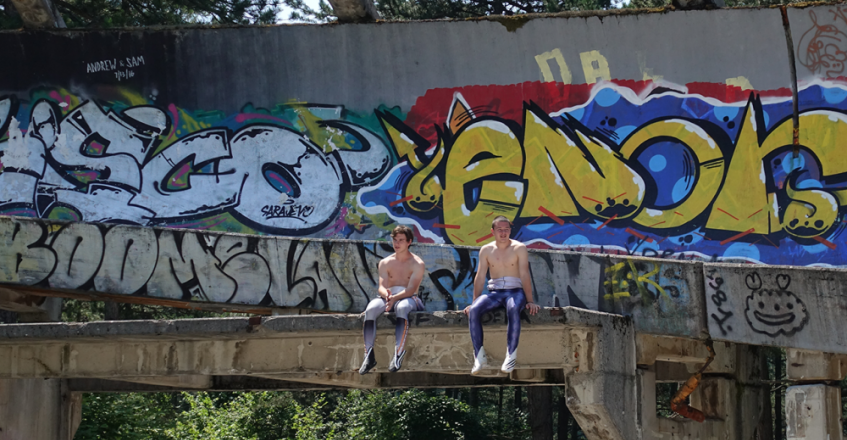
The Track is about three Bosnian lugers who are not only dreaming of an Olympic chance, but restoring vitality into a damaged Olympic site.

You might wonder why would anyone be interested in a documentary about something from the 1984 Winter Olympic Games? The Track isn’t solely about a track used for the 1984 Winter Olympics, but making a future happen.

It’s February 2018 in Sarajevo, Bosnia and the Pyeongchang Winter Olympics are happening. Three teenage boys in Sarajevo — Zlatan, Mirza and Hamza — are watching the luge competition with their coach Senad and observing how the best lugers steer their sleds. They have a luge track a distance away because of the Sarajevo Winter Olympics from 1984, but it’s hard to sled on. During the Balkan War from 1992 to 1995, the track was subject to a lot of bullet damage. In the decades that followed, little had been done to repair it back to the world class form it had during the Olympics and before the Balkan War.

Despite the shabby graffiti-ridden cement track, the three boys still have the dream to compete at the next Olympics and Senad is willing to coach them. Fortunately, one of the boys is an engineering student and he is able to help create a roller luge to ride on a concrete track. Also Senad is willing to help use concrete patches to help fix up the track. For all of them, the fixing, building and training comes at a big expense for them as they won’t be receiving much government funding.

One thing about this is it is coming as it is hard to be a young person in Bosnia-Hercegovina. In the decades that followed the end of the war, the nation of Bosnia-Hercegovina has struggled to rebuild itself. The war devastated a lot of populations. In the Balkan nations, many young people feel they have to leave for another nation in order to get wealth. The corruption of the governments that have since led Bosnia has caused additional problems. As for sport, there’s very little money going around for Olympic sports and luge hardly gets much, if any money. Despite all that, all three boys and the coach still stay strong with their dream.

One thing about this Olympic dream is four years is a long way. As the three are young, they’re in that stage of life trying to decide about what their future will be. Some come from difficult family situations where they may have to supply them with an income. One comes from a family where the father left them and he has to look out for his mother and younger sisters. It may have them questioning if doing luge is worth their time. To add to it, the coach Senad makes it clear his health is ailing. It’s hard to coach the three especially since he would be paid very little for coaching.

The year 2018 is about getting the roller sleds ready, the track patched up and the boys watching luge competitions to see how it’s done. The summer is used as a time to use the roller sleds for their luging. It’s not an easy thing to do as the track is also a tourist attraction. 2019, the practices still continue for the boys as they ponder their futures. Training gets better as the track is better patched up and the sledders are able to do more sledding. They even enter international junior competitions such as one in Calgary. 2020 is a setback not just for them, but the whole world as the COVID pandemic. They have to use makeshift training methods for training. The pressure of it all gets to the point Zlatan can’t do it anymore.

As 2021 begins, the COVID pandemic is still active but the training has to get more serious. Senad adds two new cross training methods for the two. He adds in running up the Igman Olympic Jumps, another abandoned Olympic site, as part of their cross-training. He also includes indoor training at the Zetra Olympic Hall — the former Olympic arena rebuilt as a multi-purpose recreation facility — to develop their speed and conditioning more. Mirza, Senad and Hamza make television appearances. Senad goes as far as talking about his failing health in one interview.

Then the 2021-2022 luge season. For either Mirza and Hamza to qualify for the Olympic Games, they need to achieve a qualifying time and a qualifying place during the Luge world Cup circuit. This would be tough for them as they will finally sled on ice. The first attempt was Altenberg, Germany in December 2021. It did not happen as Mirza, the one with the best chances, fell from his sled near the end. He’s unhappy about it, but he has to ready himself as there’s the next meet in Innsbruck the following week. In Innsbruck, he completes both his runs and achieves the qualifying time. His Olympic berth is guaranteed! At the Beijing Olympics, Mirza is one of the two flagbearers for Bosnia during the Opening Ceremony. He competes the next day and finishes last. Nevertheless, he is proud of his achievement of competing. He also talks about his increase in social media popularity. As Mirza and Senad are back at home and on the track, they reflect and talk about their ‘impossible possibility.’

This documentary is not just about athletes dreaming of the Olympic Games. This is also about restoring life to an Olympic site that was devastated. This is about four people and their families trying to make dreams come true despite the difficulties of their livelihoods. This is about giving some vitality to a nation still recovering from a devastating war that lasted 3 1/2 years and they’re still picking up the pieces from. During that war, over 100,000 people were killed, over 2.2 million people were displaced and Sarajevo became the longest-sieged capital city ever. I myself remember watching the Sarajevo Olympics when I was a child. I also remember nonstop news stories of the Bosnian War as I was a college student and I often wondered if it would ever end. Since then, the nation has struggled to rebuild, government corruption has been common and many people have had to find opportunity in other nations.

The documentary shows how the three boys and their coach are training for their athletic dreams, but it also shows how the boys are also growing into young men. The documentary takes place over a four-year time frame. Their athletic dreams face frequent obstacles like their family situations, their maturation into adults, trying to decide their futures, and dealing with living in a nation with limited opportunity. It’s not like they live in Germany, Austria, Italy, the US or Canada where they can juggle it all with less difficulty. They have little to no funding, they have difficult living situations and they’re training on a shabby track. It’s almost like they’re the Olympic amateurs of past decades before professionals were allowed to compete starting in the 1980’s. It’s an against-all-odds story where they won.

If there’s one flaw of the documentary, I think it’s about the limited amount of footage in the film. It does a good job of showing the four training and of their family situation, but I feel the film could have also focused more on the background of the Olympic track and why it became shabby over time. It does often mention of the Sarajevo Olympics of 1984 and of the Bosnian War in the 1990’s, but it’s mostly brief moments. Seeing them train for their dream was great to see, but past references could have been added in more. Even more footage of what the track looked like in its Olympic glory days would be great. Despite what I want, that does not stop in telling a good story of Olympic dreams.

Top respect for director Ryan Sidhoo. He knows the story is about them and he has them tell the story as it happens over the four -year period. We often see these up-close-and-personal stories of Olympians before they compete in their big moment, but this is unique that it’s over this four-year period. Although there were some areas where it could have been better, I feel Ryan did an excellent job of showing their stories. Oh, and for those wondering about for the upcoming Cortina Olympics this coming February, Mirza is still luging. For the 2024-2025 season, he finished 20th in the World Cup standings and looks poised to compete at the upcoming Olympics and do much better than his placing in Beijing. Only this coming luge season will tell by how well he does.

The Track is more than just a documentary of Olympic dreams. It’s a story of hope for sport, for a nation, and for the young. The chronology of telling the story over four years tells you why this story is about a lot more.

VIFF 2025 Shorts Segment Review: Forum 2 – Memory & Meditation

With the VIFF happening, I have to see at least one segment of short films. Forum 2 – Memory & Meditation was the first one I saw. Some are live- action, some animated, while some are documentary style. All are intriguing in their own way.

One Duck Down (Canada – dir. Lindsay Aksarniq McIntyre): This film is a five-minute documentary. Lindsay Aksarniq McIntyre returns to her home in the Arctic tundra. There she finds the carcass of a duck with the feathers still on. As we see imagery of the duck, various shot ducks, the land and the waters, she tells of the area and of her own personal story.

The documentary is fast, brief and simple, but also intimate. If you look at the imagery, you can understand why Lindsay talks of the area. It’s the area she grew up in and was raised. The imagery means a lot to her. Even that of a dead duck means a lot to her as hunting was most likely part of her family’s livelihood. It was nice to see.

Baadarane (Lebanon – dir. Sarah El Kadi): In a small town in Lebanon, a young boy loses his mother. At her funeral at the mosque, he hears people always talking of God as they pay their last respects to her. Some even saying this is ‘God’s will.’ That causes him to think. Did God punish her with a young death? He himself feels he’s at odds with God for her death.

You can tell the theme of God is omnipresent in the film as God’s name is mentioned throughout. I guess it’s common living in a Muslim society to hear God frequently referenced. The story does capture a young boy’s crisis of faith especially since his mother died and many reference it as God’s will. It makes him question if his mother was a bad person to die so young. The black-and-white filming adds in as at a young age, it does seem like a black-and-white issue and you don’t know what to think.

Water Girl (France/Netherlands/Portugal – dir. Sandra Desmazieres): An elderly woman looks out to the empty seashore as she drinks coffee. As she looks out, she’s reminded of the times she used to doo deep-sea fishing for a living. She also remembers the time at the nearby lounge where she used to drink, be entertained and romance.

Animation usually does a lot with storytelling and imagery that live-action normally can’t. This story of a woman reminiscing on a coastline really creates the environment of her past and uses the imagery of fish and various colors to help add to the storytelling. The story is slow, but creates a mood and is a delight to watch.

-Adieu Ugarit (Canada – dir. Samy Benammar): The film is a documentary where a Syrian refugee named Mohamed tells his story. He tells of growing up in a harsh dictatorship mixed with political turmoil in Syria and knowing as a soldier, his life could be taken any time. Unfortunately, his best friend was murdered by militia men just outside of Damascus in 2012. He recounts these memories as we see imagery of a peaceful land and water.

This documentary is of a story that we rarely hear about, but needs to be heard. Benammar makes a smart move in having the audio of Mohamed telling his story as we see imagery of the land and the water. The land and water is in the Laurentian area of Ontario but it brings back his traumatic memories. Especially that of a lake in Syria filled with the blood of soldiers. As Mohamed tells his story, the images haunt us back.

-A Light That Doesn’t Dim (USA – dir. Colby Barrios): Sister Jones is a Mormon missionary in Mexico. You can tell by the look on her face she’s not happy about something. Could it be homesickness? Could it be a lack of faith? She makes it clear in her diary she wants to go home. Meeting with elders does not help her personal crisis any more. Then one night, she has images that shock her and haunt her.

Of all the characters in the film’s shorts, It’s Sister Jones that will cut the deepest. She faces either a crisis of faith or homesickness, but no one is there to help. Colby’s distortive and hallucinatory imagery in the film adds to the traumatic feel to the story and makes us feel the frustration of Sister Jones’ situation. It makes the story unforgettable.

-Four Walls And A Memory (Poland – dir. Joanna Piatek): A young girl is on the run from a wild creature. She enders into a cabin, but the creature enters. Fortunately in the run, the creature hits his head on the wall and dies. For some reason, the girl doesn’t leave. She stays for days where she even makes food out of the dead creature’s leg, makes the creature like a blanket overnight and dances with the creature as she hears music from the radio of a passer-by.

The film festival is known for showing films with out-of-the-ordinary stories, but the magic of animation is it can take out-of-the-ordinary to even bigger lengths. It does seem odd for the girl to go from running from the creature to eating one of his limbs to making him a blanket to dancing with him. Sometimes you think the story is about her overcoming her fears, but it could end up being more than that. It’s subject to one’s opinions.

-WASSUPKAYLEE (USA – dir. Pepi Ginsberg): Kaylee, a young awkward teenage girl, is a social media influencer in a house popular with TikTok content and with other teen influencers. Despite the other influencers befriending her, Kaylee feels out of place as they all have bigger followings than her. Everything changes as one of the boys tries to do a high dive from the house roof into the pool. He misses and is badly hurt. As all reach out to communicate the emergency, Kaylee does it on social media and that gives her the breakthrough she’s been waiting for. Also the boy will be just fine.

Although this story doesn’t take the same creative chances as the other films in this shorts forum, it does tell a story. It’s a story relatable as we have a lot of young people who want to grow up to be a social media influencer. Kaylee is like a lot of teenagers where her self-esteem is connected to her popularity. She shouldn’t let her lack of a breakthrough get to her, but it does. Fortunately she does get a breakthrough. It may be due to the result of an injured friend, but he’ll be fine.

And there’s my look at the short films of the VIFF segment Forum 2 – Memory & Meditation. Two were documentaries, two were animated and three were dramas. Two were made by Canadians, two by Americans, and the other three from France, Poland and Lebanon. All were intriguing to watch.

VIFF Is Back For 2025

The Vancouver International Film Festival is back for 2025 to make it their 44th annual festival. As has been since the COVID pandemic, it’s a total of eleven days. One noticeable change from different years is this year’s festival is now beginning on the first Thursday of October: October 2nd. That’s a change as it normally begins on the last Thursday of September. I’m assuming they’re doing this change so that the Festival gets a boost when it ends on the Sunday before Canadian Thanksgiving: October 13th.

From the 2nd to the 12th of October, this year’s Film Festival will continue to show films and host VIFF Industry conferences on various vocations of filmmaking as well as VIFF Amp conferences about musicians and music in film. Also returning to VIFF are VIFF Labs forums in skill development VIFF Catalyst forums highlighting work from rising filmmakers. VIFF Talks and Special events also returns but most events are ticketed with prices bigger than the average VIFF ticket. VIFF Live is back with four musical performances and VIFF Signals is back to showcase futuristic media and art.

New for myself is a new set of volunteer duties. For this year, I have been assigned volunteer duties with the ‘Strike and Load’ team. From what I’ve sensed, the Strike and Load team are the people involved with setting up the theatre venues for the film festival either with VIFF posters or VIFF booths or various other VIFF materials. The team will also be needed to disassemble things at the end of the Festival or whatever last festival day at the venue. My first two shifts will be during the two days before the Festival begins. I’m involved with set-up at Granville Island, International Village and the VIFF Theatre days before the Festival begins. I’m also involved with takedown and return of supplies in the afternoon of Thanksgiving.

Now time to focus on to the films at VIFF. This year, VIFF has rebounded to host a total of 284 films in both short films and feature-length. That’s over 100 more than last year. If you’re like me and continue to have a big interest in VIFF’s running of films that are a nation’s official entry in the Academy Awards category of Best International Feature Film, 24 films here are a nation’s official entry in that category, including Canada’s: the Turkish-language The Things You Kill.

For the returning theatres, International Village is the main venue for most of the films while the Playhouse Theatre hosting the galas and more featured films and the VanCity Theatre hosting major films and events. Rio Theatre, Chan Centre for the Performing Arts, Cinematheque, SFU Goldthorp Theatre and Cinema 3 of Fifth Avenue Cinema return as venues for VIFF 2025. New for VIFF this year is four more added venues for film and special concerts:

  • Theatre 7 of International Village: This will expand the number of International Village theatres used for VIFF to four.
  • Alliance Francaise Vancouver: The recently-opened new venue for the Alliance Francaise school has a 165-seat theatre for stage and film. Contrary to popular belief, the venue will not only show French-language films.
  • Granville Island Theatre: Host venue for the Arts Club Theatre, this 440-seat theatre on Granville Island will host VIFF films for the first time and during the last three days of the Festival.
  • H. R. MacMillan Space Centre: The 209-seat space centre is the venue for a special VIFF event. Wilfred Buck’s Star Stories will be showcased on October 10th. The mix of storytelling and visual imager should make for a great spectacle.

Now onto the highlighted films of VIFF 2025:

OPENING GALA: Nouvelle Vague – Normally you would not expect a director like Richard Linklater to direct a timepiece set in Paris in 1959, but that’s what he does. This is a story of Jean-Luc Godard trying to break into the Paris film scene despite tough competition. He meets up with Jean Seberg and Jean-Paul Belmondo to make the film he hopes to be his breakthrough.

CLOSING GALA: Köln 75 – Interesting the film for the Closing Gala will take place the day before with a live concert. The German film directed by Ido Fluk is the story of American composer Keith Jarrett and his efforts against a stack of odds to do his legendary improvised concert in Cologne in 1975. The film won three awards at the Barcelona-Sant Jordi Film Festival.

After The Hunt – Directed by Luca Guadagnino and starring Julia Roberts and Leonardo Di Caprio, this film focuses on a professor who has to deal with a memory of sexual harassment as a student of hers brings up her own harassment issue. The story promises to cut deep.

Christy – David Michod directs this biopic of Christy Martin who helped pioneer women’s boxing in the 1990’s. Christy, played by Sydney Sweeney, first feels she’s fated for the common female life in her younger years until a punch thrown by her changes everything. The road to the top isn’t easy as her manager/husband is very abusive.

Father Mother Sister Brother – Directed by Jim Jarmusch and featuring a stellar cast including Tom Waits, Adam Driver, Charlotte Rampling, Cate Blanchett and Mayim Bialik, this is a family story of siblings around the world and their parents who they feel are distant, both physically and emotionally.

Franz – Poland’s official submission for the Oscars directed by Agnieszka Holland, this biopic of Franz Kafka explores his life and also tries to put a fictional twist to try to get into Kafka’s mind and create a biopic that’s just as much of an enigma as Kafka himself.

It Was Just An Accident – Winner of the Palme door at this year’s Cannes Film Festival and France’s official Oscars submission, Jafar Panahi’s latest film is a story of a man who does a ‘Good Samaritan’ act to a man on the road whom he later recalls as his violent cellmate from his past prison days. The good deed soon turns into a trigger for revenge.

Jay Kelly – The latest film from Noah Baumbach, Jay Kelly is an A-list Hollywood actor who appears to have it all, but feels empty. He’s tired of playing himself all the time in movies but he doesn’t even know who he is anymore. George Clooney plays Jay Kelly and Adam Sandler plays his manager.

Kokuho – Japan’s official submission for the Oscars, Lee Sang-il creates a story of two brothers adopted by a Kabuki actor and trains then to be Kabuki actors themselves. As they excel over the decades, the two rival each other for greatness while still trying to maintain their brotherly bond.

The Mastermind – Kelly Reichard directs a crime comedy set in a small Massachusetts town in 1970. There, an art lover at the less-than-inspiring art gallery conducts a clumsy hoist to steal four modestly valued paintings only having no clue what to do next. It’s like a crime with no clue!

Mile End Kicks – A Canadian film directed by Chandler Levack. The film takes us back to 2011 as a young aspiring female music critic is pursuing writing a book about Alanis Morisette’s Jagged Little Pill album. Her goal changes as she comes across two members of an indie rock band and decides to be their publicist. The film parodies the sexism of music journalism while also becoming a heartfelt story.

Nirvanna the Band the Show the Movie – If you think they misspelled Nirvana, you’re wrong. This Canadian comedy directed by Matt Johnson stars Johnson and Jay McCarrol and is based off their hit web series. Their movie is of a band that fails to make it until a soda-fueled Accident sends them time travelling back to 2008. It’s part Back To The Future, part pop culture parody.

No Other Choice – South Korea’s official Oscars submission, director Park Chan-wook does a Korean adaptation of Donald Westlake’s 1997 novel The Ax. A paper mill executive who was laid off from his executive job tries a corporate maneuver to overtake the competition in hopes of it paving the way for his next job. Will it work? The mix of drama and satire will set the scene.

Palestine 36 – Palestine’s official submission for this year’s Oscars, Annemarie Jacir directs a timepiece story of the Palestinian uprising against British rule in 1936. The story follows a man who becomes a soldier of the rebellion after his fellow villagers get their land conquered and are frequently pillage. The story appears to show how the present echoes the past.

A Private Life – Directed by Rebecca Zlotowski and starring Jodie Foster in her third French-language role! Foster plays a psychiatrist who must research information about a patient’s death, but her own neuroses complicate her search. The film is a mystery thriller that mixes satire.

Rental Family – Directed by Japanese director Hikari and starring Brendan Fraser. A lonely American actor who’s hired as part of a Japanese ‘rental family’ system of renting actors to be family members for events finds a family he connects with emotionally and wants to stay with them past his term of work.

The Secret Agent – Brazil’s official submission for this year’s Academy Awards, this film is a Cannes award winner for director Kleber Mendonca Filho and lead actor Wagner Moura. It’s a neo-noir political drama set in Brazil in 1977of a man who ran afoul with an influential politician that’s part of the national dictatorship at the time.

Sentimental Value – Norway’s official Academy Awards submission and a Grand Prix winner at Cannes. Two actress sisters who recently lost their mother have the added burden of dealing with their director father who abandoned the family when they were children. The story is as much about the daughter’s lives as much as the attempt at reconciliation. Stars Stellan Skarsgard, Renate Reinsve and Elle Fanning.

Sirāt – Spain’s official submission for this year’s Oscars and a Jury Prize winner at this year’s Cannes. Director Oliver Laxe delivers a story of a Spanish man and his son in the Moroccan Sahara searching for his missing daughter. An anarchic desert rave party and the aftermath make it hard for them and helpers they meet at the rave deal with the treacherous landscape and an ecstasy that becomes a damnation.

Steal Away – A Canadian horror film directed by Clement Virgo. An overprotected teenage girl is introduced to a refugee girl her mother has taken into shelter. As she becomes overly curious in the girl, even sexually, a terrible secret in her family estate is threatening to expose itself.

Wake Up Dead Man: A Knives Out Mystery – Director Rian Johnson returns with Daniel Craig again playing detective Benoit Blanc. This mystery is in New England and involves a gothic church with eccentric parishioners. The murder makes it hard to solve when it appears divine intervention could be involved with it.

Young Mothers – Belgium’s official Oscars submission. Jean-Pierre Dardenne and Luc Dardenne direct a story of five young mothers part of a teenage mothers outreach program. They go through the difficulties of being a mother at such a young age and try to take the next steps in motherhood and trying to make a future for themselves.

And there you go. That’s my preview of VIFF 2025. Lots to look forward to. My reviews of the films I watch will be coming shortly. I hope to see ten or more, despite how difficult my schedule is right now.
VIFF 2024 Ends On A Good Note

I know that VIFF ended over two months ago, but I lacked the drive to write for a long time. Since we’ve passed Christmas, I figured it’s enough wasting time and to get out the wrap-up blog.

Last year, the Vancouver International Film Festival ended the Sunday before Canadian Thanksgiving. This year, they end on Sunday October 6th: a week before Canadian Thanksgiving. Still, it was an excellent 11 days of cinema. Yes, there was the continuation of downsizing for the festival. There were less than half the number of films there were in past Festivals before the pandemic. The church that used to be the Centre In Vancouver For Performing Arts was not available this year as it has been in past years. Despite that, most facilities that had been available for the VIFF in past years were available again. VIFF also continued to showcase digital films and digital arts as it’s fast becoming a growing art form. The common cinematic films still remained the highlight of the Festival and there were excellent turn outs. There were sellout shows and repeat screenings for many films. I’ll explain more when I talk about my volunteering experience.

For this year, I was only lucky to see twelve films. I still had my goals of watching a shorts segment, a Canadian feature-length film and a Best International Feature Film Oscar contender. I was able to accomplish all three. I often want to go above and beyond it but it didn’t work out. I didn’t have as much free time during VIFF as I normally do. Outside of Monday September 30th that was a national holiday, there weren’t any regular weekdays when I could see films at any time. Another problem was not as many films had a 9:30 start time on the weekdays that’s often the best bet for me. Despite those setbacks, I did make it work. Twelve is the same number of films I saw last year. There were at least two days when I saw three films. Yes, I have a habit of cramming. Actually there were three days I saw three films but one was a day I saw a single one by choice and the other two as an usher.

For volunteering, I worked ushering at the International Village again. The crazy thing about this year is there were a lot of changes in set-up. In the past, there would be a ticket purchase booth at ground level, line control and organizing for the three cinemas on the second and the cinemas on the third floor. This year there was no booth on the main floor, lines were still on the second but ticket purchase was on the third floor just outside the theatre entrance. Even the volunteer meeting room changed. In the past, it was in a room past the theatre admission area. This year it was moved to an area just outside the main entrance. It was a lot of getting used to and sometimes a discomfort. I volunteered for three days.

The first two shifts took place the evening of the first Saturday (September 28th) and the Sunday afternoon the following day. For those two days, they were mostly to do with line control and supervising the Platinum Pass lounge. In both cases, I didn’t have the luck of seeing films. It was after that Sunday afternoon shift completed that I went to see two films after. On Saturday, October 5th, I had the luck of being able to see an Altered States film before I could start my third and last volunteer shift. With it being my last shift for the year, I had the luck of being an usher and seeing two films in the theatre. Both were documentaries.

With only nine films seen before the last day of the Festival (Sunday October 6th), I made the final day my catch-up day. There would be two films I wanted to see but would not be guaranteed a seat because their tickets sold out: the Latvian animated film Flow and the Farsi-language Canadian film Universal Language. I first took a gamble with Flow by being in the standby line-up 45 minutes in advance. After waiting and waiting, I was able to get in. I got in ten minutes after it began. It was that high in demand and it was one of the few films at VIFF open to all ages. I saw it and enjoyed it. Also I wasn’t too disappointed with coming in late because I would later have the luck of seeing it in its entirety at the VIFF volunteer party held a week later! For the rest of the day before attempting to see Universal Language, I tried making judgments of what else to see and when. I saw the Marlina film in between that time and then went back to the International Village to be early enough to see Universal Language. While the gamble with Flow paid off, the gamble with Universal Language didn’t. Being only second in the standby line did not assure me a seat. So with limited time and distance left, I rushed over to the Queen Elizabeth Theatre Warehouse to see The End. Although I wasn’t happy with The End, I was glad to see the last film of VIFF 2024 to complete itself.

For those that want a list of the films I saw at VIFF 2024, here they are in the order I saw them in:

Now some of you may want to know which films are the award winners. There were six juried award winners and nine people’s choice award winners. Interesting for this year, they changed the names of the juried categories! Descriptions of the awards are with the named categories:

JURIED AWARD WINNERS

SUMMIT Award
for outstanding narrative feature by an established Canadian director:
Universal Language (dir. Matthew Rankin)

HORIZON Award
for outstanding first or second feature by a Canadian filmmaker:
Mongrels (dir. George Yoo)

TIDES Award
for outstanding documentary feature by a Canadian filmmaker:
Ninan Auassat: We, The Children (dir. Kim O’Bomsawin)

ARBUTUS Award
for outstanding feature film production in BC:
Inay (Mama) (dir. Thea Loo)

SHORT FORUM Award
open to all short films in the Short Forums
Strawberry Shortcake (dir. Deborah Devyn Chuang)

VANGUARD Award
open to all feature films in VIFF’s Vanguard section
78 Days (dir. Emilija Gasic)

AUDIENCE AWARDS

Galas and Special Presentations
I’m Still Here (dir. Walter Salles)

Showcase
No Other Land (dirs. Basel Adra, Hamdan Ballal, Yuval Abraham & Rachel Szor)

Panorama
Angela’s Shadow (dir. Jules Arita Koostachin)

Vanguard
Red Path (dir. Lotfi Achour)

Northern Lights
The Stand (dir. Christopher Auchter)

Insights
The Chef and the Daruma (dir. Mads K. Baekkevold)

Spectrum
Grand Theft Hamlet (dir. Pinny Grylls & Sam Crane)

Portraits
Luther: Never Too Much (dir. Dawn Porter)

Altered States
40 Acres (dir. R. T. Thorne)

There you have it! That’s my long-delayed wrap up blog for VIFF 2024. Next year’s VIFF will actually start in the month of October! The Festival is expected to go from October 2 – 12 in 2025. Looking forward to it.

VIFF 2024 Review: Paying For It

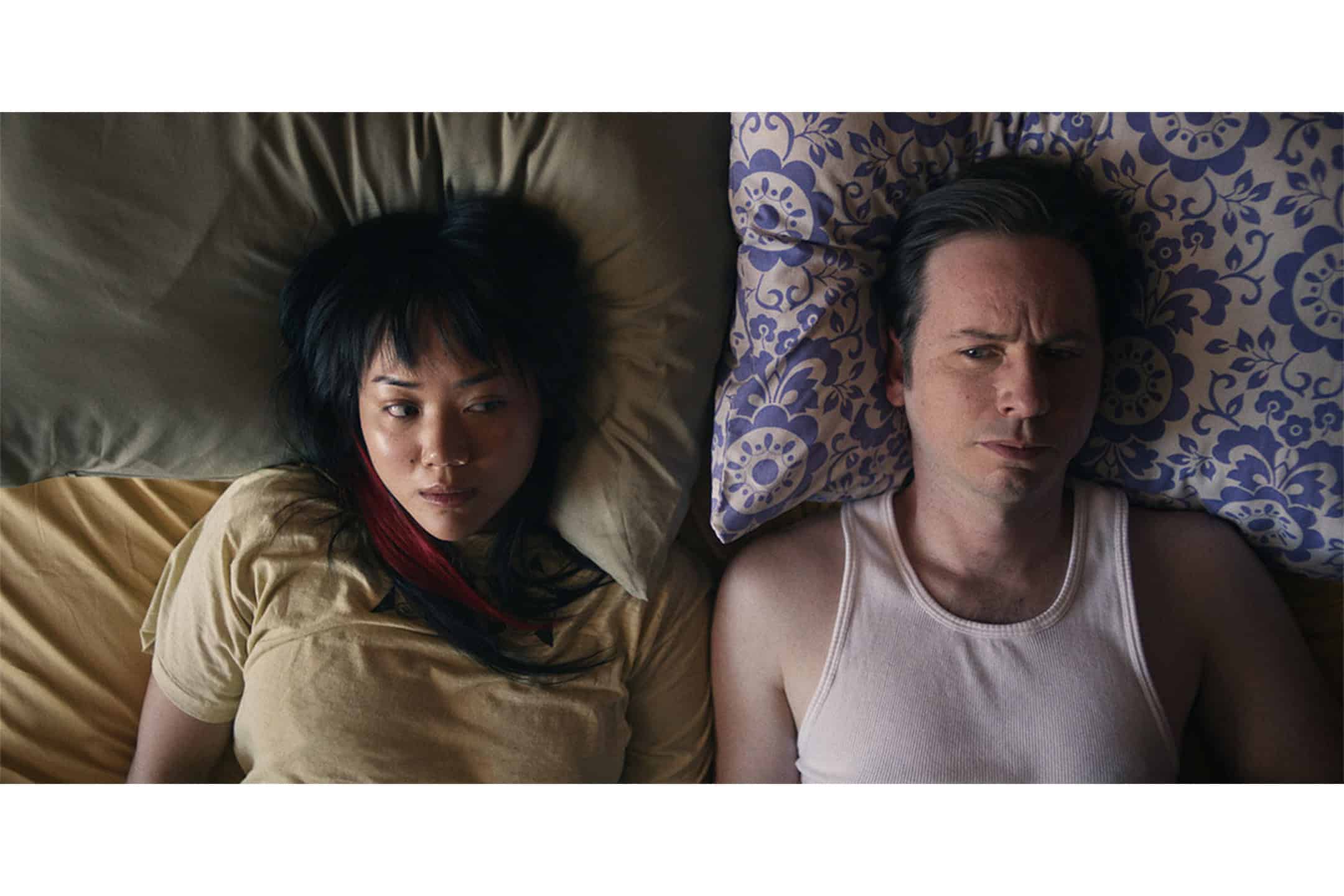
Emily Le and Dan Beirne play a couple who try open love and go in unorthodox directions in the oddball romance Paying For It.

I first took an interest to Paying For It knowing it’s directed by Sook-Yin Lee. I had no clue of what to expect. Boy was I in for a surprise!

Chester Brown and Sonny Lee are a Toronto couple in a tough situation. They’ve had a romantic relationship together for years and do a lot together, but they haven’t had sex in a long time. Both Chester and Sonny come from two different worlds in the arts. Sonny is a video jockey on the music channel Max Music and Chester is an illustrator/author of cartoon books that detail his personal life. Sonny has a few friends at her place of work while Chester frequently meets with his work colleagues from the same writing community and has a close friendship bond with them. Sonny has a lot of success but Chester is struggling to make a name for himself. Chester is quite introverted and keeps to his circle while Sonny’s not afraid to meet new people.

Sonny recommends they try open love. Maybe they were or weren’t meant for each other and maybe they need time away to figure it out. Sonny being famous on national television has no problem finding other men. Chester on the other hand struggles. His author friends warn him jealousy will sink in pretty soon. Chester does become frustrated how Sonny is able to find many a nightly partner. It even reflects in his illustrations. Chester tries an unorthodox route advised from one of his writer friends: prostitutes. Besides, he’s given up on romantic love.

Over time, both find a lot of pleasure from what they get into but they struggle to find the one. Every other man Sonny hitches up with, he’s a great passionate lover but they’re not as fun as Chester and they don’t relate to her as well. Also at work, she learns one of her female colleagues is attracted to her. Meanwhile each prostitute and escort Chester gets involved with involves something complicating or some kind of discomfort. Many are willing to give Chester what he wants that night but most of them completely back off of any commitment. Some even have demands of their own. Despite it all, Chester is finding a quality in this he feels is missing in monogamy.

Simultaneously, both have difficulties and challenges at their own jobs. Sonny had no problem being a VJ while the alternative rock wave of the 90’s was riding high, but the wave has become a ripple and in came the tsunami of boy bands and other teenpop acts Sonny does not like introducing at all. Over time, Chester and his friends question about what’s going on with his many hook-ups and it affects the art for his latest literature. Especially since Chester hasn’t found ‘the one’ and it’s frustrating for him.

Then things change over time. Chester’s writing career and the careers of his writer-colleagues get a boost. Chester also spends the night with an escort who’s her own madam and it changes his life. Sonny, on the other hand, won’t be silent about the frustration with her job and her life, even on live TV. That eventually leads her to be dropped form Max Music. The two eventually reunite during a tragic moment. The death of her dog. It’s as they mourn together they learn they had something so special, no new love of theirs can replace that, even though they have to move on.

The film is about this complicated thing called love. I’m sure a lot of you look at the situation in your relationships and find yourselves asking why can’t we just love? Why do we have to make it complicated? This film itself is about that human fallibility of making love more complicated than it should. In this case, it’s not just creating the freedom of an open relationship but also the types of people both of them date during that time. Then there’s the mix of the two professions that are similar that they’re both in art or entertainment, but very different. Then there’s the talking with friends. The people they most trust to confide into and divulge their personal feelings. Then there are the changes in their lives. Then there are human idiocies and their attitudes. All that is what makes love more complicated than it should be.

Basically this is a story about a relationship that was doomed to end. Chester and Sonny are close, but complicated. The expired birth control should send that message. Eventually Chester and Sonny grew as different people and learned in the end, they were best as friends. Chester may have found a new love with an escort who’s her own madam but his relationship with Sonny made clear he’ll never have a closeness with another that’s the same. Sonny may have found men that were better at making love, but she learned they all made lousy partners. It was Chester who had no problem with her squirt gun or her dog or any of her other oddities. The ending gave a message I have seen often enough where two in a relationship couldn’t succeed as a couple but they could succeed as soul mates.

The film does give a lot of humor and in a lot of ways is somewhat biographical of both Brown and Lee. For those that remember MuchMusic during the 80’s and 90’s, you will remember Sook-Yin Lee as one of the VJ’s in the 1990’s. Yep, Canadian Generation Xer’s like me and early Millennials will have fond memories of her. Those of us who remember her from that and see the film will see the humor in how what’s happening in the film mirrors her own life and will laugh at the humor involved. Those who have read the book Paying For It will know that Brown and Lee were romantically linked and it detailed the complications. The film does some changes with the dates as it has the film taking place as Sonny’s career is bustling while Brown’s is struggling. In real life, Brown started his relationship with Sook-Yin in 1992, before she was signed onto MuchMusic and the relationship ended in 1996 just shortly as Sook-Yin’s MuchMusic fame took off.

This is a great alternative comedy from director Sook Yin-Lee. It is a very personal story to her and she’s able to show the comedy in it in this story she co-wrote with writer Joanne Sarazen. She’s also able to make some of the changes in chronology work for the flow of the film. There were some elements of shock in the film, but the story and settings made the shock humor work. Emily Le is great as Sonny Lee. She’s great at doing the comically side of the story as well as some of the more serious moments. She may not be Sook-Yin’s twin as far as personality goes but she knows how to do it well. Dan Beirne was also great as Chester Brown. I myself never knew Chester or read his works so I’m judging his performance for how well Dan did his role. Beirne was very good at playing an introvert engaging in a sexual activity most introverts wouldn’t normally try and it changes him. His awkward traits made the character and the story. The addition of the other supporting characters like Chester’s writer friends or Sonny’s ‘other men’ also added to the storytelling and the comedy of the film.

Paying For It isn’t just a sex comedy full of sex humor and some shock humor. It’s also quite a smart comedy about a couple that could no longer be but have a special bond. It’s even a comedy that tells about our own idiocies when it comes to love.

VIFF 2024 Review: There, There

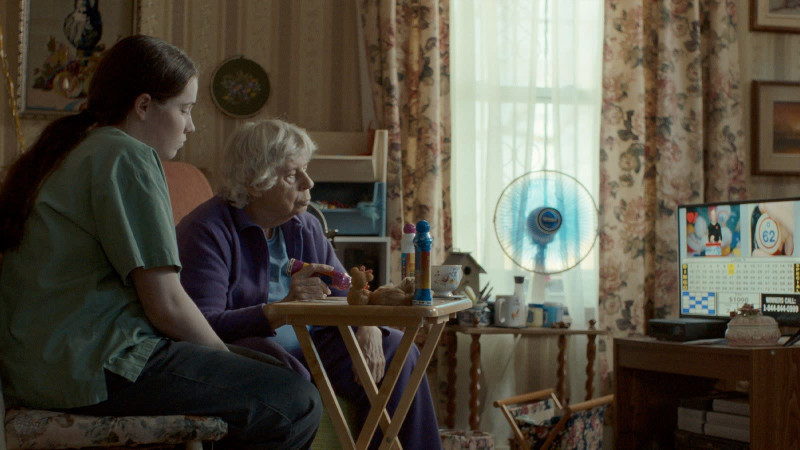
A young home-care nurse (played by Katie Mattattall) and her elderly patient (played by Marlene Jewell) form an unlikely friendship in There, There.

One thing at the VIFF is that it’s known for showcasing works from various filmmakers from Canada. There, There is the latest film from Nova Scotia director Heather Brown. It tells of an unlikely friendship of two people.

Ruth is an elderly woman living in her small Halifax home. She is doing the best she can to live her life but she is limited in both her physical ability and her mental ability. She does get home care from a young nurse named Shannon. Shannon helps with Ruth through her daily life and even helps her with playing television bingo and getting bread crumbs for Ruth to mix seeds and feed birds. Feeding birds is a favorite past-time of Ruth. Shannon is roommates with her best friend who is a social media influencer. Sometimes Shannon helps with her videos.

Soon, we learn both women are going through difficulties in their lives. For Ruth, her memory has been declining. She sees a doctor concerned she may be developing dementia. She also notices her house has been getting more insects. She buys bug spray from her local store and tapes dead bugs on paper to show the doctor. She fears the bugs are entering her body. She experiences incontinence one day. As for people in her life, Shannon is the only one who visits and the storekeeper appears to be the only other person who talks to her.

As for Shannon, she’s pregnant. Her boyfriend, who has goals of being a race car driver, has abandoned her. Even blocking her communication from social media messages. Despite that, she’s looking to get her boyfriend to face up. She even goes to the racetrack to no avail. She searches for a lawyer to take him to court once the baby is born. Meanwhile her best friend seems to be more focused on social media than on their friendship.

For a while, the two are able to find the time they need to relax. Ruth is able to make her way to the parks or the street areas where she’s able to feed the birds. Despite her pregnancy, Shannon is able to find time for a night out. The two are also helpful to each other in their own ways. There was one time when Shannon was in tears while nursing and Ruth gives her comfort. Shannon also gave Ruth her phone number in case any problems. Then almost simultaneously, everything changed. Ruth found herself stuck in an unknown place and lost in the night. Around that same time, Shannon goes into labor.

Also simultaneously, both women experience the changes in their lives. Ruth is unfit to live alone anymore. Her dementia has gotten so bad, she now has to be in a nursing home. Shannon has given birth to her daughter. For a period of time, the place she lives in becomes a place for three. Both women also learn the new changes in their lives cause them problems. Ruth may get fed, bathed and included in activities of vitality, but she can’t go out of her nursing home to feed the birds like she used to. The doors are securely locked so none of their residents can leave unassisted. As for other belongings, most of hers are now gone and she relies on donations. One donation bag, she finds a baby doll she keeps. For Shannon, her friend moves out of the place because she finds living with someone else’s baby a discomfort for her life. Shannon is still trying to pursue her boyfriend. One time, she goes to a car wash after spotting him in hopes of confronting him and showing him his child.

One day, a ray of hope. Shannon pays a visit to Ruth at the nursing home. They watch a show together. Shannon brought some bread crumbs and is able to take Ruth out to a park to feed the birds. During the visit, Ruth claims no one has visited her in years. Shannon lets her know she’ll be there. The film ends in a quiet moment with both women at their place of rest and symbolizing how they both share a bond.

This is a film of two types of women who would be seen as getting the short ends of the stick. We have a lonely elderly woman in the last years of her life concerned for her physical and mental well-being, but still trying to life as vital of a life she can. We also have a young woman who’s pregnant sooner than she hoped through a boyfriend that ended up to be irresponsible. In what should be a carefree time in her life, she faces a lot of pressures and frustrations and it’s slowly becoming a discomfort for her roommate. I’m sure you may know a woman in either of these situations. Although it’s a case where they are normally supposed to be associated with each other just as nurse and patient, it becomes a lot more over time. Just as the sudden changes happen for both of them, they reunite and it becomes obvious they have a bond between them. The story becomes a case of two lonely Halifax women of different backgrounds finding a type of unity with each other. It’s as much heartwarming as it is heartbreaking.

Some people may dismiss this as a boring film. It’s important to know when you go to a film not knowing what it’s about or just going to a film because it’s available for you to see, you should welcome what you see and judge once it’s over. From how I’ve seen it, this is a story of two women of two backgrounds that are quite common in our society. The story moves slowly but each scene tells a lot of what the two women are dealing with and how they live their lives at any given point of time. For those that have seen this film, you will notice many scenes where there is no dialogue. It’s likely the scenes were meant to do its own storytelling by imagery instead of words. With each scene without dialogue, it does a very good job of telling its story and creating the scene. The film’s mix of using scenes of dialogue and scenes of wordless imagery help in telling the stories of both women, their separate lives and their unique bond.

It’s been said by many that films should not answer everything about the story. It should have the audience asking questions or forming their answers. What the film shows presents a lot. What the film doesn’t show also presents a lot too. After seeing the film, it did leave me with a lot of questions about both Ruth and Shannon. For Ruth, it had me wondering about her past life. It left me wondering was she ever married? Does she have any family of her own, like surviving siblings, nieces or nephews? How come it’s only Shannon and the storekeeper that treat her like she exists? For Shannon, it leaves me wondering about her present and her future. Will she raise her daughter well? What about her own family? Does she not keep in contact with them? Also will she get her boyfriend to face the music? He owes her and the child. This film is very good in getting me to ask a lot of questions.

As is, this is a very good film by Nova Scotia director Heather Young. This is her fourth film and second feature. She presents a good story of two women who would be overlooked in our society but form a bond not just by one being dependent on the other but sharing a closeness that words don’t need to make present. It’s by the actions, by the moments together and even by the time alone. Young also does a smart job of choosing to have non-actors play the two main roles. Having non-actors helped with the performances here. The performance from Marlene Jewell of the elderly Ruth is very good and very believable. A retired nurse herself, she is probably very familiar with women in this type of setting or situation. She plays the part very believably. Katie Mattatall is also excellent in her role as Shannon. I don’t know of her own life but she played the frustrations of a young abandoned pregnant woman very well and very believably. She makes you feel Shannon’s situation.

There, There is a unique story about two different women who develop a special bond. It’s also a story that tells more in its images than its dialogue. That’s the most unique element of the film.

VIFF 2024 Shorts Segment Review: Forum 3

Once again, I achieved a VIFF goal when I attended Short Forum 3. This forum of eight shorts is more international and has a wide variety of styles and subject matter.

Jane’s In The Freezer (USA – dir: Caleb Joye): It’s a quiet day at the pier at the lake in Detroit. A woman who’s just gazing tried to develop conversation. Her name is Jane. The conversation doesn’t last long. She goes to the mall. At one store, she pretends she’s a worker and helps to assist with a customer’s purchases. While at the liquor store, she sees a man she claims is her son and tries to ide herself from him. After he’s gone, she sets up a dating profile on a website and goes to a nearby bar where she hopes to meet someone new. All the young men ignore her or reject her passes.

The main theme of this short film is about loneliness. It’s a common topic nowadays as it seems that it’s at an all-time high thanks to modern technology. In this story, we have a middle-aged woman trying to connect with someone. Anyone. No matter where she goes, she’s either ignored or shunned. She looks for constant opportunities to make some new friends or a new love time and time again and looks like she won’t stop. She also appears like she’s either trying to either hide or recover from a past where she estranged herself from her son. The film succeeds in getting the viewer to feel sorry for her and also wonder what her past was.

My Dog Is Dead (Japan – dirs: Tasuku Matsunaga and Takehiro Senda): Riko is a young woman in the big city of Tokyo who lives with her boyfriend Yoshiki. Just recently, she received a phone call from her mother that her dog Koppe died. She has to return back to her town. Yoshiki agrees to take her there but views the trip as tedious. She’s quiet but he treats it like a road trip and they frequently squabble over the choice of radio station. At the private memorial service with Riko, her mother and Yoshiki, Riko is in tears but Yoshiki gives her an odd look.

The film is as much about the boyfriend in the relationship as it is about the trip home. Things appear normal in the relationship but that appears to change after Koppe’s death. Riko wants to mourn Koppe one last time but it appears Yoshiki thinks it’s odd. Even that change of radio stations sends a message that maybe he’s not the right boyfriend for her and has an immature side about him. It’s a story that says as much from the images as it does from the dialogue.

Shoes And Hooves (Hungary – dir: Viktoria Traub): An animated story, pedicurist Paula has been in search for love but has always felt inferior because her upper body is human and her lower body is horse-like. She lives in a world full of full-humans, full-animals and those like her who are half-and-half. One day, she meets an alligator man named Arnold. On the first date, there’s a sense of chemistry between the two, mostly from Arnold, but Paula senses the relationship is doomed.

This is a unique story about self-image and self-acceptance. Paula needs to deal with her insecurities and her desires. With it being an animated film, it tells its story in an array of creative story telling mixed with unique imagery and metamorphosis that only animation can do. It’s as good of a creative story with a message as it is dazzling to watch for the visuals.

Nemo 1 (Canada – dir: Alberic Aurteneche): The only documentary of the eight films here. The film is shot around the Chittagong Ship Breaking Yards in Chittagong, Bangladesh along the Bay Of Bengal where ‘dead ships’ are scrapped for recycling metal. The film gives a good look as the Nemo 1 ship is the latest ship being scrapped from the various areas being broken to how high above the waters or ground they have to work. Then words from a Bangladeshi writer are shown as images of other older scrapped ships are shown. The film ends with ugly details of this yard.

There is no dialogue or spoken word here as far as the images of the ships. Only the spoken word parts are spoken. This documentary is about the images we see and the accompanying music. We see something so big and something we don’t know if we should find disturbing or not. The inclusion of the spoken word is a philosophical message of what happens if we do wrong. Unfortunately, wrong is happening as the work is deadly and the year cuts safety corners. This documentary has a lot to say and says it in its style.

Tayal Forest Club (Taiwan – dir: Laha Mebow): In a small Taiwanese town, a teenaged tribal boy named Yukan buys a bottle of wine at the store. He goes with his best friend Watan on a nature trek to the forest and to offer the wine to his ancestors. It’s a good escape from Yukan’s drunken father. They leave the town but not after passing the town drunk. As they go in the forest, they have fun until they learn their wine offering is missing. Within hours, the two find themselves lost in the night. What will happen? Soon a spirit man comes who looks like the town drunkard. Soon they are safe.

This is a good story of two young Taiwanese tribal teens. It’s also a reminder to us of how it’s not just in Canada and the Americas where Indigenous people or tribal peoples face discrimination. It’s a worldwide problem. There you see two teen friends who are misfits just like the other tribal peoples in their town. As they go out in their trek in the wilderness, they learned they forgot their wine offering and end up lost, but they get a connection to the nature that other Taiwanese wouldn’t know. Their tribal connection helps lead them home.

-Chuff Chuff Chuff (dir: Chao Koi Wang): A man from Hong Kong appears to be on a train asleep as the train passes through forest land. He wakes up and sees his home being like it’s inside a train car. He thinks it’s just a dream but the Cantonese-speaking woman reminds him it’s not. What he sees on the TV screen of the view from a train car is really happening.

This is a surprisingly fast film (six minutes). At first you will wonder what this film is about. I’m sure you can’t get the full message after watching a six-minute film. You will need to think about it more after watching. It appears the film is about a case of the common barrier of dreaming and reality and of how it’s not as far apart in this world. The addition of the turtle in the living room floor adds to the concept of the two wanting what’s out of reach.

-Nietzschean Suicide (Iran – dir: Payam Kurdistani): It’s in the 1930’s. The pharmacist, who is expecting his wife to give birth soon, is one who works strictly by the book and won’t play games. When he learns the town midwife is coming to him for a death wish requesting cyanide, he refutes her pleas, declining her fake prescription. Soon his son is born and he’s being sued by a client for agreeing to something ‘Nietzschean.’ He’s now ready to grant the midwife her wish in a unique way.

This is a unique drama as it does capture the cold feelings of the time. The silence adds to the intensity of the situation of the midwife’s death wish and the pharmacist caught between waiting for his son to be born and what he feels is the right thing to do. It keeps the viewer interested in what will happen next and will he give in?

-Darker (USA – dir: Matazi Weathers): Los Angeles is in a dystopian time. A pandemic has taken over and caused people to return to their homes. There’s word of a prison riot that is spiraling out of control. The riot grows to fire and unrest on the streets. At the same time, black insurgents and trans hackers along with their allies promote an uprising.

This film doesn’t exactly have a beginning, middle or end. It looks more like it captures a moment of when all hell breaks loose. Not just any hell. A hell fueled by the anger of racism and other types of discrimination. Images of the riots of 2020 and news stories talking of 1992 give the sense this film is sending a message. If we don’t solve the problem of racism and other forms of discrimination, all hell will break loose again and it will be worse than ever.

And there you go! That’s my look at the eight films as part of VIFF’s Short Forum 3. There was only one Canadian film. There were four Asian films, two American and one European. Most were dramas. There was one documentary and one animated film. All eight films are unique in their own ways and all are very creative.

VIFF Returns For 2024

The Vancouver International Film Festival returned for 2024 to make it their 43rd annual festival. As has been the case since the COVID pandemic, it’s an eleven day festival that started on Thursday the 26th and will end on Sunday October 6th. The Festival will not only show films but there will be live music performances as part of VIFF Live, talks about film insiders and technical people with VIFF Talks, forums as part of VIFF Industry, musical discussions as part of VIFF Amp, forums in skill development with VIFF Labs and promotion of works from promising filmmakers with VIFF Catalyst.

For my volunteer duties, I return to working for the International Village. I’m back to doing common usher duties like scanning tickets, line control, ushering to seats, whatever the venue managers call for me to do. Once again, I have my VIFF goals of hoping to see at least ten films including one shorts segment, one feature-length Canadian film and nation’s official entry in the Best International Feature Film for the upcoming Oscar race. I’ll have no problem with the endurance of watching films. I saw one the day it opened. I may have a problem posting all my reviews in a timely manner. You all saw how long it took me last year. The good news is I have no post-secondary online course so you will get the reviews a lot faster. Not exactly in time before the Festival ends, but enough ample time.

As for films, the Festival will be showing a total of 150 feature-length films and short films during its run. Theatres showcasing the films for this Festival include the VanCity theatre (the main theatre only), the International Village, Rio Theatre, Vancouver Playhouse Theatre, Centre for the Performing Arts, Cinematheque, SFU Goldthorp Theatre and new for the VIFF this year, a single screen from the Fifth Avenue Cinema. And now for the highlights of this year’s VIFF:

OPENING GALA: Ari’s Theme – This year’s VIFF opens with a documentary, and of provincial subject matter. It’s of Victoria composer Ari Kinarthy who won’t let his muscular spinal atrophy destroy the artist inside of him and is determined to compose his work. Eight members of the Vancouver Symphony Orchestra are expected to be live and perform a live score to the film.

CLOSING GALA: Emilia Perez – France’s official entry in the Best International Feature Film category for the Oscar race. The director of 2009’s Une Prophete presents a story of a Mexican former drug lord who is on trial for the crimes just after completing gender reassignment surgery. Zoe Saldana plays the lawyer assigned to defend her. Her performance won her a Cannes Film Festival prize for acting.

All We Imagine As Light – This film from India won the Grand Prix Award at Cannes. It tells of three nurses and the difficulties of their lives. One is a workaholic who works to forget about her estranged husband. Another has a Muslim boyfriend and avoids her parents as they want her with a Hindi man. The other is a widow who faces being thrown out on the streets because of land developments. Three different stories in which many women can see themselves in.

Anora – This year’s Palme d’Or winner in Cannes! A bizarre story of a Las Vegas stripper winning both the affection and eventual love of a spoiled Russian son of an oligarch. When the parents learn of the romance, all hell will break loose. Sean Baker, the director of The Florida Project and Red Rocket, promises something unpredictable!

Bird – The latest film from Andrea Arnold. A young 12 year-old girl named Bailey lives in one of England’s shabbiest slums. She has to deal with a childish father, a soon-to-be-stepmother she hardly knows, a half-brother part of a gang and her mother’s new abusive boyfriend. Can an eccentric stranger she just met one day change things for the better for her?

Can I Get A Witness? – A folksy but futuristic Canadian film. Starring Sandra Oh as the mother, it’s a story of a young woman whom, after the brink of an environmental crisis, tries to work with her colleague on a worldwide mandate to protect all life.

Conclave – From the director of the 2022 remake of All Quiet On The Western Front comes a story where a bishop in the Vatican (played by Ralph Fiennes) outlays the plan to have a new Pope elected after the passing of the recent one. This leads to factions, conspiracies and a squabble among seven bishops that leads to disaster.

The End – Joshua Oppenheimer directs a tragic drama that’s also a musical. It stars Michael Shannon, Tida Swindon and George MacKay and it’s about a selfish greedy family whom, two decades after the world’s environmental collapse, have selfish plans from outside their bunker but threaten to have it exposed by an outsider.

The Girl With The Needle – Denmark’s official entry in the Oscar race for the International Feature category. Based on a story of one of Denmark’s most notorious serial killers, a young seamstress left lonely after World War I has an affair with the owner of a clothing factory. It makes things worse and she turns to a man who offers ‘services in need.’

I’m Still Here – Brazil’s entry into the Oscar race. From renowned director Walter Salles comes a story of a Brazilian congressman and his family in the 1970’s while Brazil was under a dictatorship. He tries to prevent his teenage daughters form entering politics but that leads to trouble as he is picked up by armed man one morning. That could tear his family apart.

My Favorite Cake – The winner of the FIPRESCI Prize at the Berlin Film Festival. It tells the story of a widowed 70 year-old woman in Tehran who’s going through empty nest syndrome since her daughters moved out. One day, she listens into a conversation of late-in-life romance and soon finds herself fancying a cab driver.

Nightbitch – It’s directed by Marielle Heller and stars Amy Adams. A woman in the suburbs finds her life mundane having to tend her toddler and her husband leaving her alone as he travels city to city for his work. Soon she becomes more dog-like both physically and mentally over time and even attracts all the other dogs of the neighborhood.

The Piano Lesson -The third August Wilson play Denzel Washington brings to the big screen, it’s directed by son Malcolm and stars son John David. A man reunites with his sister in Pittsburgh in the 1930’s with a friend, a gift of a truckload of watermelons and a plan to sell the family piano she owns. The sister, who considers it a family heirloom, refuses to have any of it.

Rumors – A three-director collaboration that includes Guy Maddin. It tells of a G& meeting which world leaders assemble to create a first statement on the current crisis, in a remote gazebo isolated from the rest of the world. Their setbacks are dealing with a vain but incompetent Prime Minister of Canada and mysterious problems coming to light. If it’s from Guy Maddin, you know it will be out of the ordinary and unforgettable.

The Seed Of The Sacred Fig – Germany’s official entry in the Oscar race. It tells of an Iranian man who’s a newly promoted private investigator for the government in the early days of the feminist rebellion of 2022. His handgun goes missing, but neither his wife nor his two daughters will confess to having it. As the protests grow in size, Iman’s anger and paranoia grows and it threatens his relationship with his family.

The Tragically Hip: No Dress Rehearsal – Since they formed 40 years ago, The Tragically Hip have become one of Canada’s most beloved rock bands. This documentary directed by former member Mike Downie promises to showcase the Hip as you’ve never seen them or known them before with unseen backstage footage and rehearsal footage.

And there you go. That is my preview for this year’s Vancouver International Film Festival. I hope for this to be another ‘VIFFtastic’ year!

2024 Copa America: My Semifinals Predictions

Just four teams are left in the running for the Copa America.

Some of you may wonder why I didn’t do a Copa America blog for the groups with a game to go or a quarterfinals prediction blog. Firstly, blogs are too tiring. I like the Copa America but my hands can only take so much typing and I can only have so much inspiration. I’m not a professional blogger. Secondly, I was on vacation in my city of birth. So naturally, I will embrace my rest and relaxation while I have it.

Now that my vacation is near ending, it’s time to focus on the semifinals of Copa America 2024. The group play has been something. Argentina was great as expected, but Canada progressed even though they scored just a single goal in group play! Also Canada’s more lauded CONCACAF rivals of the USA and Mexico didn’t qualify for the quarterfinals! Even Panama qualified thanks to their 2-1 win over the USA! Venezuela, who has never won a Copa or even qualified for a World Cup, topped Group B with straight wins! The tight rivalry of Colombia and Brazil was expected to pour over into group play and it did!

Then the semifinals! Interesting that the CONMEBOL have it there’s no added extra time and goes straight to penalty kicks. It’s something because that was the case for three of the four quarterfinals! Only Colombia’s 5-0 win over Panama was a decisive game.

Now we have the semifinals. Like the Euro, they will also be contested on the Tuesday and Wednesday. Only one CONCACAF team still stands. Chances are it will again go to a CONMEBOL team. A CONMEBOL team has always won the Copa and that’s how it should be. In the meantime, here’s my look at the two semifinals:

SEMIFINAL #1: ARGENTINA vs. CANADA

Head-To-Head Stuff:

Aside from Argentina’s 2-0 win over Canada in the very first game of this Copa, their only other time meeting was in 2010 where Argentina again won, but the score was 5-0.

Team-By-Team Analysis

ARGENTINA: When you are the current World Cup Holder, a lot is expected from you. The Albiceleste did not disappoint in the Group Stage. They began the Copa with a 2-0 win over Canada, followed it with a 1-0 win over Chile and capped it off with a 2-0 win against Peru. All three games won, nothing conceded. It’s when they got into their quarterfinal against Ecuador that the challenge began. They conceded for the first time at this Copa and drew 1-1. It was after the penalty shootout that they won.

No doubt they intend to repeat as Copa champions. In the past few years, they built up a full top-notch team instead of relying on just Messi. Actually here at the Copa, the top scorer has been 26 year-old Lautaro Martinez! For their semifinal, I can’t really see them having much of a chance of losing. I think the only way they can is if they underestimate their opponent. It’s highly unlikely they will but I have seen big-name teams underestimate opponents and then lose.

CANADA: It’s easy to underestimate The Canucks. Most of the other teams here at this Copa have had bigger renown and are way more lauded. Canada came with something to prove and they did a good job of proving it. They may have opened with a 2-0 loss to Argentina but they came back with a 1-0 win over Peru and a scoreless draw against Chile. It is possible to qualify for the knockout round by scoring a single goal! That’s football for you!

Their quarterfinal win against Venezuela was a game where Canada showed both its strengths at the right time, but also their weaknesses. It’s obvious Canada intends to send a top team to the World Cup when they co-host two years from now. Their first time ever to a Copa America semifinal is a feat all its own. Nevertheless they will need to improve more if they want to go far. As for their upcoming semi, they should not let their group stage loss get to them. Argentina is a tough team but they’re beatable. It’s up to Canada to deliver well.

My Final Verdict: I thought tournaments organize themselves so that teams that play each other in group play don’t meet again until the final. I know the World Cup does it. Despite the two clashing again so soon, I think Argentina will take it 3-0.

SEMIFINAL #1: URUGUAY vs. COLOMBIA

Head-To-Head Stuff:

The two have dueled each other 45 times before. Uruguay won 20 times, Colombia won 14 times, there were 11 draws.

Team-By-Team Analysis:

URUGUAY: Here in the USA, La Céleste have put on quite a show. At a time when one wonders who the successors for Suarez and Cavani will become, in come new stars like Darwin Nunez, Maximiliano Araujo and Mathias Olivera who have dazzled during the Copa. Uruguay opened with a 3-1 win over Panama, followed it up with a 5-0 win over Bolivia and then delivered a 1-0 win over the hosting Americans.

Despite the stellar play in the Group Stage, they followed it with a scoreless draw against Brazil in the quarterfinals that was won on penalty kicks. Many complained it was lacklustre play from two top teams. A team like Uruguay will have to get itself together. Especially since Colombia had a big win in their quarterfinal.

COLOMBIA: Most people originally thought Group D was Brazil’s for topping, but Los Cafeteros had other plans. They began with a 2-1 win over Paraguay, followed it with a 3-0 win over Costa Rica and followed it with a 1-1 draw to Brazil. Their consistency took them to the top of Group D. They also followed it up in the quarterfinal with a 5-0 win over Panama. They were the only team to actually win their quarterfinal match!

The team have it together and they have what it takes to win. It’s a matter of them delivering at the moment. As they face Uruguay, they know it can go either way. They’ve been brilliant this whole tournament. They will have to continue their brilliance to get into the final.

My Final Verdict: They’ve had fierce rivalries before. The winning team is usually the one with the better World Cup chances. I think this will play to a 2-2 draw and Uruguay will win on penalty kicks.

And there you have it! Those are my predictions for the semifinals of the Copa America. Interesting this is while the Euro doesn’t have a third-place game, the Copa America does. I’m undecided if when I do my blog predictions for the final, I should predict the third-place match. Only time will tell.