Movie Review: Interstellar

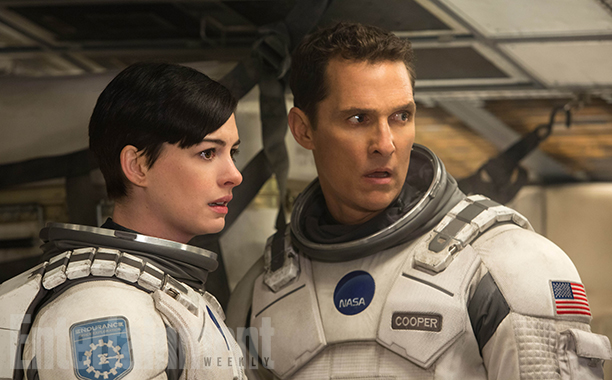
Matthew McConaughey and Anne Hathaway are on an intergalactic mission to save civilization on Earth in Interstellar.

Interstellar is one of those movies one would not expect to be too big of a success especially with a November release but it has really caught on. I had my chance to find out why just a short time ago.

Normally I would go into an analysis of the plot but I decided to skip it since it was so widely seen by now. Instead I will focus on how the film did as a film and as a sci-fi movie.

I will admit that this is not an original concept. A story of a civilization in danger requiring a trip to save it has been done before. I haven’t seen a movie where it required a space trip to do so but I’m sure it’s been done. In order for a movie like Interstellar to work those themes, it had to have a well-thought out story. Especially with the situation where saving civilization meant travelling to another planet or even another galaxy. Already at the beginning we see aspects of a hopeless world with crop blight and dust storms. We see further chaos at the school as Murphy’s teachers teach liberal conspiracy theories as the truth and Tom’s grades are great for his career pursuit but not competitive enough to get into a university.

A story like this also would have to make the time delay between space and earth work rather than look stupid and schlocky. Even for a space mission that’s doomed from the start to succeed, it has to be well-written and thought out with precision. One element that was rightfully included was the human element of the film. Cooper was to go on a mission to preserve the human race from a future of doom. It’s a trip where he ages one month for every seven years humans on earth age. It’s Cooper’s connection with his family over the spans of time–especially with Murph– that keeps the focus on why this mission has to be a success. It’s at the very end where Cooper who appears not to have aged a bit finally meets up with Murphy, elderly and on her deathbed surrounded by her family, that we see why this mission was so important. Even the images where Cooper talks with Tom and sees his grandson is an element that shows why this mission is necessary and why they have to succeed even when it seems all hope is lost.

The mission itself had to be smartly written from launch to activity to failures to battles and to returning to Earth in order for this film to be successful. The inclusion of TARS had to work. He can have his humorous moments but he can’t come off looking ridiculous as if he was trying to be a rip-off of C3P0 or Johnny Five. Also outer space and the terrain of the other planets had to look like a world unlike any other. That’s what makes a space movie: the ability to thrill as well as capture people’s imagination.

Overall, this is what Christopher Nolan had to do both as director and co-writer along with his brother Jonathan in order to make a film like this work. They not only had to show the hopeless state of the world but also make the mission work out even with its doomed failings and it had to keep Cooper’s connection with this family on earth while this aging gap was happening along the way. They had to deliver a film that was smart but also entertaining and mesmerizing like a film about space travel should be. They succeeded. Having a mission that was smartly planned out, making the staggered time lapsing happen and keeping Cooper connected with his family a galaxy away is what made this film not only work but win over audiences. It shouldn’t really be all that surprising that a smart sci-fi thriller should come from Christopher Nolan. He showed he can do a thriller that’s both intelligent and a box office winner with Inception. He does it again here.

The excellence of the film is not just that of Jonathan and Christopher Nolan. It also involved great acting from Matthew McConaughey, Anne Hathaway, Michael Caine, Jessica Chastain and even minor performances from Casey Affleck, John Lithgow and Matt Damon. I’ve seen better acting from all of them in the past but they all did very well here. Newcomer Mackenzie Foy was also very good in portraying the daughter with her love for her father and her anger for him.

Other standouts of the film were the top notch visual effects. A space movie is supposed to capture people’s imaginations and take the audience to a different world and it succeeded here. The cinematography from Hoyte van Hoytema delivered and the music from Hans Zimmer added to the feel and experience of the film.

Interstellar is a sci-fi movie that’s both imaginative and intelligent. It combines a smart story with a dazzling space mission and comes out a winner.

LATE Movie Review: The LEGO Movie

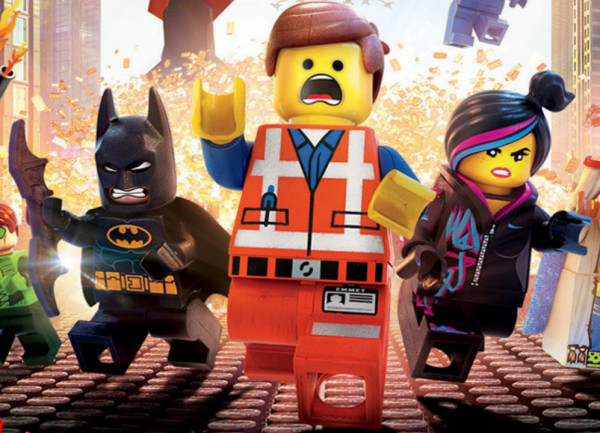
Emmet Brickowski (centre) becomes the unlikely hero in The LEGO movie.
Emmet Brickowski (centre) becomes the unlikely hero of the Lego world in The LEGO Movie.

You will all be pissed off with me. I actually saw The LEGO Movie when it was first out around the first weekend in March. The reason why I never wrote a review about it is because I was so tired out from doing a multitude of Academy Award articles. You can understand that I felt enough was enough back then and I lacked the ambition. Well ambition to write a review on it sparked in me already, especially with the Oscar season coming up and the multitude of accolades it’s received. Now I can say my thoughts.

This is another review where I won’t be giving a synopsis of the plot. I don’t feel it’s necessary since most people have already seen it by now. Nevertheless I’ll focus on how the movie worked.

This is a film that needed to have a winning script in order to make it work. It starts simple about a guy who does what he can to be liked only to learn he’s not well-liked. He’s the ‘chosen one’ despite the surprise of everyone but ends up victorious in the end. Sounds like a formulaic story that been done endlessly before, right?

In order to make a story like this fly, it has to add its own quirks and elements to make it fly. This movie succeeds in creating a Lego world beyond a toy lover’s imagination. On top of it, it had to make the Lego toys very animate and full of character. Remember the Legos are the focus of the movie. The film also did a smart job in adding in characters that are exclusive to the Lego toys and in including the Lego characters based of off movie characters. It does seem like the writers did a lot of research about the characters to have in the movie.

The film adds in a lot of humor. Firstly it creates a humorous world with the wizard Vitruvius, a villain in the Lord Business and a superweapon called Kragle which is actually Krazy Glue. However its other great asset is including the human world in the story with ‘the Man Upstairs’ and his son. It’s that twist at the end where we are all shown that this Lego world is all part of a giant Lego diorama created by the Man Upstairs. Whatever the situation, it had to make the two worlds mix in the end in order to make the story work and it did. Not to mention give a surprise humorous ending.

Now it’s not just the story that had to work. Not to mention having ‘Everything Is Awesome’ the movie’s theme song. The film had to make the animation believable. They had to make the Lego characters fluid in movement rather than wooden and choppy. They also had to be given the perfect animation in their faces while remaining Lego characters. Finally the Lego world had to be animate and 100% Lego from the building world Emmet works in to the sea the Lego galleon sails on. When you have a Lego movie, the world and the characters have to be 100% Lego-like from start to finish. One glitch in the animation and that would have blown it.

Kudos to Phil Lord and Christopher Miller for writing and directing an excellent entertaining film for all ages. In addition, great job on the vocal talents of Chris Pratt, Elizabeth Banks, Liam Neeson and Morgan Freeman. Also great job of Will Ferrel for delivering a live-action character that’s a refreshing alternate from his more idiotic characters.

It’s no wonder The LEGO Movie has been so loved since it opened back in February last year. It’s also no wonder it’s still beloved by people of all ages even now. It’s only those under a rock that haven’t seen it that don’t know why.


Superman Comparison: Man Of Steel Against 1978 Original

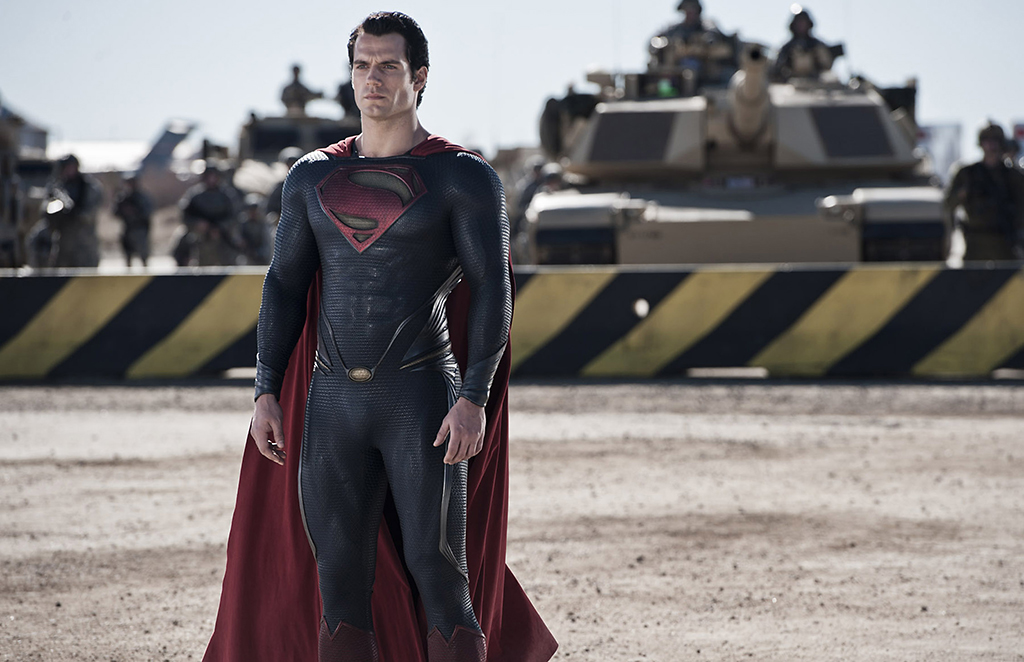
Brit Henry Cavill is the latest Superman in the movie Man Of Steel
Brit Henry Cavill is the latest Superman in the latest Superman movie Man Of Steel.

For some odd reason, Hollywood feels it’s time to revamp Superman. Apparently the original from 1978 doesn’t cut it anymore and there needs to be a new Superman. Does Man Of Steel cut it?

Here this isn’t necessarily to be a review of Man Of Steel but more of a comparison to the original Superman from 1978 and I will commonly refer to Man Of Steel as ‘the new movie.’ Superman fans will notice that Man Of Steel is a lot different than the original 1978 version. First off the original movie was the telling of how Superman the legend came to be. It was adventurous and thrilling but it was also light-hearted and funny too. We saw Superman go from the sole survivor of Krypton to growing up to be Clark Kent and then the Man Of Steel. I still remember one of my favorite parts being when Clark is left behind by the football team so he shows them by running home. In the process, he dazzles a 9 year-old Lois Lane who watches him outrun her train.

The new movie is something very different than the original first Superman movie. For one thing you will notice the strife on the planet Krypton as it is about to explode. Instead of dying with the planet, Jor-El is murdered by General Zod just before he and the exiled Kryptonians are to be taken off the planet. Superman’s youth is also shown significantly different as he’s shown as a young child first disturbed with all the human images he sees. Then shown as a life-saver as a teen after a schoolbus plunges in a river. None of which are as light-hearted as the original. One difference that actually added to the new movie was Clark’s work as an adult in various odd jobs such as fisherman or oil rig worker. Even though the original featured Clark only ever working for the Daily Planet, that change from the original was one changed that worked well if not great.

One element the new movie has in common with the original is Jonathan Kent is seen as a positive father figure to Clark as he grows up on Earth. Jonathan’s death in the new movie is different from that of the original. Martha Kent’s portrayal in the new movie however is more different. First difference would be her presence as compared to that in the original; she is way more present her and shown throughout. Back in the original Martha was seen as the mother figure that Superman eventually had to leave behind in order to discover himself and define himself and his existence on Earth. Here in the new movie, Clark doesn’t leave Martha behind and even returning to her in times of crisis often looking to her as one to confide in.

Another difference you’ll notice is Lois Lane’s involvement in this. Just like in the original, Lois is again the one person who can get through to the identity of Superman while the whole world wonders about him and gets a lot more. Lois however is not a colleague of Clark Kent’s because Clark is seen through most of the movie employed outside of the Daily Planet. Nor is Lois seen dating the social awkward Clark in the new movie. Man Of Steel sets Lois’ discovery and involvement in the Superman story right as she’s on top of another story deep in the snowy mountains. It progresses further with each battle Superman has to face to the point the inevitable between the two happen.

Jor-El’s presence is another noticeable difference. Those who remember the original may remember Jor-El as the scientist who launches baby Kal-El to Earth to keep the Kryptonian race alive. Jor-el would be a mentor to Superman as he learns of his identity and of his origins. One thing about Jor-El’s existence to Superman outside of Krypton in the original is that he would only be present to Superman in voice only. Also one will remember from the original is that Superman received from Jor-El the instruction: “It is forbidden for you to interfere with human history.” Here in the new movie, Jor-El makes appearances to Superman in the flesh and even gives him words of encouragement in his interaction with humans: “You can save them… You can save all of them.”

Another noticeable difference is the villain in this. The villains in the movie were the Kryptonians: General Zod and five others. Those were the villains in the second Superman. It almost seemed like the new movie was trying to mix the original first and second movies together. The original had Lex Luthor as the villain with the Kryptonians only seen sent off in their sentencing. Here there’s no presence of Lex. That totally surprised me because I always considered him Superman’s #1 nemesis. It also dampened my hopes as I was hoping to see who Lex Luthor was in this version and what tricks he had up his sleeve. The battles Superman faced too were also more different than in the other two movies. Also in the new movie was the fact that the US Military was growing suspicious of him. Funny because I don’t remember anything about the military and its concerns in the original. In fact the police were very cooperative with Superman and even welcoming of his support.

Even the ending was different. If you remember the original, you’ll remember Superman would circle around Earth to reverse its spin and bring those killed by Lex’s missile including Lois Lane back to life and reverse the damage. I won’t give away all that happens at the end but the most I will say is Lois is not fatally hurt.

Looking at the overall picture of the movie, I have to say that it does not work as well as the original. It’s been a common theme in this millennium to either remake movies or tell tales with a much darker theme. It’s been a common belief that such a thing would work considering movies with dark themes have been hits at the box office. However dark remakes haven’t paid off as well. A darker version of Peter Pan in 2003 didn’t fare as well as it hoped. A darker version of the first Spider-Man movie from last year didn’t do as well as the 2002 original at the box office. And now a darker version of Superman doesn’t fly as well as the 1978 original. It’s like its trade of charm and lightness for a darker edge didn’t pan out as much as they thought. Those unfamiliar with the 1978 original may welcome the new movie but I feel it will disappoint Superman fans.

Outside of comparing Man Of Steel to the original 1978 movie, I would have to say that the movie did have some good acting. Russell Crowe was very good as the mentor Jor-El. Amy Adams was also good as Lois Lane however she gave a Lois that lacked the girl-next-door quality Margot Kidder gave in the original. Henry Cavill did a good turn as Superman but he was meant to have a more dramatic role than that of the light-hearted Superman role Christopher Reeve was given. Diane Lane was good as Martha Kent but she lacked the Midwestern characteristics so it was not easy for me to believe this Martha was from Smallville, Kansas. I can’t really compare the acting of the villains from the original second movie but they were believable as cold and vicious. Hans Zimmer did a score that fit the movie well even if it’s not as memorable as John Williams’ score from the original, especially the opening theme. Zack Snyder has a reputation as being a director of dramas just like Richard Donner and this movie should add to his credit. Also it’s obvious the scriptwriters of Christopher Nolan and David Goyer aimed for a story more intense and more drama driven than that from the six scriptwriters of the original.

If there’s one thing Man Of Steel did surpass the original in, it’s in its action scenes. There’s no question that the action scenes were more sophisticated and more believable and more spellbinding than in the original. Mind you that you have to give the original credit. Back in 1978 they didn’t have the technologies, especially the computer technologies, to create the visual effects we have now. Most of what was done back then had to be done in Hollywood studios and with more effort from set designers and operators than computer operators.

Man Of Steel is like a lot of movie remakes that take a risk out of giving a different version of the original and hope it will pay off for today’s audiences. Sure the effects and action are bigger and better but the story falls short and doesn’t charm as the original. It may be a hit for some but it’s a miss for others, including me. I feel like renting the original from my local DVD store right now.

VIFF 2012 Review – Side By Side: The Science, Art And Impact Of Digital Cinema

The first documentary I saw at the Vancouver Film Festival was Tribeca Film’s Side By Side. It first caught my interest on opening day as I was assigned to be an usher for the screening. I was lucky to see it as an audient three days later. I’m glad I did because this is of a topic I’ve been interested in over the past ten years.

The documentary is hosted by Keanu Reeves and it is on a hot button in the filmmaking industry. this hot button is the transition from making celluloid motion pictures to digital motion pictures. It attempts to answer the question: “does it mark the death of an art form or does it accelerate it?”

The documentary starts with some opening opinions by some of the biggest names in directing like George Lucas, Martin Scorsese, James Cameron, David Lynch, Christopher Nolan and Danny Boyle. It also features opening comment from independent filmmakers too. The beginning also gives descriptions and computer simulated examples of how images from both celluloid cameras and digital cameras are created. Interesting is the terminology used for filming: film filmed on a reel in a single day and developed the next day would be called ‘dailies’ while digital images would be described as ‘immediates’. Later on the documentary would describe the invention of digital filming dating back to the late 60’s to George Lucas experimenting with it. The progress of digital filming would be described more over the remainder of the documentary, which I will elaborate on more throughout my review.

The documentary also points out that the use of video cameras was not accepted by the film industry at first because video cameras were seen as something for ‘cheap movies’. They showed the first two movies filmed on video camera that made an impact on video cameras’ use in film: Denmark’s The Celebration from 1998 and the US’ Chuck And Buck from 2000. The quality was obviously cheap but the cinematic angles it was taken from caught people’s eyes. Nevertheless many people still felt video cameras were not good enough quality for something like motion pictures. To think back in 1999 when George Lucas announced after The Phantom Menace that he would no longer film on celluloid, most people didn’t take it that seriously.

As I just mentioned, we shouldn’t forget at the time digital film was still lacking in quality. Slowly but surely big name directors would take notice over time and make the switch. That’s another quality of the documentary is hearing of how so many big name directors made the switch to digital. They describe the scene filmed on digital that put the nail in the coffin for their use of celluloid film. The most interesting for me is Danny Boyle’s story about the change. He described one scene in 28 Days Later–the scene of a deserted London–that was able to be done on digital because he could shut down traffic in one area temporarily for a few minutes while he would have to shut the whole of downtown down for hours if he did it on celluloid. Many directors said that filming on celluloid film has gone as far as it can go and none sensed any limit to filming on digital in sight.

Back to the part which give demonstrations of the two filming methods. As the descriptions of are demonstrated, film professionals interviewed would describe their experiences in dealing with both filming forms, both the positive aspects and the negative aspects. One filmmaker talked of the use of dailies of how they’d look at the dailies in the screening room and at how they were taken aback by what they’ve created. It was often the case but not always. There were times when the dailies would be something flimsy. As for digital, the ‘immediates’ were convenient because they were there in an instant and they were cheaper. It’s not to say the ‘immediates’ were a complete solution. One director even said immediates would show the filming well immediately on a computer screen but won’t answer what it will look like on a 50-foot big screen.

Also described in the documentary are the various changes to how one does their job. The director and cinematographer, or director of photography (DP), have always worked as a team during the days of celluloid. The two still work as a pair even during digital filming but there are changes to how they work and communicate to each other during their job. The documentary also describes how actors have had to make adjustments of their own. During filming of celluloid, there was always a period of time when the cameramen had to do technical things that would allow for a break. Now with digital there’s more consecutive shooting less of that break time, if any at all. There’s even mention of a certain ‘protest’ done by Robert Downey Jr. when he did his first digital picture. Another thing involving actors, which would get on the directors’ nerves, is that they’d want to see the ‘immediates’ to see what they looked like all too often. Should we really be surprised? Film editors as well describe how their job has changed from literal cut and paste of reels to the computerized cut and paste. Some say the quality is still there while others say it’s cheapened. And we also see how visual effects personnel work with digital film as they’re able to create greener trees and bluer skies.

Another aspect showcased in the documentary is the changes in technologies over time. I mentioned at the beginning that video camera use for motion pictures were not accepted at first because of the lack of quality. What a difference more than ten years can make. Over time just as computer technology has improved, so has video imagery and designs of cameras. The documentary showcases the pixel quality of pictures over time and also highlights camera companies creating digital motion picture cameras that would be breakthroughs. Interesting how images shot for the big screen are at least ten times better than they were at the start of the century. Video cameras used for filming motion pictures have also become better and even smaller which allows for more unique angles. The simultaneous use of two cameras for filming 3D movies is another example of technological breakthrough. Then the news of the ultimate: the announcement from motion picture camera companies in 2011 that they would no longer manufacture celluloid movie cameras.

Despite the mention of all the technological progresses of digital cameras and its progresses leading to digital practically overtaking celluloid filming, the documentary does remind us there are still Hollywood movies and independent movies shot entirely on film and there are also still ‘celluloid purists’ who won’t hop onto the digital bandwagon for their own personal and professional reasons. Last year’s Oscar winner for Best Picture The Artist was shot entirely on film as were Best Picture nominees Moneyball and War Horse. Even two of the biggest moneymakers of this year, The Hunger Games and The Dark Knight Rises were shot entirely on film. In fact both Christopher Nolan and his personal DP Wally Pfister have even declared that if they’re the last people in Hollywood to shoot movies on celluloid, so be it. There are even some independent filmmakers that talk of the beauty of shooting on celluloid that digital can’t equal.

This documentary may give a lot of examples and opinions about the filming types but it doesn’t give the final word on the future of film. It cuts off to now and will leave the future to define itself. With no more celluloid cameras being made, the ‘celluloid purists’ will face a bumpy ride if they want to stay true to their principles. As for moviemaking, where will an industry full of predominantly-digital movies take this in the future? Will the ‘celluloid purists’ succeed despite the odds? We’ll see. One thing one director said was as long as a director has a vision, they will try to create that vision with whatever means they have.

I admit that this is a topic that caught my attention and it’s one dating back ten years ago. How it caught my attention was when I attended an acting class which a top Hollywood cinematographer Monty Rowan. He talked about celluloid filming and brought up George Lucas’ comments about never filming on film again. Rowan mentioned that digital will never have the same artistic quality as celluloid. Years later I read a magazine–either Time or Newsweek–that talked about filmmaking and once again Lucas’ talk about filming on digital: “You don’t work at the office the same way you used to. So why should I do my filming the same way I used to?” It also mentioned of a younger generation weened on digital this and that and who don’t have the same appreciation for the filmmakers of the past. That had me scratching my head. Even hearing how filming on digital has cut costs on filmmaking has still led me wondering about Rowan’s comments. Yes, filmmaking is an art but there’s this vice called ‘showbiz’ that’s unavoidable. Can celluloid continue one despite the business demands of showbiz? Especially as movie viewing is no longer cinema-only and now flexible to the point one can see movies on their tablet or cellphone?

The best quality of the documentary is the big names and wide array of professionals being interviewed by Keanu for this picture. We not only hear opinions and experiences from some of the top name directors in the business but some of the independent  filmmakers who have their own say, whether positive or negative. We also hear the various cinematography, film editing and visual effects angles from some of the top names in their respective fields. We also hear from the various ‘trailblazers’ of digital filming who did something that would pave the way to the future of film, though they didn’t know it at the time. Hard to believe that Anthony Dod Mantle filmed with video cameras with the thought “I may never win an Oscar but…” and he did for Slumdog Millionaire. It does however limit the number of independent filmmakers in the business. Yes it’s great to hear opinions from the big Hollywood names but the independent directors were limited in numbers and opinions.

Another thing I liked about the documentary is that Keanu did it unegotistically. He wasn’t like Michael Moore or Morgan Spurlock who try to steal every scene and force their personal opinions. Keanu stuck to the topic and put focus and emphasis on the facts, the technologies and the professionals’ opinions. I don’t think I noticed anywhere in the documentary him talking about his own personal experiences.

As far as this documentary goes, I would not consider this to be a documentary meant for a movie cinema. One of the things with the VIFF is that there will be a lot of documentaries shown. Some will be lucky enough for a big screen run. Some will most likely be shown on television through either a documentary channel like Vancouver’s Knowledge Network or a teaching channel. This documentary looks like something that would be best suited for something like a science channel or even an entertainment information channel. I would like to see it again as this this about a topic I’m interested in as I mentioned earlier. I like how thorough this documentary was.

Side By Side is an important documentary for anyone in film, whether a professional or a student at a film school, should see. It doesn’t just present the situation but is very thorough in presenting the examples of filming, history of technological advances, and how some of the biggest names in moviemaking have taken it on. Thank you Keanu for doing a great job of giving us the facts.