VIFF 2023 Review: Do Not Expect Too Much From The End Of The World (Nu astepta prea mult de la sfârsitul lumii)

Ilinca Manolache stars as Angela: a Romanian business executive who represents capitalism in Romania well in all its strengths and flaws in Do Not Expect Too Much From The End Of The World.

My VIFF experience for 2023 ended with the Romanian film Do Not Expect Too Much From The End Of The World. It was a good choice to end the film festival with, but not a really great choice. It has a point to deliver, but makes it in a way many will miss it.

The film begins with Angela, a young woman in Bucharest. Angela has a good-status job as an entertainment executive. Actually her job works her long hours and pays her not enough. Her job also interferes with her chances in getting a stable love life. She gets an income enhancement with her social media side gig. Angela is also a TikTok influencer named Bobita: a misogynist “alpha-male” type that Angela creates with a smartphone filter. Right into the beginning, Angela is part of the latest production job. It’s for a work safety video where they’re to have a victim tell their story. The decision of which story to use and the shooting of the video will have to be completed in two days. In addition, the head of the production company from Austria will be flying in tonight for this project and Angela is to pick her up.

Angela’s own life somewhat mirrors the life of another Angela. A fictional Angela from a 1981 Romanian film called Angela Moves On. In that film, the Angela is a cab driver in the era of Communism with Romania being part of the Eastern Bloc. Angela gets flack from her male co-workers of what a woman’s job should be. Her drives down the streets of Bucharest are relatively easy compared to the packed traffic present-day Angela gets. Angela presses on and hopes to find love on the job. She saw a chance in a man she picked up from the airport.

These two days come by with Angela at full force. The company has to pick and choose the person and family to do the video with. The story of the person’s accident has to fit the film’s narrative and the person needs to have a likeable personality. Meanwhile Angela tries to juggle work, a conference call with the video director Austrian Doris Goethe, meeting with her family, meeting with the actress who played Angela in Angela Moves On, shooting more Bobita videos (where Bobita’s phoniness is slowly given away video by video), entertaining Uwe Boll (and even shooting a Bobita video with him), dating a man and losing out, and driving Goethe after she arrives from Vienna. During the drive, Angela gives Goethe a good history lesson of Romania with its Communist past and present problems like the single-lane highway of death.

Then finally the safety video is being shot. They chose a family man who was left wheelchair bound and film him with his family posed in front of the area where it happened. The video goes through many takes and many style changes. In that time, Angela is there looking after things. She does her Bobita videos during the breaks and everyone can hear her. During shooting, a sudden fact is discovered but they continue on. The producers deal with it so they can get the story to fit the film’s narrative, much to the discomfort of the man and his family. The producers have it ‘stylized’ with the man telling his story with message cards.

Sometimes when watching this film, you think director/writer Radu Jude has a lot to say not simply about capitalism in Romania, but of Romania as a whole. On this film, we see pieces of Angela Moves On where it unintentionally showcases the hardships of Romanian life under the Communist Ceaucescu regime. Even how one of the male leads had his Hungarian name “Romanianized” may send a message. Now we have the Angela in Post-Revolution capitalist Romania. She works 16-hour days, she takes a side-hustle where she does this misogynist character on TikTok, the agency she works for tries to stylize the safety video. Romania has a sharp divide between the wealthy and the impoverished; the biggest in the EU. You can’t help but think that’s the statement Jude intends to have made in the film. To show that Romania had it the worst during the days of the Iron Curtain, but made to look nice, and now has it among the worst in the capitalist era of Eastern Europe.

The thing about this film is that it has a lot to say, but it doesn’t appear to have a consistent beginning, middle and end. Sure the film shows two days in the work life of present Angela, but it often appears there’s a story about to hatch. Yes, it shows her doing her Bobita videos and it shows scenes of the truth that can be given away any minute, but it doesn’t, leaving the viewer to wonder what’s next. Even the two long scenes — of most of the memorials of crash victims on that “highway of death” and of the 40-minute scene of the shooting of the safety video at the end — can leave one confused about the whole story. I’ve seen films before where it appears to be a magnifying glass on a person’s life, but even others I saw had a consistent flow from start to finish where everything connects solidly. This appears not to come together as solidly and fluidly. Either that or this film was not meant to be the film most of us expect. I’m sure Jude had his intentions for what the film is supposed to be.

This is actually the very first work I’ve seen from Radu Jude. His works have earned him a reputation as one of Romania’s best modern-day directors. It all started with the 2007 short The Happiest Girl In The World and it paved his reputation in his works to come. His breakthrough in feature-length films came in 2015 with Aferim! which became his first film Romania would enter in the Oscar category of Best International Feature Film. His past films have focused on a lot of themes in Romania’s history and Romania’s present. Even a film like his previous one — Bad Luck Banging Or Loony Porn — have elements of Romania’s past history despite the situation not intended to be political.

This film is the fourth Jude film Romania has entered into this Oscar category. This film has something in common with his two previous films: a very long title. Another thing it has in common is elements to do about Romania. The unique thing is how it does Romania past and Romania present. We have Angela the taxi driver in 1981 under Ceaucescu-era Communism and in color. We have modern-day Angela in the days of democracy, capitalism and the EU, but shown in black and white. We have Angela from 1981 dealing with male chauvinism in her job and trying to find the right man. We have modern-day Angela in a business that has a mix of men and women, but is overworked and gets her misogyny from the male drivers on the busy streets. It’s possible she uses the misogyny she gets for her Bobita videos. It’s a film that has a lot to say. Even if the film doesn’t make complete sense, it still leaves you with a lot to think about and definitely things Romania can identify with.

I feel the best thing about the film is the acting from Ilinca Manolache. If you’ve seen this film, this film seems less like a dramatic film and more like a documentary or a reality show. Manolache is successful in making this look like a natural situation instead of something acted out. She’s successful in making the actions and moments of Angela low key and happening in front of us as if this is real life. She’s also good in doing the Bobita parts in the humorous nature it’s intended to be and showing the irony of Bobita’s misogynist talk.

This film has garnered additional acclaim besides its Oscar submission status. It won the Best Film award at the Gijon Film Festival and at the Locarno Film Festival, it won the Special Jury Prize for international film and was also nominated in the Best Film category. Other nominations for this film include the Fiction Feature category for the Montclair Film Festival and the Gold Hugo award for Best Feature at the Chicago Film Festival.

Do Not Expect Too Much From The End Of The World is the type of film where you anticipate it to end a certain way, but it ends in a way different than one would expect. It’s a film that has a statement to make, but doesn’t do a good job of making its statement made well or clear. Despite its flaws, it is a film that will get you thinking.

And there you go! That is my look at the films of the 2023 Vancouver International Film Festival. I know it was later than usual but I figured that with these films bound to come out at a later time, reviews for them all are still worth posting. Even my wrap-up blog will come very soon.
Christmas Movie Review: It’s A Wonderful Life (1946)

wonderfullife
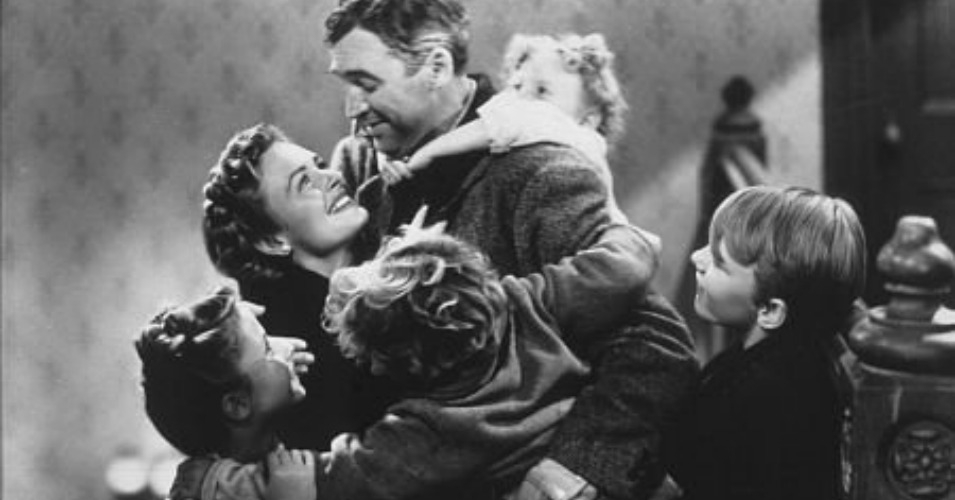
George Bailey (played by James Steward) learns that life is worth living in It’s A Wonderful Life.

This is something new I thought I would try. I thought I would try reviewing a few Christmas movies around this time. The first movie I thought I would do is It’s A Wonderful Life. It’s a Christmas staple, but I finally saw it in its entirety last year! Here are my thoughts.

It begins as Heaven is alerted of prayers for a George Bailey from Bedford Falls, New York. As it reaches Heaven, the angel assigned to save George is Clarence Odbody. Clarence is a second-class angel who needs to earn his wings. George is about to commit suicide and it’s up for Clarence to save him to earn his wings. Clarence needs to learn about George, so he learns more about his life. He learns that George saved his younger brother Harry from drowning in a sledding accident, but lost hearing in his left ear. Also in George’s younger years, he prevented a druggist Mr. Gower from giving away a prescription after it was accidentally poisoned.

As George enters adulthood, he plans to travel the world and visit college. He is re-introduced to Mary Hatch, his childhood crush, by Harry at his graduation party and the two hit it off. However his plans have to be put on hold after his father Peter suffers a stroke and dies. Peter was head of Bailey Brothers’ Building And Loan. George agrees to continue it, mainly to keep it from being overrun by the ruthlessly hypercompetitive banker Henry Potter.

George wants to keep the Building And Loan business a family business as he promises brother Harry a job after college, and even resorts to hiring his incompetent uncle Billy. The times pass and George is successful in keeping the Building And Loan active, but not without his challenges. He had competition from Potter to face, including a tempting deal from Potter himself, although he knew Potter’s true attempt was to shut him down. He is understand when Harry receives a bigger job offer from another place. He build Bailey Park: a neighborhood of housing for low-income people while Potter made apartments of overpriced slums. He fell in love with Mary and married, eventually fathering four children.

World War II happens. George can’t fight because of his deaf ear, but Harry joins the Navy and earns a medal of honor by shooting down a kamikaze plane. Uncle Billy causes a big blunder on the day Harry is to receive his heroes’ welcome. Billy taunts Potter with the newspaper honoring Harry. Billy places $8000 to be deposited in a newspaper only to pick up the wrong paper to give to the teller. Potter knows what happened but says nothing and sees it as a chance to get the Building And Loan once and for all.

George most feels the heat. He learns that this will face scandal and that the Building And Loan will crumble. George even faces an arrest from Potter. All George does is take out his frustration on the family and on others. Then George gets drunk at the bar and receives a punch from the husband of the woman he told off over the phone. George feels he’s worthless and he needs to kill himself. As George is about to jump, he notices a man who has landed in the river. He goes to help. He learns the man is Clarence and Clarence introduces him as his guardian angel. At first George doesn’t believe him. Clarence tries to find ways to convince George not to commit suicide but they appear to be going nowhere.

Finally George says “I wish I was hadn’t been born.” That’s the perfect opportunity for Clarence; show George life if he had never been born. He shows him that Bedford Falls would be Potterville: a dark and corrupt town with amoral people. Mr. Gower was just released from prison for manslaughter, because George wasn’t there to stop him from poisoning. The Building And Loan closed down because George was not there to take over after his father’s death. George’s mother doesn’t recognize him and says Uncle Billy was institutionalized after the Building And Loan failed. The area that was Bailey Park is a cemetery and Harry Bailey is buried there; drowned from the sledding accident because no George to save him. I addition, the soldiers from the transport ship died because Harry wasn’t there to save them. Finally he learns Mary is an unmarried librarian and screams for the police as she sees George a stranger.

It’s after seeing life had he not existed that George decides not to commit suicide. He’s finally convinced Clarence is his guardian angel and begs for his life back. Back in the full present, George goes back to his house, grateful to see Mary and his children and unafraid to face arrest. He’s happy to see his family and Uncle Billy was able to get the towns people to pay the missing $8000. Right as the sheriff is about to arrest George, he sees the amount of money raised and rips up the arrest warrant. Harry returns and toasts George as the ‘richest man in town.’ In the pile of money, George sees a novel Clarence carried. Inside the novel is an inscription from Clarence: “Remember no man is a failure who has friends.” The daughter notices the sign that an angel has earned his wings. George knows it’s Clarence.

This is a film that gets replayed Christmas after Christmas. Hard to believe when it first came out, it did not do so hot at the box office. Over time, it would become beloved for many reasons such as its Christmas setting or even how it related to how people sometimes see themselves as failures. That feeling can often trigger around Christmas time. The film shows one example of a person who sees themselves around Christmas as a failure. George Bailey did a lot of great things throughout his life and meant a lot to a lot of people, especially people who feared the mere idea of the town being overrun by Henry Potter. Then a mistake happens and Henry sees it as the perfect opportunity to get George. George actually had it good for most of his life. Some people could even argue he’s the angel of Bedford Falls. But now that George fears arrest, all of that doesn’t matter anymore and George wants to take his own life. It’s Clarence who shows him the world had he not existed that changes George.

Sometimes it leaves you thinking there would be less suicides if people saw all the accomplishments they did in their lifetime and knew how many people loved them. It’s so easy to get caught and brought down in the ‘now’ of things.

The film’s ‘beloved’ status was not immediate. It didn’t do so hot at the box office. It would be relay on television around Christmas that would lead it to become one of the most beloved Christmas movies ever. The film was nominated for five competitive Oscars including Best Picture, Best Director for Frank Capra and Best Actor for James Stewart. It was given an honorary Oscar for technical achievement for the  effect of simulating falling snow. There have been numerous depictions and versions of the story redone in media from a Married With Children episode to a cartoon of The Smurfs to the Billy Joel video of “You’re Only Human.” There have been dozens and dozens of adaptations. There have even been spoofs such as one sitcom, one ‘guardian angel’ shows an oafish male how life would be if he didn’t exist… and it’s better for everyone! That’s comedy for you!

Looking back, it’s better that the film was made in 1946 than today. 1946 would be more welcoming of a story like this. Stories of people starting as down and out only to end on a happy note were quite common and quite welcome at the time. If It’s A Wonderful Life was released today, some people would think of it having a corny premise. A lot of people don’t buy into guardian angels today. Some would find the ending of the film too hokey. Even that ending where people actually give money to keep George Bailey from being arrested would seem too farfetched for today’s people to buy. Even I don’t think you’d see the same monetary support for a fallen person if what happened to George would happen to someone else today. It’s a film that came out at the right time and had what it took to go the distance all these years. Plus it’s a good reminder of past great talents and stars like James Steward, Donna Reed, Lionel Barrymore and Henry Travers. Interesting enough, Travers would retire from acting three years after the movie was released!

It’s easy to see why It’s A Wonderful Life is one Christmas movie that stands the test of time. Even if the ending seems too farfetched to happen in today’s world, it’s good it came out when it did and grew in its legendary status over the years.