VIFF 2025 Review: A Poet (Un poeta)

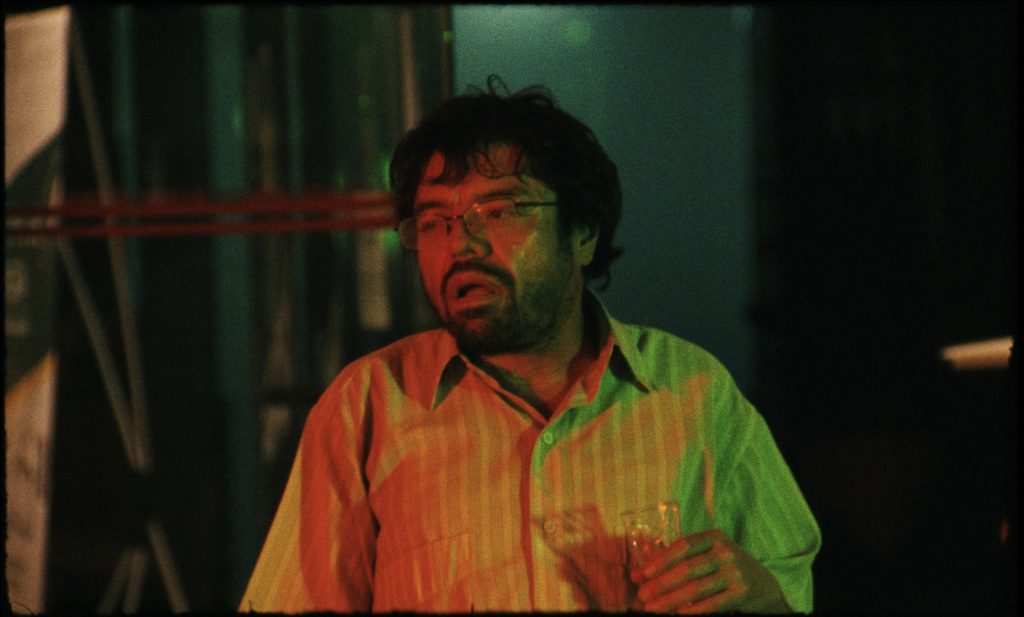
Ubeimar Rios plays an aging poet who is a troubled man who can’t seem to do anything right in A Poet.

I started my film watching at this year’s Vancouver International Film Festival with the Colombian film A Poet. It is a very bizarre story of not just the poet but the people in his life and who he intersects with.

Poetry has been Oscar Restrepo’s life but as he’s aging, he needs to face the fact he can’t make a living off it. He’s written two books of poetry as a young adult, but stopped after. Any job he’s tried, he’s been down on his luck. The guild of poets he’s with look down upon him, his 15 year-old daughter Daniela has no real relation with him, and even his ailing mother wonders what’s wrong with him. It’s gotten to the point his siblings want him to change his life around and get a job. He still has that dream in him of being as great of a Colombian poet as Jose Asuncion Silva.

One day, the guild of poets offer him a teaching job at a high school. As he’s teaching a class, he learns one of his students, a girl named Yurlady, has a gift for writing poetry and drawing. As he looks at her notebook, he is astounded by her work and sees a lot of promise in her. He looks at it as an opportunity to be a mentor to her to get a poetry scholarship. As he tutors her, he spends time outside of classes with her and tries to get to know her, her family, her bad living conditions, and her works. He sees a lot of potential in her to be the renowned poet he never could be.

Over time, problems arise with Oscar and his tutelage. A lot of students say he taught classes after he had been drinking. The guild notices him spending too much outside time with Yurlady and reminds him that could harm his reputation in his new job and even provoke nasty rumors. Even Yurlady questions Oscar in making a career in poetry. Especially since she has a huge extended family to support in the future.

Soon Oscar helps Yurlady get a spot on a national talk show to promote an upcoming meeting of young poets. The appearance is a success for her. Then the night of the poetry reading features a group of young and established poets from various backgrounds. The meeting is attended by Yurlady and some of her classmates. Yurlady’s reading goes well. In the evening, Oscar gets drunk with his colleagues and forgets about Yurlady. Later that evening, Oscar finds out Yurlady got sloppy drunk and is vomiting nonstop. Instead of staying with her at the hotel all night, he takes a cab and drops her off at her home’s doorstep.

That’s when the rumors get worse. That Oscar was careless, that he copulated with her. Oscar is fired from his job. The guild of poets will offer an out-of-court settlement for what happened provided Yurlady does a video explaining everything. Just in the middle of shooting, Oscar blockades and insists it not happen for personal reasons. The problem Oscar causes is so embarrassing, they give the family a cash payment settlement. Oscar is so defamed after that, Daniela wants nothing to do with him.

Just when it appears all is lost and as his mother’s health condition is deteriorating, Daniela finds something at her home. It’s her missing notebook that Yurlady found in Oscar’s car weeks earlier. Daniela sees Yurlady used the book to do poetry and drawings of her own. She also notices Yurlady wrote a letter to her specifically telling the whole truth of what did and did not happen that night. The letter also mentions about how she really feels about poetry. She loves doing it, but it’s not the passion Oscar wants her to have. It’s after that Daniela welcomes Oscar back into her life, but demands he smarten up. It’s at the very end with a family tragedy that the full reconciliation happens.

This film is both a drama and a comedy. Oscar and his character is what gives the film the biggest comedic elements. He’s a poet and a fail of a person. He’s like a lot of people in the arts in which they’re good at their craft, but they’re their own worst enemy. Often you will find them failing at everything else. Even making an alcoholic of themselves. That’s Oscar. The funny things is as you watch Oscar, you will see a lot of personality traits and habits that will remind you of a lot of poets in the past. I’ve even joked that poets are ‘too suicidal.’

Oscar is not as suicidal as your common poet but he is his own worst enemy, can’t think properly, can’t succeed at anything else, and finds himself back on the bottle again and again. He feels since he failed as a father to his daughter and as a poet, he can be seen as a mentor to at least one person in his life. He feels he can mentor a promising poet and share his dream of poetry with her and help her become a great. It first appears he failed at that too as he continues to make dumb decisions like making a minor part of the poetry scene. In the end, he made things worse for him and those around him. That appears to be the common theme of the film: Oscar feeling like a failure. We see it in how he messes up time and time again. We also see it as he looks at images of the poet Silva and the writer Bukowski of how he laments over his failure at literary greatness.

The film also has drama as it’s about his strained family relations and his own desire to want to be liked and admired. It’s also of his complicated redemption. It’s through Yurlady and his daughter’s notebook that he gets his unlikely redemption. It’s like the flower blooming out of a ground of ashes. It’s like the mess-up Oscar had with Yurlady eventually becomes what starts the path of the resolve between Oscar and Daniela. It is right at the ending it appears Oscar has the chance to redeem himself and really turn his life around for his family and his daughter.

This film is a great work from director/writer Simon Mesa Soto. His first feature film, 2021’s Amparo was an impressive breakthrough for him. Here, he follows it up with another great story about a troubled man who appears to be art itself in all of its triumphs and devastations, despite struggling to better himself as a poet and constantly messing up as a person. It’s a film that will impress you when and where you least expect it. Also it will become the story you didn’t expect it to be.

Possibly the most surprising thing of this film is that for the lead actors, this is their first-ever film roles. You wouldn’t notice it! Ubeimar Rios was great as Oscar. Playing a poet who is a man-child and makes life hard for everyone is quite an accomplishment for a first role. Also great is Rebeca Andrade for playing Yurlady. She did well not only as the young girl with dreams, but as the one person who could be a solution to Oscar in an unexpected way. Great performances also include Allisson Correa as the teenage daughter caught in the middle of this mess and Margarita Soto as the mother who tries to get Oscar’s head together.

This film is Colombia’s official entry for this year’s Oscar race in the category of Best International Feature Film. Additional awards the film has won are the Cannes Film Festival Jury Award of Un Certain Regard, Horizon’s Award at the San Sebastian Film Festival, the CineCoPro Award at the Munich Film Fest, and winner of the Bright Horizons Award at the Melbourne Film Festival.

The film A Poet is a unique comedy that’s also a sad comedy. It’s about a man who appears to be a poor excuse for a human being, but gets an unlikely redemption.

VIFF 2023 Intro And Review: The Promised Land (Bastarden)

Mads Mikkelsen plays Gustav Kahlen, a settler in 18th Century Denmark in the film The Promised Land.

VIFF INTRO: Normally I do a separate blog for VIFF when it opens. Since the Festival ended on Sunday the 8th, I’ll do a brief summary here. The Vancouver International Film Festival returned. This year, there were no longer films to stream as VIFFaccess is no longer. It became a case cinemas are working to bring crowds back to the theatres. Same with VIFF as its films were shown at seven different facilities. There was a reduced number of films shown at 140. Now that the pandemic is almost over, the arts communities have to downsize in order to rebuild itself. Nevertheless a lot of great films to see coming from 73 nations. A wide selection of Canadian films, Indigenous films, LBGT-themed films, documentaries and an excellent number of films directed by women are yours to watch. And even after the Festival with VIFF repeats just after! The Festival may be over but the reviews are still worth posting as the films could return to the VIFF theatre, get wider release or even be put on a streaming service.

One of my goals of the Vancouver International Film Festival is to see at least one film that’s a nation’s official entry in the Best International Feature Film category for this year’s Oscar race. I did it on my very first VIFF film: Denmark’s The Promised Land. This film already has a lot of buzz, and rightly so.

It’s the middle of the 18th Century in Jutland; territory ruled by Denmark. A peasant man named Ludvig Kahlen of unknown fatherhood sets out to cultivate the untouched heath land in hopes to win honor from the king. Even though the king’s men accept and give him servants, he soon makes an enemy with Frederik Schinkel who owns the land and wants to believe his say supersedes that of the king’s. He also reminds Kahlen that those who attempted to cultivate the land before him have failed. Nevertheless Kahlen is stubborn and is determined to make it work with the minister Anton Eklund and a servant couple. He also meets a dark-skinned Romani orphan girl named Anmai Mus who tries to connect with him, but he rejects her at first with the common racist attitude.

Over time as Kahlen gets better at his work, Schinkel gets more envious and more control-hungry. He even takes the servant husband, has him whipped in his private chamber and executed with boiling water poured on him in a dungeon. All are shocked but Schinkel is remorseless. A distraught Kahlen soon develops an intimacy with the servant’s widow. He even welcomes Anmai Mus in his life and soon it becomes a family-like situation between the three. As for the heath, Kahlen and the two work tirelessly against a stack of odds to make the land work. If it’s not the land that’s hard and lacks fertility, it’s the unpredictable weather, workers that desert and the murder of Eklund by Schinkel’s men.

In the second year, Kahlen gets a new set of settlers from Germany. They are hesitant to help Kahlen out as they view Anmai Mus as a wicked child because of her dark skin. Kahlen is insistent since he has developed a fatherly love for her. Meanwhile problems threaten Kahlen’s goal and his unity with Ann Barbara and Anmai Mus. The jealous Schinkel starts coming onto Ann Barbara and creating a love triangle between her and his cousin wife. In addition, the workers refuse to assist as long as Anmai Mus is there. They consider her bad luck. Kahlen makes a resolution to send her to a boarding school miles away. It works in getting the settlers to work, but Ann Barbara is disgusted how he did this in the name of his pride.

The cultivation of the heath becomes successful, but the envy of Schinkel gets to the point he feels he has to destroy what Kahlen has created. Kahlen’s land and livestock are set ablaze. Kahlen responds by killing some of Schinkel’s men. That leads him to being captured by Schinkel and sentenced to death. The method being whipping and boiled water: the fame fatal punishment Ann Barbara’s husband receives. Kahlen is whipped mercilessly and Schinkel would delight in seeing him burned to death but as Kahlen is put in the dungeon, Schinkel is called to his chamber. Ann Barbara awaits him and promises him an unforgettable night. After a cup of tea, which Ann Barbara poisoned, Schinkel convulses and Ann Barbara has him at his most vulnerable. Ann Barbara does not resist arrest at all for his murder.

Schinkel’s murder is successful in stopping Kahlen’s execution, but Ann Barbara is imprisoned for life hundreds of miles away. Before Kahlen returns to his farm, he takes Anmai Mus away from the boarding school and promises never to let her go. Upon returning to the fame, Kahlen leads and demands the settlers treat Anmai Mus with respect. Over the years, the farm is prosperous and Kahlen earns the title of baron from the king. Also Anmai Mus grows up to be a successful woman who wins the eyes of a young man in the area. It is after her marriage to him and her goodbye to Kahlen that Kahlen knows what he must do. The ending is slow, but it comes with a surprise result.

This is one of those films that is based on a historical person that gets you questioning if it’s real or not. This story of Ludvig Kahlen as he and his wife try to grow a farm and overcome the ruthlessness of landowner Schinkel does appear farfetched in how it plays out. Actually this is based on a novel from Danish writer Ida Jessen. Nevertheless this film does tell a lot about the case of classism and racism. It was as problematic back then as it is today. It will shock many how the settlers viewed the dark-skinned daughter as bad luck, but that’s how most people thought back then. Also seeing how someone who owns the land thinks he has bigger empowerment on situations than the king, we can see examples of people like that in the world.

I’ve seen films based on a novel based on a historic person before. It seems to be a common thing now. Although it is still common to do historical dramas, it’s become more common lately to adapt novels of stories loosely based on historical people. Gets you wondering about the “Based on a true story” factor. In this film, we see a case where a historical figure overcomes racism and adopts a dark-skinned girl. He overcomes classism by making the Heath fertile and marries the widow of his servant. He overcomes geographic odds by cultivating land in Jutland. He also overcomes his own class odds by him, a bastard peasant son who’s normally destined to stay in the peasant class, achieving Baronhood. It’s uncertain how much of this is true or loose fiction, but it is a story to get one thinking.

You can either welcome a loose story of historical figures like this or you can pan it for its inaccuracies or farfetched drama. However you view it, this film plays this story out in a unique style. One can say it plays out in the style of an epic film with all this recreation. Some would even view the film as an unlikely romance. Some even say this story plays out with the common dramatic elements of an American western. It takes a story of a historical person few have heard of and makes people get intrigued by the drama and even anticipate what will happen next. It even adds some comedy with the behavior of people, including Schinkel. The stupidities of Schinkel are behaviors that can easily remind people of bad behavior of some rich people of today. In addition, this story does not end like your typical drama. There are atypical twists at the ending, surprising people who didn’t expect the film to end that way. Maybe sending the message this film isn’t what they thought it would be about.

Top credits go to director Nikolai Arcel. Arcel has already amassed a good reputation with having written for fourteen previous films and directing five. One film he wrote and directed, A Royal Affair, was nominated for an Academy Award. In this film that he directed and co-wrote with Anders Thomas Jensen and Ida Jessen, he goes back into the genre of epic films and delivers a drama that’s grand in spectacle and thrills. Also worthy of top honors is lead actor Mads Mikkelsen. Here he temporarily leaves behind the MCU and Indiana Jones that has catapulted his stardom and returns to Denmark for a character he helps create and enhance with his performance. Also worth admiring is Simon Bennebjerg who creates a villain in Schinkel that succeeds in making you hate him for being evil and laugh at him for being stupid. Additional good performances include Amanda Collin for adding the drama as Ann Barbara and Melina Hagberg for adding in the charm as Anmai Mus. The set designers did an excellent job in recreating the barren land of the 18th Century and the score by Dan Romer adds to the dramatic feel of the film.

Danish film has really had it strong at the Academy Awards in the 21st Century, especially these last ten years. In the Best International Feature Film category, Denmark has achieved two of its four wins, six additional nominations and three years making it into the annual shortlists this Century. Arcel himself had one of his films, A Royal Affair, nominated in that category back in 2012. The Promised Land is the second of his films submitted as Denmark’s official film in this category. This film was even nominated for the Golden Lion at this year’s Venice Film Festival. At that same festival, Arcel was given Honorable Mention for the SIGNIS Award.

Whether it is true or mostly made up, The Promised Land is an intriguing story about classism and racism and the lust. Even a telling story about what it’s like to live under a monarchy. It’s also an unlikely love story.

VIFF 2021 Review: The Worst Person In The World (Verdens verste menneske)

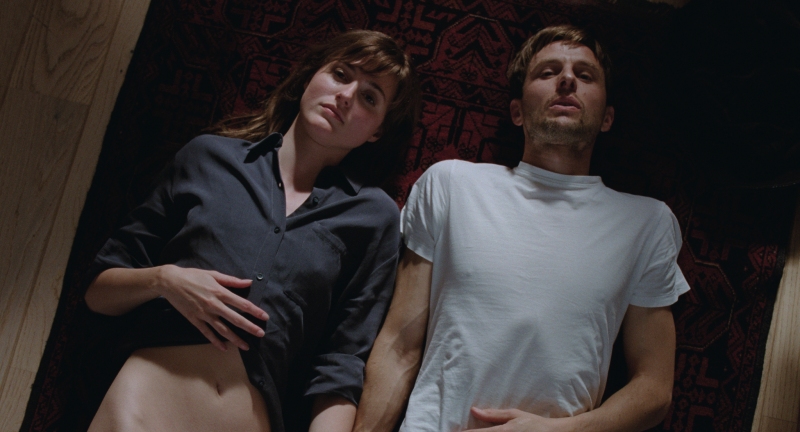
Julie (played by Renate Reinsve) looks for long-term love with Aksel (played by Anders Danielsen Lie) in the film The Worst Person In The World.

Establishing your career and settling down in love is normally something done when your in your late-20’s, early-30’s. It seems like it’s harder than ever nowadays. The Worst Person In The World has a look at a Norwegian woman trying to do exactly that.

The film starts with a prologue, leads into a twelve-chapter story, and ends with an epilogue. Julie is a woman about to turn thirty. Her road leading up to this age has been bumpy with career pursuit decisions in her academic years starting as a medical student, then switching to psychology and then pursuing a direction in photography. Approaching thirty gets to her as she finally has a serious boyfriend. This haunts her as she compares her life at 30 to her mother and many generations of her grandmothers before her. Things change when one of her photography subjects is Aksel Willman: an acclaimed politically-incorrect cartoon book author who is 15 years older than her. This is just as his cartoon Bobcat is to be adapted to a feature-length film.

Julie drops her old boyfriend for Aksel. The relationship gets more serious and it even stimulates Julie to pursue a career in writing. One weekend, the two spend it at Aksel’s parents’ house in the woods. There she meets Aksel’s brothers and nieces and nephews. That is a sudden reminder that Julie is reaching the family-planning years. To add to the frustration, Julie crashes a party after a publishing event for Aksel. There she meets a coffee barista named Eivind whom she becomes attracted to. They spend the night together, but urinate in the bathroom together to not spark any rumors of the two cheating on their significant others.

Things become more serious between Aksel and Julie. Julie writes a blog about oral sex in the age of #MeToo and Aksel is impressed with it. Then Julie has her 30th birthday with her mother and sisters. The father is a no-show. He does show up hours later as his excuse is his back. She’s hurt her father hasn’t read her blog. On the ride home, Aksel says she should make her own family. That’s difficult for her, especially with Aksel, because she’s sensing love for Eivind. One morning while everything and everyone in Oslo stands still, she’s able to meet with Eivind at his coffee store and kiss him. Over time, Julie gets disillusioned with her relationship with Aksel. The turning point is where Aksel has dinner with her and his sister-in-law. During the dinner, Aksel is constantly ranting how the film of Bobcat is a watered-down family-friendly Christmas-themed version of his comic stories.

It’s after a date with Eivind Julie is convinced Eivind is the one and breaks up with Aksel. But not after sex one last time! Becoming one with Eivind was a bit of a wait. He was married to Sunniva. However even before he met Julie, his love for Sunniva was fading. She learned from a DNA test she had Sami ancestry, albeit a small percentage. She changed herself to embrace her ‘Sami roots,’ pursue yoga, and become a climate-change activist. He met Julie at the right time, but there was still the wait to divorce. With the divorce finally settled, Julie and Eivind can finally become a pair. Eivind still follows Sunniva on Instagram, which Julie doesn’t have a problem with. However things take a turn for the bizarre when Eivind hosts a party and gives everyone psychedelic mushrooms. Julie takes some, and it sends her on a trip where she sees bizarre visions of the wrath to her father, her fear of having children, and images of Bobcat’s insanity. She feels she can be herself around Eivind.

It’s clear Julie still has feelings of attraction to Aksel as she’s at a gym working out and she watches a television interview he has where he staunchly defends the cartoon series’ past misogyny to the female host. However Aksel’s brother soon visits Julie at her job to tell her she has pancreas cancer and it’s inoperable. Soon after, Eivind discovers a short story she wrote which he believes is about her family. Julie angrily denies this and in her anger, belittles Eivind for staying a barista. Her perceived irresponsibility of Eivind is also why she doesn’t tell him she’s pregnant at first. Julie meets Aksel at the hospital. Aksel is devastated over the fact he doesn’t have a future. Aksel tells Julie after she tells him she’s pregnant she’d be a good mother. However she can’t decide whether to keep the baby or not, especially after she finally reveals to Eivind the pregnancy and she breaks up with him. Julie does see Aksel one last time. She does a photo essay of him where he visits his past places, including the school he attended where he was first inspired to be a cartoonist. The last thing he says to her is he regrets he can’t live on as something more than a memory to her. The film then ends with the prologue showcasing Julie’s current profession, and a chance encounter with Eivind all this time later.

Entering into adulthood and establishing yourself has never been easy. We have a protagonist many people can relate to. She’s made three different major decisions in her schooling as a reflection of her career choice. She’s finding her way, but now she’s at the age where she’s expected to establish herself, to settle down, and to form a family. The career path choices were hard enough, and along sparks a new career ambition after meeting Aksel. What makes it hard for establishing a relationship is the two men she’s torn between. One is a comic book artist who appears to have it together. The other man appears not to have it all together, but she’s in love with him. It’s there where she has to make decisions about her situation and who she will want to spend the rest of her life with. Her choices will eventually seal her fate.

The funny thing about it is this is happening in our modern times. Adulthood is hard to define. Julie compares her life at 30 and where it should be in comparison to past generations of her female ancestors. Meanwhile she’s torn between two men whom she loves, but can’t help but see as man-boys. One is a 44 year-old cartoonist of an obnoxious comic series about to be adapted into a film. He’s actually quite mature, if you take away the fact of his profession. Then she’s also attracted to a barista who’s more of a boy and has a lot of irresponsibilities. It’s a concern to her. Who should she love? Should she have a child? If she does want one, who should be the father? Will she be a good mother? Will either of the men accept the role of fatherhood? Add to the mix of things like social media-think, each person’s professions, current family situations and other people in their lives. You can understand the confusion in there.

The most unique thing about this story is that it goes from being a comedy of love in our times and the complications around it to suddenly adopting a more tragic tone. That comes as Julie learns Aksel is dying and Eivind’s true colors are starting to expose itself, especially after she learns she’s pregnant with Eivind’s child. We suddenly find ourselves no longer laughing at the irony and bizarreness of the situation and now sensing the seriousness of the situation. As Aksel is dying admitting personal thoughts to her, Julie starts wondering if Aksel was the one all along. The one worth loving and having a family with. We even wonder if it’s worth it for Julie to bear Eivind’s child. Mother a child to a man-boy so self-indulgent? In the end epilogue, we see a glimpse into the present that is a surprise for all to see how time elapsed for Julie and Eivind.

Norwegian-Danish director Joachim Trier directs a delight of a film. It’s common to see a film in chapters, but a film with twelve chapters, a prologue and an epilogue, and to make it all work in two hours of time, that’s something! The story he directs and co-wrote with constant colleague Eskil Vogt is the last film of his ‘Oslo Trilogy.’ I can’t compare to the other two because I haven’t seen them. As for this film, it’s a creative story as it tells of a common love triangle mixed with the confusions and distractions of the time along with the protagonist’s dreams and the wrath of Bobcat mixed in. Somehow Bobcat makes his way into Julie’s personal life! All of it is a complicated process, but the film makes it work by putting it all together in winning fashion.

Despite the story and direction working together, it’s also the excellent acting of Renate Reinsve as Julie. This story is all about Julie. Reinsve embodies her dreams, desires, confusions and frustrations in winning fashion. She embodies the comedic side of Julie as well as she embodies her tragic side. It’s a complex performance she does in remarkable fashion. The actors who played her two lovers were also great. Anders Danielsen Lie is great portraying Aksel as a man quite mature for a comic book artist and then transitioning to Aksel being a hurting man facing death too soon. Herbert Nordrum is also great in his role as Eivind, embodying his immaturities quite well.

When I first saw this film, on the last day of the VIFF, it was in the running between two other films to be Norway’s entry for the Best International Feature Film category for the upcoming Oscars. Recently it was announced to be the official entry. Even outside this Oscar category, the film has already won a lot of acclaim. It was a nominee for the Palme d’Or for the Cannes Film Festival this year. Reinsve’s performance as Julie won the Best Actress award at Cannes. The Jerusalem Film Festival awarded it the Best International Feature. The Ghent Film festival nominated it for it’s Grand Prix Award. Cinematographer Kaspar Tuxen won some film festival awards of his own including the Silver Camera 300 Award at the International Cinematographers Film Festival and the Silver Hugo award at the Chicago Film Fest. The latter of which gave him a claim for use of 35mm film, inclusion of natural light and carefully rendered interiors.

The Worst Person In The World is a funny but sad story of a woman trying to make it in a career and find a partner she can settle down with. It’s a film that does get you thinking in the end.