The members of the International Olympic Committee will meet in Buenos Aires from September 7th to 10th for their committee Session. This will be the 125th Session the IOC has held since 1894. Usually there’s your typical IOC business to discuss at the Session but this is one Session where there will be three high-focused issues.
Host City Of The 2020 Summer Games:
The IOC Sessions are where the elections are held for the host cities of future Olympic Games. They’re voted on usually six or seven years beforehand. The bidding process officially begins two years earlier when the IOC sends letters to the national Olympic Committees to submit bids. Bid confirmations and seminars follow and then the field gets narrowed down to a shortlist of candidates. This time it’s three. All three cities were visited by the IOC’s Evaluation Commission in March during three separate four-day periods and the report of the cities would be delivered in June followed by a briefing session of the candidate cities with IOC members in Lausanne. On Saturday the 7th, the vote for the host city of the XXXIInd Olympics will come down to three cities:
Istanbul, Turkey – Turkey is the one country amongst the bidders that has never hosted an Olympic Games. However Istanbul has a good reputation of hosting events such as many soccer events and even a swimming World Championships. Also Turkey’s worldwide reputation has improved a lot in the past thirty years especially amongst joining the EU.
Tokyo, Japan – This is the heavy favorite. Tokyo actually has hosted the Summer Games before back in 1964. Japan has continued to be a good host for sporting events like two Winter Olympics (Sapporo in 1972 and Nagano in 1998) and co-hosting the 2002 World Cup. However the earthquake, tsunami and the Fukushima nuclear plant catastrophe still hang like a dark cloud over Japan and this may cause some to be weary of voting for Tokyo.
Madrid, Spain – This is Madrid’s third attempt at hosting the Summer Olympics. It is given the least odds of the three host cities but don’t rule it out. We shouldn’t forget Rio had the third-most odds before the vote for the 2016 host. Both Madrid and Spain have a stellar record of hosting sporting events. Barcelona hosted the 1992 Summer Olympics. Spain hosted the 1982 World Cup and the final was held in Madrid. Madrid has also hosted World Championships in Aquatic sports, basketball and even major tournaments in track and field and tennis. Madrid enters this race as the city that has proven the most in hosting sporting events.
The 26th Sport For 2020:
The fate of Wrestling’s Olympic Sport status could make as much news as the selection of the host city of the 2020 Games.
Usually an Olympic Session votes on including sports in the Olympic program. Here there will be a vote on including a 26th sport for the 2020 Summer Olympics. However that inclusion risks causing a highly-publicized exclusion. Months ago the IOC announced the Top 25 ‘core’ sports that made the cut for being contested for the 2020 Summer Olympics. What made the biggest noise was the one sport that didn’t make the cut: Wrestling. Wrestling has been part of the Olympic Games even up to its ancient contests in the 7th century B.C. It was included in the modern revival of the Olympic Games ever since the first Olympics in 1896 and has been part of every modern Olympics except for 1900. Wrestling was again contested at the London Games of 2012 where 29 nations won at least one Wrestling medal. Only Track and Field put more nations on the podium in London.
However it was not seen as Olympic enough to be a ‘core’ sport. Many National Olympic Committees have spoken their disappointment with this decision. Even the president of the International Wrestling Federation (FILA) resigned in disappointment. However Wrestling has been given a second chance as a sport up for the vote for the ’26th sport’ for 2020. The only other two sports rivaling wrestling are Squash which has never been contested at the Olympics and Baseball/Softball: sports contested from 1992 to 2008 and seeking to return to the Olympic program. The structuring of inclusions and exclusions of sports really shows how much the IOC has changed in the last 20 or so years. It also puts into question the future of other sports. I know the IOC is trying to keep the Olympics from getting too big but is exclusion of sports really the answer?
The New IOC President:
Tuesday September 10th will be the vote for a new president of the International Olympic Committee. After 12 years, Jacques Rogge will step down as president of the IOC. Rogge leaves a legacy of improving sports in developing countries and of making efforts for hosting the Olympic Games to be less costly. It’s not to say he’s had some controversies of his own. He had been rumored to participate in a discussion about Chinese internet censorship as they we about to host the Beijing Games in 2008. Nevertheless I consider him to be the least dictator-like IOC president in history.
Now on to selecting a new president. There are six men from six countries up for the position:
Thomas Bach – Germany: Four months ago he was actually the first person to announce his run for the IOC presidency. He is an IOC member since 1991 and the President of the Arbitration Appeals Division for the Court of Arbitration of Sport. He is also an Olympic champion. Back in 1976, he was part of West Germany’s gold medal-winning Foil Fencing team. He’s the heavy favorite.
Ng Ser Miang – Singapore: Ng has been an IOC member since 1998 and has been part of the Executive Board since 2005.
Richard Carrion – Singapore: He has been a member of the IOC since 1990, currently chairs the Finance Commission and is a member of the IOC’s Marketing, TV and International Rights Commission. He’s also the CEO of financial holding company Popular, Inc., one of the most powerful financial companies in Puerto Rico.
Wu Ching-Kuo – Taiwan (Chinese Taipei): He has served as an IOC member since 1988 and has served as the president of the International Boxing Association.
Denis Oswald – Switzerland: He has served as an IOC member since 1991 and is the current head of the International Rowing Federation.
Sergei Bubka – Ukraine: He has served as an IOC member since 2008 and is current head of the Ukrainian Olympic Committee. He is also considered to be the greatest pole vaulter in history. He was Olympic Champion in 1988 and has set 35 pole vault world records in his career.
One of these six will be the new president. It’s possible we could have the first president ever that was a former Olympic champion. It will all be decided Tuesday.
The 125th IOC Session has lots in stock when the various IOC members meet in Buenos Aires. There’s the usual admission of new members and there’s also the big matters I talked about. No kidding that lots need to be taken care of here.
One of many protests in Brazil that occurred during the time of the Confederations Cup.
The Confederations Cup soccer tournament began on June 15th. Also what started around that time was a protest in Sao Paulo about transit fare inflation. Protests soon grew in Brazil. I’m sure the Confederations Cup competition and the worldwide media attention to that event had a lot to do with the growth. But what are the protests about? And why are they happening all of a sudden?
First it’s important to look at the country of Brazil. Most people will consider Brazil a poor or developing country. It is true to an extent. What most people don’t know is how much Brazil’s economy has grown since the 1980’s. Its biggest growth was in the industries of oil, mining and agriculture which grew at 47% or 3.6% per year since 2000. Its industrial growth rate is also impressive with an 8.8% back in 2008. Brazil’s economy is one of the fastest growing in the world and actually now ranks 7th in the world and has the highest GDP per capita in South America and 53rd in the world overall. Its gross national income of $10,721 US in 2011 classifies itself as upper-middle income: an income on par with many countries of Eastern Europe. It can be attributed to many factors. Some say it could be Brazil’s move to democracy that started with an Amnesty Law in 1979 and developed into its own Constitution in 1988.
The quality of life has also gone up considerably in the last 20 years and Brazil has worked to establish methods to either keep it that way or improve it. Despite huge urban sprawl in cities like Rio de Janeiro and Sao Paulo, its cities have some of the finest public transit systems that have been copied and studied by many major cities in the world. Brazil has also reformed its Social Security programs and tax systems. There was even a Law Of Fiscal Responsibility that controls public expenditures by the Executive Branches of all government levels. Export, Industry and Trade has been increased while allowing Brazil to keep itself from vulnerabilities by methods such as not exporting the oil it consumes. It has also halved its debt through exchange rate-linked certificates which has allowed exporting to grow to as much as 20% a year and put a limit on its inflation rate to 4%. It also has an average life-expectancy rate of 72.7 years (2009) which is comparable to that of many Eastern European countries.
So what are all the protests about? Even before I get into the nitty gritty of the protests there are some facts to send a message that a bubble was about to burst. We must remember that while Brazil has improved a lot in past years and especially this century, there’s still a lot of development to go. Despite its improvements, the 53rd best GDP in the world shows they can do better. Its gross national income is roughly 1/4 of what developed countries like Canada are receiving. In addition, the minimum wage translates to an annual income of an unenviable 8,086 Brazilian Reals (R$) or roughly $3,600 American. Even in government despite being a democracy, Brazil still ranks as the 69th least corrupt country in the World according to Transparency International with a score of 43 out of 100.
The first protests actually started on June 1st, two weeks before the Confederations Cup was about to begin. The first major protest was in the city of Sao Paulo of a transit fare increase from R$ 3.00 to R$ 3.20. The first protest started on June 6 and grew over time. The real turning point came when police fired rubber bullets at the protesters and journalists on June 13th. This was widely criticized by Amnesty International and even Brazilian Amnesty Groups.
Soon after, and while the Confederations Cup was progressing further, the protests grew to as many as 250,000 in various major Brazilian cities on June 17th protesting. Rio de Janeiro had the biggest that day with 100,000. Even Brazilians in other world cities stages their own protests. By June 20th, protests grew to millions of people in 100 cities and grew over the next few days. As negotiations and government involvement in matters occurred, which I will discuss later, the protests calmed down but not without incidents.
Interesting enough is not just the number of protesters and cities involved growing but the issues too. What started off as one protest over a transit fare increase grew to a wide array of issues being protested against or demanded:
A bill (PEC – 37) that hindered Public Ministry to investigate.
The distribution of petroleum royalties to the appropriate causes.
Lack of criminalization of all forms of Corruption and Embezzlement.
Secret Voting in Congress for forfeiture of office.
A bill (PEC – 33) allowing decisions made by the Supreme Court going to Congress.
Having a Privileged Forum.
Taxing in Public Transport.
Demands to the National Pact for fiscal responsibility, control of inflation and proper distribution of funds to education, public transport and health.
Demands to implement means of political reform in the country.
Demanding 10% of the GDP be devoted to education.
Demanding a free-pass for full-time university students.
Demanding a revocation of a ‘gay cure’ bill (PDL – 234) authorizing psychologists to treat LGBT people.
Evident enough is that the growth in numbers and issues happened as the Confederations Cup matches were occurring. I still remember telecast of Confederation Cup matches on CBC that even included security updates of what was happening in the cities. Even though the protests have been successful in leading to solutions of problems being protested over, there was still last chances for opportunity as violent clashes occurred in Belo Horizonte as it was hosting a semifinal match on the 26th and in Rio de Janeiro as it was hosting the final on the 30th.
You could understand why the Confederations Cup had a lot to do with the increase in protests. With a major world event happening, it’s obvious the protesters want to highlight Brazil’s problems right while the eyes of the world are watching. Mind you these next three years are going to be very big for Brazil as they will play host to many major international events. Besides the Confederations Cup that finished yesterday, Rio will host the Catholic event World Youth Day later this month. Next year Brazil will host soccer’s World Cup with twelve major cities contesting the competition. And 2016 will have Rio hosting the Summer Olympic Games. I don’t know of any other country that has had to host this many major events in a matter of four years. For Brazil it’s a chance for them to show the world their image as a well-to-do nation as they will be the first developing country since Mexico in 1986 to host a World Cup and the first developing country since Mexico again in 1968 to host a Summer Olympics. In fact the World Cup was even the subject of protests that received less notice than most other protests. Many were protesting the government giving a lot of the budget ($12 billion US) to these sports events instead of on living conditions.
I mentioned that many of the issues being protested upon have been approved within this two-week span of time. You can assure the media attention to this had a lot to do with it. Among those approved by the governments and senate are: public transit prices reduced and taxes eliminated; petroleum royalties destined to education (75%) and health (25%); reform and improvement demands to the National Pact being granted; secret voting ended; Bill PEC – 37 being revoked; all forms of Corruption and Embezzlement being criminalized; and implementing a Plebiscite to politic national reform. Even though the Confederations Cup is over and a lot of reform and improvements have been politically approved, there are still demands outstanding. Some like the 10% allocation of the GDP to education, revocation of bill PDL – 234, and the Free Pass for students are currently under negotiation by Congress while issues of ending of Privileged Forum and the elimination of Bill PEC – 33 still remain undiscussed. On top of it, time will tell if the approved reforms are carried out and if carried out successfully or not. Another thing to look for in the future is how much impact it will have on President Dilma Rousseff. Her popularity has already been hit by the protests. It remains into question whether she will win the next election.
Even though many of the protester’s demand have been met and even though many are still pending as of now, don’t expect all the action to end just as the Confederation Cup has ended. I’m sure as long as Brazilians see injustice or wrong ways of doing things, there will continue to be protests even without the anticipated major events happening and even after they all end. Nevertheless it’s excellent opportunism to make improvements happen to a developing nation that has improved so much in recent decades but still has more to improve upon.
I saw Wreck-It Ralph many weeks after its original release. I know it’s late but I finally had the chance to see it. I’ve always wanted to but I waiting too long. Now that I’ve finally seen it, here’s what I think of it.
Wreck-It Ralph is a video game villain in the early 80’s game Fix It Felix Jr. He wrecks the apartment that Felix fixes. Every time Felix completes the fixing, the tenants celebrate by throwing Ralph off the top of the building. It’s been like that for the thirty years Fix It Felix Jr.has been in Litwak’s Family Fun Centre and Arcade. When the arcade closes, all the arcade characters stop what they’re doing and lead normal lives even to travel between game to game. In Fix It Felix Jr., the tenants go to sleep and Ralph sleeps in a pile of bricks. Thirty years of this is very overbearing for Ralph as he tells his story at a ‘Bad-Anon’ meeting for video game bad guys like House Of The Dead’s Cyril, Street Fighter’s Zangief and the ghost of Pac-Man. The Bad Anon group try to reassure Ralph that his villain status is good like theirs but it doesn’t help much especially since Felix and the tenants are celebrating their 30th Anniversary at Litwak’s and leave Ralph completely out of the picture.
So what does Ralph do? He tries to find a video game to make himself a hero. He pursues it in Hero’s Duty, an army game where soldiers shoot cyber bugs in pursuit of a medal of honor. Ralph does a clumsy job but receives the medal. Finally a hero. Only problem is Ralph accidentally hatched a Cybug during that time. This also leaves Fix It Felix’s game malfunctioning and in the danger of being taken out for good. This would leave Felix and the apartment tenants homeless. Any video game taken out of Litwak’s leaves the characters homeless. Just ask Q-Bert.
Ralph continues on amongst video games where he finds himself in a candy-themed kart-racing game called Sugar Rush. Here he meets a bratty girl named Vannelope who likes teasing Ralph and dreams of racing. She even steals his medal in order to race in the game. Problem is she’s not allowed to race according to King Candy, the King of the game. Ralph wants her to race in order to win his medal back. In the meantime, one of the Cybugs is in danger of multiplying inside Sugar Rush and both Fix It Felix and Sargent Calhoun, the female sergeant in Hero’s Duty, are searching for Ralph: Felix to get him back to the game for it to function and Calhoun to stop the Cybug from multiplying and destroying the Sugar Rush game.
Ralph soon learns Vannelope lives in Diet Cola mountain shunned away by the racers. He helps build a car for Vannelope and teaches her how to race for the win. In the meantime troubles mount. Sargent notices the Cybugs have multiplied and could wreck the Sugar Rush scenery. Felix searches for Ralph and falls in love with Calhoun only to remind her of a previous relationship. King Candy offers to give Ralph back his medal to prevent Vannelope from racing as she is a ‘glitch’. He smashes it up right in front of Vannelope. And the tenants of Fix It Felix’s apartment pack their bags anticipating the worst. Looks like Ralph wrecked more than what he bargained for.
Things change when Ralph notices on the Sugar Rush game unit’s side–noticeable because Fix-It Felix’s screen faces Sugar Rush– that Vannelope was intended to be in the game in the first place. Ralph then proceeds to do the right things. He breaks Felix out of the prison King Candy put him in and gets him to fix Vannelope’s car. He then gets Vannelope out of the dungeon and gets her racing. Soon Ralph, Felix and Calhoun have to fight the Cybugs while Vannelope attempts to chase down King Candy while he leads the race. Soon it’s revealed that King Candy is the incarnation of Turbo: a racing character from an early 80’s racing game that went on to sabotage other video games upon his declining popularity. The race and the battle with the bugs lead to a somewhat predictable ending that does manage to both thrill, entertain and will leave the audience happy with the ending.
This is one example of how a fun movie like this can have excellent and creative writing. It was great to see how it was able to create ‘lives’ for these video game characters and even help given them focuses from their point of view. Mind you it had to do such in order to make such a storyline like this work. It also had to take in consideration of the cyber world of not only living in a video game but going from game to game to even being one of the games unplugged for good. The sign on a ‘homeless’ Q-Bert was also a good example of creating ‘lives’ for characters of video games past. Interesting universe of Litwak’s arcade. Makes it fun and entertaining to watch. What’s also great about this is that the story is like a maze of stories and plots coming together and making for a story that’s not too confusing and fun to watch. It all comes together in the end.
This is one of three animated features released by Disney this year. The first was Brave which was done by the Pixar studios. The second was Frankenweenie done by Tim Burton Productions and this was done by Walt Disney Studios. No doubt this has been Disney’s year in this genre. The film is co-written by Pixar writer Jim Reardon and directed by Rich Moore: writer for episodes of Futurama and The Critic. The film features vocal talents of John C. Reilly, Sarah Silverman and Ed O’Neil. The film features a music score by Henry Jackman and songs from Skrillex, Owl City and AKB48. Ironically the film’s theme song Wreck-It Wreck-It Ralph! is performed by Buckner & Garcia, the duo responsible for the 1982 novelty hit PacMan Fever.
For me I consider this movie a salute to video games from its early heydays of the 1980s to the present. I’ve often said the 80’s is to video games what the 50’s is to rock and roll. It was a fun romp into the world of video games while having an excellent story to go with it. Another thing too. As you may have noticed, video game movies have had a history of being lousy. Super Mario Brothers, Street Fighter, Mortal Kombat and its sequel: all lousy and forgettable even if a hit. Now we finally have a video game movie that’s as well-written and well-acted as it is entertaining. And to think it’s mostly featuring characters of fictional video games. It took a while but glad one finally came along.
Wreck-It Ralph is one of the best animated movies of the year. A creative take on video games past and present, real and fictional. It gives audiences young and old entertainment enjoyment. Also it’s a reminder that video game villains have feelings too. Never forget that.
Margaret Maughan lights the cauldron of the 2012 London Paralympics.
On Sunday night, the fourteenth Summer Paralympic Games closed in London. They were contested only a month after the main summer Olympic Games began. These Paralympic Games were another effort of the International Paralympic Committee to help put disabled sport upon the same parallel as able-bodied sport. They became the biggest and best ever.
START AND DEVELOPMENT
Sport for the disabled has existed ever since there were people with disabilities who still wanted to remain active and had the will to make it happen. However the start of formal sport for people with disabilities had its start and development at the Stoke Mandeville hospital in the English town of Stoke Mandeville 55 km northwest of London. It was after World War II and through the iron will of war veterans left permanently injured with either paralysis or amputation to develop sport to stay physically active and through the guidance of neurologist Ludwig Guttmann. It was on July 28, 1948–the day before the main Summer Olympics of London opened–that the Stoke Mandeville Games For The Paralyzed took place. It consisted of a single archery competition between fourteen men and two women, all from the UK.
You could say it was those Stoke Mandeville Games where the Paralympic sports movement would be born. True, but it would take some time and development. The Stoke Mandeville Games would become an annual sports competition and would consist of UK athletes only. In 1952, Dutch athletes participated at the Stoke Mandeville Games making it the first ever International Stoke Mandeville Games. The Games would continue to be contested annually and would continue to become more international. Then a breakthrough occurred in 1960 when Rome, host city of the Summer Olympics that year, agreed to host the International Stoke Mandeville Games just weeks after the main Olympics ended. This was the first time those Games were held outside of Stoke Mandeville and would later be remembered as the first ever Paralympic Games. It consisted of 400 athletes from 23 countries participating in 57 events in eight sports.
Paralympic sport would continue to grow. The International Stoke Mandeville Games would continue to be contested annually in Stoke Mandeville for three more years. Then in 1964, Tokyo would host the Games just weeks after the main Olympics ended just like Rome did four years earlier. The Stoke Mandeville Games continued annually and the 1968 Stoke Games we held just weeks after the main Olympics ended. However they would be held in Tel Aviv, Israel instead of Mexico City which hosted the main Olympics. This would continue on for twenty years where the Stoke Mandeville Games would be held in Stoke Mandeville in non-Olympic years and be held in an international city. There would be two dissimilarities during this period of time. One would be no mention of Stoke Mandeville in the title and having tiles like ‘Olympiad For The Physically Disabled’ or ‘International Games For The Disabled’. Another dissimilarity was the host city as it would be a different host city than the main Olympic Games. Also noteworthy was the creation of the first ‘Winter Olympic Games Of the Disabled’ in 1976. Like the Summer Games, the Winter Games would also be contested in cities that didn’t host the main Winter Olympics. One notable achievement of those Games is that over the years they would be recognized seriously enough for national heads of state to formally open them at their Opening Ceremonies.
Another breakthrough occurred in the summer of 1988 when the Games were held in Seoul, Korea just weeks after they finished hosting the main Olympic Games. This marked a return to the original format of 24 years ago when these Games took place in the same host city of the main Olympic Games and this partnering would continue to be the format to this day. Another notable thing of these Games was that they would be the first such Games to be referred to as the ‘Paralympic’ Games for ‘parallel’, not paralyzed and most people think. The ‘merger’ of the two Games that year would prove to be a great success and would even spawn the formation of the International Paralympic Committee the following year.
Also in case you’re interested, the International Stoke Mandeville Games would later be renamed the World Wheelchair Games and are now called the International Wheelchair and Amputee Sports (IWAS) World Games. They are headed by the International Wheelchair and Amputee Sports Federation, a sports federation separate from the International Paralympic Committee, and take place annually except during Paralympic years and at various cities worldwide.
MY OWN EXPERIENCE: VANCOUVER 2010
As many of you know, I come from Vancouver. Our city hosted to 2010 Winter Olympic Games and the Paralympic Games of that year. I had tickets for the Opening Ceremonies, alpine skiing, nordic skiing and sledge hockey. It was a very good experience. The Opening Ceremonies held on March 12th was a fun occasion which featured a DJ performing for the parade of athletes as they were coming out. The opening ceremonies also involved audience participation and featured a wide array of performers from a breakdancer with Arthrogryposis named ‘Lazylegs’ to an amputee rock band to wheelchair riders practicing halfpipe tricks to a deaf poet. The Ceremonies also paid tribute to two of Canada’s greatest athletes with disabilities: the late Terry Fox and Rick Hansen. There were speeches made by Hansen as well as past Paralympic athletes like Aimee Mullins and Chantal Petitclerc. The ceremony ended with a grand lighting of the flame by teenage athlete Zac Beaumont: a Paralympic snowboarder. He was selected to represent the future of Paralympic sport not just because of his age but also because he was a snowboarder and snowboarding was not part of those Paralympics. Snowboarding will make its Paralympic debut in 2014 under the name Parasnowboarding.
The following day I was to see the alpine skiing competition at Whistler. It was cancelled out due to foggy conditions and heavy snow. Even despite the cancellation, there was an area at the basin of the hill where children and adults could try Paralympic sports on their own. There was sledge skiing trials, sledge hockey trials and even an amputee skiing trials. It was also an introduction to the equipment used for sports competitions like the sledges for sledge skiing and the ski poles for amputee skiers called outriggers whose edges first act like poles then flip to become skis to support balance. Over at a visit to the main Whistler Town Square there were performances by rock bands throughout the square and celebrations galore at the restaurants. The medal ceremonies happened later that night. It was a great occasion and all the athletes were excited for what they achieved and the mood was festive. Whistler would be the competition grounds for all but three medal events of the Paralympic games so these Games were as much Whistler’s as they were Vancouver’s.
Me with IPC President Sir Philip Craven during Vancouver 2010.
I returned to Whistler Thursday the 18th to watch nordic skiing. There were three types of competitions: sledge, blind and amputee. Both sledge skiers and blind skiers were all ranked by their finish time. Amputee skiers were different as there were different types of amputees through the competition and times had to be adjusted due to the amputee level of each athlete for the sake of a level playing field. A unique thing I learned is that blind skiers, both nordic and alpine, would have guides with full vision guiding them through telecommunication letting them know of what to expect while they’re on course. Often guides for Paralympic athletes have to be athletes of Olympic caliber ability. I also remember groups of schoolchildren were at the events as part of a special promotion from the ticket sales. Later that day i went back to the village where they had a special igloo shaped exhibit called ‘Spirit In Motion’. Inside was an exhibit of Paralympic sports and its history. It was almost like walking through a museum learning all the information. Most of the exhibits were provided by Otto Bock, a German prosthetics company. I was also able to meet Sir Philip Craven, president of the International Paralympic Committee (IPC). We talked for a short bit as he had to head back to Vancouver. I told him I was to see a sledge hockey game tomorrow and that’s when he gave me the news that Canada lost their semifinal to Japan. My heart sunk because I wanted them to make the gold-medal final of course. The day ended with more celebrations over at the Whistler Olympic Plaza. Medals were given out and two of which went to Canadian athletes that were some of the biggest winners of these Games: five-time gold medallist Lauren Woolstecroft, an amputee alpine skier; and three-time gold medalist Brian McKeever, a blind Nordic skier. The ceremonies ended with a concert by Serena Ryder.
Friday the 19th was the day for the bronze medal game of sledge hockey. I was too late to get a ticket for the gold-medal final. This was the match I was hoping NOT to see Team Canada play in. Of course I wanted them to play in the gold-medal match. Sledge hockey has been one Paralympic sport that has caught a lot of attention over the past few years. Canada has also welcomed the sport with open arms and matched have stimulated interest in the sport. Anyways it was held at a hockey stadium over at the UBC Campus. The game was scoreless during the first two periods. Then a goal for Canada happened at the beginning of the third. During the third period, things started looking bad for Canada as they had only one shot on goal while Norway was having plenty. Then the nasty moment came. A foul by a Canadian was committed which allowed Norway a penalty shot. This infuriated the Canadian goalie enough for him to throw his helmet down. When the Norwegian took his penalty shot, he scored. Tied 1-1. Then one of the Canadian players took a bad hit and was lying on the ground. He was lying still and the coach came rushing out onto the ice. The whole arena was silent. Fortunately he was able to get up. The whole area was so relieved he was alright we didn’t seem to care if we won or not. We didn’t; Norway scored the bronze medal-winning goal with less than four seconds to go.
ACCOLADES AND CONTROVERSIES
The Paralympic Games have had their greats over the years. the most medaled Paralympian is American blind swimmer Trischa Zorn who won a total of 55 medals, 41 of them gold, from 1980 to 2004. The most medaled Winter Paralympian is Norwegian Ragnhild Myklebust who won 27 medals including 22 golds in three different winter sports: biathlon, Cross-country skiing, and ice sledge racing. It’s interesting to know that while Michael Phelps is the only Olympian with 10 or more gold medals, there are a total of 39 Paralympians with ten or more. The most medaled Canadian is Chantal Petitclerc, a Wheelchair racer who has won a total of 21 medals including 14 gold. Another Canadian Paralympic legend is Arnie Boldt, a single-leg amputee performer in athletics, who has won a multitude of Paralympic medals and was especially dominant in the high jump. Many consider him to be the best Paralympic athletics performer ever. The most golds in a single games is 12 won by Trischa Zorn at the 1988 Summer Paralympics. While Phelps is the only Olympian to win eight golds in a single games, there are six Paralympians who have won eight or more.
Each Paralympic sport has had their greats. While there’s Zorn and French swimmer Beatrice Hess in swimming, there’s Sweden’s Jonas Jacobsson in shooting, Germany’s Gerd Schoenfelder in alpine skiing, Myklebust in nordic skiing, Petitclerc and Switzerland’s Franz Nietlispach in athletics, and Britain’s Lee Pearson in athletics.
The Paralympic Games are not without their controversies. The biggest example of cheating came at the Sydney Games of 2000 when Spain’s intellectual disability basketball team was ruled to have at least ten members who weren’t intellectually disabled. Mental tests, which were to be conducted before the Games, weren’t conducted. It was later admitted ten members weren’t intellectually disabled and the team was stripped of the gold. That was considered by many to be one of the ‘most outrageous sporting moments’ in history. Intellectually Disabled Basketball has not been contested at the Paralympics ever since and it wouldn’t be until these Paralympics in London where Intellectual Disability sports would make a return, and under close scrutiny.
There have also been doping violations at the Paralympic Games too. The first positive tests came at the 1992 Barcelona Games. The Sydney Games of 2000 was the first Games to ensure their Games met the International Medical and Anti-Doping Code. Out-of-competition tests were introduced at those Games. Those resulted in fourteen athletes testing positive, ten of them powerlifters. There’s even a form of doping unique to Paralympic sport: boosting-where the athlete is induced with autonomic dysreflexia to increase blood pressure. It’s an ongoing problem that still exists.
THE LONDON GAMES THEMSELVES
These Paralympic Games were anticipated to be the biggest ever. Organizers were expecting before the Games to be the first Paralympics to achieve mass market appeal, fueled by the public enthusiasm continuing after the end of the main Olympics in London, the UK’s role in Paralympic sport and growing interest and media in Paralympic Sport. The torch bagan its journey on August 24th with torch lightings in London, Belfast, Edinburgh and Cardiff. All four met in Stoke Mandeville on the 28th, the day before the Games’ opening, to unite to create a special cauldron during a special ceremony commemorating the village’s role in the history of the Paralympics. The flame headed for London was lit and it arrived at the stadium after a 24 hour relay during the opening ceremonies just after being declared open by Queen Elizabeth II. The cauldron was similar to the multi-pedaled cauldron used for the main Olympics and it was lit by Margaret Maughan, Britain’s first Paralympic champion. The opening ceremony was as star-studded as the Olympics featuring acting from Ian McKellen, music from group Orbital and an appearance from Stephen Hawking. The closing ceremony was just as star-studded as it included Coldplay, Rihanna and Jay-Z. The Paralympic flag, by the same tradition as the Olympic flag, was handed from the mayor of London to the mayor of Rio. And British Paralympic champions Jonnie Peacock and Ellie Simmonds extinguished the flame and shared its last flame on torches to others throughout the stadium.
4300 athletes from 156 countries participated at these Games in the 503 events throughout the twenty sports. The competitions were a delight themselves and you could guarantee Olympic appearances by South African runner Oscar Pistorius would stimulate attention. He attracted a lot of attention but was surprised in the 200m run when he was beaten by a Brazilian runner. The sprinting star of those Games was actually a British teenage sprinter Jonnie Peacock. A single-leg amputee, he won the 100m for his disability class. His coach was Dan Pfaff, coach of 1996 Olympic 100m dash champion Donovan Bailey.
The most medaled athletes were Australian swimmers Jacqui Freney and Matthew Cowdrey with eight medals each: all gold for Jacqui and five gold for Matthew. The athletics competition had two quadruple-gold medalists with American Raymond Martin and Brit Dave Weir. Another British athlete, cyclist Sarah Storey, also won four gold medals. The most medaled Canadian was swimmer Summer Mortimer who won seven medals including two gold. Britain’s Sophie Christianson won two gold medals in equestrian. Brazil and Russia won the two football tournaments. The powerlifting events were won mostly by Nigeria, Iran and Egypt. China proved to be as dominant in Paralympic table tennis as they are at Olympic table tennis winning 14 of the 26 golds. China also won six of the twelve wheelchair fencing events.
In terms of the medals race, China won the most with 231 medals, 95 of them gold. Host country Great Britain won the second-most medals with 120 including 34 gold. Russia won the third-most medals with 102 including 36 gold. The USA was fourth in medals with 98 including 31 gold. Canada had its lowest Paralympic medal haul in 40 years with only 31 medals, seven of them gold. Canada usually ends up in the Top 10 on the Paralympic medals chart but ranked 20th at these Games.
GAMES MARKETING
Having the Paralympics start weeks after the main Olympic end and in the same host city has helped establish the Paralympic Games since they were repartnered back in 1988 and as helped them grow considerably. It’s another thing to help promote and market Paralympic sport and get good ticket seat sales. Even though ticket sales are lower than that of the main Olympic Games, it hasn’t been easy to attract good-sized crowds to Paralympic sport. There have been some cases in past Paralympics where some events would ‘give away’ seats to attract crowds. There have been other times when Paralympic events would attract good-sized crowds. I remember back in 2010 the gold medal match for sledge hockey was sold out weeks before it was contested. Thus my purchase of a ticket for bronze medal match. I also remember the Paralympic Games offering discounts for groups of ten or more and even offers for field trips for schoolchildren. The ceremonies were very well-attended. The skiing events I attended also had good sized crowds. The sledge hockey playoff rounds started selling out as the weeks got closer. And the medal matches for wheelchair curling sold out.
London attempted to take it even further by becoming the biggest-selling Paralympic Games in history. They planned to sell a total of 2.7 million tickets. Part of the promotions included introducing the Paralympic mascot Mandeville, named after the Stoke Mandeville Hospital, the same day the main Olympic mascot Wenlock was introduced. Royal Mail released a combined Olympic/Paralympic postage stamp series of 30 stamps each featuring either an Olympic or Paralympic sport. One of which came from Channel 4, the British channel broadcasting the Paralympic Games with 150 hours of live coverage, ran an ad campaign in the weeks leading up called Meet The Superhumans. The Ads were aired over 78 commercial television stations in Britain and was met with huge critical acclaim.
Broadcasting was also very good. Many countries like Britain, Australia, France, Germany, Spain, South Africa devoted five or more hours a day on live coverage. Some countries like Canada and New Zealand had broadcast of ceremonies and a daily hour-long highlights show. The one country with the least coverage was the United States. NBC and its NBC Sports Network only provided a total of 5 1/2 hours of coverage. Only four one-hour highlight shows and a recap show on NBC scheduled for September 16th. There was actually a lot of online broadcast of the Paralympic Games that was more active than broadcast on television. Canada had four online channels broadcasting 580 hours of coverage. Many other countries included their own online broadcast. And the IPC’s own Youtube channel broadcast approximately 780 hours of coverage. Broadcasting rights raised a profit of £10 million, a Paralympic record.
As for tickets, 2.7 million were sold. Even before the main Olympics were over, London’s Paralympic ticket sales had already broken the Paralympic record of 1.8 million for the Beijing Paralympics. By the time the Opening Ceremonies started, a total of 2.4 million were sold. The Opening Ceremonies only had 800 tickets unsold before its start which went to the police and the military along with London Mayor Boris Johnson distributing 1100 to youth athletic clubs. There was even 100,000 contingency tickets sold on September 6 due to popular demand which included multi-event passes and event tickets passed on by sponsors and partners. It’s no wonder this much enthusiasm led Sir Philip Craven to call these ‘the best Paralympic Games ever’ at the closing ceremonies.
LOOKING BACK AND LOOKING AHEAD
Oscar Pistorius’ popularity has done a lot to stimulate interest in Paralympic sport.
There can be many factors determining why these became the biggest and best Paralympic Games ever. One could be increasing support and funding of Paralympic sport from almost all national Olympic Committees. Some could also say it was due to Britain’s enthusiasm of the main Summer Olympics that poured into these Paralympics. Some could also add it was the Olympic appearance of South African double-amputee sprinter Oscar Pistorius that stirred up excitement. Some could say it was Britain’s contribution to Paralympic sport from the genesis of its formation at the Stoke Mandeville Hospital after World War II to Sir Philip Craven serving as the current President of the IPC. Nevertheless the organizers succeeded in making this the best Paralympic Games ever and leaves a tough act for Rio to follow in 2016.
Despite the success of these Paralympic Games, there are some challenges that lay ahead. First is the connection of the Paralympic Games to the Olympic Games. Since 1988 it has relied on being held shortly after the conclusion of the main Olympics to boost its popularity. That move has been very successful and is under contract to continue to be that way at least until 2020. The question is will this ‘partnership’ continue after or will the Paralympics try to hold their own by being held in a different host city? Also The IOC and IPC have close ties and both Presidents Jacques Rogge and Philip Craven meet regularly. Would the ties continue if there was such a change?
Another is the cultivation of star Paralympic athletes and the support of Paralympic sports. We have one current star Paralympian in Oscar Pistorius, commonly known as ‘The Fastest Man On No Legs’. His quest to compete at the main Olympics since 2008 and his appearances at the main London Olympics have sparked his popularity to where he receives $2 million in endorsement money annually. It’s less than the $20 million Usain Bolt will be getting but the most for any Paralympian ever. I’ve even seen him in two Nike commercials. The question is will there be other newer Paralympic stars in the future to help popularize Paralympic sport. Also the funding for Paralympic athletes. As the Paralympics continue to grow, will the funding of Paralympic athletes continue to grow too? Another is people with disabilities having access to sporting activity. I remember going to the Canada Paralympic Association website before Vancouver 2010 and saw an into that said: “34% of able-bodied people have access to sporting activity. 3% of people with disabilities have access.” Will access to sport for people with disabilities grow over time and how will it be promoted to them? I also remember shortly after the 2010 Vancouver Paralympics there were many bus ads promoting Paralympic sport throughout various buses. That’s one good example. Also the possible increase of more Paralympic Sports. Over time there will be more efforts to make more sports for people with disabilities accessible and competitive. Already I know Parasnowboarding will make its debut at the 2014 Paralympics in Sochi. Will there be new Paralympic sports in Rio and in future Summer Games? Only time will tell and it will have to involve the national and international sports federations and the athletes to get the green light from the International Paralympic Committee.
The 2012 Paralympic Games of London ended with a record bang. Enthusiasm for these Games paralleled that of the main Olympics. The future of Paralympic athletes and Paralympic sport looks bright and more promising than ever. It’s up to the various organizing committees and the athletes to help take Paralympic sport into the future not just for the increase of fanfare and revenue but also for the accessibility for the disabled. Nevertheless after these Paralympics, the future couldn’t look any brighter.
I made mention back in my post of Olympians to watch that this is the third time that London has hosted the Olympic Games. The first time was back in 1908. This was only the fourth time an Olympic Games was held. Boy have a lot of changes happened since. Also it had its share of memorable moments.
LONDON TO THE RESCUE
One thing few know is that London was not meant to host the Games of the IV Olympiad, Rome was. However Mount Vesuvius erupted in 1906 devastating much of central Italy, especially Naples. The Italian government then devoted its funds to recovery from the disaster. London was then selected to host. For the record, Rome would have to wait until 1960 to host the Olympic Games.
As for the Games, they were six-months long: beginning April 27th and ending October 31st. Twelve of the 24 sports at these Games were held in the White City Stadium which was constructed in a short time for only £60,000 and built to hold 68,000. The running track was three laps to the mile, contained a 100-metre pool for swimming and diving, a 660-yard cycling track, and platforms for wrestling and gymnastics in the middle. After the Olympics it would host the 1934 Empire Games, greyhound racing, speedway and a World Cup match in 1966. It was eventually demolished in 1985. White City now consists of buildings for the BBC including a media village. The BBC now plans to either demolish some of the buildings or convert it into a University campus. There is one reminder of these London Olympics that still exists there: a marker commemorating the finish line.
Opening Ceremonies of the Games of the IV Olympiad in London’s White City Stadium.
NATIONAL TEAMS
Athletes from many nations have competed in Olympic Games since it started but it would be these Olympic Games that there would be national teams fully recognized at these Games: 22 in total. It would even be signified by the parade of nations at the Opening Ceremonies. Each nation marched behind their national flag. First was Finland marching behind the Russian flag since Finland was under the Russian Empire. Many chose not to march over a flag at all. The Swedish flag was not displayed over the stadium so members of the Swedish team decided not to march in the ceremony. Finally the USA raised eyebrows highest of all when they were only nation not to dip their flag to King Edward VII. Popular belief is because flag bearer Ralph Rose said: “The flag dips to no earthly king.” To this day the American flag is the one flag that has never dipped to a head-of-state’s presence at any opening ceremonies. One interesting fact is that Australia and New Zealand competed together as Australasia. One more note is that Irish athletes competed for Great Britain. That left many Irish unhappy as they wanted to compete for their own team. Even though the Olympics were meant to bring nations together in brotherhood of sport, we shouldn’t forget there were still national tensions at the time and they were not left on the sidelines during the Olympics.
As for Canadian athletes, they have been competing at the Olympic Games since 1900. Here in 1908 they were able to march under their own flag. They sent 87 athletes in eleven sports. Flag bearer was Edward Archibald who would win a bronze in the pole vault.
FIRST AND ONLY
The London Olympic Games would feature a lot of sports and events that would be held at these games only. One is jeu de paume: a form of tennis that the Brits refer to as ‘real tennis’. In fact the Olympic Report of those games refer to this as “tennis (jeu de paume)” while the more familiar tennis was referred to as ‘lawn tennis’. There were eleven competitors: nine British and two American. American Jay Gould II won. It was contested at the Queens Club, as was Rackets. Rackets would also make a one-time only appearance at these Games with all entries being British. Also contested as an Olympic sport for the first and only time were Water Motorsports. They were a demonstration sport in 1900 but a full-medal sport here. They were dropped as Baron Pierre de Coubertin, president of the International Olympic Committee, insisted that the Olympics not consist of motorized sports.
NO LONGER HERE
The unique thing is that there were not only sports and events at these London Games that were there for these Games only but also sports and events that would eventually be eliminated from the Olympic Program and are no longer part of the Program to this day. Sports at London that are no longer contested at the Olympics are lacrosse, polo and tug-of-war. That’s right! Tug-of-war was an Olympic sport from 1900 to 1920. Here in London all teams that won were British. The Americans withdrew after their protest against the footwear worn by the team of the footwear of the Liverpool Police was dismissed. Lacrosse was conducted as a medal sport for the first time in 1904 and for the last time here. Canada won both times. Here in London it was a single game between Canada and Great Britain which Canada won 14-10. Polo would be contested for the second Olympics of five Olympic Games it would be contested in. All competing teams were British.
As for events no longer contested, there were separate indoor and outdoor tennis competitions. Shooting events had events at distances of 300m and 1000 yards and there were even individual and team events for many events. Yachting events were classified by boat length instead of style. Cycling had events in 20 km and 100 km and even a tandem event. Archery events had two different styles of archery. Figure skating, which I will touch on later, had both as singles and s special figures event for men. Track and field has the most discontinued events: 5 miles, race walking events of 3500m and 10 miles, a medley relay of various distances, a three-mile team event, standing long jump and high jump, a Greek-style discus throw and a freestyle javelin throw where one could hold anywhere.
Interesting that there is one sport contested at the London Games which will make a return at the Rio Games of 2016. Rugby Union debuted at the Paris Games in 1900 and London would be the second Games of four to contest Rugby. It consisted of a single match between Britain and Australasia with Australasia winning 32-3. Ironically it would be the Paris Games of 1924 where Rugby would make its finale. The professionalism, popularity and globalization of Rugby in recent decades has allowed for its reacceptance into the Olympic Program in time for the next Olympics.
FIGURE SKATING AT A SUMMER GAMES?
Sounds weird but it’s true. Figure skating made its debut at these games and was contested at the Prince’s Skating Club on October 28th and 29th. There were two men’s categories: singles and special figures. There was also a woman’s singles and pairs. The two singles winners were two names that would be legends in their sport: Ulrich Salchow of Sweden and Madge Syers of Britain. Contesting figure skating at a Summer Olympics seems odd but it would not be the last time. The Antwerp Games of 1920 would bring figure skating back and would also have ice hockey. It’s because of those two times those winter sports were contested at a Summer Olympics that would lead to a push for a Winter Olympic games that would first be contested in 1924. As odd as it was here in London, it would have its significance later on.
SPORTING SURPRISES
One thing we should remember is that sports weren’t as organized as they are now. Because of it, there were many surprises, shockers and controversies in the various sports competitions. First off was the overwhelming number of British entries in many events including the team events. Not surprisingly Britain won 146 medals including 56 golds in the 100 events. No surprise was that the famed Henley Regatta was used for rowing. A wrestling final between Finns Verner Weckman and Yrjo Saarela took 11 hours to decide. The water motorsports all resulted in a single boat making it to the finish line in each race contested. Gymnastic teams were unlimited in the number of athletes they could field. Platform and springboard diving events included 5m and 10m platforms as well as 1m and 3m springboards. The sprint event in cycling was declared void as the time limit was exceeded in the final. The athletics events were guided under the Amateur Athletics Association of England. The limit of competitors per nation was twelve. Race walking made its debut. Athletics events consisted of a medley relay of 200-200-400-800m.
I’ve already mentioned some of the controversies. I’ll bring up the two biggest later. One thing about the lack of organization of the sports was that it became apparent that international sporting federations had to be formed to have set rules guidelining the sports in the years to come. FINA–the federation in charge of aquatic sports–would be formed immediately after the Olympic aquatic sports competitions here in London. The IAAF for track and field, FILA for wrestling, and the FIE for Fencing would follow years later.
Off topic, Canada would win sixteen medals including three gold. Its gold medals came in lacrosse, Walter Ewing in trap shooting and Bobby Kerr in the men’s 200m. The most medals came in track and field. Medals also came in cycling, rowing and wresting.
Also of interest, there were only twenty-two women competing in London in tennis, archery, figure skating and yachting. Yachting was the only mixed sport at the time.
A RACE TO REMEMBER FOR THE WRONG REASONS
Of all the controversies of these London Olympics, the biggest would be in the men’s 400m. There were sixteen heats with only the winner qualifying for the semifinals. There would be four semifinals the following day where only the winner would move on to the finals. The final was held the following day. the finalists were Americans John Carpenter, William Robbins and John Taylor with Brit Wyndham Halswelle completing the field. The final ended with Carpenter first, Halswelle second, Robbins third and Taylor fourth. One of the British umpires of the event, Roscoe Badger, noticed Carpenter maneuvering as to prevent Halswelle from passing which was forbidden under British rules but legal under American rules. Badger signaled to the judges to declare the race void. This led to a 30-minute argument between British and American officials. There was an official inquiry the following day where the judges disqualified Carpenter and ordered the final to be rerun the next day without Carpenter. The following day only Halswelle showed up. The two other Americans Robbins and Taylor refused to participate in protest of Carpenter’s disqualification. Halswelle simply jogged his way to the gold. This still remains the one and only walkover win in Olympic track and field. This would also be the biggest argument for an international athletics federation. The IAAF would be formed in 1912.
MARATHON: A FINISH TO REMEMBER
The most memorable image of the 1908 London Games. Dorando assisted to the marathon finish.
The marathon run of these Olympics were remembered for two main reasons. The first is the distance. Although the marathon run was originally 25 miles, it was changed to 26 miles for the sake of having the start at Windsor Castle. It would be changed again at the request of Princess Mary so that the start would be beneath the windows of the Royal Nursery. New distance was 26 miles, 385 yards. That would return as the marathon distance at the 1924 Paris Olympics and would be the standard distance for the marathon run from then on.
The second was the final lap which will go down as arguably the most memorable moment of the London Games of 1908. The first runner in the stadium was Dorando Pietri of Italy. He appeared exhausted and he ran into the stadium in the wrong direction. Officials directed him in the right direction. then he collapsed and picked himself up. He would collapse and get back up many times. Then an American runner Johnny Hayes came into the stadium heading to the finish line. Dorando had just collapsed yards from the finish line as Hayes was nearing the finish. Two officials then assisted Dorando to his feet and led him to the finish line. Hayes crossed the line 32 seconds later and launched a protest. This led to Dorando being disqualified and Hayes winning the gold medal. Dorando was however rewarded the next day by a sympathetic Queen Alexandra a gold or silver-gilt cup in recognition of his courage.
So there you have it. A trip back in time with the first London Games. Interesting that 104 years have passed and they’re still memorable for both the bad and the good. One thing we should remember is that the Olympic Games were still young and these were the first successful Olympic Games since the very first Games back in Athens in 1896. That was an accomplishment in itself.
Yesterday I gave a look at some Olympians to watch from around the world. Today I focus on Canadians. Canada ranks seventeenth on the all-time list of total Summer Olympic Medals with a total of 260 including 58 gold. Our most medaled Summer Olympics, both in golds and total, is the 1984 Los Angeles Games which was boosted by the boycott of Soviet-allied nations and allowed the team to take home 44 medals including 10 gold. In terms of fully-contested Olympics, our most medaled are the 1996 Atlanta Games with 22 and our most golden are the 1992 Barcelona Games with 7. Here in London, Canada has sent a team of 277 athletes in 24 sports. Canada has strong expectations for the team in London and the athletes have their own personal expectations. Sports Illustrated even predicted for Canada to win seventeen medals including two golds. Here are six Canadian athletes and one team to keep an eye on in London:
-Adam van Koeverden – Canoeing: Kayakers are not necessarily Canada’s most celebrated athletes. Adam van Koeverden is one of the few. Interestingly enough he trains at a retreat with no plumbing or electricity. It must be doing something right. Back at the 2004 Olympics nothing was expected of him but he came away with a gold and a bronze. His medal wins were an upper for the Canadian team as they experienced a lot of disappointment in Athens. By 2008 he was the reigning 500m World Championships and was heavily favored to win both solo kayaking events for men. He was even Canada’s flag bearer for the opening ceremonies. The pressure must have got to him because he finished 8th in the 1000m and won silver in the 500m. 2011 saw him return to the title of World Champion, in the 1000m. Will he be all there at Dorney Lake? It will all be decided August 8th.
-Alexandre Despatie – Diving: Seems like just yesterday he was the 13 year-old prodigy that won the tower event at the 1998 Commonwealth Games or the 15 year-old from Sydney 2000 who finished fourth. Twelve years later he’s now a three-time World Champion, a two-time Olympic silver medalist and nearing the twilight of his career. However things took a turn for the scarier in June as he hit his head on the springboard while practicing an inward 3 1/2. He has since healed up and even reattempted that dive in practice two weeks ago with success. Already Sports Illustrated has him as diving’s underdog story. Does he have one last hurrah for us in London? Stay tuned.
-Jennifer Abel – Diving: As one Canadian diver’s legacy appears to be coming to an end, another appears to be starting. Jennifer Abel actually made her Olympic debut in Beijing just before her 17th birthday but her diving career has taken off greatly. She won two golds and a silver in the springboard events at the 2010 Commonwealth Games. She also won silver in 3m synchro teamed up with Canadian vet Emilie Heymans and bronze in 3m solo at the 2011 World Championships. Come London she will face challenges from China’s diver He Zi and Wu Minxia who both finished ahead of her in both events. But no matter where she finishes in London, it will all be to her advantage as the best of her is still yet to come.
-Mary Spencer – Boxing: Women’s boxing has gone from the sleazy novelty of ‘foxy boxing’ to a serious sport in the last decade. Here in London will be the first time women boxers will compete for Olympic medals. Canada’s best hopes rest on former World Champion Mary Spencer. The 27 year-old southpaw who’s of Ojibway heritage won her first World Middleweight Championship in 2005 at the age of 20. She has since won the World Champion title twice again in 2008 and 2010. However she lost in the Round of 32 at this year’s Worlds. London is the best place for her to regain her supremacy. Will she do it? Only time will tell.
-Catharine Pendrel – Mountain Biking: It seems like ever since Mountain Biking has been added to the Olympic program back in 1996, there’s always been one Canadian woman after another amongst the best in the world. It all started with Allison Sydor winning silver in 1996, then Marie-Helene Premont winning silver in 2004. Now the torch has been passed to Catharine Pendrel and she has quite a resume. She finished 4th back in Beijing but her career has taken off ever since with winning the 2010 World Cup series and last year’s World Championships. She recently won the Olympic test event at Essex’s Hadleigh Farm. Sports Illustrated even predicted her as the one to win the Olympic Mountain Biking event. Will she do it? August 11th is the day for her to deliver.
-Carol Huynh – Wrestling: Carol was the first Canadian to win gold at the Beijing Olympics and she could do it again here. She has won World Championship medals since 2000 and she has won gold at the Commonwealth and Pan Am Games. However she missed out on the medals at last year’s Worlds. Nevertheless she has been preparing well and is confident her knee injury has healed. Sports Illustrated preditcted three Canadian women to win medals in wrestling and she’s one of them. Mark your calendar August 8th.
-Canada’s Track and Field team: Canada is not known as a track and field country. In fact it was even pointed in a recent news article that there are many third world countries that have bigger fanfare and a bigger investment in the sport than Canada and even better overall showings at World Championships. Nevertheless Canada has consistently produced Olympic medalists, Olympic champions and even greats like sprinters Percy Williams and Donovan Bailey. Who does Canada have for this year? Canada’s best chances for the men come from shot putter Dylan Armstrong who won the silver at last year’s Worlds. However his best put this season has been surpassed by seven other putters. He will have to throw a seasonal best if he wants to win a medal. Canada’s best chances for the women come from heptathlete Jessica Zelinka. She has also qualified for the 100m hurdles event but it’s the heptathlon that she specializes in. She finished 5thback in Beijing and at this year’s Olympic trials she delivered a personal best total that’s currently the 4th best in the World. If she’s on the ball in London, she could win a medal. And don’t count out any of the lesser-favored Canadians. Anything can happen in the heat of Olympic competition.
And there you have it. Six athletes and one team from Canada to look out for in London. When the Games begin the night of Friday July 27th, there will be seventeen days of thrilling moments, national pride and history in the making. An event like this that only comes around every four years is definitely worth being a part of.
On the evening of Friday July 27, 2012, the cauldron of the London Olympics, the Games of the XXX Olympiad, will be lit and over ten thousand athletes from over 200 countries will compete for glory in their respective sport over these seventeen days. London will become the first city ever to host three Olympic Games: the first two being in 1908 and 1948. Here are ten athletes from around the world, two from the host country and two teams of these Games who are worth keeping a close eye on:
-Michael Phelps/USA – Swimming: Talk about a legendary career. Olympic debut in 2000 at the age of 15. Six golds and two bronzes in 2004. A record eight golds in 2008. Now London is the big finale. He’s just three medals away from breaking the record for most total Olympic medals. He also has four chances to become the first male swimmer to threepeat in an individual swimming event. Unstoppable? Maybe not. Teammate Ryan Lochte broke Phelps’ 400 IM record last year and even beat him in that event at Olympic trials. Plus there could be other younger swimmers from around the world chasing him down. It will all be decided in the London Aquatic Centre.
-Usain Bolt/Jamaica – Track and Field: Remember back in Beijing Usain was the sprinting star winning the 100, 200 and anchoring Jamaica’s 4*100 relay? All in world record time? Incredibly Usain has since broke them all. No kidding he’s been the most exciting thing in track and field since Carl Lewis. He could do it again in London. But he faces a formidable challenge from his own younger teammate Yohan Blake who currently has the year’s fastest 100 and 200 times. Plus don’t count Americans Justin Gatlin and Tyson Gay out, nor sprinters from Trinidad or St. Kitts.
-Amantle Montsho/Botswana – Track and Field: One of my favorite Olympic moments is when an athlete wins their country’s first ever Olympic medal. There are eighty countries competing in London that have never won an Olympic medal. Botswana is one of them but that could change. This will be Montsho’s third Olympics and she has progressed from the 400m heats in 2004 to 8th in the 400 final in 2008 to being crowned World 400m Champion last year. She still appears strong in the 400 this year as she has run the 400 four times under 50 seconds and even set a personal best a month ago. Winning a medal will not come easy as three other runners–two Russians and American Sanya Richards–have run faster times this year. Nevertheless if she’s all there in London, she could just make Botswanian Olympic history.
-Elena Isinbaeva/Russia: Track And Field: She has established herself as possibly the greatest female pole vaulter ever. She has won two gold medals and has set 30 world records including two at the Olympics. Nevertheless her career since Beijing has had some noticeable chokes: no-heighting at the 2009 world Championships final, fourth at the 2010 World Indoor championships, sixth at last year’s Worlds. 2012 has seen a return to her winning ways as she won the World Indoor Championships in March and even set a new world indoor record of 5.01m. She has only competed in one outdoor competition this year but it was two weeks ago and she won with an impressive 4.75m. It’s clear that in London the only person that can defeat Elena is Elena. It will all be decided in Olympic Stadium whether she threepeats or if she defeats herself.
-Caster Semenya/South Africa – Track and Field: She burst on the scene in 2009 at 18 showing the world her athletic talent in the 800m including a World Championship win. However she received more attention that year over her gender being questioned to the point the IAAF, athletics’ governing body, had to conduct gender tests on her. Caster found them both humiliating and invasive. She was eventually cleared by the IAAF but wasn’t allowed to resume competition until July 2010. The controversy has since died and Caster has continued running and even finished 2nd at last year’s Worlds. Nevertheless her country of South Africa has always stood beside her even during the heaviest of controversy and she has even been designated as South Africa’s flagbearer for the opening ceremonies. Many track experts believe she has what it takes to win but the 800m has a tough field. Could she prevail? Only time will tell.
-Carmelita Jeter/USA – Track and Field: Usually 32 is seen as the age when it’s time for a sprinter to retire. For Carmelita, it’s the age in which her sprinting career is finally taking off and could just reach her peak. Already she qualified for her first ever Olympic team. She has had world-class talent for years even finishing third in the 100m at the 2007 Worlds but she had a disastrous Olympic trials the following year filing to make the team despite being one of the favorites. In the four years since she’s become a faster runner and a better competitor. She would win bronze again at the 2009 Worlds and the 2011 Worlds gave her 100m gold, 200m silver and 4*100 relay gold. This year’s Olympic trials were better as she won the 100 and finished second in the 200. She already has the second-fastest 100m time in the world this year with defending Olympic champion Shelly-Anne Fraser the only other runner with a faster time. Jeter not only faces rivalry from her in both events but Jamaican triple Olympic champion Veronica Campbell-Brown who won the 200m at last year’s Worlds and her teammate Allyson Felix who has won 200m silver in 2004 and 2008. Whatever the situation, London will be now more than ever for her.
-Ashton Eaton/USA – Track and Field: The United States has consistently turned out decathlon champion after decathlon champion at the Olympics: eleven in total. At first it appeared Trey Hardee would become the next American to win Olympic gold in decathlon after winning the 2009 and 2011 world Championships. However teammate Ashton Eaton, who finished second to Hardee at the 2011 Worlds, had a surprise for him at the Olympic Trials. He won the Trials and broke the world record by 13 points. The Eaton/Hardee rivalry should prove to be exciting as two teammates being the two best in the world competing for gold. The winner will be decided two weeks from now.
-Mariel Zagunis/USA – Fencing: When you think of fencing and the USA, you don’t think of any greats, do you? Well Mariel could be just that. She’s already only the second American fencer ever to win Olympic gold and she did it in the saber category twice in 2004 and 2008. Both times she was not the favorite. This time she is the favorite being ranked #1 in the world but she’s not invincible. Since Beijing she has won her first World Championship medals: saber gold in both 2009 and 2010. She however lost her title at the 2011 Worlds to Russian Sofiya Velikaya. She also faces challenges in London from other Russian fencers and Ukrainians like Olha Kharlan. If she does win in London, she will make history by becoming only the second fencer to achieve an Olympic threepeat in an individual event. History in the making? It’s all in Mariel’s hands.
-Marta/Brazil – Soccer: It’s interesting how women’s soccer has been growing only in the last ten years or so. Women didn’t get their own World Cup until 1991. women didn’t compete in the Olympics until 1996. Since then the improvements have been made not just in North America and Europe but South America too. Even Brazil has a star that has been called the ‘female Pele’ and her name is Marta. She showed huge promise in football at a young age but would come of age at 16 in 2002 when she was selected to be on Brazil’s national team. Since then she has received major accolades such as two Olympic silver medals, runner-up at the 2007 World Cup and crowned FIFA World Female Footballer of the year for five years straight. She and the Brazilian team want to win and London but they face stiff challenges from Japan, Sweden and the USA who want to win their third-straight Olympic title. nevertheless they want to improve from their quarterfinal ouster at last year’s World Cup. The game’s the thing in London.
-Daba Keita/Mali – Taekwondo: Another country that has never won an Olympic medal is Mali. Daba Kaita looked like the one to win Mali’s first ever medal after winning the heavyweight title at the 2007 World Championships. However he was eliminated in the quarterfinals in Beijing and the president of Mali went as far as calling it a ‘painful day for Mali.’ Since Beijing the 6’8″ Keita successfully defended his World title in 2009. He was dealing with a knee injury in 2011 and couldn’t compete at the Worlds that year. Nevertheless Keita believes he is ready. He considers himself a smarter fighter than he was at Beijing. He has been coached in the United States since 2006 through an Olympic Solidarity program and he hopes for it to pay off in London. Even though he hasn’t been too active on the taekwondo scene in the past year, Keita could surprise his opponents and make Olympic history for Mali in London.
TWO FOR THE HOST COUNTRY:
-Tom Daley/Great Britain – Diving: For the record Great Britain has never won a diving gold medal at the Olympics. Six medals but never gold. Tom Daley burst on the world scene in 2008 by winning the tower event at the 2008 European Championships just before turning 14. He would be the ‘teddy bear’ of the British team of the Beijing Olympics and would go on to finish 7th in individual tower and 8th in synchro tower. Since then the precocious diving prodigy has had his ups and downs. He had a stellar 2009 that included a World Championship win in tower at the age of 15. An injurious 2010 ended on a good note as he won two golds at the Commonwealth Games. 2011 however was the hardest year. He had to deal with injury, learning new dives and the death of his father. The difficulties he faced showed at the World Championships that year as he lost his World tower title finishing 5th. 2012 has seen a new Tom Daley as he has been performing consistently even winning a World Cup meet and returning as European Champion. All eyes of Britain will be on him as he has beenone of the most iconic advertized images leading up to the London Games. He could lift the hearts of the nation like Cathy Freeman in 2000, Enrico Fabris in 2006 and the Canadian hockey teams of 2010. Or he could break their hearts like Konstandinos Kenteris in 2004 or Liu Xiang in 2008. It’s an awful big gamble for an 18 year-old. Nevertheless it will all be decided August 11th.
-Beth Tweddle/Great Britain – Gymnastics: Diving isn’t the only sport where Britain wants to win its first gold here. Gymnastics is another sport and Britain’s only women’s medal is a team bronze back in 1928 when women’s gymnastics was contested for the first time. Beth Tweddle looks like just the one to change that. She has been winning World Championship medals since 2003 but Olympic glory has always seemed elusive to her. 2004 was a disappointment. 2008 she finished fourth in the uneven bars but the two Chinese gymnasts who finished ahead of her have been under suspicion of being under the age limit and still remains unsolved. Since Beijing she has become a tougher competitor. She won the floor gold at the 2009 Worlds and won uneven bars gold at the 2010 Worlds. The 2011 Worlds were a tough event for her as she fell off the bars in qualifying and went out of bounds during the floor finals. Nevertheless she has proved she is ready for London as she won the uneven bars at a key international gymnastics meet and even increased the difficulty on her dismount with an extra full twist. Will she finally do it in London? It will all be decided in the Millennium Dome.
AND TWO TEAMS TOO:
-Romanian Women’s Gymnastics Team: This could be the triumph of the underdogs. Now I know what you’re thinking: “Underdogs? Romania’s gymnasts?” Yes. The 2011 World Championships were the first since 1974 in which the Romanian women failed to win even a single medal. That’s awfully odd coming from a country that introduced Nadia to the world and has shelled out countless world and Olympic Champions. Since then Romania has worked to get their gymnasts into winning ways. They field a team that includes 2004 three-time Olympic Champion Catalina Ponor coming out of retirement, 2008 Olympic floor champion Sandra Izbasa and 2010 World beam champion Ana Porgras. The plan has worked well as the team won the European Championships over 2011 Worlds silver-medalists Russia by less than a point. They even won three of the four individual event. No doubt they’re doing everything right in their comeback but they still will face challenges from Russia, host country Great Britain with possibly their best team ever, and the 2011 World Champions the United States featuring top competitors like Jordyn Wieber, Ali Reisman and Gabby Douglas. Winning will come with a fight in London.
-Cuban Boxing Team: No kidding Cuba wants to rebound after not winning a single boxing gold in Beijing 2008. Yeah, you’re probably thinking what I thought: “Cuba? No boxing golds? How can that be?” Ever since amateur boxing has gone from three three-minute round to four two-minute rounds, the Europeans have excelled while the American countries have struggled. Since Beijing amateur boxing has made a return to three three-minute rounds and Cuba is on a comeback trail. Boxers Lazaro Alvarez and Julio Cesar la Cruz won at the 2011 World Championships. Cuba’s hoping to return back to their Olympic glory days of the 70’s and 90’s and London could lead them on the right path.
And there you have it. Twelve athletes and two teams to keep a close eye on in London. My list of Canadians to watch will come tomorrow.In the meantime check this out below. This is my one and only souvenir of the London Games. I spent so much on souvenirs of the Vancouver 2010 Games I decided only one of London.
Another two months have passed and the box office has enjoyed a continued increase this year, if not completely consistent. If there’s one message to be made so far, it’s that Hollywood’s doing all the right stuff these past four months of 2012.
As many of my followers already know, I’ve been paying close attention to the total box office results this year. I started doing it every year only in recent years. This year I’m paying special attention this year because you can bet Hollywood is hoping for its biggest year ever. Also you can bet Hollywood is looking to rebound after the disappointments of the last two years as noted in my article about 2011’s Box Office.
2012 shows signs that the box office is looking up for sure. I made previous notes in my focus on January and February of the reasons for Hollywood to be optimistic. Its total gross was over $320 million more than last year’s and the biggest January/February total gross ever. March and April gave box office stats impressive enough to keep Hollywood smiling too.
The first weekend of March 2012 showed continuing promise for the box office as Dr. Seuss’ The Lorax opened with $82.8 million. It was even strong enough to keep the heavily-promoted John Carter from debuting at #1. The following week saw 21 Jump Street debut with a strong opening. However nothing could compare in March for the opening of the heavily-anticipatedThe Hunger Games. Its opening weekend of $152.5 million raked as the third-highest opening weekend of all time at the time and its buzz was even able to outdo the openings of Wrath Of The Titans and Mirror Mirror the following weekend. The end result for March 2012 was $1.071 billion: the highest-grossing March ever; only the second March ever to gross more than a billion dollars and $412 million more than the gross of March 2011.
April didn’t have as strong buzz as last year this time around. The month began with the continuing endurance of The Hunger Games keeping it at #1 during the first two weekends of April. Its box office domination even warded off debuts like American Reunion, Titanic 3D, The Three Stooges and The Cabin In The Woods. It wouldn’t be replaced as the #1 movie in North America until Think Like A Man opened. Think still continued as the #1 movie the following weekend, even outdoing the debuts of The Pirates! Band Of Misfits and The Five-Year Engagement. Nevertheless Think Like A Man’s opening weekend was only a humble $33.6 million.
The lack of sizzle of April’s openers led to a roughly estimated total gross of $725 million: $200 million less than last year’s record-setting April. Nevertheless April was only a minor box office setback as the box office of those four months amassed a total roughly over $500 million more than last year. So 2012 remains on pace for being the highest-grossing year ever.
As we head into May, we already know the box office is getting more boost as the very first weekend saw the release of The Avengers which not only broke the box office record for opening weekend but set a box office milestone too. Its record-setting opening weekend of $207 million made it the first-ever $200 million weekend! May promises more box office excitement with The Dictator, Battleship and Men In Black III. The rest of the summer is also full of buzz with Battlefield America, Madagascar 3,Disney/Pixar’s Brave, and the latest movies in the Spiderman, Jason Bourne, Expendibles and Batman franchises.
2012 is continuing on another impressive year and the buzz in the following months should continue long enough to make this a record-setting year.
The Hunger Games is a novel that has taken today’s young by storm. You can bet that the release of the big-screen adaptation has attracted the young and old alike to attend. There has already been a lot of attention directed to it. The big question is does the movie deliver to the hype?
The movie opens in a post-apocalyptic world. North America is now one nation consisting of a Capitol and twelve poorer surrounding districts. The Capitol has punished the poorer district for a past rebellion by holding a contest called the Hunger Games. In this contest, each district has one boy and one girl from 13 to 18 drawn by lot to fight to be the one to survive and live a life of fame and wealth.
The core of the movie focuses on Katniss Everdeen of the mining District 12. She is already a well-skilled outdoorswoman who knows how to survive outdoors and even hunt for her own food via bow and arrow. When the draw happens, her younger sister’s name is pulled but she volunteers for her, knowing she doesn’t have what it takes to win. The male winner is Peeta Mellark: a shy baker boy who met Katniss only once when he gave her bread. The two are taken by train to the Capitol where they are given instructions from former winner Haymitch Abernathy.
At the Capitol they are given styling from stylist Cinna who wants to make them look like something not from a mining town. The two learn this contest is as much about style and winning the audience as it is about gladiating skill. ‘Sponsors’ can also send gifts to contestants they like. They’re dolled up in stunning costumes for the opening ceremonies and also impress during training where Katniss has the highest score of all. As all the contestants are interviewed by Caesar Flickerman, Peeta confesses that he always had a crush on Katniss, much to Katniss’ discomfort. Nevertheless they remain aware of the Games and what they have to face. They also know they will face a formidable challenge from the two from District Two known as the ‘Careers’ as they are trained since birth to win the Games. A Career has won the Hunger Games the past eight years and this year’s top ‘Career’ is Cato who is well-trained, merciless and confident he will win.
The contest begins in an open gladiation of all twenty-four. At the end, half are killed. Katniss is left on her own to fend for herself. In the meantime the ‘Careers’ Cato and Clove form an alliance with some of the contestants to get Katniss. One of the members is Peeta. The alliance is successful in getting her to climb up a tree for her life. As they wait at the bottom for her to get down, she notices Rue: a small frail girl from District 11. Katniss is able to come down after she’s able to free off a branch containing a nest of bee-like tracker jackers and causes the surviving allies to flee as the jackers sting. Katniss develops a caring friendship with Rue as she gives her ointment for her sting. The friendship ends tragically as Rue is fatally wounded by a contestant. After Katniss kills Rue’s killer, she lays flowers over her body as a sign of respect.
The Games continue. There’s the medicine round where each of the surviving district has to have one contestant take the medicine. Katniss has a duel with Career Clove but Clove is killed by District 11’s Thresh in respect of what she did to Rue. Katniss discovers Peeta, wounded by Cato’s sword in a fit of rage. As she puts ointment on him he learns all the group’s supplies are captured by Cato and held in an area protected by landmines and an ally. Katniss succeeds in igniting an explosion destroying all the supplies. Now all that remains is the Cornucopia for the last survivor, or two surviors from a single district, to battle for the win of the Games. The ending consists of a battle involving two ‘created’ man-eating beasts. The ending leads to a thrilling battle with moments of intensity and a surprise twist at the end with a rule change. The ending also leads to set the stage for the follow-up movie, due for release November next year.
I’ll admit that I have not read the book The Hunger Games but I will say that the movie is very good in expressing a popular theme of drama in front of a world audience. We have the popular theme of fighting to the death just like it was done during the times of ancient Rome. We have the theme of drama created to stir popularity, intrigue and support. We especially have the theme of brawn vs. brains as best shown by Cato and Katniss. The two are an interesting study in opposites. Cato represents brawn. He comes from a district where children are trained to win from birth. Cato has all the traits of a trained competitor: confidence, skill, lack of mercy and even a lust for killing his rivals, and especially the charisma two win some of his rivals over to form an alliance to defeat his top rival Katniss, even making them forget they would have to be his victims if he wants to win. Katniss is the smart one. She knows how to fend her herself. She knows how to survive on her own. She knows the Games are stupid. She also knows how to show compassion to those she feels shouldn’t be in the Games. She knows how to play to the crowd in her natural way. She also knows how to rebel as she also is willing to give her life if it means losing Peeta. It’s no wonder Katniss’ edge is noticeable and could prove victorious in the end.
Even if you haven’t read the novel, you would notice how the world present in the Hunger Games represent a lot of barbarianisms of civilizations past. You have the Hunger Games itself where children are elected to fight to the death like the Gladiators of Ancient Rome. We have Distirct 2 which trains children to win the Hunger Games: reminiscent of both Ancient Sparta where children are raised from birth to be soldiers and of Communist countries that took children and trained them to be Olympic champions. We have The Capitol dictating these games on the twelve districts, reminiscent of Ancient Rome.
Also included in the Hunger Games are the many elements that remind us of our current voyeuristic culture. We have a reality show of these teenagers in these blood games that are broadcast to live audiences in each district. We have an image analyst and stylist who encourage and assists Katniss and Peeta in winning the crowd. We have a past winner giving the two hints on how to win. We have Gamemakers creating elements of drama and death like the forest fire, the man-eating beasts and the change of rules for two of the same district to win. We also have Katniss receiving instructions and drama directions with whatever ointment and food she receives. We have all contestants being shown off in an pre-games interview and given scores before the contest: reminiscent of weigh-ins before boxing matches. Bloody gladiator matches of the past combine with the voyeurism and media-savvy of the present.
Despite all that’s created, concocted or built up, we also have Katniss and Peeta representing the realness in all that’s staged. We have Katniss who wants to win but feels it’s an unnecessary threat for someone like Rue to be a forced warrior. We see Katniss representing the feelings and sensitivities of most trying to do battle with the charismatic but diabolical and controlling Cato. Even before the Hunger Games lottery, there was a connection between Katniss and Peeta, albeit from a long distance. It was only through the luck of the draw that the two could meet and Peeta could get the girl he always wanted to notice her. Even without the staging and set-up of events, the love and feelings between the two are real.
We also have Katniss’ sense of rebellion. Her moves during the Games, both of defiance and compassion, have sparked a lot of discomfort to those who call the shots in the Games. First act was before the Games as she volunteered to replace her younger sister for the Games. During training, she shot an arrow at an apple awfully close to a Gamemaker to get some notice. During the Games, she developed a caring bond with Rue and laid flowers over her body. Her act of respect sparked a riot in Rue’s District 11 and caused producers to change the rule of allowing two from a single district to win. When the rule was rechanged to one winner only, she and Peeta were ready to eat fatal berries together in defiance. Even the deaths of both Cato and Clove could spark outrage from the Career’s district as they’ve been trained since birth to win and this is their first loss in years. Katniss’ rebellion definitely left the Gamemakers with a nervousness even after the Hunger Games were over. This sets the stage for what could happen in Catching Fire.
The acting in the movie was very good. Jennifer Lawrence gave a performance in a role that was beyond your typical teenage heroine role. She has already proven her acting excellence in the past and she continues to impress here. Josh Hutcherson also did a good job playing the boy-next-door type Peeta. His role wasn’t as complex as Katniss but he still managed to impress and come across well as the shy sensitive type. Alexander Ludwig succeeded in making Cato hateable on screen but his role as the charismatic killing machine was underdeveloped in the movie and given less screen time than it should’ve had. The adult actors in the movie did well with their supporting roles and the characters that came with it, but most were limited to being only minor supporting roles often consisting of stock characters. Of the adult actors, it was Woody Harrelson who did the most with his role. Gary Ross did a very good job of directing even though he has not been known to direct and epic movie before. His first effort pays off well. He also did a good job in scriptwriting with Billy Ray and the book’s author Suzanne Collins although there were some key elements missing. Costuming was also well-done even though there were some outfits that could leave one thinking they were at a Lady Gaga concert. The visual effects were also excellent.
The movie had a lot of great qualities but the best thing about it is that the filmmakers kept from making a Twilight of itself. I haven’t seen any of the Twilight movies but I know enough about them to know it’s mostly about ‘hot guys’ and teen romance. The box office successes of that formula as well as the huge teen fanfare made me nervous that the Hunger Games might take those steps to gain a huge box office draw. Instead The Hunger Games doesn’t stoop to that low. It’s able to keep an intriguing story with the drama without having to resort to sex appeal for the sake of money.
The effort has payed off both on screen and at the box office too. Its opening weekend of $152.5 million made it the third-highest opening weekend ever. It spent four weekends at #1 at the box office and currently ranks #3 with a total gross of $380 million. None of the Twilight movies have been able to achieve either box office result. It’s no wonder there were even older adults in the audience the time I went. Unlike Twilight, The Hunger Games goes beyond the expected targeted teen and its pays off.
The Hunger Games does have its flaws and imperfections but it does an excellent job in creating an intriguing story that does its best to avoid distractions and most typical box-office gimmicks. The result is a quality epic that’s as smart as it is thrilling.
One last note: Okay I know it’s been weeks since The Hunger Games opening. The thing is I only saw it three weeks ago as I normally wait for big hit movies to have the crowds die down. Also I have been mentally exhausted for weeks and have had a lack of ambition to write. Finally I got it back.
Jennifer Lawrence and Josh Hutcherson: stars of the upcoming The Hunger Games.
Have you seen stuff about The Hunger Games? How could you not? The trailer has been showing in theatres these past few months. Magazines have been having cover stories and even special commemorative issues to do about it, even though it doesn’t open until three days from now. Movie shows both on television and Youtube are all abuzz about it. This is the latest movie hypefest, and for good reason.
The Hunger Games is based on a popular young adult novel by Suzanne Collins released in 2008. It has since sold over 1 million copies and has been translated in 26 languages. The first novel has spawned off two more subsequent novels Catching Fire and Mockingjay: all part of what’s known as The Hunger Games trilogy.
The film version of the novel finally hits the big screen this weekend and already boasts an impressive line-up. First up is 21 year-old Jennifer Lawrence who plays Katniss. She is most famous on television for The Bill Engvall Show but her film career has taken off in the past couple of years with roles in Winter’s Bone, which she was nominated for an Academy Award for Best Actress, and for X-Men: First Class. Peeta will be played by 19 year-old Josh Hutcherson who has had an impressive acting career as a child with movies like Zathura and Bridge To Terabithia and has continued success as a young adult in The Kids Are All Right. Gale will be played by22 year-old Liam Hemsworth. He’s best known as the younger brother of Chris Hemsworth but Liam has a resume of his own with television experience in Australia and movie experience in the US with The Last Song.
The movie also has supporting roles played by some well-established adult actors like Woody Harrelson, Elizabeth Banks, Stanley Tucci, Lenny Kravitz and Donald Sutherland. The movie is directed by Gary Ross, most notable for directing Pleasantville and Seabiscuit. There’s lots of pressure for this movie to succeed as the success of the first movie should tell a lot about the future of the next two sequels. Hollywood is already expecting this to be the next hit movie series. And let’s face it. The Harry Potter series is finished. The Lord Of The Rings series is history with one last Hobbit movie to come. Twilight has its last movie to come, hence its own twilight within a year. James Bond movies aren’t exactly one for the young clique. So this Hunger Games is seen as the next big movie series to propel the box office.
So far the hype seems to be paying off. The pre-sale tickets for the opening weekend have been on sale since February 22nd and has already sold almost 2000 shows in advance, a record according to the Huffington Post. Even the first Twilight movie’s pre-sales weren’t that high. The actual opening weekend total is still in question and to be determined this Sunday. Experts run the gamut over predicting the opening weekend to be anywhere from $85 million to $140 million. It could be possible to set an opening weekend record but it would be a bit of a surprise since March isn’t the best month for setting opening weekend records: the summer months are. So far the biggest opening weekend for a March movie is 2010’s Alice In Wonderland with $116.1 million: the tenth-highest opening weekend ever. Anyways for those keeping Box Office score, here are the records to focus on, according to Box Office Mojo:
Biggest Opening Weekend (All-Time): Harry Potter and the Deathly Hallows: Part 2 – $169.2 million
Biggest Total Gross (All-Time): Avatar – $760.5 million (U.S.)/ $2.782 billion (Worldwide)
So hang tight folks. The Hunger Games open Friday. Let the games–both The Hunger Games and the Box Office Games– begin!
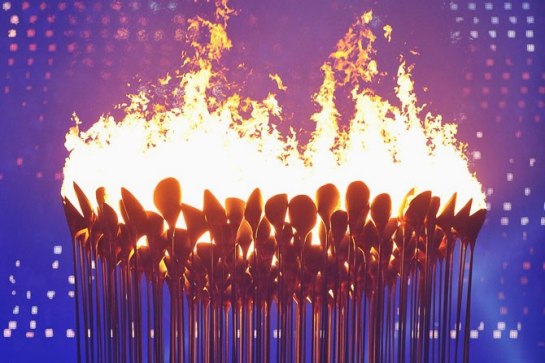



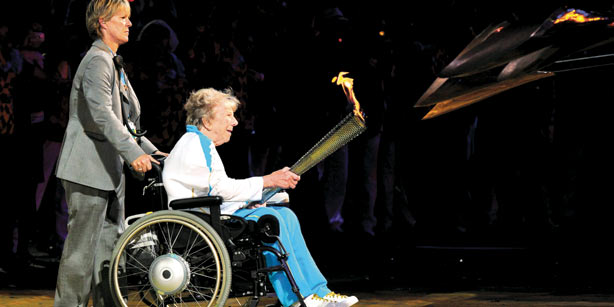
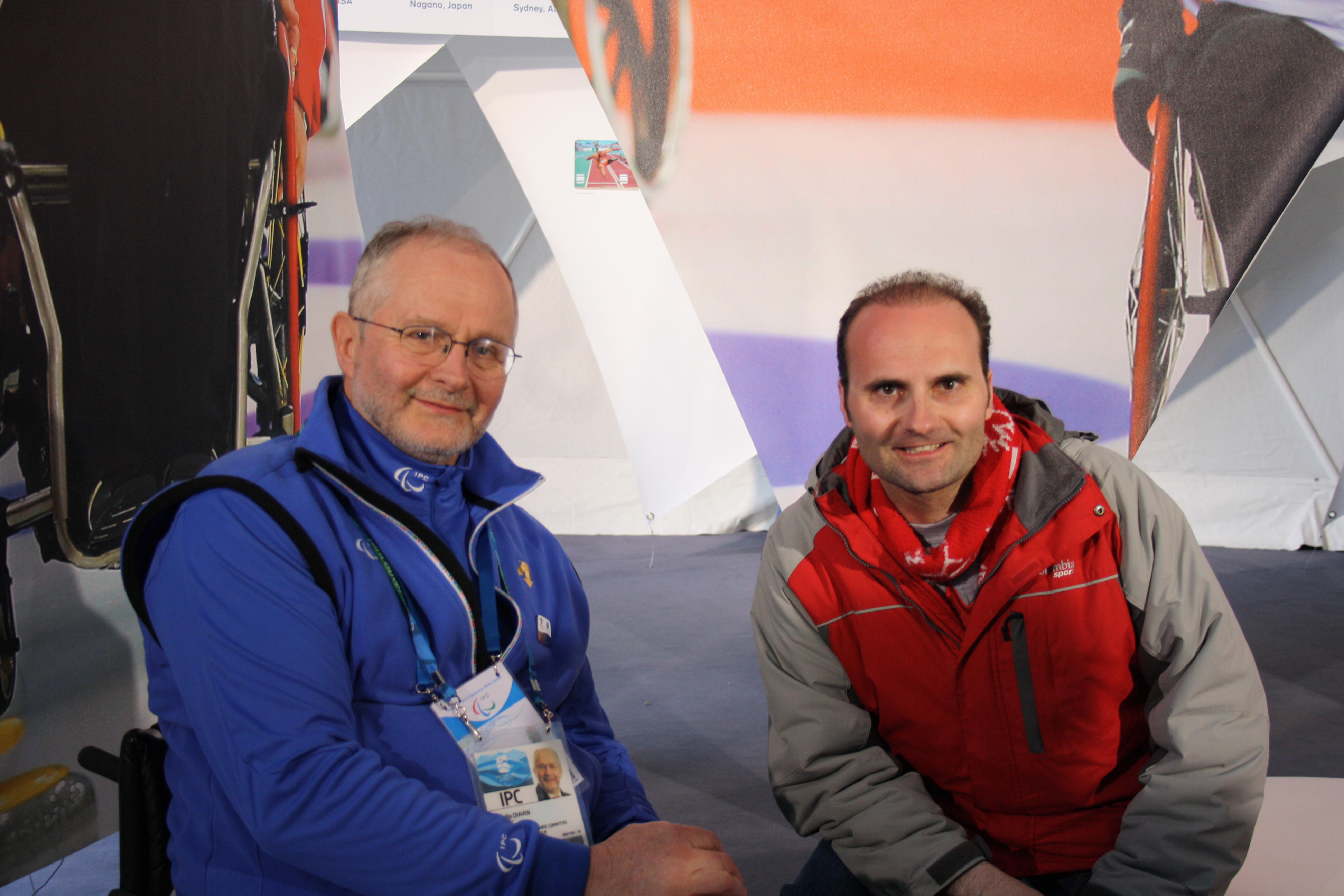
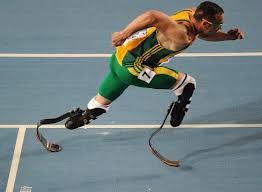
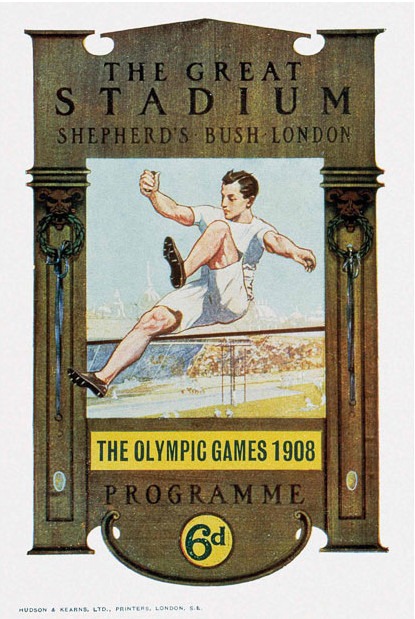
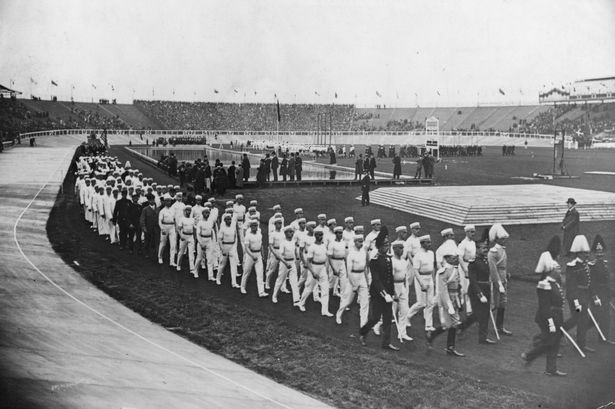
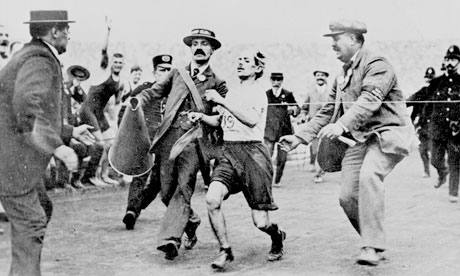


 Jon The Blogcentric