Oscars 2025 Best Picture Reviews: Part Four

It seems like this decade, there always seems to be at least one foreign language film that gets a Best Picture nomination. This year, there are two films. Both are nominated for Best Picture and Best International Feature Film. Their shared nominations should make for an interesting rivalry.

Both films are different in both the language, genre and theme of the story. Both films are also excellent in getting their story to connect with the audience. Here is my look at the Brazilian film The Secret Agent and the Norwegian film Sentimental Value.

The Secret Agent (O Agente Secreto)

It’s interesting how Brazil won the Best International Feature Oscar last year for I’m Still Here and it looks heavily poised to do it again this year. It’s also interesting that just like I’m Still Here, it has the subject of the dictatorship Brazil was under from 1964 to 1985. It was a military dictatorship that formed after a coup d’etat and it committed its biggest power and intimidation during the 1970’s. There were kidnappings and murders of many people who ranged from political rivals to intellects to dissidents. While I’m Still Here is based on a true story, this film tells of a fictional story. This story is of a former college professor named Armando who goes into hiding in his hometown of Recife in 1977 during Carnival. He had already lost his wife who was also an intellect, his 7 year-old son has to be raised by his in-laws, and his hiding place where he gets his refuge has other dissidents including Angolan War refugees. He has to adopt a new name, Marcelo, and hold a behind-the-scenes government job to avoid being killed by a hitman. The whole time, he senses a hitman is after him and he finds the frustration of it hard to deal with. To add to it, his city records job allows him to find out information about his own mother, whom he remembers very faintly.

It’s not just hiding out from assassination but as corrupt leaders are in Recife. They’re first called to the city as a human leg was found in the carcass of a shark. One of the leaders has a chance meeting with Armando at the city’s records office he works at. He tries to offer him friendship and protection, but Armando is turned off his arrogance. Especially after he calls his friend a Nazi. During that time, word does hit an executive in Sao Paulo whom had an altercation with Armando years ago and has a vendetta against him. Armando feels his days are numbered and feels he has to make his testimony recorded by a close friend, Elza, who runs a resistance network and owns a movie theatre. It’s after the recording is made that the friend reveals he has a contract killing against him. Just as an assassin has been hired in Sao Paulo to go to Recife and kill him. This is all flashed back as a history student in the present comes across news stories and recordings of Elza and her network and compiles it for Armando’s son who works at the blood clinic that now takes up the former location of the movie theatre.

The film also mixes a lot of ironies and connections to others with the film. There’s the leg in the shark around the time of Jaws being in cinemas. That leg and Jaws in theatres promotes a lot of ridiculous ‘Hairy Leg’ stories published in the newspapers. There’s the civic records job Armando has while he’s in hiding and he can take advantage of job to access records of the information of his mother whom he faintly remembers. There’s a cinema showing Jaws run by Elza of the resistance network who takes the time to record Armando’s account of why he’s being hunted down. There’s Flavia accessing the mp3 of that recording and putting it on the USB which she gives to his son Fernando who now works at the blood clinic where that cinema used to be, and where Fernando even saw Jaws with his grandfather. Like Armando with his mother, Fernando has faint memories of his father. Flavia helps his to understand him better.

This is a unique story. The story of a man in a corrupt country who knows he’s being hunted down is full of omens of a possible death. It starts as when he first arrives in Recife and sees the body of a would-be robber at the gas station. It continues as he sees suspicious costumes in preparation for Carnival. Even of other incidents of death and nightmares got him fearing the worst. The story also adds in some humor with the leg found in the shark and while Jaws is in theatres adding humor of ridiculous news stories about ‘Hairy Leg.’ Even the leg thrown back into the ocean and it being rediscovered by a gay couple adds to the humor. There are times when the story gets confusing as we see the film often go to scenes in the present of student Flavia researching all this information about Armando and you often wonder what it’s about. It’s at the end after we see the past played out and Flavia discovering all the information that it’s to be on a USB as a gift to his son Fernando who’s now a blood clinic worker. It’s almost like the story is making peace with the past as an average college student helps Fernando get to know the father the father he never knew. Even how we see other men gunned down by the hired assassin but only learn of Armando’s assassination days after through a newspaper research from Flavia leaves us thinking maybe those scenes played out in the film for the better.

This film is an accomplishment for writer/director Kleber Mendonca Filho. Although it’s hard to understand why a story about a man being pursued by assassins in Brazil during a dictatorship would add in some bizarre humor and a subplot of a severed leg, Filho succeeds in making this story work. In an interview, Filho intended for this story not just to be about a man on the run but also about life in Brazil. He wanted to capture both the positive and the negative sides of living in Brazil during a time of a staunch dictatorship. He presents what is a fictional story of a man on the run from a possible political assassination, but it’s presented like a story that mirrors what it was like at that time. Armando could represent so many real-life people who were victims of this tyranny. The film also reminds us even as people were limited in their opportunities and no one was immune to being killed, people still swam in beaches, people still celebrated Carnival, couple still had sex in the parks at night. I feel he does a good job of making the film as much about life in Brazil as it is a story of a man knowing he will be killed soon. Even as it goes to the present with Flavia and Fernando showing the democratized Brazil and their lives, Filho does capture the times as well as he tells the story.

This film is also the breakthrough for actor Wagner Moura. Wagner has had an extensive career in Brazil but he’s also been seen in popular fare like 2014’s Rio, I Love You, 2022’s The Grey Man and 2024’s Civil War. In this film, he not only plays Armando in 1977 but also Fernando in 2025. Playing both the father who fears for his life and the son who’s able to live a life without fear is an excellent performance. His acting is less about being showy and about telling the story. Even in his moments of silence, you can sense his feelings. It’s no wonder it’s received a lot of acclaim. The film doesn’t develop too well on the performances of the supporting actors but if there is one supporting performance that stands out, it’s Tania Maria as Dona Sebastiana: the landlady who works to hide other people hiding out from other possible political killings. At first, she comes off as a colorful simple character but it’s when Armando leaves that she really shines in the monolog of how life is difficult but there is still hope for the better. Carlos Francisco is also good as the grandfather who is unhappy with the death of his daughter and fears for both the lives of Armando and Fernando.

This film first caught attention when it achieved a huge amount of buzz after the Cannes Film Festival. Moura won Best Actor, Filho won Best Director, the FIPRESCI Prize and the Prix des Cinemas Art et Essai and was nominated for the Palme d’Or. The film has also won major prizes like the Best International Film awards with the National Board of Review, Golden Globes and the Critics Choice awards.

The Secret Agent is as much an intriguing look at Brazil back in the 70’s as it is an intriguing story of a man who’s the target of a political regime. It mixes drama with dark humor and tells of a story that appears to be about making resolve with the past. A past Brazil is struggling to heal from.

Sentimental Value (Affeksjonsverdi)

If there’s any film that threatens to beat out The Secret Agent for the Best International Feature film Oscar, it’s this film. This film is a complete polar opposite of the former. This Norwegian film tells a story of a family of wounds reopening and of issues unresolved. It’s not just an issue of torn family ties but also conflicts of the arts. It all starts with the Borg sisters’ death of their mother and their estranged father Gustav, a film director who owns the house, possibly being resold. As the sisters are going through grief, they have the added difficulty of the father returning and the hard feelings they feel towards him. Nora continues to harbor bitterness while Agnes tries to get a better understanding of him. Nora’s bitterness is so bad, she refused a role in his latest film work months earlier which goes to an American actress named Rachel Kemp. The film is an attempt from Gustav to revive his fading career and is now shooting while Nora and Agnes are trying to sort out things after their mother’s death. You can understand why this would be the source of a lot of family friction.

The film isn’t just about an estranged father re-entering his daughter’s lives at the most inconvenient time. The issue of how a daughter who grew up to be a theatre actress senses she’s shunned by her filmmaking father. He never once saw her act on stage. That adds to the friction and also has a lot to do with why Nora has more animosity than Agnes towards the father and may explain why she rejected the role. His revelation of how he rejects theatre even adds to the friction of the hard feelings. It takes the other two to help Nora achieve her resolve. First, it’s Agnes who does research on her father and his family background which includes revelations of his mother dealing with the torture of Nazi soldiers as a member of the resistance during World War II. Since the lead role is the same first name as her grandmother, it’s as she studies the torture her grandmother endured and how she passed her trauma onto her father is how she understands the film is a telling of the past he and his family went through. It’s as Rachel continuously goes through the role with great difficulty and has a conversation with Nora that she feels the role is more suited for Nora and for her. It’s there Rachel sends the message to Gustav that Nora was meant for the role. Even her struggles with trying to speak her lines in the Norwegian language in the role sends that message. It’s through art that family friction happens and it’s through art that healing is achieved. The theme of art as both a divider and reuniter is as much a theme of the story as World War II causing wounds that hurt long after the war has ended and even wounds that hurt loved ones even after the death of those who were hurt. Those themes are a unique way of telling this story of hurt and healing.

This film is an excellent work from director Joachim Trier. In Norway, he made a name for himself for directing three films that were part of the ‘Oslo trilogy’ which focused on the periods of life of certain people in Oslo. The only one of which I saw was The Worst Person In The World. For those who have seen all three films of the Oslo Trilogy, it will tempt some to think Trier added in a fourth film. Most notably since it’s set in Oslo, it’s another story he co-wrote with his collaborator Eskil Vogt and it features many of the actors he commonly collaborates with. This however is different. Firstly, Anders Danielsen Lie, who had leading roles in the trilogy film, has a supporting role in this film. He’s more in the background as Nora’s romantic interest. Secondly, this is a story where the arts are a theme to the film and are as a source of both friction and healing. It took a death and a film role of the father’s mother to help his daughter heal the wounds caused by a past separation. This is a great form of storytelling and it plays out very well in the film.

This film is also known for its standout acting. The biggest standout is lead actress Renate Reinsve as Nora. Already, Reinsve is being hailed as the greatest Norwegian actress since Liv Ullmann. Her performance as an actress daughter who’s thrown into family friction and how it affects her acting has a lot of dimension and we’re able to feel Nora’s feelings of anger and hurt. Also excellent is Stellan Skarsgard as Gustav. His portrayal of the father who knows he hurt his daughters and seeks to make resolve after their mother’s death is another excellent performance and it’s through the silent moments you can sense his thoughts. Inge Ibsdotter Lilleaas is also great in her supporting role as the more forgiving Agnes. It’s her performance as the one who’s trying to help solve the mystery who helps to add to the theme of resolve and forgiveness. Also great is Elle Fanning. Although she’s the one who speaks the least Norwegian, it’s her performance as the American actress Rachel who is able to also help Nora heal and eventually accept the role.

This film has received a lot of awards acclaim before this year’s awards season. Back during the Cannes Film Festival, it was nominated for the Palme d’Or and Joachim Trier win the Grand Prix award. The film was also nominated for eight European Film Awards and won six.

Sentimental Value is a deep film of trying to mend family ties and generational trauma. Even though it’s in Norwegian, many people can relate to the messages and emotions conveyed in the film. That’s what most makes this film worth watching.

That completes my fourth review of the Best Picture nominees. All that’s remaining are the last two nominees to review.

VIFF 2021 Review: The Worst Person In The World (Verdens verste menneske)

Julie (played by Renate Reinsve) looks for long-term love with Aksel (played by Anders Danielsen Lie) in the film The Worst Person In The World.

Establishing your career and settling down in love is normally something done when your in your late-20’s, early-30’s. It seems like it’s harder than ever nowadays. The Worst Person In The World has a look at a Norwegian woman trying to do exactly that.

The film starts with a prologue, leads into a twelve-chapter story, and ends with an epilogue. Julie is a woman about to turn thirty. Her road leading up to this age has been bumpy with career pursuit decisions in her academic years starting as a medical student, then switching to psychology and then pursuing a direction in photography. Approaching thirty gets to her as she finally has a serious boyfriend. This haunts her as she compares her life at 30 to her mother and many generations of her grandmothers before her. Things change when one of her photography subjects is Aksel Willman: an acclaimed politically-incorrect cartoon book author who is 15 years older than her. This is just as his cartoon Bobcat is to be adapted to a feature-length film.

Julie drops her old boyfriend for Aksel. The relationship gets more serious and it even stimulates Julie to pursue a career in writing. One weekend, the two spend it at Aksel’s parents’ house in the woods. There she meets Aksel’s brothers and nieces and nephews. That is a sudden reminder that Julie is reaching the family-planning years. To add to the frustration, Julie crashes a party after a publishing event for Aksel. There she meets a coffee barista named Eivind whom she becomes attracted to. They spend the night together, but urinate in the bathroom together to not spark any rumors of the two cheating on their significant others.

Things become more serious between Aksel and Julie. Julie writes a blog about oral sex in the age of #MeToo and Aksel is impressed with it. Then Julie has her 30th birthday with her mother and sisters. The father is a no-show. He does show up hours later as his excuse is his back. She’s hurt her father hasn’t read her blog. On the ride home, Aksel says she should make her own family. That’s difficult for her, especially with Aksel, because she’s sensing love for Eivind. One morning while everything and everyone in Oslo stands still, she’s able to meet with Eivind at his coffee store and kiss him. Over time, Julie gets disillusioned with her relationship with Aksel. The turning point is where Aksel has dinner with her and his sister-in-law. During the dinner, Aksel is constantly ranting how the film of Bobcat is a watered-down family-friendly Christmas-themed version of his comic stories.

It’s after a date with Eivind Julie is convinced Eivind is the one and breaks up with Aksel. But not after sex one last time! Becoming one with Eivind was a bit of a wait. He was married to Sunniva. However even before he met Julie, his love for Sunniva was fading. She learned from a DNA test she had Sami ancestry, albeit a small percentage. She changed herself to embrace her ‘Sami roots,’ pursue yoga, and become a climate-change activist. He met Julie at the right time, but there was still the wait to divorce. With the divorce finally settled, Julie and Eivind can finally become a pair. Eivind still follows Sunniva on Instagram, which Julie doesn’t have a problem with. However things take a turn for the bizarre when Eivind hosts a party and gives everyone psychedelic mushrooms. Julie takes some, and it sends her on a trip where she sees bizarre visions of the wrath to her father, her fear of having children, and images of Bobcat’s insanity. She feels she can be herself around Eivind.

It’s clear Julie still has feelings of attraction to Aksel as she’s at a gym working out and she watches a television interview he has where he staunchly defends the cartoon series’ past misogyny to the female host. However Aksel’s brother soon visits Julie at her job to tell her she has pancreas cancer and it’s inoperable. Soon after, Eivind discovers a short story she wrote which he believes is about her family. Julie angrily denies this and in her anger, belittles Eivind for staying a barista. Her perceived irresponsibility of Eivind is also why she doesn’t tell him she’s pregnant at first. Julie meets Aksel at the hospital. Aksel is devastated over the fact he doesn’t have a future. Aksel tells Julie after she tells him she’s pregnant she’d be a good mother. However she can’t decide whether to keep the baby or not, especially after she finally reveals to Eivind the pregnancy and she breaks up with him. Julie does see Aksel one last time. She does a photo essay of him where he visits his past places, including the school he attended where he was first inspired to be a cartoonist. The last thing he says to her is he regrets he can’t live on as something more than a memory to her. The film then ends with the prologue showcasing Julie’s current profession, and a chance encounter with Eivind all this time later.

Entering into adulthood and establishing yourself has never been easy. We have a protagonist many people can relate to. She’s made three different major decisions in her schooling as a reflection of her career choice. She’s finding her way, but now she’s at the age where she’s expected to establish herself, to settle down, and to form a family. The career path choices were hard enough, and along sparks a new career ambition after meeting Aksel. What makes it hard for establishing a relationship is the two men she’s torn between. One is a comic book artist who appears to have it together. The other man appears not to have it all together, but she’s in love with him. It’s there where she has to make decisions about her situation and who she will want to spend the rest of her life with. Her choices will eventually seal her fate.

The funny thing about it is this is happening in our modern times. Adulthood is hard to define. Julie compares her life at 30 and where it should be in comparison to past generations of her female ancestors. Meanwhile she’s torn between two men whom she loves, but can’t help but see as man-boys. One is a 44 year-old cartoonist of an obnoxious comic series about to be adapted into a film. He’s actually quite mature, if you take away the fact of his profession. Then she’s also attracted to a barista who’s more of a boy and has a lot of irresponsibilities. It’s a concern to her. Who should she love? Should she have a child? If she does want one, who should be the father? Will she be a good mother? Will either of the men accept the role of fatherhood? Add to the mix of things like social media-think, each person’s professions, current family situations and other people in their lives. You can understand the confusion in there.

The most unique thing about this story is that it goes from being a comedy of love in our times and the complications around it to suddenly adopting a more tragic tone. That comes as Julie learns Aksel is dying and Eivind’s true colors are starting to expose itself, especially after she learns she’s pregnant with Eivind’s child. We suddenly find ourselves no longer laughing at the irony and bizarreness of the situation and now sensing the seriousness of the situation. As Aksel is dying admitting personal thoughts to her, Julie starts wondering if Aksel was the one all along. The one worth loving and having a family with. We even wonder if it’s worth it for Julie to bear Eivind’s child. Mother a child to a man-boy so self-indulgent? In the end epilogue, we see a glimpse into the present that is a surprise for all to see how time elapsed for Julie and Eivind.

Norwegian-Danish director Joachim Trier directs a delight of a film. It’s common to see a film in chapters, but a film with twelve chapters, a prologue and an epilogue, and to make it all work in two hours of time, that’s something! The story he directs and co-wrote with constant colleague Eskil Vogt is the last film of his ‘Oslo Trilogy.’ I can’t compare to the other two because I haven’t seen them. As for this film, it’s a creative story as it tells of a common love triangle mixed with the confusions and distractions of the time along with the protagonist’s dreams and the wrath of Bobcat mixed in. Somehow Bobcat makes his way into Julie’s personal life! All of it is a complicated process, but the film makes it work by putting it all together in winning fashion.

Despite the story and direction working together, it’s also the excellent acting of Renate Reinsve as Julie. This story is all about Julie. Reinsve embodies her dreams, desires, confusions and frustrations in winning fashion. She embodies the comedic side of Julie as well as she embodies her tragic side. It’s a complex performance she does in remarkable fashion. The actors who played her two lovers were also great. Anders Danielsen Lie is great portraying Aksel as a man quite mature for a comic book artist and then transitioning to Aksel being a hurting man facing death too soon. Herbert Nordrum is also great in his role as Eivind, embodying his immaturities quite well.

When I first saw this film, on the last day of the VIFF, it was in the running between two other films to be Norway’s entry for the Best International Feature Film category for the upcoming Oscars. Recently it was announced to be the official entry. Even outside this Oscar category, the film has already won a lot of acclaim. It was a nominee for the Palme d’Or for the Cannes Film Festival this year. Reinsve’s performance as Julie won the Best Actress award at Cannes. The Jerusalem Film Festival awarded it the Best International Feature. The Ghent Film festival nominated it for it’s Grand Prix Award. Cinematographer Kaspar Tuxen won some film festival awards of his own including the Silver Camera 300 Award at the International Cinematographers Film Festival and the Silver Hugo award at the Chicago Film Fest. The latter of which gave him a claim for use of 35mm film, inclusion of natural light and carefully rendered interiors.

The Worst Person In The World is a funny but sad story of a woman trying to make it in a career and find a partner she can settle down with. It’s a film that does get you thinking in the end.

World Cup 2018: The Struggle Of The Defending Champion Continues

germany-out-of-world-cup-afp_625x300_1530117776053
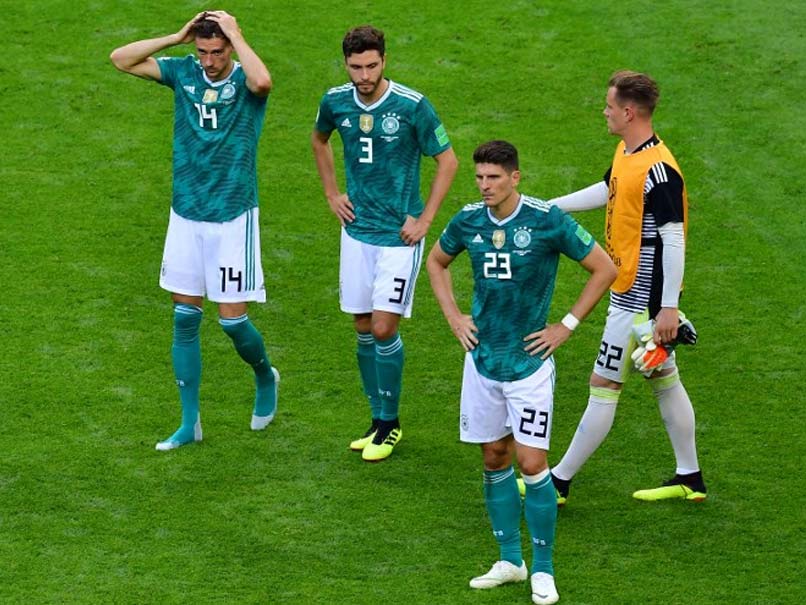
A dejected Team Germany looks on in disappointment after their 2-0 loss to South Korea.

“Congratulations to Korea for the win, for Sweden and Mexico for the qualification. It’s difficult to explain. The way we played we didn’t deserve to go through.”

-Germany coach Joachim Loew

Many of you may remember during the last World Cup, I posted a blog about the challenges the defending World Cup champion faces. Sometimes it seems like bad luck. After Germany’s game against South Korea, my look at the defending Champion deserves an update.

In the 20th Century, only Italy in 1950 and Brazil in 1966 were among the defending champions that failed to make it past the Group Stage. In the 21st Century, there was France in 2002, Italy in 2010 and Spain in 2014.

Then came Germany here in 2018. Germany was the most impressive team at the 2014 World Cup and deserving of their victory. The team appeared to have many a great retire from the national team over time like Miro Klose, Per Mertesacker and Phillipp Lahm just after their World Cup win, Bastian Schweinsteiger right after Euro 2016, and Lukas Podolski in 2017. Nevertheless their reputation of consistency would continue to be as they would continue to do very well in tournaments, if not win. There was the semifinal finish at Euro 2016. There was winning their first ever Confederations Cup in 2017. They even won FIFA team of the year in 2014 and 2017 as well as the Laureus award for Team Of The Year in 2015. It appeared that the years were kind to team Germany as well as with the new talent that was coming along. Including Joshua Kimmich who won German Player Of The Year in 2017. Germany’s Olympic team in Rio which consisted mostly of men under 23 won the silver medal. It also appeared Head Coach Joachim Loew was continuing to make the right decisions and Germany’s football system which went through an overhaul in the early 21st Century was continuing to pay off big time.

Even in friendly play, Germany did very well, but they also had notable defeats like 4-2 against Argentina seven weeks after the World Cup, 2-1 against the US in June 2015, 3-2 against England in March 2016, and 3-1 against Slovakia in May 2016. 2017 looked like a good year for Germany as they topped their World Cup qualifying group easily and they didn’t even lose a dingle friendly. Their draw for the World Cup didn’t appear to threaten their World Cup status as their mix with Sweden, South Korea and Mexico appeared to be a group they could advance with after playing.

Then the 2018 year began. They drew against Spain 1-1 in their first friendly in March. Their next friendly, against Brazil four days later, they lost 1-0. They would lose to Austria in a friendly 2-1 on June 2nd and then win 2-1 in a friendly against the Saudis on June 8th. It was apparent the team chemistry that gave Germany the winning edge in 2014 wasn’t there.

The World Cup squad of 23 for the German national team was announced on June 4th 2018: two days after their loss to Austria. Manuel Neuer, goalkeeper for the 2014 team, was back and was captain of the team, as were eight other members of Germany’s 2014 team. There was also Mario Gomez who was part of Germany’s 3rd-place World Cup team of 2010. Marco Reus, who had to be replaced just before the 2014 World Cup because of an ankle injury, finally got his World Cup moment in 2018. There were some notable differences about the make-up. Four members of the 2014 team had 100 caps or more. None of the 2018 team had that. Three of the members were part of Germany’s silver medal-winning performance at the Rio Olympics in 2016. There were the ‘reliable’ veterans like Ozil, Muler, Neuer, Khedira and Boateng. As for the new players, there were talents like 26 year-old Barcelona goalkeeper Marc-Andre ter Stegen, 22 year-old Bayer Leverkusen midfielder Julian Brandt, and defenders like 25 year-old Antonio Rudiger from Chelsea and 23 year-old Joshua Kimmich from Bayern Munich as well as 22 year-old striker Timo Werner who scored three goals during the 2017 Confederations Cup.

There were also some notable members of the German national team who were left off the World Cup squad like Shkodran Mustafi who was part of the 2014 team and Mario Gotze who scored the goal that won Germany the World Cup. Gotze had been going through a metabolic disorder since March of last year and it may have caused his dismissal from the national team.

Then the World Cup started. Their first opponent was Mexico right in Luzhniki Stadium in Moscow. There were talks of struggles with the team chemistry since the Cup started, including with their team-based training in Moscow, but it appeared to be nothing to worry about. Mexico was a team where their last defeat to them was in 1985. They even beat them in the semis at the Confederations Cup last year. However sport is not about the past; it’s about now. Vet Neuer was chosen to be goaltender, Kimmich and the relatively inexperienced Marvin Plattenhardt were the only two ‘new’ players chosen as defenders, the two midfielders were vets Kroos and Khedira, and Werner was the only ‘new’ defender of the four. Substitutions also caught people’s eyes as ‘new players’ Plattenhardt and Werner were among those substituted and two vets along with ‘new player’ Julian Brandt were the substitutes. Germany had 60% of the ball possession, 25 of 37 attempts, nine attempts on-target and nine off-target, eight of the nine corner kicks, 88% pass accuracy, but the one goal was scored by Hirving Lozano of Mexico in the 35th minute.

Germany’s 1-0 loss soon got people talking. This was Germany’s first loss of a Group Stage opening match in yay so long. There was even talk about how the German team lacked organization, lacked chemistry. Some claimed Loew was ‘separating’ the team between the tried-and-true vets and the newer players. More scattering of players than setting a build of play. Germany still however had two more games. Their next match was Sweden in another Olympic Stadium: Fisht in Sochi. Neuer was back as goaltender, but this time there was more presence of newer players, especially among defenders. Even two of the three substitutes were new players like Brandt and Ilkay Gundogan. However it appeared to be another struggle for Germany, especially after Ola Toivonen scored after the 32nd minute. It did, however, appear that Germany was beginning to find their groove again as Marco Reus evened the game up at the 48th minute. However it was starting to look like Germany was going to choke again. Then came the miracle of stoppage time. It was Toni Kroos delivering a successful free kick in the 5th minute of stoppage time to give Germany their winning goal. Despite their 2-1 victory, there were still naysayers, pointing out how Germany did so little with so much. Germany had ball possession for 71% of the game and 16 goal attempts, but only five attempts on-target. They also had five of the seven offsides. Also Jerome Boateng received two yellow cards– in the 71st and 82nd minutes– en route to a red-card dismissal and Germany to play one man down for the remainder of that game and against the following game against South Korea.

Then came Game 3 against South Korea at Kazan Arena. Germany had to win if they wanted to qualify as Mexico already had two wins. No doubt Germany appeared to be there. They had 70% ball possession, had nine corner kicks, and delivered 17 shots, but only six were on-target. Germany appeared to deliver a lot of good attempts at goals, but young goalkeeper Cho Hyun-woo was on that night. It was definitely frustrating for Germany as they knew they had to win to stay alive. Sweden was beating Mexico 3-0 so a win was needed to qualify. It did not happen. This time, it was South Korea that took full advantage of stoppage time with a goal by Kim Younggwon in the 93rd minute giving Korea the lead and a goal by Son Heungmin in an empty net in the 96th minute that meant it was the end for Germany. That was only Germany’s second loss to South Korea after their fourth time playing each other.

It’s tough to decide what lead to Germany’s demise. It may be the coaching staff’s overtrusting of its senior players and not giving the newer players a fair chance. Especially after vets like Neuer, Ozil and Thomas Muller all performed below expectation. Some say there was lack of unity or lack of a game plan. There was enough on the field to notice that. Some say the coaching tactics of Joachim Loew that was successful in the past finally ran out here. Loew himself was shocked at the loss and Germany’s early dismissal, however he did not deny any of his misdoings or the team’s misdoings.

Quotes from Loew after the game:

“I think we prepared well for the tournament. We were ready and we knew that all teams will be desperate to beat us, but we haven’t showed for it.”

“It wasn’t only Ozil, a number of other players didn’t perform as they normally would. I take responsibility for that and stand up for that, but I thought it was a good team.”

Interesting to note that Loew signed a contract to stay on as coach of the national team until 2022. Loew has been coach of the German national team since 2006. However he has made it evident that he will voluntarily step down. He made his disappointment obvious, but he said it will take hours to digest.

One thing about the loss is that it gave Germany some embarrassing statistics like the second World Cup ever and first time since 1938 that Germany failed to move past the 1st round, first time for Germany to fail to qualify after opening Group Stage play, and the third defending champion in a row to be eliminated after the Group Stage.

That last statistic continues to be biting. This is the fourth time in five World Cups this 21st century and the third consecutive time the defending champion is out after the Group Stage. I’ve never considered it bad luck to be defending World Cup champion, but the statistics are strongly pointing the way to it. It was never this way in the 20th century. They may have had some bad statistics at the following World Cup, but it was very rare to be out in the Group Stage. Now it’s more common than ever with Germany being the sixth ever and third-consecutive. It’s tempting to think bad lack, but one has to study teams to know why they perform poorly time after time. This is something new and shouldn’t be, but this is tempting.

The defending World Cup champion. The definition continues.


World Cup 2014: My Prediction For The Final

Netherlands v Spain: 2010 FIFA World Cup FinalWhat can I say about the World Cup? All I can say is that it starts with 32 teams, takes a month and at the end, only one country’s left smiling. And so after 62 games and loads of surprises, they’ve weeded out the thirty pretenders and gave us the two contenders: Germany who has won the Cup three times before and Argentina who have won it twice before. The Maracana will be the stage for deciding the World Cup winners. Here I’ll do a rundown of the two teams and even make my prediction on who I think will win the Cup.

First an interesting note I came about. Isn’t it ironic that both the final for the Cup and the 3rd-place match are both like rematches of quarterfinals of the last World Cup? Anyways I’ll get on with it.

World Cup

Past Head-To-Head Results:

Germany and Argentina have squared off against each other 20 times. Argentina has won the most often with nine times. Germany has won six and five were draws. Both Germany and Argentina have scored 28 goals against each other. Germany and Argentina have crossed paths at seven World Cups starting in 1958. Surprisingly this is the third World Cup in a row they both challenge each other. The previous two were in quarterfinals. In 2006 when Germany hosted, they tied 1-1 and it took a round of penalty kicks to decide Germany the winner. Last World Cup it was Argentina that had their own version of the Mineirazo as Germany won 4-0. Also as surprisingly, this is the third World Cup Final they both face each other: the most World Cup finals pairings ever. The first was in 1986 when Maradona and the boys won 3-2. The following World Cup they met again and it was German revenge 1-0. In both cases, that was the last World Cup either team won.

Argentina FootballARGENTINA: One word that can best describe Argentina here at the World Cup is consistent. They won all three of their Group Stage games: 2-1 against Bosnia, 1-0 against Iran, and 3-2 against Nigeria. They also won their Round of 16 match against Switzerland in extra time 1-0, their quarterfinal against Belgium 1-0 and their semifinal against the Netherlands in a penalty shootout.

There’s another word to describe Argentina’s play at this World Cup: lackluster. The phenomenal big play that Argentina has been known for was missing. Instead it looked like they were focusing on the conservative.  Sure, the conservative style worked for France last world Cup but this is not what you’d expect from Argentina. Sure Lionel Messi has been one of the stars of the tournament and has lived up to his reputation during the World Cup but other Argentinians like Gonzalo Higuain and Angel di Maria have been playing rather modestly than what they’re reputed for. That scoreless draw should be cause for concern since it was mostly a contest of ball control and very little attacking. In fact I remember a scene near the end of regulation where it appeared Dutch players were lollygagging with the ball.

Whatever the situation, conservative play will not come in handy, especially against a team that annihilated the host country on Tuesday. That game has to be the biggest signal to Argentina that if they were to win the Cup, they will be pressed to pour it on like never before at this Cup. There’s no doubt Messi and Higuain have what it takes here. They have to be prepared for a similar attack like Germany gave Brazil on Tuesday. It’s evident that Germany can take full advantage of an opponent’s vulnerability and come down hard on them. They should know because Germany beat them in the quarterfinals at the last World Cup 4-0, just after winning every other previous game they played.

As for the team, I’m not worried about Messi. I think of him as Maradona without the ego. Especially since it’s evident he knows what he needs to do to deliver here and he’s done that. Sergio Romero has been an excellent goaltender as he has delivered each time and has only conceded three goals. The rest of the team will have to be prepared for anything from Germany whether it be conservative play or an all. And with Angel di Maria out, they will have to step up their midfield. Coach Sabella knows the job he has to deliver and I’m sure he’ll mean business, especially to bring Argentina back on top after 28 years.

Germany FootballGERMANY: What can I say? They are not called the Mannschaft for nothing. What we have is a team that is lacking in superstars and celebrity. Heck, Miroslav Klose has scored the most goals in World Cup history and he doesn’t have the star power as say Neymar, Messi or Cristiano Ronaldo. Instead we have a team full of players that are focused, know what they have to do and deliver. And they definitely know how to pour it on as evident in the Mineirazo and their opener of 4-0 against Portugal. You can bet Germany is a team that knows how to deliver.

Or do they? Sure, they had big wins against Portugal and Brazil but they have had their share of tight matches at the World Cup, like when they temporarily trailed Ghana before they tied 2-2. Or even going scoreless against Algeria in regulation before winning 2-1. It’s evident in those matches that Germany has weaknesses of their own and could be made vulnerable by Argentina. Argentina is a team very familiar with them and knows how to rival them. It’s also very possible Argentina will want to avenge Germany for the last two World Cup quarterfinals. Sure, Argentina has not been too spectacular but they could just pour it on when they have to. It’s happened before in major play.

One thing about Tuesday’s game, it’s that coach Joachim Löw doesn’t want that big win to make his team overconfident. Even Miro Klose stated that he doesn’t want the win to get to the team’s head. What they’ll have on Sunday is a new team and will need a new plan to win. It’s evident with each passing match, it’s all about knowing the rival, controlling them and monopolizing on your chances. And that’s what Germany will have to do on Sunday to win the Cup for the fourth time and for the first time ever as a unified nation.

MY PREDICTION: Okay. So here goes. My prediction for the winner of the 2014 World Cup. I believe it will be Germany 2-1 in extra time. Wow! I’ve been making a lot of predictions where the score is 2-1, haven’t I? But that’s what I believe it will be. Germany have that edge in terms of delivering goals and will continue to be the case if Argentina don’t step up their game. Argentina know how to defend and control opponents but they lack the ability to monopolize on their chances. So that’s why I give Germany the edge.

So there you go. It was fun making predictions for the World Cup. I hope to do football/soccer predicting again sometime soon. Maybe my next chance will be for next year’s Copa America. Provided if TSN or ESPN broadcast it.

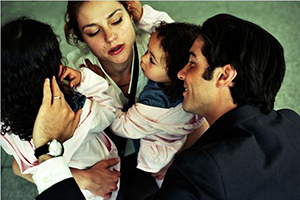
VIFF 2012 Review: Our Children (À Perdre La Raison)

A movie about a mother scorned is very rare. Our Children is a rare chance to make such a big-screen movie on that subject. The question is does it succeed at making such a movie watchable?

SPOILER WARNING: Many incidents including the ending will be mentioned in this review. So if you want it a complete surprise, please do not read any further.

The film is actually one that begins with the end of the story at the beginning. We see a woman in a hospital bed saying to have her children buried in Morocco. After we see four red coffins being brought onto a plane. Hey, don’t say I didn’t give you a spoiler warning!

We first see a young Murielle in love with a Moroccan medical student named Mounir. He wants to marry but feels he have to have the blessing not of his father but of Dr. Pinget: a Belgian doctor who has helped him out financially and morally to study medicine. The marriage is successful even receiving the blessing of Mounir’s mother. However there’s one catch. Dr. Pinget is to live in the same house. Murielle reluctantly goes along with it. Meanwhile Mounir has to deal with the feeling of animosity from his brother.

Murielle continues on with her job as a teacher and Mounir starts practicing medicine. They have two daughters. They go through the usual ups and downs of having a family. Dr. Pinget is not that much of an interference although he is strict with the couple that he is the only doctor they see. However it’s obvious about Pinget’s control when Murielle is pregnant with her third child. Mounir thinks of moving to Morocco as it would be less stressful with the couple. Pinget is infuriated and takes it as an insult.

The couple do spend time in Morocco and it helps with Murielle as it alleviates her stress. Mounir’s mother even makes her feel like one of the family. Murielle’s sister even falls in love with Mounir’s brother and they marry.

The stress returns to Murielle as she returns back to Belgium. Pinget is back into her life. The stress of managing three children is catching up to her and a fourth child is expected on the way. The stress has gotten to the point she even takes it out on a student who misbehaves in class. On top of that her husband is always under Pinget’s wing and controlling in his own way. She sees a psychiatrist, Docteur De Clerk, who’s very helpful with her psychological condition even after the birth of her fourth child. However Pinget finds out and is very angry towards her, even threatening. It’s then that Murielle finally decides to commit a rash act to ‘end her troubles’ once and for all.

At first when I saw this, I wondered why on earth would someone try to make a big-screen movie about a mother killing her children. It isn’t until later on I read that this film is based on a story that actually happened in Belgium where a young mother couldn’t take it anymore and she killed all five of her children. This movie attempts to parallel that very story. After reading up more on the story of the event, I could see a lot of parallels: the relationship, the doctor that was controlling and how the children were killed one by one.

I think that’s it about this movie. It echoes a common story we hear many times before: a mother murdering her children. North Americans are familiar with the stories of Susan Smith, Tarajee Maynor and Andrea Yates. A story like this is not that common in Europe but it does happen. The thing about this film is that it is done primarily from the mother’s point of view. I think that was the attempt of the filmmakers: to make such a film that people could relate to. I don’t think people seeing this would want to kill their children but I think people could relate to the struggles of young motherhood and someone interloping into their life and having control over what they do. There have been many murder movies where the murderer is shown as a person that possesses dark personality traits that are inside all of us. I think that may be why this story was done; to show the killer that personality traits and weaknesses we too possess.

Also I have to commend the filmmakers for not crossing the line and making it unwatchable. No one wants to see children murdered on a big screen, especially in a story close to the truth. It made a smart move by making it similar as she called the children one by one but kept the killing part hidden off-screen and completely silent. Even in the aftermath, all we see is a house with her phone call to the police. I remember taking an acting course where a teacher said people like simulation as opposed to the real thing. Good to see them holding off there.

The movie does answer some questions but it also opens for other questions too, especially about the murders that story is based upon. Why did she kill her children? I don’t condone murder of any kind but why didn’t she kill the doctor instead? He was the controlling one. I guess I’ll never know and there’s only one person in the world that can answer those questions. Also the position of Dr. Pinget in the relationship. Why was he that controlling? Was it because of Belgian law? Was it because of his belief that since he was a mentor to Mounir, Mornir’s whole family should do everything he says? Was it Mounir’s own feelings of loyalty for all the mentoring he gave him? We shouldn’t forget Dr. Pinget was as controlling to Mounir as he was to Murielle. That question remains unanswered too.

Emilie Duquenne did an excellent job in her acting as Murielle from the young girl in love to the mother breaking down. That scene where she’s behind the car singing a song and breaking into tears is a very powerful scene and was excellently acted. North American audiences are not familiar with Duquenne but European filmgoers know her as the young teen lead in the Cannes Palme d’Or winning Rosetta from 1999. Tahar Rahim was also very good in his role as Mounir, the one caught in the middle. Niels Arestup was also excellent in his supporting role as the controlling Dr. Pinget. Interesting is that Tahar and Niels have worked with director Joachim Lafosse before in the film Un Prophete. The three are back together with something different. Lafosse does a good job in making a normally-unwatchable story watchable not only with his direction but also co-writing the script with Matthieu Raynart and Thomas Bidegain who also wrote Rust And Bone and co-wrote Un Prophete. The directing and writing did a good job in sending the message to the audience through what was unsaid and silent more than most films can send through dialogue.

Our Children is Belgium’s official entry in the Best Foreign Language Film category for the upcoming Academy awards: one of twelve films at the VIFF that are their respective country’s official entry in that category. The film was nominated for the ‘Un Certain Regard’ award at this year’s Cannes Film Festival and Dequenne’s performance won the Best Actress award in the ‘Un Certain Regard’ category.

I don’t know if Our Children is really all that watchable of a movie about a mother scorned but it does make efforts to be watchable without losing the story and relatable as far as human emotions go.