2015 FIFA Women’s World Cup: Group E Focus

I’m sure that when some of you hear me talk about a controversy about this World Cup, it’s about the recent bombshell about the arrests of FIFA members. It’s not. I’m going to save that for another blog just like I’m saving the topic of women’s football for a separate blog. In this blog, here’s my review of Group E with another stadium focus and another issue focus:

GROUP E:

Spain Fixed-Spain (14): This will be Spain’s first Women’s World Cup. Spain’s women are relatively inexperienced to  major competition. They’ve never played in an Olympics before either. Nevertheless ‘La Roja’ do have some accolades like a third-place finish at the 1997 Women’s Euro and a quarterfinals finish at the last one in 2013. They’ve also had an impressive play record in the past two years with only a single loss to Norway in 2013 and wins against Italy, the Czech Republic and Belgium. Spain may just be a future power in women’s football.

Brazil-Brazil (7): When women’s football started making a name for itself in the 1990’s, it was North America and Asia that were the leaders. Countries from South America and most European countries still thought of football as strictly a man’s game and had lackluster women’s teams to show for it. Since then the continents have been taking women’s football more seriously. If there’s one country that has shown the most progress, it’s Brazil.

The Brazilian men without a doubt have the biggest legacy of any football country. The Brazilian women have really made strides to become one of the best in the world these last 15 years. They were finalists at the 2007 World Cup and achieved 3rd place in 1999. They also have two Olympic silver medals and have won the Copa America Feminina all but once. They even produced a player that can be called ‘The Female Pele,’ Marta, with five FIFA Women’s World Player Of The Year awards.

Even though Brazil has become one of the best in the last couple of decades, they still have some noticeable ‘weak spots.’ For starters, they’ve never won against England or France. Secondly, they lost to Germany twice this year. Nevertheless Brazil has been impressive these past twelve months. They’ve ties the U.S. and they’ve had wins against China, Sweden and Switzerland. Canada will be both another proving point for Brazil and a learning experience for Rio 2016.

Costa Rica-Costa Rica (37): Another of the two debut teams of this Group E. True, Costa Rica have never played in a world Cup or an Olympics before but they are a team whose cred is growing slowly but surely. They’ve been impressive during the CONCACAF Women’s Gold Cup with three semi-final finishes and were finalists at the last one in 2014.Despite their lack of experience on the world stage, they do have a promising team with four players playing for either American professional teams or American colleges.

I know I’ve talked a lot about countries here to learn. We shouldn’t forget women’s football is still growing, especially in continents where play has been denied a lot in the past. We should keep in mind Costa Rica is the first Central American country to qualify for the Women’s World Cup. Like the other ‘learning’ teams, Costa Rica really has nothing to lose and everything to gain.

Korea-South Korea (18): South Korea’s men are the tops of Asian countries in football. South Korea’s women have long been relegated to second-fiddle to China and Japan but they’re seeking to improve over the years. They’ve never qualified for an Olympics and they’ve made only one previous World Cup appearance back in 2003. However they have some accolades of their own like four semi-final finishes at the AFC Asian Cup and bronze medals at the last two Asian Games.

Their play has been 50/50 this year as they beat Russia and tied Belgium but lost to Canada and Scotland. 2015 should help boost the team for a brighter future.

MY PREDICTION: I predict Brazil to win Group E with South Korea coming in second. Third-place was a tough prediction. I predict Spain, based on their experience. Mind you anything can happen.

STADIUM SPOTLIGHT

-EDMONTON: Commonwealth StadiumEskimos
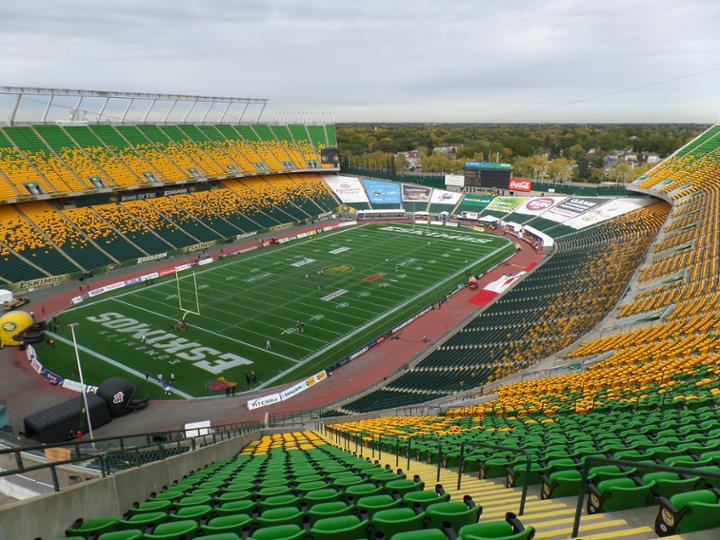
Year Opened: 1978

World Cup Capacity: 56,302

World Cup Groups Hosting: A,C,D

Additional World Cup Matches Contested: Round of 16, Quarterfinal, Semifinal, Third-Place

The Stadium was opened in 1978 in time for the Commonwealth Games Edmonton hosted. Since then it has served as the venue for the Edmonton Eskimos football team and occasionally the FC Edmonton soccer team. The Stadium is the biggest of the six hosting matches for the FIFA World Cup which explains why Canada’s first two Group Stage matches will be held here. The stadium has undergone two renovations: the first in 2001 in time for the World Athletic Championships which included a new scoreboard, an enlarged concourse and a new track. The second in 2008 which experienced a reconfiguration and a turf replacement. Outside of their main sports teams, the stadium has hosted many concerts and has also hosted many soccer friendlies for both Canada’s men’s and women’s teams.

THE TURF ISSUE

The World Cup may be building in excitement but hard to believe a year ago there was a controversy brewing with threats of boycotts. The reason was because all six stadiums will be using some form of artificial turf. why does it matter? Many believe artificial turf makes players more prone to injuries. 50 players protested the use of turf on the basis of gender discrimination. Seems odd to me to think that getting them to play on turf is a form of discrimination. Keep in mind it’s FIFA regulation that the men’s World Cup matches all be contested on grass.

There was even a lawsuit claiming FIFA would never have the men play on ‘unsafe’ artificial turf and is a violation of the Canadian Human Rights Charter. The suit filed in October 2014 in Ontario even pointed how FIFA demanded stadiums in the United States to replace the artificial turf with grass even if it meant extra millions in expenses. The lawsuit had supporters like Tom Hanks, Kobe Bryant and U.S. men’s team goalkeeper Tim Howard. FIFA’s head of women’s competitions Tatjana Haenni made it firm: “We play on artificial turf and there’s no Plan B.” The lawsuit was eventually dropped in January of this year. All the stadiums have kept the turfs they had.

Despite its firm stance, FIFA has not hesitated to discuss the issue. In fact FIFA.com did an interview with Professor Eric Harrison. Harrison, who was assigned by FIFA to inspect the pitches of the six stadiums between September 29th to October 8th of last year, was given a Q&A about his findings, the various football turfs and even injury rick. He gave his answers on why Canadians stadiums have artificial turf (Canada’s extreme weather conditions), the various turfs classified by FIFA and if there’s any difference int he frequency of injury (Harrison claims there’s no real difference). For the complete interview, click here.

And there you go. My focus on Group E and bonuses. That only means one last group to review. Coming Sunday.

WORKS CITED:

FIFA.com Staff. “Harrison: Football Turf is Integral to Canada 2015” FIFA.com. 23 October 2014<http://www.fifa.com/womensworldcup/news/y=2014/m=10/news=harrison-football-turf-is-integral-to-canada-2015-2461003.html>

WIKIPEDIA: 2015 FIFA Women’s World Cup. Wikipedia.com. 2015. Wikimedia Foundation Inc.<http://en.wikipedia.org/wiki/2015_FIFA_Women%27s_World_Cup>
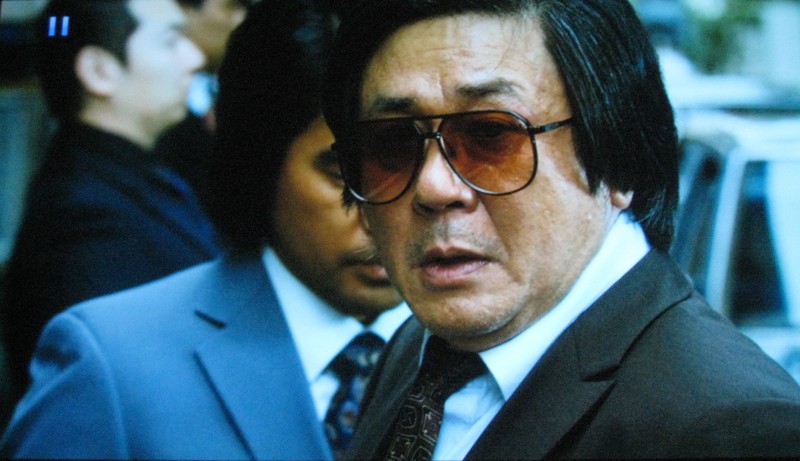
VIFF 2012 Review – Nameless Gangster: Rules Of The Time (범죄와의 전쟁)

Nameless Gangster looks like South Korea’s attempt to try and make a gangster movie. The one thing is it does a very good job at making one. This film is more than what one bargained for.

Choi Ik Hyun doesn’t seem like the type to become a gangster. He’s a customs officer in Busan who was pilfering goods and taking bribes along with colleagues at the most. On top of it, he gets drunk very often and comes off as both clumsy and idiotic after a lot of drinking. That all changes when he comes across 10kg of heroin in the warehouse. He and a friend approach a gangster, Choi Hyung-bae, to sell it to Japan’s yakuza that he’s tied to. He also learns that Hyung-bae is from the same family tree.

Soon the two would become partners in crime and they would form their own organized crime syndicate. Soon Choi’s power grows to owning night clubs and one of Busan’s first class hotels. He also faces power struggles from close associates, people within his gang and even among rivals. Some of it has to do with his feisty personality and his habit for getting drunk easily. Other times it’s because of the conflict of who’s really in power. As Choi’s power grows, politics are changing in South Korea. The dictatorship which allowed Choi to prosper in his criminal activity is now making way to democracy with the election of President Roh Tae-woo just before the Seoul Olympics. Just two years after the election, the government proposes a crackdown on organized crime. Choi knows his days are numbered. He knows the connections to prosecutors that helped some of his men get off charges in the past won’t work anymore. The story ends with the predictable as the movie begins with a prosecutor announcing the arrest of Choi in 1990 but it ends on a different and on a note one wouldn’t expect from a gangster movie.

The film’s script is good for that it’s able to mix humor with organized crime the same way Pulp Fiction and Fargo does. However the film is just as smart as it is in its story too. The film’s script is very detailed in how it’s able to take into account the situation in Busan and the rest of South Korea during that time. It takes into good account the situation of crime in Busan in the 80’s during the time South Korea was still under a dictatorship. Yeah, just because South Korea wasn’t under the tight grip the communist North was under as was well-to-do doesn’t mean the people of South Korea were completely free at the time. It also highlights the changes in South Korea as the decade progress from the student protests, to the Seoul Olympics to the election of President Roh Tae-Woo to Roh’s crackdown on organized crime and corruption. This is a part of history few outside South Korea know about. It’s as much of an eye-opener as it is entertaining.

The movie not only shows South Korea’s changing political climate at the time but how it impacted Choi and why he made his choice to organized crime. South Korea was under a dictatorship to the move to democracy to the crackdown on organized crime. While South Korea was still under a dictatorship Choi’s income as a customs officer wasn’t good. Organized crime seemed his way out at the time. He chose it and reaped the lucrative rewards as well as the star status. He also faced threats from outside rivals and rivalry within his own gang. As South Korea made the move to democracy, prosecutors then became the stars of the new Korea and that meant the downfall of Choi. The title Nameless Gangster could be because Choi could be any man in South Korea at that time. The subtitle Rules Of The Time send the message that the movie is as much about the times as it’s about the protagonist.

There were two powerful scenes in the film on that subject. The first was when Choi was having dinner with his children while he knew his arrest would be eventual. He says goodbye to his son as he is about to go to Los Angeles and told him of the importance of learning  the English language. Another was when he was at a religious ceremony for his newborn grandchild. It’s the child of his son who’s now a prosecutor. The scene where his grandson grips Choi’s finger is a powerful one of hope. It’s like Choi’s happy that his son and grandson have the better futures that Choi never had the chance for.

Without a doubt, the character of Choi was the top quality of the movie. It’s surprising how a bumbling, clumsy, easy drunk like Choi could ever manage to rise to the top of the organized crime scene in Busan but somehow he does. The movie wasn’t just about Choi and his bumbling meetings or his criminal activities. It was also about Choi the husband and Choi the father. The scenes with his children and grandchild show a different side of Choi and make his character three-dimensional rather than the typical stock character of comedies. Actor Choi Min-shik did a very good job with the role. Scriptwriter and director Yun Jong-bin did an excellent job in writing a script that was as comical as it was smart and bringing it to the screen well. I will admit I was first confused during the movie wondering what the point was in having a clumsy, oafish man as a major organized crime don but it all made sense in the end.

Nameless Gangster has received a lot of buzz. In South Korea, the film was #1 at the box office for three weeks. The film has received many awards and nominations amongst South Korea’s movie awards. Time magazine even described it as: “the Korean mob film Scorsese would be proud of.”  Interesting that the Busan-born Yun is almost 32 years-old and he has released two other films that have raised eyebrows, especially in the ways they depict male mannerisms. Already Yun looks like he’s on to a very promising career in directing especially with the success of Nameless Gangster.

Nameless Gangster is more than just an entertaining story of a crime boss. It’s also a statement about South Korea’s politics at the time and about the man caught in between. Definitely a film worth seeing.

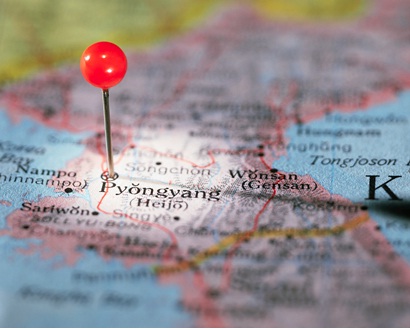
Kim Jong-il’s Death Leaves An Uncertain North Korea

The news was revealed on December 17th. Kim Jong Il was dead. At first, people thought it was a hoax. Later it became official news. Even images of his body lying in state while North Koreans mourn him have made it official. His successor is his third and youngest son, 28 year-old Kim Jong Un. He has officially assumed the office on December 24th just days before his father’s funeral. The big question is will Kim Jong Un be able to rule the tiny, private, separatist country the way his father has or will North Korea find its grip succumbing to the times?

The nation of North Korea has existed since 1948. Korea was under Japanese occupation for decades before World War II and existed as a nation after World War II ended. However it was divided at the 38th parallel under a United Nations agreement with the Soviet Union occupying the north part and the democratized world occupying the south part. It was the communist North’s refusal to participate in a 1948 UN-supervised election that led to the two Koreas being separate and Kim Il Sung being the leader of what established as the Democratic People’s Republic.

North Korea is not only unique for having only three heads of state in its existence but also from the same family: first Kim Il Sung, then Kim Jong Il and now Kim Jong Un. During Kim Il Sung’s reign, he wreaked havoc of his own. The two Koreas tried to control each other during the first few years of existence. Its escalating border conflicts led the North to invade the South which kicked off the Korean War: a civil war that lasted three years, included support for the south from UN-backed countries like the US, the UK and Canada, and left a total of over 2,000,000 soldiers and civilians dead and the borders restructured as originally planned with a heavily-armed Korean Demilitarized Zone protecting the borders. Despite the peace, relations between the North and South have been tense as was common during the Cold War times and still remain tense to this day. The North has attempted many times to assassinate leaders of the South, North Korea boycotted the 1988 Summer Olympics as Seoul was the host city, and has even attempted to develop its own nuclear weaponry. Even as the South adopted a Sunshine Policy in 1998 to moderate for peace, that hasn’t stopped the North from uttering threats and causing international tension.

During the time of Kim Il Sung, he developed a ‘cult of personality’ status that would even make some of the heads of state of most other Communist countries envious. He adopted the title of the ‘Great Leader’: a title repeated constantly amongst the citizens of North Korea of all three Kims. Glorification of him replaced all religion in North  Korea. Even after his death in 1994, he’s still referred to as the ‘Eternal President’ and his birthday is a national holiday in North Korea. As a ruler, he came across as the familiar tyrant we know Kim Jong Il to have been through his own methods. During the first years of his reign, he issued a command economy with all industry owned by the state and all agriculture collectivized. His economy was focused on peasants and workers and was aimed at eliminating class differences. Heavy industry and arms production were also predominant as was a large army. While the USSR and China were moving away from de-Stalinization, Kim was infuriated and began distancing North Korea from the two countries, even denouncing any reconciliation or peace attempts with the United States. The times from 1979 onward were very hard for North Korea as China moved towards economic reform and the European Communist countries including the USSR were exercising political reforms that led to the eventual overthrow of Communism. This led Kim Il Sung to make North Korea even more isolated: an isolation that still exists to this day. Its economy was soon hurting and Kim Il Sung was investing in nuclear arms production: a process Kim was fiercely protective of up until a month before his sudden death in July of 1994.

Kim Jong Il was named by Kim Il Sung back in 1980 to be his successor and eventually succeeded his father after his death. Kim Jong Il would wreak the havoc most people are currently familiar with during his reign from his father’s death up until his own death on the 17th. He would keep the heated ‘cold war’ between South Korea alive and well with constant condemnation and threats of war. He too was heavy on developing nuclear military prowess, resisting UN demands to inspect facilities and even threatening a war if North Korea was imposed sanctions. His military prowess kept on growing by number of soldiers and weaponry the Military First policy he adopted. The policy would continue in existence even as the people in North Korea had to deal with flooding in the 1990’s which lead to a huge reduction in arable land and eventually a famine that left anywhere from 1 million to 3 1/2 million North Koreans dead. Relationships with the United States weren’t any nicer either as Kim would still portray the US as the bad guy and George W. Bush referring to North Korea as part of the ‘axis of evil’. Even as relationships appeared to be improving one moment, things appeared to go wrong the next.

Now Kim Jong Un assumes the role as the ‘great leader’ of North Korea. Over the past two weeks, we’ve learned more about him. He attended school in Switzerland as a child, has a degree in computer science and has a military rank as general. He has two older half-brothers but it was believed by many through his personal character that he was most likely to be Kim Jong Il’s successor. In 2009, it was made official by Kim Jong Il. Since Kim Jong Il’s death, it has become a reality as title after title from North Korea’s government is now being bestowed on the younger Kim. Since the funeral and transition, the media has kept a watchful eye on North Korea and Kim Jong Un. There have been countless headlines leaving one to question the state where North Korea is going:

  • 24th – North Korea To Be Center Of Japan – China Talks
  • 26th – Kim Jong Un Meets With South Korean Delegation
  • 27th – North Asks South Korea For Money At Kim Jong Il’s Funeral
  • 27th – North Calls For Enactment of Investment Pact
  • 30th – Military Says South Korea Will ‘Pay For Hideous Crimes’

Once again, headline after headline that differ, confuse and even make people question about what the North will do next. Also in question is Kim Jong Un’s reign as the new leader. Does a dictator that’s not even 30 have what it takes to run a nation with a Stalinist style governing? Will North Korea still be a fierce hermit to the rest of the world? Will North Korea’s relations continue to be fiery and even lead to the ‘war’ North Korea keeps on talking about? Or will things open up and lead to progress and improvements in North Korea, especially its citizens’ way of life? Those are answers that can only be made as time moves on. Nevertheless it’s important for all to keep a watchful eye on events that unfold.

WORKS CITED:

WIKIPEDIA: North Korea. Wikipedia.com. 2011. Wikimedia Foundation Inc. <http://en.wikipedia.org/wiki/North_Korea>

WIKIPEDIA: Kim Il Sung. Wikipedia.com. 2011. Wikimedia Foundation Inc. <http://en.wikipedia.org/wiki/Kim_Il-sung>

WIKIPEDIA: Kim Jong Il. Wikipedia.com. 2011. Wikimedia Foundation Inc. <http://en.wikipedia.org/wiki/Kim_Jong-il>