VIFF 2025 Review: As The Water Flows (翠湖)

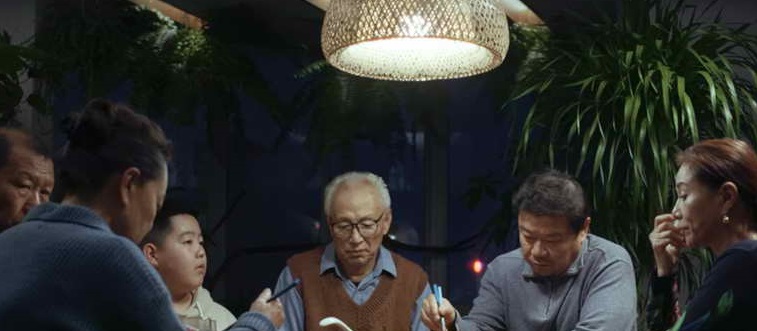
A dying grandfather, played by Li Zhenping (centre), seeks to mend family ties in the Chinese film As The Water Flows.

As The Water Flows is one of many Asian films that played at the VIFF this year. Its subject matter isn’t exactly a film that would make you want to see it, but it’s worth seeing.

The film begins with a grandfather on a boat on a river with his grandchildren. The film then goes to the grandfather Xie Shuwen, a former college professor. He’s with his new girlfriend whom he has seen recently since his wife died. He will be having a dinner with his daughters and he’s unsure they will be happy with the news of her. The dinner happens and all three daughters are there with their husbands. Only one daughter brought their child: a pre-teen chubby boy named Panda. He delivers the news, but they’re not happy about it. Especially the oldest and the most orderly of the daughters. After the dinner, bad memories of the past agent the daughters.

After the dinner, the daughters move on with their lives. They’re busy maintaining a career, their own families and their children. They want their children to grow up well and be successful but there will be difficulties ahead. One daughter is proud that her son, the eldest grandson, is going to Stanford the next year. Suspicion of what’s really happening grows when Xie notices the grandson drunk. Panda appears to participate in classes well but he is the target of bullying because of his short overweight stature. Another daughter of Xie’s is unhappy her own daughter quit a job in a family restaurant and has different career desires.

Meanwhile Xie learns he has a terming lung cancer diagnosis. As he knows he’s dying, he continues to spend his quiet time at Green Lake Park but he also uses the time to spend more time with people close to him. That includes his new girlfriend, friends from the college he taught at, neighbors, and his families. Family dinners become more common. One daughter notices how he has become closer to the family even more so than when they were younger. She also notices how his harmonica which he used to play often is showing age. She’s especially angry when she learns he’s still smoking and playing mah-jong.

As time passes, what the children are hiding becomes more obvious. The granddaughter wants to go her own direction and she has fallen in love with a man. She hints she may want to marry. The older grandson admits he forged the acceptance letter to Stanford and that he will really be going to a common University. He’s broken-hearted about this. Also Panda is unhappy with the demanding regiment at his school. It becomes frustrating to the point Panda buries his schoolbooks in dirt. It’s time with grandfather Shuwen that the grandchildren are able to be more confident with their life and their decisions. Even the older grandson is able to find luck in his life as he meets the granddaughter of one of his grandfather’s professor friends.

Shuwen then has one last visit with his girlfriend. It’s a nice quiet occasion. The marriage between the granddaughter and her boyfriend happens and Shuwen is happy to be there. The occasion is a happy occasion for all and he’s able to have amicable conversations with his daughters, despite his cancerous coughing. The ending and credits role gives a hint the wedding is the last family occasion Shuwen is present.

The film is as much about the family dynamic and the family ties as it is about the main protagonist trying to find his purpose to live. We have the widowed grandfather who has recently been diagnosed with lung cancer. Even though he lost his wife, he wants to maintain a life for himself by playing mah-jong, meeting with his professor friends and dating again. We have the three daughters who are trying to maintain their careers, keep their marriages together, and raise their children for the future. They’re the ones with the biggest struggles now. Finally, we have the three cousins that treat each other like siblings. They dream of the future, but they also fear for it. They feel it’s demanding and unforgiving and they either don’t know what to do or they want to do it their way.

This all comes as Xie Shuwen learns he is dying, just a year after his wife’s death. He spends time with his children and their families. He becomes like a guide or a mentor to the grandchildren while the daughters feel he didn’t spend enough time with them during his professor days. It’s possible he wants to seek relations with his grandchildren and resolve with his daughters. It’s not an easy thing to do with the constant arguing between the daughters and him. To add to it, the daughters are not very welcoming to his new girlfriend.

The story is told through all angles. The biggest angle seen is through Xie’s, but we also see the story through the angles of the daughters and the grandchildren. The multiple angles make for a good way of telling a story and presenting the complicated scenarios, but it can get confusing at times. The story itself is so complex, it can often seem like a drama that’s drawn out longer than it should be. Often throughout the film, you’re tempted to question who the story is mostly about. Some would argue the film follows the same formula as 1989’s Parenthood. Some would also say it has a similar sound of 2001’s The Royal Tenenbaums. It’s easy to dismiss as such but if you see the story, it relates to real situations that one can see happening in their own family. That’s the biggest quality of the film. That probably every family can see an element of the film or the characters in their own life.

This film is the directorial and writing debut for Zhuo Bian. Not much is known about Zhuo’s filmmaking before this film, according to IMDB. With this film, he creates a well-arranged family story that starts with a family dinner, goes into the lives of the separate families and the members, often returning with another family dinner from time to time, then going off again, and ending with the wedding. This type of storytelling allows the story to be told from all angles and remind us that it’s a family story. It’s very complex and sometimes difficult to connect all the stories together, but Zhuo does a very good job. He also does a great job in placing the story to the Green Lake Park in Kunming, China. That’s the place where Xie often visits or meets with others as he reflects on his thoughts. Adding that in adds to the sensitivity and solitude of the story.

The film has excellent acting from Li Zhenping as Xie. As the grandfather who’s at a crossroads between living again after losing his wife and just learning he’s dying, he does a great performance that is low on the drama but makes for honest emotions. He does a great job of holding the story together. It’s hard to pick out the best supporting performance because all the other actors did an excellent job of playing their parts well. The daughters, the sons in law, the grandchildren, they all did their parts well. The cinematography of Wang Zixuan and Jie Zhu gave the dramatic story a picturesque telling with its various shots happening inside homes and outside in nature.

As The Water Flows is as much about the family dynamic over three generations as it is about the difficulty of a grandfather trying to maintain a family and maintain one’s life. It’s possible you can see something where you can identify in your own life with this film.
VIFF 2019 Review: The White Snake (白蛇:缘起)

WHITE-SNAKE
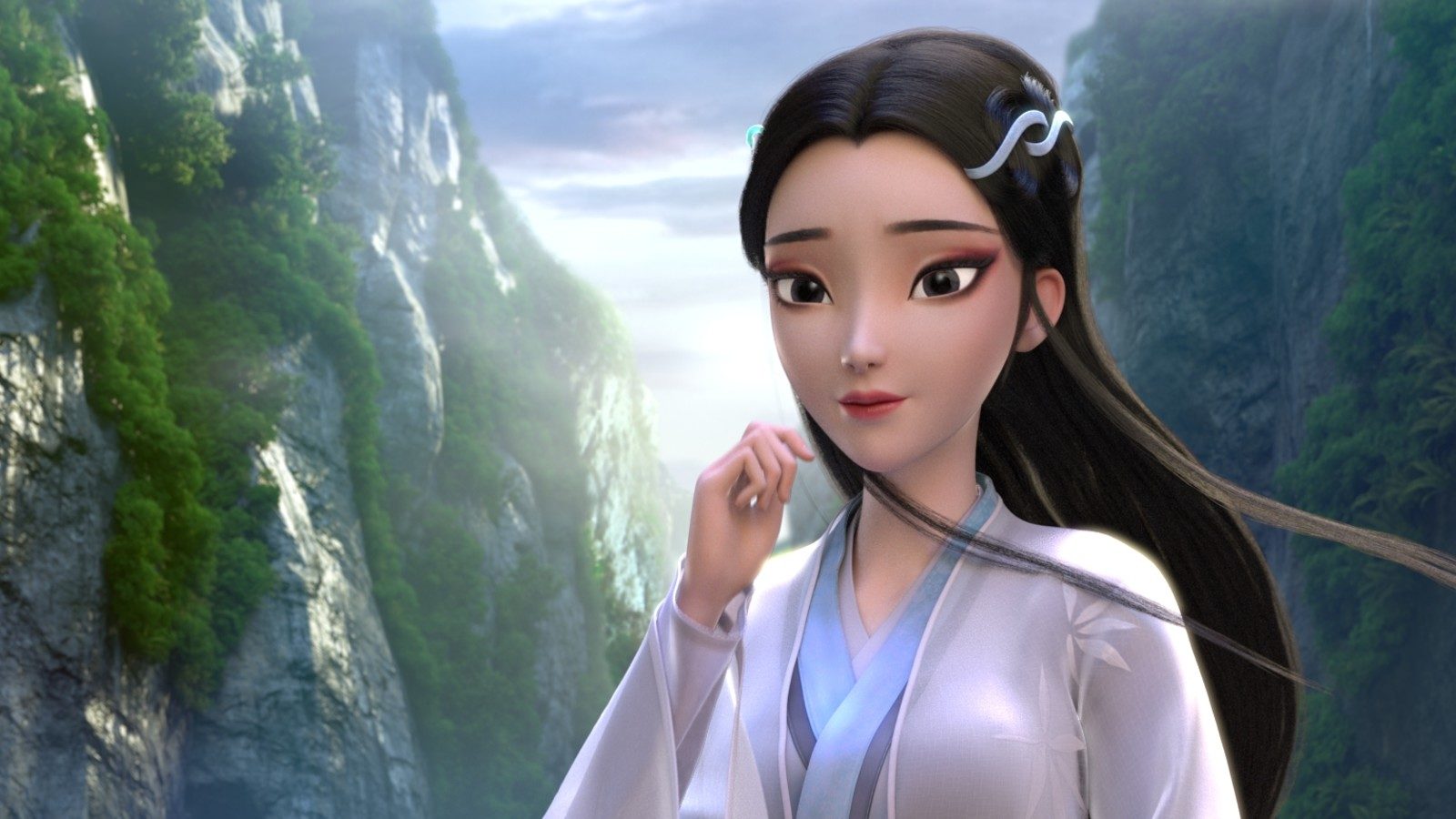
The White Snake is the story of a young woman who is destined to be a snake spirit, but is torn between her destiny and the man she loves.

“Your fate may be in stone, but you choose how you live.”

I ended my VIFF 2019 experience by seeing The White Snake at the Playhouse theatre. I wanted to treat myself to something imaginative. It was excellent and breathtaking to watch.

Blanca is a young assassin in white clothes. She is a snake spirit as the ‘White Snake’ and is able to assume human form, but she can’t achieve her goal of immortality. The answer to her goal of immortality lies in a memory of centuries ago, which she cannot recall. Her sister Verta, who is a ‘green snake’ spirit, gives her a magical hairpin that allows her to go back in time to the Tang Dynasty to get her answer.

Back in time, Blanca finds herself waking up in a village. She is surprised to learn she’s in what’s called ‘Snake Catcher Village.’ She comes across a handsome villager names Sean and his dog DuDou. Sean rescued her from a rock by the waterfalls. She falls for Sean, but is unaware that Sean is a snake-hunter. He has been ordered to hunt snakes for the Dark General and the Little General as they believe the snakes hold the key to supreme power.

Soon Sean faces an attack from a snake demon. Blanca stops the demon, only to learn it’s Verta. Sean is surprised and Dudou is convinced she’s a demon. Sean is convinced Blanca is not a demon, despite all he knows about her. Nevertheless Verta reminds Blanca that her true nature will come out when there will be a battle between the snakes and the Dark General’s army. Soon Sean learns who Blanca is as she assumes snake form. Foxy Boss tells Blanca a terrible secret about being a ‘demon:’ gods, people, and even other demons want to kill you.

Will Sean still love Blanca? There will be a battle between the snake catchers and the snake spirits very soon. The Snake General wants Blanca to be extinguished since she wants to defy her snake spirit. Blanca is heartbroken and feels she’s doomed to her demon spirit forever, but Sean sees it in his heart to love Blanca and see her for who she really is. The film ends with a battle in thrilling fashion and in a romantic mood.

This film is a 3D animation big-screen adaptation of the traditional four-chapter Legends Of The White Snake. What I liked best about the film is that the film doesn’t just present a good eye-catching drama, but it also possesses a lot of elements of Chinese culture and Chinese mythology. The imagery of animal spirits within a person is very common in Chinese storytelling and Chinese folklore. I’m not familiar with all of Chinese folklore but I can see a lot of familiar traits of it in the film. Especially the animal spirits that exist in the humans. The film does it in a very entertaining and a very mesmerizing way. The 3D animation doesn’t hurt it at all. In fact it makes it very eye-catching and even brings the audience into the story.

The film appears like a common Chinese fable meant to tell the story of bad and good. However the story is also about rejecting a destiny all for the love of a man. She was a snake spirit; he was a snake hunter. It shows how the heart can win over a person even if they are destined to be something else. The film is mostly a drama and the film succeeds in being a dramatic story. However there are some humorous moments. Most of the humor comes from Dudou, especially after he’s able to speak. It does seem like a must to have some humor in an animated film. Kids will be watching. The film doesn’t seem to get as suggestive as parts of Children Of The Sea does, but there are some suggestive scenes. The story tries more to capture the essence of love between the two. Nevertheless the suggestiveness and the violence in the film leaves me thinking this will get a PG rating.

This is an excellent film done by Light Chaser Animation. Excellent job by directors Amp Wong (credited as Huang Jiakang) and Ji Zhao. Amp has animation credits with doing the Green Lantern series. Zhao has more credits in doing editorial work in film and this is his first direction of animation. Here the directors and the Animation studio deliver a great, colorful eye-catching story that’s a delight to watch and will capture your imagination. The story by first-time scriptwriter DaMao is also excellent. It captures the story and the essence of Chinese mythology well while giving an ideal story for big-screen animation.

The vocal talent is also there. Zhang Zhe did a very good job at making Blanca sound mystical. Yang Tianxuang was also good at making Xu Xuan sound as romantic as he looked. He Zhang was great in adding the humor to the film with DuDou and Zheng Xiaopu was great at bringing out the deviousness of Foxy Boss. The music from Guo Haowei and the songs sung by Sean are also a delight to hear and add to the film’s mystique.

It’s interesting to note that the White Snake cost 80 million Chinese Yuan (roughly $11.4 million US) to make but made 447 million Yuan (about $63.9 million US) in China alone. It will be released in North America starting only with Los Angeles on November 15th and in limited release starting November 29th. English dubs will be in the release as Stephanie Sheh will be the English-language voice for Blanca and Paul Yen will voice Ah Xuan or Sean. Having seen the film in Mandarin with subtitles, I would see the English-language one, but I would try to see which one in more magical. Also those who watch the film when it comes out, I highly recommend you stay to watch the credits. Yes, there is a scene in between the credits featuring Foxy Boss that leaves you convinced there will be a sequel coming out. In fact the Mandarin title of the film means ‘White Snake: The Origin.’

The White Snake is a film with a lot of beauty and intense thrills, but it also has some humor and passion. It succeeds in doing what an animated film should do and make you escape into another world.

And that does it! There wraps up the last of the films I saw at the Vancouver International Film Festival. I will be posting my wrap-up blog very soon.

VIFF 2017 Review: Dragonfly Eyes

dragonfly_eyes-h_2017
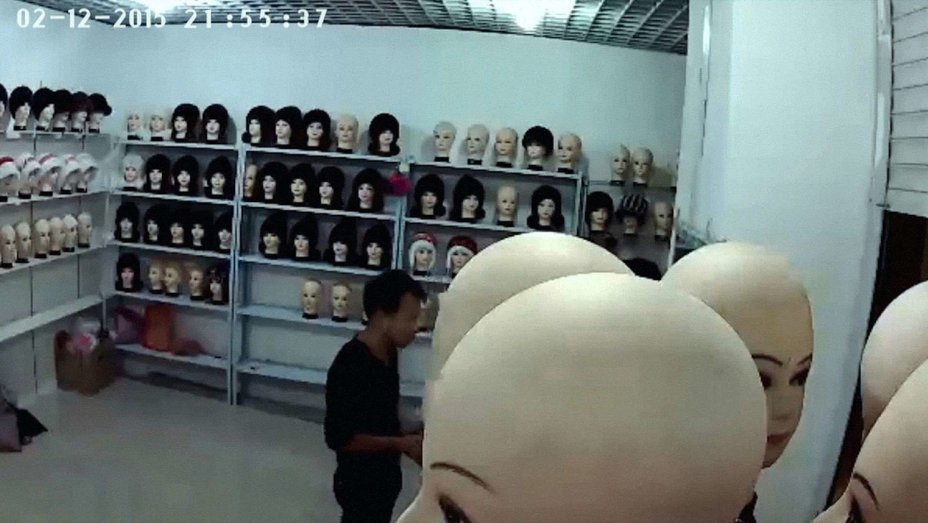
Dragonfly Eyes is a feature drama done through surveillance footage. This is one of the many surveillance images used in the film.

Dragonfly Eyes is a Chinese experimental film that attempts to use surveillance camera footage as a way to tell a story. It’s a unique story in its own.

The story begins in a Buddhist monastery. A young girl named Qing Ting, which means ‘dragonfly,’ has left the monastery in search of a better life. Ke Fan is a young man working a job at a cow farm. One day he catches the attention of Qing Ting. They have conversation, but it’s brief. She knows him and his farm work, but she tries to keep a public distance from him. She’s concerned for her social status about how she’ll look conversating with a ‘farm boy.’

Eventually she admits that she does love him and the two become a couple. However Qing Ting loses her job at a cleaner’s when a pushy rich woman gets more demanding and then demands Qing Ting be fired. Ke Fan swears to Qing Ting he will gets revenge for her. He does just that by driving in front of the rich couple’s car and smashing in their front at a red light. The incident lands Ke Fan a four-year prison term.

Four years have passed and Ke Fan is released from prison. The first thing he does is try to look for Qing Ting. He goes to where she used to live, goes to her former jobs. No sign. Then he learns of an internet celebrity by the name of Xiao Xiao. He sees her and notices that it’s Qing Ting. He tries to conversate with her, but she keeps on denying she’s Qing Ting. Then one day, she gives negative comments about a singing star. That leads to a lot of online flack delivered to her. Xiao Xiao is devastated and it drives her to suicide. Ke Fan learns of this. He feels what he must do is undergo plastic surgery to have Qing Ting’s face. After the operation, he returns to the monastery where she used to serve. It is there she chooses to stay.

This is definitely a film you can call experimental. You can also describe it as ambitious for Xu Bing. One thing we learn is that China is a country full of surveillance cameras. The average person’s face is seen on surveillance cameras 300 times a day. The cameras are all state-run. It is through this that Xu Bing came up with the idea to do a fictional story through use of surveillance. I tried to be as observant as I could with the film. I was trying to spot out if Xu Bing was using the same actors to play Ke Fan and Qing Ting. One thing about the film is that the parts are voiced over by Lui Yongfang for Qing Ting and Su Shangqing for Ke Fan.

I do give Xu Bing kudos for trying to make a film of this caliber and this experimental. However I have to say that it is flawed. The biggest thing is a story that appeared to make sense from time to time, but ended in a bizarre fashion. How does one try to keep the spirit of a deceased person alive by undergoing plastic surgery to look like them? The scene where Ke Fan joins the monastery made a little more sense as it can be seen as a way to keep Qing Ting’s spirit alive. However the plastic surgery really has me wondering.

I can understand that Xu Bing is trying to make more than one statement to make in this film. I think through the character of Qing Ting, he trying to make a statement of one being consumed by materialism. We have a young girl who leaves the monastery and then gets consumed in the modern world of materialism, and then she commits suicide. Also I feel with this film using surveillance camera footage, I think he’s also trying to make a statement about the chaos of this world we live in. It’s noted when the film goes from footage used as part of the drama shifting to general surveillance footage consisting of car crashes, people on the go, a disaster, a woman drowning in a pond, and even business footage. Whatever statements Xu is trying to make, it doesn’t come across smoothly and it comes across rather confusing. I will acknowledge Xu’s Dragonfly Eyes as a brave first-attempt at a ‘surveillance-drama’ and anticipate better in the years to come.

Dragonfly Eyes is an ambition attempt at creating a live-action film through surveillance footage, but it comes off as messy and confusing.