VIFF 2024 Review: Balomania

Balomania is about balloon artistry in Brazil. An art that’s illegal in its country of origin.

Is setting a big artistic stylish balloon in the air a crime? Balomania is a documentary that focuses on the popularity of balloon art in Brazil that is illegal.

The film begins with Danish-Spanish filmmaker Sissel Morell Dargis detailing her move to Brazil at 19. She soon became a graffiti artist and became known popularly as ‘Simba.’ During her first years, she noticed what she thought were stars floating from the favelas of Sao Paulo. Her Brazilian friends told her they’re balloons and they were launched in the air by a secret society called the ‘baloeiros.’

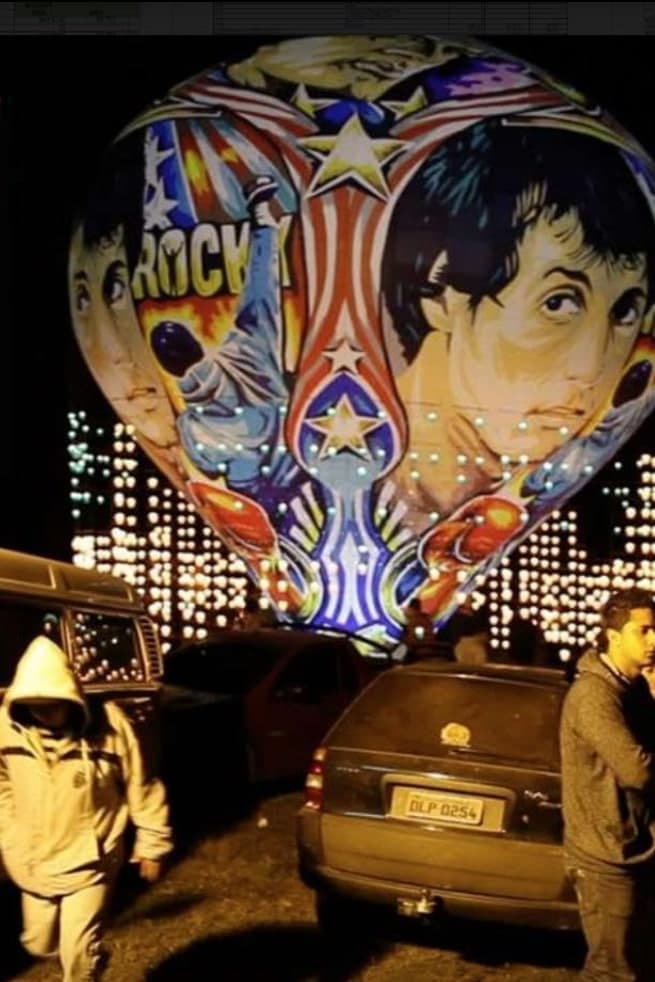
That discovery started a fascination in her of that ‘balloon world’ that still continues to this day. The balloons are the hot air balloons launched without passengers. They come in all sorts of artistic designs. Some include a wide banner hanging from underneath it. Some include hundreds of small burning candles in colored cups whose arranged image adds to the balloon’s allure. Some even include fireworks. These balloons are very expensive to make but those involve with it believe it runs in the blood and is passed from generation to generation. This group of balloon launchers she meets with launches balloons once a week.

This balloon culture is also illegal in Brazil. In the past, it was common for Brazilians to release such artistic balloons in the sky. Then in 1999, the government felt it was happening more often than it should and they criminalized it. The government claims the reasons for these bans on balloons are because of public safety, air flight safety and for environmental issues. Dargis feels there’s something more underlying to it. Possibly classism of peoples.

She meets with the many men involved in this balloon culture and are part of these ‘balloon mafias.’ She meets the artists, the crafters, the launchers, and the catchers who catch the balloon in time so that no one is arrested and will eventually have to relaunch that balloon one day. She meets with those like Zulu, Tron, legend Sergio and young father Jaba. They talk of the balloon works they’ve done in the past. They talk of how expensive it is and how they don’t get paid anything for it. Just the thrill of dazzling people who view them. Jaba talks of how he wants to break the record of the biggest balloon ever launched.

Over the ten years, Sissel films this sub-culture, she showcases the balloons crafted and launched, the catchers who catch and relaunch, and the personal lives of many of those involved. She especially focuses on Jaba as he is a father to a six-year-old son and Jaba’s seen as the future of this balloon group. Sissel also films news stories of how the governments feel they’re not doing enough to stop this and feel the best solution is to toughen the jail sentences to 5-8 years. Sissel also gets opinions from people in Jaba’s favela who speak their mind about it. The favela has divided opinions. Some feel criminalizing this is just an excuse to distract form the real problems of the nation like defeating poverty, drug crime and corruption. Some people do favor the criminalization and see it as a safety threat. We even see one case where a balloon launched in the night burns up in a similar way the Hindenberg burned up. Jaba’s son tries to convince his grandmother that it’s art.

The COVID pandemic hits Brazil. Sissel is reminded her filmmaking of this balloon underworld was a distraction to her main purpose for life in Brazil, which was making video games. Sissel did however create a video game about balloon launchers called Cai Cai Balao. During those years that passed, Sissel wonders if Jaba achieved his goal. Balloon godfather Sergio has died. Jaba left creating and launching balloons for the sake of becoming a responsible father to his son. The project of the balloon of Jaba’s dreams, the biggest balloon ever with half a ton of fireworks, did not die and is carried on by his group. Although he’s not an active member anymore, he is still part of the group. The influence never leaves. We see it being launched in the air successfully with more than a hundred men involved..

I think it’s a common thing that can happen in any nation at any time. Even in the nations with the most freedom. A style of art that the nation’s government feels uneasy about or so much contempt for, they criminalize it. We’ve seen it before in the past with genres of music or literature. Paintings and statues have also come under government scrutiny for centuries. Here in the big cities of Brazil, we have balloon launching. The setting off of these eye-catching balloons. It was done commonly in the 80’s and 90’s but the government criminalized it because it was done too much and fear of safety both in the air and on the ground. If I was a Brazilian politician, I wouldn’t criminalize it, but I would have people who know how to do it properly licensed to do it.

Here in this documentary, it presents the art and those involved through a variety of angles. Since this is about the balloon art, there has to be a lot of scenes of the crafts they launch in the air. It’s part of Brazil’s culture. It’s eye-catching. There’s a set of people who are involved in this and it’s like a whole culture of these baloeiros. It’s an art that costs in the tens of thousands to make and they get paid nothing for it. It’s also the passion for it where you’re still a part of it even after you’re no longer active with it. It’s something these men do sometimes at the expense of family relations. It’s also a source of controversy among the public. Is launching an artistic balloon in the air a crime? Is it worth having these alleged criminals in prison for years? The film also uses news stories, talk from politicians and even debate from citizens about this. One scene I liked is the debate between Jaba’s son and his grandmother who thinks it should be criminalized. She asks him why he thinks it’s art and his response: “Because it’s very beautiful and if it’s beautiful, it’s art.” Smart way of thinking!

This documentary is an accomplishment for Sissel Morell Dargis. It’s natural for a creative person who takes an interest in some topic or some subject to want to do a film about it. This film is ten years of film footage from Dargis of those involved with the craft, those who watch and those who fear it. It succeeds in getting the audience interested in those involved with the craft as it succeeds in dazzling their eyes with the images of the balloons created and launched. It also succeeds in convincing one that the criminalization of this craft is foolish while also presenting the side of those who support the criminalization. Although it appears to side more with those that consider it art, it still tries to let you decide for yourself. It’s no surprise that due to the nature of touching on a craft that’s criminalized, Dargis has to do most of the filming on simple hand-held cameras. The documentary is as intriguing to watch as it is about the filmmaker making her point.

Balomania is an intriguing documentary that shows the art, the artists, the tricks of the trade and the opposition they face. It’s also about the director making the film and making friends along the way. It’s an art documentary that becomes a lot more.

VIFF Returns For 2024

The Vancouver International Film Festival returned for 2024 to make it their 43rd annual festival. As has been the case since the COVID pandemic, it’s an eleven day festival that started on Thursday the 26th and will end on Sunday October 6th. The Festival will not only show films but there will be live music performances as part of VIFF Live, talks about film insiders and technical people with VIFF Talks, forums as part of VIFF Industry, musical discussions as part of VIFF Amp, forums in skill development with VIFF Labs and promotion of works from promising filmmakers with VIFF Catalyst.

For my volunteer duties, I return to working for the International Village. I’m back to doing common usher duties like scanning tickets, line control, ushering to seats, whatever the venue managers call for me to do. Once again, I have my VIFF goals of hoping to see at least ten films including one shorts segment, one feature-length Canadian film and nation’s official entry in the Best International Feature Film for the upcoming Oscar race. I’ll have no problem with the endurance of watching films. I saw one the day it opened. I may have a problem posting all my reviews in a timely manner. You all saw how long it took me last year. The good news is I have no post-secondary online course so you will get the reviews a lot faster. Not exactly in time before the Festival ends, but enough ample time.

As for films, the Festival will be showing a total of 150 feature-length films and short films during its run. Theatres showcasing the films for this Festival include the VanCity theatre (the main theatre only), the International Village, Rio Theatre, Vancouver Playhouse Theatre, Centre for the Performing Arts, Cinematheque, SFU Goldthorp Theatre and new for the VIFF this year, a single screen from the Fifth Avenue Cinema. And now for the highlights of this year’s VIFF:

OPENING GALA: Ari’s Theme – This year’s VIFF opens with a documentary, and of provincial subject matter. It’s of Victoria composer Ari Kinarthy who won’t let his muscular spinal atrophy destroy the artist inside of him and is determined to compose his work. Eight members of the Vancouver Symphony Orchestra are expected to be live and perform a live score to the film.

CLOSING GALA: Emilia Perez – France’s official entry in the Best International Feature Film category for the Oscar race. The director of 2009’s Une Prophete presents a story of a Mexican former drug lord who is on trial for the crimes just after completing gender reassignment surgery. Zoe Saldana plays the lawyer assigned to defend her. Her performance won her a Cannes Film Festival prize for acting.

All We Imagine As Light – This film from India won the Grand Prix Award at Cannes. It tells of three nurses and the difficulties of their lives. One is a workaholic who works to forget about her estranged husband. Another has a Muslim boyfriend and avoids her parents as they want her with a Hindi man. The other is a widow who faces being thrown out on the streets because of land developments. Three different stories in which many women can see themselves in.

Anora – This year’s Palme d’Or winner in Cannes! A bizarre story of a Las Vegas stripper winning both the affection and eventual love of a spoiled Russian son of an oligarch. When the parents learn of the romance, all hell will break loose. Sean Baker, the director of The Florida Project and Red Rocket, promises something unpredictable!

Bird – The latest film from Andrea Arnold. A young 12 year-old girl named Bailey lives in one of England’s shabbiest slums. She has to deal with a childish father, a soon-to-be-stepmother she hardly knows, a half-brother part of a gang and her mother’s new abusive boyfriend. Can an eccentric stranger she just met one day change things for the better for her?

Can I Get A Witness? – A folksy but futuristic Canadian film. Starring Sandra Oh as the mother, it’s a story of a young woman whom, after the brink of an environmental crisis, tries to work with her colleague on a worldwide mandate to protect all life.

Conclave – From the director of the 2022 remake of All Quiet On The Western Front comes a story where a bishop in the Vatican (played by Ralph Fiennes) outlays the plan to have a new Pope elected after the passing of the recent one. This leads to factions, conspiracies and a squabble among seven bishops that leads to disaster.

The End – Joshua Oppenheimer directs a tragic drama that’s also a musical. It stars Michael Shannon, Tida Swindon and George MacKay and it’s about a selfish greedy family whom, two decades after the world’s environmental collapse, have selfish plans from outside their bunker but threaten to have it exposed by an outsider.

The Girl With The Needle – Denmark’s official entry in the Oscar race for the International Feature category. Based on a story of one of Denmark’s most notorious serial killers, a young seamstress left lonely after World War I has an affair with the owner of a clothing factory. It makes things worse and she turns to a man who offers ‘services in need.’

I’m Still Here – Brazil’s entry into the Oscar race. From renowned director Walter Salles comes a story of a Brazilian congressman and his family in the 1970’s while Brazil was under a dictatorship. He tries to prevent his teenage daughters form entering politics but that leads to trouble as he is picked up by armed man one morning. That could tear his family apart.

My Favorite Cake – The winner of the FIPRESCI Prize at the Berlin Film Festival. It tells the story of a widowed 70 year-old woman in Tehran who’s going through empty nest syndrome since her daughters moved out. One day, she listens into a conversation of late-in-life romance and soon finds herself fancying a cab driver.

Nightbitch – It’s directed by Marielle Heller and stars Amy Adams. A woman in the suburbs finds her life mundane having to tend her toddler and her husband leaving her alone as he travels city to city for his work. Soon she becomes more dog-like both physically and mentally over time and even attracts all the other dogs of the neighborhood.

The Piano Lesson -The third August Wilson play Denzel Washington brings to the big screen, it’s directed by son Malcolm and stars son John David. A man reunites with his sister in Pittsburgh in the 1930’s with a friend, a gift of a truckload of watermelons and a plan to sell the family piano she owns. The sister, who considers it a family heirloom, refuses to have any of it.

Rumors – A three-director collaboration that includes Guy Maddin. It tells of a G& meeting which world leaders assemble to create a first statement on the current crisis, in a remote gazebo isolated from the rest of the world. Their setbacks are dealing with a vain but incompetent Prime Minister of Canada and mysterious problems coming to light. If it’s from Guy Maddin, you know it will be out of the ordinary and unforgettable.

The Seed Of The Sacred Fig – Germany’s official entry in the Oscar race. It tells of an Iranian man who’s a newly promoted private investigator for the government in the early days of the feminist rebellion of 2022. His handgun goes missing, but neither his wife nor his two daughters will confess to having it. As the protests grow in size, Iman’s anger and paranoia grows and it threatens his relationship with his family.

The Tragically Hip: No Dress Rehearsal – Since they formed 40 years ago, The Tragically Hip have become one of Canada’s most beloved rock bands. This documentary directed by former member Mike Downie promises to showcase the Hip as you’ve never seen them or known them before with unseen backstage footage and rehearsal footage.

And there you go. That is my preview for this year’s Vancouver International Film Festival. I hope for this to be another ‘VIFFtastic’ year!

VIFF 2021 Shorts Forum: Programme 3

I had already fulfilled one of my VIFF goals of seeing a segment of short films when I saw MODES 2. However I was hoping that for short films, I would see something less experimental and more in the lines of either documentaries or live-action storytelling. I had my opportunity when I saw the shorts segment entitled Programme 3. They were seven films by Canadian directors that were all unique in their films and their messages.

-Flower Boy (Canada – dir. Anya Chirkova): It’s summer. Nav is a musical dreamer. He plays music from piano to guitar to his analog synthesizer at parties. His girlfriend Sarah is a painter who has artistic dreams of her own. She even painted a portrait of Nav with a flower instead of a head. For summer income, Nav works at a laser tag ground where he does the typical duties and the co-workers talk of how much they hate the job and the boss. As the months pass, Nav grows further in love with Sarah, but knows summer will end and he will be heading to college in another province. Also during the job, the 60 year-old boss shows Nav that he had music dreams too, as a rock ‘n roll drummer. The boss shares with him his passion. As summer ends, he makes a decision that a surprise to all.

This is a nice picturesque story. The images do as much of the storytelling as the dialogue. The story is pretty much a celebration to any and all artistic dreamers. Even for those who eventually went on to pursue real jobs. Those who’ve had artistic dreams of their own when they were young can identify with this story of see themselves in some way somehow. This also works well for me because I had dreams of being an actor when I was younger and, well, I turn 50 next September. It’s a reminder of no matter how old you get or even how successful you are at your real job, the dream never dies. Even if it’s in an against-all-odds profession, it’s still worth it to chase the dream and never stop dreaming!

-Things We Feel But Do Not Say (Canada – dir. Lauren Grant): Genevieve is hurting, but does not make it obvious. Later we learn what’s been hurting her. The pregnancy that’s supposed to be, isn’t. It’s a miscarriage. She tries to keep it inside, even to her husband, but you know it’s going to come out. She goes with him to the doctor’s appointment and tries to keep a poker face about it, but you know it will come out. Then it does. She then returns back to her work, greeted warmly by her friend, and carries on with her day.

This isn’t just a story about a miscarriage and the hurt one feels. It’s also about trying to hide emotions and go about daily life, even though one is hurting inside. The body language actually does more telling about the story and Genevieve’s feelings than the dialogue. That’s what the film is for the most part. About unspoken feelings we hold deep inside.

-Tla-o-qui-aht Dugout Canoe (Canada – dir. Steven Davies): Joe martin is a 66 year-old man from the Tofino First Nation. His profession is making dugout canoes: canoes made from trees that are dug out from the trunk. He is skilled from teachings from his late father. The skills he uses to make the canoes, like the hand-carving and painting, are centuries-old traditions passed on from his people. The skills and canoes were scorned upon by the Canadian government decades ago who had a system to assimilate the Indigenous people, robbing them of their culture and language and sending them to Residential Schools where they were abused and neglected mercilessly. Joe is now free to make his canoes. His daughter Tsimka uses the canoes he made to take visitors on tours of Clayoquot Sound.

This is one of two documentaries that’s part of ‘indigiDOCS.’ This allows the canoe maker to tell his story of his craft and how it’s important to him and his people. At a time when Indigenous peoples are going through Truth And Reconciliation and working to take back what was stolen from them in the past, like their languages and cultural rites, this is an important documentary. You learn of the skill of how it’s important for the maker and his people and why it’s worth keeping alive and worth passing on to generations.

-News From Home (Canada – dir. Sara Wylie): It’s March 2020. A daughter makes a phone call to her mother. She has anxiety and she’s scared. She doesn’t know what to do. She wants to fly back to be with her mother, but her mother advises it’s not a smart idea. This breaks the daughter’s heart. She’s scared and frustrated to tears. She just doesn’t know what to do. Another phone call some days later. The daughter again calls the mother. The daughter doesn’t have the same frustration she had during the first phone call. She reassures her mother she’s calmed down, if imperfectly. The mother says things of reassurance. It ends with a friendly goodbye.

This is a film that consists of recorded phone calls, home movies, and the images of the rooms inside the hose where the calls took place. No actors or people present. One thing we should not forget is it’s in March 2020 when the COVID pandemic hit Canada and all these social restrictions and isolations started taking place. There was a lot of fear among people about what would be next. I too anticipated this could be the next Influenza. This film captures the moment. Even reminds us of our own first moments of dread when this all started. However it also shows the moment of relief and reassurance over time. It even shows the close bond of family. It’s that bond with someone who reminds us things will be fine that we all need.

-Indigenous Dads (Canada – dir. Peter Brass): The film is a documentary. It’s an interview of four Indigenous fathers from across Canada and of various Indigenous Nations including Brass himself. Two are fathers of two, one is a father of four, and one is a father of one. All of them share their feelings of what it was like when they became a father for the first time, both positive and negative. All four talk about how fatherhood made them grow and change as men. All talk of their love for their children. They also all talk of how they teach their children of what it is to be Indigenous and how they even remind them of the racism they can face. They also all talk about their hopes and dreams for their futures and what they want their children to grow us to be.

This is an important documentary short. It’s very inciteful. This shows a side of being both a father and being Indigenous that we rarely see. It’s an eye opener to this subject. It reminds you of the immense responsibilities these men have to face and are willing to face head-on, despite how hard it is. They speak their hopes, their joys and their fears. There are times of great emotion as well. I’m really glad I saw this.

-Srikandi (Indonesia/Canada – dir. Andrea Nirmala Widjajanto): Anjani, a young girl in Indonesia, is about to start college. This comes in the aftermath of the death of her father and as her mother is about to sell the house. Something her daughter is out protesting over. Soon, her daughter discovers something. She comes across her father’s puppet studio. Her father’s profession was the traditional Indonesian puppetry of Srikandi. She discovers she has been taught the skills of Srikandi by her father, even though Srikandi is traditionally forbidden o females. Anjani makes a decision about her career path to her mother. Her mother is not happy with it as it won’t guarantee a steady income, but Anjani is firm in her decision as he is days from leaving for Jakarta.

This is a student film from a Vancouver Film School student. Andrea Widjajanto is born and raised in Indonesia and came to Vancouver to study film. This is another film about artistic passions burning inside one’s self. This is also as she faces the heartache of the death of her father and the time in one’s life where she’s reached the college age and now preparing for a path she is to pursue for the rest of her life. This is a good film as it involves an artistic puppetry few people from outside Indonesia know about. It also reminds you that this desire to pursue your dream with the pressure from others to pursue something more bankable and steady is universal. It transcends cultures and borders. The dream to pursue one’s dream is universal. Despite the story taking place half a world away, one can relate to the story.

-Together (South Korea/Canada – dir. Albert Shin): It’s a seaside motel in South Korea. Two strangers who met online with fake names, a young-adult female who goes by the name Happy Virus and a middle-aged male who goes by Rabbit Doll X, are there. They are here for one reason: a suicide pact. Both have a cooking element and chemicals ready to do the job. During the time there, they talk about their lives and what they’ve been through. They take an interest in each other and even laugh and have a mini-party of just the two of them. It gets to the point the woman feels she can’t go through with this.

This is a story by Korean-Canadian director Albert Shin that treads on a serious subject matter. It’s of a common thing in South Korea of the type of suicide pact where two strangers with suicidal feelings meet online to commit their suicide together. Shin taps into human feelings as well as ethics and morals. In the end, he delivers a story that goes from potentially tragic to life-affirming in the end.

Overall these seven shorts have their differences, but they share a lot in common. All are from either Canadian directors or students in Canada. Some are documentaries or docudramas, while some are live-action. Most are in English while two are in different languages. All speak a message about the human spirit and human feeling.

Each of the seven films of the VIFF Shorts Segment Programme 3 either contain an aspect of life that we can all relate to or they will open our eyes. All of them are valuable to watch. I’m glad I had the chance.