
VIFF 2025 Shorts Segment Review: Forum 3 – The peripheral core

One thing about being into cinema is that it will give you a liking for short films. I saw a second segment or forum of shorts at the VIFF entitled The peripheral core. This segment, the third Forum segment, consisted of eight films that are very similar, very different, but tell a lot.

-Resistance Meditation (dir. Sara Wylie): In this documentary, we see a woman (possibly director Wylie) sleeping in bed. As she sleeps, Wylie talks about sleeping and how the time on the clock we follow is ‘corporate time.’ As she lays in bad, we learn she has a disability and she calls her sleep here ‘crip time.’ It’s not just for her sleep, but to rebel against the demands of the capitalist world.

Simply put, this is a five-minute documentary where the filmmaker has something to say. Although I don’t completely agree with her opinion about ‘corporate time,’ I like how she makes her statement in a creative way. It makes sense to present filming of sleeping and her speaking her belief about time, disability and rebelling against it.

-A Very Straight Neck (Japan – dir. Neo Sora): A woman wakes up from her sleep and has terrible neck pain. The dream she has haunts her. Her dream was she was lying face-down on the sidewalk of a busy street and the world passes around her. Even crumbling out of its existence in her mind.

This is a picturesque short film which the focus is on unspoken images and the main character narrating in the background. The biggest quality is the visuals as it adds to the story and creates the mood of what she’s trying to say. Sometimes we can understand the pain she’s going through. Very well done.

-Not Enough for the Love Inside (Brazil – dirs. Marcelo Matos de Oliveira and Wallace Nogueira): Cassio and Otto are both gay couple in Bahia, Brazil and both became blind recently. Cassio is unemployed while Otto is able to participate with a theatre group. Through all that happens in the story and Cassio’s body language, one can’t help but notice the relationship appears doomed to end.

The biggest quality of the film is the body language. I don’t know if both became blind from the same incident or from separate incidents, but you can understand how sudden changes can affect a relationship. The body language in the film is as valuable to the story as the dialogue itself. It creates the negative vibe of a relationship that is starting to fall apart.

-The Sphinx (USA – dir. Jesse Pavdeen): Harold is a young adult locksmith by profession, but he has a problem. He was born without a nose and he needs to wear a prosthetic. His nose falls off during a date, but his date doesn’t mind. She encourages him to come to a party. Things get worse when the people at the party want him to show ‘his true self.’ He takes his nose off and they all laugh. He runs to his estranged mother’s house, but she has the door locked with seven locks. Meeting with his father exposes the secret.

When you have short films, you should expect a bizarre comedy or two. Harold is seen as The Sphinx as The Sphinx itself has its nose missing. I’ve seen stories of missing body parts or weird body parts before, but this comedy does a unique job in showing one young man’s flaw and how the world treats him. Even his mother who has cut herself off from everyone. It’s a bizarre story that’s humorous too.

-Confluence (Canada – dirs. Charlene Moore and Oliver Darrius Merrick King): This is a documentary made by Indigenous members of the Winnipeg Film Group for their 50th anniversary. As images of parts of Winnipeg are shown on screen, the Indigenous members of the Group talk about various topics like their land and colonizing, being an Indigenous person, filmmaking as an Indigenous person and even envisioning the future and pondering ideas of what to film next.

I’m from Winnipeg and I remember the Winnipeg Film Group and how it took a modest area in an office building back in the 1990’s. The Group has grown a lot. This documentary is important because in recent decades, the Indigenous peoples are getting more into the arts and holding their own. Film has a bright future in Winnipeg, but the Indigenous filmmakers show the most promise and most envisioning. It’s good to hear them speak their minds about the topics as we view images of Winnipeg.

-In My Hand (Norway – dirs. Marja Helander and Liselotte Wajstedt): The film begins with a re-enactment of Norwegian Sami activist Niillas Somby waking up in prison with his amputated arm bandaged. Niillas narrated how he spent 21 years in prison and was involved greatly with Sami activism. He also talks of the accidental battery explosion from 1981 that led to the loss of his arm. He also talks of the time he went to Canada cleverly disguised as a white man and with a fake passport. The film ends in the present with present-day Niillas and today’s Sami activists.

This is another film that showcases the racism felt by a nation’s first peoples. In this case, it’s the Sami peoples of the Nordic nations. Niillas Somby tells his story about what it was like to be a Sami activist and of some of the illegal things he did in his life. We hear Somby narrate as the moments are re-enacted in front of us. This is a valuable story in learning about their struggle and has a message worth hearing.

-Cocotte Coulombe, Filmmaker (Canada – dir. Charles-Francois Asselin): Charles-Francois has always known his unmarried deaf aunt Cocotte. He does remember her bringing a film camera to family events. It’s after her death that he discovered she had taken lots of family films. As he watches the family films of hers, he discovers this was they way she communicated her love to them.

This documentary is great at telling its story. Cocotte’s family films play in the background as Charles-Francois tells his story of Cocotte and his recent discovery of the films. It’s an intimate story of how a film maker himself learns how home videos were not just a hobby for Cocotte, but also the means for a deaf family member to show her love to them. It was nice to watch.

-We Were The Scenery (USA – dir. Christopher Radcliff): In 1978, Hoa Thi Le and Hue Nguyen Che were Vietnamese refugees in a refugee camp in the Philippines. During that time in that same place, Francis Ford Coppola was filming Apocalypse Now and wanted to use the refugees as extras for the film. Le and Che rewatch Apocalypse Now and during the scenes, they point themselves out and mention of other people they knew personally as their appearances come on screen.

This is one documentary one would not expect. Most of us who saw Apocalypse Now probably never bothered to notice the extras were from a Vietnamese refugee camp. It was great to hear the story of how a couple who are married were those very extras and they saw it as just a way to make some extra money. It’s also a smart choice the director had them tell their story in Vietnamese. Although they are now American citizens, telling their story in Vietnamese only adds to this documentary.

And that was my experience with the short films from Forum 3: The peripheral core. Interesting how with this forum, five of the eight films were documentaries. Although I prefer watching live-action, I still found the documentaries intriguing to watch. Whatever the documentaries had to say, they said it well in their own way. For the live-action, they were unique to watch as well.
Oscars 2017 Best Picture Review: Call Me By Your Name

Call Me By
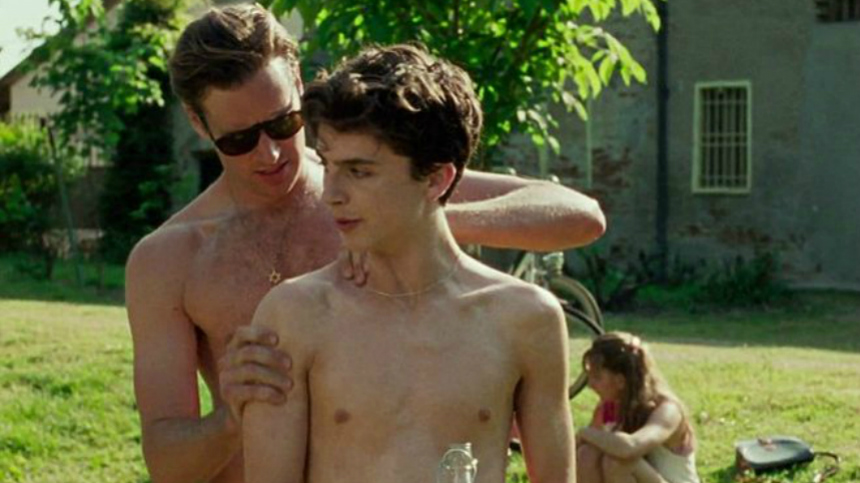
Call Me By Your Name is the story of a son of a professor (played by Timothee Chalamet; right) who falls in love with an academic (played by Armie Hammer).

Call me by your name,

And I’ll call you by mine.

This year’s Best Picture nominees feature a wide variety of themes and subjects. Call Me By Your Name may get note about its gay subject matter, but it’s a lot more.

Elio is a 17 year-old American boy living with his father, a Jewish-American archaeology professor, and his Italian mother in his father’s summer getaway in Northern Italy in the summer of 1983. He has a passion for reading and is prodigious in playing the piano. During the summer, his father invites Oliver, a 24 year-old Jewish American graduate student, up for three months to help with his academic paperwork.

Elio’s first impressions of Oliver are not the best, especially since Elio has to give up his bedroom for him. He finds him arrogant, a show-off, and it annoys Elio when Oliver flirts with one of the local Italian girls he knows. Why should it matter to Elio? He has a girlfriend named Marzia.

However Elio and Oliver develop a friendship as the two spend a lot of time together. You don’t know if something’s happening between them or not. You’re tempted to think the latter as Elio is trying to get more sexual with Marzia and even talks about it at the dinner table. However it becomes obvious Elio is attracted to Oliver as Elio smells his swimsuit and masturbates. Elio makes the first move, but Oliver tells Elio he should not act on his feelings. Even a kiss at the post office doesn’t work on Oliver.

After being distant for a few days, Oliver gives Elio a note to meet him at a tree by midnight. The two kiss. The relationship grows more intimate and more sexual, but they have to keep it a secret, not knowing how their Jewish families will react. Meanwhile Marzia notices Elio has become more distant with her.

Then the time comes when Oliver’s stay is nearing its end. They don’t know what to do. The parents sense the relationship with them, but recommend the two spend a three-day trip in Bergamo. The trip eventually becomes their last intimate time together. Oliver leaves for the US and Elio returns home brokenhearted. Marzia gives him sympathy and agrees to stay friends and his father tells him he should be lucky because a true love like that is rare. A phone call from Oliver on Hanukah where Oliver discloses that he is to marry a woman, leaves Elio with mixed feelings over what should be but will never be.

The story is not as thick on the drama as the other Best Picture nominees. This is a story that simply unravels itself slowly and quietly. Nevertheless the events are consistent and they all fit within the story. This story bears a lot of similarities with Blue Is The Warmest Color where the protagonist is just becoming an adult and just learning of their same-sex attraction after believing they were hetero the whole time. Like Blue, the story is as much about the protagonist’s progression into adulthood and meeting their first same-sex love. Like Blue, the protagonist struggles with their same-sex attraction even as they pursue love with someone of the opposite sex. Also like Blue, it’s about a person of the same gender that sweeps them of their feet. Another element where it’s like Blue is that the story takes place along an artistic setting. While Blue is about Adele becoming infatuated with Emma through her paintings, it’s Elio becoming infatuated with Oliver in Northern Italy in an environment full of art: both natural and man-made. It’s also Oliver becoming infatuated with Elio through his readings and his piano playing. It’s a unique story how two young men– one who’s artistically-inclined and one who’s academically-inclined– both feel like polar opposites at the beginning, but come to love each other over time.

Another element in common with Blue is that it features a lot of elements one would commonly find in French films. We see how the imagery of the Northern Italian country side and even all the art and artifacts in the more urban areas play in with the story. We see how the elements of Oliver’s academia and Elio’s passion for the arts also help colorize the story and even heat up the romance. We also see the environment of the 1980’s and the music in the film adds to the story line. And we especially see how the theme of apricots plays into the romance. It goes from simple academia discussion to an element of their love. The film could have simply been titled Love And Apricots! Such background elements found here are common in French films as it helps provide a lot of value and background to the story and even the themes of the film.

However the biggest difference between Blue and Call Me By Your Name is that the story of Adele meeting Emma is more about meeting her first same-sex love and Emma being more like a chapter in Adele’s life. Call Me By Your Name is different because it’s a case where Olivier is more than Elio’s first same-sex love, Oliver becomes his soul-mate. The film is also a sad love story because it’s a case of what was meant to be can’t be. We don’t learn of the true divide of the two until the very end. While Mr. Perlman is supportive of Elio’s love to Oliver, Oliver has to marry as he knows his parents not only would disapprove, but send him to a psychiatrist for therapy. I won’t say the reason being because Oliver’s family’s Jewish, but more because the US in the early 1980’s was still very hostile towards homosexuality. That was it. Two soul mates from two different worlds that would face their big divide at the end.

The film is the accomplishment of the collaboration of director Luca Guadagnino and scriptwriter James Ivory. Both openly gay, they did a very good job of creating a story about meeting the love of one’s life and placing it in a glorious picturesque background that gives the story its charm and its feel. The film is also an accomplishment for young actor Timothee Chalamet. Most of the film revolved around Elio and Chalamet delivered an excellent job of a 17 year-old who learns of his sexuality through meeting the love of his life. That end scene where the film focuses on his face and his various emotions is as much the best part of Chalamet’s acting as it is a heartbreak for the audience to see.

Also excellent is the acting of Armie Hammer as Oliver. He portrays a man who first appears arrogant, but possesses an excellent gift of making his academia sound almost like poetry. It’s easy to see why Elio would be charmed to him. Also very good is Michael Stuhbarg. He first just appears in the movie simply as the father and a professor, but his characters fruition comes out at the end as he tells Elio of how happy he is Elio loved Oliver. The choreography by Sayombhu Mukdeeprom was spot-on as it was the various camera angles and capturing the Italian beauty that was needed to make the story.

It’s funny how most people thought that Sherwin and Johnathan from the viral animated short In A Heartbeat were to be 2017’s top gay pair on film. Looks like Elio and Oliver overtook them in the end. They may not be as cute-as-a-button as Sherwin and Johnathan, but they are better at giving the romantic feel to their respective film.

Call Me By Your Name may be a gay-themed film, but it’s a lot more. It’s a film that will charm those who see it with its beauty and its story.