There is never a next time.
I find it quite intriguing that a film titled The Last One for the Road ended up being MY last film for my VIFF! Although I would rather have ended my VIFF with a film of a different genre in mind, I’m glad I ended with this one.
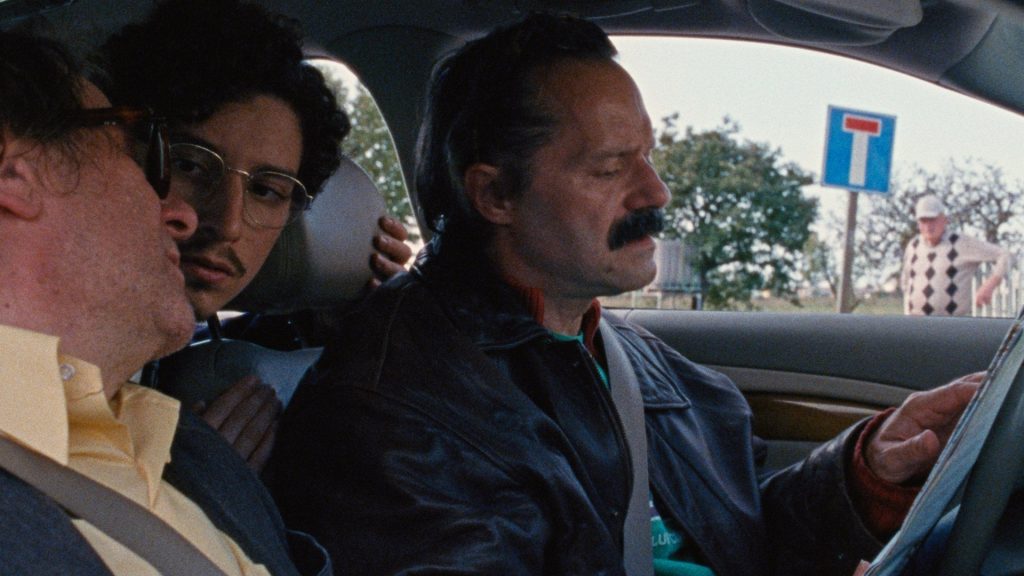
The film begins in the early-2000’s. A CEO of some company flies into a construction site. One of their veteran workers is retiring. He gives him a gold Rolex watch as a gift. Flash forward to the present. There are two fifty-something men at a bar in Veneto taking in what should be their last drink. The waitress tells them the bar is closing and they’re drinking non-alcoholic beer. Talk about a disappointment for a last drink! The two men, lifelong friends Doriano and Carlobianchi, decide to go on a trip to Venice and to a bar that serves a real beer!
They make a trip to the nearest town that will serve alcohol. They go over to a night club. It’s a country-western club. They have no problem taking in a real beer. They also notice something. There is a young male who looks unhappy. His name is Giulio, an architecture student. He has an exam on his mind and he is unhappy with how things are going for him right now. Especially after a woman he took interest in turned him down. Doriano and Carlobianchi talk to him and even offer to take him along for the ride for their ‘last drink.’ Giulio reluctantly accepts and is uncomfortable being part of this trip. Especially since he wants to return home to Mestre.
Now Doriano and Carlobianchi are a colorful bunch. Carlobianchi told Giulio the night before he holds the secret to the world. He also talks of always having one last drink because ‘it’s still yesterday for us.’ The two of them have drink after drink wherever they go. The two of them also talk about how the were construction workers who used to work on a highway in the to connect Lisbon through Treviso ending in Budapest. The two also talk about how they’re waiting for a friend named Genio whom they claim has money buried somewhere to fly in. At first, Giulio is uncomfortable with the two and can’t wait to take the train home.
Over time, Doriano and Carlobianchi are able to find temporary overnight shelters for themselves and for Giulio. They know how to create tabs and do clever talk to get it. As they go through various places, they talk about the glory times they used to have as partying young adults in the 1990’s and of their success in construction work before the 2008 financial crisis. The work they’re proudest of is the highway that links Lisbon through Treviso to Budapest. Since then, they had to swindle and scam their way into getting money whichever way they can. One job including stealing boxes of sunglasses and selling them. They even visit the house where they used to live in and come across one of the big boxes of unsold glasses. Giulio soon reluctantly warms up to the two men and starts liking them more.
Soon it becomes obvious to Giulio that this trip to anywhere will soon become a trip to somewhere. Within their talk of their ‘glory days,’ they also talk of Genio: a friend who helped them along with their scams. They mention that Genio was the lucky one as he managed to flee to Argentina before he could get caught. Genio is expected to fly in that day: the first-ever time since his ‘escape.’ Maybe Genio can give them some money. During the wait, they again make it to site after site where they either enjoy it or try to swindle something out of someone. Even a place the two used to stay at and there are still photos of them during their young days of the early 1990’s. Of course there are trips to bars for one last drink after last drink. At one bar, Doriano finds the retiree that received the watch that day. He’s at the slot machines hoping to get rich. Then they do meet up with Genio right at the airport. They pick him up and talk to him.
It’s not clear if they were able to get money out of Genio or not but it is made obvious that they now have the money. They are now able to pay some things off. Finally Giulio has his ticket for Verona. The two men help him along and see him off to his departure. Giulio tries to get a message the two men are trying to tell him but the train windows block all sound. As Giulio relaxes on the train, the two follow his train by car and give him well-wishes. Back to the regular daily life for Doriano and Carlobianchi, but just after having a cone of lemon gelato.
There have been numerous road trips films before. This is a unique story of two close broke friends who do a road trip just for the sake of taking in a drink and having a good time. When they meet a young adult who is bogged down with his cares, then it becomes a case of the trip being an actual destination and things to do. Over time, they reminisce over past memories: both good and bad. They expose secrets only they themselves know. While the young man doesn’t welcome this traveling around at first, he learns to relax and enjoy it. When he finally does board the train for Verona, it’s possible the two men left something behind with him. We hear near the beginning that Carlobianchi believes he holds the secret to the world. We never hear him tell the secret but I guess it may be in this story, Giulio’s time with these two men help him witness this secret for himself. That could be it that Giulio just sees or experiences the secret instead of hears it.
I don’t know if it’s been done before but it makes for a good story that feels more like an experience than a story. What also makes this story is that Doriano and Carlobianchi are not your typical pathetic slobbering drunks They’re drunks that are charming and they know how to get the best of life, no matter how dour it is for them. The likeability of the two is what makes this story not only watchable, but enjoyable as well. They also hint to things that are not made clear. Like is it possible the two are also secret boyfriends? Hey, a bit of mystery is an added perk to the story.
One thing you’ll notice as you watch is that the set places and towns they visit add to the atmosphere of the story. This being a road trip story, the film does a great job in telling its story around the locations and scenery of the region. The area of Northern Italy is on display from its old buildings to the Venetian coast to the landscape. The addition of the geography is another addition to the atmosphere of the film. Places that are part of the moments of the past that are significant to the two protagonists’ lives add to the story. Even some of the more run-down buildings look add to the story being played out.
If there’s one flaw about this film, it’s that you’re often left wondering what the point of the story is. You have two men who go from town after town for last drink after last drink, bring a young student along for the ride, pick up a colleague at an airport and go from place to place reminiscing of old times. The story can get confusing but it does reach an understandable ending as the two men see Guilio off at the train station and even follow his train. The middle may be disjointed but the beginning and end made the point of the film better to understand.
This is a great film for writer/director Francesco Sossai. Four years ago at VIFF 2021, he won the Vanguard Jury prize for his film Other Cannibals (Altri Cannibali). That film helped pave the way for Sossai to become assistant director for Mission Impossible: Dead Reckoning. This film is different than his other major films. The trip of two men wanting last drink after last drink and bring a young stranger along the way makes for a warm charming story. This film also gives a certain feel that will remind you of many of the more beloved Italian films of the past. I noticed that as I was watching and I sensed that’s what Sossai was aiming for. This film has been nominated for Un Certain Regard at Cannes and for the CineCoPro award at the Munich Film Festival.
The two leads, Sergio Romano and Pierpaolo Capovilla, have a great chemistry as two lifelong friends whom you will sense are lovers. The two of them and their ability to see the ability to celebrate the joys of life and laugh off the negative as they have drink after drink made the movie a joy to watch. They will succeed in making you like them. Filippo Scotti is also great as young Giulio. His performance was very believable as the young shy student who’s cynical of the zest for life of the two, but warms up later on. He made a great addition to the story. The cinematography of Massimiliano Kuveiller is another standout achievement. Showing off the places of the visit with great angles adds to the atmosphere of the film.
The Last One for the Road is more than just a road trip film. It’s about two men going through the good times and the bad times and the young stranger half their age they befriend. Although it may get confusing at times, it makes for a charming relaxing story.
And there you have it! That’s the last of the films of the Vancouver International Film Festival I have to review. My wrap-up blog is coming soon.
 Jon The Blogcentric