Oscars 2025 Best Picture Reviews: Part Four

It seems like this decade, there always seems to be at least one foreign language film that gets a Best Picture nomination. This year, there are two films. Both are nominated for Best Picture and Best International Feature Film. Their shared nominations should make for an interesting rivalry.

Both films are different in both the language, genre and theme of the story. Both films are also excellent in getting their story to connect with the audience. Here is my look at the Brazilian film The Secret Agent and the Norwegian film Sentimental Value.
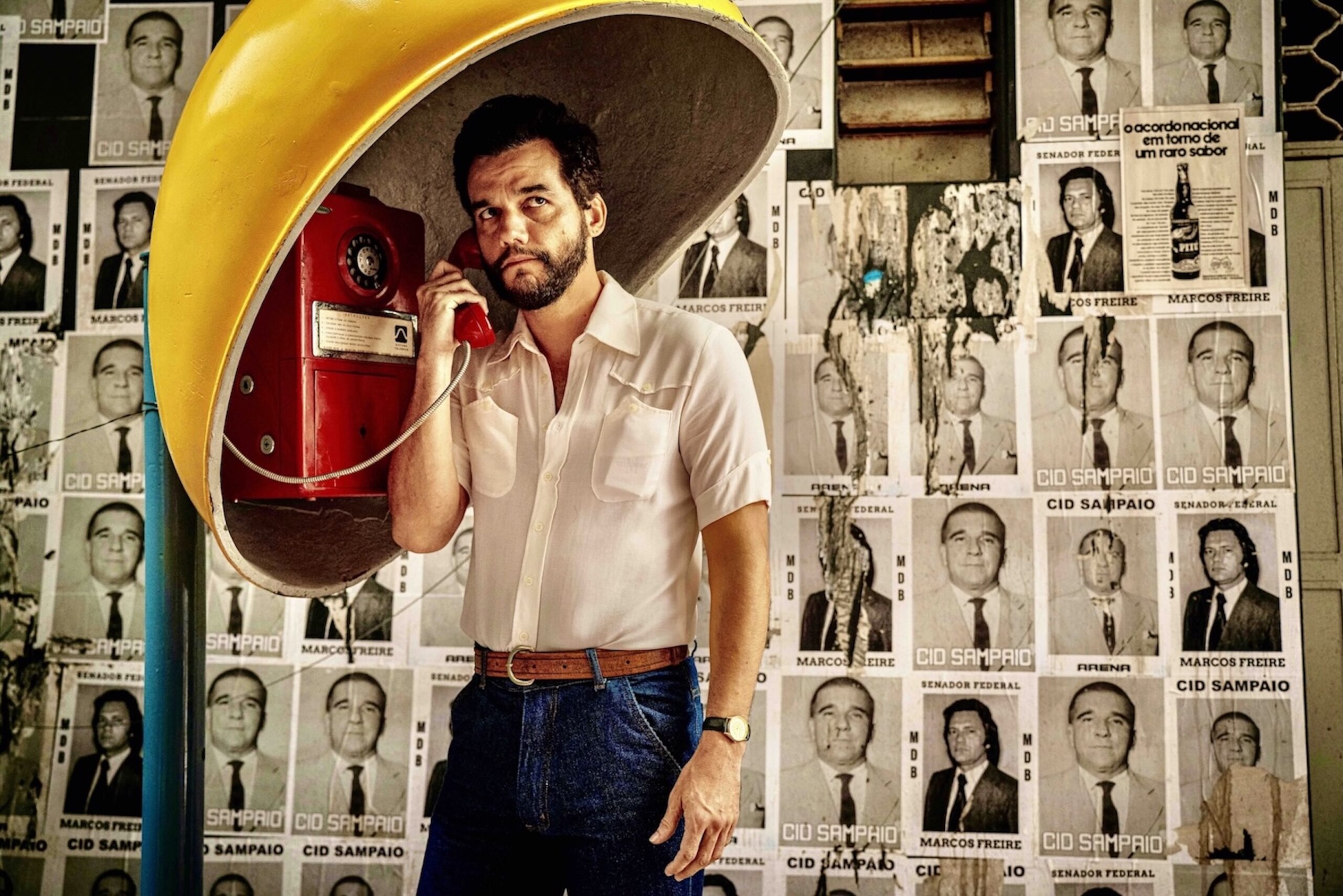
The Secret Agent (O Agente Secreto)

It’s interesting how Brazil won the Best International Feature Oscar last year for I’m Still Here and it looks heavily poised to do it again this year. It’s also interesting that just like I’m Still Here, it has the subject of the dictatorship Brazil was under from 1964 to 1985. It was a military dictatorship that formed after a coup d’etat and it committed its biggest power and intimidation during the 1970’s. There were kidnappings and murders of many people who ranged from political rivals to intellects to dissidents. While I’m Still Here is based on a true story, this film tells of a fictional story. This story is of a former college professor named Armando who goes into hiding in his hometown of Recife in 1977 during Carnival. He had already lost his wife who was also an intellect, his 7 year-old son has to be raised by his in-laws, and his hiding place where he gets his refuge has other dissidents including Angolan War refugees. He has to adopt a new name, Marcelo, and hold a behind-the-scenes government job to avoid being killed by a hitman. The whole time, he senses a hitman is after him and he finds the frustration of it hard to deal with. To add to it, his city records job allows him to find out information about his own mother, whom he remembers very faintly.

It’s not just hiding out from assassination but as corrupt leaders are in Recife. They’re first called to the city as a human leg was found in the carcass of a shark. One of the leaders has a chance meeting with Armando at the city’s records office he works at. He tries to offer him friendship and protection, but Armando is turned off his arrogance. Especially after he calls his friend a Nazi. During that time, word does hit an executive in Sao Paulo whom had an altercation with Armando years ago and has a vendetta against him. Armando feels his days are numbered and feels he has to make his testimony recorded by a close friend, Elza, who runs a resistance network and owns a movie theatre. It’s after the recording is made that the friend reveals he has a contract killing against him. Just as an assassin has been hired in Sao Paulo to go to Recife and kill him. This is all flashed back as a history student in the present comes across news stories and recordings of Elza and her network and compiles it for Armando’s son who works at the blood clinic that now takes up the former location of the movie theatre.

The film also mixes a lot of ironies and connections to others with the film. There’s the leg in the shark around the time of Jaws being in cinemas. That leg and Jaws in theatres promotes a lot of ridiculous ‘Hairy Leg’ stories published in the newspapers. There’s the civic records job Armando has while he’s in hiding and he can take advantage of job to access records of the information of his mother whom he faintly remembers. There’s a cinema showing Jaws run by Elza of the resistance network who takes the time to record Armando’s account of why he’s being hunted down. There’s Flavia accessing the mp3 of that recording and putting it on the USB which she gives to his son Fernando who now works at the blood clinic where that cinema used to be, and where Fernando even saw Jaws with his grandfather. Like Armando with his mother, Fernando has faint memories of his father. Flavia helps his to understand him better.

This is a unique story. The story of a man in a corrupt country who knows he’s being hunted down is full of omens of a possible death. It starts as when he first arrives in Recife and sees the body of a would-be robber at the gas station. It continues as he sees suspicious costumes in preparation for Carnival. Even of other incidents of death and nightmares got him fearing the worst. The story also adds in some humor with the leg found in the shark and while Jaws is in theatres adding humor of ridiculous news stories about ‘Hairy Leg.’ Even the leg thrown back into the ocean and it being rediscovered by a gay couple adds to the humor. There are times when the story gets confusing as we see the film often go to scenes in the present of student Flavia researching all this information about Armando and you often wonder what it’s about. It’s at the end after we see the past played out and Flavia discovering all the information that it’s to be on a USB as a gift to his son Fernando who’s now a blood clinic worker. It’s almost like the story is making peace with the past as an average college student helps Fernando get to know the father the father he never knew. Even how we see other men gunned down by the hired assassin but only learn of Armando’s assassination days after through a newspaper research from Flavia leaves us thinking maybe those scenes played out in the film for the better.

This film is an accomplishment for writer/director Kleber Mendonca Filho. Although it’s hard to understand why a story about a man being pursued by assassins in Brazil during a dictatorship would add in some bizarre humor and a subplot of a severed leg, Filho succeeds in making this story work. In an interview, Filho intended for this story not just to be about a man on the run but also about life in Brazil. He wanted to capture both the positive and the negative sides of living in Brazil during a time of a staunch dictatorship. He presents what is a fictional story of a man on the run from a possible political assassination, but it’s presented like a story that mirrors what it was like at that time. Armando could represent so many real-life people who were victims of this tyranny. The film also reminds us even as people were limited in their opportunities and no one was immune to being killed, people still swam in beaches, people still celebrated Carnival, couple still had sex in the parks at night. I feel he does a good job of making the film as much about life in Brazil as it is a story of a man knowing he will be killed soon. Even as it goes to the present with Flavia and Fernando showing the democratized Brazil and their lives, Filho does capture the times as well as he tells the story.

This film is also the breakthrough for actor Wagner Moura. Wagner has had an extensive career in Brazil but he’s also been seen in popular fare like 2014’s Rio, I Love You, 2022’s The Grey Man and 2024’s Civil War. In this film, he not only plays Armando in 1977 but also Fernando in 2025. Playing both the father who fears for his life and the son who’s able to live a life without fear is an excellent performance. His acting is less about being showy and about telling the story. Even in his moments of silence, you can sense his feelings. It’s no wonder it’s received a lot of acclaim. The film doesn’t develop too well on the performances of the supporting actors but if there is one supporting performance that stands out, it’s Tania Maria as Dona Sebastiana: the landlady who works to hide other people hiding out from other possible political killings. At first, she comes off as a colorful simple character but it’s when Armando leaves that she really shines in the monolog of how life is difficult but there is still hope for the better. Carlos Francisco is also good as the grandfather who is unhappy with the death of his daughter and fears for both the lives of Armando and Fernando.

This film first caught attention when it achieved a huge amount of buzz after the Cannes Film Festival. Moura won Best Actor, Filho won Best Director, the FIPRESCI Prize and the Prix des Cinemas Art et Essai and was nominated for the Palme d’Or. The film has also won major prizes like the Best International Film awards with the National Board of Review, Golden Globes and the Critics Choice awards.

The Secret Agent is as much an intriguing look at Brazil back in the 70’s as it is an intriguing story of a man who’s the target of a political regime. It mixes drama with dark humor and tells of a story that appears to be about making resolve with the past. A past Brazil is struggling to heal from.

Sentimental Value (Affeksjonsverdi)

If there’s any film that threatens to beat out The Secret Agent for the Best International Feature film Oscar, it’s this film. This film is a complete polar opposite of the former. This Norwegian film tells a story of a family of wounds reopening and of issues unresolved. It’s not just an issue of torn family ties but also conflicts of the arts. It all starts with the Borg sisters’ death of their mother and their estranged father Gustav, a film director who owns the house, possibly being resold. As the sisters are going through grief, they have the added difficulty of the father returning and the hard feelings they feel towards him. Nora continues to harbor bitterness while Agnes tries to get a better understanding of him. Nora’s bitterness is so bad, she refused a role in his latest film work months earlier which goes to an American actress named Rachel Kemp. The film is an attempt from Gustav to revive his fading career and is now shooting while Nora and Agnes are trying to sort out things after their mother’s death. You can understand why this would be the source of a lot of family friction.

The film isn’t just about an estranged father re-entering his daughter’s lives at the most inconvenient time. The issue of how a daughter who grew up to be a theatre actress senses she’s shunned by her filmmaking father. He never once saw her act on stage. That adds to the friction and also has a lot to do with why Nora has more animosity than Agnes towards the father and may explain why she rejected the role. His revelation of how he rejects theatre even adds to the friction of the hard feelings. It takes the other two to help Nora achieve her resolve. First, it’s Agnes who does research on her father and his family background which includes revelations of his mother dealing with the torture of Nazi soldiers as a member of the resistance during World War II. Since the lead role is the same first name as her grandmother, it’s as she studies the torture her grandmother endured and how she passed her trauma onto her father is how she understands the film is a telling of the past he and his family went through. It’s as Rachel continuously goes through the role with great difficulty and has a conversation with Nora that she feels the role is more suited for Nora and for her. It’s there Rachel sends the message to Gustav that Nora was meant for the role. Even her struggles with trying to speak her lines in the Norwegian language in the role sends that message. It’s through art that family friction happens and it’s through art that healing is achieved. The theme of art as both a divider and reuniter is as much a theme of the story as World War II causing wounds that hurt long after the war has ended and even wounds that hurt loved ones even after the death of those who were hurt. Those themes are a unique way of telling this story of hurt and healing.

This film is an excellent work from director Joachim Trier. In Norway, he made a name for himself for directing three films that were part of the ‘Oslo trilogy’ which focused on the periods of life of certain people in Oslo. The only one of which I saw was The Worst Person In The World. For those who have seen all three films of the Oslo Trilogy, it will tempt some to think Trier added in a fourth film. Most notably since it’s set in Oslo, it’s another story he co-wrote with his collaborator Eskil Vogt and it features many of the actors he commonly collaborates with. This however is different. Firstly, Anders Danielsen Lie, who had leading roles in the trilogy film, has a supporting role in this film. He’s more in the background as Nora’s romantic interest. Secondly, this is a story where the arts are a theme to the film and are as a source of both friction and healing. It took a death and a film role of the father’s mother to help his daughter heal the wounds caused by a past separation. This is a great form of storytelling and it plays out very well in the film.

This film is also known for its standout acting. The biggest standout is lead actress Renate Reinsve as Nora. Already, Reinsve is being hailed as the greatest Norwegian actress since Liv Ullmann. Her performance as an actress daughter who’s thrown into family friction and how it affects her acting has a lot of dimension and we’re able to feel Nora’s feelings of anger and hurt. Also excellent is Stellan Skarsgard as Gustav. His portrayal of the father who knows he hurt his daughters and seeks to make resolve after their mother’s death is another excellent performance and it’s through the silent moments you can sense his thoughts. Inge Ibsdotter Lilleaas is also great in her supporting role as the more forgiving Agnes. It’s her performance as the one who’s trying to help solve the mystery who helps to add to the theme of resolve and forgiveness. Also great is Elle Fanning. Although she’s the one who speaks the least Norwegian, it’s her performance as the American actress Rachel who is able to also help Nora heal and eventually accept the role.

This film has received a lot of awards acclaim before this year’s awards season. Back during the Cannes Film Festival, it was nominated for the Palme d’Or and Joachim Trier win the Grand Prix award. The film was also nominated for eight European Film Awards and won six.

Sentimental Value is a deep film of trying to mend family ties and generational trauma. Even though it’s in Norwegian, many people can relate to the messages and emotions conveyed in the film. That’s what most makes this film worth watching.

That completes my fourth review of the Best Picture nominees. All that’s remaining are the last two nominees to review.

Movie Review: It

Pennywise
Bill Skarsgard plays Pennywise, the creepiest clown in movie history, in It.

Until now, It appeared to be the one big Stephen King novel that has not had a big screen adaptation. Sure, there was a miniseries back in 1991, but nothing beats a big-screen showing. Finally it’s here, and the excitement is just beginning!

The story beings in the fall of 1988 in Derry, Maine. Sick and in bed, a stuttering Billy Denbrough makes a paper boat for his younger brother Georgie to play with on a rainy day. While playing with the boat, it falls into a sewer. Georgie goes to get it, but comes across a clown named Pennywise who manipulates Georgie by biting off his arm and taking him down the drain.

The story progresses to June 1989: the end of the school year. Bill has found himself with a clique of three misfits which include bespectacled big-mouth Richie Tozier, sickly asthmatic Eddie Kaspbrak, and fearful Stanley Uris who’s the son of the rabbi. End of the school year won’t mean the end of torment from a group of bullies led by Henry Bowers, son of a police officer. Bullying is Henry’s favorite past-time as he loves tormenting almost every kid. His last victim on this last day of school is Ben Hanscom, an overweight kid new to the town. The bullying however does result in Beverly Marsh, who’s bullied by the popular girls in school and called a ‘slut,’ coming to the rescue. She takes a liking to Ben as she learns he too likes the New Kids On The Block. She doesn’t appear bothered by her own bullying at school because she gets it worse by her father at home. Last day of school just means work on the farm for Mike Hanlon, an orphaned African-American boy who’s raised by his grandfather.

The abduction of Georgie is still very much on Bill’s mind. Actually it’s on the minds of most people in Derry. Derry has a dirty secret that children disappear six times more often than the national average. Bill tries to get his friends to locate the possible whereabouts of Georgie, believing he may still be alive and in a marshy wasteland known as the Barrens. Ben does research into the town of Derry. He learns of the explosion of 1908 which killed many children. He also learns of how children of Derry go lost most frequently: a curse going back centuries. Ben encounters a headless boy in the basement and runs off, only to be encountered by Henry’s group. Ben successfully fights them off and runs away bumping into Bill’s group. Adding to the drama of Derry, the group including Ben find the sneaker of a young girl. Patrick Hockstetter, one of Henry’s bullies who is chasing after Ben, is killed by Pennywise and becomes the latest of the missing.

The following day, all five of the boys have some type of nightmarish encounter with It. Later they encounter Mike Hanlon after he was bullied by Henry’s group. Mike becomes part of the group which now calls itself the Losers Club. Mike also possesses some knowledge about this entity and how it’s haunting Derry. Later in the summer, the group get together to do research into this entity that haunts them each. Bev finds her way into the group, thanks to Ben. They come across some interesting facts: they are all haunted by the same entity in the guise of what they each fear; awakens every 27 years to prey on children before returning to hibernation; and uses the sewers to travel about the town upon where a shabby abandoned house on Neibolt street is built.

They see the house on Neibolt as a chance to get to It. Most are afraid, but Billy wants to do this for the sake of finding Georgie dead or alive and to prevent other children of Derry from receiving this same threat. All agree the first time, but after having to wrestle with Pennywise the first time. Inside, Eddie breaks his arm, making him vulnerable to Pennywise. Fortunately Bev impales Pennywise, forcing him to retreat vowing revenge. However the group is threatened to disband as Eddie’s mother is furious with what had happened. Bill insists on continuing to fight It, but all except Bev and Ben leave.

August comes. Bev is threatened by her abusive father and threatens to rape her, but she kills him with a toilet lid. Unfortunately Pennywise abducts her. This prompts Bill to reassemble the Losers Club to rescue Bev. Even Eddie returns to the group after he learns that his asthma is fake and drug-induced by his mother. Meanwhile It goes into the guise of a children’s television host to compel Henry to kill his abusive father and then kill the Losers Club over at the Neibolt house. Henry fights Mike only to pushed down a well to his death. Inside the Neibolt house, they try to make their way to It’s central location, only to have Pennywise bite Stanley’s head with It’s sharp teeth. Soon they make their way to a cooling tower where they find It’s lair, containing a mountain of decaying circus props and children’s belongings. They also find Bev floating in a catatonic state. The group are able to bring Bev down and it’s Ben’s kiss that restores her consciousness. Now it’s up to the Losers Club to defeat It. The film ends with a spectacularly haunting ending that’s both triumphant, tragic and in anticipation for what’s next.

Adapting a Stephen King movie to the big screen is very much a case of hit-or-miss. Not everything can be adapted from the novel so the writers and directors have to work to bring it to life within two to two-and-a-half hours. That would mean a lot of picking and choosing and a lot of pairing down. There have been a lot of cases where it has worked excellently like Carrie, Christine, The Shining, Stand By Me, Misery and The Shawshank Redemption to name a few. There have been duds too like Maximum Overdrive, Needful Things, Dreamcatcher and Cell. YouTube countdown channel WatchMojo even did a countdown on how movie adaptations of novels actually differed greatly from the real thing.

Before there could be a big-screen adaptation of It, the film had to be organized. This is a movie that took eight years and the efforts of three directors to develop and loads of casting changes. It started when David Kajganich decided to adapt the screenplay when he learned Warner Bros. would be in charge of it. In 2012, direction then went into the hands of Cary Fukunaga. He had a vision of the story and originally planned to cast Will Poulter as Pennywise and Ty Simpkins as Bill. That changed when New Line Cinemas stepped in. Fukunaga withdrew from directing feeling that New Line and their concern with budget cuts was interfering with the creative process.

Then in July 2015, it was announced Argentinian director Andy Muschietti would be signed on to direct with Fukunaga remaining as scriptwriter. Muschietti has had a modest success that took off overnight with his 2008 short film Mama being expanded to an English-language release in 2013 with Jessica Chastain as lead actress. Casting changes came about with a new Bill and a new Pennywise most noticeable. Muschietti is the only director that went the full distance.

Then the adaptation of the story. This adaptation from It makes a lot of notable changes from the original novel. First we must remember the novel was released in 1986. The characters as children were set in the 1950’s. The characters as adults were set in the 1980’s. Here, we have the child characters set in the summer of 1989: a summer that’s close to my heart, too. Setting that part in the 1950’s would seem like a good choice as made evident in Stand By Me, but it could also be a hindrance. 2001’s Hearts In Atlantis was set in the late-50’s and it flopped. I feel it made sense to adapt the Losers Club part of It to 1989. It worked here.

Then there’s the choice of whether to do the full novel in this It movie or have this as a movie series. We’re talking about a novel that first required the format of a mini-series in order to get its first adaptation. It made sense to have the first It movie with focus exclusively on the Losers Club as children and then have a second It film possibly with the Losers Club all grown up. It would also be a gamble as this first It film would have to avoid performing poorly at the box office to get a second It film happening, despite the chances of that being extremely slim. I’ll mention later why they won’t have to worry about that.

One thing we shouldn’t forget is that this is a Stephen King film. Adaptations of Stephen King novels have been known to be a case of a lot of paring down of the story to mish-mashing to including only one part of a multi-chapter novel. Stephen King’s novels have a lot of common elements. For those unfamiliar with Stephen King novels, the first common element is the setting in a smalltown in Maine, most commonly the fictional town of Derry. Another is the case of main child characters being the misfits in a harsh time in their lives. Another is the situation of parents who are either negligent, manipulative or downright abusive to their children. Another is of religious figures or religious people with some even possessing a warped sense of blind faith. Another is the element of evil that King works into his villains.

The film included a lot of elements common to a Stephen King story. It’s set in Derry and the misfits form a clique of their own: The Losers Club. As for parents: Billy’s parents are too distraught with the loss of Georgie to pay attention to his issues; Stanley faces the pressure of being the rabbi’s son; Eddie’s mother has a case of Munchhausen syndrome which explains the fake Asthma she induces with pills; Henry Bowers’ father uses his gun to ‘traumatize’ sense into him; and Bev’s father… I don’t want to go there. Religion or religious figures are not seen as so much of a threat, curse or interference in It, but some could argue Stanley’s strict religious upbringing made him a fearful person. As for evil, the character of It is one that messes with the characters minds and fears it took a group of seven children to solve who It is and to end It once and for all.

The film also had to leave some things from the novel out. It’s not just changing the setting of 1958 to 1989. There were some guises of It in the novel that didn’t appear on film. Henry’s bullying of Stanley includes anti-Semitic slurs in the novel. Here in the film, it’s limited to throwing Stanley’s yarmukel like a frisbee. Patrick Hockstetter is not killed by It as Pennywise, but It as an army of leeches. Henry attempts to kill the Loser Club with his friends Vic and Belch in the novel, but he’s on his own in the film. In the novel, Bill confronts It through the Ritual Of Chud. And finally, Bev has sex with all six of the Losers Club boys in the novel after they make a blood oath. You can understand why that ending was changed to what it is.

In the end, Andy Muschietti delivers a winner of a film. He was not the most experienced director when being hired on to do It but it paid off and delivers an excellent thriller that frightens and gets one excited for the next It film. Kudos to scriptwriters Chase Palmer, Fukunaga and Gary Dauberman for putting together an excellent adaptation and making a lot of choices that worked. The story of the Losers Club bonding as one to fight It gives one memories of Stand By Me and even a lot of similarities to Stranger Things. Having Stranger Things star Finn Wolfhart adds to that factor even under those big glasses. The film also did a good job of adding humor into the film. The film is situated around a bunch of 12 year-olds so having some humor adds to it, despite how dark a story it is. Plus the music from 1989 adds to it too.

For those who are complete ‘virgins’ to It— I’m taking about those who have never read the book or seen the miniseries– it will keep them intrigued and scared. It will also seem confusing at first with most being haunted by Pennywise but others scared by other images too. In the end, it will all come together. All are being haunted and tormented by It. They will first think Pennywise is It, but It takes the guise of many figures like Bev’s abusive father, the children’s TV show host that pushes Henry to commit murder, the animated picture from the painting that haunts Stan. Pennywise is the most dominant guise of It and used mostly to lure young children. It’s right and proper that It meets its match as Pennywise and from Billy.

For those who are fans of the novel It and even the miniseries, they will admire that this is a film that captures the best and truest aspects of a Stephen King horror thriller. It doesn’t stray off like so many other adaptions nor is it a victim to too much studio tweaking of the story. Sure, it sets the Loser Club part of the story 30+ years of when the novel sets it, but the characters of the Loser Club and those surrounding them are very much in tune with the novel. Most of the incidents that happen in the movie It closely match what happens in the novel too. I’m sure fans of Stephen King novels will be proud of this movie. Also I feel Stephen King fans will feel that the producers made the right decision to have this first It movie focus strictly in the Losers Club story and have the incidents of 27 years later focused in It: Volume 2, which I will elaborate on in conclusion.

However the best thing about It is that this is a rare case of a horror movie that delivers excellence. The genre of the horror movie is very hard to master. Most horror movies often come across as junk loaded with blood, gore and other elements for the sake of shock value. Us 80’s kids had that with all the Friday The 13th and Nightmare On Elm Street movies. Millennial kids got that with the Saw movie franchise. Most of the time, these horror films become horror ‘comedies’ because of how stupid the situations are and how the actors are told to act idiotic on purpose. It takes a lot of effort to deliver a horror story on screen with a good story and good character development to add to it. It’s even possible to create a masterpiece of a horror movie. Movies like Psycho, The Exorcist, Carrie and even Get Out from this year are some of the best examples. Even good acting can come out of a horror movie as Sissy Spacek’s performance in Carrie earned her the first of her six Oscar nominations as did a nomination for Piper Laurie. It delivers in having a well-written script, a well-directed story and dead-on acting from the actors. This should be a template on how to do a horror movie right.

Jaeden Lieberher did a very good job in playing Bill Denbrough, especially in making the stutter look natural instead of wooden, and in making the quest to fight It a personal battle for Bill. The best thing about Lieberher was he was good at being unselfish with his lead role as he knew the other members of the Losers Club had their moments too. Sophia Lillis was possibly the biggest scene-stealer as tomboy Bev as was Finn Wolfhart whose role of Richie Tozier will entertain you, but also make you want to tell him to shut up! Good performances included Wyatt Oleff as the fearful Stanley Uris, Jeremy Ray Taylor as Ben the misfit who finds his way, Jack Dylan Glazer as sickly Eddie who develops an inner strength over time and Chosen Jacobs as the farmboy who becomes a help to the clique. All seven of the Losers Clubs kids not only had to play their parts but also make their characters grow. We see it in all the characters, especially Bill. Bill didn’t lose his stutter but he gained a new inner strength.

The actors in the Losers Club did a good job in playing salty-mouthed 12 year-olds that were not afraid to let loose, get sassy and even act like jerks at times. That’s definitely an appeal as Hollywood has a way of making child performances to innocent or ‘sugar-coated.’ Just turn on the Disney Channel and you’ll see what I mean. The kids of It were very unlike the squeaky-clean crystal-clear purity-ring-wearing Disney Channel kids; more like the foul-mouthed kids of Stranger Things. And all the better for it.

It’s not just the Loser Club that delivers in terms of acting. There’s also Bill Skarsgard who did a good job in giving Pennywise his sinister demeanor. There’s also Nicholas Hamilton who succeeds in transforming Henry from simply a jerk bully to being possessed by It’s evil leading to his own death. The mix of music of 1989 hits and the score of Benjamin Wallfisch blended well and fit the scenes of the film well. The visual effects of the film are also excellent and needed to be top-notch to make the movie work.

Already It has broken a load of records in its opening weekend. It set a September opening weekend record of $123.4 million, breaking the old record held by Hotel Transylvania 2 of $48.4 million: more than 2 ½ times that! Usually September is a quiet month for movies and they usually yield low box office results. Mainly because people had their fix during the Summer Movie Season. Summer’s over and now it’s time to get back to regular life and wait for the movie excitement to return in November as is custom. It proved that the September movie season had something to deliver, and right on the weekend after Labor Day, of all weekends! Usually that’s the lowest-grossing weekend but not this year! Other records It broke and feats It achieved according to Box Office Mojo are Widest R-Rated Releases, Widest R-Rated Openings, Highest-Grossing Fall Opening Weekend, Second-Highest Opening Weekend for an R-Rated film, Highest Grossing Stephen King Film (in just five days!), right now the third-highest grossing R-Rated horror film and second only to Deadpool for the biggest opening weekend for an R-rated film! And I’ll bet there will be more to come!

SPOILER ALERT: Do Not Read This Paragraph If You Don’t Want To Know The Ending! The film gives evidence that this will be the first It movie and there’s a Volume Two coming. It’s in the end credits and it’s very well-hinted when the Loser Club makes a ‘blood promise’ to return to Derry in 27 years if It returns. There’s already talk of It: Volume Two on IMDB. There’s a lot of talk about it from Muschietti to the producers to even the young actors. As of yet, nothing is finalized. It’s possible one could assume the film could be set in 2016–27 years from the first It— and Pennywise makes a return to the Losers Club all grown up. It’s very possible the original Losers Club from this film might have a low presence in Volume Two. That could help or hinder the story because all seven of the Losers Club helped make this adaptation of It a hit and their absence might mean the absence of their charm in Volume 2. However nothing is finalized and it leaves those that saw It in big anticipation of what’s to come.

It delivers as a Stephen King horror movie that has all the right moves–a rarity for horror movies as a whole– a hotly-anticipated Stephen King adaptation that works on the big screen, and a big reason for people to go to the movie theatres in September! Some say this could be the best Stephen King movie since 1976’s Carrie. You be the judge.