VIFF 2024 Review: Paying For It

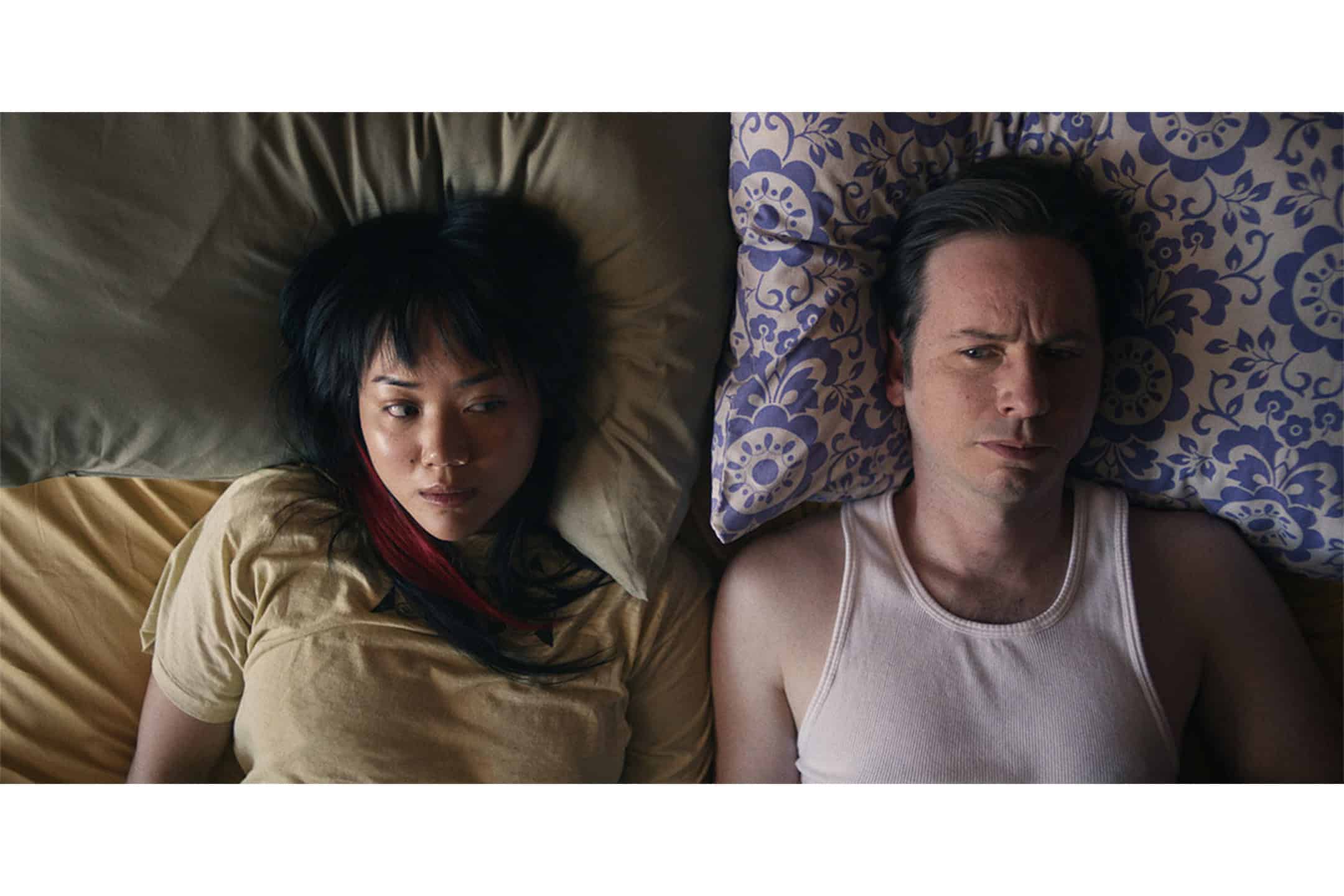
Emily Le and Dan Beirne play a couple who try open love and go in unorthodox directions in the oddball romance Paying For It.

I first took an interest to Paying For It knowing it’s directed by Sook-Yin Lee. I had no clue of what to expect. Boy was I in for a surprise!

Chester Brown and Sonny Lee are a Toronto couple in a tough situation. They’ve had a romantic relationship together for years and do a lot together, but they haven’t had sex in a long time. Both Chester and Sonny come from two different worlds in the arts. Sonny is a video jockey on the music channel Max Music and Chester is an illustrator/author of cartoon books that detail his personal life. Sonny has a few friends at her place of work while Chester frequently meets with his work colleagues from the same writing community and has a close friendship bond with them. Sonny has a lot of success but Chester is struggling to make a name for himself. Chester is quite introverted and keeps to his circle while Sonny’s not afraid to meet new people.

Sonny recommends they try open love. Maybe they were or weren’t meant for each other and maybe they need time away to figure it out. Sonny being famous on national television has no problem finding other men. Chester on the other hand struggles. His author friends warn him jealousy will sink in pretty soon. Chester does become frustrated how Sonny is able to find many a nightly partner. It even reflects in his illustrations. Chester tries an unorthodox route advised from one of his writer friends: prostitutes. Besides, he’s given up on romantic love.

Over time, both find a lot of pleasure from what they get into but they struggle to find the one. Every other man Sonny hitches up with, he’s a great passionate lover but they’re not as fun as Chester and they don’t relate to her as well. Also at work, she learns one of her female colleagues is attracted to her. Meanwhile each prostitute and escort Chester gets involved with involves something complicating or some kind of discomfort. Many are willing to give Chester what he wants that night but most of them completely back off of any commitment. Some even have demands of their own. Despite it all, Chester is finding a quality in this he feels is missing in monogamy.

Simultaneously, both have difficulties and challenges at their own jobs. Sonny had no problem being a VJ while the alternative rock wave of the 90’s was riding high, but the wave has become a ripple and in came the tsunami of boy bands and other teenpop acts Sonny does not like introducing at all. Over time, Chester and his friends question about what’s going on with his many hook-ups and it affects the art for his latest literature. Especially since Chester hasn’t found ‘the one’ and it’s frustrating for him.

Then things change over time. Chester’s writing career and the careers of his writer-colleagues get a boost. Chester also spends the night with an escort who’s her own madam and it changes his life. Sonny, on the other hand, won’t be silent about the frustration with her job and her life, even on live TV. That eventually leads her to be dropped form Max Music. The two eventually reunite during a tragic moment. The death of her dog. It’s as they mourn together they learn they had something so special, no new love of theirs can replace that, even though they have to move on.

The film is about this complicated thing called love. I’m sure a lot of you look at the situation in your relationships and find yourselves asking why can’t we just love? Why do we have to make it complicated? This film itself is about that human fallibility of making love more complicated than it should. In this case, it’s not just creating the freedom of an open relationship but also the types of people both of them date during that time. Then there’s the mix of the two professions that are similar that they’re both in art or entertainment, but very different. Then there’s the talking with friends. The people they most trust to confide into and divulge their personal feelings. Then there are the changes in their lives. Then there are human idiocies and their attitudes. All that is what makes love more complicated than it should be.

Basically this is a story about a relationship that was doomed to end. Chester and Sonny are close, but complicated. The expired birth control should send that message. Eventually Chester and Sonny grew as different people and learned in the end, they were best as friends. Chester may have found a new love with an escort who’s her own madam but his relationship with Sonny made clear he’ll never have a closeness with another that’s the same. Sonny may have found men that were better at making love, but she learned they all made lousy partners. It was Chester who had no problem with her squirt gun or her dog or any of her other oddities. The ending gave a message I have seen often enough where two in a relationship couldn’t succeed as a couple but they could succeed as soul mates.

The film does give a lot of humor and in a lot of ways is somewhat biographical of both Brown and Lee. For those that remember MuchMusic during the 80’s and 90’s, you will remember Sook-Yin Lee as one of the VJ’s in the 1990’s. Yep, Canadian Generation Xer’s like me and early Millennials will have fond memories of her. Those of us who remember her from that and see the film will see the humor in how what’s happening in the film mirrors her own life and will laugh at the humor involved. Those who have read the book Paying For It will know that Brown and Lee were romantically linked and it detailed the complications. The film does some changes with the dates as it has the film taking place as Sonny’s career is bustling while Brown’s is struggling. In real life, Brown started his relationship with Sook-Yin in 1992, before she was signed onto MuchMusic and the relationship ended in 1996 just shortly as Sook-Yin’s MuchMusic fame took off.

This is a great alternative comedy from director Sook Yin-Lee. It is a very personal story to her and she’s able to show the comedy in it in this story she co-wrote with writer Joanne Sarazen. She’s also able to make some of the changes in chronology work for the flow of the film. There were some elements of shock in the film, but the story and settings made the shock humor work. Emily Le is great as Sonny Lee. She’s great at doing the comically side of the story as well as some of the more serious moments. She may not be Sook-Yin’s twin as far as personality goes but she knows how to do it well. Dan Beirne was also great as Chester Brown. I myself never knew Chester or read his works so I’m judging his performance for how well Dan did his role. Beirne was very good at playing an introvert engaging in a sexual activity most introverts wouldn’t normally try and it changes him. His awkward traits made the character and the story. The addition of the other supporting characters like Chester’s writer friends or Sonny’s ‘other men’ also added to the storytelling and the comedy of the film.

Paying For It isn’t just a sex comedy full of sex humor and some shock humor. It’s also quite a smart comedy about a couple that could no longer be but have a special bond. It’s even a comedy that tells about our own idiocies when it comes to love.
VIFF 2024 Review: There, There

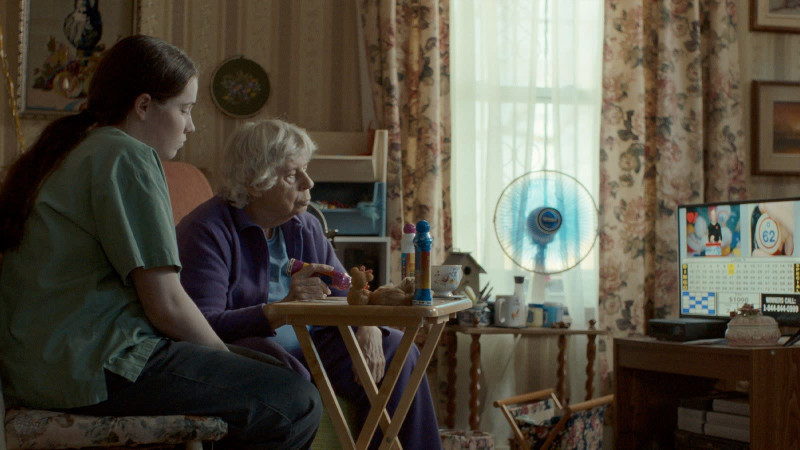
A young home-care nurse (played by Katie Mattattall) and her elderly patient (played by Marlene Jewell) form an unlikely friendship in There, There.

One thing at the VIFF is that it’s known for showcasing works from various filmmakers from Canada. There, There is the latest film from Nova Scotia director Heather Brown. It tells of an unlikely friendship of two people.

Ruth is an elderly woman living in her small Halifax home. She is doing the best she can to live her life but she is limited in both her physical ability and her mental ability. She does get home care from a young nurse named Shannon. Shannon helps with Ruth through her daily life and even helps her with playing television bingo and getting bread crumbs for Ruth to mix seeds and feed birds. Feeding birds is a favorite past-time of Ruth. Shannon is roommates with her best friend who is a social media influencer. Sometimes Shannon helps with her videos.

Soon, we learn both women are going through difficulties in their lives. For Ruth, her memory has been declining. She sees a doctor concerned she may be developing dementia. She also notices her house has been getting more insects. She buys bug spray from her local store and tapes dead bugs on paper to show the doctor. She fears the bugs are entering her body. She experiences incontinence one day. As for people in her life, Shannon is the only one who visits and the storekeeper appears to be the only other person who talks to her.

As for Shannon, she’s pregnant. Her boyfriend, who has goals of being a race car driver, has abandoned her. Even blocking her communication from social media messages. Despite that, she’s looking to get her boyfriend to face up. She even goes to the racetrack to no avail. She searches for a lawyer to take him to court once the baby is born. Meanwhile her best friend seems to be more focused on social media than on their friendship.

For a while, the two are able to find the time they need to relax. Ruth is able to make her way to the parks or the street areas where she’s able to feed the birds. Despite her pregnancy, Shannon is able to find time for a night out. The two are also helpful to each other in their own ways. There was one time when Shannon was in tears while nursing and Ruth gives her comfort. Shannon also gave Ruth her phone number in case any problems. Then almost simultaneously, everything changed. Ruth found herself stuck in an unknown place and lost in the night. Around that same time, Shannon goes into labor.

Also simultaneously, both women experience the changes in their lives. Ruth is unfit to live alone anymore. Her dementia has gotten so bad, she now has to be in a nursing home. Shannon has given birth to her daughter. For a period of time, the place she lives in becomes a place for three. Both women also learn the new changes in their lives cause them problems. Ruth may get fed, bathed and included in activities of vitality, but she can’t go out of her nursing home to feed the birds like she used to. The doors are securely locked so none of their residents can leave unassisted. As for other belongings, most of hers are now gone and she relies on donations. One donation bag, she finds a baby doll she keeps. For Shannon, her friend moves out of the place because she finds living with someone else’s baby a discomfort for her life. Shannon is still trying to pursue her boyfriend. One time, she goes to a car wash after spotting him in hopes of confronting him and showing him his child.

One day, a ray of hope. Shannon pays a visit to Ruth at the nursing home. They watch a show together. Shannon brought some bread crumbs and is able to take Ruth out to a park to feed the birds. During the visit, Ruth claims no one has visited her in years. Shannon lets her know she’ll be there. The film ends in a quiet moment with both women at their place of rest and symbolizing how they both share a bond.

This is a film of two types of women who would be seen as getting the short ends of the stick. We have a lonely elderly woman in the last years of her life concerned for her physical and mental well-being, but still trying to life as vital of a life she can. We also have a young woman who’s pregnant sooner than she hoped through a boyfriend that ended up to be irresponsible. In what should be a carefree time in her life, she faces a lot of pressures and frustrations and it’s slowly becoming a discomfort for her roommate. I’m sure you may know a woman in either of these situations. Although it’s a case where they are normally supposed to be associated with each other just as nurse and patient, it becomes a lot more over time. Just as the sudden changes happen for both of them, they reunite and it becomes obvious they have a bond between them. The story becomes a case of two lonely Halifax women of different backgrounds finding a type of unity with each other. It’s as much heartwarming as it is heartbreaking.

Some people may dismiss this as a boring film. It’s important to know when you go to a film not knowing what it’s about or just going to a film because it’s available for you to see, you should welcome what you see and judge once it’s over. From how I’ve seen it, this is a story of two women of two backgrounds that are quite common in our society. The story moves slowly but each scene tells a lot of what the two women are dealing with and how they live their lives at any given point of time. For those that have seen this film, you will notice many scenes where there is no dialogue. It’s likely the scenes were meant to do its own storytelling by imagery instead of words. With each scene without dialogue, it does a very good job of telling its story and creating the scene. The film’s mix of using scenes of dialogue and scenes of wordless imagery help in telling the stories of both women, their separate lives and their unique bond.

It’s been said by many that films should not answer everything about the story. It should have the audience asking questions or forming their answers. What the film shows presents a lot. What the film doesn’t show also presents a lot too. After seeing the film, it did leave me with a lot of questions about both Ruth and Shannon. For Ruth, it had me wondering about her past life. It left me wondering was she ever married? Does she have any family of her own, like surviving siblings, nieces or nephews? How come it’s only Shannon and the storekeeper that treat her like she exists? For Shannon, it leaves me wondering about her present and her future. Will she raise her daughter well? What about her own family? Does she not keep in contact with them? Also will she get her boyfriend to face the music? He owes her and the child. This film is very good in getting me to ask a lot of questions.

As is, this is a very good film by Nova Scotia director Heather Young. This is her fourth film and second feature. She presents a good story of two women who would be overlooked in our society but form a bond not just by one being dependent on the other but sharing a closeness that words don’t need to make present. It’s by the actions, by the moments together and even by the time alone. Young also does a smart job of choosing to have non-actors play the two main roles. Having non-actors helped with the performances here. The performance from Marlene Jewell of the elderly Ruth is very good and very believable. A retired nurse herself, she is probably very familiar with women in this type of setting or situation. She plays the part very believably. Katie Mattatall is also excellent in her role as Shannon. I don’t know of her own life but she played the frustrations of a young abandoned pregnant woman very well and very believably. She makes you feel Shannon’s situation.

There, There is a unique story about two different women who develop a special bond. It’s also a story that tells more in its images than its dialogue. That’s the most unique element of the film.

VIFF 2024 Shorts Segment Review: Forum 3

Once again, I achieved a VIFF goal when I attended Short Forum 3. This forum of eight shorts is more international and has a wide variety of styles and subject matter.

Jane’s In The Freezer (USA – dir: Caleb Joye): It’s a quiet day at the pier at the lake in Detroit. A woman who’s just gazing tried to develop conversation. Her name is Jane. The conversation doesn’t last long. She goes to the mall. At one store, she pretends she’s a worker and helps to assist with a customer’s purchases. While at the liquor store, she sees a man she claims is her son and tries to ide herself from him. After he’s gone, she sets up a dating profile on a website and goes to a nearby bar where she hopes to meet someone new. All the young men ignore her or reject her passes.

The main theme of this short film is about loneliness. It’s a common topic nowadays as it seems that it’s at an all-time high thanks to modern technology. In this story, we have a middle-aged woman trying to connect with someone. Anyone. No matter where she goes, she’s either ignored or shunned. She looks for constant opportunities to make some new friends or a new love time and time again and looks like she won’t stop. She also appears like she’s either trying to either hide or recover from a past where she estranged herself from her son. The film succeeds in getting the viewer to feel sorry for her and also wonder what her past was.

My Dog Is Dead (Japan – dirs: Tasuku Matsunaga and Takehiro Senda): Riko is a young woman in the big city of Tokyo who lives with her boyfriend Yoshiki. Just recently, she received a phone call from her mother that her dog Koppe died. She has to return back to her town. Yoshiki agrees to take her there but views the trip as tedious. She’s quiet but he treats it like a road trip and they frequently squabble over the choice of radio station. At the private memorial service with Riko, her mother and Yoshiki, Riko is in tears but Yoshiki gives her an odd look.

The film is as much about the boyfriend in the relationship as it is about the trip home. Things appear normal in the relationship but that appears to change after Koppe’s death. Riko wants to mourn Koppe one last time but it appears Yoshiki thinks it’s odd. Even that change of radio stations sends a message that maybe he’s not the right boyfriend for her and has an immature side about him. It’s a story that says as much from the images as it does from the dialogue.

Shoes And Hooves (Hungary – dir: Viktoria Traub): An animated story, pedicurist Paula has been in search for love but has always felt inferior because her upper body is human and her lower body is horse-like. She lives in a world full of full-humans, full-animals and those like her who are half-and-half. One day, she meets an alligator man named Arnold. On the first date, there’s a sense of chemistry between the two, mostly from Arnold, but Paula senses the relationship is doomed.

This is a unique story about self-image and self-acceptance. Paula needs to deal with her insecurities and her desires. With it being an animated film, it tells its story in an array of creative story telling mixed with unique imagery and metamorphosis that only animation can do. It’s as good of a creative story with a message as it is dazzling to watch for the visuals.

Nemo 1 (Canada – dir: Alberic Aurteneche): The only documentary of the eight films here. The film is shot around the Chittagong Ship Breaking Yards in Chittagong, Bangladesh along the Bay Of Bengal where ‘dead ships’ are scrapped for recycling metal. The film gives a good look as the Nemo 1 ship is the latest ship being scrapped from the various areas being broken to how high above the waters or ground they have to work. Then words from a Bangladeshi writer are shown as images of other older scrapped ships are shown. The film ends with ugly details of this yard.

There is no dialogue or spoken word here as far as the images of the ships. Only the spoken word parts are spoken. This documentary is about the images we see and the accompanying music. We see something so big and something we don’t know if we should find disturbing or not. The inclusion of the spoken word is a philosophical message of what happens if we do wrong. Unfortunately, wrong is happening as the work is deadly and the year cuts safety corners. This documentary has a lot to say and says it in its style.

Tayal Forest Club (Taiwan – dir: Laha Mebow): In a small Taiwanese town, a teenaged tribal boy named Yukan buys a bottle of wine at the store. He goes with his best friend Watan on a nature trek to the forest and to offer the wine to his ancestors. It’s a good escape from Yukan’s drunken father. They leave the town but not after passing the town drunk. As they go in the forest, they have fun until they learn their wine offering is missing. Within hours, the two find themselves lost in the night. What will happen? Soon a spirit man comes who looks like the town drunkard. Soon they are safe.

This is a good story of two young Taiwanese tribal teens. It’s also a reminder to us of how it’s not just in Canada and the Americas where Indigenous people or tribal peoples face discrimination. It’s a worldwide problem. There you see two teen friends who are misfits just like the other tribal peoples in their town. As they go out in their trek in the wilderness, they learned they forgot their wine offering and end up lost, but they get a connection to the nature that other Taiwanese wouldn’t know. Their tribal connection helps lead them home.

-Chuff Chuff Chuff (dir: Chao Koi Wang): A man from Hong Kong appears to be on a train asleep as the train passes through forest land. He wakes up and sees his home being like it’s inside a train car. He thinks it’s just a dream but the Cantonese-speaking woman reminds him it’s not. What he sees on the TV screen of the view from a train car is really happening.

This is a surprisingly fast film (six minutes). At first you will wonder what this film is about. I’m sure you can’t get the full message after watching a six-minute film. You will need to think about it more after watching. It appears the film is about a case of the common barrier of dreaming and reality and of how it’s not as far apart in this world. The addition of the turtle in the living room floor adds to the concept of the two wanting what’s out of reach.

-Nietzschean Suicide (Iran – dir: Payam Kurdistani): It’s in the 1930’s. The pharmacist, who is expecting his wife to give birth soon, is one who works strictly by the book and won’t play games. When he learns the town midwife is coming to him for a death wish requesting cyanide, he refutes her pleas, declining her fake prescription. Soon his son is born and he’s being sued by a client for agreeing to something ‘Nietzschean.’ He’s now ready to grant the midwife her wish in a unique way.

This is a unique drama as it does capture the cold feelings of the time. The silence adds to the intensity of the situation of the midwife’s death wish and the pharmacist caught between waiting for his son to be born and what he feels is the right thing to do. It keeps the viewer interested in what will happen next and will he give in?

-Darker (USA – dir: Matazi Weathers): Los Angeles is in a dystopian time. A pandemic has taken over and caused people to return to their homes. There’s word of a prison riot that is spiraling out of control. The riot grows to fire and unrest on the streets. At the same time, black insurgents and trans hackers along with their allies promote an uprising.

This film doesn’t exactly have a beginning, middle or end. It looks more like it captures a moment of when all hell breaks loose. Not just any hell. A hell fueled by the anger of racism and other types of discrimination. Images of the riots of 2020 and news stories talking of 1992 give the sense this film is sending a message. If we don’t solve the problem of racism and other forms of discrimination, all hell will break loose again and it will be worse than ever.

And there you go! That’s my look at the eight films as part of VIFF’s Short Forum 3. There was only one Canadian film. There were four Asian films, two American and one European. Most were dramas. There was one documentary and one animated film. All eight films are unique in their own ways and all are very creative.

VIFF 2024 Review: Luther – Never Too Much

Luther: Never Too Much is an intriguing documentary of Luther Vandross whose music we remember, but we didn’t know the whole story.

I’m sure most of us who were teens from the 80’s or 90’s will remember the music of Luther Vandross. The documentary Luther: Never Too Much is a documentary that showcases the R&B legend’s career but also tell us of personal sides of the singer we never knew.

The film starts by showing Luther performing on stage and then focuses on his childhood. Luther comes across as the type of child which music was born in him. He was born in a housing project in Manhattan to a father who was a former singer and mother who was a nurse. At three, he taught himself how to play piano by ear thanks to having his own record player. At 9 and shortly after the death of his father, the family moved to a rough area of the Bronx. His older sister Patricia sang for the group The Crests, most famous for the hit 16 Candles. His sisters took him to the Apollo theatre to see acts perform for free. For Luther, that was his way of escaping the threat of street life. There, he not only got to see legends perform on stage but he studied the performers, their movements and their singing.

As an adult, music was so much a passion for Luther, he dropped out of college to pursue it. Despite trying to make it in the music business being very tough, Luther was very driven. He led a Patti LaBelle fan club, finally got on stage at the Apollo as part of the group Shades Of Jade, and then formed his own vocal group Listen My Brother. Listen My Brother got to perform on some of the very first Sesame Street episodes! Vandross tried other routes in music such as writing songs for Patti Labelle and the Blue Belles, Roberta Flack, Bette Midler, Diana Ross, Donny Hathaway and Chaka Khan. He also sang back-up for artists like Gary Glitter, David Bowie, Carly Simon, Donna Summer, Sister Sledge and Flack. He would also create jingles for many commercials, including many fast food franchises.

The whole time, many felt Vandross had what it took to make it as a solo singer with his singing and his drive. There were some critics who felt his weight is what kept him from having star potential. The turning point was when in 1980, he was ‘fired’ by Roberta Flack as he was a back-up singer on his album. Flack told him he was too good to be a back-up singer. He deserved better. It’s that move that finally started his drive to make it as a solo singer. The first crack as his singing career started in the summer of 1981 with his album Never Too Much. It went double platinum and the title song hit #1 on Billboard’s R&B chart and #33 on the Hot 100. That would be the situation through the first years of his solo career. His songs would become big hits on the R&B chart but would very rarely hit the Top 40 on the pop chart. The album also helped him achieve his first two Grammy nominations.

Vandross would get more notice in the public eye as he continued to release music over the years. Becoming known as the ‘Velvet Voice,’ his Grammy nominations made him one to watch. His jingle singing would be made fun of by Eddie Murphy in his comedic monologue of singers. Of which, Vandross responded by singing his KFC jingle while Murphy was in the audience. Vandross would also get nasty flack about his weight. His concerts drew huge attendance and his hits started getting bigger on the pop chart despite not making the Top 10. On the negative side, he would get more Grammy nominations and wouldn’t win. His weight was a constant struggle throughout his life and it appeared in the mid-80’s he was finally losing weight. Then in 1986, he drove recklessly with Jimmy Salvemini, a singer he was working with, and his manager brother Larry. The car spun out of control and crashed, killing Larry. Vandross was badly injured, was sued by the Salvemini family, and returned to overeating.

In late-1989, his fortune made a turn for the better. He released a Greatest Hits album co-titled ‘The Best of Love.’ The compilation went triple-platinum and it gave the hit Here And Now that became his first-ever US pop Top 10 hit, peaking at #6. The hit also helped Luther win his first Grammy after nine previous nominations. Further pop success continued with the album Power Of Love in 1991. The album peaked at #7 on pop albums, certified double-platinum, spawned two more Top 10 hits on the pop chart and won two more Grammies. Additional pop success came over the years with two more Top 10 duets with Janet Jackson and Mariah Carey.

Despite all the success, Vandross was still going through a lot of personal problems. He had health problems, continuing struggles with his weight and difficulty confronting his sexuality. The early-90’s saw the rise of hip hop and its eventual revolution with the African American music scene. Vandross’ career soon faded and he would be dropped from Epic records. In the early 2000’s, Vandross made less public appearances and was quietly teaming up with Richard Marx to create what would be his last album: Dance with My Father. The album went double-platinum and the title song went platinum and would win the Grammy for Song Of The Year. Unfortunately a year earlier, he had a stroke that left him bound to a wheelchair and unable to sing. Vandross’ mother accepted the award on his behalf. After two years of struggling with the effects of his stroke and diabetes, he died in 2005 at the age of 53. His funeral was well-attended by legends of R & B like Aretha Franklin, Patti LaBelle, Dionne Warwick and Stevie Wonder.

This documentary is more than just a common biographical film of a musician. It’s also a good focus at a lot of garbage musicians face in the music business. Luther was an excellent singer, musician and songwriter, but making it in the business was hard. The music business always gives its performers commercial expectations or else they will dropped in favor of a rising star with better selling potential. All too often, talented people get overlooked by singers or performers with better looks. All too often when a record label looks to hire a solo male singer, they expect him to look like a “Prince Charming” or a “Mr. Hot Stuff.”

Luther was the case of person who loved music so much, he was determined to make it whatever way we could. Even as he was frequently shunned because of his weight n the 70’s, his musical work, back-up singing and songwriting ability is what made him be active in the business. Even after he made it, he still faced the difficulty of racism in the music business, pressures from his record label and personal setbacks. His biggest problems were about his weight and his closeted sexuality. In the 80’s and 90’s, he was in the public eye and judged. If he was overweight, he was ridiculed in the press. When he lost weight in the mid-80’s, he was rumored to have AIDS. He would admit in talk shows that food would be his drug or source of solace. As for his sexuality, it was a case back in the 80’s and 90’s that a male singer with a romantic voice couldn’t come out. He had to keep it hidden throughout his life. It’s only after his death it came to light.

The film is as good at showing some of the problems Vandross faced in his music career as it is about his music. It was good at showcasing his many achievements. Many of which, some of his biggest fans wouldn’t have known about. The film is also very good at getting even some of the most personal information about Luther from some of the people Vandross was closest to from musical colleagues to family members. As a musical documentary, it doesn’t offer too much in terms of a new and different way of presenting its story. There are times it feels like the common formula in music documentaries. Also in terms of chronology, I noticed there were times in which some of the musical events in his career weren’t shown in fluid chronology. Whenever the film focused on a particular year, some songs were shown years before their release.

This film is a good achievement from Dawn Porter. Porter is known as a documentarian whose works primarily focus on African American subject matter. It started in 2013 with Gideon’s Army and still continues well. She also has in plans a documentary of the Mandela’s coming up. Here in this documentary, she does an excellent job of presenting a life of a man who loved music and had to make a profession of it however he could and was lucky enough to be a famous singer. She also presents well the personal troubles and difficulties Vandross went through. The documentary of Vandross’ life and career also makes a good lesson to wannabe musicians who want to make a career. The obstacles he went through are common big names in the music business go through and have to overcome. It’s easy to see how so many either don’t make it or get swallowed alive even if they do.

Luther: Never Too Much is an intriguing look at an R&B great that shows the singer’s drive, his fame, and his struggles, both physical and personal. His story is showcased in a format common in music documentaries but it presents its story very well.

VIFF 2024 Review: The Thinking Game

The Thinking Game is a documentary that makes understanding A.I. pioneer Demis Hassabis to be as much about trying to understand how A. I. came to be and how it evolved to what we have now.

The topic of A.I. is something to provoke a lot of discussion. Some will regard it as a revolutionary breakthrough in technology. Others see it as a threat that devalues human abilities. The documentary The Thinking Game gives an insight into A.I. as navigated by one of its biggest pioneers.

The film begins with a look at Demis Hassabis: the British CEO of the technology company AlphaGo. It shows of his current working with A.I. and also his intrigue of developing AGI: Artificial General Intelligence. As we learn more about attempts to develop AGI, which is like A.I. but appears closer in developing the feelings similar to that of humans, we are introduced to Hassabis and his intrigue with the human mind. Hassabis was born to a Greek-Cypriot father and a Singaporean-Chinese mother in 1976. He grew up in East London and his above-average intelligence was noticed as he developed a love for chess. Soon he became the second-ranked chess player in the world for his age range and a chess master at 13.

Everything changed one day during a chess tournament he played in. It was a game when he was thirteen that he lost and he was out of the tournament. He was sad about it, but did not leave the playing area. While sitting, it got him thinking of all these people around him still playing and all the brain power going on. It got him thinking of a human’s brain power. Are there any limits to what human thinking can solve? Soon Hassabis bought a computer with his chess winnings and learned programming from books. One day, he won a contest to win a job at a video game company: Bullfrog Productions. Soon he helped with Bullfrog’s work and invented a game of his own: Theme park.

Theme Park became a hit and helped him make enough money to attend Queen’s College at Cambridge. College was difficult because he wanted to study artificial intelligence and he was chastised by the professors about it. He did graduate from Queens College with a Computer Science Tripos. He also went to the University College London where he achieved a PhD in Neuroscience. In between and after his stints at college, he continued his work in video games and programming going from Lionhead Studios to founding his own game studios Elixir. His fascination with the human mind never left him. He felt that through computers, he can create something with artificial intelligence that can even tap into human emotions. Something commonly referred to as Artificial General Intelligence, or AGI.

In 2010, Hassabis and his colleagues Shane Legg and Mustafa Suleyman created the artificial intelligence laboratory DeepMind. The activity on artificial intelligence at DeepMind started when Hassabis worked ways to get a computer to play old video games from the 1970’s and 1980’s. The AI system was taught nothing of the game and would have to learn by constant play. Over time, the A.I.’s learning system worked and they would master the games. Interest in DeepMind grew and it attracted investors like Elon Musk and would be owned by Google from 2013 to 2014. Then in late-2015, they created AlphaGo: a computerized version of the game Go with A.I. as the opponent. They would soon challenge the world’s highest-ranked Go players to matches and win.

For DeepMind, it was enough to declare victory. For someone like Demis Hassabis, it wasn’t enough. Hassabis has a lot of ambitions on his mind. One of which was protein folding. Solving the problem can help with solving Alzheimer’s, dementia and developing new drugs. Hassabis and his colleagues would create the program AlphaFold to perform the predictions of protein structures. For years, it was all trial and error. As one of the colleagues put it, they were the best in the world at it but they were awful. Then during the pandemic while everyone had to isolate and work at home, the code was cracked. It doesn’t end there for Hassabis as it appears he wants to crack every uncracked code that’s out there.

A.I. and A.G.I. are two things that are admired for what they do and despised for what they do. Through computer technology, they’re able to solve a lot of problems human’s either can’t solve or can’t solve fast enough. Because of that, many people see this as a threat to humanity, especially in terms of employment and the constant automating of jobs. Even Hassabis himself has been both praised for his discoveries and achievements and vilified by some in aiding something that many feel devalues human abilities. There are many people from his co-workers to journalists to his former professors that ask the big question when will it stop? Yet Hassabis comes across as the type who doesn’t want to stop until everything’s all solved.

This film actually spends more time focusing on Hassabis and his accomplishments than on the subjects of A.I. and A.G.I. The film showcases Hassabis as someone who many feel deserves the praise equal to that of other computer technology pioneers like Bill Gates and Mark Zuckerberg. Sometimes the film shows Hassabis as having acclaim ‘unsung’ compared to the two. The film also shows Hassabis as one of those child geniuses who was able to find a way to make better use of his brain than winning chess tournaments. It does show Hassabis to display a lot of genius traits both in action and personality but it doesn’t show him to be as much of an eccentric like many other famous geniuses.

The film is able to mesh Hassabis’ life story of how he went from a chess prodigy to being on the forefront of A.I. development with the current developments of A.G.I. his current lab. It chronicles his achievements while it also shows how workers in his lab are working to perfect his A.G.I. technologies to match human feelings and emotions. It doesn’t spend a lot of time on the news stories involving his lab and of A.I. research. It also spends a small amount of time on people who feel threatened by the latest wave of A.I. technologies. Especially the actors who went on strike last year. The film does leave out the times Hassabis has focused on the topic of existential risk from A.I. which Hassabis has spoken out and warned against. Hassabis has even stated the risk from extinction from A.I. is as much worthy of concern as nuclear war or another pandemic, but there’s no mention of it in the film here.

It’s interesting that this documentary comes out in the very year Hassabis and his AlphaFold partner John Jumper were awarded the Nobel Prize in Chemistry for the very protein structure prediction they were experimenting on in this documentary. The documentary does make it interesting how meshing games with work appears to be Demis’ life. He calls chess a good thinking game as a child, does game development as a teenager and young adult, uses A.I. to challenge people at chess, then using A. I. to challenge the world’s best Go players, to using A.I. to work protein structures. It seems like everything Demis has worked on in his lifetime appears to be another ‘thinking game.’ Leaving the film, maybe the film shows that science itself in all of its trials, errors and experimentations has always been a ‘thinking game.’

Director Greg Kohs delivers a documentary some could find intriguing or some could find to be missing information. It does a good job in getting us to see Demis’ achievements in a topic that has many people intrigued in. It can also lead people to scratch their head about what this film is about. Is it about Demis? Is it about A.I. or A.G.I.? Is it about his inventions and contributions? Is it about a person we’re to blame for what threatens us now? Is it even the world through Demis’ eyes? Or even is it about science as a whole with all the many failures before the successes?

The Thinking Game is an ambiguous documentary that is as much about A. I. evolving over the decades as it’s a biographical film of Demis Hassabis. It doesn’t focus too much on the controversies of A.I. Instead it focuses on Demis’ intrigue into A.I. and how it would greatly pave the way to what we have now. Whether it rightly or wrongly glorifies Hassabis, that’s up for the viewer to decide.

VIFF 2024 Review: Balomania

Balomania is about balloon artistry in Brazil. An art that’s illegal in its country of origin.

Is setting a big artistic stylish balloon in the air a crime? Balomania is a documentary that focuses on the popularity of balloon art in Brazil that is illegal.

The film begins with Danish-Spanish filmmaker Sissel Morell Dargis detailing her move to Brazil at 19. She soon became a graffiti artist and became known popularly as ‘Simba.’ During her first years, she noticed what she thought were stars floating from the favelas of Sao Paulo. Her Brazilian friends told her they’re balloons and they were launched in the air by a secret society called the ‘baloeiros.’

That discovery started a fascination in her of that ‘balloon world’ that still continues to this day. The balloons are the hot air balloons launched without passengers. They come in all sorts of artistic designs. Some include a wide banner hanging from underneath it. Some include hundreds of small burning candles in colored cups whose arranged image adds to the balloon’s allure. Some even include fireworks. These balloons are very expensive to make but those involve with it believe it runs in the blood and is passed from generation to generation. This group of balloon launchers she meets with launches balloons once a week.

This balloon culture is also illegal in Brazil. In the past, it was common for Brazilians to release such artistic balloons in the sky. Then in 1999, the government felt it was happening more often than it should and they criminalized it. The government claims the reasons for these bans on balloons are because of public safety, air flight safety and for environmental issues. Dargis feels there’s something more underlying to it. Possibly classism of peoples.

She meets with the many men involved in this balloon culture and are part of these ‘balloon mafias.’ She meets the artists, the crafters, the launchers, and the catchers who catch the balloon in time so that no one is arrested and will eventually have to relaunch that balloon one day. She meets with those like Zulu, Tron, legend Sergio and young father Jaba. They talk of the balloon works they’ve done in the past. They talk of how expensive it is and how they don’t get paid anything for it. Just the thrill of dazzling people who view them. Jaba talks of how he wants to break the record of the biggest balloon ever launched.

Over the ten years, Sissel films this sub-culture, she showcases the balloons crafted and launched, the catchers who catch and relaunch, and the personal lives of many of those involved. She especially focuses on Jaba as he is a father to a six-year-old son and Jaba’s seen as the future of this balloon group. Sissel also films news stories of how the governments feel they’re not doing enough to stop this and feel the best solution is to toughen the jail sentences to 5-8 years. Sissel also gets opinions from people in Jaba’s favela who speak their mind about it. The favela has divided opinions. Some feel criminalizing this is just an excuse to distract form the real problems of the nation like defeating poverty, drug crime and corruption. Some people do favor the criminalization and see it as a safety threat. We even see one case where a balloon launched in the night burns up in a similar way the Hindenberg burned up. Jaba’s son tries to convince his grandmother that it’s art.

The COVID pandemic hits Brazil. Sissel is reminded her filmmaking of this balloon underworld was a distraction to her main purpose for life in Brazil, which was making video games. Sissel did however create a video game about balloon launchers called Cai Cai Balao. During those years that passed, Sissel wonders if Jaba achieved his goal. Balloon godfather Sergio has died. Jaba left creating and launching balloons for the sake of becoming a responsible father to his son. The project of the balloon of Jaba’s dreams, the biggest balloon ever with half a ton of fireworks, did not die and is carried on by his group. Although he’s not an active member anymore, he is still part of the group. The influence never leaves. We see it being launched in the air successfully with more than a hundred men involved..

I think it’s a common thing that can happen in any nation at any time. Even in the nations with the most freedom. A style of art that the nation’s government feels uneasy about or so much contempt for, they criminalize it. We’ve seen it before in the past with genres of music or literature. Paintings and statues have also come under government scrutiny for centuries. Here in the big cities of Brazil, we have balloon launching. The setting off of these eye-catching balloons. It was done commonly in the 80’s and 90’s but the government criminalized it because it was done too much and fear of safety both in the air and on the ground. If I was a Brazilian politician, I wouldn’t criminalize it, but I would have people who know how to do it properly licensed to do it.

Here in this documentary, it presents the art and those involved through a variety of angles. Since this is about the balloon art, there has to be a lot of scenes of the crafts they launch in the air. It’s part of Brazil’s culture. It’s eye-catching. There’s a set of people who are involved in this and it’s like a whole culture of these baloeiros. It’s an art that costs in the tens of thousands to make and they get paid nothing for it. It’s also the passion for it where you’re still a part of it even after you’re no longer active with it. It’s something these men do sometimes at the expense of family relations. It’s also a source of controversy among the public. Is launching an artistic balloon in the air a crime? Is it worth having these alleged criminals in prison for years? The film also uses news stories, talk from politicians and even debate from citizens about this. One scene I liked is the debate between Jaba’s son and his grandmother who thinks it should be criminalized. She asks him why he thinks it’s art and his response: “Because it’s very beautiful and if it’s beautiful, it’s art.” Smart way of thinking!

This documentary is an accomplishment for Sissel Morell Dargis. It’s natural for a creative person who takes an interest in some topic or some subject to want to do a film about it. This film is ten years of film footage from Dargis of those involved with the craft, those who watch and those who fear it. It succeeds in getting the audience interested in those involved with the craft as it succeeds in dazzling their eyes with the images of the balloons created and launched. It also succeeds in convincing one that the criminalization of this craft is foolish while also presenting the side of those who support the criminalization. Although it appears to side more with those that consider it art, it still tries to let you decide for yourself. It’s no surprise that due to the nature of touching on a craft that’s criminalized, Dargis has to do most of the filming on simple hand-held cameras. The documentary is as intriguing to watch as it is about the filmmaker making her point.

Balomania is an intriguing documentary that shows the art, the artists, the tricks of the trade and the opposition they face. It’s also about the director making the film and making friends along the way. It’s an art documentary that becomes a lot more.

VIFF 2024 Review: Bird

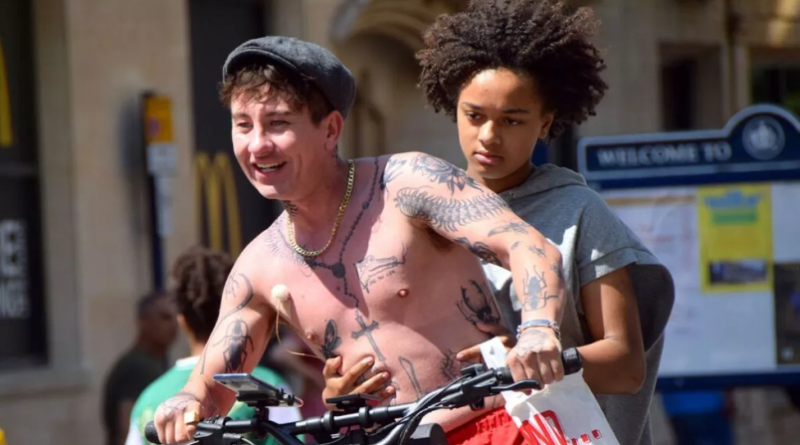
Young Bailey (played by Nykiya Adams, right) is a 12 year-old girl seeking her own identity and away from her father (played by Barry Keoghan) in Bird.

The first film I saw at 2024’s Vancouver Film Festival was Bird. It’s the latest film from renowned British director Andrea Arnold. How well does it make for a film?

Bailey is a 12 year-old girl living in the slums of North Kent. Despite living in bad conditions, she likes taking pictures and videos whenever she notices beauty. Especially beauty in nature. Bailey lives in a slummy house with her father Bug. Bug is what you’d call a ‘kidult.’ He even takes her home from school on a scooter. One day Debs, a woman his father only dated briefly, moves into the home. She’s also shocked and unhappy to find out he wants to marry her. She’s so unhappy with it, she won’t wear the pink outfit her father wants her to wear at the wedding. That leads Bug to get abusive on her, and Bailey runs off.

Bailey runs a long distance away from her neighborhood. She doesn’t only want to be away from her father but everyone she knows. Bailey finds herself in a field where horses are raised. It’s the perfect place to be alone and be captivated by nature. Suddenly she sees a stranger in the field. It’s a man in a dress who dances around like a crazy you’d see on the street. When Bailey comes face to face with him, she wants to avoid him. She later learns this man calls himself Bird and he has a message to deliver.

Bailey returns to her neighborhood but wants to avoid her father. She wants to stay at the flat with her half-brother Hunter and his girlfriend. Hunter is friendlier to Bailey than her father, but she can already tell Hunter is a bad enough influence. She tries to meet up with school friends but learns some are engaging in gang activities. She noticed another thing too. Bird is in her neighborhood. She meets face to face with him by chance. She also sees Bird from Hunter’s apartment. Bird stands atop the porch of the nearby apartment, just standing on top. She fears Bird might jump.

Over time, Bird and Bailey develop a friendship. She also learns that Bird is trying to look for his long-estranged father. One night Bailey decides to spend some time at her mother’s place after watching Bug snort cocaine. She happily meets with her younger step-siblings but learns that her mother’s new boyfriend is extremely violent and very threatening. It’s after he threatens Bailey that she has to run out.

Over time, things get better for Bailey. On the morning Bailey menstruates for the first time, Debs is able to talk to her about menstruating and give her some tampons. Another day, Bailey is able to take her younger siblings from her mother’s side out to the beach. She makes a great mother figure. Also while she herself is in the water, she finds herself in a moment of freedom.

Bug brings Bailey and all of his friends for a wedding rehearsal. Bailey is uncomfortable there. That day, she agrees to help Bird fulfil his goal of meeting face to face with his estranged father. It will be a long bus ride to a town very far out but Bailey is willing to help him. Once in town, Bailey and Bird finally get to the location of Bird’s written message. The father doesn’t notice Bird. Bailey steps in to insist to the man who has a new wife that Bird is his long-lost son.

The two return back to Kent appearing disappointed things didn’t go the way it should have. Bailey and Bird spend the night over at their mother’s place, hoping her violent boyfriend is not there. Unfortunately, he is there during the night and he assaults her mother. When Bird steps in, Bird becomes his latest punching bag. The fight escalates that it goes outdoors. Bailey notices something shocking. Bird sprouts feathers, like a bird. When the man attempts to assault Bird, Bird fights back like a bird! After beating the man unconscious, Bird flies off with the man in his claws like a bird carrying their prey. Bailey is shocked by it all.

Months later, Bug marries Debs in a court. Bailey is there in the pink outfit. That evening, the wedding happens at a bar consisting of singing performances from Bug and his friends. As Bailey takes a break from the events, she notices Bird paid a visit, wings and all. It’s a meeting of parting where he thanks Bailey for her help and bids farewell. The ending sends a message of a new beginning.

One of the focuses of the story is the difficulty of a 12 year-old girl trying to find herself. Being twelve is not easy as one is going from child to teenager. It has its own difficulties for girls. Imagine being a 12 year-old mixed race girl living in one of England’s ugliest slums and with toxic family situations and a neighborhood full of bad influences. You can imagine it would be difficult. A girl like Bailey would definitely be prone to the frustrations. Despite that, Bailey and her imaginative thinking are sources that can lead to something hopeful in the future. In fact that brief scene at the beginning of the cruise ship passing by being seen from her window is one sign Bailey is sensing something is better for her out there.

It’s her belief in something better and something hopeful in the future that keeps her going. It’s also her meeting with Bird that she helps to develop a stronger sense of herself. It’s very hard to believe that meeting with an eccentric like Bird would be the best thing for her. It’s through Bird that she’s able to discover that better things for her are out there. It’s as she helps Bird with his situation with his father that she’s able to be a stronger figure to her own family. She’s also able to show she’s a loyal friend by being determined to help Bird reunite with her father and it’s through her friendship with Bird she learns things about herself she never knew.. To think it was a chance meeting of two strangers who would be the least likely to form a friendship that turned out to be the best thing for Bailey. One who uses her imagination for her pictures and videos and the other who lives and dances out his imagination. It’s as Bird gains his wings, Bailey is able get her sense of self. Also the end of the film is both a moment of goodbye and a passing of the torch.

The story plays out well. It keeps making Bailey the prime source of the story, as it should, and it showcases her growth and her maturity over the time. It also showcases the troubles and the difficulties she goes through in both her personal life and the lives surrounding those she associates with. There are a few times when the story isn’t as steady or scenes not as fluid as it should be. Sometimes the story itself can be made confusing. Nevertheless it does all come together at the end. It makes sense that Bailey’s growth coincides with the engagement of Bug and Debs and ends with their marriage. The addition of Bird as an influence on her life also adds to the story of Bailey’s growth.

This is a good unique film from British director Andrea Arnold. Arnold first burst on the scene 20 year ago when her short film ‘Wasp’ won the Oscar for Best Live-Action Short Film. Since then, her films like Fish Tank, Wuthering Heights and American Honey have caught a lot of attention. Her latest film which she both writes and directs is a story that has a lot of ironies and twists, but it’s also smart and touching. It’s a story that shows Bailey for her uniqueness and for her common traits as a 12 year-old girl. It’s not that often a filmmaker is willing to do such a story. It’s great to see Andrea do it. Making the story work is young newcomer Nykiya Adams. This is her first acting role and having a fish actress in the role of Bailey works for the film. Nykiya did a great job in holding the film together as she did in her role as Bailey. Barry Keoghan did a great job in his role as Bug. It’s hard to picture Barry playing a thug from the slums but he masters the role and plays Bug well with his stupidities and vulnerabilities. Also excellent is Franz Rogowski. He played a believable eccentric with animalistic type of behaviors and kept Bird from looking wooden. The music added in the film also added to the quality of the film. It helped with the angry energy at times.

Bird is a unique coming-of-age story of a twelve year-long girl from the slums and her friendship with a person she’d be unlikely to befriend. It’s a unique story of a chance encounter that changes her forever.