
VIFF 2024 Ends On A Good Note

I know that VIFF ended over two months ago, but I lacked the drive to write for a long time. Since we’ve passed Christmas, I figured it’s enough wasting time and to get out the wrap-up blog.

Last year, the Vancouver International Film Festival ended the Sunday before Canadian Thanksgiving. This year, they end on Sunday October 6th: a week before Canadian Thanksgiving. Still, it was an excellent 11 days of cinema. Yes, there was the continuation of downsizing for the festival. There were less than half the number of films there were in past Festivals before the pandemic. The church that used to be the Centre In Vancouver For Performing Arts was not available this year as it has been in past years. Despite that, most facilities that had been available for the VIFF in past years were available again. VIFF also continued to showcase digital films and digital arts as it’s fast becoming a growing art form. The common cinematic films still remained the highlight of the Festival and there were excellent turn outs. There were sellout shows and repeat screenings for many films. I’ll explain more when I talk about my volunteering experience.

For this year, I was only lucky to see twelve films. I still had my goals of watching a shorts segment, a Canadian feature-length film and a Best International Feature Film Oscar contender. I was able to accomplish all three. I often want to go above and beyond it but it didn’t work out. I didn’t have as much free time during VIFF as I normally do. Outside of Monday September 30th that was a national holiday, there weren’t any regular weekdays when I could see films at any time. Another problem was not as many films had a 9:30 start time on the weekdays that’s often the best bet for me. Despite those setbacks, I did make it work. Twelve is the same number of films I saw last year. There were at least two days when I saw three films. Yes, I have a habit of cramming. Actually there were three days I saw three films but one was a day I saw a single one by choice and the other two as an usher.

For volunteering, I worked ushering at the International Village again. The crazy thing about this year is there were a lot of changes in set-up. In the past, there would be a ticket purchase booth at ground level, line control and organizing for the three cinemas on the second and the cinemas on the third floor. This year there was no booth on the main floor, lines were still on the second but ticket purchase was on the third floor just outside the theatre entrance. Even the volunteer meeting room changed. In the past, it was in a room past the theatre admission area. This year it was moved to an area just outside the main entrance. It was a lot of getting used to and sometimes a discomfort. I volunteered for three days.

The first two shifts took place the evening of the first Saturday (September 28th) and the Sunday afternoon the following day. For those two days, they were mostly to do with line control and supervising the Platinum Pass lounge. In both cases, I didn’t have the luck of seeing films. It was after that Sunday afternoon shift completed that I went to see two films after. On Saturday, October 5th, I had the luck of being able to see an Altered States film before I could start my third and last volunteer shift. With it being my last shift for the year, I had the luck of being an usher and seeing two films in the theatre. Both were documentaries.

With only nine films seen before the last day of the Festival (Sunday October 6th), I made the final day my catch-up day. There would be two films I wanted to see but would not be guaranteed a seat because their tickets sold out: the Latvian animated film Flow and the Farsi-language Canadian film Universal Language. I first took a gamble with Flow by being in the standby line-up 45 minutes in advance. After waiting and waiting, I was able to get in. I got in ten minutes after it began. It was that high in demand and it was one of the few films at VIFF open to all ages. I saw it and enjoyed it. Also I wasn’t too disappointed with coming in late because I would later have the luck of seeing it in its entirety at the VIFF volunteer party held a week later! For the rest of the day before attempting to see Universal Language, I tried making judgments of what else to see and when. I saw the Marlina film in between that time and then went back to the International Village to be early enough to see Universal Language. While the gamble with Flow paid off, the gamble with Universal Language didn’t. Being only second in the standby line did not assure me a seat. So with limited time and distance left, I rushed over to the Queen Elizabeth Theatre Warehouse to see The End. Although I wasn’t happy with The End, I was glad to see the last film of VIFF 2024 to complete itself.

For those that want a list of the films I saw at VIFF 2024, here they are in the order I saw them in:

Now some of you may want to know which films are the award winners. There were six juried award winners and nine people’s choice award winners. Interesting for this year, they changed the names of the juried categories! Descriptions of the awards are with the named categories:

JURIED AWARD WINNERS

SUMMIT Award
for outstanding narrative feature by an established Canadian director:
Universal Language (dir. Matthew Rankin)

HORIZON Award
for outstanding first or second feature by a Canadian filmmaker:
Mongrels (dir. George Yoo)

TIDES Award
for outstanding documentary feature by a Canadian filmmaker:
Ninan Auassat: We, The Children (dir. Kim O’Bomsawin)

ARBUTUS Award
for outstanding feature film production in BC:
Inay (Mama) (dir. Thea Loo)

SHORT FORUM Award
open to all short films in the Short Forums
Strawberry Shortcake (dir. Deborah Devyn Chuang)

VANGUARD Award
open to all feature films in VIFF’s Vanguard section
78 Days (dir. Emilija Gasic)

AUDIENCE AWARDS

Galas and Special Presentations
I’m Still Here (dir. Walter Salles)

Showcase
No Other Land (dirs. Basel Adra, Hamdan Ballal, Yuval Abraham & Rachel Szor)

Panorama
Angela’s Shadow (dir. Jules Arita Koostachin)

Vanguard
Red Path (dir. Lotfi Achour)

Northern Lights
The Stand (dir. Christopher Auchter)

Insights
The Chef and the Daruma (dir. Mads K. Baekkevold)

Spectrum
Grand Theft Hamlet (dir. Pinny Grylls & Sam Crane)

Portraits
Luther: Never Too Much (dir. Dawn Porter)

Altered States
40 Acres (dir. R. T. Thorne)

There you have it! That’s my long-delayed wrap up blog for VIFF 2024. Next year’s VIFF will actually start in the month of October! The Festival is expected to go from October 2 – 12 in 2025. Looking forward to it.
VIFF 2024 Review: The End

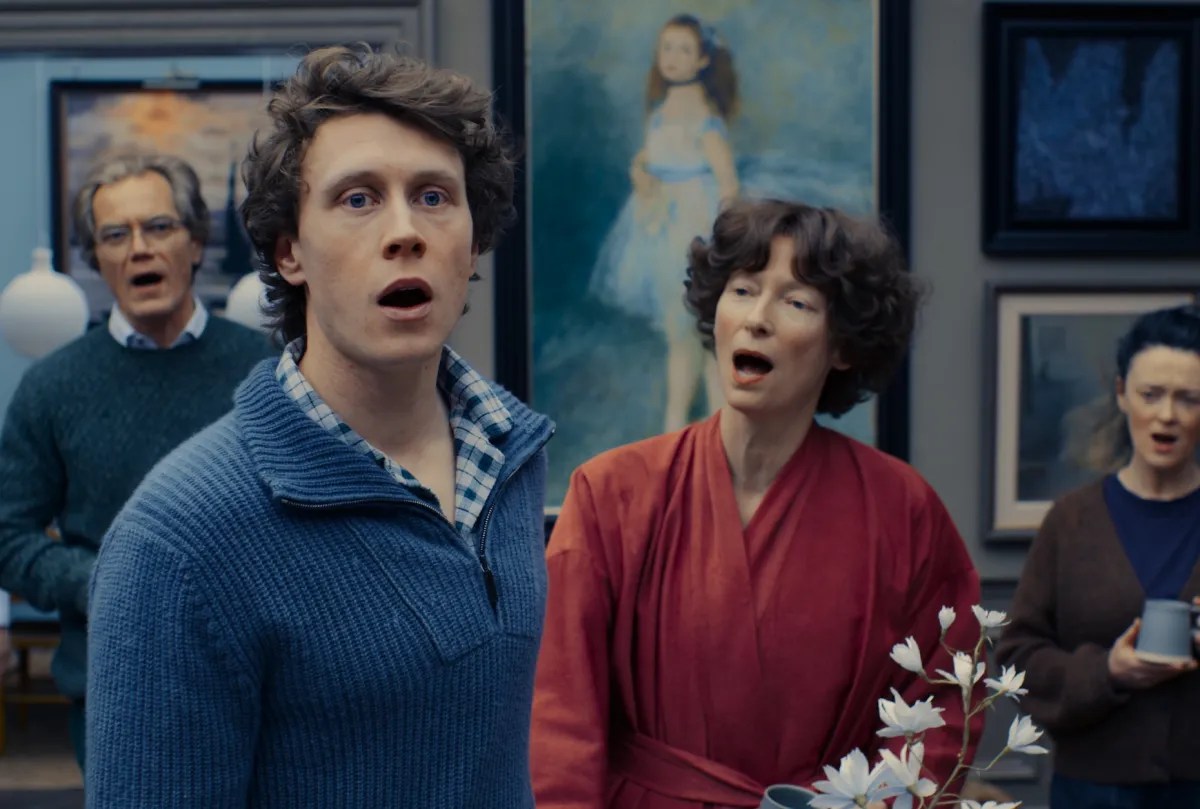
I find it quite fitting that the last film of VIFF I saw was titled The End. It’s also interesting that there would be an attempt to create a musical on a subject one would not normally create a musical about.

The musical begins in what appears to be a home of a wealthy family. The son is happy with the diorama of America he has. The father and mother consider it the idea life or the dream life. Or is it? Is it the dream life when all people need to participate in emergency raids? Turns out this ideal place of the family is a bunker underneath a salt mine they need to live in because the planet is unlikeable. The mother, father and son are among the lucky few to survive this ‘end of the world’ and this bunker is their refuge. The three aren’t the only ones living in the bunker. Also ‘lucky’ to be living there is a family friend, a doctor, the butler and the son’s ex-wife Mary. They’re the only other people the parents were willing to trust while still living on Earth’s ground. The father was an oligarch who faced death threats in his lifetime on Earth.

It should appear like they have it all in their underground bunker. They have all the luxuries they need for themselves, the friends they could trust the most on Earth living with them, samples of plants and species to keep, grow and breed for themselves, and there’s even a diorama of Earth’s site for the son to marvel at. Actually the son feels something missing in his life as he spent almost all of it below ground. Then one day, an ‘intruder’ is detected in their shelter. The intruder is a young African-American woman. She was one of the few that managed to survive the devastation as her family have all been killed. The son is attracted to her as he sees something captivating in her. Possibly because she’s the only person in his life who has lived recent time at the surface.

The romance between the son and the girl kindle, but the mother and father are not happy about it. She’s an outsider. She’s an interference to the ideal life they envisioned having once the apocalypse happened. The mother even suspects her of having an ‘agenda.’ Soon awful truths begin to unravel from the girl as she has the most knowledge of the devastation at the surface. All the pollution that was caused killed her family. Soon the news hits Mary as she learns the pollution is what caused her son’s terminal cancer and she neglected him in the end by bringing him to the surface to die. She soon dies in heartbreak. Then the parents learn of the hurt they caused. Mostly the father as on Earth, he bribed corruption in developing countries to happen for his gain, his company caused massive pollution around the world and his political ties allowed his influence and policies to be adopted around the world. A world he did his part to destroy. The mother tries explaining to her son she did all this to protect him, but he doesn’t buy it. The parents wonder is there any way they can find any redemption or forgiveness for what they’ve done? They do find it, but not in the way anyone expects.

It shouldn’t be too much of a surprise that there would end up being an ‘end of the world’ musical. Creativity is just waiting to happen. I’m sure this is not the first apocalyptic musical ever done. The story itself is an ambitious story. An oligarch family live in a bunker below the devastated Earth and live happily with themselves and the people they want. Suddenly they find an outsider in their area. The parents don’t know what to do with her. The son falls in love with her. Meanwhile as the two become closer, ugly truths about the parents and the choices they enforced caused much of this earthly destruction and they are finally facing the music about it. This musical does touch on a lot of things such as environmental damage, blood money and people who ‘ruled the world’ facing the music for the devastation they cause.

The thing about this musical is that it doesn’t feel all that together. I know it’s a musical that has most of the activity taking in one small place and it doesn’t lead too much outside, but one does get the sense a musical like this could have been done much better. Its biggest flaw is there are many times in which during many dialogue parts of the song, you forget it’s a musical until a song is thrown in. Now don’t get me wrong. Cinematic musicals are as hard to create for the big screen as stage musicals are hard to adapt to the big screen, but one can’t help but think as they watch along that this could have been a way better musical. I’ve often sensed that if Adam McKay were to do an ‘end of the world’ musical like this, it would be a lot angrier and with humor that delivers a lot more hard blows as McKay is known to do.

Despite its flaws, I give credit to Joshua Oppenheimer for his ambitious attempt to create such a musical. This film is not only Oppenheimer’s first attempts at a big-screen musical but also his first attempt at a feature-length film that isn’t a documentary. His two documentaries The Act Of Killing and The Look Of Silence have both been nominated for Oscars in the Best Documentary Feature category. In this film he directs and co-wrote the screen play with Rasmus Heisterberg, his lack of experience in directing live action shows as it’s not all together. Mind you those that know the story know it’s not an easy story to direct and set. Never mind throw in songs ever now and then. Some critics have labeled such a film an ‘experiment.’ If this film is a successful experiment, it’s an uneven success where the flaws are noticeable. The songs composed by Marius de Vries and Joshua Schmidt are good but there aren’t as many as there should be in a musical.

By the looks of screen time, it looks like George Mackay is the lead actor in this film. I’m unfamiliar with his experience at singing or musical theatre but he does a very good job in this film. He plays the naive son clueless about the outside world very well. His chemistry with the girl is often because she symbolizes the outside world he craves to live in. Also playing the role well is Moses Ingram. She’s most famous for playing Jolene in The Queen’s Gambit. She does a great job at playing the survivor of this catastrophe who’s able to capture the son’s love. Michael Shannon and Tilda Swinton do a good job of playing the parents. Curiously, Shannon is only 17 years older than Mackay. I didn’t think Michael looked that old! They both do a good job who are first in love with what they have and then learn this paradise is an illusion and they confront the truth of what they caused. Also great is Danielle Ryan who plays the first love of the son who soon confronts her role in the responsibility of her son’s death.

The End attempts to create a musical that attempts to be like a sad comedy. The energy and overall mood are not as fluid as they should be. The acting and singing are both good, but the film doesn’t seem to be all together.

And there you have it! Finally the last of my reviews of films from the Vancouver Film Festival of 2024. You’ll be getting my wrap-up blog soon.

VIFF 2024 Review: Frewaka

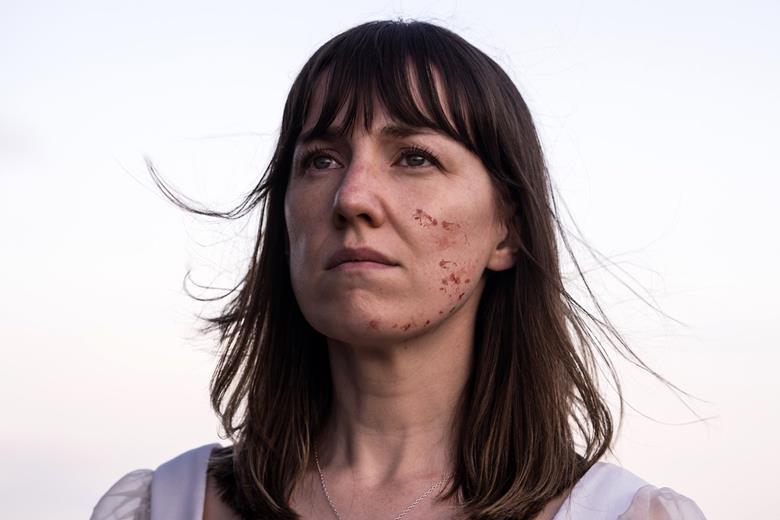
Clare Monnelly plays a student nurse who senses something troubling and beyond her control in her patient’s house in Frewaka.

It’s very rare to see a film in the Gaelic language at the VIFF. Frewaka, from the Altered States series, is that film and a lot more.

The film begins in 1973. There’s a wedding in a local village. The wedding is crashed by village locals in traditional fashion wearing straw masks. The man looks fine about it as it’s tradition but the bride, named Peig, is unhappy about something. She goes outdoors as she’s sick but she spots something mysterious about the goat. The husband tries to look for Peig but can’t find her. Only her wedding ring on the ground. Peig is missing and it begins the story of the runaway bride of the village. Cutting to the present and to a reclusive elderly woman living in an apartment full of Catholic paraphernalia. She hangs herself as one of her crosses lights up red.

The film then cuts to another story in the present of a young woman named Siobhan, or ‘Shoo,’ who has just graduated form nursing school. Shoo’s mother has just died; the woman who hung herself. Shoo clears out her place emotionless, surprising her Ukrainian girlfriend Mila. Shoo never made amends with her mother after the years of abuse. Shoo is suddenly given a last-minute assignment to do palliative care with a woman in a remote village in the North. Shoo is hired mostly for her knowledge of Gaelic as the woman doesn’t speak any English and most of the villagers only speak Gaelic as well. This may come at what should be a very inconvenient time for Shoo, but she accepts it without a problem, leaving the pregnant Mila behind to deal with the stuff.

Shoo may be hard-headed and hard-hearted towards the work she’s about to do but she senses something isn’t right about this. She first senses this as she goes to the town and asks directions to the woman’s place. Two villagers at the store tell her not to go to the house. She also notices as one farm boy from the town looks at her strangely. Then she goes to the woman’s house. The woman’s name is Peig: the ‘runaway bride’ from 1973. She’s elderly now and she’s agoraphobic to the point she won’t leave the house. Shoo senses something very uneasy about Peig’s house. It’s big with a lot of rooms, but aging, crumbly and full of bad taxidermy and various talisman. What Shoo finds most frightening is Peig’s cellar door. It’s painted red and has many good-luck symbols nailed on surrounding it. Jarring noises and phantom images come from that cellar door. Even Peig herself feels that cellar has a frightening spiritual threshold, which she refers to as ‘them.’

Looking after Peig turns out to be a frustration for Shoo. Very often, Peig goes into her dementia and won’t take her medicine. There are many times Peig refuses to leave the house, possibly fearing that something will take her away. Despite that during the time, Peig and Shoo form a bond. The bond seems positive at first, but soon Shoo is haunted by her own past memories. In that time, Shoo feels a drawing that she herself feels she must go to that cellar door to find out what’s inside. Is it the ‘them’ that Peig keeps on referring to? In addition, Shoo also senses the same haunting feeling Peig does, including a crucifix that lights up red just like her late mother’s.

Over the next days, the nursing agency is contacting Shoo about her reports of incompetence on the job and Mila is infuriated with Shoo as she feels she left her abandoned pregnant and with her late mother’s stuff to manage. But Shoo is fixated on the cellar door and the hauntings in Peig’s house. Finally she does go into the cellar and finds out what’s inside. Inside are key clues to Peig’s past, including the ‘runaway bride’ story. Shoo also discovers what is so haunting down there. Within time, Shoo herself becomes consumed by the hauntings and with the appearances of the masked villagers similar to that at Peig’s wedding and they overtake Shoo to leave a haunting ending.

It seems to be a thing now to make a smart horror film. We all remember the guilty pleasure horror movies of the 80’s and 90’s that were for to shock us, scare us or disgust us or even try to add bizarre humor to get us laughing. These past ten years, there have been a lot more smarter horror movies that are a lot like psychological dramas. Some have even made critics’ lists as the best film of the year. This film is another film that makes the attempt at becoming a smart horror film and it does a very good job. This film is also a horror film that includes a lot of cultural elements as well. We see it in the Irish folklore and Irish mythology shown in various scenes and even in villagers and their broom masks. Adding that in is what makes this horror film unique. I think every culture has some mystical spirits or mystical hauntings from old folklore.

It’s not just Irish folklore that add into the affect of horror in the film. There are also ugly pieces of Irish history. One thing that has been vocal in recent decades is how the Catholic Church mistreated people in the past. It’s also been especially vocal in how it treated women. We hear about stories with the Magdalene laundries, we hear other past abuse stories. It’s also possible that Peig’s marriage at the beginning could have been a marriage arranged with some Catholic input and something Peig could not see herself living through it. That could also explain that crucifix in the film that lights up red. Of how Catholicism is now seen more as a curse than a help in Ireland.

This is an impressive horror drama. It tells of a bond between two women who are complete opposites. One is an ailing former runaway bride. The other is a lesbian who chose her girlfriend but gives her neglect. One has lived in the village all her life and as a recluse. The other has lived in the big city her life, well-educated and speaks Gaelic well. They appear to be opposites but over time, both will show to have some things in common. Both have had abusive influences in their life. In both cases, it was religious-based. Both are haunted by the cellar door, what they think is inside the cellar and what is actually inside. As what causes Peig’s fears reveal itself, the ugly irresponsible side of Shoo is revealed. All of it just slowly unravels itself as time presses on and adds to the eerie feeling of the film and for the shock ending.

This is an impressive work from writer/director Aislinn Clarke. This is her first self-made feature since 2018’s The Devil’s Doorway. Although I have not seen it, the storyline from the premise descriptions I’ve read has some similarities with Frewaka. Here, Clarke gives another story of religious spirits haunting those around. It’s well-written and we’ll pieced together. The beginning could have been organized better but the story does make better sense as it goes along and keeps it being the thriller it’s intended to be. Clare Donnelly does a great performance as Shoo. She does very well as a woman who’s strong and stern but soon becomes consumed of what haunts the house. Also great is Brid Ni Neachtain as the elderly Peig who has lived a lifetime of being haunted and traumatized. She is very convincing in her character.

Frewaka is not just a supernatural thriller that one would see in VIFF’s Altered States films. It’s also a film that shows some unique aspects of Irish paganism or Irish occult and ugly parts of Irish history. The elements are just as intriguing as the story itself.

VIFF 2024 Review: Marlina The Murderer In Four Acts (Marlina si pembunuh dalam empat babak)

Marlina: The Murderer In Four Acts is a thought-provoking drama about Marlina (played by Marsha Timothy, right) and her friend Novi (played by Dea Panendra, left) deal with the mysogyny around them.

Not every film at the Vancouver Film Festival is a film from 2024 or 2023. Marlina: The Murdered In Four Acts is an Indonesian film made in 2017. It was one of four films in the Leading Lights program of VIFF of picks from Pakistani-Canadian director Zarra Khan. It is a good film worth seeing.

The film begins with the first act: The Robbery. Marlina is a recent widow living on her farm on the Indonesian island of Sumba. You can tell she is still hurting as she has her husband’s mummified body in the house. One day, a gang of seven men arrive being led by Markus: the oldest of the gang. Their intention is to steal the livestock and to tape her now that her husband is deceased. Before they commit to the act, they demand she cooks them a dinner. She agrees to cook but poisons the dinner. All the robbers except Markus are affected by the poisoned dinner. Markus then rapes her in the bedroom but somehow she’s able to kill him by decapitating him while in the act and then burns his jungaa (musical instrument) he brought along.

The film then leads into the second act: The Journey. The next day, Marlina knows she will have to go on the run. She knows the surviving robbers will wake up from their poisoned stupor and want to kill her or rape her in revenge. She’s able to get on a bus. While on the bus, she meets a pregnant woman named Novi. Her pregnancy has been longer than nine months. Because of this, her husband Umbu suspects the delayed birth is because of infidelity and has left her. She’s on a trip to find Umbu as she expects the birth to happen soon. Also on the bus is an old widow with a dowry payment of two horses on her way to her nephew’s wedding.

Sure enough, two robbers have awoken and discover the deaths of Markus and other men. As expected, they go on their journey for revenge on Marlina. Much to their luck, the two robbers find the bus that Marlina’s on and hijack it. Marlina is able to find an escape with one of the widow’s horses. The escape is successful but Marlina is not alone. Following her and haunting her is an apparition of the headless Markus playing the jungaa.

This leads to the third act: The Confession. Marlina is far away from any harm in a village where nobody knows her. She decides to stay in the village because it has a police office and she can file her claim of robbery and rape. At the office, the police ask her some personal questions. Some of which appear narrow-minded.  The officer delivers some unpleasant news. Although they accept her claim, they don’t have the funds to purchase rape test equipment. Such funds will require a wait of a month or so. As Marlina is in the village, she stays at a warung. At the warung, she notices the daughter who has to work the business while the boys are at school or playing football. Marlina develops a bond with the young girl. Marlina is able to get a break from the pursuing robbers but is still haunted by the walking headless body of Markus.

This leads to the film’s fourth and final act: The Birth. The start of this act involves Novi. She finally finds Umbu. Instead of embracing her, he notices she has not given birth and believes a breech baby is a sign of her cheating. He hits Novi and leaves her. Unfortunately it’s Franz, one of the two surviving robbers, who finds Novi. He threatens her to lure Marlina back to Marlina’s house for his revenge. As the three meet at the house and face each other, Novi’s water breaks. Nevertheless Franz demands a dinner. There, Franz is able to reunite Markus’ head with his corpse and place it next to the corpse of Marlina’s husband. Franz thinks he can finally get revenge on Marlina and just when he thinks he does, Novi has another idea and is able to commit it despite being in labor. The film ends with Marlina, Novi and the newborn baby leaving the house the next morning.

This film tells a story of a woman on a mission to avoid being prosecuted for the murder she committed in self-defense and at the same time, avoid one of the men who seeks vengeance. The film also tells a lot in terms of sexist attitudes. We have Marlina who killed her rapist and is on the run. We also have Novi, a pregnant woman who was left abandoned by her husband.

Throughout the film, they face sexist attitudes from the men they’re around. There’s Marlina whom the thieves want to make their ‘slave’ in the robbery and Markus who wants to make her his ‘love toy.’ There’s Novi who is pregnant longer than normal and her superstitious husband sees it as her being unfaithful. There is surviving robber Franz who, more than any other robber, seeks revenge and to rape Marlina. There’s the police who give Marlina narrow-minded questions about the rape and, due to lack of funds, have to delay giving her a rape kit. There’s the girl at the village restaurant who is forced to work while the boys have the leisure time to play football. Finally, there’s Umbu who believes myths about delayed pregnancy and breech birth being sighs of infidelity and slaps Novi. Seeing all this happening to Marlina and Novi makes you wonder is that the sexist attitudes in Indonesia? I know there are different sexist beliefs in every country but are there other countries that have similar mythical sexist beliefs? It really makes you wonder. It also makes you understand why taking the law into their own hands was Marlina’s and Novi’s only option.

The film itself does the right thing in making it a story in four acts. The first act is about the robbery where a gang of robbers seek to rob a recent widow of her live stock and one of them to rape her in the heist. They fail thanks to Marlina’s brave wits but that leaves Marlina to seek justice. The second act is where Marlina meets a woman who would become just the partner she will need in the revenge plot, though she wouldn’t know it at the time. The second act is also where she learns of her revenge plot from surviving robber Franz and where she has to make her escape. The third act is where Marlina learns justice can only help her so much and gets her one day of peace knowing that Franz’s revenge is looming. Then the fourth and final act happens as her partner Novi is left by her husband and Franz’s revenge eventually happens. It becomes apparent the only person who can help Marlina is Novi. It also becomes obvious the only person who can be a person of support to Novi is Marlina. The story isn’t just a rape revenge story nor just a story of vigilantism. It’s also about two women betrayed by people that are supposed to support them when they need it. In the end, both turned out to be who the other needed and a bond was formed. It’s a good way of sending a message without losing focus that there is a drama to tell.

This film is a great accomplishment for Indonesian filmmaker Mouly Surya. This is the third feature length film she has directed. Along with directing, she co-wrote the film with Garin Nugroho and her husband Rama Adi. She does a great job in presenting the story of two women who not only have their enemies to deal with but a society of sexism. It’s great to see her deliver a story with a message of sexism that does not forget that it’s a dramatic story. She balances it out well. Also excellent is the acting of Marsha Timothy. She does a good job of making her character of Marlina a fierce heroine but also a common Indonesian woman at the same time. Making that balance is not easy and Marsha does a great job. Also great is Dea Panendra as Novi. She does her own great job of playing a common Indonesian woman who soon learns of her own brave courage. Yoga Pratama is also very good as Franz. Sometimes you wonder who is the true villain of the film? Markus or Franz? He even manages to make you feel sorry for him.

When it was released back in 2017, the film has won numerous film festival awards such as a special award at the Asia-Pacific Film Festival, the Queer Palm at Cannes, the NetPac Award at the Rotterdam Film Fest, the Grand Prize at the Tokyo FilmEX, three awards at the Festival Film Indonesia including Best Film and an Audience Award nominee at the AFI Fest.

Marlina: The Murderer In Four Acts is more than just a drama of revenge killing. It’s also a revealing look at sexist attitudes and the treatment of women that’s common in other parts of the world. If you see their stories, you can understand why Marlina and Novi would make vigilantes of themselves.