
Obama’s Same-Sex Marriage Stance And The Upcoming Election

DISCLAIMER: The object of the article is not to express my personal view of same-sex marriage but to give an analysis on how it could impact the National Election.

 “I’ve been going through an evolution on this issue. At a certain point, I’ve just concluded that for me personally, it is important for me to go ahead and affirm that I think same-sex couples should be able to get married. I have hesitated on gay marriage in part because I thought that civil unions would be sufficient. I was sensitive to the fact that for a lot of people the word marriage was something that evokes very powerful traditions, religious beliefs and so forth.”

That announcement from Barack Obama during an ABC news interview is seen by many as a positive move. For many Americans, this is an announcement they feel they’ve waited too long to hear. For other Americans, they are unhappy at what he declared and can’t believe that an American president would approve of such a thing. One thing to take a note of is that Obama made that announcement almost six months before the American people go to vote for President of the United States. The question remains was that a smart pre-election move or a risky move?

To get an understanding of why the topic of same-sex marriage has always been a hot button, you have to look at social history. Same-sex relationships and activities have always been looked down upon worldwide throughout history. Things started changing starting in the late 60’s. The signs of changes coming first occurred in the late-40’s early 50’s when professor Alfred Kinsey published his findings on human sexuality and activity. Part of his findings included what he learned of homosexuality and he even talked of the seven levels of homosexuality from the completely heterosexual Level 0 to the fully homosexual Level 6. It wasn’t until the 1970’s that things reached a turning point in the US when openly gay politician Harvey Milk was voted into San Francisco city council and helped defeat a bill banning homosexuals from housing and teaching jobs in 1978. The 80’s was a hard and dark time for gay men as the AIDS epidemic had gay men as most of their victims. The 90’s experienced a resurgence of pride with President Bill Clinton urging gays in the military. It’s only until this century that the gay population of the United States saw the possibility of gay marriage. And with good reason.

Hard to believe that 25 years ago, the idea of same-sex marriage was unheard of anywhere in the world. The first sign of things to come happened when same-sex relations were first legitimized in Denmark back in 1989 as ‘legalized partnerships’. Many countries followed with their own recognition, like ‘registered partnerships’ or ‘life partnerships’, but it wasn’t until 2000 when the Netherlands became the first country to officially recognize same-sex matrimony. Belgium and the Canadian province of Ontario followed in 2003 with Spain following in 2005 and South Africa following in 2006. Today thirteen countries legally recognize same-sex marriages.

The United States was always hard to achieve legal recognition. Even if a President is liberal in beliefs and stances, he will face the pressures of the political opposition. That explains why even though Bill Clinton was the most ‘gay-friendly’ President Of The United States in its history and even supported gays in the military, he compromised to a ‘don’t ask: don’t tell’ rule. In 1996 he even signed the Defense of Marriage Act (DOMA) which defines marriage as ‘one man and one woman’ after it was passed as law by Congress. Nevertheless the right would gradually increase state-by-state. It wouldn’t be until May 2004 that Massachusetts would become the first state in American history to legally recognize same-sex marriages. The issue of gay marriage would continue to be a state-by-state issue as some states would legitimize same-sex marriages while other states would pass laws prohibiting such recognition. Even some states–most noticeably the state of California with Proposition 8– would place the issue on the voter’s ballot. Currently nine states in the United States give full recognition to same sex marriages while most other states have either a statute or a constitutional law banning same-sex marriage. Nineteen states have a constitutional law banning recognition of any same-sex union.

Now comes President Barack Obama. Like Bill Clinton before him, Obama has also had his times of personal stances and bowing to pressures from the opposition. Obama favored legalizing same-sex marriages in a 1996 interview but during the 2008 Presidential Election campaign, he stated he believed marriage to be one man and one woman. Obama exhibited similar complications when in January 2009 he opposed a federal mandate for same-sex marriage and opposed DOMA. He’d continue to say that his opinion of same-sex marriage was ‘evolving’. However the first hint of Obama siding with the position of same-sex marriage came in February in 2011 when he announced that DOMA was unconstitutional. It wouldn’t be until May 9, 2012 that Obama would finally make his stance on same-sex marriage heard. His opinion was warmly greeted by many people, especially LBGT groups and other liberals. Some people were skeptical, feeling they might still get the same raw deal they’ve been getting for years. There’s no question that the upcoming Presidential Election had a lot to do with his announcement.

Even though Obama’s gay marriage stance appears as a positive step towards the upcoming election, there is also the opposite side as this could pave the way for a Republican being President. Of all issues facing the United States, it’s this issue that best resembles the current divisiveness and polarization of American politics. Its strongest opponents of course are those that side with the Republican Party and the values it stands for. The Republican Party has always left a bitter taste in the throats of the LGBT population of the United States. They still remember how conservative icon President Ronald Reagan sided with religious leaders; including the Moral Majority’s Jerry Falwell who declared  the AIDS epidemic in the early 80’s as “God’s punishment to the gay lifestyle”. This may have a lot to do with the Reagan Administration’s slow acting upon the epidemic. President George Bush Sr. was strongly opposed to gays in the military and campaigned the Republican Party during the 1992 Presidential election as ‘the party of family values’: a title that has popularity stuck since. The younger George Bush even tried to push for a constitutional amendment defining marriage as ‘one man and one woman’ only to lose in the Supreme Court in 2004. Many believe his opposition to same-sex marriage is what helped him win the 2004 Election.

Soon after came the right-wing of the United States of today. You can hear it in the many voices of the right-wing pundits on the airwaves constantly stating their opposition to same-sex marriage, even going as far as declaring that ‘marriage is not a right’.  Many Republicans strongly believe that defining marriage as ‘one man and one woman’ is a value instead of a prejudice. There’s even a set of voters in the millions that vote at election time on ‘family values issues’, known as ‘Values Voters’. Even Republican politician Mike Huckabee slammed Obama’s declaration of DOMA as ‘unconstitutional’ and a bad move come the Election. As expected, all candidates for the Republican Race were opposed to same-sex marriage.

You can bet after Obama’s stance that Wednesday, there was a lot of talk of the right-wing and the Republicans, especially from Race front-runner Mitt Romney. Three days after, Romney spoke to a graduating class at Liberty College reaffirming his opposition towards same-sex marriage and declaring his strong support for traditional Christian values. He even declared: that the “pre-eminence of the family” remains at the heart of the principles that underpin the nation. That drew a loud cheer from the 25,000 in the crowd.

There is an interesting footnote in Romney’s view. It’s also been known that he’s not opposed to same-sex adoption. Also interesting to know is just days after his stance on traditional marriage, it was brought to the attention that Romney was a high school bully who bullied an allegedly gay student because of his fancy hairstyle. Romney promptly apologized in public for all the bullying he did.

So Obama said his thoughts on same-sex marriage and the public have responded. His stance on same-sex marriage could either help him or hinder him. The big question is will it work against him n the upcoming Presidential Election or will it work for him? And if it does work for him, will that pave the way for full recognition of same-sex marriages in the whole of the United States? It will all be decided on November 6th, and possibly the four years after.

WORKS CITED:

WIKIPEDIA: Timeline of Same-Sex Marriage. Wikipedia.com. 2012. Wikimedia Foundation Inc.

<http://en.wikipedia.org/wiki/Timeline_of_same-sex_marriage>

WIKIPEDIA: Same-Sex Marriage In The United States. Wikipedia.com. 2012. Wikimedia Foundation Inc.

<http://en.wikipedia.org/wiki/Same-sex_marriage_in_the_United_States>

Roberts, Robin. Interview.  ABC News. May 2012. 9 May 2012. <http://news.yahoo.com/transcript-robin-roberts-abc-news-interview-president-obama-001212560–abc-news-topstories.html>

Parisse, Emmanuel. “Romney adamantly rejects same-sex marriage” Yahoo! News 12 May 2012. <http://news.yahoo.com/romney-courts-young-evangelicals-promotes-values-062331045.html>

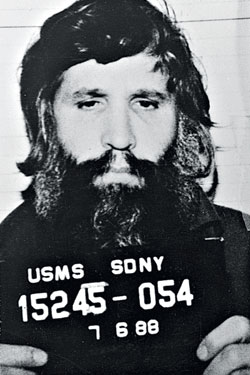
Little Boy Lost: Why Etan Patz Still Matters Today

Etan Patz, a 6 1/2 year-old NYC boy, left his apartment one morning in 1979 and was never seen again.

The news broke Thursday the 19th. New York police started searching the basement of an apartment that could have the buried body of Etan Patz: a 6 ½ year-old boy missing since 1979. The building was located on Prince St, the same street as the Patz family’s apartment. People who never knew the story behind this asked “Who is Etan Patz?” Those of us who have been around since it all happened either know the story all too well or felt the effects of it over time.

Friday May 25, 1979 started like any other day in the United States. By day’s end, there would be two events that would change things forever: the crash of American Airlines Flight 191 just outside of Chicago and the abduction of New York City child Etan Patz. The plane crash would be the deadliest air disaster in US history (outside the 9/11 attacks) for claiming 273 lives and would lead to changes in airline maintenance and would be the beginning of the end of the DC-10 aircraft. The abduction of Etan Patz would soon pave the way for stronger measures and procedures for dealing with missing children and would lead to many of the tougher laws and better, more immediate procedures that exist today.

Before Etan Patz, child abductions were not taken that seriously. Most were either thought of as runaways or kids that would eventually find their way home. Kidnapped children were originally thought of as only happening to children of rich parents where the abductor would demand ransom money for the child’s release. Even before Etan’s disappearance, an ugly truth of child abductions that was already happening was about to unravel. It all started that Friday morning. Etan Kalil Patz was a six-and-a-half year-old boy living in lower Manhattan, the middle child of Stanley and Julie Patz. Etan had always walked with his mother to the school bus stop but for months, he was begging to go alone because all of his friends were. He was given that landmark day that Friday. He woke up, got dressed, had breakfast, waved goodbye to his mother and then walk down the Prince St. apartment stairs to the bus stop two blocks away, alone for the first time. He was never seen again.

Immediately upon news of his disappearance, the police and media were in a rush. Stories abounded. His face was even shown on the nightly news. Stanley and Julie Patz soon became media figures. Etan’s story would become the hottest child kidnapping story since the Lindbergh Baby. Never before was the press and the police so immediate over a child kidnapping. Nevertheless stories would arise how some child kidnappings in the years before Etan, and some in the years after Etan, were not so lucky to receive prompt action from authorities or the press. The lack of resources and coordination between law enforcement and other government agencies left many parents of missing children frustrated. Even Julie Patz made mention in an interview two years after Etan’s disappearance that there were many children’s’ bodies in morgues being left unidentified.

Soon more news about child abductions came to the surface. There was the 1981 abduction of Florida six year-old Adam Walsh who’s severed head was found two weeks later. There were Oklahoma 13 year-olds Charlotte Kinsey and Cinda Pallett assigned to do a carnival job overnight in 1981 and never heard from. There was 12 year-old Iowa boy John Gosch who left home for his paper route in 1982 and was never seen again. Further names came about: 12 year-old Ann Gotlib from Kentucky, 14 year-old Elizabeth Ann Miller from Colorado, 16 year-old Maurice Jefferson from Florida, 9 year-old Taj Narbonne from Massachusetts, the list is endless. Better actions had to be done.

The subject of missing children soon became unavoidable. Each state had their own missing child cases to deal with. It even hit internationally in Canada and other countries. Over time, the subject of missing children would soon be a hot topic and better laws were enacted both in states and nationwide. In 1983, May 25th–the date of Etan’s disappearance–would be declared National Missing Children’s Day. The faces and descriptions of missing children would soon appear on milk cartons. Etan was the first. The FBI and various state police departments passed tougher laws and adopted better faster actions towards dealing with missing children. The National Center for Missing And Exploited Children was formed by the American Congress in 1984. Posters of missing children appeared at bus stations, border crossings and police stations. Local police would visit schools and teach children of the danger of strangers. Some would even give fingerprinting. Child identification programs that included fingerprinting and child identification files started up nationwide. Finally a problem that had been long ignored got its long overdue improvements and changes in procedures.

One thing about is his disappearance is that it sure has changed childhood and sure has changed parenting. With it came the loss of the essence of childhood. Parents were confronted with the fact they could no longer afford to give their children the carefree childhood they felt they deserved. They felt the need to hold on to their children tighter. Many newspaper writers have written editorials about how Etan Patz’s abduction changed everything. Before his abduction, monsters were seen by children as something of their imagination. Since the Patz abduction, today’s children know monsters exist in real life. Parenting has also changed. It makes it a lot harder for a parent to let go of their child, knowing that so many children go missing. You can guarantee that ever since Etan went missing, a child will have to wait longer than 6 ½ to walk alone to the school bus. A dark truth could no longer be avoided right there and then and remains unignorable today, especially with pedophiles now able to use the internet to lure kids.

PRIME SUSPECT: Jose Ramos

You can guarantee that in the years since Etan’s abduction, missing children has been taken seriously and continues to be taken seriously today Authorities are quick to act whenever a child goes missing. Awareness is immediate. Punishments are severe for the abductors. On the downside, it became apparent in the 90’s that potential abductors knew of the stricter measures and tougher precautions that were made against them. That caused many to find new and sneakier ways to abduct children, like the 1993 abduction of 13 year-old Polly Klaas at knifepoint in her own home and 9 year-old Amber Hagerman being yanked off her bike and immediately taken into a car. Those abductions and the finding of their bodies would lead to the creation of the Polly Klaas Foundation, Marc Klaas to lobby for tougher sentences for convicted felons, and the institution of the Amber Alert which alerts people through buses and on radio stations about sudden missing cases. There’s even a recent statistic out that today 99% of abducted children are found alive. Despite all these improvements and changes, it’s all too much too late for many missing children of years and even decades past, like Etan Patz.

Etan Patz was never found dead or alive. The case has never been closed, although there is a prime suspect. His name is Jose Antonio Ramos. In the late 1980’s, he started serving a 20-year prison sentence in Pennsylvania for sexually abusing a boy. In 1991 it was alerted to Stuart GraBois–Assistant United States Attorney who received the Patz case in 1985–from jailhouse informants that Ramos admitted involvement in the disappearance of Etan. Ramos was the boyfriend of Etan’s babysitter at the time of Etan’s disappearance. The Patz family had known for years that he may be involved but it wasn’t until then they were able to get any legal action. Further confessions led the Patz family to confront the fact in 1999 that Etan was dead. In 2001, Stanley and Julie Patz had Etan legally declared dead. In 2004, they won a wrongful death suit against Ramos for which they were to be awarded $2 million. One thing that could not be done is place a murder charge on Ramos. The District Attorney at the time, Robert Morgenthau, said a criminal indictment could not be sought because the body of Etan has never been found. Ramos is scheduled to be released from prison in November 2012. The Patzes fear he will continue to be a threat to children until he is unable to walk. Ever since he learned of Ramos’ confessions, Stan Patz sends Ramos a copy of Etan’s missing poster on Etan’s birthday and the anniversary of his abduction. On the backs, Stan has typed the question: “What have you done to my little boy?”

Potential Second Suspect: Othniel Miller

Despite the strong evidence against Ramos and the subsequent legal actions, the case continues to be unclosed. The fact that no body has been found has prevented a lot of justice from being done and the decades-old mystery from being solved. In May 25, 2010, the Etan Patz case was reopened by Manhattan District Attorney Cyrus Vance Jr. Since then, a second suspect has come to the attention: Othniel Miller. At the time of the Patz disappearance, Miller was a handyman who owned a workshop in a building near the apartment the Patzes resided in. His workshop doubled as a play room for small children. Recent revelations have come to light in recent years: one is from his ex-wife that he raped her 10 year-old niece; another is the fact that a fresh concrete floor was poured in his workshop the year after Etan’s Disappearance; another is Jose Ramos did odd jobs for Miller in the past.

Miller is now 75 and has suffered many strokes. He was very cooperative in talking with FBI agents for the past 30 years but denies any involvement with the Patz case. Then a cadaver dog was allowed to sniff in the basement and alerted a clue. There was the potential that Etan could be buried underneath the floor of concrete. Nevertheless cadaver dogs are known to be erroneous and can easily be distracted if they sniff out something as simple as a dinner. Despite the slim odds, Stanley Patz was content with the search as he believed something is better than nothing. The search began on Thursday the 19th. Concrete was excavated, cut, crushed and even analyzed for any possible forensic detail. There was a stain on the wall that came to the alert as a possible bloodstain. However the search for Etan in that apartment concluded on Sunday. There was not enough evidence. That small stain wouldn’t be enough to prove anything according to the NYPD because it’s quite possible it wasn’t a bloodstain at all. There was no body found underneath the basement floor. Even that claim against Miller is under question as his stepson claims he never raped his 10 year-old niece and would never hurt a child. For the record, Miller was never charged for it. Nevertheless the Etan Patz case remains opened. A mystery like this deserves to be solved.

Whether Etan Patz will ever be found or whether case will ever be closed or not is still a big question. There may be new evidence and new investigations anytime in the future. Nevertheless the recent search reminded the public of the importance of this case. It was the missing child case that led to the major changes and tougher procedures in policing and justice that exist today. It was also the case that made parents and children wake up to the potential dangers. It all started that Friday morning in Manhattan 33 years ago. Hard to believe the child whose case started it all has never been found.

UPDATE: For May 25th update, Click Here.

WORKS CITED:

WIKIPEDIA: Disappearance Of Etan Patz. Wikipedia.com. 2012. Wikimedia Foundation Inc. <http://en.wikipedia.org/wiki/Disappearance_of_Etan_Patz>

“Etan Patz: Search Ending With No Evidence Of 6 Year-Old Boy.” ABC News.go.com. 2012. ABC News. 23 April 2012. http://abcnews.go.com/US/etan-patz-search-ending-evidence-year-boy/story?id=16192599

For Further Reading:

Writer’s Editorial s from Yahoo:

http://news.yahoo.com/etan-patz-changed-generation-213000800.html

http://news.yahoo.com/nyc-boy-vanished-era-anxiety-born-181742158.html

NHL Playoff Madness: Here We Go Again

Okay, many of you may remember my Canucks articles from last year. The reason for it was obvious: our third and possibly best chance to win the Stanley Cup. For those of you who want to read them again or have never read them, here are my articles: Confessions Of A Canucklehead, My Stanley Cup Experience, Stanley Cup Game Seven preview and aftermath.

Last year we won the Presidents Trophy. This year we do it again. It wasn’t entirely expected at first because October, the first month of regular season started on a down note with five wins, five losses and one overtime. Many Vancouverites were uncertain if we’d do it again but I reassured many that if the Lions can lose their first five games and then go on to win the Grey Cup, the Canucks still have a chance. The months became better over time as the Canucks would bag more wins and move up higher in the ranks to the point they appeared poised to repeat as Presidents Trophy winners.

However it would be a tight April 7th as the Canucks were one of four possible teams to win the Trophy and it took a final game that night. Their toughest rival for the Trophy, the New York Rangers, lost their final game. A win from the St. Louis Blues wasn’t enough to supersede the Canucks in the League standings. A win from the Pittsburgh Penguins meant that an overtime at the least would be what the Canucks would need at the least. It wasn’t like last year where the Canucks had a comfortable lead over the second-place team in the NHL by six wins. Nevertheless the Canucks won against Edmonton 3-0 and they repeated as Trophy winners. I remember the game well as I saw it at my cousin’s place. It was a fun time. It wasn’t just hockey action but the dogfights too. My cousin has two dogs–one that looks like Lassie and a puppy that looks like Toto–and they fought alot duing the games. The fights were even more entertaining than the actual hockey fights!

The funny thing is that even after the Canucks won, it wasn’t all over. There was still one last NHL game being played at the time: Los Angeles Kings vs. San Jose Sharks. It was an important one too as the Kings and Sharks were both #7 and #8 in the Western Conference and a loss from either team would make them #8 and thus the Canucks’ first Stanley Cup Playoff rival. The game went into overtime and ended with an overtime goal from the Sharks. The Kings are the Canucks’ first rival en route to the Stanley Cup.

Now it’s Playoffs time. It all starts April 11th and Vancouver will face Los Angeles. Vancouver has won two of the four regular season games against LA with one of their losses being an overtime. Vancouver has consistently played better against the Kings at home which is an advantage for this contest.

Anyways the sixteen Playoff berths have been decided and the match-ups are set. The whole playoff action begins on April 11th. Lots of fanfare and celebrations to be held. One thing’s for sure that I will not buy a ticket for a Finals game again if the Canucks do happen to make it. The amount I payed for a fourth-class seat at the game was ridiculous and I won’t do that again.

So enjoy the playoff action. There may be sixteen cities celebrating now but by June, there will only be one city still smiling. Let’s hope it’s Vancouver this time.

The Hunger Games Very Hungry For Hype

Jennifer Lawrence and Josh Hutcherson: stars of the upcoming The Hunger Games.

Have you seen stuff about The Hunger Games? How could you not? The trailer has been showing in theatres these past few months. Magazines have been having cover stories and even special commemorative issues to do about it, even though it doesn’t open until three days from now. Movie shows both on television and Youtube are all abuzz about it. This is the latest movie hypefest, and for good reason.

The Hunger Games is based on a popular young adult novel by Suzanne Collins released in 2008. It has since sold over 1 million copies and has been translated in 26 languages. The first novel has spawned off two more subsequent novels Catching Fire and Mockingjay: all part of what’s known as The Hunger Games trilogy.

The film version of the novel finally hits the big screen this weekend and already boasts an impressive line-up. First up is 21 year-old Jennifer Lawrence who plays Katniss. She is most famous on television for The Bill Engvall Show but her film career has taken off in the past couple of years with roles in Winter’s Bone, which she was nominated for an Academy Award for Best Actress, and for X-Men: First Class. Peeta will be played by 19 year-old Josh Hutcherson who has had an impressive acting career as a child with movies like Zathura and Bridge To Terabithia and has continued success as a young adult in The Kids Are All Right. Gale will be played by22 year-old Liam Hemsworth. He’s best known as the younger brother of Chris Hemsworth but Liam has a resume of his own with television experience in Australia and movie experience in the US with The Last Song.

The movie also has supporting roles played by some well-established adult actors like Woody Harrelson, Elizabeth Banks, Stanley Tucci, Lenny Kravitz and Donald Sutherland. The movie is directed by Gary Ross, most notable for directing Pleasantville and Seabiscuit. There’s lots of pressure for this movie to succeed as the success of the first movie should tell a lot about the future of the next two sequels. Hollywood is already expecting this to be the next hit movie series. And let’s face it.  The Harry Potter series is finished. The Lord Of The Rings series is history with one last Hobbit movie to come. Twilight has its last movie to come, hence its own twilight within a year. James Bond movies aren’t exactly one for the young clique. So this Hunger Games is seen as the next big movie series to propel the box office.

So far the hype seems to be paying off. The pre-sale tickets for the opening weekend have been on sale since February 22nd and has already sold almost 2000 shows in advance, a record according to the Huffington Post. Even the first Twilight movie’s pre-sales weren’t that high. The actual opening weekend total is still in question and to be determined this Sunday. Experts run the gamut over predicting the opening weekend to be anywhere from $85 million to $140 million. It could be possible to set an opening weekend record but it would be a bit of a surprise since March isn’t the best month for setting opening weekend records: the summer months are. So far the biggest opening weekend for a March movie is 2010’s Alice In Wonderland with $116.1 million: the tenth-highest opening weekend ever. Anyways for those keeping Box Office score, here are the records to focus on, according to Box Office Mojo:

  • Biggest Opening Weekend (All-Time): Harry Potter and the Deathly Hallows: Part 2 – $169.2 million
  • Biggest Total Gross (All-Time): Avatar – $760.5 million (U.S.)/ $2.782 billion (Worldwide)

So hang tight folks. The Hunger Games open Friday. Let the games–both The Hunger Games and the Box Office Games– begin!

UPDATE: I saw the movie and here’s my review!

Kim Jong-il’s Death Leaves An Uncertain North Korea

The news was revealed on December 17th. Kim Jong Il was dead. At first, people thought it was a hoax. Later it became official news. Even images of his body lying in state while North Koreans mourn him have made it official. His successor is his third and youngest son, 28 year-old Kim Jong Un. He has officially assumed the office on December 24th just days before his father’s funeral. The big question is will Kim Jong Un be able to rule the tiny, private, separatist country the way his father has or will North Korea find its grip succumbing to the times?

The nation of North Korea has existed since 1948. Korea was under Japanese occupation for decades before World War II and existed as a nation after World War II ended. However it was divided at the 38th parallel under a United Nations agreement with the Soviet Union occupying the north part and the democratized world occupying the south part. It was the communist North’s refusal to participate in a 1948 UN-supervised election that led to the two Koreas being separate and Kim Il Sung being the leader of what established as the Democratic People’s Republic.

North Korea is not only unique for having only three heads of state in its existence but also from the same family: first Kim Il Sung, then Kim Jong Il and now Kim Jong Un. During Kim Il Sung’s reign, he wreaked havoc of his own. The two Koreas tried to control each other during the first few years of existence. Its escalating border conflicts led the North to invade the South which kicked off the Korean War: a civil war that lasted three years, included support for the south from UN-backed countries like the US, the UK and Canada, and left a total of over 2,000,000 soldiers and civilians dead and the borders restructured as originally planned with a heavily-armed Korean Demilitarized Zone protecting the borders. Despite the peace, relations between the North and South have been tense as was common during the Cold War times and still remain tense to this day. The North has attempted many times to assassinate leaders of the South, North Korea boycotted the 1988 Summer Olympics as Seoul was the host city, and has even attempted to develop its own nuclear weaponry. Even as the South adopted a Sunshine Policy in 1998 to moderate for peace, that hasn’t stopped the North from uttering threats and causing international tension.

During the time of Kim Il Sung, he developed a ‘cult of personality’ status that would even make some of the heads of state of most other Communist countries envious. He adopted the title of the ‘Great Leader’: a title repeated constantly amongst the citizens of North Korea of all three Kims. Glorification of him replaced all religion in North  Korea. Even after his death in 1994, he’s still referred to as the ‘Eternal President’ and his birthday is a national holiday in North Korea. As a ruler, he came across as the familiar tyrant we know Kim Jong Il to have been through his own methods. During the first years of his reign, he issued a command economy with all industry owned by the state and all agriculture collectivized. His economy was focused on peasants and workers and was aimed at eliminating class differences. Heavy industry and arms production were also predominant as was a large army. While the USSR and China were moving away from de-Stalinization, Kim was infuriated and began distancing North Korea from the two countries, even denouncing any reconciliation or peace attempts with the United States. The times from 1979 onward were very hard for North Korea as China moved towards economic reform and the European Communist countries including the USSR were exercising political reforms that led to the eventual overthrow of Communism. This led Kim Il Sung to make North Korea even more isolated: an isolation that still exists to this day. Its economy was soon hurting and Kim Il Sung was investing in nuclear arms production: a process Kim was fiercely protective of up until a month before his sudden death in July of 1994.

Kim Jong Il was named by Kim Il Sung back in 1980 to be his successor and eventually succeeded his father after his death. Kim Jong Il would wreak the havoc most people are currently familiar with during his reign from his father’s death up until his own death on the 17th. He would keep the heated ‘cold war’ between South Korea alive and well with constant condemnation and threats of war. He too was heavy on developing nuclear military prowess, resisting UN demands to inspect facilities and even threatening a war if North Korea was imposed sanctions. His military prowess kept on growing by number of soldiers and weaponry the Military First policy he adopted. The policy would continue in existence even as the people in North Korea had to deal with flooding in the 1990’s which lead to a huge reduction in arable land and eventually a famine that left anywhere from 1 million to 3 1/2 million North Koreans dead. Relationships with the United States weren’t any nicer either as Kim would still portray the US as the bad guy and George W. Bush referring to North Korea as part of the ‘axis of evil’. Even as relationships appeared to be improving one moment, things appeared to go wrong the next.

Now Kim Jong Un assumes the role as the ‘great leader’ of North Korea. Over the past two weeks, we’ve learned more about him. He attended school in Switzerland as a child, has a degree in computer science and has a military rank as general. He has two older half-brothers but it was believed by many through his personal character that he was most likely to be Kim Jong Il’s successor. In 2009, it was made official by Kim Jong Il. Since Kim Jong Il’s death, it has become a reality as title after title from North Korea’s government is now being bestowed on the younger Kim. Since the funeral and transition, the media has kept a watchful eye on North Korea and Kim Jong Un. There have been countless headlines leaving one to question the state where North Korea is going:

  • 24th – North Korea To Be Center Of Japan – China Talks
  • 26th – Kim Jong Un Meets With South Korean Delegation
  • 27th – North Asks South Korea For Money At Kim Jong Il’s Funeral
  • 27th – North Calls For Enactment of Investment Pact
  • 30th – Military Says South Korea Will ‘Pay For Hideous Crimes’

Once again, headline after headline that differ, confuse and even make people question about what the North will do next. Also in question is Kim Jong Un’s reign as the new leader. Does a dictator that’s not even 30 have what it takes to run a nation with a Stalinist style governing? Will North Korea still be a fierce hermit to the rest of the world? Will North Korea’s relations continue to be fiery and even lead to the ‘war’ North Korea keeps on talking about? Or will things open up and lead to progress and improvements in North Korea, especially its citizens’ way of life? Those are answers that can only be made as time moves on. Nevertheless it’s important for all to keep a watchful eye on events that unfold.

WORKS CITED:

WIKIPEDIA: North Korea. Wikipedia.com. 2011. Wikimedia Foundation Inc. <http://en.wikipedia.org/wiki/North_Korea>

WIKIPEDIA: Kim Il Sung. Wikipedia.com. 2011. Wikimedia Foundation Inc. <http://en.wikipedia.org/wiki/Kim_Il-sung>

WIKIPEDIA: Kim Jong Il. Wikipedia.com. 2011. Wikimedia Foundation Inc. <http://en.wikipedia.org/wiki/Kim_Jong-il>

2011 Corruption Perceptions Index Shows Many Surprises – Including For Canada

The annual Corruption Percentage Index has been released which ranks the most corrupt countries to the least corrupt. If there are two points one would most get from this list, it would be that Canada is slipping and that this is a very corrupt world.

Since three years ago, I’ve taken an interest in a certain annual chart. It’s called the Corruption Perceptions Index and it’s released by Transparency International. Transparency International is an international watchdog association headquartered in Berlin with 70 international chapters that monitors the corruption levels in countries around the world. Every year since 2002, they publish what they call a Corruption Perception Index which shows the annual corruption ranking of each country. They rank the countries based on a scale they give from 0 to 10. 0 is completely corrupt while 10 is not corrupt at all.

Many welcome their results while others question the validity and accuracy of the results. Some question whether Transparency International really has all their facts together when they make their list. The thing we shouldn’t forget about the list is that it’s about perceived corruption: the people’s ability to sense or notice corruption in their own country. This is based on poll questions ranging from “Do you trust the government?” to “Is corruption a big problem in your country?” Without a doubt, the results are rather surprising. Plus we shouldn’t forget that most governments do a good job of hiding their corruption so it’s hard to sense.

In the past, Canada has done very well ever since the Index has been published. Canada ranked an impressive 10th-least corrupt in 2011 with a score of 8.7. However the rank becomes less impressive knowing that last year, Canada ranked 6th with a score of 8.9. Also making it less impressive is the fact that it’s Canada’s lowest ranking on the list since 2006. The lowest Canada ever ranked on that list was 14th back in 2006 and 2005, and what was around the time the Gomery Scandal was fresh in the mind of most Canadians. The most recent government scandal–the Harper government’s contempt of parliament which led to a national election–had a lot to do with Canada’s slip of four spots.

For the record, here are the Top 10 least corrupt countries, according to this year’s Corruption Perceptions Index with score in brackets:

1)New Zealand (9.5)

2)Denmark (9.4)

2)Finland (9.4)

4)Sweden (9.3)

5)Singapore (9.2)

6)Norway (9.0)

7)Netherlands (8.9)

8)Australia (8.8)

8)Switzerland (8.8)

10)Canada (8.7)

Viewing the overall results can give some interesting facts and figures. Interesting how the Scandinavian countries and the major countries of Oceania had the highest rankings. The only Scandinavian country not to make the Top 10 was Iceland at 13th with 8.3. It’s a shame because they used to rank #1 in 2005 and 2006 with as high as a 9.7. Hong Kong ranked 12th. Many countries which has some of the most established democracies ranked lower than most people would expect like Germany and Japan ties for 14th, United Kingdom in 16th, the United States in 24th and France in 25th and Italy in 69th. The highest ranking country under a dictatorship was Qatar in 22nd. The highest ranking African country was Botswana in 32nd.

An interesting find is that 49 of the 183 countries ranked received a 5.0 or higher, sending a message about how this is quite a corrupt world. The country at #49 is Rwanda with a 5.0. That’s especially surprising since many people could remember the bloody civil war they went through back in 1994. The list is as good at monitoring improvements as it is in monitoring weakenings. Rwanda had the highest jump up from 4.0 from last year. For the record, the biggest drop in pointage came from Slovenia which went from 6.4 last year to 5.8 this year. The dictatorship of Cuba ranked a surprisingly high 62nd, outranking such democracies like Italy, South Africa and Greece. Syria and Yemen, which made bad news this year for its constant clashes with people marching for freedom, ranked 129th and 164th respectively. Also Venezuela, which continuously makes bad news with its dictator Hugo Chavez, ranked 172th. Since we’re on the topic of Venezuela, here’s the ten most corrupt countries on the list, the ‘Bottom 10’:

182)Somalia (1.0)

182)North Korea (1.0)

180)Myanmar (1.5)

180)Afghanistan (1.5)

177)Uzbekistan (1.6)

177)Turkmenistan (1.6)

177)Sudan (1.6)

175)Iraq (1.8)

175)Haiti (1.8)

172)Venezuela (1.9)

172)Equatorial Guinea (1.9)

172)Burundi (1.9)

Most of the bottom countries are already well-known for their governments continuously making bad news. They remind us that when things seem to be going wrong in our country, there are countries where corruption is not only very present but sometimes part of daily life.

So there you have it: a brief summary of the 2011 Corruption Perception Index and its interesting finds. With the politics of the world changing frequently and varying from country to country, there should be many interesting finds for 2012. The politics in Canada will determine if we can improve on our 10th-place ranking. The nation of South Sudan should make its debut next year. Also Arabic countries which had successful fights for freedom this year could see interesting results for next year. If you want to keep track, Libya ranked 168th, Tunisia ranked 73rd and Egypt ranked 112th for 2011. Stay tuned for next year’s rakings.

If you want to learn more about Transparency International and the Corruption Perceptions Index, which I have used in my article here, here are the links to go to:

Transparency International: http://www.transparency.org/

2011 Corruption Perceptions Index (with link to list): http://cpi.transparency.org/cpi2011/

Grey Cup 2011

On Sunday November 27th, fans of Canadian Football will have all their attention fixed on the newly renovated BC Place Stadium for the 99th Annual Grey Cup. For those unfamiliar with Canadian Football or even the Canadian Football League (CFL), the Grey Cup is to Canadian Football what the Super Bowl is to American Football. This year, the rivalry between East and West over the Cup will be the BC Lions against the Winnipeg Blue Bombers.

For those non-Canadians unfamiliar with the CFL, the CFL is as much a part of Canadiana as the NFL is to Americana. The Grey Cup has been part of league football in Canada since 1909 but it wasn’t until the CFL formed in1958 that the Grey Cup was a permanent fixture in Canadiana. For the most part, the CFL consists of nine teams except when something goes wrong with one of them. Usually there is at least one city that has problems with their CFL team. In the 80’s and 90’s, it was Montreal. Now it’s Ottawa. But don’t worry. Ottawa will be returning in 2013. Plus there’s talk of possible franchises in the future from Quebec City or Halifax.

For the most part, the CFL has been happy to be Canada’s own football league. For many decades, it didn’t worry about competing with the NFL because it knew it had a very solid dedicated base in Canada. Things became uncomfortable in the late 80’s when the CFL tried attracting new players to the league but couldn’t compete with the big salaries of the NFL teams. In the 90’s, the CFL tried things like offer a $5 million annual salary to Raghib ‘Rocket’ Ismael to join the Toronto Argonauts in 1991. It turned out to a success for that one year. Sure the Rocket and the Argos won the Grey Cup that year but the Rocket’s career went downhill after that. The success of the Rocket led to the CFL to form franchises in cities like Sacramento, Baltimore, Las Vegas and Shreveport. In 1995 Birmingham and Memphis entered the league. The 1995 Grey Cup came as a shocker as the Baltimore Stallions won; the only time an American team won the Grey Cup. After a lot of business issues and bad management from some American teams, the CFL returned to being based completely in Canada since 1996 and we’re happy to keep it that way.

Nowadays, the CFL does not need to seek out ways to try to reach the popularity level or moneymaking level of the NFL. Ever since the CFL stopped its expansion into the US, they were reminded again that they can hold their own with loyal Canadian fans. The CFL has the seventh-highest per-game attendance average of 27,000. Its average may be less than that of Major League Baseball and not even half that of the NFL but it has a higher average than the top soccer leagues of Mexico, Italy, Argentina, France and even Brazil. Yeah, that well-attended.

BC Place and its new roof on its opening night.

This year’s Grey Cup will prove to be an exciting match. Firstly because it is held in BC Place with the new roof. Before the 2010 Winter Olympics, there was a demand for a new roof for the stadium as the air-supported ETFE roof had a tear in 2007. The construction of the new roof began after the 2010 Paralympics and was completed on September 30 of this year. During that time, the Lions returned to the dismantled Empire Field and played in a stadium consisting completely of 25,000 temporary seats. This was quite an experience for me as I saw the Lions’ fourth game of theis season in that temporary stadium. A lot of banging, that’s for sure. As for BC Place’s new roof, it’s more high-tech and doesn’t require so much air pressure to keep it up. The scoreboard is supported by 36 cables connected to its own mast. The top of the Stadium consists of lighted glass. Looks great from the outside, but now that people couldn’t call BC Place ‘The Marshmallow’ anymore, what could they call it? My pick for the name would be ‘The Crown’. Anyways in the very first year of BC Place being ‘The Crown’, it appropriately hosts the Grey Cup this year. This year the race for the Grey Cup has narrowed the field down to its East and West contenders: the Winnipeg Blue Bombers and the home team BC Lions. Here’s a wrap-up on how the two stack up:

BC LIONS

Another pic of the newly renovated BC Place at night.

If one would say at the beginning of the CFL season that the Lions would be in the Grey Cup, most would be laughing. The start of the regular season for the Lions was depressing and even frustrating for fans. The first five games were straight losses. Even I attended the fourth game, against Hamilton, and witnessed the loss. Their sixth game was a win against Saskatchewan only to follow it us with a loss against Edmonton. After that, it was like a miracle turnaround. Eight straight wins propelling themselves to the top of the CFL. There was only one loss after the sixth game, and that was against Hamilton in their 16th game in the regular season. By finishing atop the West Division, they only had to wait until the Division Finals to play their first and only playoff game against Edmonton, in which they won 40-23.

Overall, the 2011 Lions have had an excellent season with 11 wins and 7 losses. They became the first team in CFL history to lose their first five games only to end regular season on top of the CFL. Many teams they lost to at the start of the season they were able to beat in matches later in the season. The only two teams the Lions did not win against this season were the Hamilton TiCats and the Winnipeg Blue Bombers. This may come as an Achilles heel for the Lions as they will face Winnipeg for the Cup, and Winnipeg beat Hamilton en route to their East division berth for the Cup. However it may not be a glitch as we should remember that the two losses to Winnipeg came in its first seven games of the season. The Lions have sure changes since then and they could be ready for Winnipeg this time.

Also a bit of Grey Cup trivia. This year’s Grey Cup may come in the first year of BC Place’s new roof but BC Place hosted the Grey Cup in its opening year: 1983. Like this year, the Lions played in the Cup. Unfortunately they lost. Actually of the three times BC both played in and hosted the Grey Cup, only once were they the Cup winners. Something to think about for Sunday.

WINNIPEG BLUE BOMBERS

The Bombers finished atop the East Division with 10 wins and eight losses. Sounds impressive at first but while the Lions started their regular season weak and ended strong, the Bombers started strong and ended weak. They started off impressively winning all but one of their first eight games of regular season. However there was a surprise turnabout as the Bombers would only win three of the last ten games of regular season. They were known for their strong defence but many of their top defencemen were injured later on in the season. By finishing atop the East division, their only playoff game was the division Final against Hamilton which they won 19-3. If their strength from the beginning of the season has returned to form, then they should be able to beat the Lions for the Cup. It may not be 100% as some of their top defencemen are too injured to play in the Grey Cup. If Winnipeg’s defence is still strong, it will be decided in the play for the Cup.

One additional note. While Winnipeg had its own challenges on the playing field, its biggest news this season was of the loss of their Assistant Coach Richard Harris. Harris collapsed at the CanadInns Stadium on Tuesday, July 26 and died that afternoon. He was 63. He was promoted to Assistant Coach this season after being their Defensive Line Coach since 2006. This also came as a loss for the Lions too as he was their Defensive Line Coach from 2011 to 2004. Surely Coach Harris will be on the minds of the Bombers when they play the Grey Cup on Sunday.

For me, it’s hard for me to pick who will win or who I should cheer for. I was born in Winnipeg and lived there most of my life. However I’ve made a home for myself in Vancouver these past ten years. BC has only won the Cup five times compared to ten for Winnipeg, but Winnipeg hasn’t won the Cup since 1990 while BC’s last won the Cup five years ago. Anyways I decided not to cheer for either team and let the game decide the better team. Anyways, Go Bombers! Go Lions! May the best team win!

Vancouver International Film Festival Turns 30

Back on Saturday, I started my volunteer work for the Vancouver International Film Festival. It is my fourth year volunteering. It’s great being part of an event that gathers a lot of media attention and helps promote filmmaking.

If you look back to the late 1970’s, you might remember there being film festivals like the Toronto Film Festival and the Sundance Film Festival that garnered very little attention but were growing at the time. They were still below the ranks and renown of the more established film festivals in Europe like Cannes, Venice and Berlin. Since then, Sundance and Toronto have made a major impact on the film world with its releases and its promotion of films. The Vancouver International Film Festival started in 1982 and now ranks as one of the top film festivals in North America. It nevertheless does carry a bit of an identity crisis but does have a lot to offer.

Since the Vancouver International Film Festival, the VIFF, opened in 1982, it has grown to an annual attendance of 150,000 every year since 2003. The 2000’s saw the construction of a special theatre, the VanCity Theatre, and an adjacent office for the VIFF organizers. This year it features over 300 films from 59 countries. Quite a lot. Nevertheless many feel that the VIFF is sandwiched in the role of playing second-fiddle to the Toronto Film Fest. In fact one person frequently tells me that we always get the ‘leftovers’ from Toronto. It is true that we get a lot of films that have already had their show at Toronto, especially those that get a special presentation at the Visa screening room. Very rarely, if ever, does a big-name actor show up. At most, a big feature will only have a tech person in the audience at the VIFF. What’s also true is what the VIFF has to offer on its own. Firstly the VIFF has more Asians films than any film festival in North America. This year there are more than 100 from dozens of countries. The VIFF also features more Canadian films and works than any other film festival in Canada. Not even Toronto has as much. They’re too busy hyping up the Oscar contenders. The VIFF also features loads of documentaries. There are dozens this year too from a wide variety of topics. The VIFF also features a lot of short films and films for youth. The film festival is not simply a festival showing straight features but a wide variety of films from across the spectrum from shorts both animated and live action to at least four films longer than 4 hours. There’s also the possibility of Q&A sessions from directors and even actors.

The VIFF also has a lot of dealings going on. Some films will catch the eye of distributors and will work things out to have them shown to the big screen. Others, like documentaries, will be able to be shown on specialty television networks. Some will be promoted as videos or films for special groups or resource centers. Like last year I saw the Canadian film Two Indians Talking and the director said in the Q&A that she hopes for it to be put on DVD and shown in First Nations resource centers. Then there are those where the VIFF will be the furthest their film will get. That’s the nature of the beast in filmmaking and promoting. It’s always a case of chance and luck of how far it will go.

Another thing the VIFF did was that it had a special panel. With this being the 30th Year of the Festival, it had a look back to the early years of the Festival and also hosted a free forum about the future of film. I wasn’t there at the Forum but I’m sure there’s a lot of discussion. I myself believe the world of film faces a lot of challenges in the years and decades ahead. One is the future of creativity and taking film in new directions in what is essentially a bottom-line business. Film can allow for a lot of creative minds to express themselves but there’s this beast called ‘showbiz’ where the subject of movie marketability is inescapable. Whether creativity can be taken in new directions and possibly even change filmmaking, only time will tell. Another factor to take into consideration is the multitude of media sources one now has, including some that didn’t exist ten years ago. When the VIFF opened, film’s top rivals were television, VCR and the newly-created pay TV. Multiplexes were increasing but it was still possible for a single-screen cinema to hold its own. Today, we have digital cable with hundreds of channels at our fingertips. We have websites like Youtube and Netflix. We can watch a movie on our laptop or even on our cellphone. Multiplexes are now the mainstay for big screen cinemas and single screen cinemas nowadays have either succumbed, are now in the fight of their life, or have to have some backing from some film source or company. Some of you may already have read some of the current difficulties of running a cinema as noted in my Hollywood Theatre article. Just to give a heads up, there’s going to be a multiplex opening in the new shopping mall at the New Westtminster station: ten cinemas with a total of 1800 seats. A multiplex with samll per-screen theatres; another example of what’s happening with the movie business.  Don’t get me wrong. There will be a future for film–there’s no doubt in my mind– but it has a bumpy road ahead.

This year, there were some changes in the venues with the Festival. The Granville 7 still remains the biggest venue for showing films but the Visa Screening Room is no longer Cinema 7 on the top floor. Instead it’s the Vogue Theatre. The Park Theatre is not one of the alternative theatres this year. The VanCity and Pacific Cinematheque are still being used for the Festival. Last year, the Festival opened with the screening of a Canadian film–Barney’s Version— with promotion of Telefilm Canada. This year they open with Pedro Almodovar’s The Skin I Live In, a film from Spain. Last year, they closed with the animated movie The Illusionist. This year, they close with the French film The Kid With A Bike.

In its thirtieth year, the Vancouver International Film Festival shows strong signs of growth. It may have a while before it joins the ranks of Sundance and Toronto but I’m sure it will continue to establish its own identity in the future. For more information about the Festival, go to the VIFF website.

9/11 Remembered

September 11, 2001: A day that will live on forever. A lot has changed in the ten years since. Air security is way tighter. Arabic names and words no one could pronounce previously have since become part of our everyday vocabulary. Entering the United States is more regulated. Being Arab American has made people more victim to racism than ever before. We have a no-fly list and a terrorism alert of color grades. We have people claiming conspiracy theories. We have had two wars declared since which has further divided political sides. We’ve caught many to do with the terrorism but have more to go.

Around this time, you will read many articles and views surrounding the events, political climates and beliefs of the writers. You will hear many stories from those involved to those who lost loved ones to those in political power. As for me, I won’t be focusing on such. Instead I will focus on the day as I remember it.

Tuesday, September 11th 2001 started off like any other day for me. I wasn’t yet 30 and had recently moved to Vancouver months earlier and living in a character house with at least six other residents at the time. I was off to work and listening to a radio show talking about a bizarre contest where people do crazy stunts for the sake of an entry. Things wouldn’t be the same after that. In the morning while I was on a break from my first job, I saw one of my co-workers laughing. When I saw him, he said a plane hit the World Trade Center. Some of you may think it was insensitive but looking back, I think he was laughing at the bizarreness of the event. When I first heard the news from him, I first thought it was probably a small passenger plane and it hit one of the Twin Towers by accident. That afternoon I was working at my second job for a government business. I heard one of my supervisors talking about what happened and saying that it could have happened to a building like ours. Hearing that, I started to think that this may not be an accident after all, but how?

Later on in the day as I was returning home, I saw news stories and images of the events that happened. There was even a second newspapers issued that day about the events. I saw one of the towers hit by an airplane was burning while another airplane hit the other tower. When I first saw it, I was in disbelief. I thought it was something that could only happen in the movies. Then hearing of other crashes like the plane that hit the Pentagon and one that crashed in a failed attempt to hit Camp David. Then hearing how all Worldwide commercial air ground to a halt. Then seeing images of people running and screaming for their lives as the first of the Twin Towers crashed down. The events were just completely unreal in my mind. Until then, I always thought hijacking a plane was always about the terrorist using plane passengers hostages for the sake of making demands. Until then, I’ve only heard of airplanes used as weapons during the Kamikaze attacks of World War II. I never thought that terrorist could use passenger planes for the sake of a suicide mission. The attacks on the Twin Towers also immediately brought back a memory of how back in 1993, the World Trade Centre was bombed but there were only five fatalities at the time. I also remember that the mastermind was a Muslim cleric. Remembering that got me thinking that the attackers had the failed attempt from 1993 in mind to bring the towers down for sure that time.

Then back at my home, I met with the other residents in my character house and we were all shocked. One who was visiting from the Netherlands even videotaped the speech from President Bush. The day was just completely surreal. All networks were focused on all the events that happened. There was no changing the other channel. It would continue to be that way for at least two weeks straight.

Days later, I would hear stories of those who died that day. There was even a memorial service broadcast from radio at my workplace that consisted of five minutes of silence. I also heard from those who lost loved ones. Even later on I heard even further details of the activities. Hearing about how some of the terrorists went to flying school to carry out those activities completely surprised me. Hearing how Al-Qaeda had a worldwide network with followers even in Canada shocked me. Hearing of these countries having weapons given to them by the United Stated puzzled me even further. Hearing the various reactions around the world also caught my eye. Most of the world, including many Arab countries, expressed their condolences to the events. There were some, like Palestinians, the Taliban and Saddam Hussein, who considered that day a day of celebration. Then there were the speeches of Osama bin Laden. Already infamous for his years of bomb attacks on American embassies in other countries, he led the taunts. Shockingly he promised a ‘great day of terror’ weeks earlier.

Despite all the nastiness, there were also a lot of positives. The United States however refused to let it defeat them and a renewed sense of patriotism happened. New York City also developed its own pride in itself. People who used to diss the police and firemen and politicians almost immediately rallied behind them. Families would help out stranded air passengers during that time. Nations would come to the support of the United States and some other nations even lost citizens of their own.

Ten years have passed. Yeah, you could say a lot has changed. Even reflecting back on the happenings of that tragic day still boggles my mind. Commercial planes used as weapons for a suicide mission. Four flights hijacked with the intent to destroy four places. Thousands dead. I was never involved with it nor did I personally know anyone who died that day but even ten years ago, it does seem like yesterday.

Anyways those are my thoughts on 9/11. I just wanted to reflect on what I remember from that day. I didn’t want to get into any political speech or political thought. If you want any political thought from me, read my Osama bin Laden is Dead article. Since I wrote it, Al-Qaeda has elected a new leader. Whether he has the same sophistication as Osama or not is something only time will tell. I just hope there’s no massive loss of life in the process. There you go. That’s the most political I will get in this article.

I hope you liked what I had to say because that’s what I remember. I was never an actual part of the events. I never knew anyone lost that day. Nevertheless I still remember the constant broadcast of the day’s events and the atmosphere surrounding it. You can’t deny how much it’s changed the world and changed people. I end my article saying: God Bless the souls of those lost that day and may God continue to be with the families.

From Summer Movie Sizzle To September Slump

We’ve already seen the latest summer movie season come and go. The excitement, the hits, the blockbusters, the special effects, the stars, the flops, the sleeper surprises. It all shaped the summer movie season of 2011, which I will elaborate on in a future article. The Labor Day always opens the movie month of September up on a bright note.

What happens in the next three or four weeks should be known as the September Slump. Now that all the big movies had the summer to reap in the money, it’s now quieter fare during September. That usually makes for a low box office month. In fact September has the lowest box office gross of any month of the year. For the record, the highest grossing September was back in 2007 with $554.7 million. Also for the record, the highest opening weekend for a September release is Sweet Home Alabama way back in 2002 with $35.6 million. Pretty paltry compared to other months, eh?

So you think that the month of September should have some drab fare, right? Wrong. There are lots of reasons to go see a movie in September even though you’re no longer on vacation and back at work or back to school. Look what the month has:

THIS WEEKEND:

Contagion: Matt Damon, Kate Winslet, Jude Law. Medical drama about trying to stop an airborne virus from spreading into an epidemic.

Warrior: Tom Hardy, Nick Nolte, Joel Edgerton. Could this be the first hit movie about Mixed Martial Arts?

Bucky Larson: Born To Be A Star: Nick Swardson, Don Johnson, Christina Ricci. An over-the-top comedy with an over-the-top scenario.

The Black Power Mixtape 1968-1975 Excellent for those who are into documentaries.

Main Street (limited): Colin Firth, Ellen Burstyn, Patricia Clarkson. Colin Firth plays an American! A Southern one!

September 16:

Drive: Ryan Gosling, Carey Mulligan, Bryan Cranston. A Hollywood stuntman who moonlights with the underworld is on the run.

I Don’t Know How She Does It: Sarah Jessica Parker, Pierce Brosnan, Kelsey Grammer. A businesswoman who can juggle her career, family and marriage until she meets her business associate.

Straw Dogs: James Marsden, Kate Bosworth. When an L.A. Screenwriter relocates to his wife’s Southern hometown, it leads to some Southern discomfort.

Restless (limited): Mia Wasikowska stars in a dark ropmantic drama directed by Gus Van Sant.

September 23:

Moneyball: Brad Pitt, Robin Wright, Jonah Hill. Can a computer design a winning baseball team on a budget? You be the judge.

Abduction: Taylor Lautner, Lily Collins, Alfred Molina. Can Taylor Lautner be bankable with something other than Jacob? And with his shirt still on? Stay tuned.

Machine Gun Preacher: Gerard Butler, Michelle Monaghan, Michael Shannon. A true story of a reformed bad boy becoming a crusader for Sudanese children.

Killer Elite: Jason Statham, Clive Owen, Robert de Niro. A kidnapping drama that will capture the action movie crowd.

Puncture (limited): A legal drama starring Chris Evans.

Dolphin Tale: A family movie starring Morgan Freeman.

You may have noticed I left out September 30, right? And for good reason. That weekend has more days in October than September. So there you go. Some good movie choices for the month of September. Even movies already out like The Help and The Debt make for good choices about this time. I’m sure even in your hectic schedule or workload, overtime, or homework or family business, you can find time for a movie.

SOURCES CITED:

Box Office Mojo

IMDB