VIFF 2022 Review: Klondike (Клондайк)

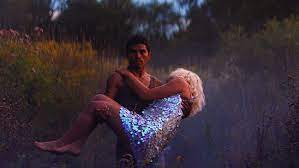
A young farming couple on the Ukrainian-Russian border struggle to keep their marriage together amidst political turmoil in the Ukrainian film Klondike.

The Ukrainian film Klondike has been the talk of the film festival circuit, and for good reason. It’s also a film that is, unfortunately, well-timed for what’s happening now.

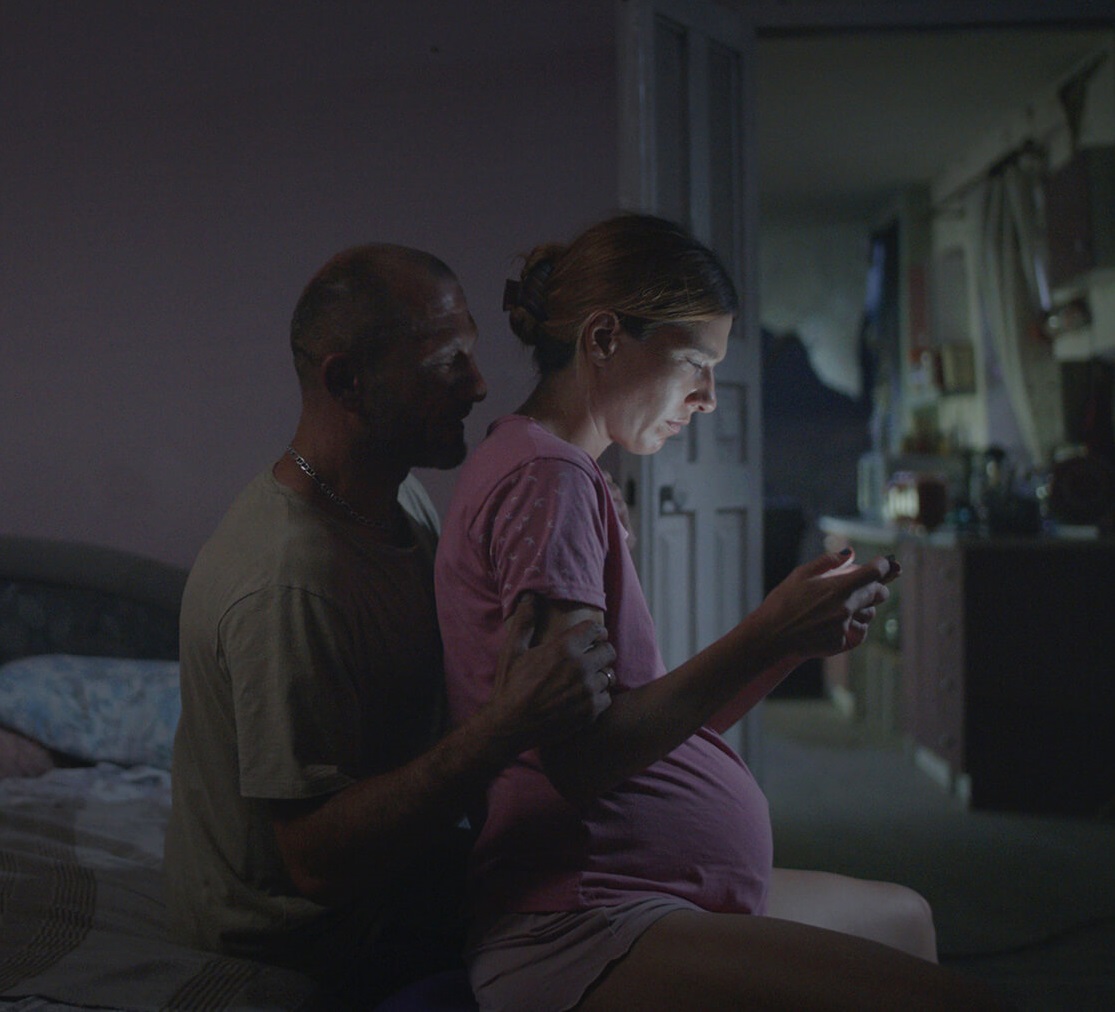
Irka and Tolik are a young couple who live on a farm in Ukraine close to the Russian border in 2014. Irka is expecting a baby soon. Both Irka and Tolik plan on doing their farm work normally until a bomb explodes near their farm. They are caught in between the war between Russia and Ukraine. The explosion causes the wall to their living room to collapse. Despite this threat, Irka does not want to leave the house. She is going to stay here and have the baby here.

Things prove difficult. They try to continue on with their lives. Tolik has to do farmwork and tend to Irka, but the area sees an increase of Ukrainian nationalists and Russian separatists. Frequently he meets up with his friend Sanya. Sanya is a Russian and he’s able to help Tolik get items at a cost. This is definitely frustrating Irka. Especially as Tolik wants them both to leave the area. Then one day a shocking thing happens. An airplane caught in the war’s crossfire crashes down in an area close to the border and close to Irka and Tolik’s farm.

With the plane shot down being a commercial aircraft, this is something that will bring a lot of people down, like the news media, the UN, ambulances, firemen, and soldiers from both sides. This makes like very invasive for both Irka and Tolik. Tolik still wants to move but Irka is still insistent. Irka even has her brother Yurik, a soldier with the Ukrainian army, come to help out. Despite losing the wall, Irka wants the couch placed outdoors. Yurik and Tolik reluctantly take the couch out with Irka still on it. During the stay, Yurik notices something of Tolik’s. He has a Russian uniform. He is convinced that Tolik is a Russian separatist. That leads to conflict between the two which Irka tries to stop.

As time progresses on, more people come to the area, including more soldiers and religious leaders and their followers to pray over the deceased. This frustrates Tolik and he decides to take Irka and leave. Right in the middle of leaving, Irka walks out of the car. Tolik tries to get her back in but she resists forcefully. Tolik agree to continue to help Irka and stay in the house. Unknown to Irka is that Tolik has held Yurik captive in their basement bunker.

Then one day, the area has Chechen rebels in to get a piece of the action. They target the home of Yurik, Irka and Tolik. The Chechen rebels torture Yurik and Tolik and watch as Irka goes into labor. Most of the rebels take Tolik and Yurik outside to deal with them while two watch Irka and joke about what they’ll do with the baby. Outside the rebels get Tolik to execute Yurik. Yurik says to Tolik that he is not a separatist. Then they get Yurik to execute Tolik. Since neither man will, the terrorists execute them both. The terrorists then leave the house as Irka gives birth on the couch.

This film appears to be the right film at the right time. Right as Ukraine is still going through a brutal war against Russia, this film takes people back to the Russo-Ukrainian War. In addition, it adds a major news even from that period: the shooting down of Malaysian Airlines Fight 17 by the Ukraine-Russia border. There’s no doubt that this film is bound to bring up a lot of talk. Especially since there are many areas of Ukraine that have a high Russian population. That has often happened in nations that were former Soviet Republics that Russians move in or peoples would be displaced over periods of time. It’s because of that Putin feels he can go in and take the territories. Even declare some nations like Ukraine as actually being part of Russia.

This film is a story that’s bound to provoke a lot of discussion. Irka and Tolik have their farm close to the Ukraine-Russia border. It’s right in the middle of the Russia-Ukraine border. The plane crash happens very close to their farm. Irka’s brother Yurik is a soldier in the Ukrainian Army. Tolik’s close friend and associate is a Russian. This is bound to get a lot of people thinking. It would not surprise me how many families with both Russians and Ukrainians would face clashes over this war. And to think this is a war where a passenger plane and over 100 of its passengers were unintended casualties. War is always ugly, but it is very intense. And to think this is a story of a pregnancy happening in the middle of it and a wife that refuses to leave her home despite the threat of danger. This is a story that will get one thinking.

Top acclaim should go to writer/director Maryna Er Gorbach. She did an excellent job of delivering a thought-provoking story of a complicated war happening as a pregnancy is happening. She did a very good job of placing the events with the story and not taking anything away or hiding anything from the tense topic. Also excellent is the acting from Oksana Cherkashyna. She does an excellent job as the wife caught in this conflict. She does a good job of portraying a woman confused, fearful, feeling neglected and still trying to maintain hope. Also excellent is the performance of Sergei Shadrin. Hard to believe he died shortly after shooting in June of 2021 at the age of 41. Sergei delivers an excellent performance of a man who is confused and tries to be supportive, but has something to hide. Oleg Shcherbina does an excellent job of being the brother caught in the middle of the friction. Also excellent is the cinematography of Svyatoslav Bulakovskiy. His inclusion of panoramic shots during certain scenes add to the film.

This film is Ukraine’s official entry for this year’s Oscar race in the Best International Feature Film category. At the Sundance Film Festival, the film was nominated for the Grand Jury Prize for the World Cinema – Dramatic category. Er Gorbach won the Best Director Award for the genre category. The film has since received many accolades like winning the Ecumenical Jury Prize at the Berlin Film Festival, winning Best International Film at the Fribourg Film Festival, Grand Prix Winner at the Ghent Film Festival, Best International Film at the Heartland Film Festival, Winner of Best International Feature at the Santiago Film Fest and winner of Best Feature Film at the Seattle Film Festival.

Klondike is the right film at the right time. It says a lot of the differences of Ukraine and Russia. It also tells how political turmoil can threaten a family in even the most remote areas. It’s a message we need to hear right now.
VIFF 2022: The Word (Slovo)

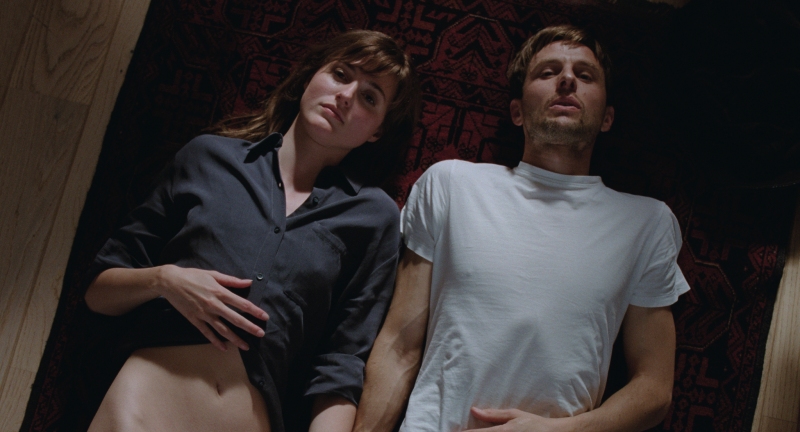
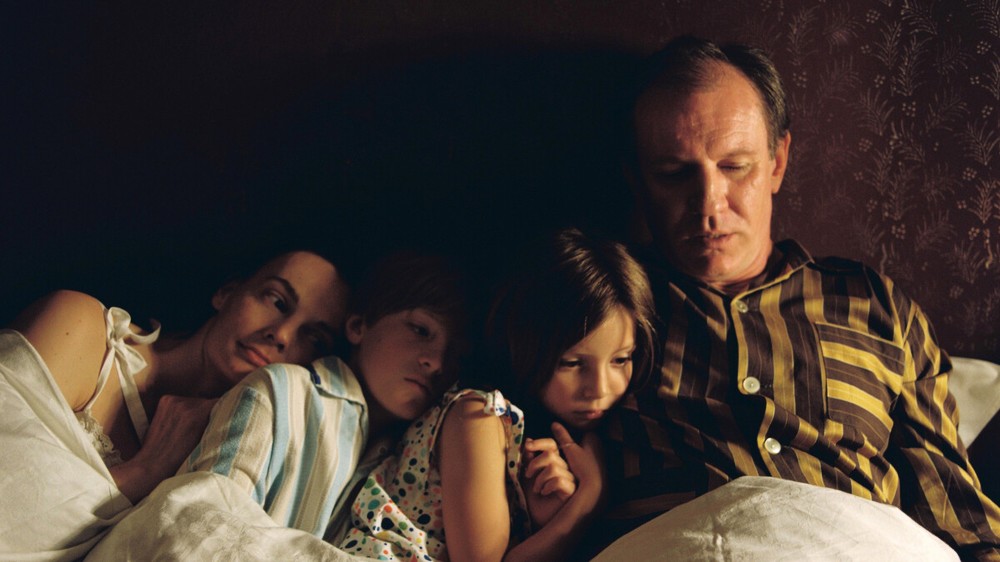
The Word is the story of a Czech couple played by Gabriela Mikulkova (far left) and Marin Finger (far right) trying to keep their lives and family together after intense political change.

The first feature-length live-action film I saw during the VIFF was the Czech film The Word. This is a historical drama that tells of a story quite personal to the director.

Vaclav Vojir is a successful lawyer in Czechoslovakia in 1968. It’s not made clear where he works but he lives in a small town with his wife and two children. Vojir is good in his work and he deals with his clients in a humane way. One day in the summer of 1968, he meets with two men whom he didn’t have an appointment. They are men from the Czechoslovakian Communist Party. They dictate to him of how he is to do his profession. Ever since the Prague Spring earlier that year, the Communist Party has a heavier hand than before. They also noticed that Vojir was one person who signed a manifesto for more freedom that year. They threaten him with possible imprisonment in the future if he doesn’t sign an agreement with them.

Soon after, he meets with his wife Vera Vojirova and his children Ales and Emicka. He tells her of what happened and how he fears for the future. It comes at a tough time as summer is approaching. The family go on vacation at the beach, but Vaclav can’t forget what could happen to him. He tries to hide it from his children and wife and try to be a family man, but he can’t let it out of his head. Vera is in close contact with her sisters and tells them of all that’s happening. Word soon gets out over town.

Soon the pressures of being under the thumb of the Communist government bear down on Vaclav. He has a mental breakdown. His mental health has deteriorated so much, he has rendered himself bedridden. Soon Vaclav has to be institutionalized. The sisters feel it’s best off that Vera divorce him. They know she loves Vaclav, but the Communist government is a menacing force on the entire nation. Vera gets the nerve to visit Vaclav in the hospital. She has food for him and she reminds him that she still loves him and will do everything to keep the family unit intact.

As Spring 1969 approaches, Vaclav is now feeling better and he’s fit to be released from the hospital. He returns to a home that’s happy to see him again. However as he returns to his job, he is reminded that the pressures from the Communist government to do as he is told have not left him. He’s still under their thumb. Vaclav will stand by his word, but he knows he could face dire consequences. He could avoid them, but he can’t risk another relapse of his mental health. In the summer of 1969, Vaclav then makes the decision for him and his family to move. They’re going to leave the pressures of his job and the talk of the town behind to start a new life in another town. It’s unclear in terms of his career, but it’s known for the sake of his marriage and family.

This film is a reminder of the Cold War. Those 40 and over will remember it. It was the Communist world and the non-Communist world constantly threatening each other or trying to look menacing to each other. In the Communist world, the government were like a big brother to you and your daily life. For Czechoslovakia, things were definitely at their hardest after the Prague Spring of 1968. The government became harder on the people and those who were part of the movement for freedom faced threats of imprisonment. today, the Cold War and the Communist regimes are a thing of the past most Eastern Europeans. The nations did make the move to freedom starting in 1989. Some nations even dismantled themselves, like Czechoslovakia becoming Czechia and Slovakia. However ugly reminders still remain.

This is a story that happened just as the Soviet tanks had just come in and crushed Czechoslovakia’s move to freedom. People who participated in any activities leading to freedom were either punished or threatened. That especially meant people in their jobs like Vaclav Vojir. He was a lawyer who strongly believed in integrity and the power of staying to one’s word. However political pressure was menacing. It became a point where it affected his mental health. It was as much of a frustrating situation for his wife Vera. She too believed in the importance of staying married to Vaclav. She too was one who was willing to fight to keep the family unit together. Even if people advised her to divorce for the sake of the situation, she would not budge. I think the whole theme of the film is of how life under Communist rule really put people’s values to the test. Even though the Vojir family is miles away from the biggest hostility of the Prague Spring, it doesn’t mean they won’t feel it.

The story does a good job of telling of how the Communist government caused a lot of friction in people’s lives, especially in many family units. What’s unique about it is it does a good job of showing it over a one-year period. It starts in the summer of 1968 and it moves over time progressing as it goes from season to season. Each scene is an average of ten-minutes long and takes place in a single location or single area. Holidays are also important as they show the time change and also the occasions where families got together. The vacations and family time are also important as they showcase the relation between the Vojir’s and how much the family means to them. It’s a case where the surroundings are as important at telling the story as the actual dialogue and events. Also the additional element as the end of each scene of showing three photographs of the people involved, especially since no camera is shown, adds to the uniqueness of the storytelling.

This film is an excellent work from Czech filmmaker Beata Parkanova. Parkanova is relatively unknown outside of Europe. She wrote her first feature-length screenplay in 2015 and directed her first film Chvilky in 2018. This film is a different story for her as it is a retelling of a situation that happened in her grandparents’ family. She doesn’t go for big action in this story. The biggest most brutal action of the revolt happened around this time. Instead it’s a story low on action and more intense on the situation. Parkanova helps us keep our intrigue with the story and watch as the time progresses.

Actor Martin Finger does an excellent job of acting as he portrays Vaclav Vojir. He’s one of Czechia’s more renowned actors in recent years. Here he does a very good job in his portrayal of a man who will try to stay strong, but is prone to being under pressure. Also excellent is the acting of Gabriela Mikulkova. Her portrayal of the wife and the one who will most do whatever it takes to keep the family together is worthy of admiration. One could argue it’s her who best carries the film. The additional characters in the film like the Vojir children and Vera’s sisters add to the element of storytelling. At the Karlovy Very Film festival, the film was a nominee for the Crystal Globe for Best Film and Parkanova won the Best Director Ward and Finger Best Actor. The film continues to do the film festival circuit and was a nominee for Best Debut Film at the Haifa Film Festival.

The Word is an impressive melodrama that sends a message of how political change can impact individuals and families. The story isn’t told in intense fashion, but its story does give a lot of impact.

VIFF 2022 Review: Love Will Come Later

Samir El Hajjy is a young Moroccan man dreaming of love and a better life in Europe in the documentary Love Will Come Later.

DISCLAIMER: I know VIFF ended on October 9th. I’m still posting my film reviews as they can either be streamed or will be released at a later date.

It’s not that often I go to see a documentary, never mind see one during the VIFF. The first film I saw at the VIFF was a documentary entitled Love Will Come Later. It’s an eye-opener of a story as it focuses on a topic that is quite common, but not too many people are aware of.

The film begins with Samir El Hajjy, a Moroccan male in his early 20’s, having a text conversation with a woman. The woman lives somewhere in Europe. The conversation is intimate. Soon we hear from Samir himself. He tells of his dreams and ambitions. He dreams of marrying a European woman, particularly one in France, and dreams of a better life for himself. This may be difficult as he has an arranged fiance.

As the documentary continues, we learn more about Samir and his family. We learn that Samir has attempted to apply to European Universities without success. We learn that he has an older brother whom has married a European woman and is starting a family. We learn that he has sisters who are very religious and very tradition-minded, especially when it comes to the subject of love and marriage.

The subject of love and marriage is one that comes very much in conversation. We hear frequently from Samir’s friends of what they have to say about it. We hear from Samir’s barber of how he married. We heard from other men telling their stories of how they married. Sure, they were arranged, but love came over time. We hear from Samir’s sisters and how they have a negative opinion of marrying a European woman. We even see a scene when Samir’s brother flies into Marrakech with his family. It becomes evident this is the life Samir aspires to have. We also see how Samir faces the pressure to marry a woman he’s arranged to marry.

The film also focuses on Samir’s daily life and the city he lives in. We see Samir as he’s having fun with friends. We see Samir as he’s getting his hair cut. We see Samir ride his motorcycle slowly across the narrowest of streets of old Marrakech. We see Samir as he is in his prayers to Allah. We see frequent celebrations in Marrakech. Some celebrations are national. Some are more local, like weddings or neighborhood festivals.

The film doesn’t stray away from his marriage goals. Many times, we get a focus on the conversations he has with the European women. Some are through messenger, some are text message, some are Zoom meeting where by Islamic morals she is not to have her face shown. We see one case of an actual phone conversation with one of the women Samir is pursuing. During the time, Samir reveals his beliefs. In one of his conversations, he talks with the woman of his beliefs of the roles of the man and the woman. He reveals he’s not as tradition minded and doesn’t side with the man dominating. He believes in 50/50. That becomes increasingly apparent as he gets into a religious discussion with someone and even points out that in the Koran there’s no mention a woman should wear a burka.

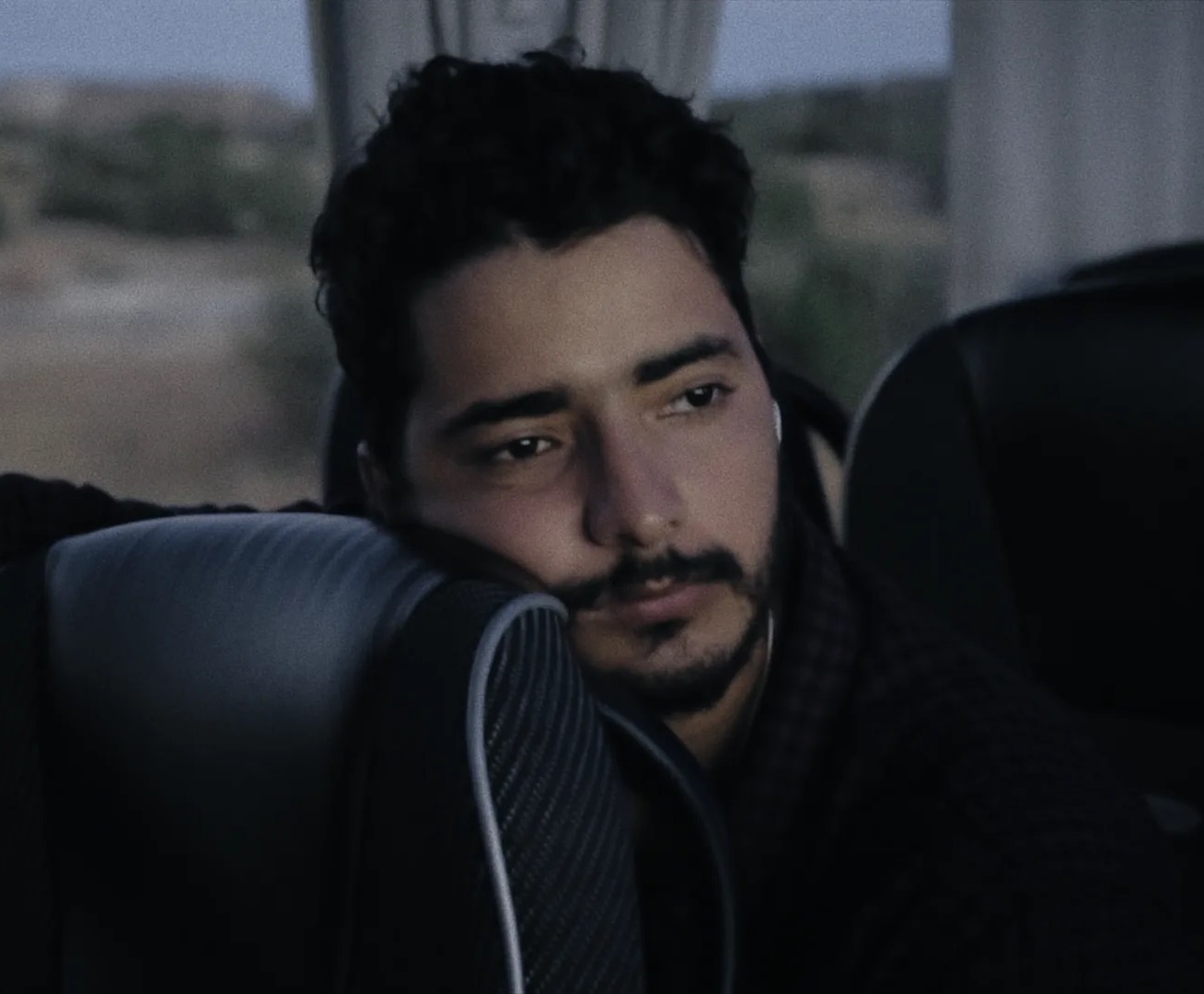
Eventually the frustrations weigh down on Samir and he feels he should forget his dream, ‘grow up,’ and marry the woman he’s arranged to. The film ends with Samir in his latest pursuit. She’s a woman from France. In the final scene, of Samir in a bus, he tells of his dreams of love and marriage. This appears to be the love pursuit he is committed on making work. As for love itself, he feels it’s something that will come and grow over time.

The story of Samir pursuing love in Europe is a common thing in African countries. French-language countries like France and Belgium have a high number of immigrants from Congo, Cameroon, Morocco and Algeria. Even one documentary I saw at the VIFF years ago showed how in many African countries the belief is to pursue Europe or die trying. It seems to be a common belief of the young in Africa that they have a future, but they can’t see it happening in their own countries. They feel their future is in Europe. It would not be uncommon to see cases where they will want to marry into Europe. Samir is possibly thousands of young men in African countries who want to do just that.

However the film is not just about a Moroccan trying to pursue love in Europe. The story is about Samir. They story paints an intimate portrayal of Samir El Hajjy himself. He wants to marry, but he doesn’t devalue marriage. He knows marriage is as much about love as it is an institution. As the cameras follow him, his life and make his conversations visible, we get a good sense of his life and his desires. We get a sense why he is not too interested in the woman he’s arranged to marry, or any woman in Marrakech. We get a sense of daily Moroccan life for families like killing a lamb for dinner and daily prayers to Allah.

On the subject of marriage and tradition, we get a sense of his family situation. We see how his brother who married in France is quite comfortable, but the sisters are disapproving. They feel it’s against Islamic traditions and they have a negative attitude towards European women. We get a sense of Samir’s loyal faith and we also see Samir’s own beliefs about the role of women and how it correlates with Islamic faith. Samir is not naïve in his Islamic faith and his beliefs. We see how many people view his goals of marrying in Europe to be a sign of immaturity. We also see how the pressure does come down on him. There are scenes near the end where he’s tempted to give it all up and marry his arranged fiancé. Tradition and the modern world frequently clash in the film. It’s not the type of clash that’s heavy on action but heavy on emotion.

Top respect to Swiss director Julia Furer for putting this documentary together. Her film allows Samir to tell his own story and allow the cameras follow him along in his story telling. With a topic like this, it’s best to let the subject tell the story than the director to send their message. Julia also shows a lot of shots that first appear to be irrelevant to the film, but eventually do add to the story when you look back. Shots of Samir on his motor bike show what living in Marrakech is like with its homes and bazaars. Shots of festivals show of the common traditions and celebrations in Morocco. Julia focuses on the good and the bad of life in Marrakech. One thing she shows as she showcases Samir’s story is that there are two different Marrakeches: the Marrakech tourists see and the Marrakech of daily life that only residents know. Shots of airplanes flying off may first appear to just add time in the film, but as the story progresses, each plane taking off from the airport appears to be another missed dream for Samir. Furer does a very good job of making this as much of a story of Morocco as it is the story of Samir.

Love Will Come Later is an intriguing story that first comes off as a story of a Moroccan man searching for love. If you look closer, it says a lot more. Not just about him, but of his family, his town, his faith, his country, and even about what being a young man in Morocco is all about.

The VIFF Is Back For 2022

I know it’s been a long time since I blogged. Normally I would fill my summer blogging with a major football event. However the World Cup doesn’t start until November. In addition, this summer I was involved in a heavy duty post-secondary course that took up a lot of my time. However the VIFF is starting up soon so now I’ve got my drive back.

The Vancouver International Film Festival returns. This year, the Festival is an eleven-day event from Thursday September 29th to Sunday October 9th. The Festival this year is a move to having less streaming on VIFFConnect and more getting people to return to the theatres. This year, VIFF returns to having films at the International Village like they did back in 2019.

Me, I will be volunteering this year at the International Village as an usher. This is the first time in three years I will volunteer there. Each year, I talk about my VIFF goals including the three that stand out: Canadian feature, shorts segment, foreign-language Oscar contender. This year is different as I will be leaving Vancouver in the middle of the Fest to attend a wedding. I will have to cut my film-watching short. However I do still have a goal of seeing at least seven films. We’ll see how the week goes. Also it depends if I’m lucky with my volunteer position for each film. Yes, you will get reviews from me. Some of you remember I still had reviews to post but I ran out of energy. You can thank an accounting class for that. But I’m sure I’ll have the energy to post reviews for all the films I see this year.

The Vancouver International Film Festival isn’t just about films. It also has a wide variety of events related to film and the industry including talks from business insiders, high school programs, interactive exhibitions and even an orchestrated replay of a silent film taking place at a church. Here’s what’s on the roster for this year’s VIFF:

VIFF Talks: This year’s VIFF Talks include Brother director Clement Virgo; Avatar costume designer Deborah Lynn Scott who will deliver a masterclass, Dean Fleischer Camp who will showcase his new short film Marcel The Shell With Shoes On.

VIFF Industry and VIFF Labs: VIFF Industry holds talks from industry professionals this year include such topics as filmmaker’s influence on climate change, showrunners of sci-fi talking of their craft, the challenges and opportunities of international coproduction in Canada, shooting analog and guests from the Directors Guild of Canada. VIFF Labs allow people in film to cultivate their craft and is for invitation-only groups.

VIFF Amp: Once again, VIFF Amp explores the connection of music and sound in film. Guest speakers include film score composers, music supervisors, songwriters and managers. Events include masterclasses, case studies, panel discussions, networking, breakout sessions and musical showcases. All are meant to promote up and coming musicians, especially from marginalized communities, to a thriving future in film.

Signals: In the past, it was VIFF Immersed that showcased the latest in virtual reality. Now it’s renames Signals. The interactive exhibitions are back. There’s more variety of new technologies including virtual production, volumetric capture, holograms, and VR/AR/XR technologies.

An Evening With Michael Abels: The composer who composed scores to Jordan Peele films like Get Out, Us, and Nope will be at the Vancouver Playhouse for a night of insight, creativity and his music performed by the Vancouver Symphony Orchestra.

Nosferatu 100 by Big Kill: Pop group Big Kill set the score of gothic pop for a resurrection of Nosferatu in what is it’s 100th anniversary. Set at St. Andrew’s-Wesley Church for the right goth feel, this promises to be an experience like no other!

And of course with the Vancouver Film Festival comes films. There are 130 films and 100 shorts from 74 countries. Theatres include the VanCity theatre (the main theatre only), the International Village, Rio Theatre, Vancouver Playhouse Theatre, Centre for the Performing Arts, Cinematheque and the SFU Goldthorp Theatre. There’s a lot to look forward to and to watch at the Film Festival. Here’s a sneak peak of some of the biggest highlights:

OPENING GALA: Bones Of Crows-Marie Clements directs a story of a Metis woman who goes through the 20th Century enduring the harsh systemic racism forced upon her from residential schooling to enlisting in the army for World War II.

CLOSING GALA: Broker- Directed by Hizoraku Kore-eda, this story starring Parasite’s Song Hang-Ko about a man conducting a baby adoption scam in Korea. It’s described to be as touching as it is comedic. Song’s performance won the Best Actor award at this year’s Cannes Film Festival.

The Banshees Of Inisherin- directed by Martin McDonagh, this story starring Colin Farrell and Brendan Gleeson is of two good friends in Ireland in the 1920’s whose friendship takes a turn for the worse and their enmity has the whole village consumed.

Corsage- directed by Marie Kreutzer, this Austrian film is a comedy of 19th Century Austrian empress Elisabeth. Elisabeth is nearing 40 and struggles with her appearance. Meanwhile she has been politically sidelined against her will and starts acting out. Vicky Krieps’ performance won a special award for performance at this year’s Cannes Film Festival.

Decision To Leave-Another South Korean film with buzz. By director Park Chan-wook, this story is of a homicide director who falls in love with the Chinese widow of a bureaucrat who committed suicide. At this year’s Cannes Festival, Park won Best Director.

Empire Of Light-Directed by Sam Mendes, this is a story of an English woman who works a cinema job in the early 80’s. Soon she is taken aback by her black co-worker. She strikes up a romance, but it does not go well in the Thatcher-dominated UK of the 1980’s.

EO-Polish director Jerzy Skolimowski directs a story of a donkey who first starts life as a circus performer in Poland. Animal rights activists change everything and his life is changed where he goes from being a part of a petting zoo to playing a Polish soccer game to encountering a countess. Shared winner of the Prix du Jury at this year’s Cannes Film Festival.

The Grizzlie Truth-Directed by Kathleen S. Jayme, this is a documentary of the ill-fated Vancouver Grizzlies of the NBA. Despite the Grizzlies’ short life in Vancouver, Jayme remained a true fan and she goes in and connects with former players and fans alike.

One Fine Morning-Directed by Mia Hansen-Love, this is a film situated in Paris. Sandra, played by Lea Seydoux, is going through financial difficulties and it’s made even more complicated as her father is suffering with Benson’s syndrome and needs to be place in a care facility. During that time, she has an affair with a past friend she meets again by chance.

The Son- Directed by Florian Zeller, this film is the story of a 17 year-old boy struggling to find himself. He feels he has to leave his mother to be with his father (played by Hugh Jackman), but the father’s new family and the son’s struggle with depression may prove to be too much.

Stars At Noon- Directed by Claire Denis, this film is a story of a young American journalist who has her passport seized. She tried to do whatever she can to make it out, but when she falls for a British man, what she thought was her way out was a path to worse trouble. Shared winner of the Cannes Grand Prix.

Triangle Of Sadness-Winner of the Cannes Palm d’Or. Directed by Ruben Ostlund, An influencer couple go on a luxury cruise for the mega-rich. During that time, they contemplate their status and their relationship. Along with a captain (Woody Harrelson) that is arrogant and quotes Marx, this cruise is bound to hit stormy weather.

The Whale-Directed by Darren Aronofsky, this film focuses on a morbidly obese teacher, played by Brendan Fraser. Turns out his eating is a suicide attempt in order to be reunited with his dead boyfriend. Will reuniting with his estranged teenage daughter change that?

Women Talking- Sarah Polley directs a story adapted from the novel by Miriam Toews. News has hit a Mennonite community in Canada that a colony in Bolivia has systematically abused over 100 women over a two year period. Eight women in the Canadian community were among the victims and they try to make sense of it all.

And there you go! There’s a sneak peak of what to expect at the 2022 Vancouver Film Festival. For more information and to buy tickets for yourself, just go to: https://viff.org/

VIFF 2021 Review: The Worst Person In The World (Verdens verste menneske)

Julie (played by Renate Reinsve) looks for long-term love with Aksel (played by Anders Danielsen Lie) in the film The Worst Person In The World.

Establishing your career and settling down in love is normally something done when your in your late-20’s, early-30’s. It seems like it’s harder than ever nowadays. The Worst Person In The World has a look at a Norwegian woman trying to do exactly that.

The film starts with a prologue, leads into a twelve-chapter story, and ends with an epilogue. Julie is a woman about to turn thirty. Her road leading up to this age has been bumpy with career pursuit decisions in her academic years starting as a medical student, then switching to psychology and then pursuing a direction in photography. Approaching thirty gets to her as she finally has a serious boyfriend. This haunts her as she compares her life at 30 to her mother and many generations of her grandmothers before her. Things change when one of her photography subjects is Aksel Willman: an acclaimed politically-incorrect cartoon book author who is 15 years older than her. This is just as his cartoon Bobcat is to be adapted to a feature-length film.

Julie drops her old boyfriend for Aksel. The relationship gets more serious and it even stimulates Julie to pursue a career in writing. One weekend, the two spend it at Aksel’s parents’ house in the woods. There she meets Aksel’s brothers and nieces and nephews. That is a sudden reminder that Julie is reaching the family-planning years. To add to the frustration, Julie crashes a party after a publishing event for Aksel. There she meets a coffee barista named Eivind whom she becomes attracted to. They spend the night together, but urinate in the bathroom together to not spark any rumors of the two cheating on their significant others.

Things become more serious between Aksel and Julie. Julie writes a blog about oral sex in the age of #MeToo and Aksel is impressed with it. Then Julie has her 30th birthday with her mother and sisters. The father is a no-show. He does show up hours later as his excuse is his back. She’s hurt her father hasn’t read her blog. On the ride home, Aksel says she should make her own family. That’s difficult for her, especially with Aksel, because she’s sensing love for Eivind. One morning while everything and everyone in Oslo stands still, she’s able to meet with Eivind at his coffee store and kiss him. Over time, Julie gets disillusioned with her relationship with Aksel. The turning point is where Aksel has dinner with her and his sister-in-law. During the dinner, Aksel is constantly ranting how the film of Bobcat is a watered-down family-friendly Christmas-themed version of his comic stories.

It’s after a date with Eivind Julie is convinced Eivind is the one and breaks up with Aksel. But not after sex one last time! Becoming one with Eivind was a bit of a wait. He was married to Sunniva. However even before he met Julie, his love for Sunniva was fading. She learned from a DNA test she had Sami ancestry, albeit a small percentage. She changed herself to embrace her ‘Sami roots,’ pursue yoga, and become a climate-change activist. He met Julie at the right time, but there was still the wait to divorce. With the divorce finally settled, Julie and Eivind can finally become a pair. Eivind still follows Sunniva on Instagram, which Julie doesn’t have a problem with. However things take a turn for the bizarre when Eivind hosts a party and gives everyone psychedelic mushrooms. Julie takes some, and it sends her on a trip where she sees bizarre visions of the wrath to her father, her fear of having children, and images of Bobcat’s insanity. She feels she can be herself around Eivind.

It’s clear Julie still has feelings of attraction to Aksel as she’s at a gym working out and she watches a television interview he has where he staunchly defends the cartoon series’ past misogyny to the female host. However Aksel’s brother soon visits Julie at her job to tell her she has pancreas cancer and it’s inoperable. Soon after, Eivind discovers a short story she wrote which he believes is about her family. Julie angrily denies this and in her anger, belittles Eivind for staying a barista. Her perceived irresponsibility of Eivind is also why she doesn’t tell him she’s pregnant at first. Julie meets Aksel at the hospital. Aksel is devastated over the fact he doesn’t have a future. Aksel tells Julie after she tells him she’s pregnant she’d be a good mother. However she can’t decide whether to keep the baby or not, especially after she finally reveals to Eivind the pregnancy and she breaks up with him. Julie does see Aksel one last time. She does a photo essay of him where he visits his past places, including the school he attended where he was first inspired to be a cartoonist. The last thing he says to her is he regrets he can’t live on as something more than a memory to her. The film then ends with the prologue showcasing Julie’s current profession, and a chance encounter with Eivind all this time later.

Entering into adulthood and establishing yourself has never been easy. We have a protagonist many people can relate to. She’s made three different major decisions in her schooling as a reflection of her career choice. She’s finding her way, but now she’s at the age where she’s expected to establish herself, to settle down, and to form a family. The career path choices were hard enough, and along sparks a new career ambition after meeting Aksel. What makes it hard for establishing a relationship is the two men she’s torn between. One is a comic book artist who appears to have it together. The other man appears not to have it all together, but she’s in love with him. It’s there where she has to make decisions about her situation and who she will want to spend the rest of her life with. Her choices will eventually seal her fate.

The funny thing about it is this is happening in our modern times. Adulthood is hard to define. Julie compares her life at 30 and where it should be in comparison to past generations of her female ancestors. Meanwhile she’s torn between two men whom she loves, but can’t help but see as man-boys. One is a 44 year-old cartoonist of an obnoxious comic series about to be adapted into a film. He’s actually quite mature, if you take away the fact of his profession. Then she’s also attracted to a barista who’s more of a boy and has a lot of irresponsibilities. It’s a concern to her. Who should she love? Should she have a child? If she does want one, who should be the father? Will she be a good mother? Will either of the men accept the role of fatherhood? Add to the mix of things like social media-think, each person’s professions, current family situations and other people in their lives. You can understand the confusion in there.

The most unique thing about this story is that it goes from being a comedy of love in our times and the complications around it to suddenly adopting a more tragic tone. That comes as Julie learns Aksel is dying and Eivind’s true colors are starting to expose itself, especially after she learns she’s pregnant with Eivind’s child. We suddenly find ourselves no longer laughing at the irony and bizarreness of the situation and now sensing the seriousness of the situation. As Aksel is dying admitting personal thoughts to her, Julie starts wondering if Aksel was the one all along. The one worth loving and having a family with. We even wonder if it’s worth it for Julie to bear Eivind’s child. Mother a child to a man-boy so self-indulgent? In the end epilogue, we see a glimpse into the present that is a surprise for all to see how time elapsed for Julie and Eivind.

Norwegian-Danish director Joachim Trier directs a delight of a film. It’s common to see a film in chapters, but a film with twelve chapters, a prologue and an epilogue, and to make it all work in two hours of time, that’s something! The story he directs and co-wrote with constant colleague Eskil Vogt is the last film of his ‘Oslo Trilogy.’ I can’t compare to the other two because I haven’t seen them. As for this film, it’s a creative story as it tells of a common love triangle mixed with the confusions and distractions of the time along with the protagonist’s dreams and the wrath of Bobcat mixed in. Somehow Bobcat makes his way into Julie’s personal life! All of it is a complicated process, but the film makes it work by putting it all together in winning fashion.

Despite the story and direction working together, it’s also the excellent acting of Renate Reinsve as Julie. This story is all about Julie. Reinsve embodies her dreams, desires, confusions and frustrations in winning fashion. She embodies the comedic side of Julie as well as she embodies her tragic side. It’s a complex performance she does in remarkable fashion. The actors who played her two lovers were also great. Anders Danielsen Lie is great portraying Aksel as a man quite mature for a comic book artist and then transitioning to Aksel being a hurting man facing death too soon. Herbert Nordrum is also great in his role as Eivind, embodying his immaturities quite well.

When I first saw this film, on the last day of the VIFF, it was in the running between two other films to be Norway’s entry for the Best International Feature Film category for the upcoming Oscars. Recently it was announced to be the official entry. Even outside this Oscar category, the film has already won a lot of acclaim. It was a nominee for the Palme d’Or for the Cannes Film Festival this year. Reinsve’s performance as Julie won the Best Actress award at Cannes. The Jerusalem Film Festival awarded it the Best International Feature. The Ghent Film festival nominated it for it’s Grand Prix Award. Cinematographer Kaspar Tuxen won some film festival awards of his own including the Silver Camera 300 Award at the International Cinematographers Film Festival and the Silver Hugo award at the Chicago Film Fest. The latter of which gave him a claim for use of 35mm film, inclusion of natural light and carefully rendered interiors.

The Worst Person In The World is a funny but sad story of a woman trying to make it in a career and find a partner she can settle down with. It’s a film that does get you thinking in the end.

VIFF 2021 Review: Spaghetti Code Love (スパゲティコード ラブ)

Thirteen different young people in Tokyo. Thirteen different dreams, desires and heartache make for the story of Spaghetti Code Love.

I’ve seen films that have involved multiple story lines strung together. The Japanese film Spaghetti Code Love is a film that takes the genre to new heights.

The story begins as a brief introduction of the thirteen characters just after a woman tends to a young boy screaming hysterically in a Tokyo arcade. We have a young couple hurting about life, a street singer who sings self-composed songs about down feelings, a photographer from another city who is looking for his big break, a model from a privileged family he’s about to photograph but has a prima donna attitude, a social media influencer he’s interested in who is coming to Tokyo to meet with him and pursue her dream of stardom, a call girl seeking her own success, a lonely man who lives daily in capsule apartments unsure of his ambitions, a delivery man on a bicycle hoping to achieve enough money to meet with his girlfriend, a housewife who wants to be the perfect wife to her husband even though she works part-time at a restaurant, a young woman in an apartment seeking post-breakup advice from an online fortune-teller and her next-suite neighbor who deals with her own breakup by eating jars of peanut butter. In the middle of it all is a high school student given a written assignment where he’s to plan out what to do with his life even up to his 60’s and 70’s.

All of them go after their goals or live life as they routinely do. The photographer sets up his set, but the model is disgusted with it and labels it ‘amateurish’ out loud. The boy fills in his assignment, but erases his writing when he gets a new idea. The delivery man has a target goal of 1000 total deliveries before quitting and reuniting. The couple decide on a suicide, but undecided how. The two young women continue on with their post-breakup habit, but never really meet. They just think whatever judgmental thought of the other. The housewife is thinking of quitting her waitress job at the restaurant to be with her husband after dealing with a rude customer. The call girl is heartbroken by the way she’s treated. The singer is affected by a laugh at a song from a passer-by.

Then all of a sudden, and simultaneously, something sudden happens to all 13 that causes them to say ‘shit!’ The deliveryman misses his target at his intended time at 999. The housewife doesn’t have the chicken ready for her dinner. The peanut-butter girl accidentally spills all her empty jars of peanut butter down the apartment stairs. The model finds out her outburst went viral on social media. The high school boy accidentally tears his sheet upon erasing a response. And the woman trying to settle the screaming boy can’t do it after such a long period of time.

Then all of them either come across something life-changing or heartbreaking during the night. The two apartment neighbors finally meet and talk. They learn about each other. The social media star finally meets with the photographer and has sex. He is disinterested in a relationship, but she makes him face the fact of the job he’s to do. However she can’t return back to her home city because returning after trying to make it big in Tokyo is regarded as failure. The housewife learns her ‘husband’ is actually a married man with a wife and children in another city and plan to move back this night. The suicidal couple contemplate jumping off a roof, but the girlfriend is undecided. The singer decides to quit as a musician. The model is confronted by her agency and is faced by an angry agent at a face-to-face meeting. The peanut butter girl is at a grocery store stocking up on more peanut butter, but changes her mind. The delivery man does achieve delivery 1000 after a long wait and he’s in tears after his accomplishment.

At the end of it all the next day, things change for all when they see a ray of hope. The two neighbors start up a friendship and drop their habits of online fortune telling and peanut butter eating. The woman who hoped to be a housewife tells her heartbreak to a cab driver and he responds in a caring way. The photographer decides he does love the social media star after all and they become a pair. The suicidal couple decide not to jump after all. The bratty model decides to quit and pursue her dream of interior design. The singer changes her mind about quitting and gets back to playing. The woman does succeed in stopping the screaming boy from screaming. The delivery boy finally quits and meets with his girlfriend. And the high school boy writes on his assignment in big letters ‘No Plan’ and heads back home on his skateboard.

For those that don’t know, the term ‘spaghetti code’ is based on a computer term for a source code that’s unstructured and difficult to maintain. You can say at the start this film is a spaghetti code. Up until I saw this film, the film with the most plots strung into one story that connects has to be 1999’s Magnolia. I remember it well. Many different stories, few times people intersect with each other, but they’re connected somehow. This is one of those complex stories. Thirteen characters in total! You will first feel confused at the beginning. You’ll wonder who’s the lead character? What’s this to be about? Will this story make sense? Over time the characters do connect despite few intersecting. We get the first sign of it right in the middle when all thirteen have a sudden incident where they all say ‘shit.’ Then we see them all as they go through something that hurts them or sets them back. Then in the end, many see a brighter road ahead or a resolution, while some get their comeuppance. You could rightfully say this film does the impossible!

The film shows thirteen individuals with hopes and dreams. Some are simple like being a good loving housewife or making enough money to be able to see his girlfriend. Some are dark, like the couple’s desire to commit suicide. And then there are some that are basic, like the two apartment neighbors who just simply long to just be happy again after their break-up. It shows how each of them with their dreams hit a sudden bad incident that causes friction in their ambition. It also shows how for many, things don’t turn out as they want it, or they all learn a hard lesson. Then it ends with either a radical decision they make or a ray of hope sending the message that it will all work out in the end. I believe that was the point of the story. To send the message that things may look difficult, but it’s not the end of it all. Things can and do work out.

The film isn’t just about being a young adult with dreams and ambitions and then things changing or falling apart. It’s also about how other people see others. There are scenes of some intersecting for a split second and thinking one thing about a person, but their mental words show another side of them. Like the singer who comes across as depressing, but it’s just her inspiration. Also the peanut butter girl thinking one thing about her neighbor at first, unaware of her own post-breakup bad habit. Even the bratty model who comes across as arrogant, but has this believe that achieving mammoth success is completely about looks and popularity, and it affects her self-esteem.

This story is also about it happening in the city of Tokyo. For many of the young adults, they came to Tokyo to pursue their dreams. For some of the young ones, Tokyo is where they’ve lived their daily life. Life in a big city like Tokyo is fast and tough and can be frustrating. However for a lot of them, Tokyo is seen as the place to make it. As one put it, once they arrive in Tokyo, they can’t head back home. If they arrive back to their home city after attempting to pursue their dreams in Tokyo, they are regarded as a failure. You can understand the pressures for a lot of them. I think that’s the overall message of the film. That just because your dreams don’t go as planned, it doesn’t mean total failure and it’s all over.

This film is an accomplishment not just for the genre of multi-plot stories, but also for director Takeshi Maruyama. Maruyama’s previous accomplishments include music videos, commercials and documentaries. This is his first feature-length film and he does it as if he’s very well-experienced in film directing. The film is also an accomplishment for scriptwriter Naomi Hiruta. Hiruta is well-experienced in writing for a TV mini-series, a teleplay, and two other feature-length films. She creates a complex screenplay and successfully makes it work from start to finish. You think when you first see the beginning it won’t work out, but it does in the end! Excellent work from the many actors involved in this film. Even long after the film is over, you will be left questioning who is the main protagonist in the film? Or is there even one? I’ve decided the main protagonist to be the high school boy. He has an assignment where he has to plan his life while the others that are either young adults or teens close to the adult ages showcase their dreams and plans. I just have a sense he’s the one whom they all revolve around.

Spaghetti Code Love is not just a film with multiple plots revolving around characters. It’s a film that will will surprise you not just of the multiple stories in the film, but how they’re successfully strung together and with a message that unites all the plots. It’s an achievement of a film and entertaining to watch at the same time.

VIFF 2021 Review: Drive My Car (ドライブ マイ カー)

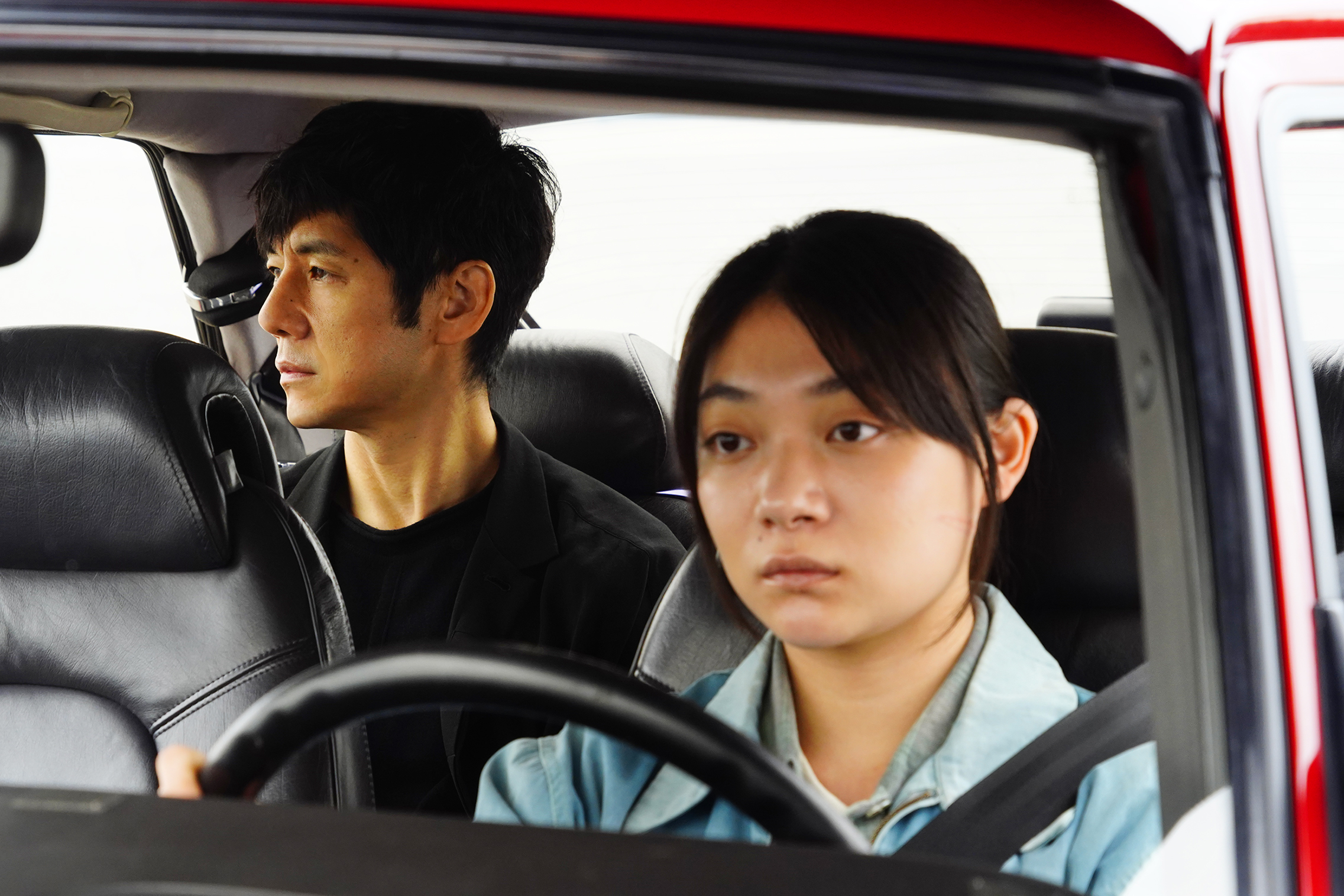
A young Hiroshima chauffeur (played by Toko Miura) and the director she drives around (played by Hidetoshi Nishijimi) form an unexpected bond in the Japanese film Drive My Car.

Drive My Car is one of two Japanese films I saw at the VIFF on Saturday the 9th. It’s a film that turns out to be more than what one expect of it.

The film begins with Yusuke Kafuku and his wife Oto. They appear happily married at the start. Oto is a housewife while Yusuke is a stage actor, and doing very well. Oto frequently gives Yusuke story ideas which he could one day adapt and direct, even while they both have sex! They were parents to a daughter, who died at a young age 20 years earlier. They still hold a religious memorial for her on the anniversary of her death. He has just finished doing a play with rising young Japanese actor Koji Takatsuki. Soon after, he is given an assignment to do a directing job in Russia. Just before he is to board the plane at Narita, he’s told of a one-day delay. He goes back to his house, only to find Koji having sex with Oto, which they don’t notice. Days later, Yusuke has a car accident and learns of glaucoma in his right eye. Yusuke tries to recover, but soon, Oto dies of a hemorrhage.

Yusuke needed two years to recover from this all. It started affecting his work as he had trouble dealing with his first role after her death: the role of Vanya in Uncle Vanya. His first project is to co-direct a multilingual adaptation of Uncle Vanya with a Korean director names Lee Yoon-a. It is to be staged in Hiroshima during a theatre festival. One thing is that Yusuke meets a young woman named Misaki. She is to be his driver from hotel to theatre. Yusuke doesn’t like the idea of a driver. He wants to do his own driving. However festival insurance rules means having a driver for the directors is a must. One of their directors from years past died in a car accident during production. That’s why directors for this company have drivers. Yusuke reluctantly agrees to allow her to drive his Saab.

The drives to and from the theatre start without conversation. Misaki simply drives Yusuke to the theatre. Some friction starts when Yusuke wants to use the car’s tape player to recite his lines: something he commonly does as he rehearses shows. It starts with friction, but she complies. Yusuke and co-director Lee start the auditions for the play. They audition many actors from various parts of Asia and other countries. The languages vary from Japanese to Korean, Taiwanese and even Korean sign-language. One of those auditioning is Koji. Koji switch from television to theatre after his career was one tabloid scandal after another. You can tell Yusuke has feelings of contempt for him. Yusuke declines to be an actor himself in the production because of how emotional Chekhov’s works are too emotionally draining.

The film starts read-through rehearsals. Most are Japanese-speaking, but there’s also Korean-speaking, a Taiwanese-speaking American and the woman who does Korean sign-language. Koji has also been cast in the play. Both Yusuke and Lee go through the rehearsals. The friction is no bigger than your typical friction on a theatre set. Misaki continues to drive Yusuke and the two start to develop conversation. Misaki is a chain-smoker and just briefly tells Yusuke of the death of her mother in a landslide disaster.

As the play starts progressing to the physical rehearsals, where an LED screen above flashes the dialogue in many languages to the audience, the play gets its common friction. If there are any hostile feelings between Yusuke and Koji, Yusuke keeps it to himself. He has to get along with Koji as they are producing. One night, the director Lee invites Yusuke to dinner at his house. Misaki is also invited. Lee meets the wife, who is the actress who is performing in sign-language. It’s a happy marriage.

One night Yusuke and Misaki go into the town for drinks. They come across Koji. Koji is at the bars hoping to get away from it all. However people trying to get his photo annoys him even to the point he gets violent with one. Since Koji is too drunk to drive, he gets a ride with Yusuke from Misaki. During the time, Koji confesses his affair with Oto. He tries to give Yusuke words of comfort of what a wonderful woman Oto was. He even tries to suggest that it was through Oto they meet by fate here.

Just a week before the show is about to start, it was learned that Koji is under investigation for committing manslaughter from that night at the bars. The play continues rehearsals despite the temporary detainment of Koji. After the rehearsal, Yusuke allows Misaki to go to the area where the landslide that took her mother happened. They go to the area. Misaki starts letting out her feelings and breaks into tears. There, Yusuke also confesses his failings to Oto after the death of their daughter. He too is in tears and they embrace together. Uncle Vanya is then staged with Misaki watching from the audience. She watches the ending scene with intensity where the actress playing Sonya signs about the need to stoically carry on living in the face of crushing disappointment. The film ends in a questionable way.

This is a rare story. This is a case of a director of theatre being escorted by a young driver who’s the same age his late daughter would be. We don’t notice it at first, but both are hurting inside and both need healing. Over time, they are mostly silent. Then over time, they strike up an unlikely friendship that eventually takes them to where they grieve together. One is first tempted to think around the middle of the film, Yusuke would soon be romantically interested in Misaki, but that’s for you to judge for yourself.

It’s not just about Yusuke and Misaki. It’s also about Yusuke trying to make peace with himself as the husband who failed. Maybe he blames himself for Oto’s premature death. It’s also about making peace with Koji, Oto’s ‘other man.’ In a lot of ways, it’s about Yusuke criss-crossing with a lot of people as he’s on his journey to heal and make peace. He’s a man trying to heal from his failed marriage and his driver is trying to heal from her mother’s death which she blames himself for. Yusuke is a television actor who quit television for theatre after his daughter’s death. Koji, the ‘other man,’ quit television for theatre with the scandals of his behavior plaguing his life. Yet they find themselves working together in the film. It could be a case where the fates are a case where Oto brought them there to forgive each other, as Koji suggested.

The mixing in of the story of Uncle Vanya being done in multilingual fashion adds into the story. I think that’s the point of the story. I believe it’s to show how art is universal in its feelings and connections. Art transcends language barriers to deliver the feelings of love and hurt we all share. Even the detail of the play that’s being staged in Hiroshima has a bearing of importance in this story.

This is a smart film about a director who is trying to make peace over the sudden death of his adulterous wife. The inclusion of a ‘chauffeur’ who herself hasn’t fully come to terms with her mother’s death in a disaster and the young actor in his play who was one of his wife’s ‘other men’ adds to the story of the healing process for both the director and the driver. One glitch about the film is that it goes for a long period of time. Possibly too long. Even at the start, forty minutes of story go by before the opening credits roll. The story in itself is almost three hours long. It’s a very good story that deals with universal human emotions intertwined with art, but it is drawn out for too long of a period of time. You’re left wondering if all that time was really worth it.

This is a very good film for director/writer Ryusuke Hamaguchi. He’s had renown before for his filmmaking like Wheel Of Fortune and Fantasy and Happy Hour. Here he creates a smart film of three people that need healing and how it’s through the power of art that they are able to make it happen and be given the will to live despite all that’s happened. There are some noticeable mistakes like the length of the film and the ending that gets you wondering, but it’s still a good film to watch. Hidetoshi Nishijima does a great performance as Yusuke being a man that needs healing, but doesn’t show it on the outside. Toko Miura is also very good as Misake. Just like Nishijima as Yusuke, she does a good job of playing a character with hurts she tries to keep hidden until it all comes out that moment together. Masaki Okada is also very good as the troubled Koji. You can tell despite the ego on the outside, he has some personal feelings underneath.

This film has already won an excellent amount of awards. The film won the Best Screenplay Award and the FIPRESCI Prize at the Cannes Film Festival and was a nominee for the Palme d’Or. The film was also a nominee for the Best Feature Award at the Chicago Film Festival and a nominee for the Audience Award at the San Sebastian Film Festival. The film was recently selected as Japan’s entry in the category of Best International Feature Film for this year’s Oscar race.

Drive My Car is a film of two individuals who meet by fate, but help each other heal. It does a good job of mixing the story line with the art of theatre and the mixing of languages, but it’s too long of a film. A good story, but too elongated nevertheless.

VIFF 2021 Review: Queen Of Glory

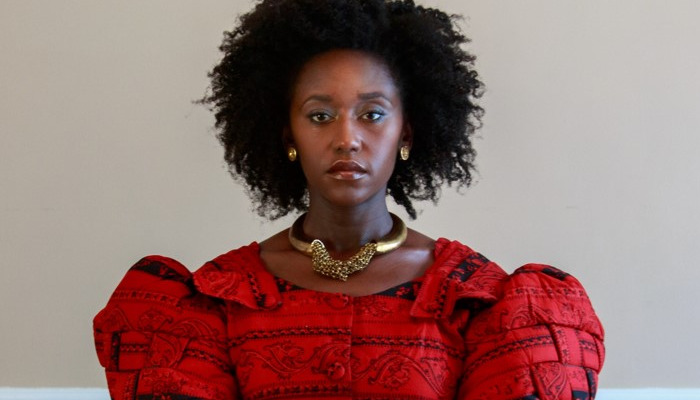
The sudden passing of a doctoral student’s mother becomes a path of self-discovery, transformation and learning of her Ghanian routes in Queen Of Glory.

It’s not that often that I see American films at the VIFF. Queen Of Glory caught my attention and it turned out to be a very nice story.

Sarah Obeng has been a doctorate student at Columbia University as long as she can remember. Approaching thirty, she’s thinking of abandoning her Ivy League career and follow her married-with-children lover on a cross-country trip. She’s tired of the same life of studying, preparing for an Ivy League job, dinner with her religious mother and sharing an apartment with a male roommate who’s not her boyfriend. Then things change suddenly. Her mother has a fatal heart attack. Being the only child and more responsible than her own father, she has to take care of the funeral preparations.

Dealing with her mother’s cremation and memorial service isn’t the only thing Sarah has to deal with. She also heads back to her mother’s house as her father had arrived from Ghana. She will tend to him and hope to reconnect with him. On top of it, she has to deal with her mother’s Christian bookstore in the Bronx, named King Of Glory, that didn’t have a post mortem business plan. All this happening just as Sarah’s life was about to take off. She decides to continue studying at Columbia temporarily. She also decides to sell her mother’s Christian bookstore, but spend some time in it to understand the business. She meets Pitt, an ex-con with facial tattoos who has been loyal to the business and her mother. Especially since her mother is one of few people to give him a second chance. She also finds time to take a break from all the stress when the next-door Russian-American family welcomes her in and gives her dinner.

Lots of things change over time as the funeral nears. First there’s the Ghanaian community that wants to hold a traditional funeral. They’re surprised Sarah had her cremated before. She has to do all the cooking of traditional Ghanaian food for the services. Then she has dinner with Lyle only for him to deliver some shocking news. The attempt to reconnect with her father is not working as well as she wants it. He is more interested in watching football on television and falls in love with a New York woman, which outrages Sarah. As Sarah works at her mother’s bookstore with Pitt, they start a friendship. However this is put to the test as potential buyers of the bookstore arrive, upsetting Pitt.

The day of the funeral/memorial service happens. Sarah is all dressed in a new red dress and hair. You can tell she’s ready, nut not ready. There, she’s greeted by other members of family and members of the Ghanaian community. There she’s able to properly mourn her mother’s death. Over time she’s able to make peace with her father and found a solution to her mother’s business that pleases her and Pitt.

Immigrant identity is a common theme in a lot of films. It’s about living in your current country while still maintaining a personal bond to your motherland or fatherland. We have seen this motif done many times in films about Italian-Americans, Irish-Americans and Jewish-Americans, to name the most common. Last year, there was the story of Minari of a Korean family and their attempt to achieve their own American dream. Very rarely do we see a story of an African-American and ties to their motherland or fatherland. There have been a lot of African immigrants coming to North America in the past few decades. I’m sure there aren’t enough stories of them and their experiences. This is a great story of a young Ghanaian-American as she deals with her identity. This is something you rarely see in the cinema and I’m glad it was made.

It’s not just about a Ghanaian-American daughter. It’s of a daughter who is trying to establish herself and so much happens to her at once. Over time, she gets her biggest personality changes and has a new outlook on life and herself. She starts as business-like, making decisions about her mother’s funeral and her business. Then she starts to learn a lot more from the people around her. She gets to experience more from the Ghanaian community: a community I don’t think Sarah was too close to before. She learns more about her mother’s Christian bookstore. This is more than a business. This is a place a lot of people liked and a place where an ex-con gets a second chance, thanks to her late mother. It’s right after her immediate decisions were made she learns just how apart she was. The community wanted a traditional funeral, but Sarah rushed the cremation. Also Sarah learns how much the business meant to Pitt after she put it on sale. All this happening within the days of her mother’s death and the funeral. You can understand how stressful this would be for Sarah.

This film is an accomplishment for Nana Mensah. An American born to Ghanaian immigrants herself, she has had moderate success as an actress. In film, it’s mostly been bit parts in films like The Mysogynysts, Like Father and The King Of Staten Island. Television success has been better as she had recurring roles in An African City, New Amsterdam and13 Reasons Why. This film she directs, writes and plays the lead protagonist is definitely an achievement. It’s very multi-dimensional and it gives a quality story of a daughter and her sudden changes just as tragedy happens. She does a good job of portraying a young woman who’s hurting inside, but trying to hold it all in and keep it under control. Meeko also does a very good job with Pitt. He does a great job of playing a character you least expect to be the one that will change Sarah’s outlook or one who Sarah seems least likely to befriend.

The film does a very good job in telling its story. It divides from the world Sarah knows to the world her mother knows and the world of her ancestry. It tells the story well in color with presenting images in black and white of a traditional Ghanaian funeral. It shows the story of Sarah and the bookstore while occasionally cutting to images of the man nearby selling Ghanaian movies outside. It also shows what it’s like to live or work in the Bronx. All these added aspects add to the atmosphere of the story.

The film has had a good share of awards and nominations in the film festival circuit. It was a nominee for an American film award at the Champs-Elysees Film Festival, nominee for a New Visions Award at the Reykjavik Film Fest and a Best Film nominee at the Warsaw Film Fest. It’s also won the Best New Narrative Director award at the Tribeca Film Festival and the New York Women in Film & Television Award at the Hamptons International Film Fest.

Queen Of Glory can be seen as a triumph for actor/writer/director Nana Mensah. It’s an excellent story of how one can discover themselves during a time of grief and of great personal change. It was a great film to watch. Meeko is also good to watch as Pitt. He does a great job of playing the most unlikeliest of men that will help change Sarah’s outlook.

VIFF 2021 Review: The Scary Of Sixty-First

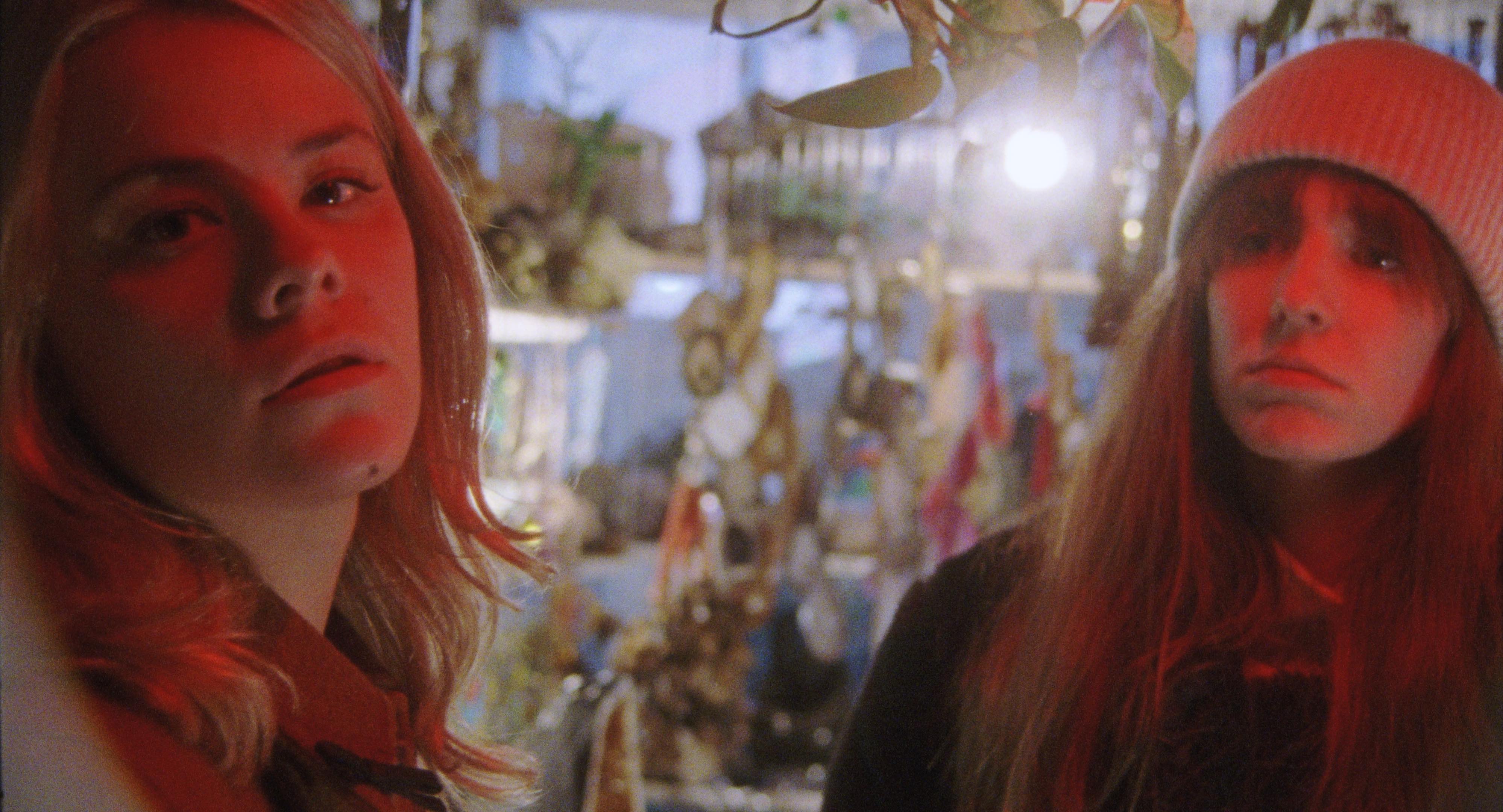
Supernatural hauntings of a New York apartment and a ring of famous sex offenders spark intrigue in a pair (played by director Dasha Nekrasova and Madeline Quinn) in The Scary Of Sixty-First.

The Scary Of Sixty-First is an American film that’s part of the VIFF’s series of Altered States films which set one up to expect the unknown, unusual and even bizarre. Here, bizarre is an understatement.

The story begins close to Christmas with two female friends, Noelle and Addie, searching for an affordable apartment in New York City. The come across one place in the East Side which is grand in size and has just been made available after the recent death of its tenants. The realtor however makes clear that at an affordable price any place they accept is taken as is. The girls find a place in New York’s downtown area. They are willing to clean everything up even though it was left behind with a big mess, including a moldy turkey with a dead mouse found in it. After their cleaning, they decide it’s worth staying in temporarily.

They have no problem living together, even though Addie has a boyfriend named Greg. Addie is at a crossroads in her life. She doesn’t know whether to move on and establish herself, or live with Greg. One day, a young woman visits the place while only Noelle is home. She introduces herself and informs Noelle that this suite was owned by Jeffrey Epstein before he was arrested. Just when both Addie and Noelle were already starting to sense the bad vibes of the place, it gets even worse when they notice blood underneath the mattress. They find a tarot card with a provocative image that they feel holds a clue to the place.

The other woman and Nicole start having a tempestuous relationship. It almost appears the place is becoming more like Noelle’s and the other woman’s instead of Noelle’s and Addie’s. As they both are trying to get a better understanding of the place, Addie is feels drawn to the place, despite also sensing the danger of it. Addie starts having an interest in Prince Andrew as the woman tells Noelle of the stories involving Prince Andrew to the place. Things turn for the bizarre as while she has sex with Greg, she shouts in a demonic voice for him to imagine her underage. That creeps Greg out and starts the friction in the relationship. The woman and Nicole are especially freaked out by Addie’s frequent masturbation, child-like behavior, and fixation with Prince Andrew memorabilia.

As the woman and Noelle get further and further into the Epstein connection with this place, they have had enough. They go to a crystals shop where they think the man who runs the store will know what the tarot card means and will have a good sense of what’s wrong inside. The man turns out to be creepy as he appears to deride them both of what he senses in their aura. However once they show him the card, he’s convinced of the problem and warns them to leave.

Then one day, Addie arrives to the place appearing like she’s possessed by a demon. Both of the women notice Addie worshiping whatever appears to be in the place. The two have to go in, fearing the worst. The end culminates in something you would not at all expect no matter what you had anticipated. It’s even a surprise for Addie, Noelle, the woman and Greg.

This is truly a bizarre story. The story already begins on a creepy note about a house left over by deceased people which the two have to clean up themselves, only to discover a moldy turkey in the fridge with a dead mouse in it! The bizarreness just starts there and continues into weirder territory. The weirdness grows with the mention that this was owned by an associate of Jeffrey Epstein, then comes mention of Prince Andrew, and the bizarreness grows and grows after that. Sometimes, you’re left wondering what the main theme of the film is about? Sex-offenders? The supernatural? Bizarre possessions? What is the main subject? There were even other people leaving the theatre wondering what was the point?

Despite the bizarre story, I give credit to Belarussian-born Dasha Nekrasova. This is a very ambitious film she directs, co-writes with co-star Madeline Quinn and acts in. It’s a very daring story as it reaches into the supernatural, the provocative, and even the taboo. However it’s a story that gets you wondering what is the overall point? Yes, the ending is different from what one would expect, as one should be, but it doesn’t make sense in the end. Sometimes you wonder what was the film aiming to be? A scary drama? A scary comedy? A load of shock value? What exactly?

Despite my confusion with this, I will say the acting from Dasha was very good as she did an excellent job with her part. even the scenes where it didn’t appear to make much sense. Actually if anyone should understand this story, it’s Dasha. Madeline Quinn was also very good as Noelle. Being the co-writer of the story, she would most likely be the only other person who understands the story best. Betsey Brown was also very good as Addie. Being under a bizarre possession opens the door for bad acting. But Betsey pulled it off well. Mark Rapaport is also good as Greg. He has the luxury of portraying possibly the sanest character in the story!

Despite the weirdness of the film, this film has attracted awards mention. At the Berlin Film Festival, it won the Best First Feature Award and was nominated for an Encounters Award and a Teddy Award (given to LGBT films) for Best Feature Film. At the Sitges – Catalonian Film Festival, it was nominated for a New Visions Award for Best Motion Picture. Over on Rotten Tomatoes, many critics see this film as a tribute to the bad horror movies of the 80’s. Maybe these film festivals and critics are seeing something in it most of us didn’t.

The Scary Of Sixty-First is definitely far from your conventional story. However it’s a film that is often too weird or too bizarre in either subject matter or story line to make sense. Sometimes you’re left wondering what was the point? The story or shock value?

VIFF 2021 Review: Drunken Birds (Les oiseaux ivres)

A Mexican migrant worker in search of the woman he loves (played by Jorge Antonio Guerrero) is the centerpiece of the Canadian film Drunken Birds.

Drunken Birds is Canada’s official entry in the 2021 Academy Awards category of Best International Feature Film. It’s a film that meshes French with Spanish and Chinese to create a film that stands out.

The story begins with a Mexican family inside an apartment in Montreal. We learn of a man who’s searching for a woman named Marlena. Flash back many years ago. Workers for an arrested drug lord in Mexico chase down a car with a burning top. They then chase a worker for the cartel by the name of Willy down. They know what he’s been doing behind the drug lord’s back the whole time and they warn him at gunpoint.

Flask forward to the present to the Becotte farm near Montreal. The boss, Richard Becotte, is the latest to run a vegetable farm of his family going back many generations. He’s fair to the Mexican migrant workers who agree to work, but strict. Show up at 5:30am or no pay for the day. There are many who are returning, but there are some new men, including Willy. Willy does his work along with the other men, but he doesn’t really care about the pay. All that matters is he finds Marlena. In fact while the men communicate on Skype or Zoom with their wives, children and other family, Willy uses his time to search for Marlena, who has gone by a pseudonym. He has a feeling Marena lives in Montreal.

Flash back to many years ago. A Chinese art studio is given orders to either make replicas of legendary paintings of painting versions of photos. One of the photos is the picture of the Mexican mob boss. Flash to months later but still in the past, police visit the house of the drug lord some time after it was raided and the boss arrested. They talk of admiration of how they brought this tyrant with many riches down. They also notice a letter from his young wife Marlena that appears to be a suicide note. Instead it was a letter Marlena concocted with the help of Willy to plan her escape. Turns out before the raid, Willy was the ‘other man’ of Marlena. Marlena’s true love. A love that had to be kept complete secret. Four years ago, the two decided to escape together, but go their separate ways after that. Willy has been searching for Marlena for four years. He’s tried places in Mexico, knowing her pseudonym. Now hes here in Montreal hoping he’ll be able to find her here once and for all.

However the Becotte family have friction of their own. Last year in their cornfield, Julie had an affair with one of the workers. Daughter Lea knows about this and she confronts her mother about this, even mentioning Richard knows about it. This is hard to deal with as now Julie is starting to take a liking to Willy as she drives him off to a place. Meanwhile Lea is becoming an adult and she rebels against her parents. She’s trying to fit in with her friends and even try her way into the Montreal night club scene. She’s willing to try anything, including drugs and prostitution. Actually racers for the Montreal Grand Prix are in town from around the world. Lea is hoping to hook up with one of the racers and make some money. Her pimp gives her a pager and puts a drug in her mouth. She does win a driver and gets taken into his hotel room, but she leaves him, and the pimp’s phone, behind. She’s on the streets and dreams of being met up with the racer in his car, but awakens to find herself beaten up by the pimp.

Willy notices a beaten Lea in tears. He takes her in his arms and tends to her. However Richard comes in and mistakes Willy as the man who beat Lea up. Willy is in pursuit and tries to run off. However in a rainy night as he is chased in by a truck back to the Becotte farm, Richard has his men and he’s ready to square off with Willy. Richard shouts spiteful things to Willy and the Mexicans, blaming them for what happens to Lea. As the men try to beat Willy up, the Mexicans defend Willy and start charging at Richard’s men. Willy is able to find his way out and hide in a cornfield. Richard tries to search, expecting Willy to come out, but to no avail. Richard soon learns he has to make peace with his family. In the end, willy didn’t stop running. He made it to Montreal for his main goal: to find Marlena. The film ends in an expected but unexpected way.

This is a unique story. It’s a story of two worlds. The world of the past in Mexico and the world of the present as part of a farm. It’s a story of a man in search of the woman he loves and the story of a family that appears falling apart. It’s a story that deals with the issue of migrant workers and how they’re treated by their bosses in Canada. At the same time, it’s a story that blends in a colorful romance. It’s like two films in one in many ways. It’s not easy to mix the two, but it’s done successfully here.

In a lot of ways, this film shows a lot of similarities between both scenarios. Here we have Willy who’s the object of the kingpin wife’s desire. It’s a desire they have to keep well-hidden or else Willy will be killed. Both have to move on after the kingpin is arrested and his mansion raided. In Canada, we have the farm-leader’s wife who falls for the migrant workers. Willy becomes one of the men she falls for. It’s a case for Willy that both world’s collide with him. He has to cope with the aftermath of the raid and the immense possibility of never seeing Marlena again. He also comes across the possible danger of Richard crossing his path if he knows that he’s one of the workers Julie falls for.

Even though Willy is the centrepiece of the story, it’s not just about Willy. It’s about the Becotte family. Julie has her affairs with some of the migrant workers. Lea is upset with what she sees and claims Richard knows. Meanwhile Lea appears she wants to establish herself as an adult and she feels that means choosing her own direction, even if it is dangerous. When you see Richard and his men attempt to square off against Willy, blaming him for what happened to Lea, you can easily get the feeling Richard knows of Julie’s affairs and feels he has to take it out on at least one Mexican worker. Before he takes it out, you could notice by the look on his face he most likely blames himself for his family’s failures.

This is an impressive work from Serbian-born Canadian director Ivan Grbovic. His films like La Chute and Romeo Onze have won acclaim at past film festivals. This film hasn’t won as much acclaim outside of it’s Oscar entry. It did however earn a Platform Prize at the TIFF (Toronto International Film Festival). This is an impressive film that blends in modern storytelling with imagery of classic films and common Mexican dramas. What we have here is an excellent film that’s as much a joy to watch as it being a story that will keep you intrigued.

Jorge Antonio Guerrero is excellent as Willy. His performance as a man caught between his passion and always having to be on the run keeps you on the edge of your seat and hoping he succeeds in finding Marlena. Claude Legault is also very good as Richard. He does a good job of playing a man that’s supposed to be tough on the outside, but is hurting on the inside. Helene Florent is also good as the flirtatious Julie who later has to confront her wrongs. Also excellent is Marine Johnson as Lea. She does a great job of playing a teenager angry with her home life and wanting to break free, only to find herself more entrapped by her choices.

Drunken Birds is more than just a film with a story. It mixes modern drama with a social message and traditional Mexican drama to give the viewer a story that’s a delight to experience.