You all remember Vancouver 2010. Canada won the most ever Winter Olympic golds in a single games with 14. Canada is not the host nation for the Winter Olympics anymore. That pressure now belongs to Russia. Nevertheless Team Canada will face pressures of its own over in Sochi both as individuals and as a team. One thing we should take into account is how some countries perform in the Olympics after they were host nation. Below is a chart of host countries and their various medal hauls. The #/# guide is golds/total medals:
As noted in that chart, some get better like Canada in 1992. Some still stay the same and some do noticeably worse like Japan in 2002 and Italy in 2010. Sports Illustrated predicts Canada to win a total of 31 medals including eleven gold. That’s an awful lot but not impossible.
In the meantime, here’s a look at some Canadians favored to do well in Sochi, if not win:
Patrick Chan – Figure Skating: Canada has a proud legacy in figure skating. So proud you could say figure skating is rightfully third behind hockey and curling as our national sport. Our legacy is there. Canada has also left every Winter Olympics since 1984 with at least one medal in Figure Skating. Canada is one of only five countries to win twenty or more Olympic medals in figure skating. We have Olympic champions in three of the four returning figure skating categories. The only one we don’t have is in the Men’s Singles event. Four bronze medalists, two double-silver medalists but never a gold medalist. This could finally be the year.
Patrick Chan has Canada’s best chances. He’s been national champion since 2008 at the tender age of 17, a world Championships medalist every year since 2009 and a World Champion three times starting in 2011. He has looked good this season, winning two of his three international competitions this year losing only the Grand Prix of Figure Skating.
He has looked good in practice here in Sochi and appears confident he will win. However he will have rivalries from Kazakhstan’s Denis Ten who finished behind him at last year’s Worlds and Russia’s Evgeni Plushenko who’s making a comeback. Also expected to challenge is Spain’s Javier Fernandez and Japan’s Yuzuru Hanyu: the latter two of which are coached by Canadian double-silver medalist Brian Orser. In fact it was Hanyu who gave Chan his only defeat this year at the Grand Prix back in December. So will he be the first Canadian men’s champion or the seventh medalist? It will all be decided on the 13th and 14th.
Erik Guay – Alpine Skiing: Remember the Crazy Canucks? Yeah, Canada had an impressive legacy in Alpine Skiing on both the World Cup circuit and the Olympic Games in decades past. Nancy Greene, Kathy Kreiner, Ken Read, Steve Podborski, Kerrin Lee-Gartner, we all remember them. Problem is it seems like it’s all in the past. The last Olympic medal was a 1994 bronze in Men’s Downhill by Ed Podivinsky.
Canada’s top bet to get back on the Olympic podium is Erik Guay. Guay is 2010 World Cup winner in the Super-G and 2011 World Champion in the Downhill. This year he has ranked in the Top 3 in the men’s downhill on the World Cup circuit. However he was sidelined temporarily in January due to a minor knee injury. But he’s confident he will be ready to perform on February 9th. Actually Erik is not the only Canadian alpine skier with good chances to win a medal. Healthy medal chances also come with Marie-Michele Gagnon who is currently ranked fourth in World Cup standings in the slalom and just won her first ever World Cup race–a super-combined event–just last month in Austria. Will a new generation of Crazy Canucks arrive in Sochi? The Rosa Khutor Alpine Resort will set the stage.
Alexandre Bilodeau – Freestyle Skiing: Alexandre isn’t just simply the first Canadian to win gold during Vancouver 2010. He’s the first ever to win gold on Canadian soil as the 1976 Summer Games in Montreal and the 1988 Winter Games in Calgary failed to produce a Canadian Olympic champion.
Since Vancouver he has made many public appearances and has graduated from college. His competitive drive has not deterred. He has won moguls silver at the past two World Championships and has already won three of the six moguls events on the World Cup circuit. He is a big favorite to win at what he says will be his last Olympics but his top challenge will come from fellow Canadian Mikael Kingsbury who is 2012 and 2013 World Cup winner in moguls, World moguls champion in 2013 and has won the other three World Cup events from this year. In fact Sports Illustrated predicts Kingsbury to win gold and Bilodeau to win silver. The stage for Canadian vs. Canadian will take place February 10th.
Charles Hamelin – Short-Track Speed Skating: There’s a lot of talk for the possibility of the first ever Canadian four-time Olympic champion. One possibility, actually three, is in women’s hockey which I will talk about later. Another possibility is in men’s short track speed skating with Charles Hamelin.
You could say that short track is in his blood. His younger brother Francois was part of Canada’s gold medal-winning relay and his father Yves is the current national director of the national short track team. Hamelin has had an illustrious career which includes two Olympic golds from Vancouver and a silver from Turin in 2006 as well as 26 World Championship medals, eight of them gold. In fact at last year’s World Championships, Hamelin was part of the gold medal-winning relay and won three individual bronzes.
Charles comes to Sochi as the reigning leader in the overall World Cup standings as well as leading the 1000m and 1500m. His path to more gold will not go unchallenged. His top threats come from Russia’s Viktor Ahn and South Korea’s Sin Da-Woon. Plus there’s the sport itself which is known for its slipperiness and frequent falls. It will all be decided at the Iceberg Skating Palace.
Alex Harvey – Nordic Skiing: Skiing sure runs in the family. It was natural that Alex Harvey take up cross-country skiing. His father Pierre was Canada’s best ever cross country skier when he was competing during the 80’s. In fact I myself remember back during the Calgary Olympics Pierre was giving Canada its best-ever finishes in the cross country events. Sure they were between 14th and 20th but they were still new achievements for Canadian skiers.
Alex, who was actually born in September of that year, has taken achievement to new levels. He now has Canada’s best ever men’s finish at an Olympic Games: fourth in team sprint with teammate Devon Kershaw. He and Kershaw would become World Champions in that event in 2011. Harvey won bronze in the sprint at last year’s Worlds. This season he has won two World Cup races. Sports Illustrated predicts him to win bronze in the sprint. However he’s pressed to win Canada’s first even men’s cross country medal by teammate Devon Kershaw who finished second to Harvey in a World Cup sprint event. He will also be challenged in winning the sprint event by World Champion Nikita Kryukov of Russia, World Cup sprint leader Josef Wenzl of Germany and Italy’s Federico Pellegrino who’s ranked second in the sprints. The Laura Biathlon and Ski Complex is the stage.
The Dufour-LaPointe sisters (Justine, Maxime and Chloe) – Freestyle Skiing: It’s not uncommon that you have siblings competing together at the same Olympics. Sometimes in the same event. But three? And all three of them in the same event? That’s the case of the Dufour-Lapointe sisters in moguls: Maxime who turns 25 on the 9th, 22 year-old Chloe and 19 year-old Justine.
The first excitement came when Chloe qualified for the Vancouver Games. Bigger excitement came when Justine won bronze at last year’s World Championships. However the excitement has been happening this year on the World Cup circuit. All six World Cup meets this year has seen at least one of the three on the podium with Justine winning two events and Chloe winning one. Currently on the World Cup circuit Justine ranks second, Maxime third and Chloe fourth. It’s possible the sisters could even sweep in Sochi. However blocking their path is defending Olympic champion, 2013 World Champion and World Cup leader Hannah Kearney of the U.S. American Heidi Kloser of the U.S. who is ranked fifth in the World Cup also poses a challenge as well as Japan’s Miki Ito who finished second at last year’s Worlds. It will all be decided February 8th.
Canada’s Hockey Team (men and women): Every Winter Olympics you can’t avoid the talk of Canada’s chances in hockey. Especially in men’s hockey. Hey, our national pride is at stake and winning it makes our OlympicsEver since NHL players were allowed to compete for the first time back in 1998, it’s always the challenge to prove themselves first among at least six equals. But we’ve succeeded with wins in 2002 and back in Vancouver. However we’ve found ourselves off the podium in 1998 and ousted in the quarterfinals in 2006.
Team Canada’s 24 members are all NHL players and eleven were part of Canada’s gold medal-winning team from 2010. Sidney Crosby who scored the ‘golden goal’ back in Vancouver is the captain this time. Team Canada has failed to win a World Championship medal ever since Vancouver but is predicted by Sports Illustrated to win bronze. They face challenges from 2013 World Champions Sweden whom SI predict to win and from the home country of Russia. It will all be decided at the Bolshoi Ice Dome by the 23rd.
As for the women, Canada has very good chances to win gold again. If they do, three women–Haylee Wickenheiser, Caroline Ouellette and Jayna Hefford–could become the first Canadians to win four Olympic golds. However their top rival as always is the United States. In fact the U.S. beat Canada for the 2011 and 2013 World Championships. It’s just a question of which of the two will take it on the 20th. Or a question of if a European team will upset. It’s possible.
So there you go. Those are some Canadians to look for at the Sochi Games. I know they’re more than seven but I couldn’t resist adding more. Besides people who like my Olympic writing probably don’t mind anyways. Besides since I wrote about the athletes from around the world yesterday, I figure you were due some Canadians.
They should provide for a lot of great moments and more national heroes. Interesting how ever since the 90’s Canada has become a superpower in winter sports like Austria and Norway. Before them we either had a lousy winter and a good summer or a good winter but a lousy summer. There have been one or two years where we had both a lousy winter and summer but that’s in the past. Anyways let the Games begin!
I can tell that a lot of my visitors liked my blogs to do about the London Olympic Games. Heck, the last time someone clicked on one of my ‘athletes to watch’ blogs from those games was just today! Even my blogs reviewing the London Games of 2012 and the other two times still received recent hits. Seeing that has inspired me to do more Olympic writing. And it definitely inspires me to write about these ones to watch for the Sochi Games of 2014.
I know there’s been a lot of talk about outside factors involving the Sochi Games. In this blog I’m sticking to talking about what the Games are supposed to be about: the athletes. Here are ten athletes who are poised to dazzle us or even thrill us from February 7th to the 22nd.
-Marit Bjorgen/Norway – Nordic Skiing: Norway has won more Winter Olympic medals than any other nation. And it’s no wonder. Winter sports are in their blood with their biggest legacies in Cross Country Skiing, Ski Jumping, Nordic Combined and Long Track Speed Skating. Even recently they’ve been showing excellent prowess in Alpine Skiing and Freestyle Skiing. One of the best female skiers ever, Marit Bjorgen, will be competing in her fourth Olympics here in Sochi.
Marit has an illustrious career starting quietly with silvers in 2002 and 2006. Vancouver 2010 was her moment as she won five medals, three of them gold. She has also won the overall World Cup title three years and nineteen World Championship medals including twelve total gold. At last year’s World Championships, she really had the show in her hands as she won four gold and a silver.
Here in Sochi, she comes with probably the most expectations of any female Nordic skier. She’s expected to perform big and has the credentials for it. However she does face rivalry. She is currently ranked third in the World Cup overall standings with her 25 year-old Norwegian teammate Therese Johaug leading in the distance events and 25 year-old German Denise Herrmann leading in the sprint events. She’s also expected to receive rivalry from her traditional rival Poland’s Justyna Kowalczyk. Nevertheless if there’s one female skier who can most rise to the challenge, it’s her.
-Ted Ligety/U.S.A. – Alpine Skiing: The United States has always been a force in Alpine Skiing. This century has seen a lot of big names like Lindsay Vonn, Bode Miller and Julia Mancuso. Another name on the list is Ted Ligety. At the 2006 Olympics, Ted came from nowhere to take gold in the combined event. Since then he has been most dominant in the giant slalom event but has had seasons with ups and downs. He was finished on top of the World Cup giant slalom event in 2008, 2010, 2011 and 2013. However he had a lackluster 2010 Winter Olympics where his best finish was fifth. 2013 not only saw him win his fourth World Cup giant slalom title but a third place finish overall and winning three gold medals at the World Championships.
Interesting is that he has his own ski business. As for this season, it hasn’t been so easy for Ted. He’s had four World Cup wins but finds himself fourth overall and third in the giant slalom. He faces a strong challenge from Austrian Marcel Hirscher and France’s Alexis Pinturault in the giant slalom. It will all boil down on each race day. Especially the giant slalom on February 19th.
-Tina Maze/Slovenia – Alpine Skiing: Slovenia has never won a Winter Olympic gold medal. Two silvers and five bronzes but never a gold. That could change thanks to Tina Maze. She has had an excellent career as a skier that includes Slovenia’s two silvers, both won in Vancouver 2010, and six World Cham,pionship medals. Two of them gold. However her biggest year was 2013 when she won three World Championship medals including gold in the Super-G and the World Cup overall title which she won with the highest total points ever.
This season has been a difficult one for her as she has struggled in consistency in races and it wasn’t until just two weeks ago she finally won her first World Cup race of the season: a downhill. She will be hard pressed to repeat her winning with threats from Germany’s Maria Riesch-Hoefl and 18 year-old American sensation Mikaele Shiffrin. Also it may be possible Slovenia’s first ever Winter Olympic gold could be won by another athlete like ski jumper Petr Prevc or snowboarder Žan Košir. Nevertheless the Olympics can be anyone’s game in Alpine Skiing and it just could be Tina’s.
-Shaun White/U.S.A. – Snowboarding: What else is there to say about the ‘Flying Tomato?’ His has definitely been one of the most popular Winter Olympians in recent years, if not the most. He has won numerous X Games medals, he has made the cover of Rolling Stone twice and is commonly seen in endorsements. Already he has made Olympic history as the first snowboarder to win back-to-back gold medals, in the Halfpipe event. This year is a unique year as he will be trying for a threepeat in the halfpipe.
Shaun has been absent for the 2013 World Championships but has continuous won events in X Games competitions. He is expected to win the halpipe again but he does however face some hungry young guns like Switzerland’s Yuri Podladchikov and Japan’s Taku Hiraoka trying to take him down.
He was also expected to be a top contender in the new slopestyle event this year. However it was not to be as he fell days ago after hitting the rail hard during a training run and was injured. He chose to withdraw from that event but reassures all that he will be ready for the halfpipe. However there have been other boarders who suffered falls on the course at the Rosa Khutor Extreme Park and their injuries caused them to withdraw before even competing and two even requiring hospitalizing. His fate will be decided on the halfpipe on the 11th.
-Shani Davis/U.S.A. – Long-Track Speed Skating: The threepeat in Olympic Long Track Speed Skating is a feat only accomplished twice and by women. First was by American Bonnie Blair in the 500m from 1988 to 1994. The second was Germany’s Claudia Pechstein in the 5000m from 1994 to 2002. We have the chance for a male to do it here in Sochi with Shani Davis.
Davis has been a speed skater known for a controversial career. First came before the 2002 Winter Olympics when he was a short track speed skater. He finished second in a race at the US Olympic trials but it was under investigation of race fixing between him and club teammates Rusty Smith and Apolo Anton Ohno. It was taken before a court of arbitration and none of the skaters were found guilty. Davis however would not skate in Salt Lake City.
Davis would later switch to long track speed skating and became the fastest at the 1000m. For the 2006 Turin Olympics Davis qualified for three individual events and won gold in the 1000m and silver in the 1500m. However it was his non-participation in the Team Pursuit event that caught a lot of flack. Many people felt he should’ve been put on but David neglected making room for some skaters who were just competing in pursuit. The incident has kept him being at odds with U.S. Speedskating. Under less controversy, Davis again won 1000m gold and 1500m silver.
Here in Sochi, Davis is expected to win 1000m and become the first man to win three consecutive golds in a single event. It’s not without its challenges. At last year’s World Championships, he finished third behind Kazakhstan’s Denis Kuzin and South Korea’s Mo Tae Bum. However Davis has won the 1000m in three of the four World Cup meets this year. Plus he is still strong in the 1500m winning silver at last years’ Worlds. It will all be decided at the Adler Oval.
-Germany’s Luge Relay Team: There are five new events at the Sochi Winter Olympics. One of which is the Team Relay event in the luge. In this event there’s one male luger, one female and one doubles team. Each have a single run but when one luger finishes their run, they hit a touch-sensitive pad to open the start gate for the next sled of the team. Fastest total time wins. It should be no surprise that Germany is the team expected to win. German lugers have won 27 of the 40 gold medals in luge since it was added to the Olympics back in 1964. Germany also won all three singles and doubles categories at last year’s World Championships. So it’s no surprise they won the Team Relay at those championships too using the sledders that won the single-sled competitions in the relay.
One thing we should take note is that the relay will take place the day after the last single-sled competition–men’s doubles–will be held. It is possible that the three World Championship-winning sledders–Felix Loch in men’s singles, Natalie Giesenberger in women’s singles, and the doubles team of Tobias Wendl and Tobias Arlt–could either win gold or be Germany’s best finisher in their respective event and thus on the relay team. But anything can happen in the heat of Olympic competition and there could be a different German competitor that finishes best on the team. Whatever sledders they include in the relay, you can be sure they’ll win it.
-Kim Yu-Na/South Korea – Figure Skating: Those of you remember the Vancouver Winter Olympics will remember a figure skater from South Korea named Kim Yu Na. She not only won gold but took figure skating to a new level of excellence with new world records in points. She became the first South Korean to win a figure skating medal.
Continuing after the Vancouver Olympics has not been easy. There was period for the first few years she lacked motivation and even sat out the 2011-2012 season. By the 2012-2013 season, she decided to return not just to competition but to her childhood coaches back in Korea. It was successful as she returned to her title of World Champion winning by the biggest margin since the new scoring system was adopted in 2005.
However the 2013-2014 season has been rather challenging. She actually had to drop out of the Skate Canada competition because of a metatarsal injury on her right foot. She recovered in time to compete at the Golden Spin of Zagreb competition in December and won. Nevertheless she’s expected to be rivaled by Japan’s Mao Asada who won silver behind her in Vancouver, 15 year-old Russian newcomer Julia Lipnitskaya who just won the European Championships and American Gracie Gold. Kim plans on becoming a member of the IOC after the Sochi Games. In the meantime, she has one last thing to prove in the Olympic stage.
-Sara Takanashi/Japan – Ski Jumping: Women’s Ski Jumping makes its debut in Sochi. There will be only one event: the Normal Hill. The heavy favorite to win is 17 year-old jumper Sara Takanashi. Last year she won the World Cup in women’s Ski jumping and won a silver medal in the Normal Hill event losing to American Sarah Hendrickson. This year Takanashi has had a stellar year with ten international victories including her most recent wins last weekend in Austria.
Despite her stellar year, she is not alone at the top. She’s expected to receive a challenge from American Sarah Hendrickson who beat her at the World Championships as well as challenges from Austria’s Jacqueline Seifriedsberger and Germany’s Carina Vogt. Nevertheless it will all be decided at the RusSki Gorki Jumping Centre. Watch herstory be made February 11th.
-Tatiana Volosozhar & Maxim Trankov/Russia – Figure Skating: You can’t expect a list of athletes to watch not to include those from the host country, can you? Russia has a legacy in pairs figure skating going back as far as the days of the U.S.S.R. It all started with the Protopopovs in 1964 and 1968. It continued with Irina Rodnina and her male partners from 1972 to 1980. Continuing on in 1984, the dominance continued even after the break-up of the U.S.S.R. as pairs competing for Russia would continue to finish on top. By the 21st century it looked like Russia’s dominance was waning as a Russian pair tied a Canadian pair for the gold in 2002 and the Russian pair that won gold in 2006 was the only Russian pair to even make the podium. Then in Vancouver 2010, not a single Russian pair made it on the podium for the first time since 1960.
With the Sochi Olympics coming, you could bet they want to bring Russia back on top in pairs figure skating and they found it in the pair of Tatiana Volosozhar and Maxim Trankov. Back at the Vancouver Olympics, they not only skated with different partners but different countries. Maxim finished in 7th competing for Russia and Tatiana finished 8th competing for Ukraine. She then made the trip to Russia shortly after Vancouver when it became obvious there were no male partners in Ukraine for her to progress further. Since her teaming up with Trankov, it’s been victorious as the two won world Championship silvers in 2011 and 2012 and then won the World last year: the first Russian pair since 2005 to win the World Championships.
This year the pair have been solid winning all but one of the five competitions they’ve entered. They come to Sochi as the heavy favorites and the ones to bring Russian superiority back to pairs figure skating. However it will not go unchallenged as their top threat has been their traditional rivals of Germany’s Savchenko and Szolkowy who were World Champions in 2011 and 2012 and have given the Russians their only loss this season. Nevertheless it will all be decided at the Iceberg Skating Palace on the 11th and 12th.
-Russia’s National Hockey Team (men and women): I’m sure all of you can remember the days of Soviet dominance in ice hockey. Ever since the U.S.S.R. started competing at the winter Olympics in 1956, their hockey team was invincible with players that were better than even the best NHL pros. In the ten Winter Olympics they played, they won eight times losing only to the Americans in the two Olympics the U.S.A. hosted in 1960 and 1980. Since the Unified Team’s win of the gold in 1992, Russia has since found itself amongst equals in the hockey world but have not returned to the top. Since Russia first competed on their own starting in 1994, the men’s hockey team have only won 1998 silver and 2002 bronze with the gold medals divided amongst Sweden, Canada and the Czech Republic.
This time Russia has the whole nation expecting them to win here. And I mean whole. Even Vladimir Putin told Aleksandr Ovechkin that he wants to see Russia’s team win the gold. Sixteen of the 25 members play for the NHL. Other NHL stars on the team including Ovechkin are Evgeny Malkin and Pavel Datsyuk. The other nine players are from Russian professional leagues. They come to Sochi as 2012 World Champions and they’re expected to repeat here, even though they finished off the podium last year. It is possible as the men’s competition is usually a competition of at least six equals. Sports Illustrated predicts Sweden to win with Russia coming in second and Canada third. Only the next two weeks will tell the tale.
As for the women, women’s hockey has traditionally been a case of Canada vs. the U.S. with one other Scandinavian team as a lightweight rival. Russia has only competed in three of the four times women’s hockey has been contested and has never made the semi-finals. The women are hoping things will change especially after winning bronze at last year’s World Championships. The women have nowhere else to go but up and I’m confident they can make their country proud here.
So there you have it. Those are ten athletes to watch out for in Sochi. I know they’re not guaranteed to win. I know the Olympics that the gold medal doesn’t go to the one with the most pre-Games accolades. The gold medal goes to the one who’s the most there at that moment. Nevertheless it will be interesting to see whether they seize it or not these two weeks.
Also those of you wondering why no Canadians on my list? Well I have a separate blog of Canadians to watch.
Ben Johnson taking the stand at the Dubin Inquiry in June 1989, eight months after testing positive for stanozolol at the Seoul Olympics.
“Sooner or later your ability to succeed on natural talent runs out when you run against a chemical barrier. The question became do you take drugs to try to win or do you content yourself with losing forever by staying away from them?”
– Charlie Francis
“I think about it for about three weeks before I say yes. Why should I train hard doing it clean and then these other guys are not clean? Face fear…I was young, in the business and (Jamie Astaphan) was a doctor and he said ‘If you don’t take it, you won’t make it.'”
– Ben Johnson
Back on Tuesday, I posted my memories and thoughts of the big run, the events leading up to it and the aftermath. It made sense since it was the 25th anniversary of that controversial run. Today is another 25th anniversary: the anniversary of the bad news hitting the fan. Here I will reflect on what I’ve learned from watching 9.79* and all that I’ve noticed in doping in the years since.
I know I talked a lot about the ESPN 30 For 30 Film 9.79* in my last article. For those who haven’t seen it, 9.79* is a very informative documentary about the Ben Johnson scandal that not only tells about the process of how Ben got into taking steroids but also about the changing world of track and field at the time as well as the widespread doping amongst those in the track world at the time too. It not only interviews Ben Johnson and Carl Lewis but all eight runners that participated in what’s commonly called ‘the dirtiest race in Olympic history:’
Lane 1: Robson da Silva – Brazil
Lane 2: Raymond Stewart – Jamaica
Lane 3: Carl Lewis – USA
Lane 4: Linford Christie – Great Britain
Lane 5: Calvin Smith – USA
Lane 6: Ben Johnson – Canada
Lane 7: Desai Williams – Canada
Lane 8: Dennis Mitchell – USA
It also interviews the coaches of Carl Lewis, Calvin Smith and even the coach of the US Olympic track team of 1988. Calvin Smith is of special focus too as he was the 100m dash World Record holder until Ben broke it at the 1987 Worlds. It also interviews two of Ben’s former teammates from the Scarborough Optimist Track Club: Angella Issajenko and Desai Williams who had stories of their own of what they saw around them and what they themselves did. It also interviews those associated with the USOC Doping programs like Dr. Robert Voy and Dr. Don Catlin from the UCLA lab during the 1984 Summer Olympics. Members of Canada’s Olympic Committee, Robert Armstrong from the Dubin Inquiry and a doping historian are also interviewed as well as Mary Ormsby: a Toronto Star journalist. Mary’s analysis of Ben Johnson and those associated with him as well as Canadian attitudes and even celebrations of Ben during those times really summed it up well and really struck me.
There are many key people who were not present in the film like Ben’s mother, Dr. Jamie Astaphan, human growth hormone Dr. Robert Kerr, Charles Dubin, Alexandre De Merode and Charlie Francis because they’re all now deceased. There is however one film footage of interview of Charlie from 2000. Also Andre Jackson, whose significance I will talk about later, is not interviewed either.
BEFORE IT ALL STARTED
Long before the whole Ben Johnson scandal, I knew about doping in sports. I first took an interest in the Olympic Games back in 1984 in the months leading up to the Los Angeles Olympics. I was a kid back then and with each preview show and each book I read, my curiosity grew and grew and I continued to learn more about the Games. Even seeing shows about Olympians past like The Olympiad widened my knowledge and excitement. However there was one Olympic preview show that focused on the subject of doping and anabolic steroids. They even made mention of athletes from the Pan American Games the year before that tested positive including two Canadian weightlifters.
Later on I’d learn just slightly more about doping. Actually I learned about an Olympic fatality from 1960. It was Danish cyclist Knud Enemark Jensen in the team road race. Two other members of the Danish team also dropped out of the race. The coach later admitted to giving his riders Roniacol. Amphetamines were also found in his autopsy. That would lead to the start of doping tests in 1968. The first athlete stripped of a gold medal for a doping violation was American swimmer Rick de Mont for using an asthma medication. Even though the substance is no longer on the banned list, the IOC won’t give back his gold medal. Steroid use was known in the 70’s and it was actually 1976 that the Olympic Games started testing for them. There were steroid positives in Montreal. Moscow in 1980 had no positive tests but some medalists including two track and field gold medalists had been banned for a positive steroid test in the past.
WHAT LED TO IT ALL
Back to the subject of Ben Johnson, I made mention of how Ben Johnson burst onto the international scene by winning bronze in the 100m dash at the 1984 Olympics. That was a great improvement from the World Championships a year before where we only got as far as the semifinals. His two bronze was rather quiet news for Canada’s athletes as they had their best Olympics ever with 44 medals. Ten of them gold. Our ten golds during those Games were not only a delight but a relief since our last Summer Olympics gold medal came back in 1968. Between that time we had to deal with the embarrassment in Montreal in 1976 of becoming the first and so far only host nation of a Summer Olympics to fail to win gold. We also had to deal with the heartache of our 1980 Summer Olympics team not even making it to Moscow as Canada joined the U.S. in boycotting those Olympics.
What was going on is that the sports world knew what was going on in terms of doping back during the 70’s and 80’s. Just like Calvin Smith said:”(Track athletes) know more than the public ever will.” I guess you can say that about every sport. Charlie Francis, Ben Johnson’s coach, would compete for Canada in the 100m dash at the 1972 Munich Olympics. He would hear rumors of how 80% of the field were on steroids. The crunch of sport being full of people on performance enhancing drugs would get heavier after the 1976 Olympics and the successes of athletes like the East German swimmers and weightlifters from various countries who many knew were doped but they won and passed the drug tests. When Charlie himself took to coaching, he was determined to make champions out of his athletes. However he had to deal with the challenge of an unlevel playing field and felt the only way to win was to encourage his own athletes to use steroids. That attitude: “If you don’t take it, you won’t make it.” He would give them drugs he knew the East Germans were taking at mass level. He even hired Dr. Jamie Astaphan after the 1984 Olympics to increase sophistication in his steroid program.
As for why Ben and his teammates agreed to take steroids, it was more than just about the desire to win. It also wasn’t until I saw the film that his athletes considered him not just a coach but a friend. Ben Johnson, Desai Williams and Angela Issajenko looked up to him very highly. They were Canadian immigrants from the Caribbean who felt like misfits and they took aback to Charlie how he made them feel like they belonged and how he helped them to succeed as athletes. In fact Francis helped coach all three of them to the 1984 Olympic Games where they all came home with Olympic medals. In addition to Ben’s two bronzes, Desai was part of Canada’s bronze medal-winning relay team and Angella was part of Canada’s silver medal-winning women’s 4*100m relay team. It’s that coach-athlete relationship thing that could have a lot to do with why they agreed to take the steroids at his encouragement. They looked up to him that much. Coach-athlete relationships are also of focus in 9.79* as it shows the relationships between Carl Lewis and Tom Tellez and Joe Douglas as well as Calvin Smith and his coach Wayne Williams. One thing the film showed me is that for all the show-off and braggart I always saw Carl Lewis to be, I admire him for the huge respect he had for his coaches and still has. Like he sang in his flop song: “You can’t win on your own.”
I’ll admit I knew a lot about doping even before the 1984 Summer Olympics. I’ll admit, as evident in my article from Tuesday, that I learned a lot of what was going on in the Scarborough Optimists Track Club and other athletic sources around that time. In watching the film 9.79*, the things that stuck most with me were the things I don’t remember or didn’t know about. The mention of the USOC and the drug testing programs back in 1983 were a surprise to me. Even as well the number of noticeable tampered or ‘chemically masked’ samples they attained and how none of the athletes were punished but warned instead. I’ll admit I didn’t pay much attention to the BALCO scandal that came to light in 2003. I knew only partial details and mention of Carl Lewis testing positive for a banned stimulant but I didn’t know all the facts. Also I didn’t know about the missing positive results from the last days of the 1984 Olympics. Nor did I know about Human Growth Hormone being untestable at the time. I’ve always known it to be testable but I forgot there was a time when it wasn’t.
This film gave more information about the doping programs created and the lightweight actions carried out. One of the things I was not surprised about was when Dr. Don Catlin talked about him asking the athletes why they were taking drugs. The answer was obvious: they want to win. Even as track and field was being professionalized, it became obvious that success was winning medals. In fact I remember the USOC conducted a survey in 1988 where they asked athletes who trained at the US Olympic Centre in Colorado Springs the survey question: “If you were given a pill that was guaranteed to make you Olympic champion but would kill you within five years, would you take it?” The result: 52% said “Yes.”
THERE’S MORE TO IT THAN DOPING
The film doesn’t just simply show you thoughts and opinions of those surrounding the event, and especially the subject of doping in track and field. The film also focuses on the sport of sprinting. It shows a lot of the training whether it be old videotapes of Ben’s workouts or even Dennis Mitchell coaching his young athletes. Ben will remind you in his conversations as demonstrated by Dennis Mitchell in his coaching that track athletes push their bodies beyond the human limits to be the best. Desai Williams summed it up well in his own words: “You work every single day, five or six days a week. You’re going to beat yourself into the ground. It’s tough: the sacrifice that every track person makes with no guarantee. None.”
The film also shows the times in which this was all happening too. The film also reminds us that this was happening at a huge turning point in track and field. Until 1980, professionals were not allowed to compete at the Olympics. If you wanted Olympic gold, you couldn’t make a single penny off your sport. Any money you made had to be a well-kept-secret. In fact track and field had separate amateur and professional leagues. Once professional athletes were given the green-light to compete in the Olympics in the early 80’s, things changed. Athletes who dreamed of Olympic gold didn’t have to accept under-the-table money anymore. Meets run by the IAAF could pay the athletes. Athletes in Olympic sports who had high profiles could hire agents. However professionalizing track and field it didn’t come without its growing pains. Meets hopping on the professional bandwagon had to market themselves. Hence Zurich’s Weltklasse being passed off as ‘The Olympics In One Night.’ Only athletes with big star status like Carl Lewis or Daley Thompson could command big appearance fees. The Carl Lewis/Ben Johnson rivalry was a great boost to the professionalizing of the sport and created a rivalry that drew crowds. Prize money per athlete varied anywhere from big money for the top finishers to chicken feed for the also-rans. It shouldn’t be a surprise that the prize money thing could cause problems in terms of doping.
That was quite an era for track. I don’t think there has been an athlete since Carl Lewis that could be that big of a draw, although I see a rival in Usain Bolt currently. There also hasn’t been a rivalry as exciting as the Carl Lewis/Ben Johnson rivalry. Not even the Carl Lewis/Mike Powell rivalry in the long jump that happened years later was as exciting, nor the rivalry of Carl Lewis vs. age during the mid-90’s. There isn’t a rivalry nowadays, not even Usain Bolt vs. Yohan Blake, that has the same excitement.
WHAT’S HAPPENED SINCE
Also remember how I talked about the East Germans and that being Angella Issajenko’s drive to hop on Charlie’s doping bandwagon? Well shortly after Germany reunified in 1990, just a year after the Dubin Inquiry concluded, the confessions were out that East Germany had a program of systematically administering steroid to their athletes headed by the Stasi, East Germany’s equal to the KGB. They knew which drugs to give which athletes, when to break them off to avoid detection, how often doses were needed to reach top performance and which drugs were undetectable at the time. After the confessions, many former East German Olympic champions have admitted to being part of the program. Some have asked their records be stripped and some are willing to give their medals back. One thing is many are reluctant to give their medals back, giving a common claim: “Yes, I was on steroids but I had the talent to win.” The thing is all of the records held by East Germans, even the world records, still stand and none of the medals have been demanded back by the IOC. That especially bites as a Canadian knowing that in three women’s swimming events in 1976, the fastest non-East German was a Canadian. It’s a shame. Three gold medals from Montreal that could’ve been and should be.
The thing was the intention of the Dubin Inquiry was not just to get to the bottom of Ben Johnson’s positive from Seoul. It was also to expose truths about doping in the sports world and hope to clean up sport not only in Canada but around the world too. If it did, it was quite minimal. You know how there are a lot of things that would eventually defeat their purpose over time like called ID and warning stickers on records? The Dubin Inquiry also defeated its purpose in a lot of aspects. This was the only time in history athletes confessed their doping use under oath. The subsequent punishments to the athletes who confessed caused many athletes to be a lot more protective of their innocence even after they test positive. Some would maintain their innocence to the point of taking their doping situation to court. They know that meets outside of the World Championships and the Olympic Games have doping labs that don’t have the same top-notch consistency and errors in procedures can result. They can use that to overturn their positive. There are even countries that know of positives in their own country but hide it around Olympic time so that the athlete can compete and win. A country like Canada can’t afford to do something like that, not after the embarrassment of Ben Johnson’s positive.
The 1996 Atlanta Games would present a new doping situation. There were many cases where athletes with positives outside of steroids would give explanations of taking medicine given by their team doctor. They’d be exonerated and they’d get their medals back. However it was made obvious at Sydney in 2000 that this kind of forgiveness was over when Romanian gymnast Andreea Raducan tested positive for a stimulant provided to her by the team doctor. Instead of exoneration, the stripping of her all-around gold medal stood and the doctor was suspended for two Olympic cycles. That was it. No more exonerations over a team doctor’s bad medicine. Enough was enough.
Doping still continues to be an issue in sport. New drug discoveries, new incentives or new needs to revamp the testing, new ways of dealing with doping, and even new commissions like WADA: the World Anti-Doping Agency, which was started in 1998 after officials believed the IOC lacked consistency in cracking down on dopers. WADA is headquartered in Montreal and headed by Canada’s Dick Pound who used to be the Vice-President of the IOC. In the 2000’s it was the Americans that were most under fire for doping in sport. If there were cover-ups during the 80’s, the cover-ups weren’t happening anymore as many sprinters were faced with positive drug tests. Marion Jones was the most famous as she would take years to confess her own steroid abuse since 2000. Even while two ex-husbands of hers had already tested positive during the times of her marriages, it still took her until 2007 to confess it all.
There are always new drugs. There are always new ways to try and get them and try to stay ahead of the tests. One thing is that there are some advancements. Out-of-competition testing has increased with surprise tests and even programs sponsored by the USOC where top runners volunteer to have themselves tested. One of which is sprinting star Allyson Felix. In addition, each Olympics takes doping tests to unprecedented levels than from before. Beijing 2008 introduced a new procedure where all tests would include samples frozen for four years and retested to crack down on athletes who thought they could be ‘ahead of the game.’ London 2012 had it so that every athlete in every sport that finished in the Top 5 in each event was tested. Also I don’t think we’ll ever see an equal to the sophistication of the East German doping program. That has to be the most successful systematic doping program of all time. China tried to copy that program in the 90’s but it wouldn’t work as positives resulted.
Steroid use isn’t just limited to sport. It’s also subject to professional wrestlers too and it was made a big issue in the wake of the murder-suicide of Chris Benoit and his family. Many believe ‘Roid Rage to be the cause. Steroid use is even rampant simply with men who go to the gym to work out. Ask anyone that works at a gym. There are even teenage boys and some as young as 11 going to guidance counselors and asking for steroids simply to look bigger. Even after they hear of the consequences, they still want it because they only care about their looks. I know there’s a lot of attention made to young girls and anorexia. I believe there should also be the same attention to young boys and steroids.
Interesting to note is that Track And Field is not the Olympic sport with the biggest doping problems. Weightlifting is. In fact just days before Ben Johnson would make the biggest doping news out of Seoul, two Bulgarian weightlifters who had won gold medals tested positive for diuretics, a drug possibly intended to be a masking agent. Funny how it could mask the steroids but failed to mask itself and caused the lifters to give back their gold medals, both receive the same sports ban as a steroid positive and cause the whole Bulgarian weightlifting team to return home prematurely and in embarrassment. Weightlifting has gotten tougher on doping. They have since changed the weights of weight classes and erased past records to start on a clean slate. They now give lifetime bans on the first steroid positive. They also place bans on nations who have multiple lifters that test positive consistently. One nation currently on that banned list is Bulgaria.
Funny thing is that the sprints are not the events in Track And Field with the biggest doping problem. It’s the throwing events. You’d be surprised how many Olympic medals have been given back in those events. The shot putters however have received the most doping positives and most returned medals. 9.79* presents the doping problem of the 1980’s and portrays it as the heyday of doping in sprints, or as Calvin Smith put it: “a time of big time drugs.” It doesn’t seem as rampant at first but 2013 shed light that it’s still a problem, if not at the same length as back in the 80’s. This year there were three doping positives from sprinters that made news which included former World Record holder Asafa Powell of Jamaica and former World Champion Tyson Gay of the US. In fact Powell tested positive for the same stimulant his Jamaican teammate Sherone Simpson tested positive for. This could cause suspicion over the Jamaican track program which has been so dominant in sprinting and hurdling over the past seven years.
ADDITIONAL NOTES ABOUT THE FINAL
Interesting thing about that final is that all of the runners in that final would have won Olympic medals in their careers. In fact you’ll see in 9.79* footage of the victory ceremony of the 1984 Men’s 4*100m relay: the US won gold with Jamaica silver and Canada bronze. There in that footage you’ll see five of the eight finalists: Lewis, Smith, Stewart, Johnson and Williams. As for the other three finalists:
Linford Christie who finished third would get his bronze upgraded to silver in the aftermath and would be Olympic 100m champion in 1992.
Robson da Silva won bronze in the 200m four days later.
Dennis Mitchell would have to wait until 1992 to win Olympic medals where he won bronze in the individual 100m and gold in the 4*100 relay which Carl Lewis anchored to a new world record.
Also interesting to note is the drug issues the other athletes faced after the 1988 Olympics:
Raymond Stewart: His doping issues came as a coach after he retired from running. It was made evident he was giving performance enhancing drugs to his athletes. The USADA banned him from coaching for life in 2010.
Carl Lewis: so far that banned stimulant was the only known violation he did. Had proper doping procedures been carried out, he would have been banned for three months including the 1988 Olympics. However the USOC exonerated Lewis when he showed an official the supplements he was taking and classified it as an ‘inadvertent positive.’
Linford Christie: he actually tested positive for a banned stimulant after the 100m dash final but was exonerated by the IOC’s disciplinary committee vote of 11 to 10 to keep him from sanctions. He wasn’t so lucky in 1999. An indoor meet in Germany tested him positive for Nandrolone and he was slapped with a two-year ban.
Dennis Mitchell: he was banned for two years in 1998 for showing high levels of testosterone.
You yourself would be interested seeing the reactions of them when they’re confronted by Gordon in 9.79* of their own doping issues. Raymond insists that what he was giving to athletes were Vitamin B12 and insists he’s innocent. Carl Lewis provided me with one of my favorite moments while watching 9.79* When confronted about his positive for the banned stimulant, he gets all defensive and even insists on the fact that the stimulant is no longer on the banned list. Looks like Carl isn’t completely the Mr. Clean he packages himself to be. Linford isn’t questioned about the stimulant from 1988 but he is about the nandrolone from 1999. He tries to make like he’s ‘Mr. Clean’ and denies his 1999 positive even though he never did anything to legally overturn the result. Dennis Mitchell appears to be the only one of the others with a positive test willing to confess his wrongdoings. He admits to making a bad coaching decision and bad choices along the way.
It looks as though the only athletes never to have any doping issues in their careers was Calvin Smith and Robson da Silva, just two. If I had my way, I’d give the gold to Smith, silver to da Silva, get all the semifinalists who failed to qualify together for a run-off and give the bronze to the winner. That should fix everything. That’s another thing about the film is that it shows Calvin to be the one that should’ve been Olympic champion and even the sprinting great that could’ve been. Makes you wonder what would’ve happened had the field been level. Also sad to see that he may have received the bronze medal after Johnson’s disqualification but there wasn’t a second medal ceremony. Reminds you that even after justice was done, that’s the one thing missing.
The crazy thing about the whole doping thing is that the most honest former athletes in 9.79* were the Canadians. Of course, the Dubin Inquiry exposed it all. Ben, Desai and Angella were all punished. The Canadian ones lost the most and they have nothing left to hide and no one left to hide it from. Ben however acts like he still feels he deserves respect for what he did. Almost like he feels that since the field was unlevel and he was just the one that didn’t get away, he should receive some sort of vindication. Even his mention of Andre Jackson and the sabotage he claims–he claims Andre slipped pills in his beers and training water and even admitted it to him years later–makes me question his character. I felt like saying to Ben: “Just admit the truth.” Besides the Dubin Inquiry exposed the facts that Astaphan injected Ben with stanazolol that was called Winstrol before the competition. I want to think that it was the injections from Astaphan that caused the positive in Seoul. For those that didn’t see the film, Jackson responded to Ben’s allegations with an uninterviewed answer: “Maybe I did, maybe I didn’t. What was carried out in 1998 cannot and will not be invalidated.” Nevertheless it does make me wonder how an athlete from the Santa Monica Track Club who never qualified for the Olympics was able to get Olympic credentials to be with the finalists and even be with Ben in the doping room. That claim from Douglas that he was there to see if Johnson was taking a masking agent to cover up steroids in his system even got me thinking.
Desai and Angella however made class acts of themselves in the film by being honest and setting the record straight about themselves, their own doping and about what it’s like to be an elite athlete. I don’t condone sports doping of any kind but can understand the pressure to win these athletes feel. However I now have more respect for Angella and Desai as they have appeared to get wiser over time.
Of the non-Canadians, the most honest Americans were the doping officials Voy and Catlin. Now that the BALCO scandal exposed the cover-up facts starting in 2003, they can tell the whole story. Funny how Carl and his coaches deny everything. Carl’s lifetime coach Tom Tellez insists: “As a coach I wouldn’t want to (encourage steroid use.)You’re not a coach anymore!” Yes, there’s no evidence to suggest Carl used steroids–even coach Douglas’ statement about Carl’s eyes suggest Carl’s innocence–but seeing how defensive Carl gets when the positive at the 1988 Olympic trials is brought up suggests Carl may have something to hide.
Calvin Smith however was a class act as he was able to tell it how he saw it. Robson was another class act too. I like how he made mention of the potential money he lost in that race and mentions: “…but I sleep very nice every night.” You probably can’t say that about those that doped, even those that passed every doping test in their career.
There are a lot of interesting notes about what has happened since that race. 9.79 is no longer the world’s fastest time. It would be 11 years until a runner was able to touch 9.79 and pass the drug tests. It was American Maurice Greene at the 1999 World Championships. For the record, Greene never tested positive in any of his drug tests. 9.79 his either been touched or surpassed by seven sprinters since. In fact 9.79 was only good enough for a bronze in the London Olympic final. The world record is now 9.58 set by Jamaica’s Usain Bolt in 2009. Bolt also holds the Olympic record with the 9.63 he ran in London last year. The Canadian Record is 9.84 and is owned by Donovan Bailey for his gold medal run in 1996 and Bruny Surin for his second-place finish at the 1999 Worlds.
There’s no record whether the Scarborough Optimists club still exists. It wouldn’t surprise me if it folded in the midst of the scandal. Charlie Francis returned to coaching after the Dubin inquiry but was later banned for life when he made it clear he would return to giving his athletes steroids. He would later become a respected personal trainer and in 2003 would secretly train American sprinters Tim Montgomery and Marion Jones who would later face heat for their own doping issues. Francis died in 2010 at the age of 61. Ben Johnson was a pallbearer at his funeral. Dr. Astaphan would continue to face doping and drug trafficking issues for years after the scandal. After a release from a US prison in 1996, he would return to St. Kitts where he practiced medicine until his death in 2006.
Angella Issajenko released a tell-all just two years after Johnson’s disqualification telling her story of how she got into sports and doping. She would later become a teaching assistant and a track coach. Desai Williams now works as a speed coach for the Toronto Argonauts football team and currently trains Olympic track athletes as well. Mark McKoy, who was not interviewed for 9.79*, would later move to Austria in the wake of his steroid admission and subsequent two year ban. He would continue to represent Canada until 1994 and would win gold in the 110m hurdles at the 1992 Olympics. He has since returned to Toronto where he now works as a personal athletics trainer and therapist.
Ben Johnson comes across in the film as a lonely person looking for vindication. Actually he’s not that lonely as he is both a father and a grandfather. Johnson may have tested positive three times as a runner in his career but he has found success on his own as a soccer trainer. He’s trained Diego Maradona and Muammar Gadhafi’s son. He also released an autobiography of his own in 2010: Seoul To Soul.
Many Canadians had felt that this moment made Canada look like a country that dopes to win. I myself didn’t really lose faith in my country’s athletes. In fact I was at the Summer Olympics in Barcelona where Canada won eighteen medals, seven of them gold. I will admit that the Ben Johnson incident did make me suspicious when I saw the men’s 400m hurdles and a new World record set by the US’s Kevin Young. I was also in Vancouver cheering on our winter athletes too. Many want to look at the Olympic athletes as noble people who compete for the honor of their country and that Ben Johnson’s positive scarred their dignity forever. We should also remember they face pressures we ourselves will never face like the pressure to win for their country or for prize money and even face a tainted playing field. Also they face the pressure of people saying they let us down if they don’t win gold. We the fans are guilty of that too. As for Olympians, I know for a fact that there was cheating in the ancient Olympics too. In fact cheaters during the ancient Olympics would have their names engraved on a stone wall to be disgraced for eternity.
Not all was lost since that infamous moment. The Canadian Olympic Team would eventually leave Seoul with ten medals. Three of them gold. Yeah, that’s one thing I didn’t like about the film. It made Canada look like a gold medal-starved country when in fact Montreal in 1976 would eventually become the last Summer Olympics where Canada failed to win a gold medal. Canada has left every Summer Olympics since with anywhere from the one gold won in London 2012 to ten golds won in Los Angeles in 1984. Canada would begin a strong anti-doping campaign of its own. One of the athletes within the infamous Scarborough Optimist ring, hurdler Mark McCoy would win gold in the 110m hurdles in 1992. The biggest treat came the following Olympics in Atlanta where Canada could again claim the World’s Fastest Man. This time it was Donovan Bailey. Like Ben Johnson, a Jamaican Émigré. Unlike Ben Johnson, he had a natural sprinter’s build. Combine that with excellent coaching and he won the 100m dash gold in a World Record time in 9.84. It only took two Olympics for a Canadian sprinter to redeem Canada’s reputation in the eyes of the sports world. Bailey then teamed up with three other Canadian teammates for the 4*100m relay and helped to win another gold. This was a remarkable feat as this Canadian team was the first 4*100 relay team to officially defeat the American team of the gold medal. Officially meaning cause the Americans to cross the finish line after the gold medal champions. Until then, the American team lost the gold only upon disqualifications and the 1980 boycott.
9.79* is one of those documentaries I watch over and over again. I know this blog looks like a mix of a 30 For 30 Film review with talk about doping but the film did remind me about the problem of doping in sport and even make me question a lot of the runners that didn’t test positive that race and still try to pass themselves off as clean even though there’s a lot of evidence suggesting otherwise. It also makes you question the braces on Carl Lewis from 1987 to 1988. Was he on Human Growth Hormone at the time? 9.79*not only gives us answers but it still leaves us with a lot of questions.
Hard to believe that it was 25 years ago the world was in shock. Canada was especially shocked. I too was shocked in disbelief even as I was watching the news that day. We would all receive more shocking news over the years about Ben Johnson, those associated with him and even his rivals at the time. You think that people would learn from this. They may have but probably not much. I remember going on Twitter to an account about sports quotes and one uncredited quote was: “It’s better to lose on principles than to win on lies.” Sadly most young athletes don’t feel that way.
Ben Johnson (6) beat Carl Lewis (3) in the heavily hyped 1988 Olympic final of the 100m. A shocking truth would be unraveled three days later.
“It’s one of those moments everyone remembered where they were when he won.”
-Toronto Star journalist Mary Ormsby
It’s funny how time passes. We always think that way whenever we remember a great moment in sports. It’s that same feel whenever we remember one of the more infamous moments in sports too. Today marks the 25th anniversary of the 1988 Olympic 100m dash final: a moment that would eventually become Canada’s most infamous moment at the Olympic Games. Any Canadian who was around at the time will remember that moment whenever you bring it up. However I was reminded of it two months ago when I saw an ESPN 30 For 30 film about it entitled 9.79* It was a film I watched repeatedly on Youtube. The film brought back a lot of memories for me but it also showed me there was more than met the eye at the time.
THE START OF IT ALL
Here in this blog I will reflect on my memories of that moment, the years leading up, the years since, and my own thoughts while watching 9.79*. I was a teenager around the time of the Ben Johnson/Carl Lewis rivalry. I was one who followed the rivalry rather closely. I still remember how it was first a case of Carl Lewis and how he matched Jesse Owens’ feat of four gold medals at the Los Angeles Games of 1984 in the same four event Jesse won gold in 1936. I knew of the Canadian named Ben Johnson who won bronze in the 100m dash during those Games. Back then, Ben Johnson’s bronze and the bronze of Canada’s 4*100 relay was good news but quiet news. Thanks to the boycott of the Eastern Bloc nations, Canada won 44 medals in Los Angeles including ten gold.
A RIVALRY IS BORN
I remember around 1985 reading about a Canadian named Ben Johnson who won a big 100m race and beat Carl Lewis along the way. Already that would catch some Canadians’ attention, including mine. A Canadian that could beat the great Carl Lewis. Attention from Canadians grew in 1986 when Ben Johnson continued his winning streak against Carl in 1986. I even remember reading of a meet Ben won with a time of 9.95 which was just .02 seconds shy of the world record. I sensed Johnson to be a possible Olympic champion in 1988 at that time and maybe a possible world record breaker.
Then came the 1987 World Championships in Rome. There are only two competitions in an Olympic sport where one can truly prove themselves the best in the world: the Olympic Games and the World Championships. It’s especially memorable not only for Ben Johnson’s win but for breaking the world record with a time of 9.83: one tenth of a second. I myself remember the World Championships of that year and CBC’s live broadcast. There was additional excitement to this showdown as Carl and Ben were assigned in side-by-side lanes which added more excitement. I was hoping to see the final live but I went away for something at the time. I don’t remember exactly what I left for. That night I saw the race at the end of a news broadcast. Before they were to show the race at the very end of the news show, the man made mention of the ‘9.83 seconds of Ben Johnson.’ I thought to myself: “9.83? That can’t be. You can’t break a 100m dash world record by a full tenth of a second. That’s too much. That has to be wind-aided.” I saw the rebroadcast of the race. I heard it was legit and I took it at face value at the time. For a year, I felt the same excitement as the rest of Canada knowing that we had the fastest man in the World. I think Ben even stole a lot of attention away from Wayne Gretzky. How often does a track athlete get more attention in Canada than a star hockey player? It made the anticipated Olympic showdown in Seoul that more exciting.
1988 AND THE BUZZ BEGINS
The Olympic showdown in Seoul was definitely something to wait for in big anticipation but it was still one year away. And a lot can happen in a year. First off was the Calgary Olympics. Canada again failed to win a gold medal. The months and weeks leading up to the Seoul Olympics would provide both excitement and drama. First there was excitement of the anticipated Johnson/Lewis duel. Then there was mention of another Canadian, Desai Williams who was also Johnson’s teammate from the Scarborough Optimists track club, being another potential threat to the field. There were the two Angelas–Bailey and Issajenko– who were both threats for the women’s 100m dash. For the record, the two Angelas did not get along well off the track. There was the CBC Olympic preview show Road To Seoul which showed the potential medalists for these Games, both Canadian and foreign in the various sports, and them telling their stories of their training, competing and their goals for the 1988 Olympics.
Then there was the drama of learning of Ben Johnson’s injury: a pulled hamstring. I didn’t learn about his injury until I was watching an Olympic preview show and it talked of Desai winning an international track meet as an injured Ben was a spectator in the stands. It left a big question mark whether Ben would heal in time for Seoul, not just for the sake of their own competition but drawing excitement and big-time attention to the Seoul Olympics. During Ben’s healing process came some more exciting news. In addition to Desai’s win, Angella Issajenko won the 100m at an international meet beating 1984 Olympic champion Evelyn Ashford of the US. The US Olympic trials also added to the excitement as Carl Lewis won the 100m in a wind-aided 9.78. Even though the time was not legit enough to be a world record, it sent a message to Ben which Ben naturally brushed aside. Another surprise moment at the US Olympic Trials was the 10.49 world record of Florence Griffith-Joyner in the 100m. It chopped more than a quarter of a second off the world record and is still questioned to this day, even though Griffith-Joyner’s autopsy results from 1998 declared nothing of steroid abuse.
Another note: I also remember one Olympic preview show talk about doping procedures and how they’re conducted. After a sporting event the athlete would produce their sample and it would be divided into two testing samples. If the first sample called the A-sample tests positive, only the athlete is notified and they are given two options. I forget what the first option was but I know the second option was reproducing a sample. If the second sample called the B-sample is positive, it’s confirmed and the necessary penalties and suspensions are carried out.
I was reminded in 9.79* of one key competition weeks before Seoul that would have a bearing on the story: the Weltklasse in Zurich. It’s funny how Zurich’s Weltklasse competition would provide a lot of key moments in the years of the Johnson/Lewis rivalry. In fact it was the 1985 Weltklasse where Ben’s first victory over Carl occurred. 1988’s Weltklasse was yet another focus of the Lewis/Johnson rivalry especially since this was Ben Johnson returning to competition since his hamstring injury. The Lewis/Johnson duel got even more attention than American sprinter Butch Reynolds breaking the 20 year-old world record in the 400m dash at that meet. I still remember CBC stopping broadcast of a soap opera at that time to show live telecast of that competition. I remember first seeing the warm ups and then seeing all of the runners shown lane-by-lane. Funny how the other sprinters who were in the same events of the Lewis/Johnson rivalry like Brit Linford Christie, American Calvin Smith and Jamaican Ray Stewart were frequently regarded by most as simply “lane-fillers” as Dennis Mitchell put it. I remember that Ben and Carl were again in opposite lanes and they both received the biggest cheers in the stadium when their names were announced. Then the run took place and Carl won with Ben third. That was Ben’s first loss to Lewis since 1985. I know it had some of us Canadian’s nervous. Hey, it was natural for us to want Ben to win in Seoul.
SEOUL 1988: THE MOMENT ARRIVES
Then came the Seoul Olympics. Sure enough the Lewis/Johnson rivalry was probably the most hyped-up rivalry before the Games. I can’t think of any other rivalry for Seoul that was more hyped-up. There were even the sentimental stories added to the hype of the rivalry. First was the constantly repeated story of Johnson being an immigrant and finding his place in track and field. As for Carl Lewis, his story was that his father died the year before and Carl put the 100m gold medal from 1984 into his coffin. He told his surprised family: “Don’t worry. I’ll win another.”
Even before the final, there was drama in the preliminary races. First was the quarterfinal Johnson ran in. Johnson finished third and with there being six quarterfinals, the Top 2 automatically qualified for the semi while the last four qualifiers would be the four fastest of those that finished between 3rd and 6th. Ben ran the first quarterfinal and would have to wait until all six were run to know if he qualified. You could bet it was an agonizing time not just for Ben but for Canada too. Even after it was clear Ben’s time was fast enough to qualify, many of us Canadians including myself were still nervous. After seven days of Olympic competition, Canada was still waiting for its first medal of any color at these Games and we didn’t know what to expect from Ben the next day. As for Carl, he not only won his quarterfinal easily but was the only one to run it under 10 seconds. Anyways Ben and Canada could breathe a sigh of relief in the semis the next day as Ben won his semifinal. However Carl also won his semi and just like in the quarterfinals, he was the only one to run it under ten seconds. The heavily-anticipated Lewis/Johnson rivalry in Seoul would finally be a reality in the final but the world would then have to wait an hour and a half for it to start.
THE FINAL: THE HYPE IS NOW A REALITY
I remember where I was during that exact moment too. It was a Saturday afternoon in Seoul when the event happened which meant because of the time difference, live broadcast took place late evening on a Friday for us Canadians. I don’t remember exactly too much about what I saw before the race started. I remember that my mother, my sister and I gathered around the television set. My father was at work doing overtime. Talk about hard luck that day. I remember the lane-by-lane rundown of all the finalists. I knew all their names but 9.79* reminded me of which runner was in which lane. I never forgot Carl was in Lane 3 and Ben was in Lane 6. I was also reminded by 9.79* of the starter and how he said “Take your marks” and “Set” in Korean. The film has made the memory hard to forget since.
Then the start. Surprisingly there was not a single false start beforehand: just one bang and it started. Then the race: I could remember Ben in the lead right at the start of the gun. All of us were glued to the television set in both excitement and nervousness. Once Ben crossed the finish line, we all jumped up and cheered loudly in celebration. I was also stunned to see the world record from Rome broken. My father even called from work as he heard it on the radio while working. I remember he asked me: “Did you see it?” in excitement. I remember going into a conversation though I forgot all we talked about. The following night I went to a party. We were all drinking and dancing. I remember one guy saying “Yeah! Ben Johnson!” Euphoria continued on the Sunday as well as relief that we were now winning more medals in other events.
THE TRUTH IS UNRAVELED
Then the bombshell. Everybody may remember where they were when they were when the final was contested and I’m sure most, if not everybody, may remember where they were when they heard the shocking news. I remember where I was when I received the first hint. It was late Monday afternoon and I returned home from school. My mother came and said: “I heard some bad news.” I didn’t know what she was talking about. Then she said: “There’s news of a positive drug test and they think it’s Ben Johnson.” I was surprised but I thought to myself; “It can’t be.” I then turned on the television. Within time I learned that it was true. Ben Johnson had tested positive for the anabolic steroid stanozolol. I believe at first I didn’t want to believe it. However it was there on the television right in front of my face.
I remember switching between the channels showing Olympic coverage that evening. It was all the same. Both CBC channels, the English and French-language ones, had the story. Even NBC was showing it. I also remember CBC’s live broadcast from the International Olympic Committee (IOC) Main Press Centre. It first started with an official announcing the sanctions to Ben: disqualification which included being stripped of his gold and a two-year ban from competition. It was followed by Alexandre de Merode, head of the IOC Medical Commission, being asked questions in various languages and responding in French. I was flicking between the three channels at that time. One station returned attention to the Olympic competition with the start of the men’s road race in cycling. Very ironically, it was won by Olaf Ludwig of East Germany. You’ll what I mean by ‘very ironically’ in my follow-up blog three days from now. That day did have some redeeming competition moments like Greg Louganis completing diving’s double-double of gold medals by winning platform diving and Canadian sailor Lawrence Lemieux receiving a porcelain box from the IOC for saving the life of a Singaporean sailor in danger of drowning days earlier.
The aftermath was ugly. I remember Ben’s sister constantly saying: “No! No! He would never do anything like this!” I remember many people were saying it’s possible to be sabotage. I remember news footage of Ben making his way to the Seoul airport and Ben’s arrival in Toronto. Both times he was met by news people that were both hungry and hostile. I remember hearing of all the professional companies that endorsed Ben Johnson including Diadora withdrawing their endorsements to him almost immediately. Most Canadian athletes tried to compete without letting the news affect their own performances. The Canadian team would leave Seoul with a total of ten medals, three of them gold. The Canadian track team struggled to compete in the wake of that debacle. Canada’s only legit medal in Track and Field was decathlete David Steen’s bronze. The sprinters just fell apart. Canada was medal favorites in both 4*100m relays but the scandal just caused the sprinters to fall apart. The women’s team failed to qualify for the final and the men’s team could only muster 7th.
Outside of Olympic competition, I remember a lot of news stories continuing. I remember Ben publicly declaring he had never knowingly taken steroids. Charlie Francis added to the alleged insistence of sabotage. But Angella held nothing back when she returned back to Canada. She declared that Ben took steroids and he knew about it. I remember news talk about Charlie’s team doctor Jamie Astaphan. I don’t remember of any mention of Dr. Astaphan before the news of the positive. If there was any, it may have been footnotes. After the news of the positive, you can bet there was focus on him. All this would pave way to an inquiry to get answers. Did Ben knowingly take steroids? Or was it sabotage? Who else was involved?
On a comedic note, I remember watching the first Saturday Night Live of that season. There was the Weekend Report with Dennis Miller and he did some post-Olympic humor. First was of the American Joyner family. The second was on Ben Johnson. You’d figure SNL wouldn’t dare miss a chance on this. And they delivered as they had a segment where Ben inspired the All-Drug Olympics. The competition was held naturally in Bogota, Colombia and there was ‘live footage’ of a Soviet weightlifter attempting to lift a huge weight. The sportscaster detailed all the drugs the lifter took and said: “but it’s legit, actually it’s enouraged, here at the All-Drug Olympics.” The lifter didn’t just simply fail in his lift but his arms fell off, leading him bleeding from the joints. Miller ended the segment cracking: “With the Games half-over, Canada leads in total medals.” Further cracks from SNL on Ben Johnson would continue over the episodes which would piss my teenage sister off a lot. I don’t think she got it at the time but the reason why Ben Johnson and Canada got a lot of pot shots on SNL was because creator-writer Lorne Michaels is Canadian.
AN INQUIRY GETS TO THE BOTTOM OF THIS
The Canadian government set up an official inquiry at the start of 1989 to get the answers on Ben’s positive results. The inquiry would be conducted by chief justice Charles Dubin and would be officially known as the Dubin Inquiry. The Inquiry turned out to expose more than just the answers to the Ben Johnson scandal. In fact I remember one of the athletes testifying one month before Charlie Francis was a Canadian weightlifter who had nothing to do with the Ben Johnson scandal. Even some doctors involved in outside doping cases were interviewed. Shows that the inquiry was more than about getting answers to a positive drug test at the Olympics.
In March 1989, almost five months since the test results were made public, Charlie Francis took the stand to testify. He admitted that he gave steroids to his athletes and that Ben knew all along that he was taking them. He even said that steroids gave a one-meter advantage in an event like the 100m dash. Simultaneously I remember reading that Desai Williams, who was preparing for a track meet in Europe, confessed his own participation in taking the steroids given by Charlie Francis. His reason: “If you can’t beat ’em, join ’em.” I also remember Carl Lewis’ reaction in response. He declared Ben: “a liar and a cheat. At least I have the world record by a clean athlete.” Angella Isajenko testified the following week. She even went as far as bringing her diary where she documented her steroid intake since 1979. I never saw live broadcast of the inquiry or even news coverage of that event. I did however read about it in the local newspaper. That’s the most I remember of that, and the tears she shed for her teammates the following day.
There was one athlete not directly connected to the Ben Johnson scandal that caught my attention. It was Canadian sprinter Tony Sharpe. He competed at the Los Angeles Olympics in 1984 and qualified for the 100m dash final and would run as part of Canada’s bronze medal-winning 4*100m relay team. He stated in his testimony that steroid abuse gave him physical complications and would eventually lead to his premature retirement from the sport back in 1985. Serves as a reminder that for all the physical advantages steroids give, they also cause a lot of physical problems too.
Funny thing is right when the Dubin Inquiry was happening, an American sprinter named Darrell Robinson said he saw Carl Lewis and Florence Griffith-Joyner purchase vials of steroids. I remember that story quite well. I also remember reading in Sports Illustrated that Robinson and Griffith-Joyner, who retired shortly after Seoul, were both interviewed on the Today show where Griffith-Joyner called Robinson a ‘lying lunatic.’ Robinson responded: “The truth will come out.” I remember hearing many stories about Carl threatening to sue Robinson but I don’t think it ever came about. I never did learn the end result.
Back to the Dubin Inquiry, Dr. Astaphan finally testified. He admitted of all the steroids he gave to Charlie Francis and his athletes but the biggest shocker is that he gave some steroidic medicines that were veterinarian medicines: not meant for humans! I also remember him talking frequently of Winstrol. The bizarre thing I remember about this was that after he talked of all that he administered, he said he was keeping in line with the Hippocratic Oath he swore under. Funny. Since when did giving athletes performance enhancing drugs become in allegiance with the Hippocratic Oath?
The crazy thing about this is that with every athlete or professional connected to the Ben Johnson scandal giving testimony, it made me more and more impatient in waiting for Ben himself to testify. Ben finally testified in June. I remember on that day, someone in my family was watching something else on television. It was the only television in the house at the time. I then turned on the radio and I could hear Ben Johnson examined by the justice. Later on he would admit to taking them. When asked why he said he never knowingly took them upon arriving home, he said it was because he was tired and frustrated from all that was happening. He also told the youth of Canada not to take steroids. Funny thing is even after Ben Johnson had completed his testimony, there were still people and doctors that testified some time after. Also I remember just shortly after Johnson’s testimony, Geraldo Rivera did a show about steroids on his talk show Geraldo. I remember at the conclusion of the inquiry, Justice Charles Dubin stated his conclusions and verdicts. He also blamed the cutthroat competitiveness of competitive sports and even things like the Olympic Games and high-payout athletic endorsements for the rampant use of steroids.
THE AFTERMATH
There were additional penalties after the Dubin Inquiry. Both Desai and Angella were banned from competition for two years and were stripped of all their records. They would retire in that time. Other Canadian runners such as Mark McCoy who didn’t run his relay leg in Seoul in the wake of the scandal also received a two year ban. Charlie Francis would soon be banned from coaching for life. He appeared to have come clean after he admitted giving his athletes steroids. However he’d be disgraced again when he announced that he’d continue giving his athletes steroids. Once that was made public, he was banned for life. Ben Johnson’s world record from the 1987 World Championships was also stripped from the record books. The new record was the 9.92 run by Carl Lewis in Seoul. Ben was however allowed to keep both of his Olympic bronzes from Los Angeles. Desai and Angella were allowed to keep their 1984 Olympic medals too.
There are some interesting footnotes. One is that there were three books released in a matter of two years since that were either about the scandal or made mention of the scandal. The most notable was Carl Lewis’ autobiography Inside Track released late in 1990. In that same time period Charlie Francis released his book Speed Traps. However the biggest one for me was Angella Issajenko and her book Running Risks which was released around the same time as Inside Track. I remember she even had a radio interview on a Winnipeg station while promoting her book. She made mention of a meet where Canada’s senior women’s relay team finished behind East Germany’s junior relay team. That’s when she made the decision to go on steroids. She also said she believed the world has learned nothing from this. I admire Angella for most telling it like it was.
For years after Seoul, there was the big question about Ben Johnson running again. For a long time, the Canadian Olympic Committee (COC) was saying he can’t run for Canada again. Jamaica said they didn’t want him back. That changed when Carol Anne Letheren was made head of the COC. Johnson was allowed to compete for Canada again. I even remember a news story of Ben Johnson with his new coach in 1990. Ben’s comeback began at an indoor meet in the winter of 1991. I remember tracing Ben’s comeback attempt at the time. Upon returning, Ben looked less bulky since Seoul. Ben lost the race by a close margin. Ben would continue competing. However reality sunk in when there was a meet in France which was to be the first Johnson/Lewis rivalry since Seoul. It was actually won by American Dennis Mitchell. Carl Lewis finished second and Ben finished eighth and last. I was really hoping for Ben to come back from this and I was starting to lose hope in him. Further hope was lost when I learned he finished fourth at the World Championship Trials. His only berth at the Worlds came on the men’s relay. For the record, Canada had a new national fastest man: Bruny Surin. Ben was still persistent. He would qualify for the 100m dash at the 1992 Summer Olympics in Barcelona while Carl Lewis was ill at the US Olympic Trials and missed qualifying. Johnson only got as far as the semifinals in Barcelona. At that time I sensed some hope for Ben in the future.
Unfortunately the Barcelona Olympics would be the last major competition Ben would appear in. Months later, he allegedly failed another drug test. This time he was banned for life. I was shocked myself because I wanted to see him come back a winner. He protested his innocence but declined to fight the charge since he was nearing the end of his career. He did fight the charges five years later and won only to test positive again in 1999. By then, I just shrugged it off. I didn’t have to worry. Canada already had a new World’s Fastest Man in Donovan Bailey and he never failed a doping test. It was obvious that steroids made Ben.
So there you go. Those are my memories of the final in Seoul and what happened in the years leading to it and the years leading since. If I wouldn’t have seen that film 9.79*, I wouldn’t have remembered that today’s the 25th Anniversary of that moment. My how time flies. Anyways you heard my thoughts on the big moment today. I also posted my thoughts on doping in sport on Friday.
The members of the International Olympic Committee will meet in Buenos Aires from September 7th to 10th for their committee Session. This will be the 125th Session the IOC has held since 1894. Usually there’s your typical IOC business to discuss at the Session but this is one Session where there will be three high-focused issues.
Host City Of The 2020 Summer Games:
The IOC Sessions are where the elections are held for the host cities of future Olympic Games. They’re voted on usually six or seven years beforehand. The bidding process officially begins two years earlier when the IOC sends letters to the national Olympic Committees to submit bids. Bid confirmations and seminars follow and then the field gets narrowed down to a shortlist of candidates. This time it’s three. All three cities were visited by the IOC’s Evaluation Commission in March during three separate four-day periods and the report of the cities would be delivered in June followed by a briefing session of the candidate cities with IOC members in Lausanne. On Saturday the 7th, the vote for the host city of the XXXIInd Olympics will come down to three cities:
Istanbul, Turkey – Turkey is the one country amongst the bidders that has never hosted an Olympic Games. However Istanbul has a good reputation of hosting events such as many soccer events and even a swimming World Championships. Also Turkey’s worldwide reputation has improved a lot in the past thirty years especially amongst joining the EU.
Tokyo, Japan – This is the heavy favorite. Tokyo actually has hosted the Summer Games before back in 1964. Japan has continued to be a good host for sporting events like two Winter Olympics (Sapporo in 1972 and Nagano in 1998) and co-hosting the 2002 World Cup. However the earthquake, tsunami and the Fukushima nuclear plant catastrophe still hang like a dark cloud over Japan and this may cause some to be weary of voting for Tokyo.
Madrid, Spain – This is Madrid’s third attempt at hosting the Summer Olympics. It is given the least odds of the three host cities but don’t rule it out. We shouldn’t forget Rio had the third-most odds before the vote for the 2016 host. Both Madrid and Spain have a stellar record of hosting sporting events. Barcelona hosted the 1992 Summer Olympics. Spain hosted the 1982 World Cup and the final was held in Madrid. Madrid has also hosted World Championships in Aquatic sports, basketball and even major tournaments in track and field and tennis. Madrid enters this race as the city that has proven the most in hosting sporting events.
The 26th Sport For 2020:
The fate of Wrestling’s Olympic Sport status could make as much news as the selection of the host city of the 2020 Games.
Usually an Olympic Session votes on including sports in the Olympic program. Here there will be a vote on including a 26th sport for the 2020 Summer Olympics. However that inclusion risks causing a highly-publicized exclusion. Months ago the IOC announced the Top 25 ‘core’ sports that made the cut for being contested for the 2020 Summer Olympics. What made the biggest noise was the one sport that didn’t make the cut: Wrestling. Wrestling has been part of the Olympic Games even up to its ancient contests in the 7th century B.C. It was included in the modern revival of the Olympic Games ever since the first Olympics in 1896 and has been part of every modern Olympics except for 1900. Wrestling was again contested at the London Games of 2012 where 29 nations won at least one Wrestling medal. Only Track and Field put more nations on the podium in London.
However it was not seen as Olympic enough to be a ‘core’ sport. Many National Olympic Committees have spoken their disappointment with this decision. Even the president of the International Wrestling Federation (FILA) resigned in disappointment. However Wrestling has been given a second chance as a sport up for the vote for the ’26th sport’ for 2020. The only other two sports rivaling wrestling are Squash which has never been contested at the Olympics and Baseball/Softball: sports contested from 1992 to 2008 and seeking to return to the Olympic program. The structuring of inclusions and exclusions of sports really shows how much the IOC has changed in the last 20 or so years. It also puts into question the future of other sports. I know the IOC is trying to keep the Olympics from getting too big but is exclusion of sports really the answer?
The New IOC President:
Tuesday September 10th will be the vote for a new president of the International Olympic Committee. After 12 years, Jacques Rogge will step down as president of the IOC. Rogge leaves a legacy of improving sports in developing countries and of making efforts for hosting the Olympic Games to be less costly. It’s not to say he’s had some controversies of his own. He had been rumored to participate in a discussion about Chinese internet censorship as they we about to host the Beijing Games in 2008. Nevertheless I consider him to be the least dictator-like IOC president in history.
Now on to selecting a new president. There are six men from six countries up for the position:
Thomas Bach – Germany: Four months ago he was actually the first person to announce his run for the IOC presidency. He is an IOC member since 1991 and the President of the Arbitration Appeals Division for the Court of Arbitration of Sport. He is also an Olympic champion. Back in 1976, he was part of West Germany’s gold medal-winning Foil Fencing team. He’s the heavy favorite.
Ng Ser Miang – Singapore: Ng has been an IOC member since 1998 and has been part of the Executive Board since 2005.
Richard Carrion – Singapore: He has been a member of the IOC since 1990, currently chairs the Finance Commission and is a member of the IOC’s Marketing, TV and International Rights Commission. He’s also the CEO of financial holding company Popular, Inc., one of the most powerful financial companies in Puerto Rico.
Wu Ching-Kuo – Taiwan (Chinese Taipei): He has served as an IOC member since 1988 and has served as the president of the International Boxing Association.
Denis Oswald – Switzerland: He has served as an IOC member since 1991 and is the current head of the International Rowing Federation.
Sergei Bubka – Ukraine: He has served as an IOC member since 2008 and is current head of the Ukrainian Olympic Committee. He is also considered to be the greatest pole vaulter in history. He was Olympic Champion in 1988 and has set 35 pole vault world records in his career.
One of these six will be the new president. It’s possible we could have the first president ever that was a former Olympic champion. It will all be decided Tuesday.
The 125th IOC Session has lots in stock when the various IOC members meet in Buenos Aires. There’s the usual admission of new members and there’s also the big matters I talked about. No kidding that lots need to be taken care of here.
Margaret Maughan lights the cauldron of the 2012 London Paralympics.
On Sunday night, the fourteenth Summer Paralympic Games closed in London. They were contested only a month after the main summer Olympic Games began. These Paralympic Games were another effort of the International Paralympic Committee to help put disabled sport upon the same parallel as able-bodied sport. They became the biggest and best ever.
START AND DEVELOPMENT
Sport for the disabled has existed ever since there were people with disabilities who still wanted to remain active and had the will to make it happen. However the start of formal sport for people with disabilities had its start and development at the Stoke Mandeville hospital in the English town of Stoke Mandeville 55 km northwest of London. It was after World War II and through the iron will of war veterans left permanently injured with either paralysis or amputation to develop sport to stay physically active and through the guidance of neurologist Ludwig Guttmann. It was on July 28, 1948–the day before the main Summer Olympics of London opened–that the Stoke Mandeville Games For The Paralyzed took place. It consisted of a single archery competition between fourteen men and two women, all from the UK.
You could say it was those Stoke Mandeville Games where the Paralympic sports movement would be born. True, but it would take some time and development. The Stoke Mandeville Games would become an annual sports competition and would consist of UK athletes only. In 1952, Dutch athletes participated at the Stoke Mandeville Games making it the first ever International Stoke Mandeville Games. The Games would continue to be contested annually and would continue to become more international. Then a breakthrough occurred in 1960 when Rome, host city of the Summer Olympics that year, agreed to host the International Stoke Mandeville Games just weeks after the main Olympics ended. This was the first time those Games were held outside of Stoke Mandeville and would later be remembered as the first ever Paralympic Games. It consisted of 400 athletes from 23 countries participating in 57 events in eight sports.
Paralympic sport would continue to grow. The International Stoke Mandeville Games would continue to be contested annually in Stoke Mandeville for three more years. Then in 1964, Tokyo would host the Games just weeks after the main Olympics ended just like Rome did four years earlier. The Stoke Mandeville Games continued annually and the 1968 Stoke Games we held just weeks after the main Olympics ended. However they would be held in Tel Aviv, Israel instead of Mexico City which hosted the main Olympics. This would continue on for twenty years where the Stoke Mandeville Games would be held in Stoke Mandeville in non-Olympic years and be held in an international city. There would be two dissimilarities during this period of time. One would be no mention of Stoke Mandeville in the title and having tiles like ‘Olympiad For The Physically Disabled’ or ‘International Games For The Disabled’. Another dissimilarity was the host city as it would be a different host city than the main Olympic Games. Also noteworthy was the creation of the first ‘Winter Olympic Games Of the Disabled’ in 1976. Like the Summer Games, the Winter Games would also be contested in cities that didn’t host the main Winter Olympics. One notable achievement of those Games is that over the years they would be recognized seriously enough for national heads of state to formally open them at their Opening Ceremonies.
Another breakthrough occurred in the summer of 1988 when the Games were held in Seoul, Korea just weeks after they finished hosting the main Olympic Games. This marked a return to the original format of 24 years ago when these Games took place in the same host city of the main Olympic Games and this partnering would continue to be the format to this day. Another notable thing of these Games was that they would be the first such Games to be referred to as the ‘Paralympic’ Games for ‘parallel’, not paralyzed and most people think. The ‘merger’ of the two Games that year would prove to be a great success and would even spawn the formation of the International Paralympic Committee the following year.
Also in case you’re interested, the International Stoke Mandeville Games would later be renamed the World Wheelchair Games and are now called the International Wheelchair and Amputee Sports (IWAS) World Games. They are headed by the International Wheelchair and Amputee Sports Federation, a sports federation separate from the International Paralympic Committee, and take place annually except during Paralympic years and at various cities worldwide.
MY OWN EXPERIENCE: VANCOUVER 2010
As many of you know, I come from Vancouver. Our city hosted to 2010 Winter Olympic Games and the Paralympic Games of that year. I had tickets for the Opening Ceremonies, alpine skiing, nordic skiing and sledge hockey. It was a very good experience. The Opening Ceremonies held on March 12th was a fun occasion which featured a DJ performing for the parade of athletes as they were coming out. The opening ceremonies also involved audience participation and featured a wide array of performers from a breakdancer with Arthrogryposis named ‘Lazylegs’ to an amputee rock band to wheelchair riders practicing halfpipe tricks to a deaf poet. The Ceremonies also paid tribute to two of Canada’s greatest athletes with disabilities: the late Terry Fox and Rick Hansen. There were speeches made by Hansen as well as past Paralympic athletes like Aimee Mullins and Chantal Petitclerc. The ceremony ended with a grand lighting of the flame by teenage athlete Zac Beaumont: a Paralympic snowboarder. He was selected to represent the future of Paralympic sport not just because of his age but also because he was a snowboarder and snowboarding was not part of those Paralympics. Snowboarding will make its Paralympic debut in 2014 under the name Parasnowboarding.
The following day I was to see the alpine skiing competition at Whistler. It was cancelled out due to foggy conditions and heavy snow. Even despite the cancellation, there was an area at the basin of the hill where children and adults could try Paralympic sports on their own. There was sledge skiing trials, sledge hockey trials and even an amputee skiing trials. It was also an introduction to the equipment used for sports competitions like the sledges for sledge skiing and the ski poles for amputee skiers called outriggers whose edges first act like poles then flip to become skis to support balance. Over at a visit to the main Whistler Town Square there were performances by rock bands throughout the square and celebrations galore at the restaurants. The medal ceremonies happened later that night. It was a great occasion and all the athletes were excited for what they achieved and the mood was festive. Whistler would be the competition grounds for all but three medal events of the Paralympic games so these Games were as much Whistler’s as they were Vancouver’s.
Me with IPC President Sir Philip Craven during Vancouver 2010.
I returned to Whistler Thursday the 18th to watch nordic skiing. There were three types of competitions: sledge, blind and amputee. Both sledge skiers and blind skiers were all ranked by their finish time. Amputee skiers were different as there were different types of amputees through the competition and times had to be adjusted due to the amputee level of each athlete for the sake of a level playing field. A unique thing I learned is that blind skiers, both nordic and alpine, would have guides with full vision guiding them through telecommunication letting them know of what to expect while they’re on course. Often guides for Paralympic athletes have to be athletes of Olympic caliber ability. I also remember groups of schoolchildren were at the events as part of a special promotion from the ticket sales. Later that day i went back to the village where they had a special igloo shaped exhibit called ‘Spirit In Motion’. Inside was an exhibit of Paralympic sports and its history. It was almost like walking through a museum learning all the information. Most of the exhibits were provided by Otto Bock, a German prosthetics company. I was also able to meet Sir Philip Craven, president of the International Paralympic Committee (IPC). We talked for a short bit as he had to head back to Vancouver. I told him I was to see a sledge hockey game tomorrow and that’s when he gave me the news that Canada lost their semifinal to Japan. My heart sunk because I wanted them to make the gold-medal final of course. The day ended with more celebrations over at the Whistler Olympic Plaza. Medals were given out and two of which went to Canadian athletes that were some of the biggest winners of these Games: five-time gold medallist Lauren Woolstecroft, an amputee alpine skier; and three-time gold medalist Brian McKeever, a blind Nordic skier. The ceremonies ended with a concert by Serena Ryder.
Friday the 19th was the day for the bronze medal game of sledge hockey. I was too late to get a ticket for the gold-medal final. This was the match I was hoping NOT to see Team Canada play in. Of course I wanted them to play in the gold-medal match. Sledge hockey has been one Paralympic sport that has caught a lot of attention over the past few years. Canada has also welcomed the sport with open arms and matched have stimulated interest in the sport. Anyways it was held at a hockey stadium over at the UBC Campus. The game was scoreless during the first two periods. Then a goal for Canada happened at the beginning of the third. During the third period, things started looking bad for Canada as they had only one shot on goal while Norway was having plenty. Then the nasty moment came. A foul by a Canadian was committed which allowed Norway a penalty shot. This infuriated the Canadian goalie enough for him to throw his helmet down. When the Norwegian took his penalty shot, he scored. Tied 1-1. Then one of the Canadian players took a bad hit and was lying on the ground. He was lying still and the coach came rushing out onto the ice. The whole arena was silent. Fortunately he was able to get up. The whole area was so relieved he was alright we didn’t seem to care if we won or not. We didn’t; Norway scored the bronze medal-winning goal with less than four seconds to go.
ACCOLADES AND CONTROVERSIES
The Paralympic Games have had their greats over the years. the most medaled Paralympian is American blind swimmer Trischa Zorn who won a total of 55 medals, 41 of them gold, from 1980 to 2004. The most medaled Winter Paralympian is Norwegian Ragnhild Myklebust who won 27 medals including 22 golds in three different winter sports: biathlon, Cross-country skiing, and ice sledge racing. It’s interesting to know that while Michael Phelps is the only Olympian with 10 or more gold medals, there are a total of 39 Paralympians with ten or more. The most medaled Canadian is Chantal Petitclerc, a Wheelchair racer who has won a total of 21 medals including 14 gold. Another Canadian Paralympic legend is Arnie Boldt, a single-leg amputee performer in athletics, who has won a multitude of Paralympic medals and was especially dominant in the high jump. Many consider him to be the best Paralympic athletics performer ever. The most golds in a single games is 12 won by Trischa Zorn at the 1988 Summer Paralympics. While Phelps is the only Olympian to win eight golds in a single games, there are six Paralympians who have won eight or more.
Each Paralympic sport has had their greats. While there’s Zorn and French swimmer Beatrice Hess in swimming, there’s Sweden’s Jonas Jacobsson in shooting, Germany’s Gerd Schoenfelder in alpine skiing, Myklebust in nordic skiing, Petitclerc and Switzerland’s Franz Nietlispach in athletics, and Britain’s Lee Pearson in athletics.
The Paralympic Games are not without their controversies. The biggest example of cheating came at the Sydney Games of 2000 when Spain’s intellectual disability basketball team was ruled to have at least ten members who weren’t intellectually disabled. Mental tests, which were to be conducted before the Games, weren’t conducted. It was later admitted ten members weren’t intellectually disabled and the team was stripped of the gold. That was considered by many to be one of the ‘most outrageous sporting moments’ in history. Intellectually Disabled Basketball has not been contested at the Paralympics ever since and it wouldn’t be until these Paralympics in London where Intellectual Disability sports would make a return, and under close scrutiny.
There have also been doping violations at the Paralympic Games too. The first positive tests came at the 1992 Barcelona Games. The Sydney Games of 2000 was the first Games to ensure their Games met the International Medical and Anti-Doping Code. Out-of-competition tests were introduced at those Games. Those resulted in fourteen athletes testing positive, ten of them powerlifters. There’s even a form of doping unique to Paralympic sport: boosting-where the athlete is induced with autonomic dysreflexia to increase blood pressure. It’s an ongoing problem that still exists.
THE LONDON GAMES THEMSELVES
These Paralympic Games were anticipated to be the biggest ever. Organizers were expecting before the Games to be the first Paralympics to achieve mass market appeal, fueled by the public enthusiasm continuing after the end of the main Olympics in London, the UK’s role in Paralympic sport and growing interest and media in Paralympic Sport. The torch bagan its journey on August 24th with torch lightings in London, Belfast, Edinburgh and Cardiff. All four met in Stoke Mandeville on the 28th, the day before the Games’ opening, to unite to create a special cauldron during a special ceremony commemorating the village’s role in the history of the Paralympics. The flame headed for London was lit and it arrived at the stadium after a 24 hour relay during the opening ceremonies just after being declared open by Queen Elizabeth II. The cauldron was similar to the multi-pedaled cauldron used for the main Olympics and it was lit by Margaret Maughan, Britain’s first Paralympic champion. The opening ceremony was as star-studded as the Olympics featuring acting from Ian McKellen, music from group Orbital and an appearance from Stephen Hawking. The closing ceremony was just as star-studded as it included Coldplay, Rihanna and Jay-Z. The Paralympic flag, by the same tradition as the Olympic flag, was handed from the mayor of London to the mayor of Rio. And British Paralympic champions Jonnie Peacock and Ellie Simmonds extinguished the flame and shared its last flame on torches to others throughout the stadium.
4300 athletes from 156 countries participated at these Games in the 503 events throughout the twenty sports. The competitions were a delight themselves and you could guarantee Olympic appearances by South African runner Oscar Pistorius would stimulate attention. He attracted a lot of attention but was surprised in the 200m run when he was beaten by a Brazilian runner. The sprinting star of those Games was actually a British teenage sprinter Jonnie Peacock. A single-leg amputee, he won the 100m for his disability class. His coach was Dan Pfaff, coach of 1996 Olympic 100m dash champion Donovan Bailey.
The most medaled athletes were Australian swimmers Jacqui Freney and Matthew Cowdrey with eight medals each: all gold for Jacqui and five gold for Matthew. The athletics competition had two quadruple-gold medalists with American Raymond Martin and Brit Dave Weir. Another British athlete, cyclist Sarah Storey, also won four gold medals. The most medaled Canadian was swimmer Summer Mortimer who won seven medals including two gold. Britain’s Sophie Christianson won two gold medals in equestrian. Brazil and Russia won the two football tournaments. The powerlifting events were won mostly by Nigeria, Iran and Egypt. China proved to be as dominant in Paralympic table tennis as they are at Olympic table tennis winning 14 of the 26 golds. China also won six of the twelve wheelchair fencing events.
In terms of the medals race, China won the most with 231 medals, 95 of them gold. Host country Great Britain won the second-most medals with 120 including 34 gold. Russia won the third-most medals with 102 including 36 gold. The USA was fourth in medals with 98 including 31 gold. Canada had its lowest Paralympic medal haul in 40 years with only 31 medals, seven of them gold. Canada usually ends up in the Top 10 on the Paralympic medals chart but ranked 20th at these Games.
GAMES MARKETING
Having the Paralympics start weeks after the main Olympic end and in the same host city has helped establish the Paralympic Games since they were repartnered back in 1988 and as helped them grow considerably. It’s another thing to help promote and market Paralympic sport and get good ticket seat sales. Even though ticket sales are lower than that of the main Olympic Games, it hasn’t been easy to attract good-sized crowds to Paralympic sport. There have been some cases in past Paralympics where some events would ‘give away’ seats to attract crowds. There have been other times when Paralympic events would attract good-sized crowds. I remember back in 2010 the gold medal match for sledge hockey was sold out weeks before it was contested. Thus my purchase of a ticket for bronze medal match. I also remember the Paralympic Games offering discounts for groups of ten or more and even offers for field trips for schoolchildren. The ceremonies were very well-attended. The skiing events I attended also had good sized crowds. The sledge hockey playoff rounds started selling out as the weeks got closer. And the medal matches for wheelchair curling sold out.
London attempted to take it even further by becoming the biggest-selling Paralympic Games in history. They planned to sell a total of 2.7 million tickets. Part of the promotions included introducing the Paralympic mascot Mandeville, named after the Stoke Mandeville Hospital, the same day the main Olympic mascot Wenlock was introduced. Royal Mail released a combined Olympic/Paralympic postage stamp series of 30 stamps each featuring either an Olympic or Paralympic sport. One of which came from Channel 4, the British channel broadcasting the Paralympic Games with 150 hours of live coverage, ran an ad campaign in the weeks leading up called Meet The Superhumans. The Ads were aired over 78 commercial television stations in Britain and was met with huge critical acclaim.
Broadcasting was also very good. Many countries like Britain, Australia, France, Germany, Spain, South Africa devoted five or more hours a day on live coverage. Some countries like Canada and New Zealand had broadcast of ceremonies and a daily hour-long highlights show. The one country with the least coverage was the United States. NBC and its NBC Sports Network only provided a total of 5 1/2 hours of coverage. Only four one-hour highlight shows and a recap show on NBC scheduled for September 16th. There was actually a lot of online broadcast of the Paralympic Games that was more active than broadcast on television. Canada had four online channels broadcasting 580 hours of coverage. Many other countries included their own online broadcast. And the IPC’s own Youtube channel broadcast approximately 780 hours of coverage. Broadcasting rights raised a profit of £10 million, a Paralympic record.
As for tickets, 2.7 million were sold. Even before the main Olympics were over, London’s Paralympic ticket sales had already broken the Paralympic record of 1.8 million for the Beijing Paralympics. By the time the Opening Ceremonies started, a total of 2.4 million were sold. The Opening Ceremonies only had 800 tickets unsold before its start which went to the police and the military along with London Mayor Boris Johnson distributing 1100 to youth athletic clubs. There was even 100,000 contingency tickets sold on September 6 due to popular demand which included multi-event passes and event tickets passed on by sponsors and partners. It’s no wonder this much enthusiasm led Sir Philip Craven to call these ‘the best Paralympic Games ever’ at the closing ceremonies.
LOOKING BACK AND LOOKING AHEAD
Oscar Pistorius’ popularity has done a lot to stimulate interest in Paralympic sport.
There can be many factors determining why these became the biggest and best Paralympic Games ever. One could be increasing support and funding of Paralympic sport from almost all national Olympic Committees. Some could also say it was due to Britain’s enthusiasm of the main Summer Olympics that poured into these Paralympics. Some could also add it was the Olympic appearance of South African double-amputee sprinter Oscar Pistorius that stirred up excitement. Some could say it was Britain’s contribution to Paralympic sport from the genesis of its formation at the Stoke Mandeville Hospital after World War II to Sir Philip Craven serving as the current President of the IPC. Nevertheless the organizers succeeded in making this the best Paralympic Games ever and leaves a tough act for Rio to follow in 2016.
Despite the success of these Paralympic Games, there are some challenges that lay ahead. First is the connection of the Paralympic Games to the Olympic Games. Since 1988 it has relied on being held shortly after the conclusion of the main Olympics to boost its popularity. That move has been very successful and is under contract to continue to be that way at least until 2020. The question is will this ‘partnership’ continue after or will the Paralympics try to hold their own by being held in a different host city? Also The IOC and IPC have close ties and both Presidents Jacques Rogge and Philip Craven meet regularly. Would the ties continue if there was such a change?
Another is the cultivation of star Paralympic athletes and the support of Paralympic sports. We have one current star Paralympian in Oscar Pistorius, commonly known as ‘The Fastest Man On No Legs’. His quest to compete at the main Olympics since 2008 and his appearances at the main London Olympics have sparked his popularity to where he receives $2 million in endorsement money annually. It’s less than the $20 million Usain Bolt will be getting but the most for any Paralympian ever. I’ve even seen him in two Nike commercials. The question is will there be other newer Paralympic stars in the future to help popularize Paralympic sport. Also the funding for Paralympic athletes. As the Paralympics continue to grow, will the funding of Paralympic athletes continue to grow too? Another is people with disabilities having access to sporting activity. I remember going to the Canada Paralympic Association website before Vancouver 2010 and saw an into that said: “34% of able-bodied people have access to sporting activity. 3% of people with disabilities have access.” Will access to sport for people with disabilities grow over time and how will it be promoted to them? I also remember shortly after the 2010 Vancouver Paralympics there were many bus ads promoting Paralympic sport throughout various buses. That’s one good example. Also the possible increase of more Paralympic Sports. Over time there will be more efforts to make more sports for people with disabilities accessible and competitive. Already I know Parasnowboarding will make its debut at the 2014 Paralympics in Sochi. Will there be new Paralympic sports in Rio and in future Summer Games? Only time will tell and it will have to involve the national and international sports federations and the athletes to get the green light from the International Paralympic Committee.
The 2012 Paralympic Games of London ended with a record bang. Enthusiasm for these Games paralleled that of the main Olympics. The future of Paralympic athletes and Paralympic sport looks bright and more promising than ever. It’s up to the various organizing committees and the athletes to help take Paralympic sport into the future not just for the increase of fanfare and revenue but also for the accessibility for the disabled. Nevertheless after these Paralympics, the future couldn’t look any brighter.
So the seventeen days of Olympic action has ended. History was written in London. Some of these athletes’ dreams came true, some dreams had to be put on hold for another four years, and some died right there. Nevertheless they were a seventeen days that gave the world lots to cheer about.
MEMORABLE MOMENTS AND NAMES IN HISTORY
One of the unique things of these Olympic Games were that two of the biggest stars from the Beijing Games were back to thrill the world again. An aging Michael Phelps was back in London proving to the world he still has it. He left London with four gold and two silver, successfully defended his gold medal for the third straight time in two different events, set a career Olympic medals record with 22 over three Olympic Games, and ended his Olympic year as arguably the greatest Olympian of all time. Another great from Beijing, Jamaican sprinter Usain Bolt, won the 100m, 200m and anchored Jamaica’s 4*100m relay to gold as he did back in 2008. He too solidified himself as one of the greatest Olympians of all time. It wasn’t just Bolt and Phelps who added more glory to their Olympic careers in London. There was the American beach volleyball team of Kerri Walsh and Misty May-Treanor who won gold for the third straight time. There was British cyclist Chris Hoy whose two gold medals at the Velodrome gave him a career total of six gold medals. No other cyclist has won more. Also British yachtsmen Ben Ainslie won gold for the fourth straight Olympics. Only one other sailor, Denmark’s Paul Elvstrom, has won as many yachting golds.
Even with greats adding to their legacy here in London, this was also the arena where great were born. American swimmer Missy Franklin won five medals, four of the m gold. American sprinter Allyson Felix won three gold medals. British distance runner Mo Farah dazzled the home crowd by achieving the 5000m-10000m double. American decathlete Ashton Eaton and British heptathlete Jessica Ennis gave brilliant wins. Right after the US won the women’s team event in gymnastics, it was American Gabby Douglas who won hearts and the all-around gold. Swimming wasn’t only Michael Phelps and Missy Franklin. American Ryan Lochte also provided some great rivalry for Phelps in the pool. The women’s swimming also saw double golds from China’s Ye Shiwen and the Netherlands’ Ranomi Kromowidjojo. Tennis made a double-winner out Serena Williams in both individual and doubles with her sister Venus. There were also brilliant team efforts in London too. China dominated badminton and table tennis while the Americans dominated basketball. China also won six out of the eight diving events. While the American women’s gymnasts were the clear winners, it was China again who was the class of the men’s field. And the football contest showcased the gold medal-winning brilliance of the Mexican men and the American women.
Despite all the sports action, one of the biggest attractions of these Games were the attendance of members of the royal family at events. The most notable were Prince William, Prince Harry and Kate Middleton. They were seen taking in the athletic action and cheering for Britain. Some of the most notable appearances of them were at the men’s team gymnastics tournament, the swimming finals where they saw Michael Phelps and Missy Franklin in action, the track cycling events where the British women’s pursuit team set a world record in front of them, and the equestrian competition where they cheered Duchess Zara Phillips to a team silver in the eventing competition. Her medal was placed around her neck by her mother Princess Anne: a former Olympic equestrian rider and a member of the International Olympic Committee.
As for medal totals, the most medaled male athlete of these games was once again Michael Phelps with six: four gold and two silver. The most medaled women were three swimmers–Austrailian Alicia Coutts and Americans Missy Frankin and Allison Schmitt– who won five medals each. The American team won the most medals with 104 as well as the most golds with 46. Next in line was China with a total of 88 medals, 38 of them gold. Russia was third in total medals with 82. However it was the host country of Great Britain with the third-most gold medals with 29 which I will elaborate on later in this article.
As for Canada, Canadian athletes won eighteen medals over eleven sports. The eighteen medals was the same medal total as in Beijing but Canada only won a single gold. Canada’s only gold medalist was trampolinist Rosie MacLennan. Canada’s other medals were also worthy of respect too. Both of Canada’s rowing eights teams took silver. Wrestler Tonya Verbeek regained her past winning form to take silver in her category. Canada’s female synchro diving pairs both won bronze. Christine Girard became Canada’s first female weightlifter to win a medal, a bronze. Swimmer Brent Hayden won bronze in the 100m freestyle in his third Olympics. Derek Drouin was a surprise bronze medalist in the men’s high jump. And it was Canada’s women’s football team that won the hearts of the country after their controversial semifinal loss against the Americans and their win in the bronze-medal game. There were even non-medallists like Jessica Zelinka, Damian Warner, Mary Spencer and Canada’s women’s gymnastics team who won the respect of the nation.
The Olympic Games here showed that inspiring a generation doesn’t strictly mean winning a gold medal. For the first time in London, all Olympic sports had events for women or were mixed. Also every competing country sent female athletes with their delegation. This was especially victorious for women of Muslim nations as they could finally compete for their country. There was also individual achievements here in London too. There was marathon runner Guor Mariol from South Sudan. South Sudan was just formed as a nation one year ago and has not yet formed its own national Olympic Committee. Guor was given the option to compete for Sudan but refused. Because Sudan it is the country responsible for the genocide of two million of his people, including eight of Guor’s own brothers and sisters, he believed competing for Sudan would be a betrayal to his people. The IOC agreed to have him compete as an Independent Olympic Athlete, one of four at these Games. His appearance could lead to a South Sudan team for the 2016 Olympics. There was South African double-leg amputee runner Oscar Pistorius who had only run in the Paralympics previously and won a long battle with the IAAF to run as an Olympic runner. He ran as part of South Africa’s relay team and in the men’s 400m event. He only made it to the semifinals in the individual 400m but the highlight was at the end as eventual Olympic champion Kirani James did a name tag exchange with him as a sign of respect. There was the American men’s 4*400m relay where the first runner Manteo Mitchell broke his fibula halfway through his run but still ran to the exchange to help the US qualify for the finals. In the finals, Bryshon Nellum who was shot in the leg three years earlier and was told he would never run again ran as part of the silver-medal winning team. He would be chosen as the American flag bearer at the closing ceremonies. And there was delight in the home crowd as British diving prodigy Tom Daley wanted to win a medal for his father who died one year earlier. Those in Britain and the diving world were well aware of the close relationship he had with his father whom wholeheartedly supported Tom during his lifetime. He faced a tightly competitive field in the men’s platform diving but won the bronze. You don’t have to win a gold to be a hero.
THE NEW POSSIBLE: NEW RECORDS SET
Have you been seeing all those ads from AT&T where they show a winning moment and a young athlete writes it as their goal followed by the tagline: “Here’s to the new possible?” The new possibles have been celebrated as new World Records and new Olympic Records countless times here in London. Archery saw the world records fall in the ranking rounds of both the men’s individual and team tournaments. Athletics saw the Olympic record broken in twelve events: four of them new world records. The most amazing had to be the American women’s 4*100 relay team breaking a 27 year-old world record held by East Germany by more than half a second. Cycling saw ten world records broken in four events. All but two were set by British cyclists. Shooting saw seventeen Olympic records and seven world records broken or equaled. Both Modern Pentathlon events saw new Olympic record totals set. Swimming saw the Olympic record fall in twenty events and the world record fall in eight events. The women’s events were the ones with the most change as only two events saw the old Olympic record still standing. Weightlifting saw nineteen Olympic records set, eight of them world records. They say records were made to be broken. Makes you wonder how many of those new records will be broken in 2016?
THE FIRST OF THEIR COUNTRY
Remember how I made mention in my segment of Botswanian sprinter Amantle Montsho that one of my favorite Olympic moments is when a country wins their first ever Olympic medal? Here in London, seven nations won their first ever Olympic medals here in London. Botswana was one of them but it wasn’t Montsho; it was Nijel Amos who won silver in the men’s 800m run. Bahrain’s first ever medal was a bronze in the women’s 1500m run won by Maryam Yusuf Jamal. Montenegro’s women’s handball team won their country’s first medal, a silver. Guatemalan race walker Erick Barrondo brought his country on the medals table for the first time ever with a silver in the 20km walk. The victory ceremony of the men’s heavyweight category in taekwondo saw Gabon’s flag raised for the first time ever at the Olympics for silver medalist Anthony Obame. Cyprus arrived on the medals podium for the first time ever thanks to sailor Pavlos Kontides winning silver in the Laser event. And finally the tiny Caribbean island of Grenada with a population of only 110,000 had an Olympic champion in 19 year-old sprinter Kirani James in the men’s 400m run. With that Grenada set a unique Summer Olympic record for most gold medals per population, beating The Bahamas in 1964 when they had a population of 130,000. The Winter Olympic record is another story. Anyways back to the focus of this segment, one of the reasons why I like seeing a country win their country’s first Olympic medals is because you know they will come home to their country a national hero. That’s the biggest example of the London Games motto “Inspire a generation” happening here. No doubt they’ll inspire their country’s children to excel like them.
HOST NATION PRIDE
The British Olympic Committee has existed possibly ever since there was an Olympic Games. However things changed in the late 90’s after the Atlanta Games of 1996 where Britain won a total of 15 medals and only one was gold. The Olympic Committee revamped itself as Team GB in 1999 and meant to unify the team as one body, irrespective of one athlete’s particular sport. It’s formula appeared to pay off as Team GB, had set targets of medal achievements in each sport at the London Olympics and a total medal target of at least 48 medals; one more than the total won in Beijing. That seemed a pretty high target considering Beijing had one of Britain’s biggest medal hauls ever. It actually turned out to be a very realistic target as Great Britain won a total of 65 medals including 29 golds in a total of 17 sports. It all started with a silver medal won by cyclist Lizzie Armistead in the Women’s Road Race and ended on closing day with pentathlete Samantha Murray winning silver in the women’s modern pentathlone event. In between were loads of reasons for the host country to cheer, especially on Saturday the 4th when Britain won six golds on what will be known as ‘Super Saturday’.
One of the benefits of Team GB’s sport unity was the ability for Brits to excel better than ever in sports Britain was never much of a power in. Taekwondo had only one British medal in the past and here in London they had their first Olympic champion. Previously underrated tennis player Andy Murray won the men’s singles tournament and later won silver in the mixed doubles tournament. Britain won its very first triathlon medals here through the Brownlee brothers: Alastair taking gold and Jonathan taking bronze. British canoeists won more gold medals than ever. And the British gymnastics team here in London won a silver and three bronze; the same total of medals British gymnasts have won in all past Olympic Games combined. There were also some sports where Britain used to dominate in the past that saw a return to the dominance here in London. British boxers won medals in five of the thirteen categories including three wins. Britain’s equestrian riders won gold in three of the six events. And British sailors won medals in five categories including a gold medal for Ben Ainslie in the Finn class: his fourth consecutive.
However it was in the sports that Britain has consistently done best in over the years that saw their biggest successes. It was the sports of cycling, rowing and athletics that most gave the home country something to cheer about. The GB cycling team that included greats like Chris Hoy and Bradley Wiggins always got the crowd cheering especially in the velodrome as they won twelve medals, eight of them gold. No other country did better in cycling. British rowers won the most medals winning in nine of the fourteen categories including four gold. Athletics saw huge success with four gold and six total medals but it was on ‘Super Saturday’ August 4th that Britain had three Olympic champions: Mo Farah in the men’s 10000m; Greg Rutherford in the long jump; and Jessica Ennis in the heptathlon. There hasn’t been that many athletics wins by a host country in a single day since the Los Angeles games of 1984. The only sport Britain fell short in was swimming where they targeted five medals at the least but wound up with only three. A far cry from the six medals won in Beijing. There were other sports where Britain made no target and no medals resulted. Even in soccer Britain’s teams lost their quarterfinals: the women to Canada and the men to South Korea via (what else?) penalty kicks. Nevertheless it was their biggest Olympics since 1908 and it gave the whole of Great Britain something to cheer about and a Games to be proud of.
OLYMPIC LOWLIGHTS
Even though these were an excellent Olympic Games, it’s not to say they weren’t without their problems. First was to do about their security. In the days leading up to the Games, the media made highlights of the security inadequacies. This lead the London Organizing Committee of the Olympic Games (LOCOG) to bring in British troops from even as far away as Afghanistan to help. Another was to do about the use of Twitter by some athletes. The bad tweets got most of the attention but two athletes–a Greek triple-jumper and a Swiss soccer player–wrote tweets bigoted enough to get them taken off their team.
There were lowlights during the events. First was news about all the empty seats at some events. despite ensuring fans that tickets were all sold out. Even the non-ticketed qualifying rounds of archery held just before the opening ceremonies raised eyebrows. Another controversy was a man from the stands threw a bottle at the track just before the start of the men’s 100m final and was subsequently arrested. One boxing referee was dismissed from the Olympic for awarding a win to an Azerbaijani fighter who was knocked to the canvas six times by his Japanese rival. A women’s fencing semifinal was given extra time because of a clock malfunction. That allowed German fencer Britta Heidemann to win the match against South Korea’s Shin A-Lam. A-Lam protested with a one-hour sit-in to no avail. One scoreless judo quarterfinal led to the judges unanimously deciding the win on the Korean fighter at first then changing it to the Japanese fighter with no explanation.
However of all the lowlights outside of actual cheating, the two most notable came in the gymnastics events and women’s soccer. Gymnastics first saw scoring problems first in the case of two scores–one by a Japanese gymnast in the team competition and another by American Aly Raisman in the balance beam final–leaving the individual and team out of the medals. Their country’s respective official immediately appealed the score in both cases and both were changed to a score that allowed the gymnasts to win their medals. Another case came when British gymnast Louis Smith and Hungarian Krisztian Berki were both given the same score in the pommel horse final. However Berki won the gold because of a higher execution score. This broke the hearts of both Smith and the British people especially since had Smith won the gold, he would have become Britain’s first-ever Olympic champion in gymnastics. No doubt gymnastics scoring will be debated and reassessed by the FIG in the years before the 2016 Olympics. And a woman’s soccer semifinal received a rare delay-of-game call against the Canadian goalkeeper which allowed an American player to get a penalty kick to tie the game. The American team won the semifinal and went on to win the gold medal. The Canadians were disheartened but not enough to win their bronze-medal match three days later.
CHEATER CHEATER
The biggest Olympic lowlights are always the cheaters. Usually the Olympic cheaters that make the biggest news are often those that test positive for drugs. Here at these Olympics the cheaters that made the biggest news were the ones that cheated through different means. The biggest news came in the women’s doubles badminton tournament. Four teams deliberately lost in their preliminary bouts so they can get a more favorable position in the elimination round. When it was revealed, all four teams were disqualified. Also newsworthy was the stricter rules in sports such as the no-false-start rule which means even a single false start in swimming and athletics would get one disqualified. It almost happened in two swimming finals but both false-starters were allowed to compete as the starts were on technical malfunctions. Another case of stricter rules came when Canada’s men’s 4*100 relay team was third across the finish line but was disqualified of the race as one of their runners stepped on the lane’s line only once. In the past runners were allowed a maximum of three steps.
There were even some cases of cheating later admitted and cheating being questioned now. First was the swimming feat of China’s double-gold medalist Ye Shiwen. Her 400m Individual Medley win was set in world record time with her final 50m swum comparable to the time of the men’s winner Ryan Lochte. Despite the controversy, she tested negative in all of her drug tests. Another swimming shocker came in the men’s 100m breaststroke when South Africa’s Cameron van der Burgh won in world record time. He later admitted to using more than one allowable dolphin kick during the race. He was not disqualified. Britain may have provided some of the biggest highlights of the cycling competition but the Men’s sprint team provided a lowlight as member Philip Hindes crashed and the team was given a restart. Hindes claimed in an interview that he crashed deliberately after a slow start to get the restart for his team. He later retracted his statement and so far no action has been taken against him. And then there’s men’s 1500m run champion Taoufik Makhloufi of Algeria. On the day before his gold-medal run, he withdrew himself from the 800m heats after 200m. The IAAF disqualified him feeling he didn’t give an honest effort. He was later reinstated after providing a medical certificate showing that an ailment hampered his efforts. Whatever the truth is, Makhloufi will continue to be under suspicion. One thing about these incidents of potential disqualification is that it shows the sports feds need to get their acts together.
And then there are the positive drug tests. The IOC and the WADA (World Anti-Doping Agency) have developed tougher doping rules over the last few years such as having half the competitors of the London Games, 6000 in total, being tested between the start of the Olympics and the end of the Paralympics. All medalists and fourth-place finishers will be tested. The Olympic anti-doping agency will test up to 400 samples a day for more than 240 banned substances. Samples will also be stored and tested over a time period of four year for in the case of additional substances added to the banned list. Even WADA set an ‘in-competition’ time starting July 16th and declared that any athlete can be tested during the in-competition time without notice. During the in-competition period, thirteen athletes from thirteen countries tested positive for banned substances and sent home with suspensions. The only Olympic medalist to test positive was women’s shot put champion Nazdeya Ostapchuk of Belarus. She tested positive for Methenolone and was stripped of her gold medal. New Zealand’s Valerie Adams, second-place finisher behind Ostapchuk, now has the gold medal. One thing about all this cheating is Canadian magazine Maclean’s wrote an article about it asking: “Whatever happened to sportsmanship?”
RIO 2016: A LOOK AHEAD
The next Summer Olympic Games will be held in Rio De Janeiro in 2016. This marks the first time ever a South American city will host an Olympic Games. There’s no doubt Brazil is hoping to use these Games to showcase themselves to the world. This comes at a busy time as Rio will also be facilitating to two more major events within the next four years: World Youth Day in 2013 and the World Cup in 2014. These Olympics already have their own official motto: “Live your passion.” They will begin on August 5 and end on August 21. There are expected to be 304 events in 28 sports. There will be no new sports introduced to the Olympic program in Rio but there will be one making a comeback. Rugby will be making its Olympic return since it was last contested in 1924 although the Olympics will stage Rugby sevens instead of the Rugby union conducted in the past.
The city of Rio is planning on hosting most of the events within the greater city. There are four districts of Rio where the majority of facilities are planned: Deodoro, Maracana, Copacabana and Barra. Deodoro is planned to host most of the modern pentathlon events as well as whitewater canoeing and mountain biking. Copacabana is the perfect place planned to host events in rowing, canoeing, yachting, marathon swimming and beach volleyball. Barra will be a hub for contesting sports such as swimming, gymnastics, hockey, tennins, boxing and wrestling. Maracana will have the biggest hosting of events with the legendary Maracana stadium for football events and the ceremonies, Joao Havelange stadium for athletics, the Maracanazinho arena for volleyball and the Sambadrome which normally host Carnival will host the archery and marathon events.
Most of the events will be held in facilities that already exist like the Maracana, the Joao Havelange Stadium, the HSBC Arena, Pio Olympic Velodrome, the Maria Lenk Aquatics Centre and the multipavilion Riocentro. There are some temporary facilities planned strictly for the Olympic Games like the Copacabana stadium for beach volleyball, the Deodor Modern Pentathlon Park, an Olympic Hockey Center, an Olympic Hockey Park and a temporary pavillion at the Riocentro. There are only six new venues planned for these Games like the Olympic Aquatics Stadium, the Olympic BMX Centre, an Olympic Tennis Centre and an Olympic Training Centre consisting of four halls and a total seating capacity of 50,000. The only competition venues held outside Rio will be soccer stadiums in four different Brazilian cities.
As for the Brazilian team, Brazil’s team here in London won a total of seventeen medals including three golds in eight sports. That’s their biggest medal haul ever although the most golds they won were five back in 2004. Brazil is one country whose Olympic prowess has really grown in the last twenty years. The first Olympics where Brazil ever won ten or more medals was back in 1996 and the Brazilian team has left every Summer Olympics since with ten medals at the very least. There’s no doubt Brazil wants these Games to have their biggest medal haul ever. What they will have planned in preparation for their Olympic team for these Games will be decided and carried out gradually in the next four years.
The Olympic flame won’t be lit again until the Winter Games in Sochi in 2014. By now all the Olympians are either home or heading home. Each nation’s Olympic Committee will be taking home the one of the 204 pedals of the cauldron that has their country’s name on it. One has to agree the London Games gave a lot of great memories and once again brought the world together. The Olympic flame may be extinguished in London but the flame still burns in the hearts of the athletes. That’s what continues to make the Olympic Games so great. Its ability to unite the world, put on a show and inspire the young. The motto of the Games was “Inspire a generation” and you can be sure there were many children watching that were inspired here. Thank you London for a job well-done.
Okay last week I took you way back to the first time London hosted an Olympic Games back in 1908. The second time London hosted was back in 1948. I don’t know if you have seen film footage of past Olympic Games but I have seen mostly through Bud Greenspan’s The Olympiad series and I have to say the London Games of 1948 were definitely a Games to remember for all the right reasons. It brought athletes from around the world back into an arena, brought athletic achievement back into the spotlight and even gave the world a heroine.
WAR IS OVER
One thing we should remember is that these Olympic Games were the first Olympic Games in twelve years and they were staged just three years after World War II ended. When World War I happened, the 1916 Olympics scheduled for Berlin were cancelled. World War II would lead to the cancellations of the Tokyo Games of 1940 and the London Games of 1944. The last Summer Olympics held before these London Games were held back in 1936 in Berlin and they were most memorable for showcasing the Nazi ideology that would eventually lead to the start of World War II. As the London Games were about to begin, most of the world was still trying to recover from the war. These Games were to be dubbed the ‘Austerity Games’ because of such. Europe was especially devastated during wartime and the UK was still giving out food rations at the time. Even though the Olympics were intended to bring together the countries of the world, wounds from World War II were not fully healed. As a result, Germany and Japan were not invited to these Games. The USSR was invited but declined.
As for staging the events, there was no way to afford new facilities. All events were staged in existing venues. The 25 year-old Wembley Stadium hosted the athletics competitions, equestrian events, hockey and football tournaments and the ceremonies. The well-established Henley Regatta hosted the rowing and canoeing events. Empire Pool, originally built for the 1934 Empire Games, hosted the aquatic events and boxing finals. The 11 year-old Empress Hall Earl’s Court hosted gymnastics, weightlifting, wrestling and boxing preliminaries. The track cycling events were held at the Herne Hill Velodrome built in 1891. Basketball was held at the Harringay Arena built in 1936. Sailing events were held in Torquay, a town in Southwest England on the English Channel. As for athlete accommodations, there was no Olympic Village constructed and athletes were housed in existing accommodations instead. Male athletes stayed at RAF camps in nearby cities and female athletes were housed in London college dorms. Athletes were also subject to the food rations. Actually athletes were given increased rations: the same amount as dockers and miners. BBC was to broadcast a total of 60 hours of live broadcast of the Games. Broadcasting rights was a mere £1000.
As for the torch relay, the torch was lit in ancient Greece and was carried through Italy, Switzerland and France before arrived in England at Dover one day before the Opening Ceremonies.
The Opening Ceremonies in London bring back the Olympic spirit after a 12-year hiatus.
OPENING CEREMONIES
The 1948 Olympic Games opened at 2pm on a sunny Saturday on July 29th. Army bands began the pageantry and the Royal Family arrived at 2:45pm. The parade of nations started around 3pm and lasted 50 minutes with 59 nations parading starting with Greece by tradition, the other nations marching in alphabetical order, and ending by tradition with the host nation Great Britain. Fourteen countries including Jamaica and Korea marched in the opening ceremonies for the first time. Each nation was obliged to bring their own flag to the ceremonies. Lord Burghley, president of the British Olympic Council who headed the organization of these Games, greeted the athletes to “keen but friendly rivalry” and said London represented a “warm flame of hope for a better understanding in the world which has burned so low.” King George VI formally declared the Games open. 2,500 pigeons were released, symbolizing the doves of peace. The Olympic Flag was raised to a 35 ft. flagpole near the end of the stadium. The torch entered the stadium carried by 23 year-old British runner John Mark and was greeted by a 21-gun salute. Mark lit the Flame located inside the Wembley Stadium. The Olympic Oath was taken by 39 year-old hurdler Donald Findlay, a silver-medalist from 1936 who was able to make the British Olympic team that year. Then the athletes proceeded out of the stadium to the two weeks of competition.
COMPETITION HIGHLIGHTS
The 1948 London Games delivered in terms of competition. 136 events were contested in seventeen sports. The USA–a country that was one of the least effected by World War II– was the top medal winner with 84 medals including 38 golds. Sweden won the second-most with 44 medals including 16 golds. France and Hungary both won ten gold medals each.
The competitions themselves featured a lot of excellent feats from athletes who would be remembered for all time. In athletics, Harrison Dillard was the surprise winner of the men’s 100m dash beating out his favored teammate Barney Ewell. Both would run in the 4*100 relay where the American team was originally disqualified for exchanging the baton outside the exchange zone but a film replay would reinstate their first-place finish. Arthur Wint won Jamaica’s first ever gold medal in the men’s 400m. American Mal Whitfield would win the first of his two consecutive 800m gold medals here. The legendary Emil Zatopek of Czechoslovakia would begin his legendary Olympic career with a win in the 10000m and a silver in the 5000m. Micheline Ostermeyer of France won the women’s shot put and discus. Sweden dominated the steeplechase and walks. High jumper Alice Coachman would become the first ever African-American woman to win Olympic gold. Bob Mathias won the first of his two consecutive decathlon gold medals here. His win here just a week before his 18th birthday would make him the youngest ever male gold medalist in track and field. However the two biggest moments of the athletics events will be discussed later in this blog.
In swimming all men’s events were won by Americans. Women’s swimming was divided between the Americans, Danes and Dutch. Diving was completely dominated by the Americans with Victoria Draves winning gold in both springboard and platform. The legendary Sammy Lee of the USA would win the first of his platform golds and a bronze in springboard.
Men’s gymnastics was won mostly by Finland. A unique moment occurred when three men–all Finnish–tied for first place in the men’s pommel horse. Thus three gold medals were awarded. There was only one single event for women in gymnastics: a team competition which Czechoslovakia won. The USA won no gold medals in boxing but a Hungarian boxer, Laszlo Papp, would win the first of his three career Olympic golds: the first of only three boxers to do so. Swedish kayaker Gert Frederiksen would win two gold medals here and would go on to an Olympic career of eight total medals, six of them gold. Equestrian events had the strongest showings from the Americans, French and the Mexicans. Hungarian fencer Ilona Elek–a Jewish survivor of World War II thanks to Raoul Wallenberg–became the only gold medalist from 1936 to repeat here in London. Sweden won in soccer. Danish yachtsman Paul Elvstrom won the first of his four consecutive gold medals at Torquay. The Americans and Egyptians were the standouts in weightlifting while the Swedes and the Turks were the top winners in wrestling. And while there’s excitement over double-amputee Oscar Pistorius running in London this year, here at these Games Hungarian shooter Karoly Takacs won a gold medal with his left hand after losing his right hand in a grenade blast ten years earlier.
For those of you that took an interest in all the discontinued events from the first London Olympics, the discontinued stuff isn’t as interesting as the ones back in 1908. All the sports contested at the London Games of 1948 are still contested at these London Games. There are some discontinued events. In athletics, the 10km road walk would be replaced by the 20km walk. The Star boat is the only one of the five sailing events from 1948 that’s contested in 2012. In rowing there were pairs and fours both with and without a coxwain while the only rowing event in 2012 with a coxwain is the eights event. Cycling had a tandem event and canoeing had three events over a distance of 10,000 metres.
As for the host country Great Britain, athletes won a total of 23 medals: the sixth-most of all countries at these Games. Their medal haul was their biggest since 1924 and most of their medals came in athletics, rowing, cycling and sailing. Their gold medal total of three was one of the lowest gold medal totals Britain has ever had and lower than the four won at the previous Olympics in Berlin. As for Canada, no Canadian athlete won a gold medal. These would be the second of only five Summer Olympics where Canada didn’t win a gold medal. Canada did win three medals: a bronze won by the women’s 4*100m relay team in athletics and both a silver and a bronze won in canoeing.
SIGNS OF A CHANGED WORLD
Even though these Olympics were meant to ease political barriers, it’s not to say these Games were immune to politics. Countries now governed under Communist regimes would compete in London for the first time and they would give the first signs of the changes of post-World War II politics. Back in February of that year, the Soviet allied ‘Czech coup’ led to Czechoslovakia’s inclusion into the Soviet bloc. Just after Czechoslovakia’s women’s gymnastics team won the gold medal, 57 year-old Marie Provaznikova, the Czechoslovakian president of the International Gymnastics Federation, refused to return home because: “there is no freedom of speech, of the press or of assembly.” Provaznikova made history as the first Olympic participant to defect. Defections during the Olympic Games would later be common over the decades of the Cold War.
MARATHON: THE LAST LAP AGAIN
Remember how back at the London Games of 1908 there was a dramatic last lap of the marathon? Well there would be another dramatic last lap again 40 years later. Two and a half hours after the start, the first runner into the stadium was Etienne Gailly of Belgium. Gailly was never a serious threat for a medal and he was quite inexperienced at running the marathon distance. He went out hard into the race under unusually hot and humid conditions. He held the lead for most of the race and was even first into Wembley Stadium but by the time he entered, he was visibly exhausted and stumbled as he ran. Delfo Cabrera of Argentina, running in his first marathon, entered the stadium second and passed Gailly en route to winning the gold medal. Third into the stadium was Britain’s Tom Richards. Gailly fell and Richards passed him to finish second. Gailly picked himself up again but fell along the homestretch. Gailly had made a promise to himself before the run that when he crosses the finish line, he will have won a medal. Time was soon running out as South African Johannes Coleman was fourth into the stadium. Fortunately Gailly mustered enough energy to get up and beat Coleman to the bronze medal by 200 meters. A promise kept.
MOTHER COURAGE: Fanny Blankers-Koen’s four golds in London did a lot for women in sport.
THE FLYING DUTCHWOMAN
Of all the performances that dazzled, there was one athlete that could truly be called the star of the Games. Back in 1935 a 17 year-old Francina Koen dreamed of competing in the Olympic Games as a swimmer. A swimming coach told her: “We have many great swimmers in Holland but no woman can run like you.” At his advice she chose track and it turned out to be the right decision. She would be coached by Jan Blankers and represented the Netherlands in track and field at the Berlin Games of 1936, finishing 6th in high jump and was part of the Netherlands’ 5th-place 4*100m relay. However the biggest highlight of those games was meeting four-time gold medalist Jesse Owens and getting his autograph. It would remain her most cherished possession.
After the 1936 Berlin Games, Fanny would soon become the top woman in track and field winning meets and setting world record. However World War II would cause the 1940 and 1944 Olympics to be cancelled. During the time in between she married Jan Blankers and would come to be known as Fanny Blankers-Koen. She continued training for the Olympics during the wartime. Even after she gave birth to two children, they would eventually become involved with her training regimen. Her athletic activity would help her and the Blankers family to thrive despite the harsh conditions of World War II. Despite it all, most people looked down upon Fanny for her training for sport instead of being a full-time housewife. We shouldn’t forget that woman athletes didn’t have a favorable impression at the time.
Fanny was one of the 390 female athletes competing in seven sports here in London: less than 10% of the total number of athletes at these Games. Here in London she was to compete in four events. She knew this would be her best chances for Olympic gold in her career as her peak years occurred during the cancelled Games of 1940 and 1944.
Her first event in London was the 100m dash. She easily won her heat and semi-final. She won the final in Olympic record time. Her second event was the 80m hurdles. At the finish of the final, it appeared that Fanny and British runner Maureen Gardner hit the tape together both in Olympic record time. The playing of God Save The King by the band let to further confusion. It was then revealed that Blankers-Koen won by inches and the playing of God Save The King was because King George VI and family entered the stadium. Then came to 200m. She won her heat but homesickness set in before the semifinal and she cried to her husband. Her husband Jan was sympathetic and reminded her if she continues on, she will equal Jesse Owens’ feat of four golds. She continued on and won the 200m with the widest margin in Olympic history. Then came the 4*100m relay to which Fanny was to run the anchor leg for the Netherlands. At the time Fanny took the baton, the Netherlands was in 3rd place but Fanny made up the distance by driving the Dutch team to victory. Like her idol Jesse Owens, Fanny won four gold medals: the first female athlete in Olympic history to do so in a single Games. She would later be dubbed the ‘Flying Housewife’ and ‘Mother Courage’. She still remains one of the best female athletes of all time, ranking her amongst the greats like Babe Didriksen and Jackie Joyner-Kersee. After the London Games, she returned to Amsterdam to a hero’s welcome even bigger than the celebrations at the end of World War II. Her feats were best summed up by one journalist: “Holland has won four gold medals in athletics and Fanny has been a part of them all.”
The 1948 Olympic Games closed in Wembley Stadium on August 14, 1948. 64 years have passed since these London Games but its importance has never withered over time. These Games took place twelve years after the last Olympic Games and a mere three years after World War II had ended. These Olympics showed that even years after such a brutal global war and even while many of the world’s nations–even Great Britain itself– were still trying to recover from the damage, the human spirit can triumph again in sports competition. They also showed that Baron de Coubertin’s dream of the world gathering together once again and competing harmoniously in friendly competition can be revived successfully.
It is because of this that the London Games of 1948 left its biggest legacy that is still admired today. I don’t know of any other Olympic Games that have been able to make such a significant statement. It is because of this that I consider the London Games of 1948 to be the best Summer Olympics ever. Not necessarily for the sake of the sports achievements or the level of competition, but what it meant for the world and for the Olympic movement. To think Lord Burghley declared at the Opening Ceremonies: “A visionary dream has today become a glorious reality. At the end of the worldwide struggle in 1945, many institutions and associations were found to have withered and only the strongest had survived. How, many wondered, had the great Olympic Movement prospered?” These London Games showed the world how.
I made mention back in my post of Olympians to watch that this is the third time that London has hosted the Olympic Games. The first time was back in 1908. This was only the fourth time an Olympic Games was held. Boy have a lot of changes happened since. Also it had its share of memorable moments.
LONDON TO THE RESCUE
One thing few know is that London was not meant to host the Games of the IV Olympiad, Rome was. However Mount Vesuvius erupted in 1906 devastating much of central Italy, especially Naples. The Italian government then devoted its funds to recovery from the disaster. London was then selected to host. For the record, Rome would have to wait until 1960 to host the Olympic Games.
As for the Games, they were six-months long: beginning April 27th and ending October 31st. Twelve of the 24 sports at these Games were held in the White City Stadium which was constructed in a short time for only £60,000 and built to hold 68,000. The running track was three laps to the mile, contained a 100-metre pool for swimming and diving, a 660-yard cycling track, and platforms for wrestling and gymnastics in the middle. After the Olympics it would host the 1934 Empire Games, greyhound racing, speedway and a World Cup match in 1966. It was eventually demolished in 1985. White City now consists of buildings for the BBC including a media village. The BBC now plans to either demolish some of the buildings or convert it into a University campus. There is one reminder of these London Olympics that still exists there: a marker commemorating the finish line.
Opening Ceremonies of the Games of the IV Olympiad in London’s White City Stadium.
NATIONAL TEAMS
Athletes from many nations have competed in Olympic Games since it started but it would be these Olympic Games that there would be national teams fully recognized at these Games: 22 in total. It would even be signified by the parade of nations at the Opening Ceremonies. Each nation marched behind their national flag. First was Finland marching behind the Russian flag since Finland was under the Russian Empire. Many chose not to march over a flag at all. The Swedish flag was not displayed over the stadium so members of the Swedish team decided not to march in the ceremony. Finally the USA raised eyebrows highest of all when they were only nation not to dip their flag to King Edward VII. Popular belief is because flag bearer Ralph Rose said: “The flag dips to no earthly king.” To this day the American flag is the one flag that has never dipped to a head-of-state’s presence at any opening ceremonies. One interesting fact is that Australia and New Zealand competed together as Australasia. One more note is that Irish athletes competed for Great Britain. That left many Irish unhappy as they wanted to compete for their own team. Even though the Olympics were meant to bring nations together in brotherhood of sport, we shouldn’t forget there were still national tensions at the time and they were not left on the sidelines during the Olympics.
As for Canadian athletes, they have been competing at the Olympic Games since 1900. Here in 1908 they were able to march under their own flag. They sent 87 athletes in eleven sports. Flag bearer was Edward Archibald who would win a bronze in the pole vault.
FIRST AND ONLY
The London Olympic Games would feature a lot of sports and events that would be held at these games only. One is jeu de paume: a form of tennis that the Brits refer to as ‘real tennis’. In fact the Olympic Report of those games refer to this as “tennis (jeu de paume)” while the more familiar tennis was referred to as ‘lawn tennis’. There were eleven competitors: nine British and two American. American Jay Gould II won. It was contested at the Queens Club, as was Rackets. Rackets would also make a one-time only appearance at these Games with all entries being British. Also contested as an Olympic sport for the first and only time were Water Motorsports. They were a demonstration sport in 1900 but a full-medal sport here. They were dropped as Baron Pierre de Coubertin, president of the International Olympic Committee, insisted that the Olympics not consist of motorized sports.
NO LONGER HERE
The unique thing is that there were not only sports and events at these London Games that were there for these Games only but also sports and events that would eventually be eliminated from the Olympic Program and are no longer part of the Program to this day. Sports at London that are no longer contested at the Olympics are lacrosse, polo and tug-of-war. That’s right! Tug-of-war was an Olympic sport from 1900 to 1920. Here in London all teams that won were British. The Americans withdrew after their protest against the footwear worn by the team of the footwear of the Liverpool Police was dismissed. Lacrosse was conducted as a medal sport for the first time in 1904 and for the last time here. Canada won both times. Here in London it was a single game between Canada and Great Britain which Canada won 14-10. Polo would be contested for the second Olympics of five Olympic Games it would be contested in. All competing teams were British.
As for events no longer contested, there were separate indoor and outdoor tennis competitions. Shooting events had events at distances of 300m and 1000 yards and there were even individual and team events for many events. Yachting events were classified by boat length instead of style. Cycling had events in 20 km and 100 km and even a tandem event. Archery events had two different styles of archery. Figure skating, which I will touch on later, had both as singles and s special figures event for men. Track and field has the most discontinued events: 5 miles, race walking events of 3500m and 10 miles, a medley relay of various distances, a three-mile team event, standing long jump and high jump, a Greek-style discus throw and a freestyle javelin throw where one could hold anywhere.
Interesting that there is one sport contested at the London Games which will make a return at the Rio Games of 2016. Rugby Union debuted at the Paris Games in 1900 and London would be the second Games of four to contest Rugby. It consisted of a single match between Britain and Australasia with Australasia winning 32-3. Ironically it would be the Paris Games of 1924 where Rugby would make its finale. The professionalism, popularity and globalization of Rugby in recent decades has allowed for its reacceptance into the Olympic Program in time for the next Olympics.
FIGURE SKATING AT A SUMMER GAMES?
Sounds weird but it’s true. Figure skating made its debut at these games and was contested at the Prince’s Skating Club on October 28th and 29th. There were two men’s categories: singles and special figures. There was also a woman’s singles and pairs. The two singles winners were two names that would be legends in their sport: Ulrich Salchow of Sweden and Madge Syers of Britain. Contesting figure skating at a Summer Olympics seems odd but it would not be the last time. The Antwerp Games of 1920 would bring figure skating back and would also have ice hockey. It’s because of those two times those winter sports were contested at a Summer Olympics that would lead to a push for a Winter Olympic games that would first be contested in 1924. As odd as it was here in London, it would have its significance later on.
SPORTING SURPRISES
One thing we should remember is that sports weren’t as organized as they are now. Because of it, there were many surprises, shockers and controversies in the various sports competitions. First off was the overwhelming number of British entries in many events including the team events. Not surprisingly Britain won 146 medals including 56 golds in the 100 events. No surprise was that the famed Henley Regatta was used for rowing. A wrestling final between Finns Verner Weckman and Yrjo Saarela took 11 hours to decide. The water motorsports all resulted in a single boat making it to the finish line in each race contested. Gymnastic teams were unlimited in the number of athletes they could field. Platform and springboard diving events included 5m and 10m platforms as well as 1m and 3m springboards. The sprint event in cycling was declared void as the time limit was exceeded in the final. The athletics events were guided under the Amateur Athletics Association of England. The limit of competitors per nation was twelve. Race walking made its debut. Athletics events consisted of a medley relay of 200-200-400-800m.
I’ve already mentioned some of the controversies. I’ll bring up the two biggest later. One thing about the lack of organization of the sports was that it became apparent that international sporting federations had to be formed to have set rules guidelining the sports in the years to come. FINA–the federation in charge of aquatic sports–would be formed immediately after the Olympic aquatic sports competitions here in London. The IAAF for track and field, FILA for wrestling, and the FIE for Fencing would follow years later.
Off topic, Canada would win sixteen medals including three gold. Its gold medals came in lacrosse, Walter Ewing in trap shooting and Bobby Kerr in the men’s 200m. The most medals came in track and field. Medals also came in cycling, rowing and wresting.
Also of interest, there were only twenty-two women competing in London in tennis, archery, figure skating and yachting. Yachting was the only mixed sport at the time.
A RACE TO REMEMBER FOR THE WRONG REASONS
Of all the controversies of these London Olympics, the biggest would be in the men’s 400m. There were sixteen heats with only the winner qualifying for the semifinals. There would be four semifinals the following day where only the winner would move on to the finals. The final was held the following day. the finalists were Americans John Carpenter, William Robbins and John Taylor with Brit Wyndham Halswelle completing the field. The final ended with Carpenter first, Halswelle second, Robbins third and Taylor fourth. One of the British umpires of the event, Roscoe Badger, noticed Carpenter maneuvering as to prevent Halswelle from passing which was forbidden under British rules but legal under American rules. Badger signaled to the judges to declare the race void. This led to a 30-minute argument between British and American officials. There was an official inquiry the following day where the judges disqualified Carpenter and ordered the final to be rerun the next day without Carpenter. The following day only Halswelle showed up. The two other Americans Robbins and Taylor refused to participate in protest of Carpenter’s disqualification. Halswelle simply jogged his way to the gold. This still remains the one and only walkover win in Olympic track and field. This would also be the biggest argument for an international athletics federation. The IAAF would be formed in 1912.
MARATHON: A FINISH TO REMEMBER
The most memorable image of the 1908 London Games. Dorando assisted to the marathon finish.
The marathon run of these Olympics were remembered for two main reasons. The first is the distance. Although the marathon run was originally 25 miles, it was changed to 26 miles for the sake of having the start at Windsor Castle. It would be changed again at the request of Princess Mary so that the start would be beneath the windows of the Royal Nursery. New distance was 26 miles, 385 yards. That would return as the marathon distance at the 1924 Paris Olympics and would be the standard distance for the marathon run from then on.
The second was the final lap which will go down as arguably the most memorable moment of the London Games of 1908. The first runner in the stadium was Dorando Pietri of Italy. He appeared exhausted and he ran into the stadium in the wrong direction. Officials directed him in the right direction. then he collapsed and picked himself up. He would collapse and get back up many times. Then an American runner Johnny Hayes came into the stadium heading to the finish line. Dorando had just collapsed yards from the finish line as Hayes was nearing the finish. Two officials then assisted Dorando to his feet and led him to the finish line. Hayes crossed the line 32 seconds later and launched a protest. This led to Dorando being disqualified and Hayes winning the gold medal. Dorando was however rewarded the next day by a sympathetic Queen Alexandra a gold or silver-gilt cup in recognition of his courage.
So there you have it. A trip back in time with the first London Games. Interesting that 104 years have passed and they’re still memorable for both the bad and the good. One thing we should remember is that the Olympic Games were still young and these were the first successful Olympic Games since the very first Games back in Athens in 1896. That was an accomplishment in itself.
Okay I know I already wrote articles about athletes at the London Olympics from around the world and Canada that are worth watching. The thing is when it gets closer and closer to the Olympic Games, there become more and more that are worth keeping an eye on. Here in this article are another ten that I feel are worth keeping an eye on. So without further ado:
-Ryan Lochte/USA – Swimming: A lot of attention is focused on Michael Phelps ending his legendary Olympic career with a bang. However Ryan Lochte is one swimmer that could steal the show from Phelps. Like Phelps, he also qualified for four individual events. Unlink Phelps, he’s the one this time around with his face on more magazine covers than any Olympic athlete. Here in London, he will attempt to defend his 200m backstroke title and rival Phelps in both individual medley events. Actually Lochte has an advantage over Phelps as he holds the world record in the 200 and finished ahead of Phelps in the 400 at the Olympic Trials. Looks as though London may not only be the last hurrah for Phelps but also a possible changing of the guard with Lochte. It will all be decided in the London Aquatics Centre.
-Kosuke Kitajima/Japan – Swimming: There’s a lot of talk of Michael Phelps threepeating in four events. The thing is he may not become the first male swimmer to do so. That could be Japan’s breaststroker Kosuke Kitajima. Kitajima has already won both the 100m and 200m breaststroke events in both 2004 and 2008, making him one of only six swimmers to achieve a ‘double-double’ in swimming. 2011 was a difficult year for Kitajima as he only won a single bronze medal at last year’s Worlds. Nevertheless this year has seen him return to his winning form as he has the world’s fastest time in both the 100 and 200. But don’t think another double here is going to be easy for him. The 200 will be his toughest challenge as he will face the rivalry of Hungary’s Daniel Gyurta and his teammate Ryo Tateishi who’s best time of the year is just .17 seconds behind Kitajima’s. Nevertheless Kitajima trying to be the first to achieve a ‘triple-double’ in swimming should prove to be exciting.
-Kenenisa Bekele/Ethiopia – Track and Field: This Olympics seems like to be one where a lot of events have a chance of a threepeat happening. Track and field also has the potential of some threepeats: Jamaica’s Veronica Campbell in the women’s 200m, Isinbaeva in women’s pole vault, Norway’s Andreas Thorkildsen in men’s javelin and Ethiopia’s Kenenisa Bekele in the men’s 10000m. Bekele has had a stellar running career ever since he burst on the scene back in 2003. He holds the world records in both the 5000m and 10000m, has won a total of five World Championships and has won three Olympic gold and one silver. Beijing was especially stellar as he performed the 5000-10000 double. However 2011 was not a kind year for Bekele as he sat the year out with injuries. He has since regained his old form and has posted the third-fastest 10000 time in the world this year only less than a second behind the fastest. Will a threepeat happen here? Mark your calendars August 4th and tune in.
-Allyson Felix/USA – Track and Field: Allyson Felix is one of the best 200m runners ever but she’s still missing that Olympic gold in that event. She first burst onto the scene back at the 2004 when she won a silver medal in the 200 at the age of 18. She also set a world junior record upon winning that medal. The following year she won the 200m at the World Championships becoming the youngest sprinter ever to do so. She repeated as World Champion in the 200 in 2007. However she again won Olympic silver in 2008 finishing second again to Jamaica’s Veronica Campbell-Brown. She did however win a gold as part of the USA’s 4*400m relay. Nevertheless she’s still chasing down that elusive 200m gold here in London. Last year was a bit of a shock for her as it was the first World Championships since 2003 where she didn’t win the 200m, finishing 3rd. However she’s run the world’s fastest 200m time this year–4/10 of a second faster than the second-fastest–and she’s the heavy favorite to win that event. She also will compete in the 100m here in London where she actually finished in a tie for third at the Olympic trials with Jeneba Tarmoh. Although Felix was the one who got the birth, both will compete in the 4*100 relay. Nevertheless it’s the 200m that will be the big focus for her. Will her time finally have come? Her fate will be decided August 8th.
-Kerri Walsh and Misty May-Treanor/USA – Beach Volleyball: It’s not just individual events where threepeats could happen here in London. There are some team events too. The beach volleyball duo of Walsh and May-Treanor could do just that. Both women started as indoor volleyball players. May-Treanor switched to beach volleyball in 1999 she teamed up with Holly McPeak and finished 5th at the 2000 Olympics. At those same games Walsh was part of the USA’s indoor volleyball team where the US finished 4th. Soon after Walsh switched to beach volleyball, was paired to May-Treanor, and the rest is history. Actually it started slow with a 9th place finish at the 2001 World Championships. Since then it was a legendary pair in the making with three world Championships and Olympic victories in 2004 and 2008. Since Beijing they’ve had their difficulties. They lost their competitive edge in 2009 losing early in tournaments and May-Treanor badly injured her Achilles tendon not by playing or training but as a contestant on Dancing With The Stars. 2011 saw the two return to competition where they finished second at the World Championships to Brazilian pair Larissa and Julianna. They’re confident they can win in London. Will they do it or will it be a changing of the guard? It will all be decided at the Horse Guards Palace.
TWO MORE CANADIANS:
-Karen Cockburn – Trampolining: The trampolining event for both men and women have only been contested at the past three Olympics and Karen Cockburn has won a medal in all three: bonze in 2000, silver in 2004 and silver again in 2008. In 2011 she had to deal with both injury and illness which left her out of major competitions. She would finish fourth at the Worlds that year. Nevertheless she looks strong for London and is a medal favorite once again. Also keep an eye on another Canadian, Rosie MacLennan, as she won a silver at last year’s Worlds. London could be another triumph for Karen or a passing of the torch to Rosie. August 4th’s the date to decide it.
-Clara Hughes – Cycling: There are two Canadians that will have two of the most illustrious sports careers of the whole team. One is equestrian rider Ian Millar competing in his record-setting tenth Olympics. The other is Clara Hughes, competing in her sixth Olympic Games. She has won a Canadian record total of six medals in both cycling and speed skating. Her Olympic success in cycling came at the 1996 Atlanta games winning two bronzes. Her last Olympic appearance in cycling was in 2000 as she retired years later to focus on speed skating where she has won four Olympic medals including a gold in the 5000m in 2006. She was also selected to be Canada’s flag bearer at the opening ceremonies of the Vancouver 2010 Winter Olympics where she won her last speed skating medal, a bronze in the 5000m. Shortly after retiring from speed skating she made a return to cycling in November 2010. She will compete in the road race and the time trial. She is not favored in either event but both are events where even a non-favorite can be a winner. Whatever the results, it will make for another exciting moment for the 39 year-old’s exciting career.
TWO MORE FROM THE HOST COUNTRY:
-Paula Radcliffe – Marathon: Paula is one of the most respected British women in track and field competing here in London. However she is still searching for her first Olympic medal. Her first Olympic appearance was at the Atlanta Games in 1996 where she finished 5th in the 5000. She won her first World Championships medal in 1999 with a silver in the 10000. She would finish 4th in that event at the Sydney Games in 2000. After the 2000 Olympics she would have an incredible career in Marathon running winning both the London Marathon and the New York Marathon three times, winning the Chicago Marathon in 2002 and the World Championships Marathon in 2005. She also holds the world record in the marathon with her winning time at the 2003 London Marathon of 2:15:25. Olympic marathons have been bad luck for her as she competed in 2004 as the heavy favorite but dropped out because of injury. The injury also caused her to drop out of the 10000m. She competed in Beijing finishing 23rd in the marathon. Now 38, she has qualified for the Olympic marathon with a qualifying time at last year’s Berlin Marathon where she finished 3rd. This may be her last Olympics in an illustrious career. She has made mention that she’s trying to heal a foot injury. Win or lose, the whole nation will be behind her.
-Bradley Wiggins – Cycling: British cyclists have some of the biggest Olympic feats ever. Chris Hoy, who will be the flagbearer for Britain at the Opening Ceremonies, is one of two cyclists to win four golds. The other being Dutchwoman Leontien van Moorsel. Bradley Wiggins is the only other cyclist besides van Moorsel to win six Olympic medals. He’s also the second British athlete besides rower Steven Redgrave to win six Olympic medals. All of Wiggins’ previous medals have been in track cycling. Here in London he will compete in the two road events: the road race and the time trial. He has a lot of potential to set new medal-winning records there especially after he just won the Tour de France last week. A lot of excitement awaits. Oh, as for Hoy, he will be competing in one event: the team sprint.
AND ONE MORE TEAM:
-Great Britain Men’s Soccer Team: Interesting to know that FIFA recognizes England, Scotland, Wales and Northern Ireland as their own nations and can field their own ‘national’ team for events like the World Cup. The International Olympic Committee thinks otherwise and will only recognize Great Britain as a nation. Great Britain has qualified a soccer team in eight previous Olympic Games, winning gold in 1908 and 1912. The last time the British soccer team appeared at the Olympics was in 1960. With Great Britain hosting the 2012 Olympics, there was to be a British team in the soccer tournament as host nation. Even Prime Minister Gordon Brown suggested in 2008 that a Great Britain team was ‘vital’. However the Scottish, Welsh and Northern Irish football associations first refused feeling it might affect their status with FIFA. FIFA gave a May 2009 deadline to settle the row. The three dissenting associations said they would not participate in a unified UK team but would not prevent England form fielding a team under that banner. Jim Boyce, vice-president of FIFA and Englishman, steeped in and said non-English players have the legal right to be considered for Team GB. Anyways after years of association politicking, public opinion polls and words from politicians from all four countries, there is a Team GB in Olympic football. All but five of the players are English–the five that aren’t are Welsh– and they come from some of the UK’s best clubs like two from Manchester United, two from Tottenham Hotspur, two from Chelsea, one each from Arsenal and Liverpool, and three from Swansea City. Sports Illustrated predict them to win bronze. After all that politics, it’s time for them to play.
And there you have it. One last set of Olympians to watch in London. I wish I could tell you more how like Zara Phillips is following in the footsteps of her mother, Princess Anne, by competing in equestrian or Canadian canoer Mark Oldershaw who’s the fifth Oldershaw in three generations to paddle at the Olympics. However I better call it quits before I get the urge to write about any more Olympians to watch. In the meantime, let the seventeen days of drama, excitement and glory begin!


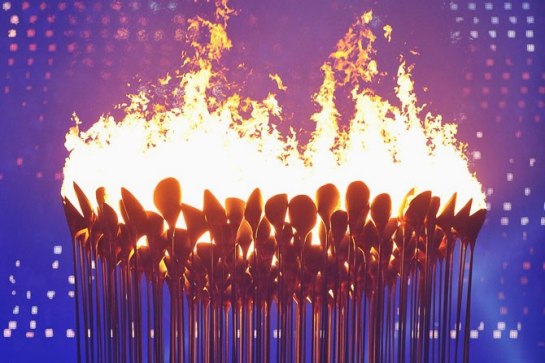

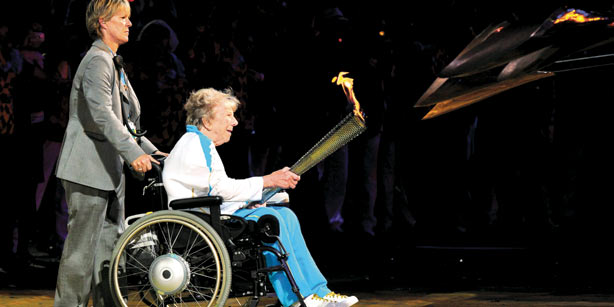
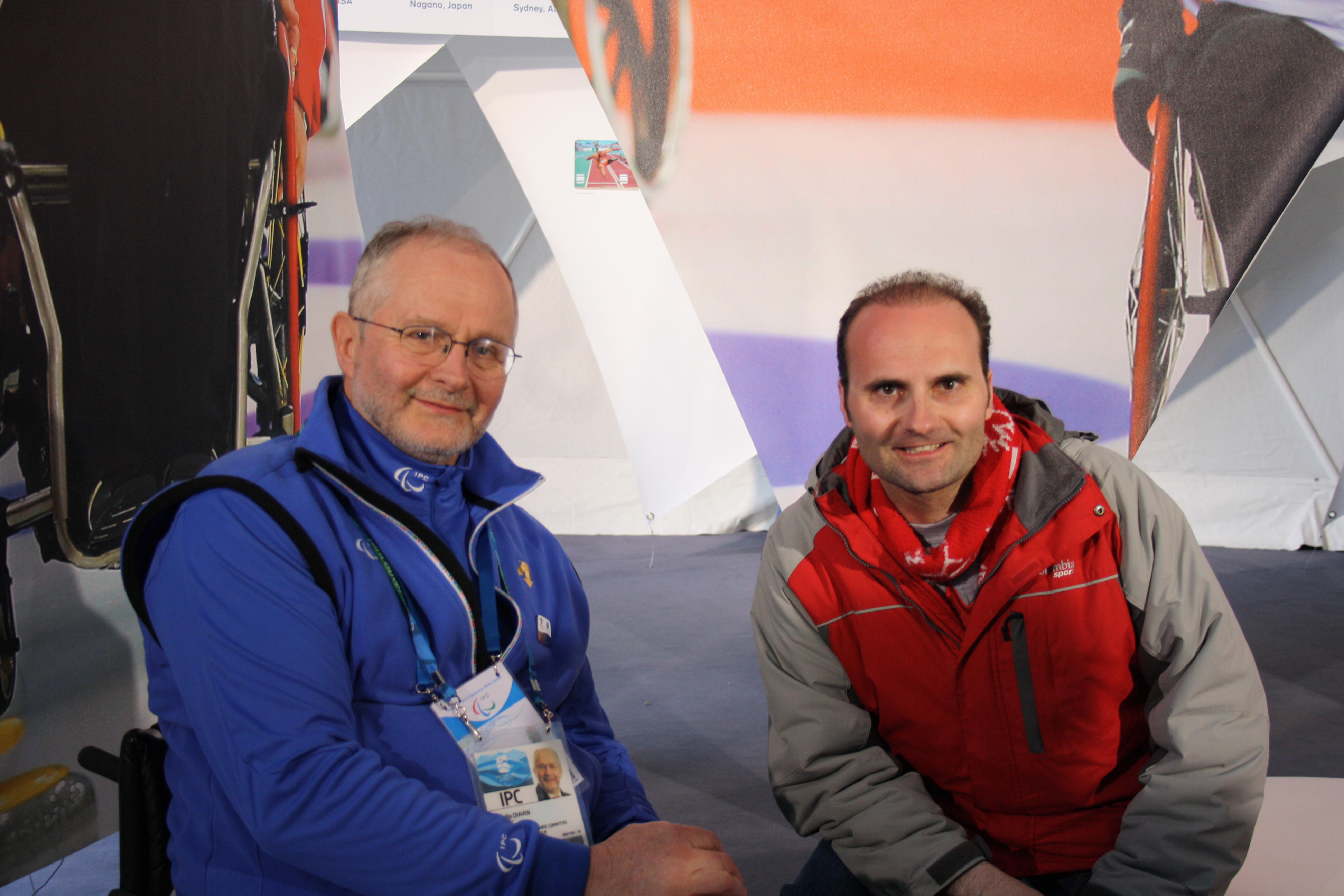
 Jon The Blogcentric