2011 Corruption Perceptions Index Shows Many Surprises – Including For Canada

The annual Corruption Percentage Index has been released which ranks the most corrupt countries to the least corrupt. If there are two points one would most get from this list, it would be that Canada is slipping and that this is a very corrupt world.

Since three years ago, I’ve taken an interest in a certain annual chart. It’s called the Corruption Perceptions Index and it’s released by Transparency International. Transparency International is an international watchdog association headquartered in Berlin with 70 international chapters that monitors the corruption levels in countries around the world. Every year since 2002, they publish what they call a Corruption Perception Index which shows the annual corruption ranking of each country. They rank the countries based on a scale they give from 0 to 10. 0 is completely corrupt while 10 is not corrupt at all.

Many welcome their results while others question the validity and accuracy of the results. Some question whether Transparency International really has all their facts together when they make their list. The thing we shouldn’t forget about the list is that it’s about perceived corruption: the people’s ability to sense or notice corruption in their own country. This is based on poll questions ranging from “Do you trust the government?” to “Is corruption a big problem in your country?” Without a doubt, the results are rather surprising. Plus we shouldn’t forget that most governments do a good job of hiding their corruption so it’s hard to sense.

In the past, Canada has done very well ever since the Index has been published. Canada ranked an impressive 10th-least corrupt in 2011 with a score of 8.7. However the rank becomes less impressive knowing that last year, Canada ranked 6th with a score of 8.9. Also making it less impressive is the fact that it’s Canada’s lowest ranking on the list since 2006. The lowest Canada ever ranked on that list was 14th back in 2006 and 2005, and what was around the time the Gomery Scandal was fresh in the mind of most Canadians. The most recent government scandal–the Harper government’s contempt of parliament which led to a national election–had a lot to do with Canada’s slip of four spots.

For the record, here are the Top 10 least corrupt countries, according to this year’s Corruption Perceptions Index with score in brackets:

1)New Zealand (9.5)

2)Denmark (9.4)

2)Finland (9.4)

4)Sweden (9.3)

5)Singapore (9.2)

6)Norway (9.0)

7)Netherlands (8.9)

8)Australia (8.8)

8)Switzerland (8.8)

10)Canada (8.7)

Viewing the overall results can give some interesting facts and figures. Interesting how the Scandinavian countries and the major countries of Oceania had the highest rankings. The only Scandinavian country not to make the Top 10 was Iceland at 13th with 8.3. It’s a shame because they used to rank #1 in 2005 and 2006 with as high as a 9.7. Hong Kong ranked 12th. Many countries which has some of the most established democracies ranked lower than most people would expect like Germany and Japan ties for 14th, United Kingdom in 16th, the United States in 24th and France in 25th and Italy in 69th. The highest ranking country under a dictatorship was Qatar in 22nd. The highest ranking African country was Botswana in 32nd.

An interesting find is that 49 of the 183 countries ranked received a 5.0 or higher, sending a message about how this is quite a corrupt world. The country at #49 is Rwanda with a 5.0. That’s especially surprising since many people could remember the bloody civil war they went through back in 1994. The list is as good at monitoring improvements as it is in monitoring weakenings. Rwanda had the highest jump up from 4.0 from last year. For the record, the biggest drop in pointage came from Slovenia which went from 6.4 last year to 5.8 this year. The dictatorship of Cuba ranked a surprisingly high 62nd, outranking such democracies like Italy, South Africa and Greece. Syria and Yemen, which made bad news this year for its constant clashes with people marching for freedom, ranked 129th and 164th respectively. Also Venezuela, which continuously makes bad news with its dictator Hugo Chavez, ranked 172th. Since we’re on the topic of Venezuela, here’s the ten most corrupt countries on the list, the ‘Bottom 10’:

182)Somalia (1.0)

182)North Korea (1.0)

180)Myanmar (1.5)

180)Afghanistan (1.5)

177)Uzbekistan (1.6)

177)Turkmenistan (1.6)

177)Sudan (1.6)

175)Iraq (1.8)

175)Haiti (1.8)

172)Venezuela (1.9)

172)Equatorial Guinea (1.9)

172)Burundi (1.9)

Most of the bottom countries are already well-known for their governments continuously making bad news. They remind us that when things seem to be going wrong in our country, there are countries where corruption is not only very present but sometimes part of daily life.

So there you have it: a brief summary of the 2011 Corruption Perception Index and its interesting finds. With the politics of the world changing frequently and varying from country to country, there should be many interesting finds for 2012. The politics in Canada will determine if we can improve on our 10th-place ranking. The nation of South Sudan should make its debut next year. Also Arabic countries which had successful fights for freedom this year could see interesting results for next year. If you want to keep track, Libya ranked 168th, Tunisia ranked 73rd and Egypt ranked 112th for 2011. Stay tuned for next year’s rakings.

If you want to learn more about Transparency International and the Corruption Perceptions Index, which I have used in my article here, here are the links to go to:

Transparency International: http://www.transparency.org/

2011 Corruption Perceptions Index (with link to list): http://cpi.transparency.org/cpi2011/
Britsh Columbia Civic Elections: Not Much Change Noticed

If you live in one of the cities of British Columbia, you may have had to place your vote in this year’s civic election. It’s that time every three years where the B.C. Cities head out to decide their mayor, their school trustees, and their city councilors. Nevertheless it’s always the mayoral election that catches the most attention, especially for the mayor of the City of Vancouver. Whatever the situation, most major cities had very little change in terms of the mayor elected. The biggest changes happened in the smaller cities on the outskirts of Greater Vancouver or in the smaller towns. Here’s a brief wrap-up of which mayors are staying and which are leaving:

RE-ELECTED

VANCOUVER – Gregor Robertson

HIs three-year term of mayor has received huge publicity. It came as he was mayor while Vancouver was the Olympic City and mayor during the time of the Stanley Cup finals. His three-year term as mayor has come with many ups and downs. He sponsored HEAT (Homeless Emergency Action Team) to aid the homeless problem and provide shelters. It has helped the problem to an extent but has faced its own funding issues. He praised the opening of the Canada Line but criticized the construction process. He has mandated for Vancouver to become the “Greenest City on Earth’ but has been criticized for approving the construction of bike lanes down Dunsmuir from Beatty to Hornby. He has headed an amendment for borrowing almost half a billion to fund the 2010 Olympic Village without taxpayers input. He has also made some unguarded comments about Premier Gordon Campbell at a public introduction and profanity-laden comments about the rival civic party NPA which were broadcast on Youtube. He has even admitted partial responsibility for the 2011 Vancouver Riots.

In the 2011, he and his Vision Vancouver party faced stiff rivalry from councilor Suzanne Anton and rival party NPA and Ellen Woodworth and COPE. On election night, Robertson was re-elected mayor with all but two of the council seats won by Vision. The other two seats were won by the NPA party. Vision also kept the control of the Park Board and the School Board. Robertson promises in his term an aggressive agenda to try to end homelessness, raise the profile of green issues and tackle housing affordability.

BURNABY – Derek Corrigan

The election was known more for the forming of a new civic party than of the party that was expected to win. When Burnaby school board passed an anti-homophobia policy, many Burnaby parents were unhappy and formed the Burnaby Parents Voice party with five school board candidates in an attempt to strike down the policy. In the end, it was the left-leaning Burnaby Citizens Association headed by Mayor Derek Corrigan that swept everything, and for the second election in a row. Despite the lack of opposition, Corrigan says he and his Citizens Association will be open, transparent and anything but complacent about ideas and issues.

NEW WESTMINSTER – Wayne Wright

Being a resident of New Westminster, this was one election that was able to distract me from that of the City of Vancouver. Wayne Wright won for the fourth straight time and his win was double the number of votes of his closest rival James Crosty. The downside of the election was that there was only 24% voter turnout. Shame. Wright has been known to push for development in the city, especially after the loss of three pulp mills and the Labatt’s Brewery in the past decade. The last three years have seen a lot of development completed or taking shape like the completed shopping area and the business sector under construction at the Brewery District, the New Westminster Station shopping center which is to be opened next month, the New Westminster Civic Centre which has just started construction and a Pier Park project in the works.

SURREY – Dianne Watts

Her re-election to the mayor’s office was not a surprise. She had already won twice before. What was a surprise was that her Surrey First party swept all the councilor seats and won 81% of the vote. She plans to develop its City Centre into a ‘Second Downtown’ for Greater Vancouver with a new library and City Hall. She also plans to add more police presence and firefighter presence in the city and well as services for at-risk youth and a child advocacy center. She also plans for more seniors services and for more transit access in the city.

RICHMOND – Malcolm Brodie

It was Brodie again for the fourth straight election. His win may not have been the most decisive of the night but it was the quickest of the night. The biggest civic issue he plans to tackle is growth, especially around the Canada Line. He plans on working out an aggressive affordable housing strategy along with ensuring the number of green spaces and recreational facilities.

COQUITLAM – Richard Stewart

Richard Stewart’s biggest pre-election headlines weren’t about the campaign or his issues but about being hit by a car a week ago while campaigning. Despite an aggressive rivalry from Barrie Lynch, Stewart won the election.

NANAIMO – John Ruttan was re-elected mayor of Nanaimo with a convincing win. The council has a mix of some familiar faces and some new faces. This was another city with another low voter percentage: 26%.

VICTORIA – Dean Fortin

Fortin was re-elected for a second term. The capital region saw very little change in the leadership. There were some changes of councilors but most of the original councilors as well as the city’s mayors remained the same.

NEWLY ELECTED

WHISTLER – Nancy Wilhelm-Morden

Wilhelm-Morden won the mayor’s seat beating out incumbent mayor Ken Melamed: 2636 votes to 610. The city’s biggest issues were the transit problems, assisting business, trust between the community and city hall and the unpopular implementation of pay parking.

SQUAMISH – Rob Kirkham

Kirkham was elected Squamish’s new mayor in a close race: 2283 votes to 2104 to incumbent mayor Auli Parvainen. His biggest goal is the town’s oceanfront plan which he sees it key to the town’s prosperity.

LANGLEY – Jack Froese

Mayor Rick Green was often criticized for leading a dysfunctional council. In the end, he lost to newcomer Jack Froese. Froese plans to bring a better future to the community and tackle the town’s urbanization whom many residents feel is growing too fast.

PITT MEADOWS – Deb Walters

Don MacLean was stepping down as mayor of the town. That led to three rivals for the mayor’s seat. In the end, the winner was Deb Walters with 55% of the votes. In the process, she became Pitt Meadows’ first femal mayor.

KELOWNA – Walter Gray

Possible the biggest city to have a change of mayor. Walter Gray has been mayor before but lost to Sharon Shepherd back in 2005. After a six-year absence, Gray was elected back in to the mayor’s seat by a close margin: 47.1% compared to Shepherd’s 45.7%. His goals are to attract investors to Kelowna and create more jobs for the city.

There are more elections that happened in BC but those were the one that received the biggest notice for which seats changed and which remained the same. For most BC residents, there were two elections to pay close attention to: the City of Vancouver and their own city. Every city’s residents have a lot of expectations from their mayor and the councilors over the next three years. Whether they carry them out, and if the outcome is good or bad, is something only the next three years can tell.

WORK CITED:

VANCOUVER SUN: Vancouver Sun, 2011. Canada.com. Postmedia Network Inc. <http://www.vancouversun.com&gt;

9/11 Remembered

September 11, 2001: A day that will live on forever. A lot has changed in the ten years since. Air security is way tighter. Arabic names and words no one could pronounce previously have since become part of our everyday vocabulary. Entering the United States is more regulated. Being Arab American has made people more victim to racism than ever before. We have a no-fly list and a terrorism alert of color grades. We have people claiming conspiracy theories. We have had two wars declared since which has further divided political sides. We’ve caught many to do with the terrorism but have more to go.

Around this time, you will read many articles and views surrounding the events, political climates and beliefs of the writers. You will hear many stories from those involved to those who lost loved ones to those in political power. As for me, I won’t be focusing on such. Instead I will focus on the day as I remember it.

Tuesday, September 11th 2001 started off like any other day for me. I wasn’t yet 30 and had recently moved to Vancouver months earlier and living in a character house with at least six other residents at the time. I was off to work and listening to a radio show talking about a bizarre contest where people do crazy stunts for the sake of an entry. Things wouldn’t be the same after that. In the morning while I was on a break from my first job, I saw one of my co-workers laughing. When I saw him, he said a plane hit the World Trade Center. Some of you may think it was insensitive but looking back, I think he was laughing at the bizarreness of the event. When I first heard the news from him, I first thought it was probably a small passenger plane and it hit one of the Twin Towers by accident. That afternoon I was working at my second job for a government business. I heard one of my supervisors talking about what happened and saying that it could have happened to a building like ours. Hearing that, I started to think that this may not be an accident after all, but how?

Later on in the day as I was returning home, I saw news stories and images of the events that happened. There was even a second newspapers issued that day about the events. I saw one of the towers hit by an airplane was burning while another airplane hit the other tower. When I first saw it, I was in disbelief. I thought it was something that could only happen in the movies. Then hearing of other crashes like the plane that hit the Pentagon and one that crashed in a failed attempt to hit Camp David. Then hearing how all Worldwide commercial air ground to a halt. Then seeing images of people running and screaming for their lives as the first of the Twin Towers crashed down. The events were just completely unreal in my mind. Until then, I always thought hijacking a plane was always about the terrorist using plane passengers hostages for the sake of making demands. Until then, I’ve only heard of airplanes used as weapons during the Kamikaze attacks of World War II. I never thought that terrorist could use passenger planes for the sake of a suicide mission. The attacks on the Twin Towers also immediately brought back a memory of how back in 1993, the World Trade Centre was bombed but there were only five fatalities at the time. I also remember that the mastermind was a Muslim cleric. Remembering that got me thinking that the attackers had the failed attempt from 1993 in mind to bring the towers down for sure that time.

Then back at my home, I met with the other residents in my character house and we were all shocked. One who was visiting from the Netherlands even videotaped the speech from President Bush. The day was just completely surreal. All networks were focused on all the events that happened. There was no changing the other channel. It would continue to be that way for at least two weeks straight.

Days later, I would hear stories of those who died that day. There was even a memorial service broadcast from radio at my workplace that consisted of five minutes of silence. I also heard from those who lost loved ones. Even later on I heard even further details of the activities. Hearing about how some of the terrorists went to flying school to carry out those activities completely surprised me. Hearing how Al-Qaeda had a worldwide network with followers even in Canada shocked me. Hearing of these countries having weapons given to them by the United Stated puzzled me even further. Hearing the various reactions around the world also caught my eye. Most of the world, including many Arab countries, expressed their condolences to the events. There were some, like Palestinians, the Taliban and Saddam Hussein, who considered that day a day of celebration. Then there were the speeches of Osama bin Laden. Already infamous for his years of bomb attacks on American embassies in other countries, he led the taunts. Shockingly he promised a ‘great day of terror’ weeks earlier.

Despite all the nastiness, there were also a lot of positives. The United States however refused to let it defeat them and a renewed sense of patriotism happened. New York City also developed its own pride in itself. People who used to diss the police and firemen and politicians almost immediately rallied behind them. Families would help out stranded air passengers during that time. Nations would come to the support of the United States and some other nations even lost citizens of their own.

Ten years have passed. Yeah, you could say a lot has changed. Even reflecting back on the happenings of that tragic day still boggles my mind. Commercial planes used as weapons for a suicide mission. Four flights hijacked with the intent to destroy four places. Thousands dead. I was never involved with it nor did I personally know anyone who died that day but even ten years ago, it does seem like yesterday.

Anyways those are my thoughts on 9/11. I just wanted to reflect on what I remember from that day. I didn’t want to get into any political speech or political thought. If you want any political thought from me, read my Osama bin Laden is Dead article. Since I wrote it, Al-Qaeda has elected a new leader. Whether he has the same sophistication as Osama or not is something only time will tell. I just hope there’s no massive loss of life in the process. There you go. That’s the most political I will get in this article.

I hope you liked what I had to say because that’s what I remember. I was never an actual part of the events. I never knew anyone lost that day. Nevertheless I still remember the constant broadcast of the day’s events and the atmosphere surrounding it. You can’t deny how much it’s changed the world and changed people. I end my article saying: God Bless the souls of those lost that day and may God continue to be with the families.

HST Referendum Update: HST Voted Out

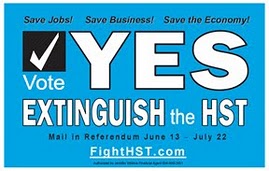
Some of you may remember a while back I did my own personal rundown and observation of the HST referendum in British Columbia. It was done just a few days after the last mail-in day. However the wait to find out the final result seemed to take forever.  Nevertheless the result was made public since Thursday. The citizens of British Columbia voted ‘Yes!’ to extinguishing the HST. The decision was 55%. However there are many economists that believe that reverting from the HST back to the GST/PST system will have both positive and negative impacts.

On the positive side, many businesses will like the reversion back to the GSTR/PST system. I myself have heard of many business owners talk of how unhappy they are with the HST system and how it cost their business. In fact a recent article in the Vancouver Sun written by Don Cayo said that restaurants and the builders of high-end homes should the most notable businesses to win big with the reversion. The total tax customers pay retailers will definitely boost sales businesses. Customers themselves will now have to pay less like they did in the days of the PST/GST.

Even though it was noted a while back that businesses should will big on the customer end of things, they will face higher costs as the PST they pay on the items they buy to run their business will either be swallowed or more likely passed to customers. Even back in the original days of the PST, there were some mind-boggling complexities like in the case of tax exempt items like children’s clothes or for women’s dress fabric. Also one economist pointed out it will cost $30 million to reinstate an infrastructure that was split. Also under the HST, businesses could report and remit taxes twice a year instead of multiple times with the split tax system. There’s even the case liars may take advantage of the old system again. Even in the case of manufacturers, costs they used on materials are rebated with the HST but weren’t in the PST days.

As a BC citizen, I too know about experiencing the HST. As annoying as it is to pay 12% on things that used to be only 7% or 5%, I am open to insights on both sides of things. I’m glad Cayo repeated those points that were commonly spoken by economists and business people. Whatever happens in the future, it will be a gradual process. BC Premier Christy Clark promised that the HST will be extinguished by March 31, 2013. What it paves for the future of British Columbia, only time will tell.

WORK CITED:

Cayo, Don. “Return to PST may be costly – and complicated.” Vancouver Sun 27 August 2011 <http://www.vancouversun.com/business/Return+costly+complicated/5317119/story.html >

Is The End Of Gadhafi A New Beginning For Libya?

The news just broke days ago. After months of fighting, warfare and rebellion, the rebels deposed Libyan dictator Muammar Gadhafi and have just raided his compound as of now. Gadhafi is currently in hiding but refuses to believe he has been removed from power. The news of Gadhafi’s overthrow was expected over time. After 42 years, many feel this will be a new change for Libya but the question is will it be positive or negative?

Before 1969, Libya was a kingdom with increasing oil wealth. It adopted a constitution to model the freedoms and liberties similar to that of European and North American states. It also received huge foreign influence from countries like the United States, Italy and Great Britain in aiding increased levels of wealth and tourism. While most welcomed these contributions, there were many who saw it as a threat.

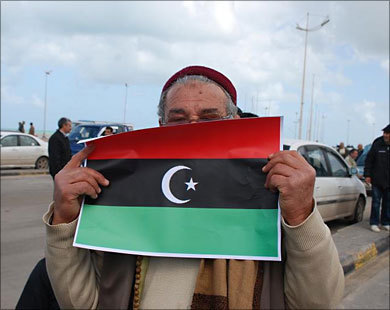
On September 1, 1969, a group of young soldiers led by 27 year-old Muammar Gadhafi staged a coup d’etat on King Idris and launched the Libyan revolution. In 1973 Gadhafi imposed Sharia law on all of Libya, purged of the ‘politically sick’ and a ‘people’s militia would ‘protect the revolution.’ The revolution was both in culture and administration. 20% of workers in Libya were under heavy surveillance by Gadhafi. Executions of dissidents were made public and broadcast on state television. In 1977 Gadhafi officially declared Libya the Great Socialist People’s Libyan Arab Jamahirya and adopted a national flag that was completely green. Gadhafi opposed any Arab country that sided with Israel and even declared a four day war on Egypt. He also supplied arms to any of its allies, both nations and terrorist groups.

Another key note is that Gadhafi was heavily influential in terrorism during the first two decades of his reign.  Some believe he was the tour de force of terrorism at the time that would pave the way for groups like Al Qaeda. He formed the Black September movement which caused many attack in the 1970’s including the Olympic Attack in Munich where 11 Israeli athletes were killed. His terrorists were also instrumental in hijacking airplanes which led to the tight security on airplanes that still continue and become stricter to this day. In 1985, it was discovered by the United States that Gadhafi harbored a camp for training terrorists. This led to President Ronald Reagan to declare an airstrike on Libya in 1986. The strike failed to kill or depose Gadhafi but killed his daughter. His terrorist activities died down soon after but not without one last infamous attack of a bomb on a flying plane exploding over Scotland in 1988, killing hundreds. Even despite his terrorist activities dying down, he still talked tough and sided with Arab leaders who were anti-Israel.

In 2011, people’s movements in Tunisia and Egypt led to the overthrow of their heads of state. The revolutionary spirit spread to other Arab countries including Libya starting in the month of February. Gadhafi quickly condemned the uprising and claimed it was being engineered by Western elements and Israel.  By March, much of Libya had tipped out of Gadhafi’s control where even members of the Libyan army were joining the revolt. Gadhafi loyalists were encouraged to kill the protesters. Soon international forces from the United States, the United Kingdom and France had joined forces to declare a military operation to remove Gadhafi. In June, the International Criminal Court issued an arrest warrant for systematically planning and implementing attacks on civilians. By August 22, 2011, rebel fighters had gained influence and control of Tripoli’s Martyr’s Square. Meanwhile Gadhafi asserts he’s still in Libya and will not concede power to the rebels.

Now the overthrow of Gadhafi is definite or eventual, if not official. There comes the big question. What will come of Libya in the future? Will it become a better stronger country? Or will it face its own problems?

The country is now mostly controlled by Mustafa Abdul Jalil, Gadhafi’s former justice minister who established the National Transitional Council shortly after the Libyan revolt began. The Declaration of the council includes many key aims like: ensuring safety of its citizens and liberating the rest of Libya, restoring normal civilian life, have the military council achieve a doctrine protecting Libyan citizens and defending the borders, draft a new constitution, pave the way for free elections and guide the conduct of foreign policy and international relations.

The policies appear promising but the big question is can it be attained over time? Many Arab countries that have established new freedoms and new liberties have faced the threat from dissidents, terrorists and loyalists of the former dictators. Afghanistan and Iraq have held elections and drafted new constitutions after their revolutions but have constantly faced attacks from many dissident factions that still happen to this day. Also it is possible of another coup d’etat in the future from a new dissident or Gadhafi loyalist with military power. The future of Libya has yet to be determined in the wake of the deposition of Gadhafi that continues as we speak.

Libya also has the 10th largest oil reserves in the world and the 17th highest petroleum production. It’s high petroleum production and low population has given it the fourth-highest GDP in Africa. During Gadhafi’s reign, the money was used to buy arms which led to many of the terrorist attacks. The wealth was not evenly spread out amongst the people. Under a new government in Libya, will the wealth be used more generously for the sake of developing the nation and the quality of life for its citizens? Or will it be a heated political debate in the future?

Since Gadhafi’s official overthrow is eventual, the future of Libya is a big question. The future of the country and the leadership that follows will be a new chapter in the country’s history but which direction it goes, and whether the new intended freedoms and liberties will be successfully carried out, still remains a question that only time can answer.

WORKS CITED:

WIKIPEDIA: Libya. Wikipedia.com. 2011. Wikimedia Foundation Inc. <http://en.wikipedia.org/wiki/Libya>

WIKIPEDIA: National Transitional Council. Wikipedia.com. 2011. Wikimedia Foundation Inc. <http://en.wikipedia.org/wiki/National_Transitional_Council>

Jack Layton: 1950 – 2011

It’s extremely rare when a major politician dies in the middle of his term. It’s also unfortunate that Jack Layton dies soon after the biggest success for himself and his political party. Nevertheless his influence in Canadian politics will always be remembered.

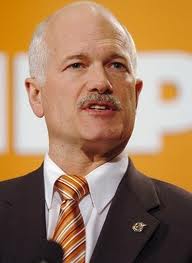
John Gilbert Layton was born in Montreal on July 18, 1950 to a family with a huge political background. His mother Doris Steeves was a grand-niece to a Father of Confederation. His father Robert Layton was a Progressive Conservative MP who served as a Cabinet Minster during the Mulroney administration. His grandfather was a cabinet minister in Quebec parliament. His great-grandfather was an activist for the blind. Naturally he would follow in his family’s footsteps. He was elected student council of his high school and studied Political Science at McGill University. In 1969-1970 he was a member of the Quebec Youth Parliament. In 1970, the family moved to Toronto where he attended York University and received his PhD in Political Science. He became a professor at Ryerson University, was a prominent activist and wrote many books on political issues and his beliefs.

He first entered politics on a civic level. He was elected to Toronto City Council in 1982 and soon became one of the most outspoken members of the council and a leader of the left wing. He was one of the first advocates for rights for AIDS patients and spoke his opposition to the building of the Skydome and Toronto’s bid for the 1996 Summer Olympics. In 1985 he moved on to the Metropolitan Toronto council. In 1988 he became returned for the election to Toronto City Council. He not only won but his reformist coalition for which he headed gained control of City Council. In 1991, he made the move to run for mayor of Toronto. His opposition to the Olympic bid and the low popularity of the NDP party at the time caused him to lose the election. Layton would return to teaching and later founded an environmental consulting business, the Green Catalyst Group. He ran for the House of Commons twice in the 90’s and lost both times.

Then in January 2003 came the biggest breakthrough of his political career. He was elected leader of the federal NDP party. Before the 2004 election, Layton was already known for making some eyebrow-raising statements about the Liberal party led by Paul Martin shifting to being too right-wing. During the 2004 National Election, Layton accused the Liberal Party for the increase in homelessness and homeless deaths in Canada. Many people complained that it was negative campaigning. Layton caused another controversy during that election when he suggested the removal of the Clarity Act and allowing Quebec to declare independence upon a referendum vote. In that election the Layton-led NDP party had 15% of the popular vote, the highest in 15 years, and 19 seats in the House of Commons.

In the next federal election, in January 2006, Layton attempted to cast himself as the sole remaining champion of universal health care. Layton constantly repeated during the campaign to Canadian that they have a ‘third choice.’ Some conservative pundits mocked Layton and his stances. Some would paste Layton-styles moustaches on them and say things like ‘raise my taxes’ or ‘I’d like to pay higher gas prices.’ Layton also went all out in attacking the scandal-ridden Liberals at the time and pledged to use his minority clout to keep the Conservatives in check. The election resulted in 29 seats in the House of Commons for the NDP: 11 more than the previous election. Layton’s wife Olivia Chow was also elected to the House of Commons making them the first couple to be elected to the House.

During the 2008 Federal election, many were comparing Layton as trying to pass himself off as Canada’s Barack Obama. He shunned the comparisons and reminded people that he only simply shared the same views as him like the working class and the middle class. Layton also mentioned he told Obama and Hillary Clinton the North American Free Trade Agreement was hurting people on both sides of the border. Layton also spoke out about internet freedoms and his stance in favor of net neutrality, torrent sites, video-sharing sites and social networking sites. The NDP would go on to win a total of 37 seats in the House but would only be the fourth-most populous behind the Conservatives, Liberals and Bloc Quebecois. Shortly after the election in November 2008, Layton negotiated with Liberal leader Stephan Dion and Bloc leader Gilles Duceppe on forming a coalition to replace the Conservatives as the government. Prime Minister Stephen Harper responded by suspending parliament until January 2009. After Liberal leader Michael Ignatieff signed a budgetary agreement that would end the coalition, Layton declared: “If you oppose Mr. Harper and you want a new government, I urge you to support the NDP.”

In 2011, a new national election was called as the Conservative party was defeated in a Vote of Non-Confidence for contempt; the first time in the history of the Commonwealth for a government to receive a Vote on Non-Confidence. That resulted in Prime Minister Harper dissolving parliament for a new national election. During the election, appeal for the NDP started slow but Layton’s NDP party soon increased greatly in popularity after the leadership debates. The NDP moved past the Liberals into second place in the polls behind the Conservatives and first in Quebec. Soon after his popularity rose, a smear campaign came about as a retired police officer stated he saw Layton naked in a massage parlor back in 1996 but didn’t charge him. Layton responded that he was just simply getting a massage. In the end, no charges were laid against Layton. In the election, held May 2, 2011, the NDP won 103 Seats. That was the highest-ever total of seats for the NDP party and made the NDP the Official Opposition party to the Commons for the first time ever with Layton as the official opposition leader.

One thing known to few was of Jack Layton’s illness and the severity of it. In February 2010, he announced he had prostate cancer and vowed to beat it and continue to pursue his duties as the leader of the NDP. On July 25, almost three months since the national election, he announced he would take a temporary leave to fight an unspecified newly diagnosed cancer. He announced he planned to return as leader of the NDP once the House of Commons was to be resumed September 19, 2011 and recommended NDP caucus chair Nycole Turmel serve as interim leader. On the morning on August 22, 2011, Jack Layton died at his Toronto home. He was 61.

Jack Layton was a unique politician. He came from a family who had a lot of political experience. He rallied and campaigned for causes that were popular with the left and he strongly believed in as well. As a leader of a national party, he brought ideas and spoke of issues in ways unheard of before by leading Canadian politicians. He brought ideas unheard of before in Canadian parliament. Overall he was one p[politician who believed in a better Canada and wasn’t afraid to speak out about it. After his death, Prime Minister Stephen Harper said:  “On behalf of all Canadians, I salute Jack’s contribution to public life, a contribution that will be sorely missed. I know one thing: Jack gave his fight against cancer everything he had. Indeed, Jack never backed down from any fight.”

As a fitting final tribute, Jack wrote a letter two days before his death. His family released the letter the day of his death that ended with these final words:

“My friends, love is better than anger. Hope is better than fear. Optimism is better than despair. So let us be loving, hopeful and optimistic. And we’ll change the world.”

WORKS CITED:

WIKIPEDIA: Jack Layton. Wikipedia.com. 2011. Wikimedia Foundation Inc. < http://en.wikipedia.org/wiki/Jack_Layton&gt;

South Sudan: The World’s Newest Nation

Hi. This is an article that I have delayed posting here for the longest time. Hope you like it.

It was declared on July 9, 2011. South Sudan was now an official independent nation of its own. Its population is an estimated 8,000,000. The capital city is Juba, a city of an estimated 400,000 people. Hearing about what the people of South Sudan went through, you’d feel their independence from the main Sudan was hard-earned.

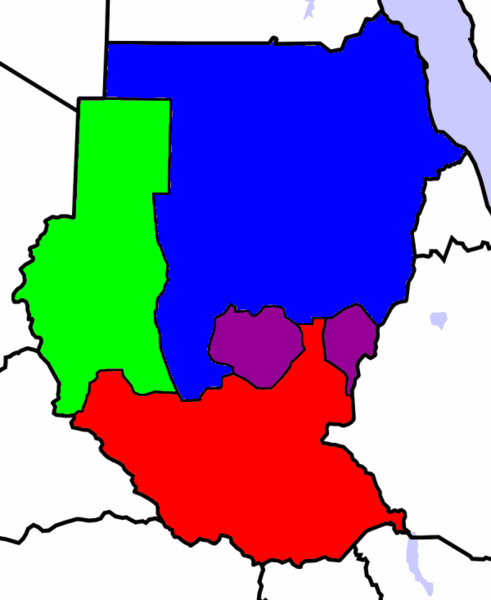
Map of Sudan and regions. Area declared South Sudan is in red.

Firstly Sudan was originally a joint condominium between Britain and Egypt until they declared independence in 1956 as the Republic of Sudan. Despite Sudan being independent, it was not unified. The northern and southern parts of Sudan were sharply divided.  The main divide between the two was based on ethnicity but also about religion; the northern part of Sudan was predominantly Muslim while the southern part of Sudan had a Christian majority. Conflict between Northern Sudan and Southern Sudan had already existed for a year and would continue until 1972. That war would be known as the First Sudanese Civil War. Half a million people were killed. It would take an agreement in Ethiopia in March 1972, known as the Addis Ababa Agreement, that would end that civil war. The goal of the Agreement was to address and appease concerns of the southern Sudan liberation and succession movement. This would help to give some autonomy to the Southern Sudanese region and would give peace to Sudan for almost a decade.

The one thing the Agreement failed to do is dispel the tensions that caused the first Sudanese Civil War. Then in 1983, Sudan’s President Gafar Nimeiry declared all Sudan an Islamic state, The Southern Sudan Autonomous Region was abolished on June 5, 1983 and the Addis Ababa Agreement was ended. This would lead to the Second Sudanese Civil War. This war would last from 1983 to 2005 and would have one of the highest civilian death tolls since World War II. Two million people were killed as a result of the warfare, famine and disease caused by the conflict. Four million people from Southern Sudan have been displaced during the times of the war. At the start of that war, the Sudanese People’s Liberation Movement was formed as both a rebel group and a political party in response to the crises.

The war finally ended in January 2005 after a comprehensive Peace Agreement was signed. The purpose of the agreement, known as the Naivasha Agreement, was to develop democratic governance countrywide and share oil revenues. It further set a timetable by which Southern Sudan would have a referendum on its independence. The referendum happened during the week of January 9-15, 2011. Almost 99% of South Sudanese voted for independence. Independence was declared on July 9, 2011 and the United Nations recognized South Sudan’s independence on July 14th.

Despite being the world’s newest nation, South Sudan still faces problems and challenges in the time ahead. One problem is that the famine that is occurring mostly in Somalia also includes South Sudan and other nations. Another problem is that conflict between Sudan arose again a month ago with the South Kordofan conflict that still exists today. Another problem is of possible intertribal enmity within the country. One challenge South Sudan will have to face in the future is organizing the nation and its rights amongst the people. It is currently on a human rights watch by the UN, and rightly so. The SPLA may have been able to get South Sudan its independence but is also known for human rights atrocities of their own. Even the CIA has suspected of genocide in southern Sudan last year. One thing the elected President of South Sudan, Salva Kiir Mayardit, has promised is respect to freedom of religion. Kiir himself is Catholic with a Muslim son.

South Sudan: the world’s newest nation. Will it be a better, wealthier, more developed, more just country that Sudan was and still is? Or will it have its own problems or atrocities? Only time will tell.

WORKS CITED

WIKIPEDIA: South Sudan. Wikipedia.com. 2011. Wikimedia Foundation Inc. < http://en.wikipedia.org/wiki/South_Sudan >

IMAGE CITED

WIKIMEDIA: Regions Of Sudan. Wikimedia.com. 2011. Wikimedia Foundation Inc. <http://commons.wikimedia.org/wiki/File:Regions_of_Sudan.png&gt;

HST Referendum: BC Votes On The Tax

Hi. I know it’s been a while since I wrote something, especially of substance. So here I am getting back into the swing of things with my latest article. Hope you like it.

If you’ve lived in BC this past year and a half, you may have known for a long time about the most heated three letters in the province: HST. The tax came from nowhere, became part of BC faster than you think and is now up for public vote after a year of existence. The tax and the craziness surrounding it is both frustrating for the citizen and cartoonish in the media’s eye. Even more surprising is that the referendum involving the HST isn’t your typical ballot-and-booth referendum but a mail-in referendum lasting a full month. Most BC residents may not know a whole lot about this Harmonized Sales Tax but it sure has been far from harmonious in BC.

What few people know is that British Columbia is currently one of five provinces with an HST. The others being New Brunswick, Newfoundland and Labrador, Nova Scotia and Ontario. Actually it was the Atlantic Provinces who worked back in 1996 in having a Harmonized Sales Tax implemented in order to lower the amount of tax a citizen would have to pay. This resulted in a 15% HST that came into existence on April 1, 1997. When the GST lowered to 6%, the HST went down 1% to 14% and would go down to 13% when the GST was reduced to 5%. It was noticed that the price of goods fell when the HST came in. In fact one of the things in changing from a cascading tax to a value-add tax was to reduce income taxes, and instituted direct transfer payments (refundable tax credits) to lower-income groups, resulting in lower tax burdens on the poor.

The benefits of the HST were appealing. Even Prime Minister Stephen Harper government said of tax harmonization: the single most important step provinces with retail sales taxes could take to improve the competitiveness of Canadian businesses.” However it was in 2010 when the HST was implemented in BC and Ontario that the drawbacks came to light. It made businesses hard to manage and property values hard to maintain. Many food expenses which had either to the one tax or neither tax became more expensive. The price of gas increased. Services like haircutting and dry cleaning which had only one tax saw the raised price. Some items in BC, like public transportation, ferry costs and toll-bridge tolls. Children’s clothing, child-care items and feminine hygiene items were also exempt. Nevertheless the expenses that were already added were noticed soon enough.

In BC, the brouhaha about this tax is not just simply its existence but its introduction and implementation. It was first reported back in June 23, 2009 that the BC government under the leadership of Gordon Campbell intended to harmonize the two taxes. Full attention to this tax didn’t come until after the 2010 Winter Olympics in Vancouver had ended. Before it was to be implemented on July 1, 2010, the raucous was not only raised by BC citizens but former premier Bill Vanderzalm in campaigning to get the HST abolished. After the HST was made official in BC, Vanderzalm still continued on his campaign while Gordon Campbell’s popularity soon dipped to single-digit percentages, leading him to retire.


Now the fate of the HST lies in the hands of the citizen of British Columbia. All registered BC voters including myself were sent a mail-in yes/no ballot in which one is to vote not on keeping the HST but on abolishing the HST. The deadline for mailing in the vote was Friday July 22nd. During that time, there has been many pro-HST and anti-HST rhetoric. Those against the HST would speak of their drawbacks, most notably the increase in expenses for BC citizens and the businesses that have either faced huge economic difficulties or closed. The common citizen should also have its own experience with the HST in the past.


Those for the HST have come from economics or other sources that have studied the HST in the past. On May 4, 2011, an independent panel commissioned by the BC government released a report on the impact of the HST in BC. The report concluded that “Unless you are among the 15 per cent of families with an income under $10,000 a year, you’re paying more sales tax under the HST than you would under the PST/GST: On average about $350 per family.” The report also predicted that by 2020, the HST is anticipated to result in a BC economy that will “Be $2.5 billion larger than it would be under the PST. That’s about $480 per person or $830 per family.” There was even a prediction from the University of Calgary that the HST will lead to 600,000 more jobs in the next ten years. Economists have even spoken of the potential damages and drawbacks that could happen if the HST is abolished.


Anyways the referendum is over. If you didn’t mail your ballot in by now, tough cookies. Time will tell what the result of referendum will determine. Time will also tell which tax system was supported by the people and whether it will pay off in the long run. Stay tuned. The future of BC and its economy will be decided.

WORK CITED

WIKIPEDIA: Harmonized Sales Tax.Wikipedia.com. 2011. Wikimedia Foundation Inc.  <http://en.wikipedia.org/wiki/Harmonized_Sales_Tax>

Osama Bin Laden’s Death Doesn’t Make The World Safer

The news came unexpectedly on May 1, 2011. Osama Bin Laden, the Saudi hermit and terrorist leader of Al-Qaeda who was the master mind of the attacks on US soil on September 11,2001, was finally found and killed. He had been on the run from the law and taunting the US by videotape for 9 1/2 years until he was finally caught and killed. Reactions have been numerous and varied. One thing is for sure, that his death leaves an uncertain question about the safety of the world, particularly the United States.

 Before September 11, 2001, the world was not a safe happy place. The World was a place that was already as precautionary as it felt to be. Airline terrorism had been a reality for almost 40 years and prevention procedures were already in place and carried out as best as they did. Terrorism from Muslim extremists, especially against the US, had been known for years. Until then the biggest terrorist attack on US soil from foreigners was the 1993 bombing of the World Trade Center which left six dead but failed to bring the two towers down. Osama bin Laden was actually already on the FBI’s Ten Most Wanted list. His connection to money and his ability to access arms was already legendary. He formed and headed the terrorist group Al-Qaeda, which means ‘the foundation’. He helped to empower the Taliban in Afghanistan and they would become his biggest ally.  He was the admitted mastermind of the 1998 US Embassy bombings: the August 7, 1998 bombings of the American embassies in Dar Es Salaam, Tanzania and Nairobi, Kenya that left hundreds dead. He had already been known for making a ‘death wish’ against the United States for his wish to see every American dead. In 1999, just two years before 9/11, Bill Clinton had already encouraged sanctions against Afghanistan in an attempt to extradite him. Weeks before 9/11, bin Laden promised in a videotape a ‘great day of terror’ to the United States.

Then 9/11 happened. Terrorists with flight training knowledge committed possibly the most shocking terrorist attack ever. The Two Towers destroyed by terrorists in a Kamikaze-style attack. Part of the Pentagon was also destroyed by a plane attack. A fourth plane meant for the Camp David site crashed outside it thanks to the vigilantism of American passengers. In the aftermath, thousands of Americans were dead. The world’s airline system was shut down for days. Memorial services were conducted all around the world. Some Arab countries and Arab peoples considered it a great victory for them and punishment from Allah to the US. Bin Laden himself acknowledged the attacks and praised the ‘martyrs’ in the attacks. He promised more in the future and promised never to get caught. Soon President George W. Bush declared war in Afghanistan against al-Qaeda and the Taliban. Bin Laden was now the World’s Most Wanted man.

Even while at large for years, Osama still had access to money and had a huge worldwide group of allies with the ability to carry out a terrorist attack anywhere in the World at any given time. The war in Afghanistan and the subsequent war in Iraq have fueled further attacks since. Osama’s Al-Qaeda have carried many terrorist acts out since that have left a total of hundreds dead: the 2004 Madrid Train bombings; the 2005 attacks in London; two bombings in Algiers in 2007; the 2008 bombing of the Danish embassy in Pakistan; a 2009 shooting in Little Rock; and two failed bombing attempts.

You could say the world has changed a lot since 9/11. Arabic words we never knew before are now part of our everyday language. Airline security has become more advanced and becomes increasingly stricter after additional foiled terrorist attempts. We have no-fly lists. We have a colored alert system whenever a terrorist threat appears coming. Right-wing and left-wing politics in the United States have increased in their division. We have a ‘Patriot Act’ which claims to be a prevention to terrorism. We had a terrorist list introduced in attempts to catch those connected to the bombings or terrorist associations. There have even been conspiracy theories surrounding the 9/11 attacks with protesters seeking attention for their cause. A lot has changed in the past ten years. The one thing that remained unchanged during that time was Osama bin Laden was alive and still at large. His lack of access to any means of modern technology besides a personal courier helped keep him from being found for years. He was capable of orchestrating terrorist attacks and shelling out videos to Al Jazeera television while remaining at large from authorities. Billions of dollars and cooperation from many nations failed to capture bin Laden. But on May 2, 2011, that all changed.

On May 2, 2011 in Pakistan (still May 1 back in the US), Osama had been killed by shots to the head and chest by an operation ordered by Barack Obama on his compuond some 40 miles from Islamabad, Pakistan. This operation was conducted by Navy SEALs under the command by the Joint Special Operations Command in cooperation with the CIA. It will forever be remembered at Operation Neptune Spear. Many other associates of Bin Laden, including his courier, one son and two others, were also killed. Soon after the killing, his body was taken to Afghanistan for identification and confirmation, then buried him at sea within 24 hours.

Reaction around the world was almost immediate. US President Barack Obama made the address on US television with the phrase “Justice has been done.” There was cheering in the streets, especially in New York around the area where the Twin Towers stood. Many Americans, especially those who lost loved ones on 9/11, were met with relieve that the killer had finally been brought to justice. There’s also cynicism too. Some conspiracy theorists are adding to the claim it’s a conspiracy. Many are demanding that the ‘death photo’ be shown. In the Arab World, reactions were mixed. Pakistan is denying ‘hiding’ bin Laden since his compound was so close to the capital of Islamabad. Some were happy of his death. Others were hurt and angry that their hero had been killed by the Americans.

It is because of the latter reactions that it’s too soon to believe that the world is a safer place now that Osama is gone. Both Obama and Bush have stated that. We should not forget that Al-Qaeda was a group built on revenge. That is why they carried out their terrorist attacks. Osama even stated that the 9/11 attacks were for revenge of all the Arab blood. Osama has also stated in previous tapes that he had people to carry on his mission even after his death. Even Al-Qaeda promised revenge shortly after acknowledging Osama’s death. That is the top reason why the US won’t release the death photo of Osama. Plus with Al-Qaeda spread so far out around the world, including countries like the US and Canada, there’s no telling when and where the next terrorist attack will happen. Also there’s no telling who from Al-Qaeda would be the new mastermind and there will be no telling what new security precautions will result because of this. So the terrorism precautions used shortly after 9/11 still have to be in effect. Also airlines have to maintain top professionalism and security competence to keep any further security risks. we should not forget that part of the 9/11 attacks’ success was taking advantage of the security ‘weak spots’ at airports.

While millions of people are probably still celebrating Osama’s death, the celebrations can’t last for long. The next ten, possibly twenty, years will tell whether this was a smart movie for the US to carry out. I personally wanted to see Osama arrested, tried by a World tribunal court, and executed. Also the next years will tell whether Al-Qaeda was in fact weakened by Osama’s death or only grew stronger and wider. Only time will tell.

WORKS CITED:

WIKIPEDIA: Osama Bin Laden. Wikipedia.com. 2011. Wikimedia Foundation Inc. <http://en.wikipedia.org/wiki/Osama_bin_Laden>

WIKIPEDIA: Death Of Osama Bin Laden. Wikipedia.com. 2011.Wikimedia Foundation Inc. <http://en.wikipedia.org/wiki/Death_of_Osama_bin_Laden>

Election 2011: Canada Votes

Okay, some of you who don’t live in Canada have heard that we have a National Election—the 41st Canadian General Election– in which we will be voting on May 2nd, but don’t know all the details of what’s going on. Here are the details about what’s been happening and what to anticipate.

For those unfamiliar with how Canadian elections work compared to American elections, Canadian elections are held on any given date instead of the first Tuesday of November. A Prime Minister’s term can be any length of time instead of the solid four years of an American President’s term, even though most Prime Minister terms are between three to five years. While Presidential Elections are decided by electoral votes based on which Party wins the most votes per state, Canadian Prime Ministers are decided by the most won seats with each voting district or region deciding its own winning Member of Parliament per Seat. In other words, while citizens vote for electors in the Presidential election and the winning Party in the state wins all the state’s electors, Canadians vote for MP seats in the Prime Minister election. While an American President is decided by the most electoral votes, even if he doesn’t have the highest total of votes, A Canadian Prime Minister can be declared upon winning the most seats even if they don’t have the highest total of votes. So there are some similarities between Canadian elections and American elections but a lot of differences.

Now for the current political scenario in Canada. Politics in Canada has gone through a lot of chaos over the past few years; so chaotic this is the FOURTH National Election in seven years. The most recent National Election was declared in the aftermath of a political scandal. Stephen Harper’s Conservative party was long considered to be in contempt of parliament at the beginning of March upon refusing to meet Opposition requests for details of proposed bills and their cost estimates. The Liberal Party responded by declaring a motion of non-confidence against the Government and on March 25, 2011, the House voted agreeing 156-145 to the motion. This marked the first time in the history of Canada or any nation in the Commonwealth of Nations that a cabinet has been found in contempt of Parliament. Following a meeting with Stephen Harper, Governor-General David Johnston agrees to dissolve the 40th Canadian Parliament and a Federal Election was declared.

Even before the most recent election was declared, Canadian politics has already been known for its chaos in the last seven years. Back in 2005, the Liberal Party under then-Prime Minister Paul Martin faced a sponsorship scandal of what would be documented in the Gomery Report. Even though Paul Martin had been Prime Minister for less than a year, an election was declared and in January 2006 Conservative Party Leader Stephen Harper won the election with a minority of seats. The Conservative Party victory was considered an arrival for political conservatives in Canada who struggled during the 90’s after the eventual decline of the Progressive Conservative party upon the resignation of Brian Mulroney.

 Another national election was held less than three years later in October 2008 and Harper’s Conservatives again won the election with a minority with Liberals, Bloc Quebecois and NDP making up most of the remaining seats. Shortly after the 2008 Federal Election, the Liberals and NDPs banded together for an overthrow of the Conservative government through a unified vote of non-confidence. Some may call it the right thing, others political mutiny. Whatever the situation, the coalition didn’t succeed and the Harper-led Conservatives remained the leading party of Canada. Since then, many Liberals have tried to distance themselves from the coalition.

Now it’s Stephen Harper’s try for a third term as Prime Minister. He comes in the election with the scandal creating baggage for him, but not a lot. Before the scandal, the Conservatives were tops in the polls and they still remain on top. One thing Stephen Harper is hoping for is a Conservative majority, especially with the 2008 attempted coalition still in his Party’s memory. The most surprising fact of the polls is that the Liberal Party is not the party with the second-highest ratings but the NDP. The Jack Layton-led NDP surpassed the Liberals in the April 20th poll and the most recent polls have the NDPs at an average of 31.4% in comparison with 3% for the Conservatives and the Liberals at 20%. This has many believing that the NDP could be setting up for a possible upset for Monday’s election; maybe even a Prime Minister Layton. Mind you the polls only represent popular voting patterns. It will all be decided when the ridings vote for the MP’s and their parties.

Win or lose, Jack Layton appears poised to have the biggest National Election result for the NDP party ever. The biggest ever result for the NDP Party is 43 seats in the 1988 election while the Party was led by Ed Broadbent. Even its founder, Tommy Douglas, never experienced the success Ed received. One difficulty of Layton’s, especially after the coalition, is for the NDP to distinguish its political platform from that of the Liberal Party. Too many voters label the NDP to be like the Liberals since they are on the same left stance. This may be seen good for liberal-siding voters but not so good for the NDP’s own identity. Whether Jack Layton wins or loses, he will have to prove the NDP’s distinction from the Liberals politically. Otherwise voters will continue to believe the NDP and Liberals are two choices of the same stance.

Then there’s the Bloc Quebecois. The Bloc was started in response to a resurgence of Quebec nationalism felt after the decline of the Parti Quebecois and after the Meech Lake Accord, which was intended to grant Quebec distinct constitutional status, was overturned in 1990. The party has attracted Quebec nationalists and even prompted a second referendum in 1995 in which Quebec nationalism lost again. Despite Quebec nationalism being voted down, the party has always won at least 50% of the Seats open to Quebec. The Bloc had 49 Seats in the last election–47 are still current– with 10% of the popular vote in Canada and 38.1% of the vote in Quebec. However recent polls have them at 7%. Could this mark a decline of the Bloc?

Party aspects aside, One thing about the election is that the parties are hoping for a better voter turnout than what happened during the 2008 election. Then, the voter turnout was 58.8%, the lowest turnout percentage ever for a National Election. Parties have been making the effort to urge voters out. Even campuses have had young people out to drum out support. Interesting how around the time I first became an adult, MTV started a ‘Rock The Vote’ campaign around the time of the 1992 Presidential election and MuchMusic started ‘Vote With A Vengeance’ for the 1993 Federal Election. This election, there’s no ‘Vote With A Vengeance’ campaign. Funny. Doesn’t Much care anymore?

The big day is May 2nd, tomorrow to be exact. Canadian history will be decided by the people. The election results and its aftermath will further shape Canadian democracy in the years to come. Stay tuned. As for Canadians, get out and vote!

WORKS CITED:

WIKIPEDIA: Canadian Federal Election, 2011.Wikipedia.com. 2011. Wikimedia Foundation Inc. <http://en.wikipedia.org/wiki/Canadian_federal_election_2011>

WIKIPEDIA: New Democratic Party.Wikipedia.com. 2011. Wikimedia Foundation Inc. <http://en.wikipedia.org/wiki/New_Democratic_Party>

 WIKIPEDIA:Opinion Polling in the Canadian Federal Election, 2011.Wikipedia.com. 2011. Wikimedia Foundation Inc. <http://en.wikipedia.org/wiki/Opinion_polling_in_the_Canadian_federal_election,_2011>

WIKIPEDIA: Bloc Quebecois. Wikipedia.com. 2011. Wikimedia Foundation Inc. <http://en.wikipedia.org/wiki/Bloc_Qu%C3%A9b%C3%A9cois>