VIFF 2025 Review: Calle Málaga

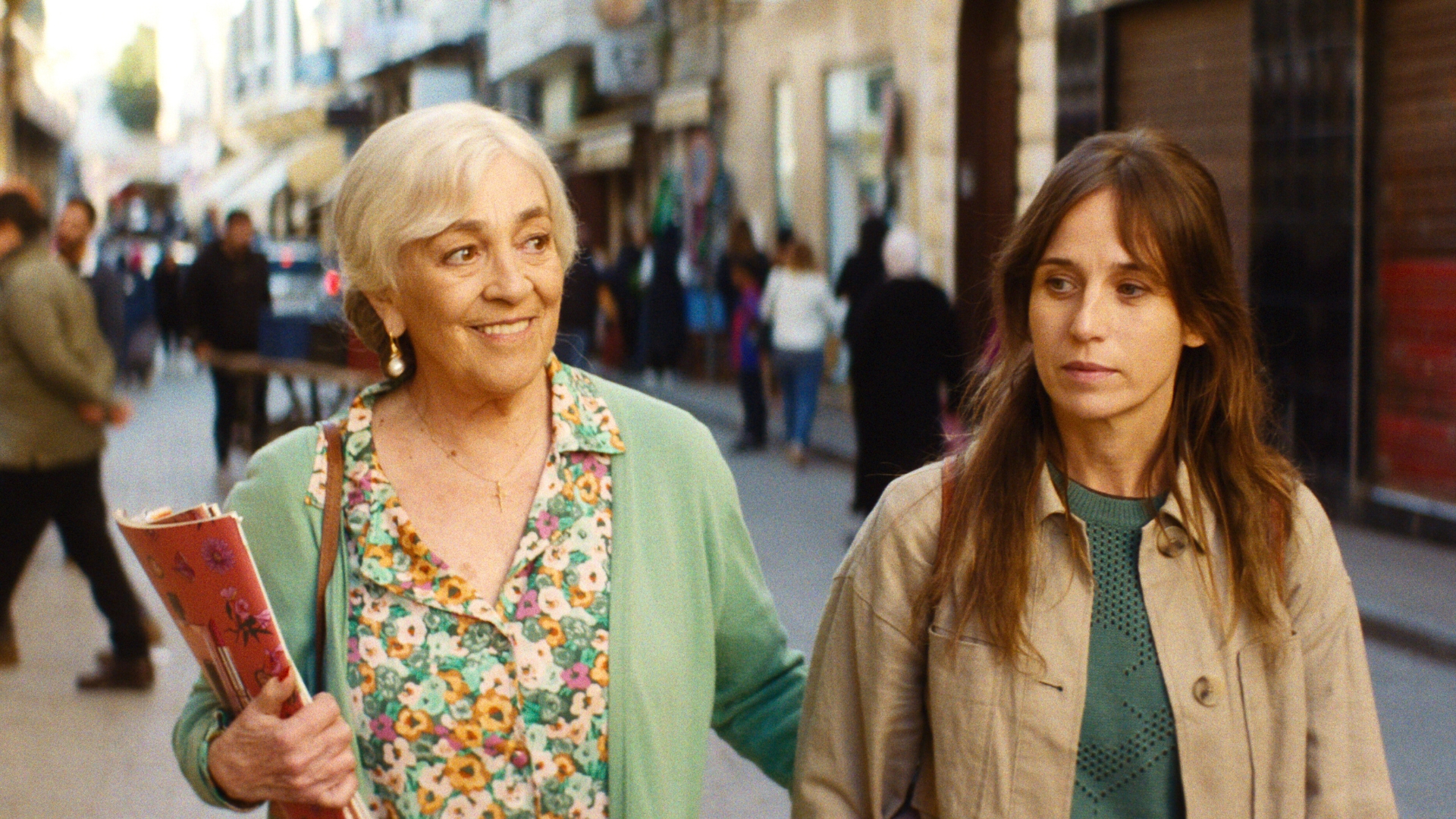
Carmen Maura (left) plays a mother who refuses to let her daughter sell her flat in Tangier, Morocco in Calle Málaga.

For this year’s Academy Awards, Morocco’s official submission for the Best International Feature Film category is a Spanish-language film: Calle Málaga. It presents a tense story set among beautiful scenery.

In Tangier, Maria Angeles is an elderly Spanish woman. She’s of descendants of Spaniards who fled to Tangier to evade the Franco dictatorship of Spain. After Franco died and democracy was introduced, many Spaniards returned back to Spain, but Maria remained with her husband and daughter. Over time, her daughter Clara returned back to Madrid, married, and had a family of her own as Maria stayed in Tangier at the Calle Malaga flats. Having her daily coffee, talking with her best friend who’s a nun who’s taken a vow of silence, watering her plants, and embracing the horizon at night, her life in Tangier is all she asks for.

One day, Clara returns to Maria. It first appears that it would be a happy family visit, but it’s something else. Since her divorce, Clara has been cash-strapped. Especially since she has to both work and raise her two children. It’s gotten so dire, Clara thought it best to sell Maria’s flat. Maria is crushed, but Clara thinks she did the right thing. Clara feels Maria will have a better quality of life being around her daughter and grandchildren. Besides Maria’s husband died 20 years ago and most of the people she’s known her life have either died or migrated back to Spain.

Maria protests but Clara reminds her the flat is in her name and she can do what she chooses. Clara states the only other option is for Maria to go to the Spanish nursing home in the city. Maria first chooses the nursing home. As she’s transported there, the house’s old belongings go for sale or for pawning so the empty flat can sell. Maria is not happy with her life at the nursing home. It’s missing all the vitality of her own life and she’s also very able to take care of herself.

One day, she fakes a situation where she’s flying to Spain to be with her daughter. The only other person who knows this is the cab driver who’s to pick her up. What Maria really does is move back to the flat that used to be hers. She returns and the neighbors are happy to see her back, but all her furniture is gone. To add to the frustration, the tenant holding the flat for sale lives on the floor below.

Her first goal is to make enough money to get all her furniture back. Her pension doesn’t pay her enough. What she decided to do is turn her flat into a café for friends to watch La Liga football games. In turn making a new friend with the young Khalid who’s helping her out with new visitors. It becomes a popular hangout. One day, she catches the tenant at the suite and puts him in a situation that she is to hold fort until it’s sold. She reminds him she’s in control. She gives her friend the nun quite the story.

Over time, she learns of the antique shop selling her furniture. She confronts the salesman named Abslam about getting her furniture back. She also tries to use her makeshift café as a chance to coax him into helping her further. Over time, it becomes more and she starts to feel love for the first time since her husband’s death. She learns that Abslam was never married. The romance grows and she has quite the story to tell Sister Josefa.

As time passes, it becomes evident Maria’s secret will run out. During one of her games, the tenant comes to visit and tells her the place is sold. She’s brokenhearted and doesn’t know what to do. Also that day, Sister Josefa dies. Maria sees her in her deathbed to tell her last feelings. The following day, the day before the new owners are to move in, Clara arrives and is surprised as she sees one of her mother’s parties. It’s there Maria confronts Clara tells of her choice. The film ends with no telling what happens the next day, but telling of how it appears things should be.

This is one story that’s not too heavy on its core social topic. The topic here is ageism. The daughter who has the flat in her name feels she can make decisions for the mother, but the mother is able to decide her life for herself. Maria wants Clara to know this but is afraid to at first. It’s over time she’s able to amass the courage to tell her. This is a common problem among families.

I’ve seen films or shorts of people who don’t want things to change at first and are unwilling to accept change, only to accept it and eventually embrace it in the end. Maria is different. This life in Tangier and her flat is the only life she’s ever known and the only life she wants to know. One would find this a bad thing for her not to accept change, but it’s her choice. Mind you the film is more about Maria’s refusal to change. It’s also about Maria finding vitality in her own age. Most people Maria’s age would feel they’re at the end of their life. Instead, Maria sees a chance for a new beginning. She may refuse to change her living situation but the changes she makes like her makeshift football café, her new young friend Khalid and her new love with Abslam add to her vitality.

This is a great film by director Maryam Touzani. The story she co-wrote with husband Nabil Ayouch is a nice calm story where the intensity is in the moments of heated discussions. It makes for a nice story about a woman and the life she feels she was meant to live. Instead of this story being a super-heated story about ageism, it’s a calm story about what is meant to be and is given a nice calm vibe.

Carmen Maura owns the film. Outside of Spain, Maura is most famous for her frequent collaborations with Pedro Almodovar. Here in this film, she handles her role with immense class and her personal charm adds to the film. Ahmed Boulane is also great as Abslam. Playing a man who feels love for the first time also adds well to the film. Also great is Maria Alfonsa Rosso as the mute Sister Josefa. Her performance with her body language adds to the comedic elements of the film. The best technical element has to be the cinematography of Virginie Surdej. The cinematography of the city images and the panoramic nature of Tangier adds to the story as it’s one of the best elements at telling the audience why Maria can’t leave her old life behind.

Calle Malaga tells a story about a woman who finds a purpose in her life in her age and finds a new life. It’s also a cinematographic delight to watch with the scenery adding to the storytelling.
VIFF 2021 Review: The Worst Person In The World (Verdens verste menneske)

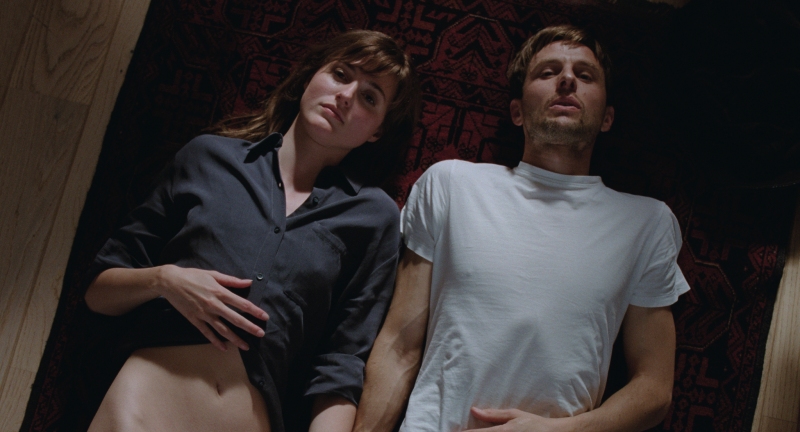
Julie (played by Renate Reinsve) looks for long-term love with Aksel (played by Anders Danielsen Lie) in the film The Worst Person In The World.

Establishing your career and settling down in love is normally something done when your in your late-20’s, early-30’s. It seems like it’s harder than ever nowadays. The Worst Person In The World has a look at a Norwegian woman trying to do exactly that.

The film starts with a prologue, leads into a twelve-chapter story, and ends with an epilogue. Julie is a woman about to turn thirty. Her road leading up to this age has been bumpy with career pursuit decisions in her academic years starting as a medical student, then switching to psychology and then pursuing a direction in photography. Approaching thirty gets to her as she finally has a serious boyfriend. This haunts her as she compares her life at 30 to her mother and many generations of her grandmothers before her. Things change when one of her photography subjects is Aksel Willman: an acclaimed politically-incorrect cartoon book author who is 15 years older than her. This is just as his cartoon Bobcat is to be adapted to a feature-length film.

Julie drops her old boyfriend for Aksel. The relationship gets more serious and it even stimulates Julie to pursue a career in writing. One weekend, the two spend it at Aksel’s parents’ house in the woods. There she meets Aksel’s brothers and nieces and nephews. That is a sudden reminder that Julie is reaching the family-planning years. To add to the frustration, Julie crashes a party after a publishing event for Aksel. There she meets a coffee barista named Eivind whom she becomes attracted to. They spend the night together, but urinate in the bathroom together to not spark any rumors of the two cheating on their significant others.

Things become more serious between Aksel and Julie. Julie writes a blog about oral sex in the age of #MeToo and Aksel is impressed with it. Then Julie has her 30th birthday with her mother and sisters. The father is a no-show. He does show up hours later as his excuse is his back. She’s hurt her father hasn’t read her blog. On the ride home, Aksel says she should make her own family. That’s difficult for her, especially with Aksel, because she’s sensing love for Eivind. One morning while everything and everyone in Oslo stands still, she’s able to meet with Eivind at his coffee store and kiss him. Over time, Julie gets disillusioned with her relationship with Aksel. The turning point is where Aksel has dinner with her and his sister-in-law. During the dinner, Aksel is constantly ranting how the film of Bobcat is a watered-down family-friendly Christmas-themed version of his comic stories.

It’s after a date with Eivind Julie is convinced Eivind is the one and breaks up with Aksel. But not after sex one last time! Becoming one with Eivind was a bit of a wait. He was married to Sunniva. However even before he met Julie, his love for Sunniva was fading. She learned from a DNA test she had Sami ancestry, albeit a small percentage. She changed herself to embrace her ‘Sami roots,’ pursue yoga, and become a climate-change activist. He met Julie at the right time, but there was still the wait to divorce. With the divorce finally settled, Julie and Eivind can finally become a pair. Eivind still follows Sunniva on Instagram, which Julie doesn’t have a problem with. However things take a turn for the bizarre when Eivind hosts a party and gives everyone psychedelic mushrooms. Julie takes some, and it sends her on a trip where she sees bizarre visions of the wrath to her father, her fear of having children, and images of Bobcat’s insanity. She feels she can be herself around Eivind.

It’s clear Julie still has feelings of attraction to Aksel as she’s at a gym working out and she watches a television interview he has where he staunchly defends the cartoon series’ past misogyny to the female host. However Aksel’s brother soon visits Julie at her job to tell her she has pancreas cancer and it’s inoperable. Soon after, Eivind discovers a short story she wrote which he believes is about her family. Julie angrily denies this and in her anger, belittles Eivind for staying a barista. Her perceived irresponsibility of Eivind is also why she doesn’t tell him she’s pregnant at first. Julie meets Aksel at the hospital. Aksel is devastated over the fact he doesn’t have a future. Aksel tells Julie after she tells him she’s pregnant she’d be a good mother. However she can’t decide whether to keep the baby or not, especially after she finally reveals to Eivind the pregnancy and she breaks up with him. Julie does see Aksel one last time. She does a photo essay of him where he visits his past places, including the school he attended where he was first inspired to be a cartoonist. The last thing he says to her is he regrets he can’t live on as something more than a memory to her. The film then ends with the prologue showcasing Julie’s current profession, and a chance encounter with Eivind all this time later.

Entering into adulthood and establishing yourself has never been easy. We have a protagonist many people can relate to. She’s made three different major decisions in her schooling as a reflection of her career choice. She’s finding her way, but now she’s at the age where she’s expected to establish herself, to settle down, and to form a family. The career path choices were hard enough, and along sparks a new career ambition after meeting Aksel. What makes it hard for establishing a relationship is the two men she’s torn between. One is a comic book artist who appears to have it together. The other man appears not to have it all together, but she’s in love with him. It’s there where she has to make decisions about her situation and who she will want to spend the rest of her life with. Her choices will eventually seal her fate.

The funny thing about it is this is happening in our modern times. Adulthood is hard to define. Julie compares her life at 30 and where it should be in comparison to past generations of her female ancestors. Meanwhile she’s torn between two men whom she loves, but can’t help but see as man-boys. One is a 44 year-old cartoonist of an obnoxious comic series about to be adapted into a film. He’s actually quite mature, if you take away the fact of his profession. Then she’s also attracted to a barista who’s more of a boy and has a lot of irresponsibilities. It’s a concern to her. Who should she love? Should she have a child? If she does want one, who should be the father? Will she be a good mother? Will either of the men accept the role of fatherhood? Add to the mix of things like social media-think, each person’s professions, current family situations and other people in their lives. You can understand the confusion in there.

The most unique thing about this story is that it goes from being a comedy of love in our times and the complications around it to suddenly adopting a more tragic tone. That comes as Julie learns Aksel is dying and Eivind’s true colors are starting to expose itself, especially after she learns she’s pregnant with Eivind’s child. We suddenly find ourselves no longer laughing at the irony and bizarreness of the situation and now sensing the seriousness of the situation. As Aksel is dying admitting personal thoughts to her, Julie starts wondering if Aksel was the one all along. The one worth loving and having a family with. We even wonder if it’s worth it for Julie to bear Eivind’s child. Mother a child to a man-boy so self-indulgent? In the end epilogue, we see a glimpse into the present that is a surprise for all to see how time elapsed for Julie and Eivind.

Norwegian-Danish director Joachim Trier directs a delight of a film. It’s common to see a film in chapters, but a film with twelve chapters, a prologue and an epilogue, and to make it all work in two hours of time, that’s something! The story he directs and co-wrote with constant colleague Eskil Vogt is the last film of his ‘Oslo Trilogy.’ I can’t compare to the other two because I haven’t seen them. As for this film, it’s a creative story as it tells of a common love triangle mixed with the confusions and distractions of the time along with the protagonist’s dreams and the wrath of Bobcat mixed in. Somehow Bobcat makes his way into Julie’s personal life! All of it is a complicated process, but the film makes it work by putting it all together in winning fashion.

Despite the story and direction working together, it’s also the excellent acting of Renate Reinsve as Julie. This story is all about Julie. Reinsve embodies her dreams, desires, confusions and frustrations in winning fashion. She embodies the comedic side of Julie as well as she embodies her tragic side. It’s a complex performance she does in remarkable fashion. The actors who played her two lovers were also great. Anders Danielsen Lie is great portraying Aksel as a man quite mature for a comic book artist and then transitioning to Aksel being a hurting man facing death too soon. Herbert Nordrum is also great in his role as Eivind, embodying his immaturities quite well.

When I first saw this film, on the last day of the VIFF, it was in the running between two other films to be Norway’s entry for the Best International Feature Film category for the upcoming Oscars. Recently it was announced to be the official entry. Even outside this Oscar category, the film has already won a lot of acclaim. It was a nominee for the Palme d’Or for the Cannes Film Festival this year. Reinsve’s performance as Julie won the Best Actress award at Cannes. The Jerusalem Film Festival awarded it the Best International Feature. The Ghent Film festival nominated it for it’s Grand Prix Award. Cinematographer Kaspar Tuxen won some film festival awards of his own including the Silver Camera 300 Award at the International Cinematographers Film Festival and the Silver Hugo award at the Chicago Film Fest. The latter of which gave him a claim for use of 35mm film, inclusion of natural light and carefully rendered interiors.

The Worst Person In The World is a funny but sad story of a woman trying to make it in a career and find a partner she can settle down with. It’s a film that does get you thinking in the end.

VIFF 2016 Review: Personal Shopper

personal-shopper
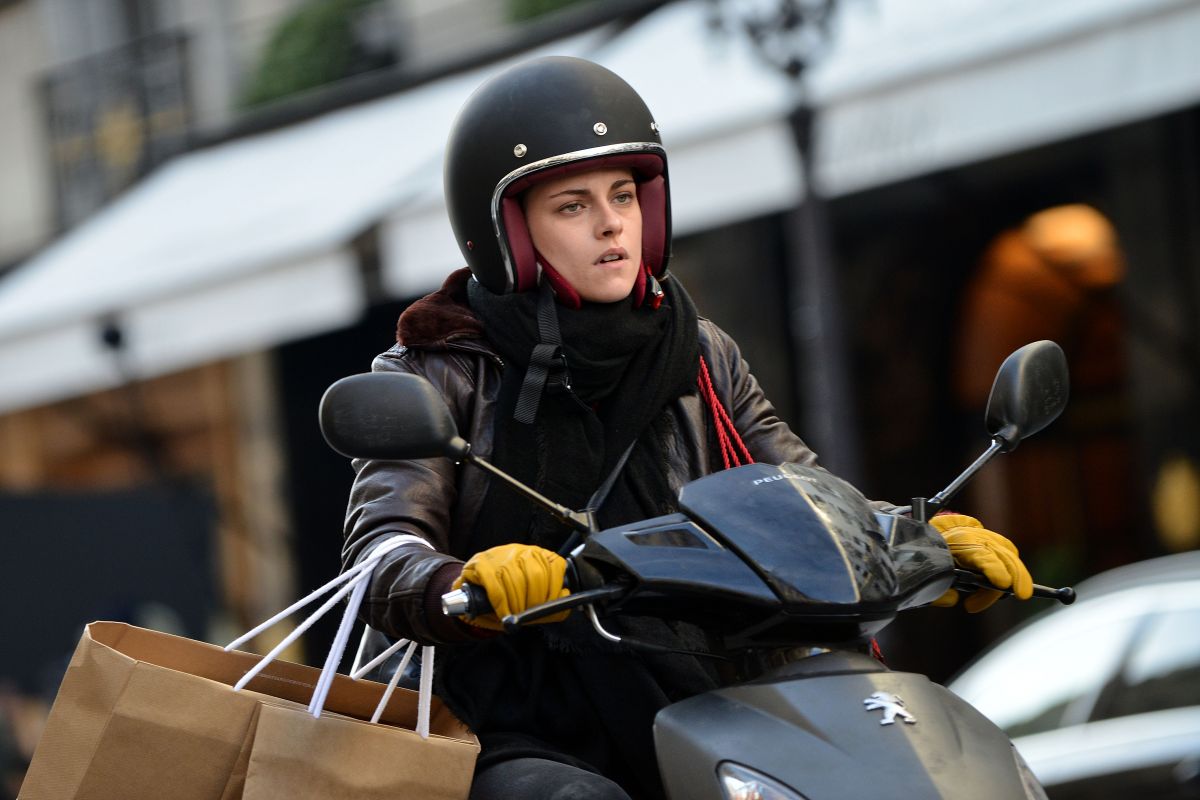
Kristen Stewart plays a young woman in Paris who seems to be haunted by something she can’t explain in Personal Shopper.

DISCLAIMER: I know the VIFF ended a month ago. I’ll admit I’ve been slow at posting reviews. This is mostly due to attending night classes at a community college. However my writing energy is slowly returning and I will post theses last three VIFF reviews in good time. Hopefully all done before Saturday.

Ghost stories usually make for some cheesy movies. Personal Shopper is one story about a ghost that actually works very well for the cinema.

Maureen has just arrived in Paris. She just accepted a job to be a personal shopper for a high-status fashion journalist in Paris named Kyra. She is able to live at her mansion during her job. She is still able to communicate with her boyfriend in the US despite her distance from him. One important note: Maureen has taken on this job just months after her twin brother died from a heart defect.

One night, Maureen notices something mysterious. Could it be a ghost? She carries on doing her shopping duties normally like nothing happened. However incidents keep coming. She starts to question them. Then one day, she gets a text message from a mysterious person. That could be the ghost. You know the texts are upsetting her each and every time. However, she does agree to play along with the requests of the mysterious texter. She even agrees to wear one of the dresses she bought for Kyra.

Maureen senses that this has something to do about her brother’s death. Could the ghost actually be her brother. The ghost even follows Maureen to the various locations she goes to. Then one day, she finds Kyra dead as if she was brutally murdered. Then she agrees to comply to the texter’s request to go to a hotel. The morning after, we see the ghost vacate the hotel. Maureen is still alive. Maureen decides to go on a vacation to a remote location is Saudi Arabia. Whatever happens, she’s prepared to meet the ghost whom she believes to be her brother.

There have been movies about ghost stories before but most come across as ridiculously cheesy. This is one ghost story that has substance to it, and a lot of it. We have Maureen dealing with the loss of her twin brother. She appears to be handling it well but imperfectly. You’re led to think that the ghost is exposing a truth about how her brother’s death is affecting Maureen. In addition, this is a ghost that affects her through the text messages he sends. It’s obvious he will do whatever it takes to get what he wants out of Maureen.

Basically the thing that gives this ghost movie its substance is that it does relate to human feelings. It’s obvious this ghost has a bearing on Maureen. However as the story progresses, it leaves the audience asking as many questions as Maureen is asking right now. This is no run-of-the-mill movie ghost. This is a ghost that has us intrigued and wondering what will happen next. Will Maureen learn of the ghost’s identity? Will Maureen get killed or hurt? The story keeps us intrigued.

If there’s one weakness, it’s that the story appears to end either twice or three times. I know most people would anticipate the hotel scene to be the climactic end but instead it leads to another story. It’s like the story goes places but stalls. Even the actual ending comes across as abrupt. I know a lot of directors try to end their films unexpectedly as a chance for the audience to draw their own conclusions but this ending was too abrupt and unclear.

The film is a very good effort from writer/director Olivier Assayas. He has created a very good story that keeps us all intrigued. However the flaws at the end are too obvious. Still a very good work. Kristen Stewart does a very good job of acting here. A lot of people have dismissed her acting since the Twilight movies. It turns out her bad acting was because of bad direction. Even before Twilight, she showed she can deliver a good acting job. Remember 2002’s Panic Room? It’s obvious Kristen has something to prove and she’s been proving it since starting with 2014’s Clouds Of Sils Maria, also directed by Olivier Assayas. Kristen delivers possibly her best and possibly deepest performance yet. A bit of ironic trivia: in Assayas’ next work, Idol’s Eye, he will be working with Kristen’s former Twilight co-star Robert Pattinson. Can he resuscitate his career too?

Back to the topic of the film, Stewart is the only person who’s given any real acting in the film. For the most part, the other actors are given comparatively lightweight work. That will happen when the protagonist is mostly acting off of a ghost throughout most of the film.

Personal Shopper is for the most part a one-person film that ends too abruptly. Nevertheless it has a lot of excellent qualities that give the film dimension and will keep the audience intrigued.