Oscars 2025 Best Picture Reviews: Part Three

My next pair of Best Picture reviews is for two films that have two nominations in common: Best Actor and Best Director. They’re also both comedies. Usually the Academy isn’t too fond of comedies but these two films are among the most heralded and have a lot of buzz for big Oscar wins. One film is directed by one of the business’ top directors and features one of the biggest leading men in the past two decades. The other is by an emerging director featuring a young actor whom many tout to be the next great one. One is set in the present and features a very political topic. The other is less about politics and more about a person seen as a joke trying to shed his skin. Here’s my look at them.
Marty Supreme

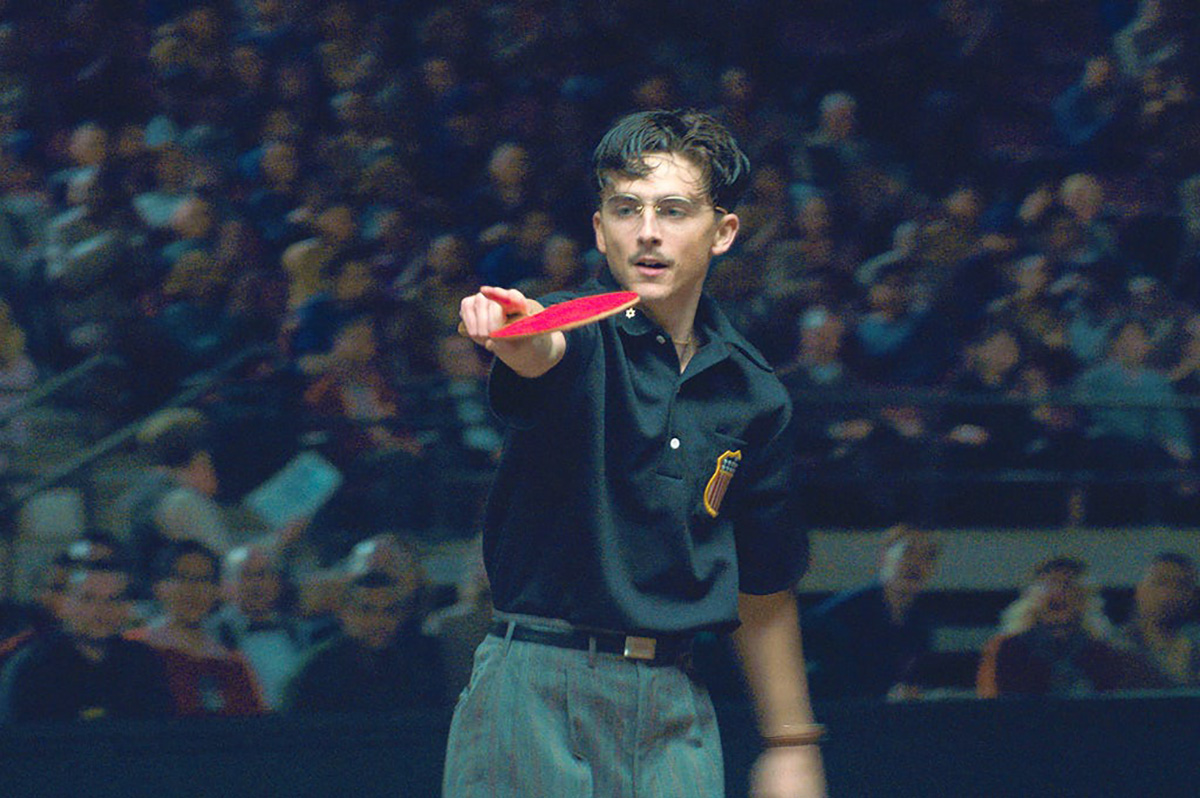
It’s interesting how this film doesn’t simply focus on a table tennis player but also the times he was in. We should keep in mind that table tennis didn’t become an Olympic sport until 1988. The International Table Tennis Foundation was founded in 1926 and in the time set in the film, the early 1950’s, it was fine for a player to be paid in their sport, unlike those in Olympic sports at the time. Despite that, we should also know that table tennis players were not paid very much for their wins back then. You could understand how the federations were hoping to use many methods to try to popularise the sport at that time. So it should not be a surprise to see Marty try to use the money from his shoe salesman job to pay for his entries, trips, and equipment, and it still wouldn’t be enough. A New York table tennis player like Marty, he would have to hustle or swindle or even use his playing skills to win gambling money to get the money he needs. That’s how it was for Marty Reisman: the table tennis player Marty Mauser is loosely based on. In his 1974 memoir The Money Player, Reisman said top table tennis players back in the day had to be ‘gamblers and smugglers.’

I’m sure at first, you’ll wonder who would watch a film about a table tennis player from the 50’s, even with Timothee Chalamet starring in it? This story is not just about a table tennis player, but a player who had a bizarre year between a key tournament and the World Championships. Basically, Marty would be regarded commonly as a loser. He lost the British Open to a Japanese player and wants to be the World Champion. His only options to help pay for his training, equipment and tournament trips is selling shoes, making a novelty act of himself touring with the Harlem Globetrotters, have his gambling matches at the bowling alley or a lot of illegal hustling. Other options come along the way with a businessman striking a deal with ping pong balls in his name and having an affair with his movie star wife to get help. Very risky indeed. Adding to the risky moves of he reunites with an already-married childhood friend, having an affair with her and making her pregnant. Then damaging a mobster’s suite and he gives him a dog to look after, which eventually becomes the property of a trigger-happy farmer. You can see how this would catch the attention of many people. All the messes Marty gets in and he has a World Championship to compete in. A loser of a person who wants to be a winner in what he lives for, a woman he loves and a baby to be. That can make for a thrill ride of a story.

The story is a unique timepiece that it takes Marty Mauser from one situation or another. It takes him into his sports world, it takes him into his world at home, it takes him into his world of opportunities made and opportunities lost, and it takes him into his world of constant troubles. The story is more about Marty trying to win for once instead of constantly being seen as a loser. It’s about a man trying to get his way out of troubles that he constantly gets himself into. It’s about the women in his life and how being the man they have an affair with will cause a lot of problems. Especially the businessman Rockwell who knows of the affair and loves seeing him humiliated publicly. The story also provides a unique filmmaking element where it’s set in a specific time period but often features music from another time period. I did not expect a film set in the 1950’s have songs from the 1980’s included in many of the scenes. That is something that is becoming more common in films. It works in this film as well.

This film is an achievement for director Josh Safdie. Almost ten years ago, the Safdie brothers, Josh and Benny, were seen as rising talents in film making with films like Good Time, Uncut Gems andFunny Pages. Back in 2024, the two brothers split to pursue their own film making directions. This film is Josh’s first film as a solo director. The story he directs and co-wrote with Ronald Bronstein takes the audience back to a time when things were both glamorous and shady and a man who can be both a hero and an anti-hero. He succeeds not only in presenting the story in a creative way, but also in an entertaining way. He succeeds in making a ping pong hustler fascinate the audience and his misdoings and potential troubles keep us intrigued. It’s an excellent accomplishment.

Making the film most come alive is actor Timothee Chalamet. Ten years ago, he was seen as yet another young rising face in the film world. The last few years, we’ve seen Chalamet become a top box office draw and deliver in challenging acting roles. This film is the latest film where he shows his acting maturity. He does a great job of making a troubled young man look comical and at the same time, get us to see him as a 3D person who just wants to be taken seriously and try to get his dignity back. Chalamet does a great job in making us root for Marty.

Of the supporting performances, Odessa A’Zion stands out as the girlfriend who is just as troubling as Marty. She will make you hate Rachel but also hope for the best for her. Also great is Kevin O’Leary as Rockwell. We may remember him from the television show Shark Tank. This is his first film role and he succeeds in making his character both likeable and hateable. You could easily see why Marty would want to get even with him. Gwyneth Paltrow is also great as the movie star Kay Stone. She succeeds in replicating the charm of a movie star of the time. Tyler Okonma, most commonly known as Tyler The Creator, does a great job in playing Wally the cab driver. With Marty having so many people he shouldn’t trust, Tyler succeeds in making Wally look like a person Marty can trust.

This film also has a lot of great technical achievements as well. Safdie and Bronstein also did the editing for the film and they deliver the right moves. Cinematographer Darius Khondji delivers a lot of great scene shots. The costuming from Miyako Bellizzi and the set designers succeed very well in physically setting the film back to the past. Composer Daniel Lopatin delivers a fitting score for the film that blends in with the songs used in the film.

Marty Supreme succeeds in being a film about a ping pong player that makes you want to see it. It also succeeds in making a hero out of a man whom you wouldn’t want to make a hero of any kind. It will make you like it.

One Battle After Another

Usually around Oscar time, one can expect to have a film that’s very political as one of the top contenders. This year, there aren’t as many political films among the Best Picture contenders and those that are aren’t that heavy into the politics. This film is not only very political but it seems to come out at the right time. We see all that’s going on right now in the United States. We have a right-wing government whom many fear will threaten people’s civil liberties and their democratic system. We have the anti-immigration force ICE brutally abducting people and treating both the people they arrest and bystanders like garbage. With all this, it’s easy to understand why a film like this would come out.

In this film, it starts out as a left-wing militia rivalling the powers that be at the time and a right-wing militia. In the middle of it is a player in the left-wing group who uses sex to entice and manipulate her enemies. She bares the daughter of the white supremacist and her husband agrees to take care of her as she flees for refuge. Sixteen years later, secrets unravel, the daughter is grown, the father needs to sober up and join his group again to protect his wife’s child and the white supremacist father is trying to hunt the daughter down. When you watch all that unfolds and you learn of the scenarios, you can sense that this film has a lot to tell. Some say one can see far-left militias like the French 75 happening. We know of far-right militias. It should come as no surprise if one on the far-left arises with what’s going on now. And to have a child who’s the daughter of the racist colonel and the black revolutionary getting exposed to what happened around the time of her birth and learning she’s a target, it’s possible something like that could happen in real life. It’s a possibility Americans can’t avoid.

This film is based on a book from 1990 called Vineland where radicals from the 1960’s deal with the complexities in Ronald Reagan’s 1980’s. This film modernises the story and makes it more reflective of what is happening in our contemporary political landscape. The film will remind us of how many feared of what would happen during the Reagan Era was nothing compared to what is happening during the Trump Era. The film is also a mirror to our current society as we have all learned about extremist militias and about governments stimulating hate and racism. We’ve all seen in the recent ten years how racist groups have become more emboldened. The film creates the scenario of what would happen if a militant racist had a mixed-race child with ‘the enemy?’ How will it end up? The film makes for a drama that will have you at the edge of your seat as one hopes for the safety of Willa. The film also delivers comedy as we see Ghetto Pat become a fail of a person and try to get his life together and the racist Lockjaw face the music of what he did in surprising ways. To make such a film that’s both a drama and a comedy, that is no easy task, but it succeeds in doing it.

This film is another achievement for director/writer Paul Thomas Anderson. Hard to believe it was almost thirty years ago when he first made a name for himself with 1997’s Boogie Nights. He’s had many an acclaimed film since and this film gives him his fourth Best Director nomination. Anderson succeeds in modernising the story and making it reflective of what could happen in present-day United States. He also succeeds in making what should be an intense drama a comedy with shocker after shocker happening. It would be very difficult to make an intense story like this to be a comedy, but Anderson succeeds in achieving it.

Leading the film is Leonardo di Caprio. Delivering a character like Ghetto Pat who’s become an irresponsible father but the best father for Willa was no easy achievement. He succeeds in delivering the dramatic parts and the comedic parts in a good balance. Creating good chemistry with di Caprio is Chase Infiniti as Willa. This being her film debut performance, she shines greatly and makes the film as much a story about Willa, if not more, as it is about Ghetto Pat. Of the supporting performances, Teyana Taylor shines most as Perfidia Beverly Hills. Her performance as a modern-day Mata Hari-like soldier who knows how to take command of men steals the show and makes her character still felt long after she’s gone. Benicio del Toro is also great as Sergio in his duty to protect both Pat and Willa. Sean Penn is also great as a corrupt racist who faces a shocking truth and feels his only solution is killing Willa.

The film also features a lot of great technical achievements. Michael Bauman pulls the right moves in cinematography to deliver the best shots for telling the story. The film editing of Andy Jurgensen and the sound editing from the sound team give the right mix and the right placings to make it all work for the story for it to deliver well. The production design team does a great job in creating places like the militia hideouts and plotting scenes such as the convents. Composer Jonny Greenwood meets again for another Anderson film and delivers a score that’s fitting mixed in with popular songs from decades back.

One Battle After Another is a film that’s both a mirror to our society and an ironic comedy. It’s a story we can see happening, now but also be shocked with all that happens in the story. Not everyone will like it but it will please its crowd.

And that completes my third pair of reviews of the Best Picture nominees. Glad to see many of them are still in theatres and many of them are doing quite well this year.


Oscars 2025 Best Picture Reviews: Part Two

It’s interesting for my next blog of Best Picture nominees. One film is a remake of one of the most captivating monster stories ever and the other film tells the story of the tragedy that produced one of the most legendary plays ever. They’re both unique in their own way.

Frankenstein

Ever since Mary Shelley has published her book titled Frankenstein; or, The Modern Prometheus back in 1818, the story and the monster have captured the imagination of the world. The monster definitely more often than the story. The Frankenstein monster has been featured and parodied frequently to the point people have created their own versions of Frankenstein on both the character and the physical appearance. People on Halloween especially have a field day with Frankenstein costumes and their own Frankenstein stories. Crazy thing is most of these stories stray greatly away from the original story of Mary Shelley. They may get the basics like a mad scientist creates a living person from the body parts of deceased people but they are too loosely based. The very first Frankenstein film, a silent film from Edison Studios released in 1910, was a film the director intended to be ‘broadly based’ on Shelley’s story or call itself a ‘liberal adaptation.’ The most famous film adaptation has to be the 1931 film which was an adaptation of a stage play. Frankenstein’s monster in that film, played by Boris Karloff, has the most iconic image of the Frankenstein monster with the rectangular forehead and green skin. That film also includes the memorable line: “It’s alive! It’s alive!”

This film is Guillermo del Toro’s adaptation of the story that is still off the original in some amount but is closer to Shelley’s story. The film is set in 1857 and a Danish ship of the Royal Navy is stuck in ice. The ship becomes like a hospice for a gravely injured Victor Frankenstein who was hurt from the wave of an explosion. The ship is then attacked by a fur-laden humanoid creature that appears indestructible. As Victor notices that’s the creature he created, he tells his story, which becomes Part I: Victor’s Tale. After Victor tells his story, the creature tells his story in Part II: The Creature’s Tale. This layout of the story sets up for the finale where the creature finally makes peace with Victor and Victor apologises for being too cruel to the creature. It’s after Victor’s death that the creature departs, but not until he frees the ship from being stuck in the ice.

Some of the most noticeable differences are in the novel, Victor’s mother dies of scarlet fever. In this film, she dies of childbirth giving birth to William. While the novel shows Victor discovering the possibility of creating new life through his studies, the film shows him actually conducting his proven findings in front of professors and being expelled. In the novel, Victor is shocked and repelled by the creature he created and abandons it in the cold snows. In the film, he’s proud of his creation but enslaves him. In the film, Victor wins the love of a woman named Elizabeth. In the film, it’s William who courts Elizabeth and Victor tries to win her, but his mad science and arrogance prevent her. Victor even kills Elizabeth and William. Also in the film, Elizabeth embraces the creature when he rushes back to Victor to demand a female creation for him. It turns out Elizabeth has more feelings for the creature than for Victor. The creature in the novel becomes lost in the wilderness and has both seen the best and ugliest of humanity. In the film, he is given refuge to a farming family whom the blind man treats him well. The other family think he killed the blind man when they return and try to shoot him. There is the reconciling of the two on the ship but the creature remains on the ship at the end of the novel while the creature leaves the ship but is powerful enough to push the ship free of the ice.

This adaptation that is both written and directed by Guillermo del Toro is a story that is more faithful to the book than most stories. Del Toro already knows how to do an excellent job of stories involving monsters like Pan’s Labyrinth and The Shape Of Water. Here, he shows off his expertise again with an excellent adaptation of the story. Making it two stories, of Victor’s story and The Creature’s story, is done quite well without deviating too much from the original. The two stories do a good job of playing themselves out leading to its eventual connection in the end. The result is not only an adaptation well done but an adaptation that will capture your attention and get you caught up in the story and the drama as it unfolds. The story will also get you feeling for The Creature as well as it showcases he’s not only a human in flesh but he’s a human in feeling. If you see the story, you will agree that the creature has more heart than Victor. Del Toro masters the story and the drama.

Oscar Isaac does a great job in making Victor Frankenstein into a doctor that isn’t completely heartless but full of personal flaws. His eccentricities interfere with his ability to relate with others, have any kind of heart to his creation or even love Elizabeth enough to win her love. Surprisingly, Isaac does succeed in making you feel sympathy to Victor and even forgive him for all he’s done. The dimension Isaac bring is excellent to the role. Jacob Elordi steals the film as the creature. Creating a character of a created human with the common sensitivities of people, even having feelings of love and heartbreak, gives the film its heart and soul within the spectacular drama. Many times, you’re tempted to think Elordi is the lead. Mia Goth is also very good in her role as Elizabeth, but the role could have been given more dimension in the story. Other good supporting acting performances come from Christian Convery as the young Victor, Felix Kammerer as William Frankenstein, and Lars Mikkelsen as the Captain Andersen.

For a film like this, you can bet this has a lot of excellent technical achievements. The cinematography from Dan Lautsen captures the story very well. The costuming from Kate Hawley, the production design from Tamara Deverell, and the hair and makeup team do a great job in taking the audience back to the past and recreating scenes of the times. Alexandre Desplat knows how to deliver a score for a film and he does it again here with a score that fits the drama of the story very well. The sound team and the visual effects team all deliver the right stuff to deliver the excitement of the film.

Frankenstein is not just another adaptation of the story. It’s one Guillermo del Toro does his own telling of the story mixing his own take and trying to stay faithful to the story. It succeeds in a very thrilling way!

Hamnet

There have been many semiautobiographical films of William Shakespeare many times before but you hardly see any films, plays or literature about his children. Among possibly the least known is his only son Hamnet Shakespeare. Little is known or documented about him or what he was like. It was known that he died at the age of 11. The play Hamlet premiered three or four years after his death and scholars have frequently debated Hamnet’s young death and how much inspiration it bored on Hamlet. It is known that before Hamnet’s death, Shakespeare mostly wrote comedies and Hamlet was a significant turning point. The film makes the case in point that it was very inspirational to the creation of Hamlet. You could tell in rehearsals Shakespeare was a perfectionist and was very demanding on his lead actor. It’s possible he wanted the actor to create the spirit of Hamnet in Hamlet.

There are two things that stand out the most from this film. The first is that it is based on a novel that is historical fiction. There are many details in the film that are fact with Shakespeare’s life, but there are also a lot of myths and imagined fiction. Very little is documented about Hamnet so in her novel Hamnet, Maggie O’Donnell gave him a personality and in writing of Hamnet’s death, O’Donnell used some of her own experience when her daughter was suffering from a potentially fatal illness. The second thing that stands out is that the film is mostly focused on Shakespeare’s wife: Agnes Shakespeare. The film is more Agnes’s story as it shows her an herbalist who’s a lover of nature. She finds herself attracted to this playwright whom her family does not approve of. They fall in love, develop a family and marry. William frequently makes trips to London for his plays while Agnes does mostly motherly duties. Agnes is the one who has to deal with her twin children, their teachings and eventually their illnesses. She is the one who has to witness Hamnet’s death. No doubt she’s angry with William being away in London during that time. Years later, she learns of his plays Hamlet. She’s there at the opening. She fears the play could upset her. Instead she is touched by the play, by the actor, and by the character. It gives one the sense in seeing Hamlet played on stage, she senses Hamnet’s spirit living in him and shared with all.

The film itself doesn’t try to be a historical docudrama. It does keep many actual facts of history but it does its own storytelling. It does maintain situations that many would commonly relate to. It reminds people that Shakespeare’s choice to pursue arts or teaching was not well-regarded in his working class family. It shows William and Agnes married because she was pregnant and she didn’t want her daughter Susanna to be born a ‘bastard.’ It’s known that in between the death of Hamnet and the premiere of Hamlet, there was a period for Shakespeare known as the ‘lost years.’ What it does is it tells its story. As I mentioned earlier, the film is based on a book that is loosely based on the lives of the Shakespeares. It’s a story that connects with common situations in ones life like not being accepted into a family, loving someone their family doesn’t approve of, the loss of a child, trying to live life again and of how art connects with the human spirit. The latter, I think that’s the theme of the film. How art reflects humanity and can even be a method of healing. The film does an excellent job in having its story connect with the viewer while also maintaining intrigue towards the family of a legend. That’s its biggest quality.

This film is another excellent accomplishment for Chloe Zhao. When she agreed to do the story, she also hired Maggie O’Donnell, the author of the novel Hamnet, to help with the scriptwriting. Human connection is a common theme of Zhao’s films and Chloe does an excellent job in directing a story of an artist’s method of healing and how he shares it with the world. There have often been films that show how art connects with the human spirit. This film also succeeds in displaying that theme and Zhao creates an excellent work in delivering that message.

The performance of the film definitely belongs to Jessie Buckley. The film is mostly about Agnes and Jessie does an excellent job of taking charge of her role and owning the movie. She shows many dimensions of Agnes Shakespeare: falconer, herbalist, teacher, daughter, wife, mother and griever. She showcases both the triumphs and the struggles Agnes goes through and delivers a performance that’s an achievement in itself. Paul Mescal is also great as William Shakespeare but he does not deliver the performance of Shakespeare one would expect. Here, he’s seen as a son with a stormy relationship with his father, husband of Agnes, a playwright who’s away from the family for a long period of time and one who grieves the loss of his son. His performance in making William Shakespeare a three-dimensional common person instead of the icon we all know makes for the excellence of the film.

The film also has a lot of good supporting performances. The one that most stands out is Jacobi Jupe as Hamnet Shakespeare. While O’Donnell creates a character in the son of Shakespeare we never knew, Jupe adds an appeal to him and portrays Hamnet to be just as much of a dreamer as his father. Jupe is also good at portraying Hamnet as a twin brother willing to give his life for his ailing twin sister. Jupe really catches the spirit in both senses. Also good is Noah Jupe, Jacobi’s older brother. I think there was a sense of purpose in the film of having Jacobi cast as Hamnet and Noah cast as the actor who plays Hamlet. Noah is great in having the actor capture the spirit of Hamnet in his acting and be able to connect with Agnes. Other good supporting performances in the film are Emily Watson as Shakespeare’s mother and David Wilmot as John Shakespeare who was frequently at odds with his son.

The film also has a lot of excellent technical aspects. The cinematography from Lukasz Zal fits the film excellently. The set design by Fiona Crombie and Alice Felton excellently takes the film back to the past and the costuming by Malgosia Turganska fits the times perfectly. The score from Max Richter does an excellent job in capturing the drama of the story and the artistic triumph at the end.

Hamnet is more than just another Shakespeare story. It’s a story that connects with people and it shows how the arts are the way to the soul. It’s a story of joy, of love, of tragedy and of the eventual triumph.

That completes my second look at the Best Picture contenders for this year. Six more films left to review.

Oscars 2017 Best Picture Review: The Shape Of Water

Shape Of Water
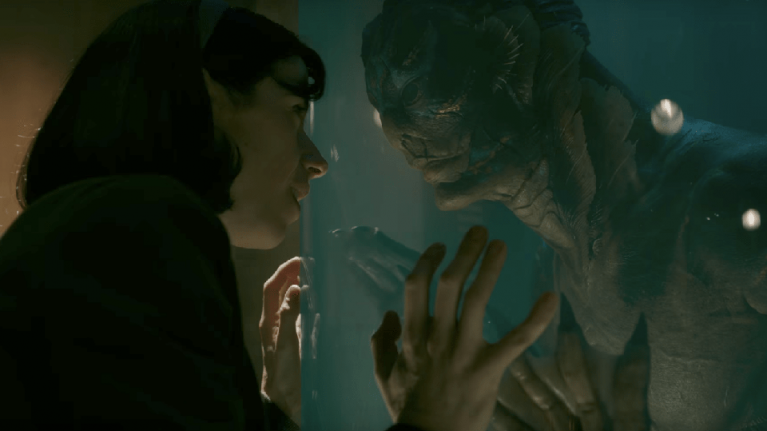
Sally Hawkins (left) plays a mute who develops a bond with a sea creature (played by Doug Jones) in The Shape Of Water.

At first one would think that The Shape Of Water is another science fiction movie with a bizarre story, but it turns out to be a story that’s a lot more than that.

Eliza Esposito is a mute woman in Baltimore in 1962. Orphaned at a young age, she lives in an apartment just above a movie theatre and works as a janitor in a secret government laboratory. She only has two friends. The first is Giles: a gay advertising artist who lives next door to her. They often eat pie and watch entertainment together. The second is Zelda: an African American woman she communicates with in sign language. It’s through Zelda she can tell her biggest secrets.

One day, a creature is brought to the laboratory. It’s a sea creature from South America captured by Colonel Richard Strickland. Right when she sees the creature, she notices something about him. That the creature has some human-like traits. Both Zelda and Eliza sense something wrong with Colonel Strickland as he comes across in a gruff manner. They also notice he brought a cattle prod that has blood on it. Eliza notices the blood travels in a unique pattern.

Later Strickland is attacked by the creature, bleeding badly and lost two of his fingers which get reattached shortly after. As Strickland is being tended to, Eliza wonders who is this creature and what do they want from him? Eliza soon develops a bond with the creature and discovers it’s a humanoid amphibian. She gives him eggs to eat, music to listen to, and communicates with him through sign language.

There are different plans people have for this creature. General Hoyt wants Strickland to dissect it for the possibility of an advantage in the Space Race. Scientist Robert Hoffstetler, who is secretly a Soviet spy, tries to convince his masters to keep the creature alive for scientific study. The Soviet spymasters disagree and want him euthanized.

When Eliza learns of Hoyt and Strickland’s plans for the creature, she tried to persuade Giles to assist, but he rejects at first. It’s after a failed attempt at hitting on the pie man that he agrees to comply. Zelda is also opposed to it at first, fearing for but her job and Eliza’s, but she agrees to help. Hoffstetler tells Eliza he’s aware of her plan and is willing to help.

The plan is to help the creature escape where no one can see. Zelda keeps a close eye on the coast. Hoffstetler helps in the distracting of the surveillance cameras just as Zelda makes the adjustment, and even has a bomb on the power base set to explode at the right minute. Giles rents a truck and paints it to look like the laundry pick-up truck. Eliza is able to get the creature into the laundry bin. Just as it appears that Giles is about to get stopped by security, Hoffstetler injects sleeping medicine into the guard’s neck. The pick-up and escape is successful, but not without smashing Strickland’s new blue Cadillac!

Eliza keeps the creature in her apartment. She keeps it in her bathtub which she mixes with salt and plants. She plans to release it into a canal in a few days one it opens to the ocean. She’s well aware that Strickland still wants the creature. Strickland even meets with Eliza and Zelda to interrogate, but both are able to keep the truth hidden from him.

Back at the apartment, the creature leaves Eliza’s suite and visits Giles’ suite. He takes an interest in his drawings and the television, and thinks one of his cats is food! The creature runs off again just after he slashes Giles’ arm. Eliza goes searching for the creature and finds him in the movie theatre staring at the screen. The relationship between Eliza and the creature grows. She becomes more than just his protector, but his lover. She herself can even acquire the ability to make shapes with water. She even tells all to Zelda, to her surprise. The creature even helps Giles heal from his wounds. Giles eventually opens up to him just after. Eliza gets sexually involved with the creature even to the point she tries to flood her whole bathroom to have underwater sex! Much to the disappointment of the cinema owner down below!

However time is running out for all. General Hoyt gives Strickland an ultimatum of 36 hours to return the creature back. For not helping with keeping the creature, Hoffsteler is told by his superiors he will be extracted in two days. However the creature’s health is failing and he will have to be returned to the water. The day Eliza planned to take the creature to the canal comes. Giles agrees to help drive the creature to the canal when the day comes.

Meanwhile Hoffsteler meets with his handlers and is shot, but not until Strickland intervenes and shoots the handlers dead. He forces Hoffsteler to reveal who took the creature. Strickland then goes to Zelda’s house. To the shock of her and her husband, Strickland arrives and threatens Zelda to reveal Eliza has been keeping the creature. Zelda then telephones Eliza and Giles warning them of Strickland. The time to take the creature to the canal is now. The creature wants Eliza to come with him, but Eliza insists it’s better for him to go alone. The scene ends on a dramatic note and an ending that’s unexpected, but is the right ending for the film.

This does make for a bizarre story of a recently-discovered sea creature and a woman’s romantic connection to the creature. We’ve seen Beauty-And-The-Beast type of movies before like King Kong or Creature Of The Black Lagoon. The funny thing about this is that it actually succeeds as a romance. The first thing that makes it work is that there’s a real connection between the woman and the creature. Rightly so because Eliza is the first to connect with the creature and connects with him in the biggest way. All Eliza had before was her job and the friendships with Giles and Zelda. Here she finds a being that she not only connects with, but becomes her soul mate. The one that completes her. They were two lonely people who were united by fate of the most impossible kind. You could understand why the ending made sense. It was through the magic of the creature’s healing that she is able to live in his world and his world only.

The most interesting thing of the film is its connection of the various arts. It’s more than just nostalgia. It reminds you of the charm and the feel of such entertainment back then that most people overlook. However it’s through those various arts that the sea creature gets a sense of human vitality and even embraces it into his own life. The art he comes across helps him communicate in the human world and gives him his human-like qualities. From the music Eliza plays to the images on the movie screen to even watching a hokey episode of Mr. Ed on Giles’ television, the entertainment is his connection to his human traits. It even helps him experience his feelings of love which he has for Eliza. You could understand why that one scene where Eliza was not a mute –that musical number where she dances with the creature– makes sense. It’s through art that she’s able to express her love for the creature: the one being that doesn’t make her feel like an outsider at all.

The creature doesn’t just affect the lives of Eliza, but of the two closest to her too. Soon after Giles has a change of heart and helps the creature’s escape, Giles opens up to the creature and soon makes him a part of his own art. As Zelda helps the creature escape, she too develops an inner strength in her and is able to stand up for herself to her husband. It’s something to think about. The three main characters are all misfits in 1962 Baltimore. Eliza is a mute, Giles is gay, and Zelda is black. However it’s through this creature that Eliza finds a soul mate, Giles finds a purpose and Zelda finds an inner strength.

I give top credit to Gullermo del Toro. The story he directed and co-wrote with Vanessa Taylor is comical and had a lot of good drama, but it’s the human element that shines in the story line. Del Toro would admit in an interview that this is inspired by The Creature From The Black Lagoon and always dreamt of seeing Gill-Man succeed in the romance to Kay Lawrence. I can sometimes see hints of Pan’s Labyrinth in the story. It’s interesting how he creates this story that romanticizes the entertainment of the time as well as reminds us of the hysteria of Communism at the time too, as well as the racism. All of this makes the charm of the film.

The acting is the biggest strength of the film. The best comes from Sally Hawkins in playing a mute who best communicates to the sea creature with her feelings and with the power of art. Richard Jenkins is also excellent as Eliza’s loner friend who finds a new purpose in life through the creature. Another excellent performance is from Octavia Spencer playing the friend closest to her side. Also very good acting from Michael Shannon. You often wonder if Strickland is heartless or just plain under the thumb of the Colonel. You know he’s troubled when you see the amount of pills he takes. Excellent work for Doug Jones. One again, he does excellent work as the creature in Guillermo del Toro’s movies. Most of you remember him as the Faun in Pan’s Labyrinth. You could say Doug Jones is to del Toro’s movies what Andy Serkis is to Lord Of The Rings’ Gollum.

The film has a lot of excellent technical aspects too. There’s the costuming and make-up team that made up the costume of the creature, as well as the visual effects team that made the ‘blue effect’ of the creature’s skin. There’s the production design team that made an excellent set that dates back to the early 1960’s to a tee, even with the movie theatre. There’s Luis Sequeira that designed the right costumes and outfits for the actors as well. Finally, there’s the mix of the music of the time mixed with the imaginative score of Alexandre Desplat. Desplat knows how to compose for a movie.

The Shape Of Water is more than just a creature-and-woman romance we’re familiar with. It succeeds in having the feel of an actual romance and successfully convey the feelings of love. In the end, the romance looks so right! That’s its magic.